Industrial production of chemical solvents
“Acetone”
LincolnUniversityCollege
Faculty of science
Department of Biotechnology
Presented by
Essam Yahya
Solvents
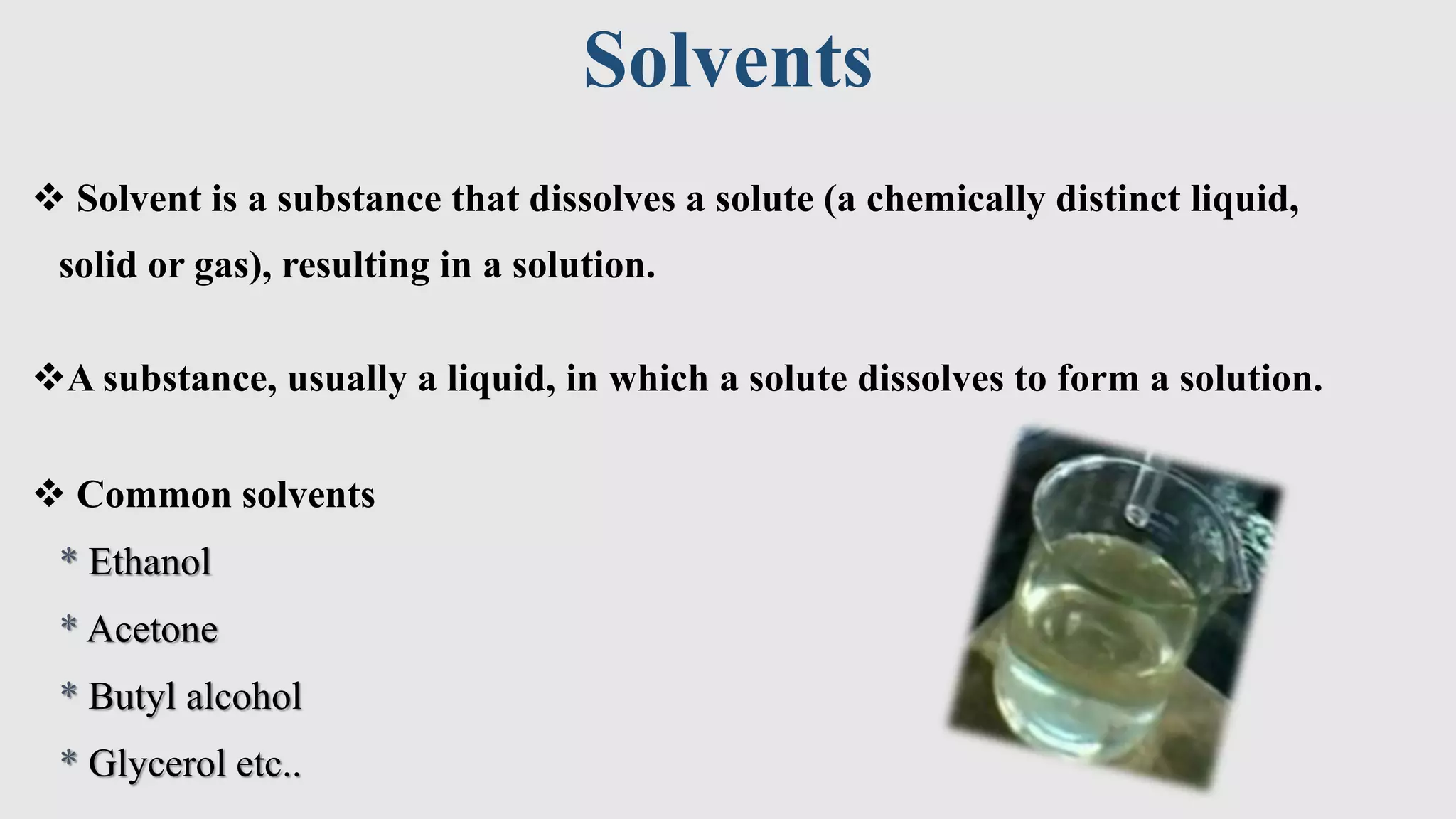
 Solvent is a substance that dissolves a solute (a chemically distinct liquid,
solid or gas), resulting in a solution.
A substance, usually a liquid, in which a solute dissolves to form a solution.
 Common solvents
* Ethanol
* Acetone
* Butyl alcohol
* Glycerol etc..
Types of chemical solvents
 Solvents can be classed as organic or inorganic materials.
 Water, the simplest and most abundant solvent on earth is classed as an
inorganic solvent as its chemical structure does not contain carbon.
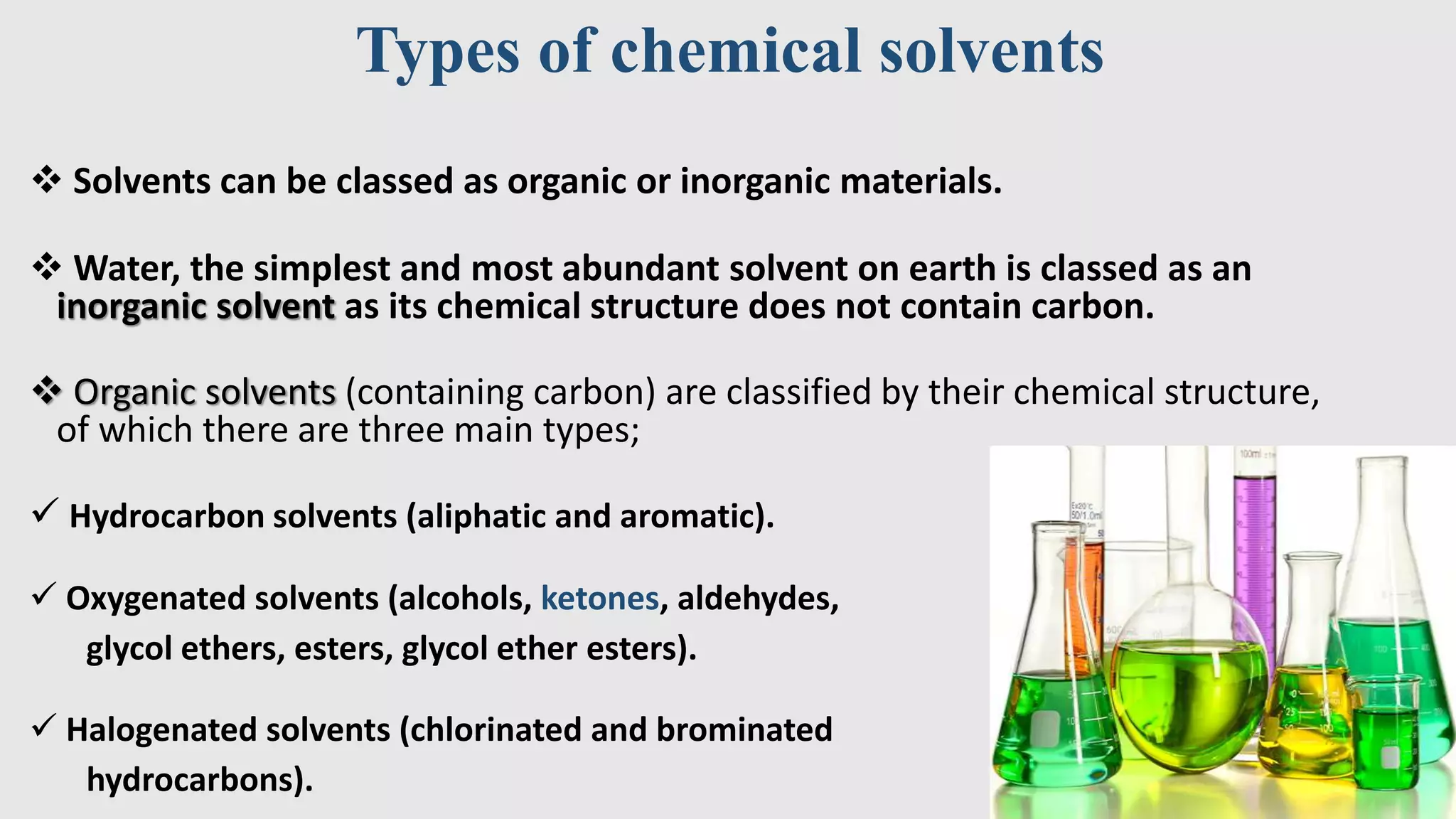
 Organic solvents (containing carbon) are classified by their chemical structure,
of which there are three main types;
 Hydrocarbon solvents (aliphatic and aromatic).
 Oxygenated solvents (alcohols, ketones, aldehydes,
glycol ethers, esters, glycol ether esters).
 Halogenated solvents (chlorinated and brominated
hydrocarbons).
Common Uses of Solvents in Our Life
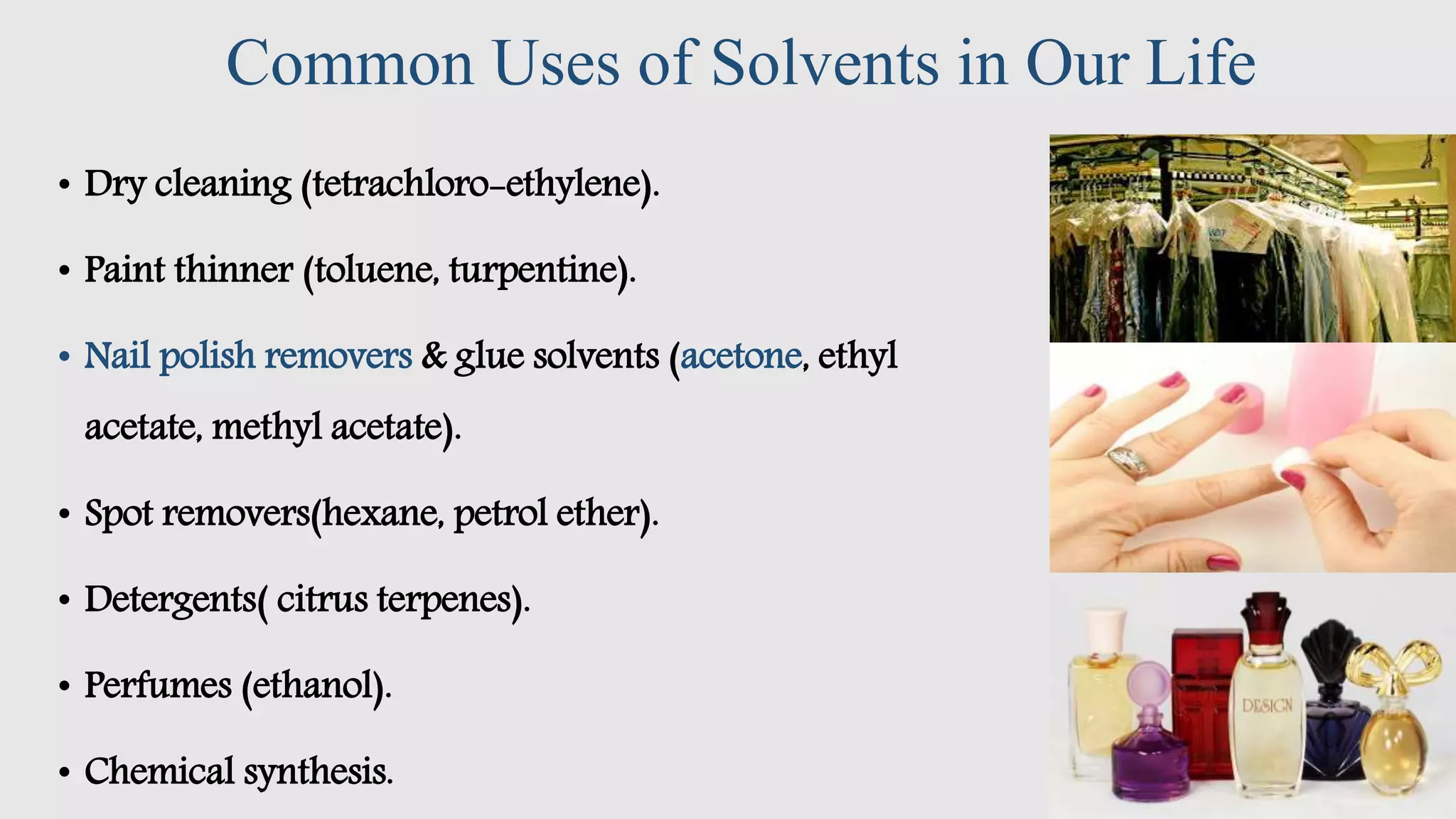
• Dry cleaning (tetrachloro-ethylene).
• Paint thinner (toluene, turpentine).
• Nail polish removers & glue solvents (acetone, ethyl
acetate, methyl acetate).
• Spot removers(hexane, petrol ether).
• Detergents( citrus terpenes).
• Perfumes (ethanol).
• Chemical synthesis.
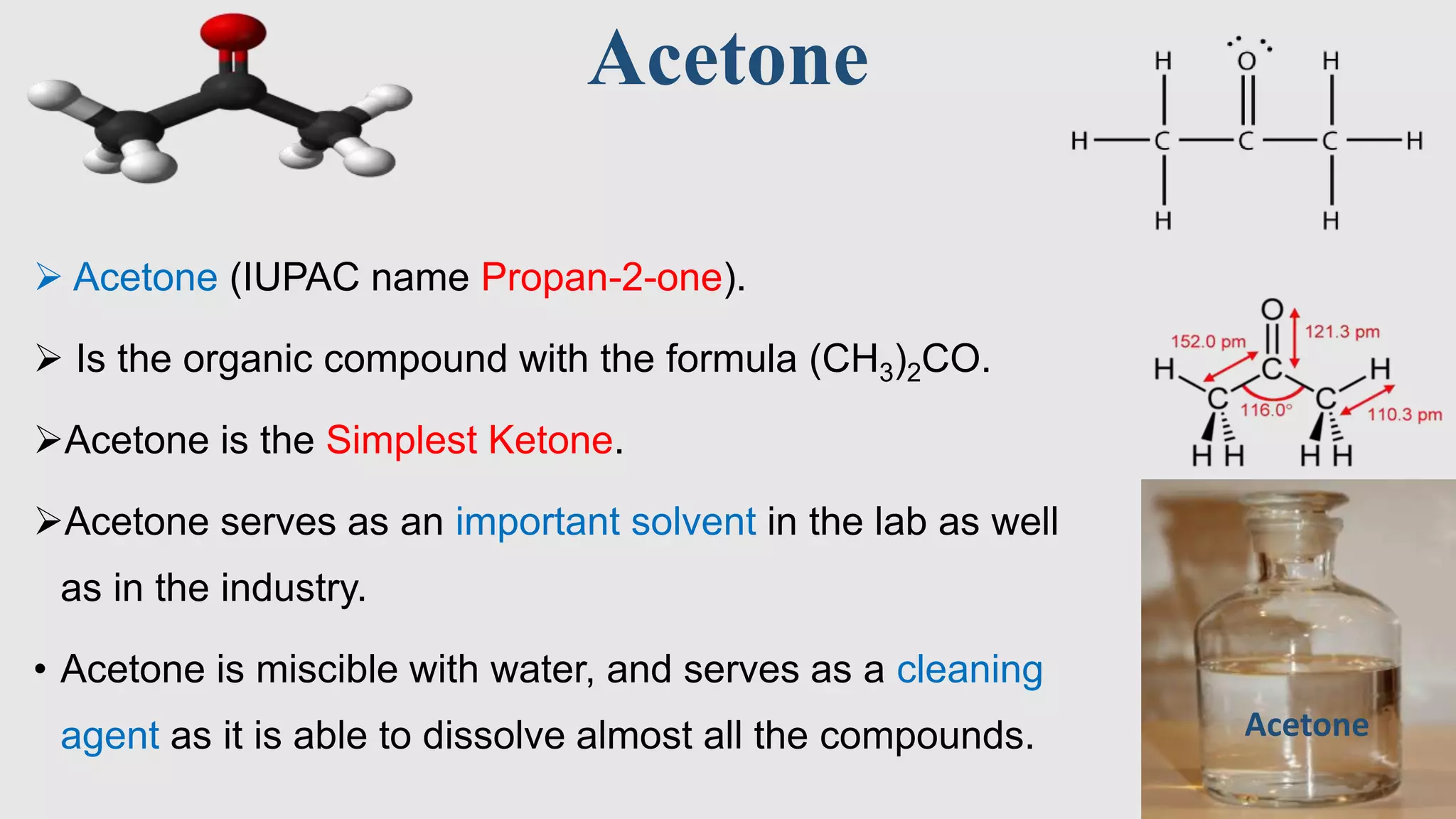
Acetone
 Acetone (IUPAC name Propan-2-one).
 Is the organic compound with the formula (CH3)2CO.
Acetone is the Simplest Ketone.
Acetone serves as an important solvent in the lab as well
as in the industry.
• Acetone is miscible with water, and serves as a cleaning
agent as it is able to dissolve almost all the compounds. Acetone
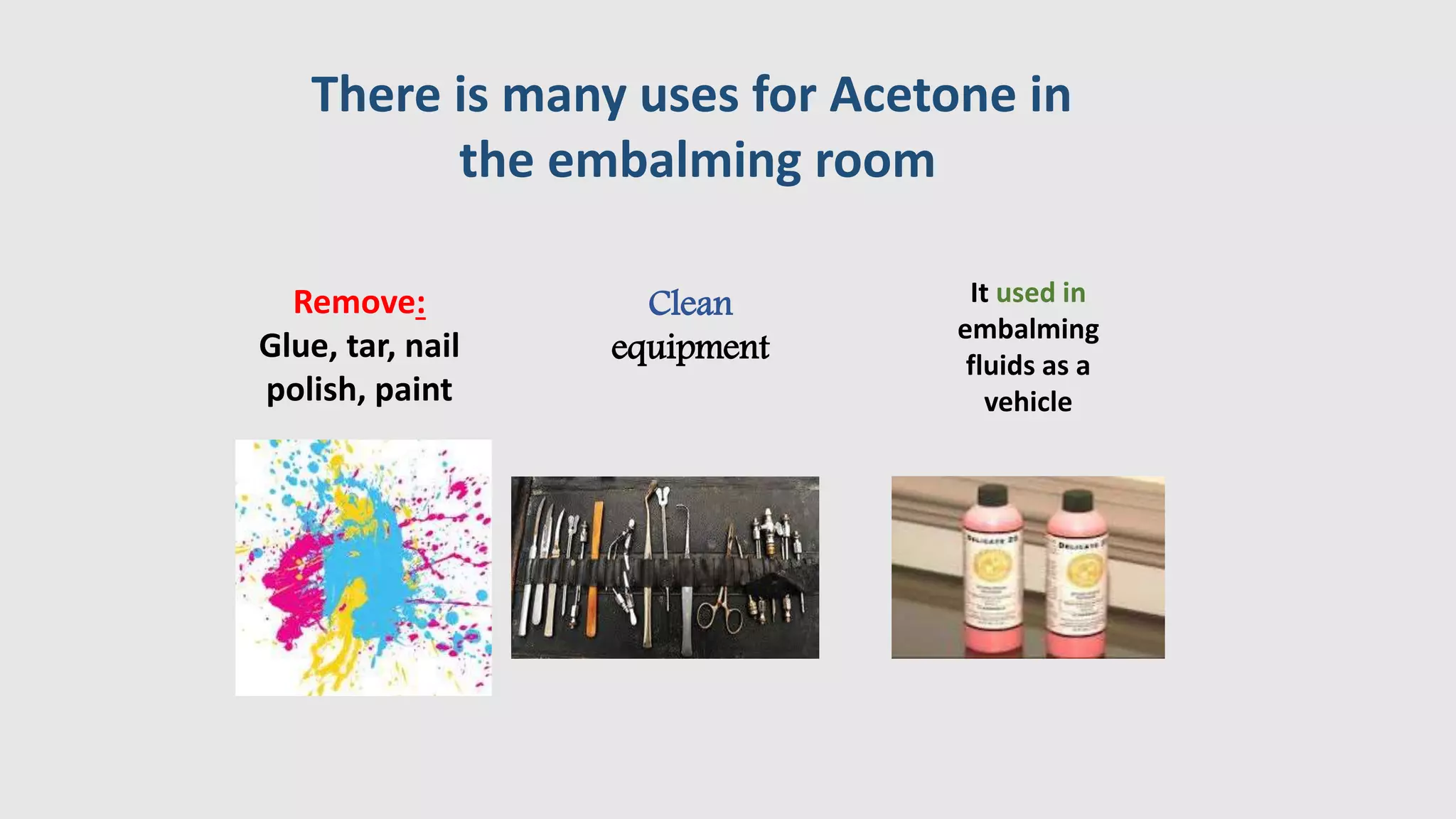
There is many uses for Acetone in
the embalming room
Remove:
Glue, tar, nail
polish, paint
Clean
equipment
It used in
embalming
fluids as a
vehicle
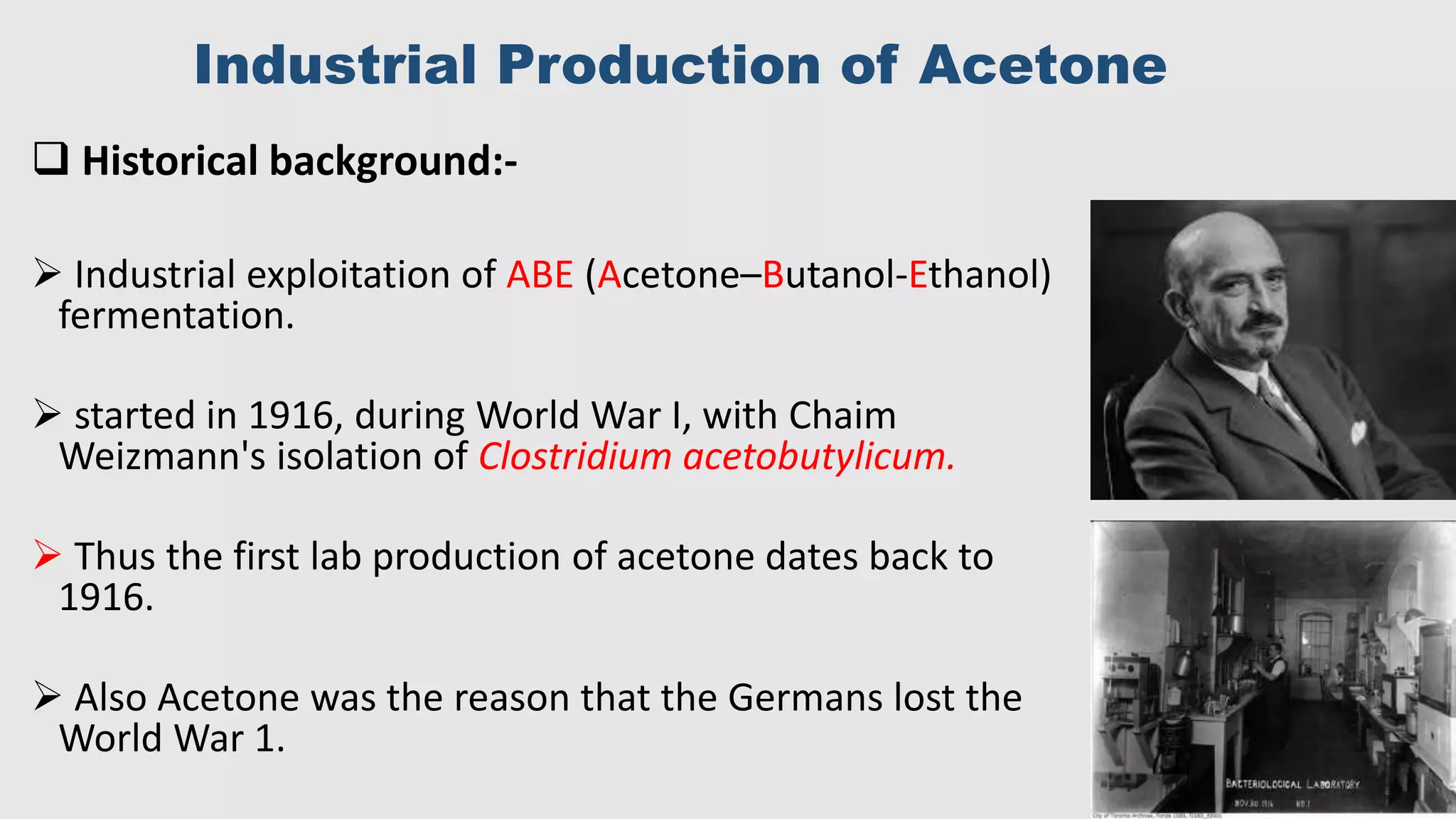
Industrial Production of Acetone
 Historical background:-
 Industrial exploitation of ABE (Acetone–Butanol-Ethanol)
fermentation.
 started in 1916, during World War I, with Chaim
Weizmann's isolation of Clostridium acetobutylicum.
 Thus the first lab production of acetone dates back to
1916.
 Also Acetone was the reason that the Germans lost the
World War 1.
Industrial production methods
• Acetone is produced using different methods:-
1. Cumene Process.
2. From Alkane nitriles.
3. Hydrolysis of Gem-Dihalides.
4. Oxidation of isopropyl alcohol.
5. Ozonolysis of alkenes.
6. Fermentation process.
1) CUMENE PROCESS
• The air oxidation of cumene (isopropyl benzene) leads to the
production of both phenol and acetone, as shown in the following
figure.
• At the end of reaction we get Acetone as well as Phenol both of which
are desirable.
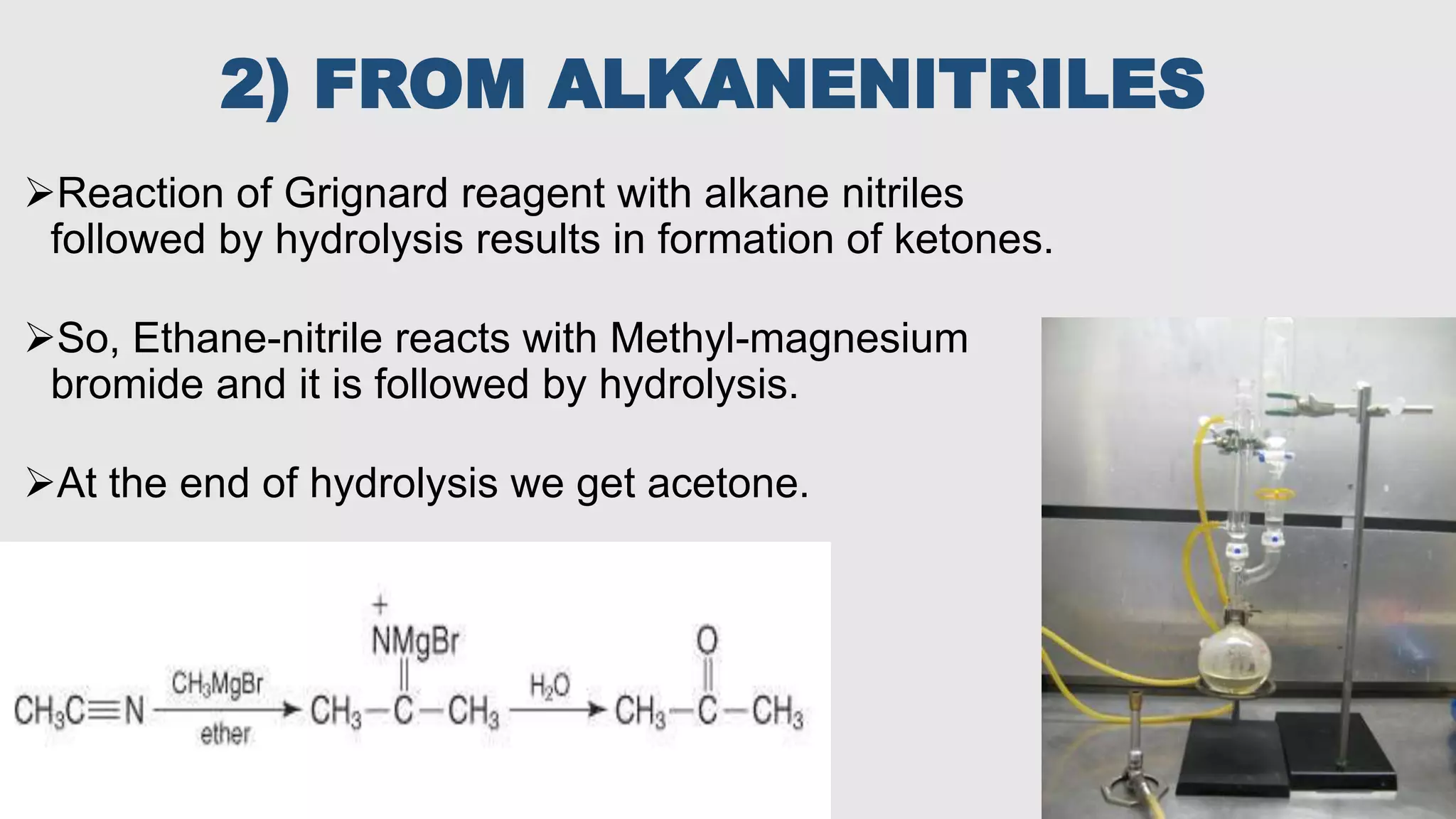
2) FROM ALKANENITRILES
Reaction of Grignard reagent with alkane nitriles
followed by hydrolysis results in formation of ketones.
So, Ethane-nitrile reacts with Methyl-magnesium
bromide and it is followed by hydrolysis.
At the end of hydrolysis we get acetone.
3)HYDROLYSIS OF GEM-DIHALIDES
 Ketones are produced by alkaline hydrolysis of those
gem-dihalides.
 In which the two halogen atoms are attached to a non-
terminal carbon atom.
 So, 2,2-Dichloropropane followed by alkaline
hydrolysis and at last acetone will produce.
4) OXIDATION OF ISOPROPYL ALCOHOL
 Ketones can be prepared by controlled oxidation of
secondary alcohol.
 Using an acidified solution of potassium dichromate.
So, 2-Propanol followed by oxidation process and
produce acetone.
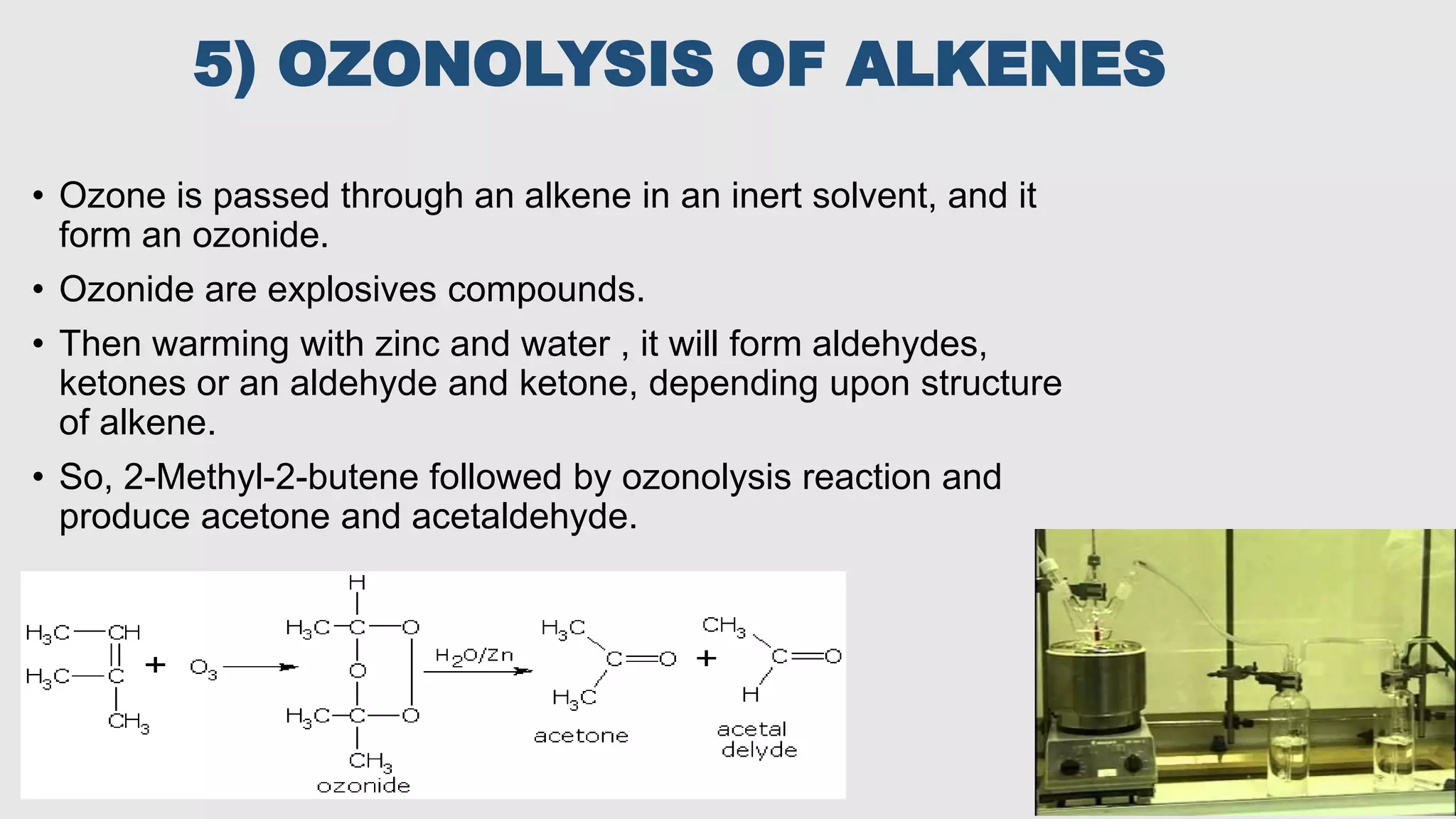
5) OZONOLYSIS OF ALKENES
• Ozone is passed through an alkene in an inert solvent, and it
form an ozonide.
• Ozonide are explosives compounds.
• Then warming with zinc and water , it will form aldehydes,
ketones or an aldehyde and ketone, depending upon structure
of alkene.
• So, 2-Methyl-2-butene followed by ozonolysis reaction and
produce acetone and acetaldehyde.
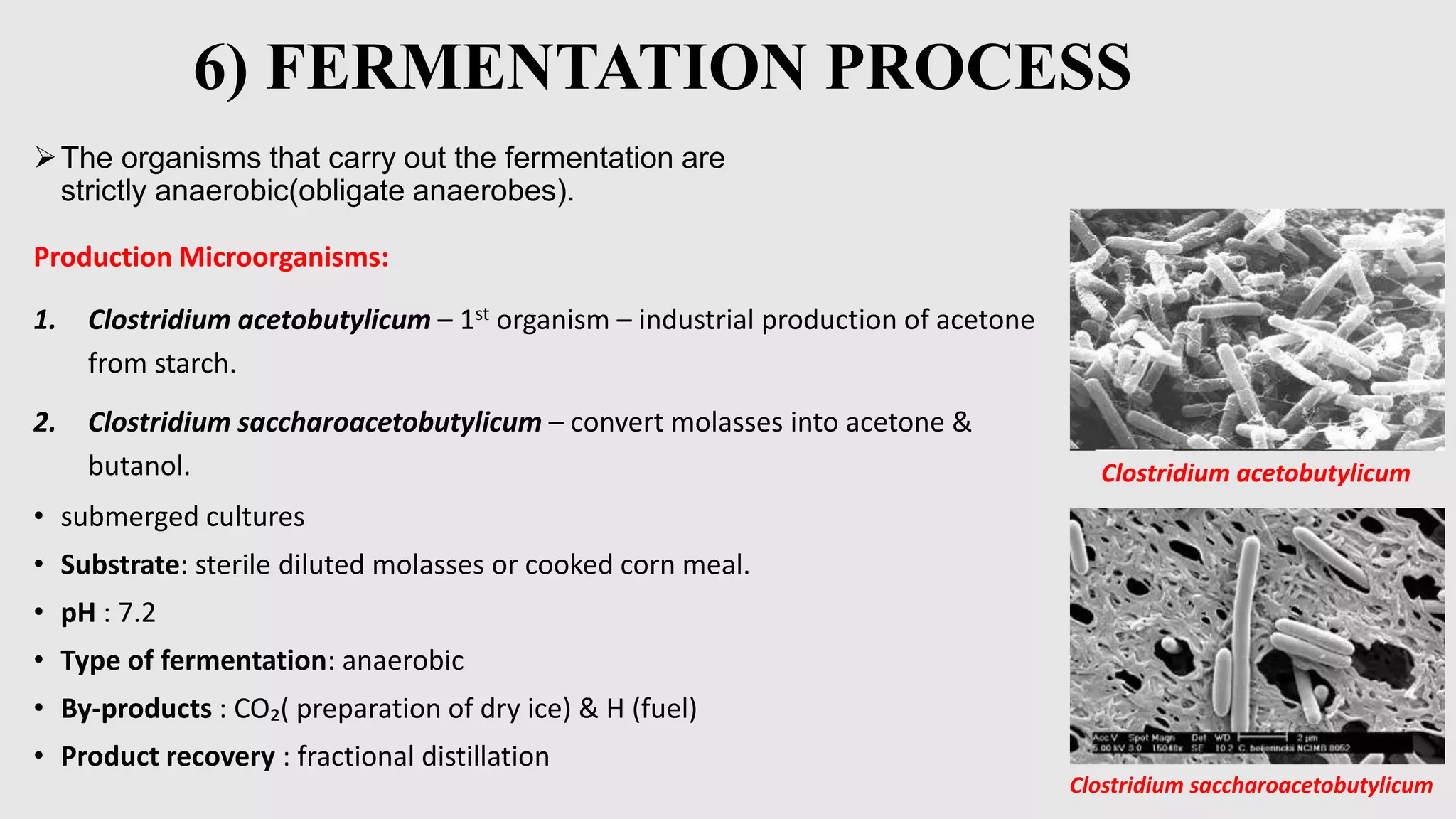
6) FERMENTATION PROCESS
The organisms that carry out the fermentation are
strictly anaerobic(obligate anaerobes).
Production Microorganisms:
1. Clostridium acetobutylicum – 1st organism – industrial production of acetone
from starch.
2. Clostridium saccharoacetobutylicum – convert molasses into acetone &
butanol.
• submerged cultures
• Substrate: sterile diluted molasses or cooked corn meal.
• pH : 7.2
• Type of fermentation: anaerobic
• By-products : CO₂( preparation of dry ice) & H (fuel)
• Product recovery : fractional distillation
Clostridium acetobutylicum
Clostridium saccharoacetobutylicum
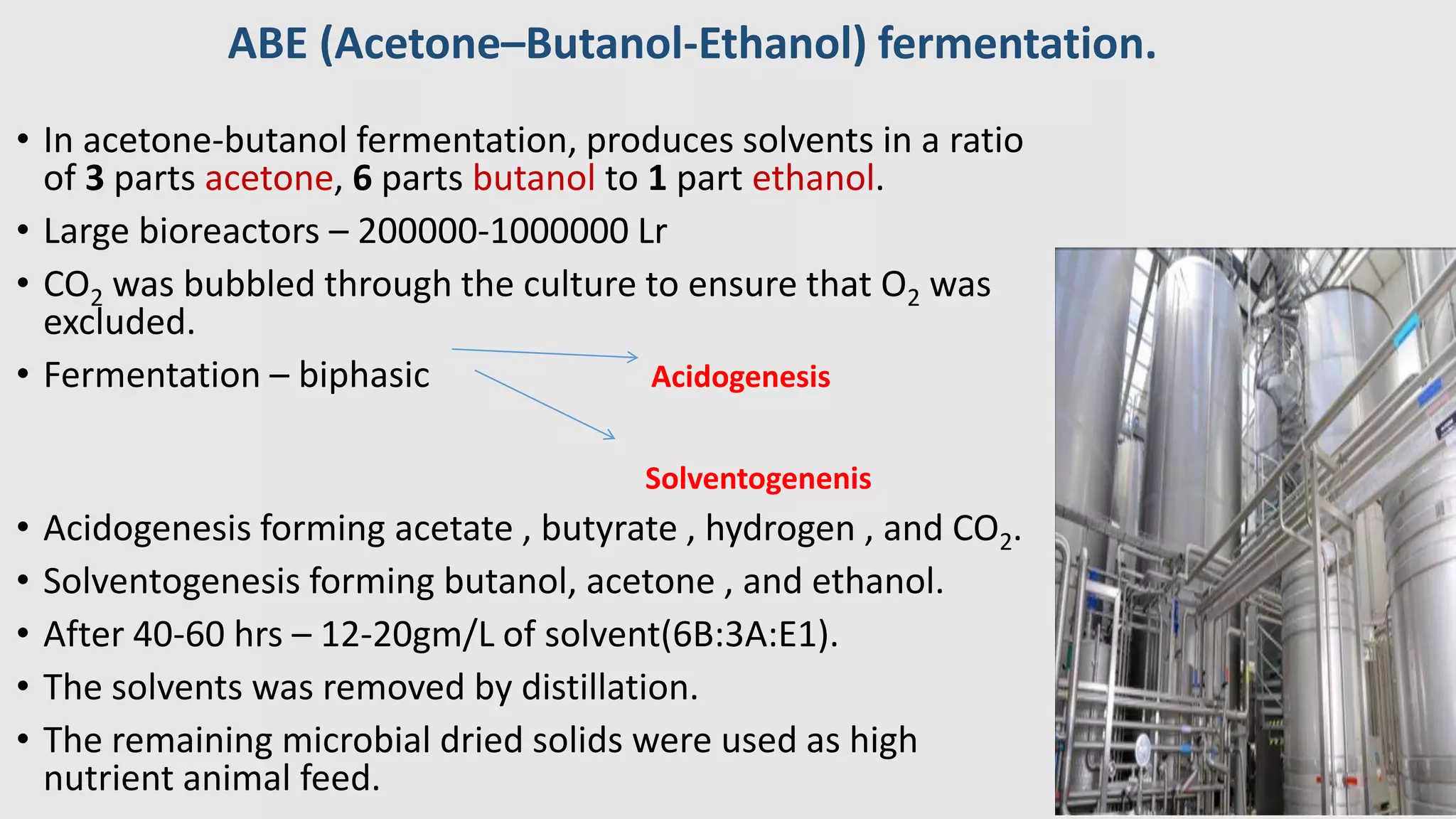
• In acetone-butanol fermentation, produces solvents in a ratio
of 3 parts acetone, 6 parts butanol to 1 part ethanol.
• Large bioreactors – 200000-1000000 Lr
• CO2 was bubbled through the culture to ensure that O2 was
excluded.
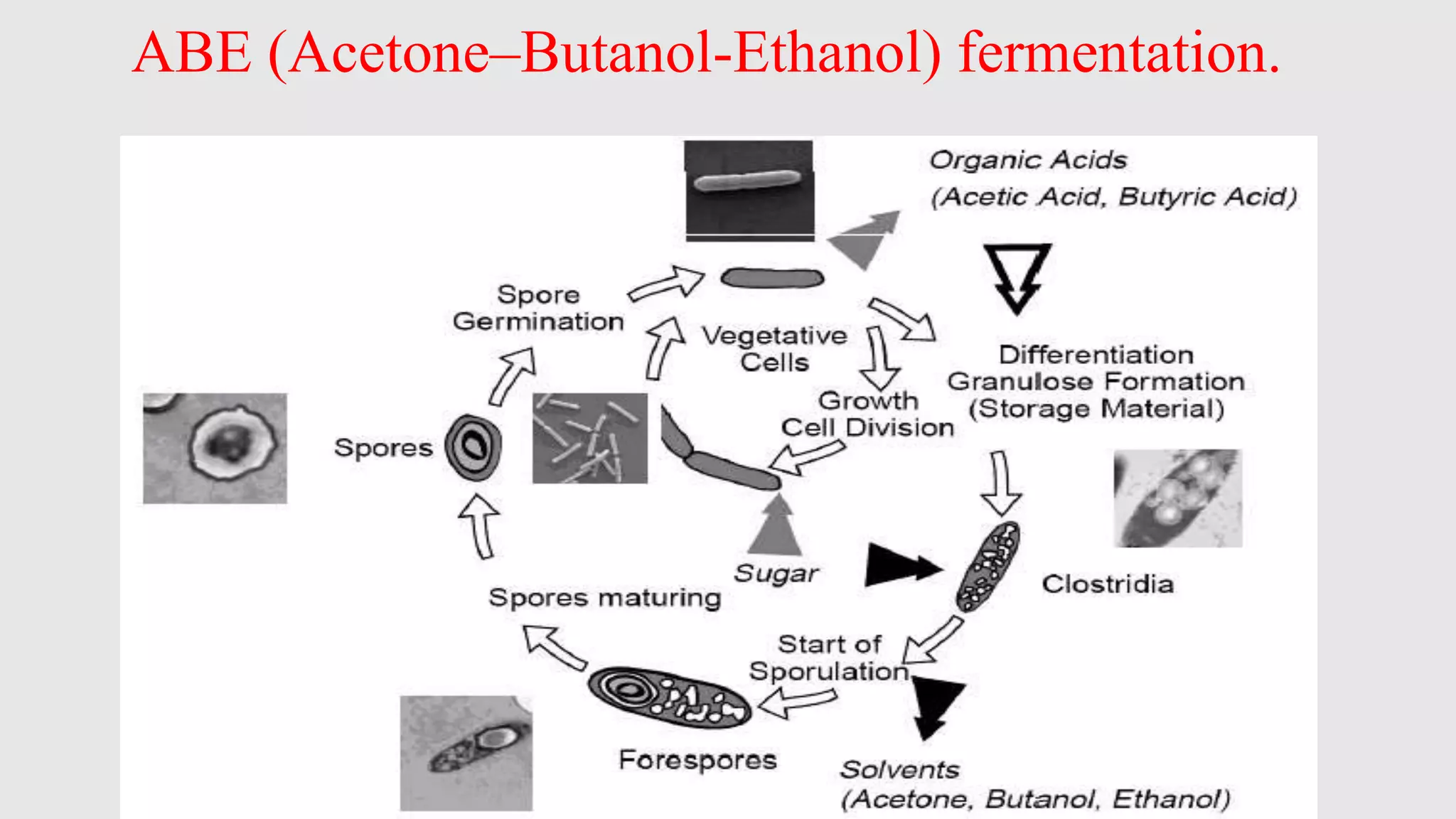
• Fermentation – biphasic Acidogenesis
Solventogenenis
• Acidogenesis forming acetate , butyrate , hydrogen , and CO2.
• Solventogenesis forming butanol, acetone , and ethanol.
• After 40-60 hrs – 12-20gm/L of solvent(6B:3A:E1).
• The solvents was removed by distillation.
• The remaining microbial dried solids were used as high
nutrient animal feed.
ABE (Acetone–Butanol-Ethanol) fermentation.
Q1 Classify the chemical solvents, and explain their
application in our daily life.
Q2 Enumerate the methods used in industrial production of
chemical solvents, such as Acetone.
Industrial production of chemical solvents “Acetone”

Industrial production of chemical solvents “Acetone”

  • 1.
    Industrial production ofchemical solvents “Acetone” LincolnUniversityCollege Faculty of science Department of Biotechnology Presented by Essam Yahya
  • 2.
    Solvents  Solvent isa substance that dissolves a solute (a chemically distinct liquid, solid or gas), resulting in a solution. A substance, usually a liquid, in which a solute dissolves to form a solution.  Common solvents * Ethanol * Acetone * Butyl alcohol * Glycerol etc..
  • 3.
    Types of chemicalsolvents  Solvents can be classed as organic or inorganic materials.  Water, the simplest and most abundant solvent on earth is classed as an inorganic solvent as its chemical structure does not contain carbon.  Organic solvents (containing carbon) are classified by their chemical structure, of which there are three main types;  Hydrocarbon solvents (aliphatic and aromatic).  Oxygenated solvents (alcohols, ketones, aldehydes, glycol ethers, esters, glycol ether esters).  Halogenated solvents (chlorinated and brominated hydrocarbons).
  • 4.
    Common Uses ofSolvents in Our Life • Dry cleaning (tetrachloro-ethylene). • Paint thinner (toluene, turpentine). • Nail polish removers & glue solvents (acetone, ethyl acetate, methyl acetate). • Spot removers(hexane, petrol ether). • Detergents( citrus terpenes). • Perfumes (ethanol). • Chemical synthesis.
  • 5.
    Acetone  Acetone (IUPACname Propan-2-one).  Is the organic compound with the formula (CH3)2CO. Acetone is the Simplest Ketone. Acetone serves as an important solvent in the lab as well as in the industry. • Acetone is miscible with water, and serves as a cleaning agent as it is able to dissolve almost all the compounds. Acetone
  • 6.
    There is manyuses for Acetone in the embalming room Remove: Glue, tar, nail polish, paint Clean equipment It used in embalming fluids as a vehicle
  • 7.
    Industrial Production ofAcetone  Historical background:-  Industrial exploitation of ABE (Acetone–Butanol-Ethanol) fermentation.  started in 1916, during World War I, with Chaim Weizmann's isolation of Clostridium acetobutylicum.  Thus the first lab production of acetone dates back to 1916.  Also Acetone was the reason that the Germans lost the World War 1.
  • 8.
    Industrial production methods •Acetone is produced using different methods:- 1. Cumene Process. 2. From Alkane nitriles. 3. Hydrolysis of Gem-Dihalides. 4. Oxidation of isopropyl alcohol. 5. Ozonolysis of alkenes. 6. Fermentation process.
  • 9.
    1) CUMENE PROCESS •The air oxidation of cumene (isopropyl benzene) leads to the production of both phenol and acetone, as shown in the following figure. • At the end of reaction we get Acetone as well as Phenol both of which are desirable.
  • 10.
    2) FROM ALKANENITRILES Reactionof Grignard reagent with alkane nitriles followed by hydrolysis results in formation of ketones. So, Ethane-nitrile reacts with Methyl-magnesium bromide and it is followed by hydrolysis. At the end of hydrolysis we get acetone.
  • 11.
    3)HYDROLYSIS OF GEM-DIHALIDES Ketones are produced by alkaline hydrolysis of those gem-dihalides.  In which the two halogen atoms are attached to a non- terminal carbon atom.  So, 2,2-Dichloropropane followed by alkaline hydrolysis and at last acetone will produce.
  • 12.
    4) OXIDATION OFISOPROPYL ALCOHOL  Ketones can be prepared by controlled oxidation of secondary alcohol.  Using an acidified solution of potassium dichromate. So, 2-Propanol followed by oxidation process and produce acetone.
  • 13.
    5) OZONOLYSIS OFALKENES • Ozone is passed through an alkene in an inert solvent, and it form an ozonide. • Ozonide are explosives compounds. • Then warming with zinc and water , it will form aldehydes, ketones or an aldehyde and ketone, depending upon structure of alkene. • So, 2-Methyl-2-butene followed by ozonolysis reaction and produce acetone and acetaldehyde.
  • 14.
    6) FERMENTATION PROCESS Theorganisms that carry out the fermentation are strictly anaerobic(obligate anaerobes). Production Microorganisms: 1. Clostridium acetobutylicum – 1st organism – industrial production of acetone from starch. 2. Clostridium saccharoacetobutylicum – convert molasses into acetone & butanol. • submerged cultures • Substrate: sterile diluted molasses or cooked corn meal. • pH : 7.2 • Type of fermentation: anaerobic • By-products : CO₂( preparation of dry ice) & H (fuel) • Product recovery : fractional distillation Clostridium acetobutylicum Clostridium saccharoacetobutylicum
  • 15.
    • In acetone-butanolfermentation, produces solvents in a ratio of 3 parts acetone, 6 parts butanol to 1 part ethanol. • Large bioreactors – 200000-1000000 Lr • CO2 was bubbled through the culture to ensure that O2 was excluded. • Fermentation – biphasic Acidogenesis Solventogenenis • Acidogenesis forming acetate , butyrate , hydrogen , and CO2. • Solventogenesis forming butanol, acetone , and ethanol. • After 40-60 hrs – 12-20gm/L of solvent(6B:3A:E1). • The solvents was removed by distillation. • The remaining microbial dried solids were used as high nutrient animal feed. ABE (Acetone–Butanol-Ethanol) fermentation.
  • 16.
  • 17.
    Q1 Classify thechemical solvents, and explain their application in our daily life. Q2 Enumerate the methods used in industrial production of chemical solvents, such as Acetone.