FOOD PRODUCTION
Contents
 What is chocolate?
 Manufacturing process
 Types of chocolate
 Storage
 Uses of chocolate
 Leading manufactures
What Is Chocolate
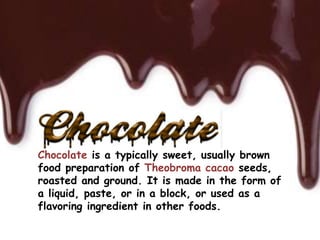
Chocolate is a typically sweet, usually brown
food preparation of Theobroma cacao seeds,
roasted and ground. It is made in the form of
a liquid, paste, or in a block, or used as a
flavoring ingredient in other foods.
Manufacturing Of Chocolate
 Processing of Cocoa beans
• Harvesting of cocoa beans
• Fermentation, drying & bagging
• Roasting & Grinding
• Pressing
 Blending
 Conching
 Tempering
Chocolate is made from cocoa beans, the dried and
fermented seeds of the cacao tree (Theobroma cacao), a
small, 4–8 m tall (15–26 ft tall) evergreen tree native to the
deep tropical region of the Americas.
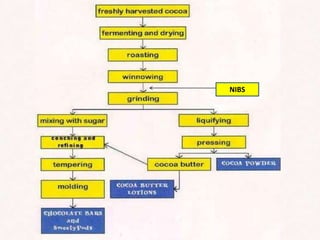
NIBS
Processing of Cocoa
Beans
 Cacao pods are harvested by cutting them from the
tree using a machete, or by knocking them off the
tree using a stick.
 Fermentation process, which takes up to seven
days, also produces several flavor, eventually
resulting in the familiar chocolate taste.
 After fermentation, the beans must be quickly dried
to prevent mold growth and then transported to a
chocolate manufacturing facility.
 The beans are cleaned (removing twigs, stones,
and other debris), roasted, and graded.
 The shell of each bean is removed to extract the nib.
 Nibs are ground, liquefied to thick chocolate color
liquid known as “mass”.
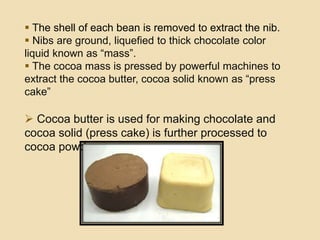
 The cocoa mass is pressed by powerful machines to
extract the cocoa butter, cocoa solid known as “press
cake”
 Cocoa butter is used for making chocolate and
cocoa solid (press cake) is further processed to
cocoa powder.
Blending Of Chocolate
Chocolate liquor is blended with the cocoa butter in varying
quantities to make different types of chocolate or
couvertures. The basic blends of ingredients for the various
types of chocolate (in order of highest quantity of cocoa
liquor first), are:
• Dark chocolate: sugar, cocoa butter, cocoa liquor, and
(sometimes) vanilla
•Milk chocolate: sugar, cocoa butter, cocoa liquor, milk or milk
powder, and vanilla
•White chocolate: sugar, cocoa butter, milk or milk powder, and
vanilla
Conching
A conche is a surface scraping mixer and agitator
that evenly distributes cocoa butter within chocolate,
and may act as a 'polisher' of the particles. It also
promotes flavor development through frictional heat,
release of volatiles and acids, and oxidation. This
penultimate process is called Conching.
When ingredients are mixed in this way, sometimes
for up to 78 hours, chocolate can be produced with a
mild, rich taste. Lower quality chocolate is conched
for as little as six hours.
Tempering
Tempering means improve the consistency or
resiliency of (a substance) by heating it or adding
particular substances to it.
Tempering chocolate is an essential step for making
smooth, glossy, evenly colored coating for your
dipped chocolates. Tempering prevents the dull
grayish color and waxy texture that happens when
the cocoa fat separates out. Tempered chocolate
produces a crisp, satisfying snap when you bite into
it. The tempering process takes chocolate through a
temperature curve, a process which aligns the
chocolate's crystals to make it smooth, silky, and
glossy.
Types Of Chocolate
 Milk Chocolate is sweet chocolate that also
contains cocoa butter, cocoa liquor, milk powder or
condensed milk and vanilla
 White Chocolate contains cocoa butter, sugar,
and milk, but no cocoa solids.
 Dark Chocolate is produced by adding fat and
sugar to the cacao mixture.
 Unsweetened chocolate is pure chocolate liquor,
also known as bitter or baking chocolate. It is
unadulterated chocolate: the pure, ground, roasted
chocolate beans impart a strong, deep chocolate
flavor.
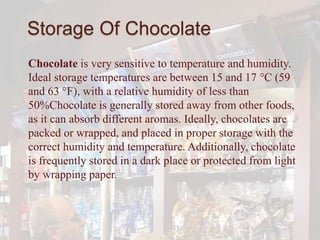
Storage Of Chocolate
Chocolate is very sensitive to temperature and humidity.
Ideal storage temperatures are between 15 and 17 °C (59
and 63 °F), with a relative humidity of less than
50%Chocolate is generally stored away from other foods,
as it can absorb different aromas. Ideally, chocolates are
packed or wrapped, and placed in proper storage with the
correct humidity and temperature. Additionally, chocolate
is frequently stored in a dark place or protected from light
by wrapping paper.
Uses Of Chocolate
•Chocolate is sold in chocolate bars, which come in
dark chocolate, milk chocolate and white chocolate
varieties.
•Chocolate is used as a confectionary ingredient(e.g.,
nougat, wafers, caramel, nuts, etc.)
•Chocolate is used as a flavoring product in many
desserts, such as chocolate cakes, chocolate
brownies, chocolate mousse and chocolate chip
cookies.
•Some non-alcoholic beverages contain chocolate,
such as chocolate milk, hot chocolate and chocolate
milkshakes.
•Some alcoholic liqueurs are flavoured with
chocolate, such as chocolate liqueur and creme de
cacao.
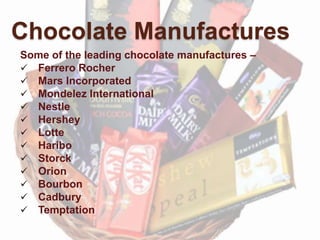
Chocolate Manufactures
Some of the leading chocolate manufactures –
 Ferrero Rocher
 Mars Incorporated
 Mondelez International
 Nestle
 Hershey
 Lotte
 Haribo
 Storck
 Orion
 Bourbon
 Cadbury
 Temptation
About Chocolate And Manufacturing..

About Chocolate And Manufacturing..

  • 1.
  • 2.
    Contents  What ischocolate?  Manufacturing process  Types of chocolate  Storage  Uses of chocolate  Leading manufactures
  • 3.
  • 4.
    Chocolate is atypically sweet, usually brown food preparation of Theobroma cacao seeds, roasted and ground. It is made in the form of a liquid, paste, or in a block, or used as a flavoring ingredient in other foods.
  • 5.
    Manufacturing Of Chocolate Processing of Cocoa beans • Harvesting of cocoa beans • Fermentation, drying & bagging • Roasting & Grinding • Pressing  Blending  Conching  Tempering Chocolate is made from cocoa beans, the dried and fermented seeds of the cacao tree (Theobroma cacao), a small, 4–8 m tall (15–26 ft tall) evergreen tree native to the deep tropical region of the Americas.
  • 6.
  • 7.
    Processing of Cocoa Beans Cacao pods are harvested by cutting them from the tree using a machete, or by knocking them off the tree using a stick.  Fermentation process, which takes up to seven days, also produces several flavor, eventually resulting in the familiar chocolate taste.  After fermentation, the beans must be quickly dried to prevent mold growth and then transported to a chocolate manufacturing facility.  The beans are cleaned (removing twigs, stones, and other debris), roasted, and graded.
  • 8.
     The shellof each bean is removed to extract the nib.  Nibs are ground, liquefied to thick chocolate color liquid known as “mass”.  The cocoa mass is pressed by powerful machines to extract the cocoa butter, cocoa solid known as “press cake”  Cocoa butter is used for making chocolate and cocoa solid (press cake) is further processed to cocoa powder.
  • 9.
    Blending Of Chocolate Chocolateliquor is blended with the cocoa butter in varying quantities to make different types of chocolate or couvertures. The basic blends of ingredients for the various types of chocolate (in order of highest quantity of cocoa liquor first), are: • Dark chocolate: sugar, cocoa butter, cocoa liquor, and (sometimes) vanilla •Milk chocolate: sugar, cocoa butter, cocoa liquor, milk or milk powder, and vanilla •White chocolate: sugar, cocoa butter, milk or milk powder, and vanilla
  • 10.
    Conching A conche isa surface scraping mixer and agitator that evenly distributes cocoa butter within chocolate, and may act as a 'polisher' of the particles. It also promotes flavor development through frictional heat, release of volatiles and acids, and oxidation. This penultimate process is called Conching. When ingredients are mixed in this way, sometimes for up to 78 hours, chocolate can be produced with a mild, rich taste. Lower quality chocolate is conched for as little as six hours.
  • 11.
    Tempering Tempering means improvethe consistency or resiliency of (a substance) by heating it or adding particular substances to it. Tempering chocolate is an essential step for making smooth, glossy, evenly colored coating for your dipped chocolates. Tempering prevents the dull grayish color and waxy texture that happens when the cocoa fat separates out. Tempered chocolate produces a crisp, satisfying snap when you bite into it. The tempering process takes chocolate through a temperature curve, a process which aligns the chocolate's crystals to make it smooth, silky, and glossy.
  • 12.
    Types Of Chocolate Milk Chocolate is sweet chocolate that also contains cocoa butter, cocoa liquor, milk powder or condensed milk and vanilla  White Chocolate contains cocoa butter, sugar, and milk, but no cocoa solids.  Dark Chocolate is produced by adding fat and sugar to the cacao mixture.  Unsweetened chocolate is pure chocolate liquor, also known as bitter or baking chocolate. It is unadulterated chocolate: the pure, ground, roasted chocolate beans impart a strong, deep chocolate flavor.
  • 13.
    Storage Of Chocolate Chocolateis very sensitive to temperature and humidity. Ideal storage temperatures are between 15 and 17 °C (59 and 63 °F), with a relative humidity of less than 50%Chocolate is generally stored away from other foods, as it can absorb different aromas. Ideally, chocolates are packed or wrapped, and placed in proper storage with the correct humidity and temperature. Additionally, chocolate is frequently stored in a dark place or protected from light by wrapping paper.
  • 14.
    Uses Of Chocolate •Chocolateis sold in chocolate bars, which come in dark chocolate, milk chocolate and white chocolate varieties. •Chocolate is used as a confectionary ingredient(e.g., nougat, wafers, caramel, nuts, etc.) •Chocolate is used as a flavoring product in many desserts, such as chocolate cakes, chocolate brownies, chocolate mousse and chocolate chip cookies. •Some non-alcoholic beverages contain chocolate, such as chocolate milk, hot chocolate and chocolate milkshakes. •Some alcoholic liqueurs are flavoured with chocolate, such as chocolate liqueur and creme de cacao.
  • 15.
    Chocolate Manufactures Some ofthe leading chocolate manufactures –  Ferrero Rocher  Mars Incorporated  Mondelez International  Nestle  Hershey  Lotte  Haribo  Storck  Orion  Bourbon  Cadbury  Temptation