We'll take you through the chocolate making process
step-by-step.

Harvesting, Fermenting & Drying
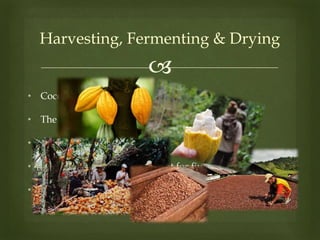
• Cocoa farms.
• The beans are the raw material.
• Each cocoa fruit has between 20 and 50 beans.
• The pulp is allowed to ferment for five to seven days.
• The fermenting and drying are the main reasons on the
price of cocoa.

Roasting
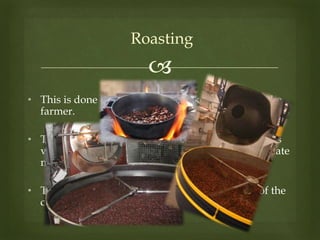
• This is done by the chocolate maker rather than the
farmer.
• The process and equipment used to roast the beans
vary considerably from chocolate maker to chocolate
maker.
• The exact temperature and roast time are part of the
chocolate maker’s (often secret) recipe.

Cracking & Winnowing
• The roasted cocoa beans have a thin.
• The beans are cracked open.
• And the shell is removed.
• Leaving behind pieces of pure cocoa bean, known as
“nibs”.

Grinding & Conching
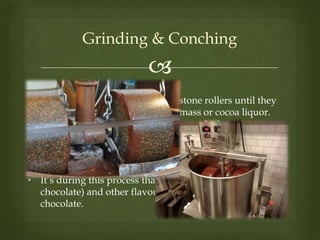
• The cocoa nibs are ground with stone rollers until they
become a paste known as cocoa mass or cocoa liquor.
• The cocoa mass is be transferred to a separate machine
called a conch.
• It’s during this process that sugar, milk powder (for milk
chocolate) and other flavourings are added to the
chocolate.

Conching
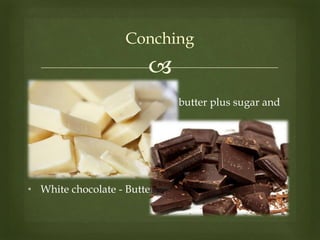
• Traditional chocolate - Cake; butter plus sugar and
milk.
• Dark chocolate - Cake; butter plus sugar without
milk.
• White chocolate - Butter plus milk and sugar.

Tempering
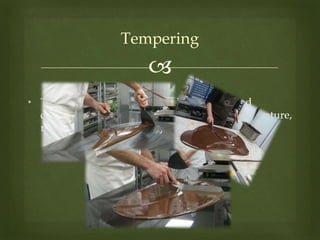
• The tempering machine will keep the melted
chocolate circulating at exactly the right temperature,
making the final step easier.

Moulding
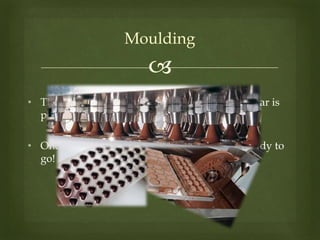
• The final step in making a finished chocolate bar is
pouring it into a mould.
• Once cooled, the chocolate is wrapped and ready to
go!

How chocolate is made

  • 1.
    We'll take youthrough the chocolate making process step-by-step.
  • 2.
     Harvesting, Fermenting &Drying • Cocoa farms. • The beans are the raw material. • Each cocoa fruit has between 20 and 50 beans. • The pulp is allowed to ferment for five to seven days. • The fermenting and drying are the main reasons on the price of cocoa.
  • 3.
     Roasting • This isdone by the chocolate maker rather than the farmer. • The process and equipment used to roast the beans vary considerably from chocolate maker to chocolate maker. • The exact temperature and roast time are part of the chocolate maker’s (often secret) recipe.
  • 4.
     Cracking & Winnowing •The roasted cocoa beans have a thin. • The beans are cracked open. • And the shell is removed. • Leaving behind pieces of pure cocoa bean, known as “nibs”.
  • 5.
     Grinding & Conching •The cocoa nibs are ground with stone rollers until they become a paste known as cocoa mass or cocoa liquor. • The cocoa mass is be transferred to a separate machine called a conch. • It’s during this process that sugar, milk powder (for milk chocolate) and other flavourings are added to the chocolate.
  • 6.
     Conching • Traditional chocolate- Cake; butter plus sugar and milk. • Dark chocolate - Cake; butter plus sugar without milk. • White chocolate - Butter plus milk and sugar.
  • 7.
     Tempering • The temperingmachine will keep the melted chocolate circulating at exactly the right temperature, making the final step easier.
  • 8.
     Moulding • The finalstep in making a finished chocolate bar is pouring it into a mould. • Once cooled, the chocolate is wrapped and ready to go!