Fudges-
Principles and Characteristic Features
Geetika K. Gopi
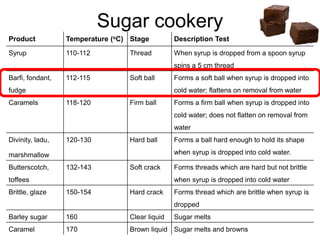
Sugar cookery
Product Temperature (oC) Stage Description Test
Syrup 110-112 Thread When syrup is dropped from a spoon syrup
spins a 5 cm thread
Barfi, fondant,
fudge
112-115 Soft ball Forms a soft ball when syrup is dropped into
cold water; flattens on removal from water
Caramels 118-120 Firm ball Forms a firm ball when syrup is dropped into
cold water; does not flatten on removal from
water
Divinity, ladu,
marshmallow
120-130 Hard ball Forms a ball hard enough to hold its shape
when syrup is dropped into cold water.
Butterscotch,
toffees
132-143 Soft crack Forms threads which are hard but not brittle
when syrup is dropped into cold water
Brittle, glaze 150-154 Hard crack Forms thread which are brittle when syrup is
dropped
Barley sugar 160 Clear liquid Sugar melts
Caramel 170 Brown liquid Sugar melts and browns
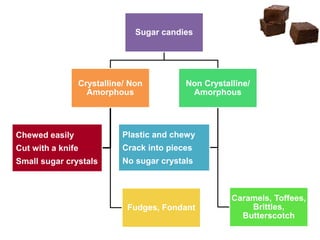
Sugar candies
Crystalline/ Non
Amorphous
Fudges, Fondant
Chewed easily
Cut with a knife
Small sugar crystals
Non Crystalline/
Amorphous
Caramels, Toffees,
Brittles,
Butterscotch
Plastic and chewy
Crack into pieces
No sugar crystals
What is a fudge?
• Fudge is a crystalline candy….Crystal
formation is desirable
• Tiny micro crystals in fudge are what give it
the firm but smooth texture.
• It is usually made from
milk
butter
unsweetened chocolate
about 85% sugar
• And cooked till 115°C
• End point separates fudge from caramel
[118-120°C]
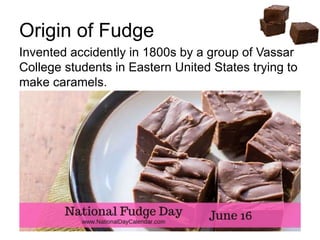
Origin of Fudge
Invented accidently in 1800s by a group of Vassar
College students in Eastern United States trying to
make caramels.
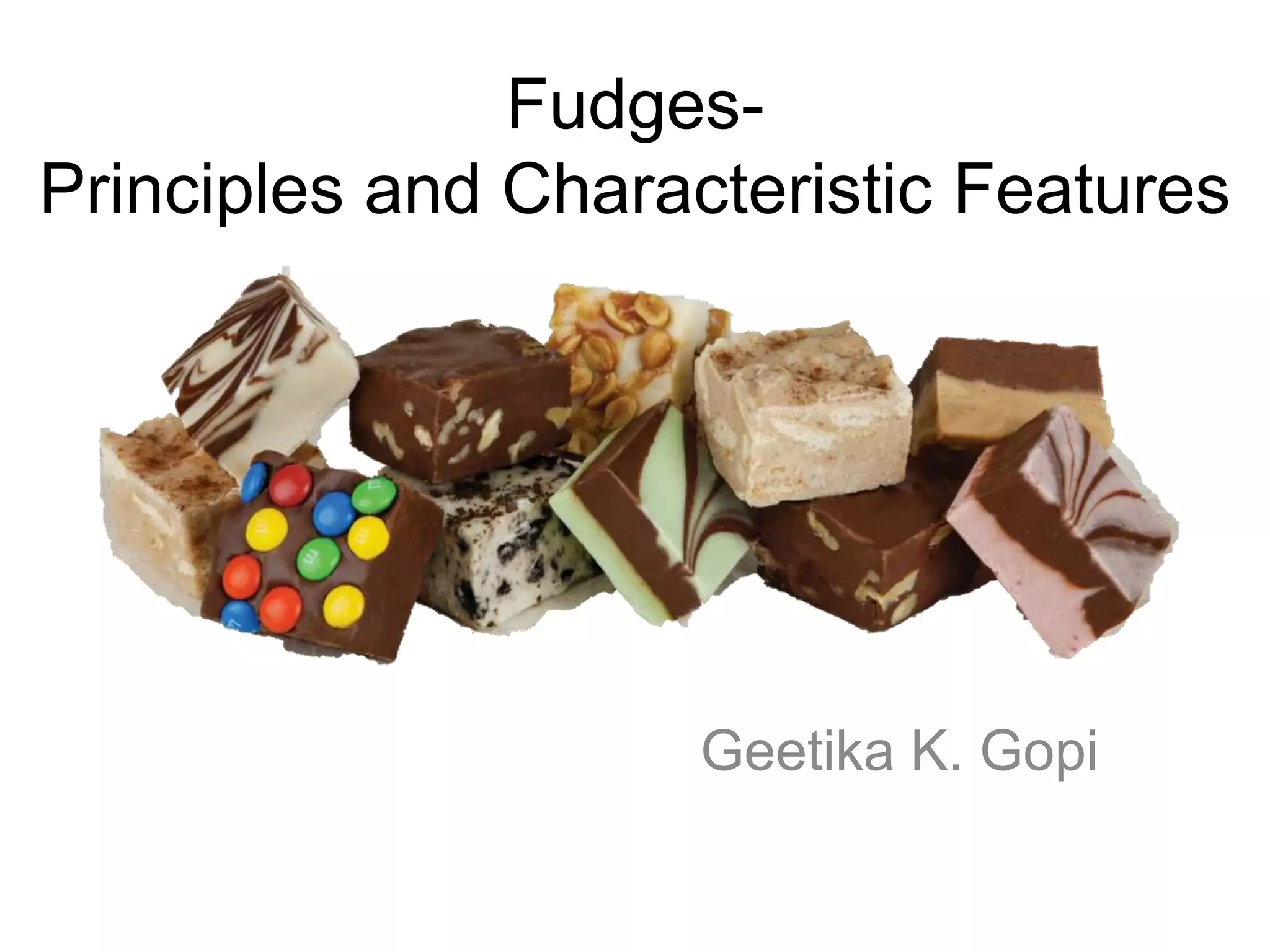
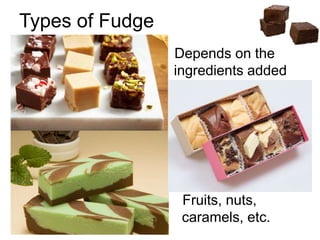
Types of Fudge
Depends on the
ingredients added
Fruits, nuts,
caramels, etc.
Ingredients
• Chocolate is the usual base, fudges are often made
with marshmallow cream, peanut butter, vanilla,
maple, or butterscotch
• Often sour cream is substituted for milk and butter,
and nut meats or raisins may be stirred into the
fudge
• Other common additives include marshmallow fluff
or crème, vanilla, and chopped nuts
Variously flavoured fudges are used as cake icings
and ice cream toppings
Characteristics of a Fudge
• Appearance: chocolate colour, dull
• Consistency: firm, not soft or syrupy, not
hard, brittle or crumbly
• Texture: smooth, not grainy, not lumpy
• Flavour: well blended chocolate, not too
sweet, not strong
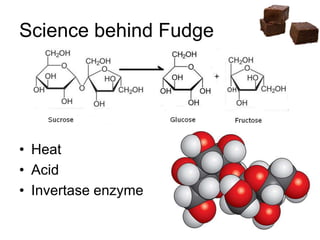
Science behind Fudge
• Heat
• Acid
• Invertase enzyme
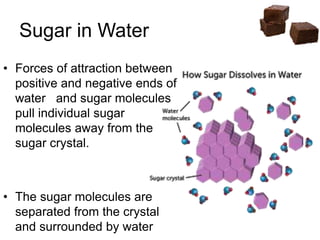
• Forces of attraction between
positive and negative ends of
water and sugar molecules
pull individual sugar
molecules away from the
sugar crystal.
• The sugar molecules are
separated from the crystal
and surrounded by water
Sugar in Water
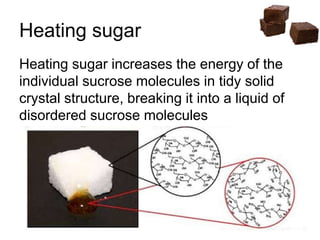
Heating sugar increases the energy of the
individual sucrose molecules in tidy solid
crystal structure, breaking it into a liquid of
disordered sucrose molecules
Heating sugar
Cooking
• As water evaporates, sucrose starts to
crystallise
• For fudge…. Crystallisation should be
controlled
• Too many crystals…. Grittiness… Grainy
fudge
• Syrup reaches saturation
Crystal formation
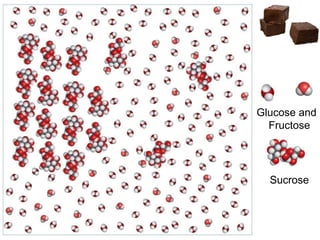
• Glucose and fructose surround the
sucrose and prevent sucrose molecules
from joining together
• Use of
corn syrup or other sources of sucrose
butter
• …. keeps sucrose molecules from joining
• …. different sugars interfere with each
others crystallisation
Sucrose
Glucose and
Fructose
Cooling
• Heat till soft ball stage [112-115 °C] and
then cool, undisturbed
• Syrup reaches super saturation during
cooling to 46°C
• Tendency to crystallise is stronger
• Stirring
…. Increase seed crystal formation
…. Helps sucrose molecules to find each
other and crystallise
Crystals in Fudge
• Crystal growth follows Le Chatelier’s
Principle
• “When conditions are shifted inside a
system at equilibrium, the system will
respond in an attempt to restore
equilibrium”
• In fudges, during cooling, the decreasing
temperature of the sugar solution
provokes crystallization
Stirring when lukewarm
• Promote crystallisation throughout the
candy
• Many crystals form at once
• Crystals compete with each other for
sugar…. And hence cannot grow large
• Beating causes surface shine to disappear
Precautions
Reduce crystal formation
• wash down the sides of the pan with a wet
pastry brush or paper towel
• don't scrape the pan
• don't disturb the candy until it's cooled
• don't let anything fall into the cooling syrup
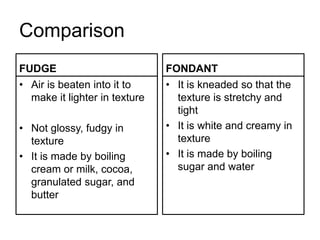
Comparison
FUDGE
• Air is beaten into it to
make it lighter in texture
• Not glossy, fudgy in
texture
• It is made by boiling
cream or milk, cocoa,
granulated sugar, and
butter
FONDANT
• It is kneaded so that the
texture is stretchy and
tight
• It is white and creamy in
texture
• It is made by boiling
sugar and water

Fudges- characteristic features and principles

  • 1.
    Fudges- Principles and CharacteristicFeatures Geetika K. Gopi
  • 2.
    Sugar cookery Product Temperature(oC) Stage Description Test Syrup 110-112 Thread When syrup is dropped from a spoon syrup spins a 5 cm thread Barfi, fondant, fudge 112-115 Soft ball Forms a soft ball when syrup is dropped into cold water; flattens on removal from water Caramels 118-120 Firm ball Forms a firm ball when syrup is dropped into cold water; does not flatten on removal from water Divinity, ladu, marshmallow 120-130 Hard ball Forms a ball hard enough to hold its shape when syrup is dropped into cold water. Butterscotch, toffees 132-143 Soft crack Forms threads which are hard but not brittle when syrup is dropped into cold water Brittle, glaze 150-154 Hard crack Forms thread which are brittle when syrup is dropped Barley sugar 160 Clear liquid Sugar melts Caramel 170 Brown liquid Sugar melts and browns
  • 3.
    Sugar candies Crystalline/ Non Amorphous Fudges,Fondant Chewed easily Cut with a knife Small sugar crystals Non Crystalline/ Amorphous Caramels, Toffees, Brittles, Butterscotch Plastic and chewy Crack into pieces No sugar crystals
  • 4.
    What is afudge? • Fudge is a crystalline candy….Crystal formation is desirable • Tiny micro crystals in fudge are what give it the firm but smooth texture. • It is usually made from milk butter unsweetened chocolate about 85% sugar • And cooked till 115°C • End point separates fudge from caramel [118-120°C]
  • 5.
    Origin of Fudge Inventedaccidently in 1800s by a group of Vassar College students in Eastern United States trying to make caramels.
  • 6.
    Types of Fudge Dependson the ingredients added Fruits, nuts, caramels, etc.
  • 7.
    Ingredients • Chocolate isthe usual base, fudges are often made with marshmallow cream, peanut butter, vanilla, maple, or butterscotch • Often sour cream is substituted for milk and butter, and nut meats or raisins may be stirred into the fudge • Other common additives include marshmallow fluff or crème, vanilla, and chopped nuts Variously flavoured fudges are used as cake icings and ice cream toppings
  • 8.
    Characteristics of aFudge • Appearance: chocolate colour, dull • Consistency: firm, not soft or syrupy, not hard, brittle or crumbly • Texture: smooth, not grainy, not lumpy • Flavour: well blended chocolate, not too sweet, not strong
  • 9.
    Science behind Fudge •Heat • Acid • Invertase enzyme
  • 10.
    • Forces ofattraction between positive and negative ends of water and sugar molecules pull individual sugar molecules away from the sugar crystal. • The sugar molecules are separated from the crystal and surrounded by water Sugar in Water
  • 11.
    Heating sugar increasesthe energy of the individual sucrose molecules in tidy solid crystal structure, breaking it into a liquid of disordered sucrose molecules Heating sugar
  • 12.
    Cooking • As waterevaporates, sucrose starts to crystallise • For fudge…. Crystallisation should be controlled • Too many crystals…. Grittiness… Grainy fudge • Syrup reaches saturation
  • 13.
    Crystal formation • Glucoseand fructose surround the sucrose and prevent sucrose molecules from joining together • Use of corn syrup or other sources of sucrose butter • …. keeps sucrose molecules from joining • …. different sugars interfere with each others crystallisation
  • 14.
  • 15.
    Cooling • Heat tillsoft ball stage [112-115 °C] and then cool, undisturbed • Syrup reaches super saturation during cooling to 46°C • Tendency to crystallise is stronger • Stirring …. Increase seed crystal formation …. Helps sucrose molecules to find each other and crystallise
  • 16.
    Crystals in Fudge •Crystal growth follows Le Chatelier’s Principle • “When conditions are shifted inside a system at equilibrium, the system will respond in an attempt to restore equilibrium” • In fudges, during cooling, the decreasing temperature of the sugar solution provokes crystallization
  • 17.
    Stirring when lukewarm •Promote crystallisation throughout the candy • Many crystals form at once • Crystals compete with each other for sugar…. And hence cannot grow large • Beating causes surface shine to disappear
  • 18.
    Precautions Reduce crystal formation •wash down the sides of the pan with a wet pastry brush or paper towel • don't scrape the pan • don't disturb the candy until it's cooled • don't let anything fall into the cooling syrup
  • 20.
    Comparison FUDGE • Air isbeaten into it to make it lighter in texture • Not glossy, fudgy in texture • It is made by boiling cream or milk, cocoa, granulated sugar, and butter FONDANT • It is kneaded so that the texture is stretchy and tight • It is white and creamy in texture • It is made by boiling sugar and water