Cacao pods
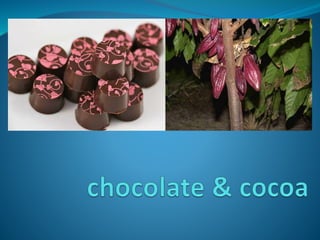
The fruit of a cacao tree is named as pods.
Inside a pod there are beans called cacao.
Inside a pod there are 40 beans. Chocolate in
made from the beans.
WHERE ARE CACAO TREE
GROWN?
Cacao trees used to grow in central America and
grown extensively in brazil, west indies and Sri
Lanka.
 The Brazilian beans are considered to be the
best.
The pods are 4-7 inches in diameter having thick
leathery rings containing 25-75 seeds inside in
rows.
PERCENTAGE COMPOSITION OF
COCOA BEAN
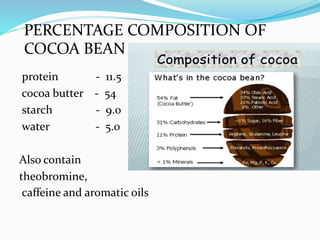
protein - 11.5
cocoa butter - 54
starch - 9.0
water - 5.0
Also contain
theobromine,
caffeine and aromatic oils
PROCESSING
Fermented beans
Under fermented
Partially fermented
Fully fermented
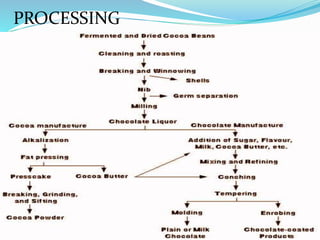
How Chocolate is Made
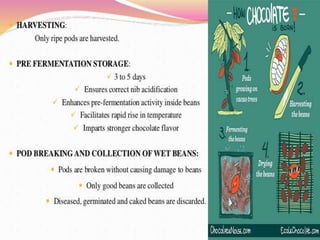
 Cocoa pods are harvested
 Pods are crushed and
fermented.
 Cocoa beans are taken out
from the pods and then
dried.
 Beans are roasted, graded,
and then ground.
 Grinding the beans creates
a liquid called chocolate
liquor.
 Chocolate liquor - made
mostly of fat called cocoa
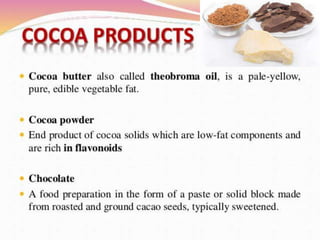
butter.
 Cocoa butter is extracted.
 Cocoa powder is also
created when beans are
ground.
 Process creates chocolate
liquor, cocoa powder, and
cocoa butter.
 Ingredients are blended
back together to create
different kinds of
chocolates.
Picture of Cocoa
PodsPicture of Cocoa Beans
Types of Chocolate
 Sweet Chocolate
• Contains no milk solids
• Cannot contain less than 15% chocolate liquor
 Dark Bittersweet Chocolate
• Contains the most chocolate liquor.
• It is sweet chocolate that cannot contain less than 35% chocolate
liquor.
 Semi Sweet Chocolate
• Similar to dark bittersweet chocolate.
 Baking Chocolate
• Contains no sweeteners and no milk.
Types of Chocolate
 Milk Chocolate
• Contains milk and sugar, which
differs from bittersweet and
semisweet chocolate.
• Cannot contain less than 12% milk
and cannot contain less than 10%
chocolate liquor.
 White Chocolate
• Technically not real chocolate
• Contains no chocolate liquor,
which is one of the main
ingredients in chocolate.
• It’s made of cocoa butter, milk,
and sugar.
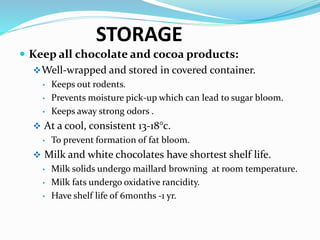
STORAGE
 Keep all chocolate and cocoa products:
Well-wrapped and stored in covered container.
• Keeps out rodents.
• Prevents moisture pick-up which can lead to sugar bloom.
• Keeps away strong odors .
 At a cool, consistent 13-18°c.
• To prevent formation of fat bloom.
 Milk and white chocolates have shortest shelf life.
• Milk solids undergo maillard browning at room temperature.
• Milk fats undergo oxidative rancidity.
• Have shelf life of 6months -1 yr.
Chocolate Facts
 Chocolate Consumption:
• Americans consume over 3.1 billion pounds of chocolate every year,
which is about 11.7 pounds per person.
• Milk Chocolate is the most popular among Americans, followed by
dark chocolate and then white chocolate.
 Chocolate contains more than 300 known chemicals.
• Flavanols
• Theobromine
• Caffeine
• Tyramine
• Pehnyletylamine
• Anandamide
 Chocolate is considered a mood food.
• Contains an amino acid called L-tryptophan. This increases
serotonin in the brain, which is a calming hormone.
• Said to be nature’s own “antidepressant.”
stimulants
antioxidants
Central nervous system stimulants
Potential Health Benefits
Chocolate may be good for the heart.
 Chocolate contains chemicals like those found in red
wine and green tea.
 Helps improve circulation
 Helps cut down blood pressure
 Chocolate contains flavanols.
 Helps in preventing the oxidations of “bad” cholesterol, which
reduces the stickiness of blood platelets and improve blood
vessel elasticity.
Theobromine, found in chocolate, was found to treat
coughs better than codeine.
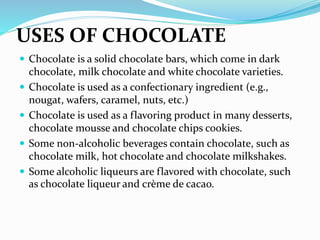
USES OF CHOCOLATE
 Chocolate is a solid chocolate bars, which come in dark
chocolate, milk chocolate and white chocolate varieties.
 Chocolate is used as a confectionary ingredient (e.g.,
nougat, wafers, caramel, nuts, etc.)
 Chocolate is used as a flavoring product in many desserts,
chocolate mousse and chocolate chips cookies.
 Some non-alcoholic beverages contain chocolate, such as
chocolate milk, hot chocolate and chocolate milkshakes.
 Some alcoholic liqueurs are flavored with chocolate, such
as chocolate liqueur and crème de cacao.
PERCENTAGE NUTRITIVE VALUE OF
COCOA AND CHOCOLATE
CONSTITUENTS COCOA CHOCOLATE
Water 4.6 5.9
Protein 21.6 12.9
Fat 28.6 48.7
Carbohydrates 37.7 30.0
Chocolate & cocoa

Chocolate & cocoa

  • 2.
    Cacao pods The fruitof a cacao tree is named as pods. Inside a pod there are beans called cacao. Inside a pod there are 40 beans. Chocolate in made from the beans.
  • 3.
    WHERE ARE CACAOTREE GROWN? Cacao trees used to grow in central America and grown extensively in brazil, west indies and Sri Lanka.  The Brazilian beans are considered to be the best. The pods are 4-7 inches in diameter having thick leathery rings containing 25-75 seeds inside in rows.
  • 4.
    PERCENTAGE COMPOSITION OF COCOABEAN protein - 11.5 cocoa butter - 54 starch - 9.0 water - 5.0 Also contain theobromine, caffeine and aromatic oils
  • 5.
  • 9.
  • 14.
    How Chocolate isMade  Cocoa pods are harvested  Pods are crushed and fermented.  Cocoa beans are taken out from the pods and then dried.  Beans are roasted, graded, and then ground.  Grinding the beans creates a liquid called chocolate liquor.  Chocolate liquor - made mostly of fat called cocoa butter.  Cocoa butter is extracted.  Cocoa powder is also created when beans are ground.  Process creates chocolate liquor, cocoa powder, and cocoa butter.  Ingredients are blended back together to create different kinds of chocolates. Picture of Cocoa PodsPicture of Cocoa Beans
  • 15.
    Types of Chocolate Sweet Chocolate • Contains no milk solids • Cannot contain less than 15% chocolate liquor  Dark Bittersweet Chocolate • Contains the most chocolate liquor. • It is sweet chocolate that cannot contain less than 35% chocolate liquor.  Semi Sweet Chocolate • Similar to dark bittersweet chocolate.  Baking Chocolate • Contains no sweeteners and no milk.
  • 16.
    Types of Chocolate Milk Chocolate • Contains milk and sugar, which differs from bittersweet and semisweet chocolate. • Cannot contain less than 12% milk and cannot contain less than 10% chocolate liquor.  White Chocolate • Technically not real chocolate • Contains no chocolate liquor, which is one of the main ingredients in chocolate. • It’s made of cocoa butter, milk, and sugar.
  • 17.
    STORAGE  Keep allchocolate and cocoa products: Well-wrapped and stored in covered container. • Keeps out rodents. • Prevents moisture pick-up which can lead to sugar bloom. • Keeps away strong odors .  At a cool, consistent 13-18°c. • To prevent formation of fat bloom.  Milk and white chocolates have shortest shelf life. • Milk solids undergo maillard browning at room temperature. • Milk fats undergo oxidative rancidity. • Have shelf life of 6months -1 yr.
  • 18.
    Chocolate Facts  ChocolateConsumption: • Americans consume over 3.1 billion pounds of chocolate every year, which is about 11.7 pounds per person. • Milk Chocolate is the most popular among Americans, followed by dark chocolate and then white chocolate.  Chocolate contains more than 300 known chemicals. • Flavanols • Theobromine • Caffeine • Tyramine • Pehnyletylamine • Anandamide  Chocolate is considered a mood food. • Contains an amino acid called L-tryptophan. This increases serotonin in the brain, which is a calming hormone. • Said to be nature’s own “antidepressant.” stimulants antioxidants Central nervous system stimulants
  • 19.
    Potential Health Benefits Chocolatemay be good for the heart.  Chocolate contains chemicals like those found in red wine and green tea.  Helps improve circulation  Helps cut down blood pressure  Chocolate contains flavanols.  Helps in preventing the oxidations of “bad” cholesterol, which reduces the stickiness of blood platelets and improve blood vessel elasticity. Theobromine, found in chocolate, was found to treat coughs better than codeine.
  • 20.
    USES OF CHOCOLATE Chocolate is a solid chocolate bars, which come in dark chocolate, milk chocolate and white chocolate varieties.  Chocolate is used as a confectionary ingredient (e.g., nougat, wafers, caramel, nuts, etc.)  Chocolate is used as a flavoring product in many desserts, chocolate mousse and chocolate chips cookies.  Some non-alcoholic beverages contain chocolate, such as chocolate milk, hot chocolate and chocolate milkshakes.  Some alcoholic liqueurs are flavored with chocolate, such as chocolate liqueur and crème de cacao.
  • 21.
    PERCENTAGE NUTRITIVE VALUEOF COCOA AND CHOCOLATE CONSTITUENTS COCOA CHOCOLATE Water 4.6 5.9 Protein 21.6 12.9 Fat 28.6 48.7 Carbohydrates 37.7 30.0