University of Chakwal, Pakistan
Department of zoology
PRESENTED BY: KINZA ASHRAF
REG NO: 20M-UOC/ZOL-47
BS ZOOLOGY
SESSION 2020-24
SUBJECT: ENDOCRINOLOGY
SUBMITTED TO: DR. SYEDA NADIAAHMAD
Topic: Abnormalities of Aldosterone Hormone.
Aldosterone
• Aldosterone is a
mineralocorticoid
hormone.
• produced in the
zona glomerulosa of
the adrenal cortex.
• that influences
water and salt
regulation in the
body(Scott et
al.,2017 al).
Fig.1.1: Aldosteronestructure
https://images.app.goo.gl/o2SLxNYjyNxjNahXA
Functions of Aldosterone Hormone
Fig.1.2: Functions of AldosteroneHormone.
https://images.app.goo.gl/rSZHtj5t65EeMPqG6
Hyperaldosteronism
• Having higher-than-normal
aldosterone levels is usually
considered
hyperaldosteronism.
• High aldosterone levels
cause elevated
1. sodium levels
(hypernatremia) and
2. low potassium levels
(hypokalemia)
Symptoms:
Symptoms of
hyperaldosteronism
overlapped partially with
the symptoms of sinusitis:
lethargy, dizziness, and
sinus pressure(Song et
al.,2021).
Conn’s Syndrome:
Fig.1.3 Conn’s Syndrome.
Syndrome.https://images.app.goo.gl/aDZHxgRFQk8q1t6e8
Hypoaldosteronism
• Having lower-than-normal
aldosterone levels is
usually considered
hypoaldosteronism.
• Low levels of aldosterone
result in low sodium levels
(hyponatremia), elevated
potassium levels
(hyperkalemia).
Symptoms:
Patients with aldosterone
defects typically present with
similar symptoms and findings,
which include failure to thrive,
vomiting, hyponatremia,
hyperkalemia and metabolic
acidosis (Turan et al., 2018).
Hyponatremia
Fig 1.4 Hyponatremia
https://images.app.goo.gl/MFWPJmrTmsBzVKb69
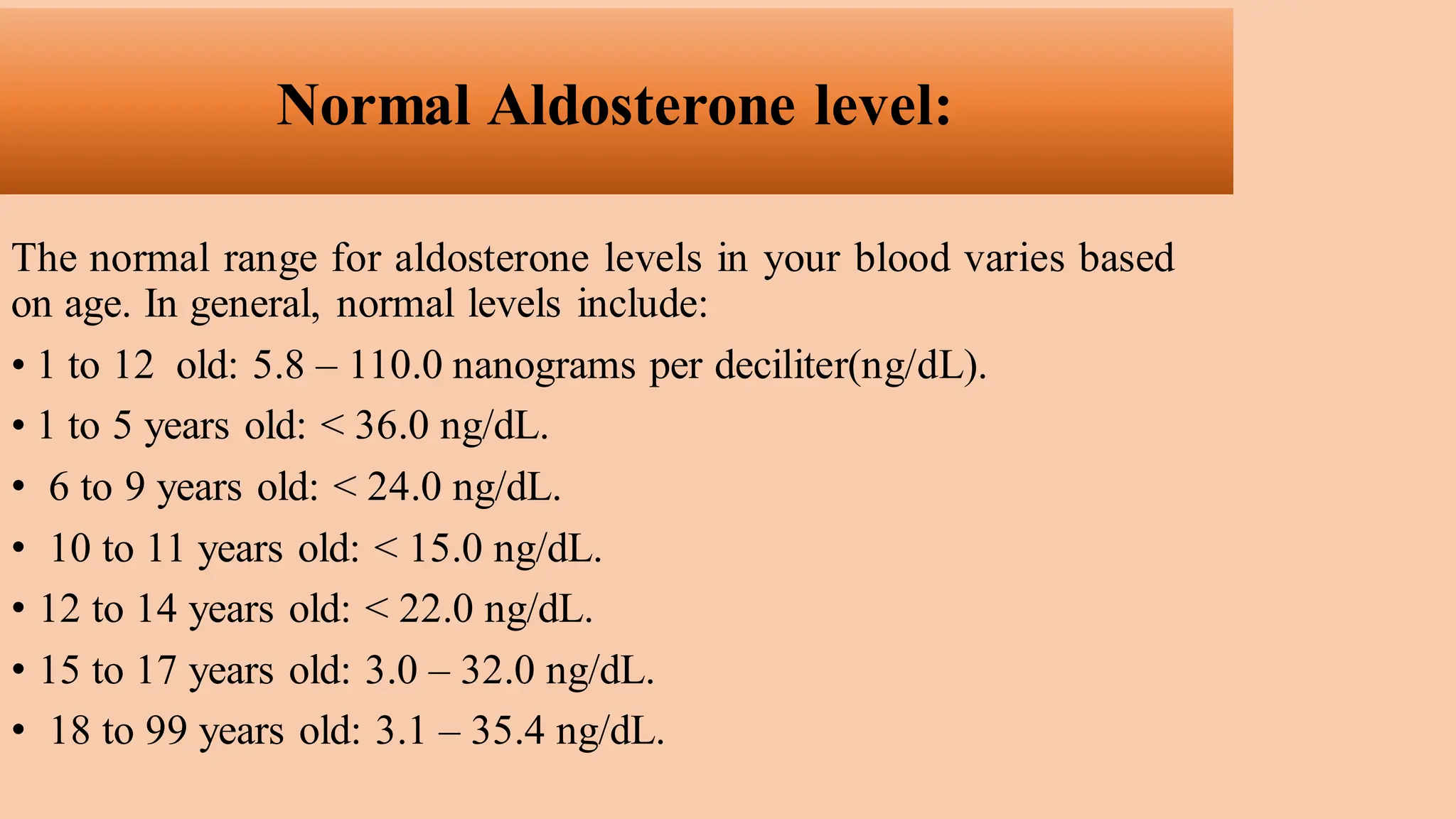
The normal range for aldosterone levels in your blood varies based
on age. In general, normal levels include:
• 1 to 12 old: 5.8 – 110.0 nanograms per deciliter(ng/dL).
• 1 to 5 years old: < 36.0 ng/dL.
• 6 to 9 years old: < 24.0 ng/dL.
• 10 to 11 years old: < 15.0 ng/dL.
• 12 to 14 years old: < 22.0 ng/dL.
• 15 to 17 years old: 3.0 – 32.0 ng/dL.
• 18 to 99 years old: 3.1 – 35.4 ng/dL.
Normal Aldosterone level:
Fig.1.5 HPA axis
https://images.app.goo.gl/WksPJC2qte5KPf7Y9
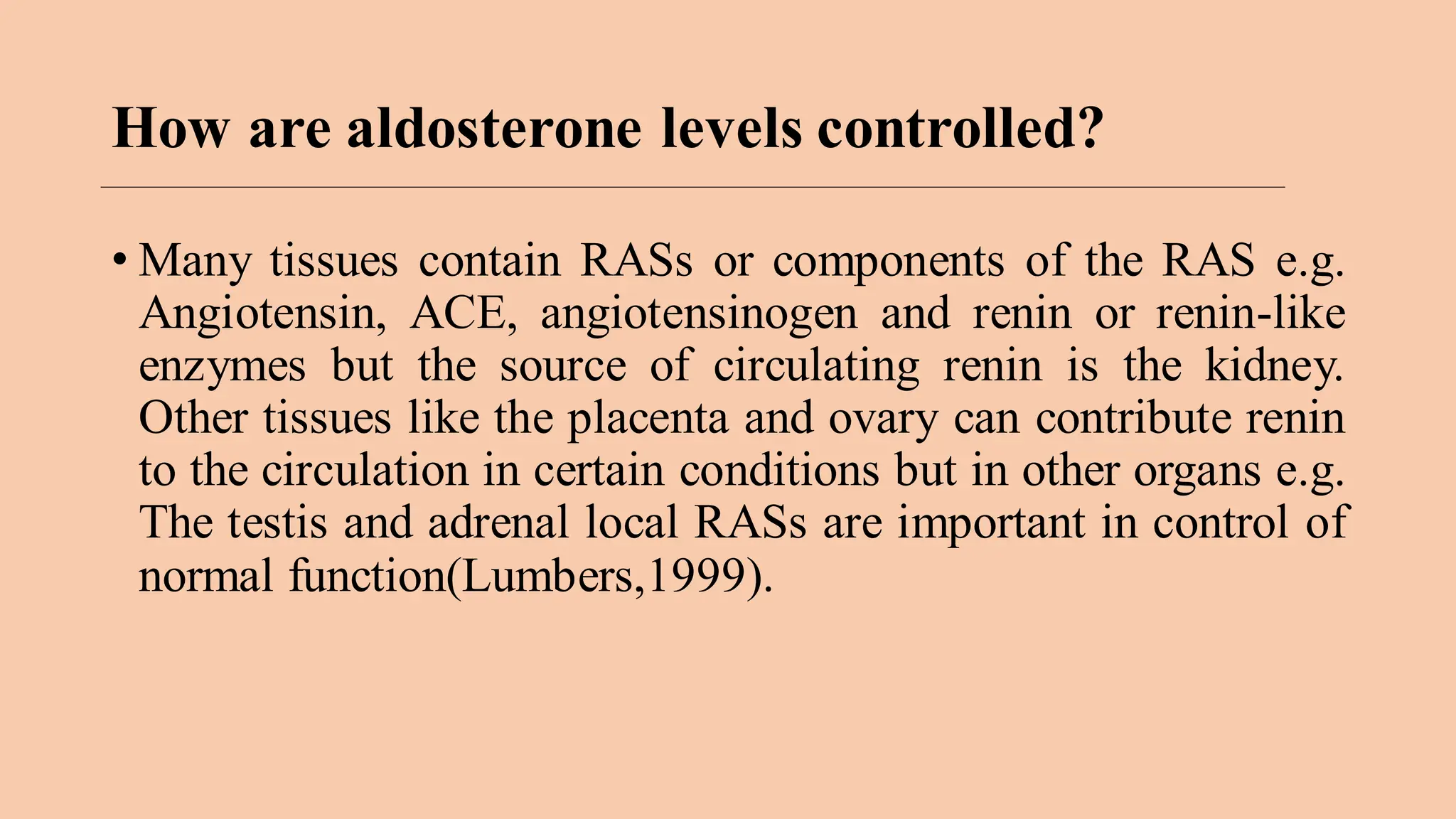
How are aldosterone levels controlled?
• Many tissues contain RASs or components of the RAS e.g.
Angiotensin, ACE, angiotensinogen and renin or renin-like
enzymes but the source of circulating renin is the kidney.
Other tissues like the placenta and ovary can contribute renin
to the circulation in certain conditions but in other organs e.g.
The testis and adrenal local RASs are important in control of
normal function(Lumbers,1999).
Fig.1.6 Hyperaldosteronism
https://images.app.goo.gl/Dwia3TMcEYWFz9dAA
What test measures aldosterone levels?
• The most common test healthcare providers use to assess possible
issues with aldosterone is the aldosterone: renin ratio test.
• To determine whether the calculated ratio of plasma aldosterone
concentration (PAC) to plasma renin activity (PRA), a proposed
screening test for primary aldosteronism, provides a renin-independent
measure of circulating aldosterone that is suitable to judge whether
PAC is inappropriately elevated relative to PRA(Montori et al.,2001).
References:
Scott, J. H., Menouar, M. A., & Dunn, R. J. (2017). Physiology, aldosterone.
Song, C., Wong, A., & Newman, M. (2021). M290 RECALCITRANT
RHINOSINUSITIS ASSOCIATED WITH PRIMARY
HYPERALDOSTERONISM. Annals of Allergy, Asthma & Immunology, 127(5),
S123.
Turan, I., Kotan, L. D., Tastan, M., Gurbuz, F., Topaloglu, A. K., & Yuksel, B.
(2018). Molecular genetic studies in a case series of isolated hypoaldosteronism due
to biosynthesis defects or aldosterone resistance. Clinical endocrinology, 88(6), 799-
805.
Lumbers, E. R. (1999). Angiotensin and aldosterone. Regulatory peptides, 80(3), 91-
100.
Montori, V. M., Schwartz, G. L., Chapman, A. B., Boerwinkle, E., & Turner, S. T.
(2001, September). Validity of the aldosterone-renin ratio used to screen for primary
aldosteronism. In Mayo Clinic Proceedings (Vol. 76, No. 9, pp. 877-882). Elsevier
Abnormalities of Aldosterone Hormone.pdf

Abnormalities of Aldosterone Hormone.pdf

  • 1.
  • 2.
    Department of zoology PRESENTEDBY: KINZA ASHRAF REG NO: 20M-UOC/ZOL-47 BS ZOOLOGY SESSION 2020-24 SUBJECT: ENDOCRINOLOGY SUBMITTED TO: DR. SYEDA NADIAAHMAD Topic: Abnormalities of Aldosterone Hormone.
  • 3.
    Aldosterone • Aldosterone isa mineralocorticoid hormone. • produced in the zona glomerulosa of the adrenal cortex. • that influences water and salt regulation in the body(Scott et al.,2017 al). Fig.1.1: Aldosteronestructure https://images.app.goo.gl/o2SLxNYjyNxjNahXA
  • 4.
    Functions of AldosteroneHormone Fig.1.2: Functions of AldosteroneHormone. https://images.app.goo.gl/rSZHtj5t65EeMPqG6
  • 5.
    Hyperaldosteronism • Having higher-than-normal aldosteronelevels is usually considered hyperaldosteronism. • High aldosterone levels cause elevated 1. sodium levels (hypernatremia) and 2. low potassium levels (hypokalemia) Symptoms: Symptoms of hyperaldosteronism overlapped partially with the symptoms of sinusitis: lethargy, dizziness, and sinus pressure(Song et al.,2021).
  • 6.
    Conn’s Syndrome: Fig.1.3 Conn’sSyndrome. Syndrome.https://images.app.goo.gl/aDZHxgRFQk8q1t6e8
  • 7.
    Hypoaldosteronism • Having lower-than-normal aldosteronelevels is usually considered hypoaldosteronism. • Low levels of aldosterone result in low sodium levels (hyponatremia), elevated potassium levels (hyperkalemia). Symptoms: Patients with aldosterone defects typically present with similar symptoms and findings, which include failure to thrive, vomiting, hyponatremia, hyperkalemia and metabolic acidosis (Turan et al., 2018).
  • 8.
  • 9.
    The normal rangefor aldosterone levels in your blood varies based on age. In general, normal levels include: • 1 to 12 old: 5.8 – 110.0 nanograms per deciliter(ng/dL). • 1 to 5 years old: < 36.0 ng/dL. • 6 to 9 years old: < 24.0 ng/dL. • 10 to 11 years old: < 15.0 ng/dL. • 12 to 14 years old: < 22.0 ng/dL. • 15 to 17 years old: 3.0 – 32.0 ng/dL. • 18 to 99 years old: 3.1 – 35.4 ng/dL. Normal Aldosterone level:
  • 10.
  • 11.
    How are aldosteronelevels controlled? • Many tissues contain RASs or components of the RAS e.g. Angiotensin, ACE, angiotensinogen and renin or renin-like enzymes but the source of circulating renin is the kidney. Other tissues like the placenta and ovary can contribute renin to the circulation in certain conditions but in other organs e.g. The testis and adrenal local RASs are important in control of normal function(Lumbers,1999).
  • 12.
  • 13.
    What test measuresaldosterone levels? • The most common test healthcare providers use to assess possible issues with aldosterone is the aldosterone: renin ratio test. • To determine whether the calculated ratio of plasma aldosterone concentration (PAC) to plasma renin activity (PRA), a proposed screening test for primary aldosteronism, provides a renin-independent measure of circulating aldosterone that is suitable to judge whether PAC is inappropriately elevated relative to PRA(Montori et al.,2001).
  • 14.
    References: Scott, J. H.,Menouar, M. A., & Dunn, R. J. (2017). Physiology, aldosterone. Song, C., Wong, A., & Newman, M. (2021). M290 RECALCITRANT RHINOSINUSITIS ASSOCIATED WITH PRIMARY HYPERALDOSTERONISM. Annals of Allergy, Asthma & Immunology, 127(5), S123. Turan, I., Kotan, L. D., Tastan, M., Gurbuz, F., Topaloglu, A. K., & Yuksel, B. (2018). Molecular genetic studies in a case series of isolated hypoaldosteronism due to biosynthesis defects or aldosterone resistance. Clinical endocrinology, 88(6), 799- 805. Lumbers, E. R. (1999). Angiotensin and aldosterone. Regulatory peptides, 80(3), 91- 100. Montori, V. M., Schwartz, G. L., Chapman, A. B., Boerwinkle, E., & Turner, S. T. (2001, September). Validity of the aldosterone-renin ratio used to screen for primary aldosteronism. In Mayo Clinic Proceedings (Vol. 76, No. 9, pp. 877-882). Elsevier