Hyperfunction
of
Adrenal Cortex
Hari sharan makaju
M.Sc Clinical biochemistry
PG Resident
Adrenocortical Hyperfunction
 Hyper function of the adrenal cortex produces clinical
syndromes of mineralocorticoid excess, glucocorticoid excess,
and androgen excess.
Hyperaldosteronism:
 A medical condition where too much aldosterone is produced
by the adrenal glands, which can lead to sodium retention
and potassium loss.
 Types:
 Primary hyperaldosteronism
 Secondary hyperaldosteronism
PRIMARY
HYPERALDOSTERONISM
 Also known as hyporeninemic hyperaldosteronism / Conn’s
Syndrome
 was first described in 1955 by Conn in conjunction with an
aldosterone-producing adrenal adenoma (APA)
 Characterized by autonomous excessive production of
aldosterone by adrenal glands
 Presents with :
hypertension ,
hypokalemic alkalosis
renal K+ wasting
PRIMARY
HYPERALDOSTERONISM
Causes:
 Aldosterone-producing adenoma (APA) ≈30% of cases
 Bilateral idiopathic hyperplasia (IHA) ≈60% of cases
 Unilateral (primary) adrenal hyperplasia ≈2% of cases
 Aldosterone-producing adrenocortical carcinoma <1 % of cases
 Familial hyperaldosteronism (FH)
 Glucocorticoid-remediable aldosteronism (FH type I) <1%of cases
 FH type II (APA or IHA) <6% of cases
 FH type III(germline KCNJ5 mutations)—<1% of cases
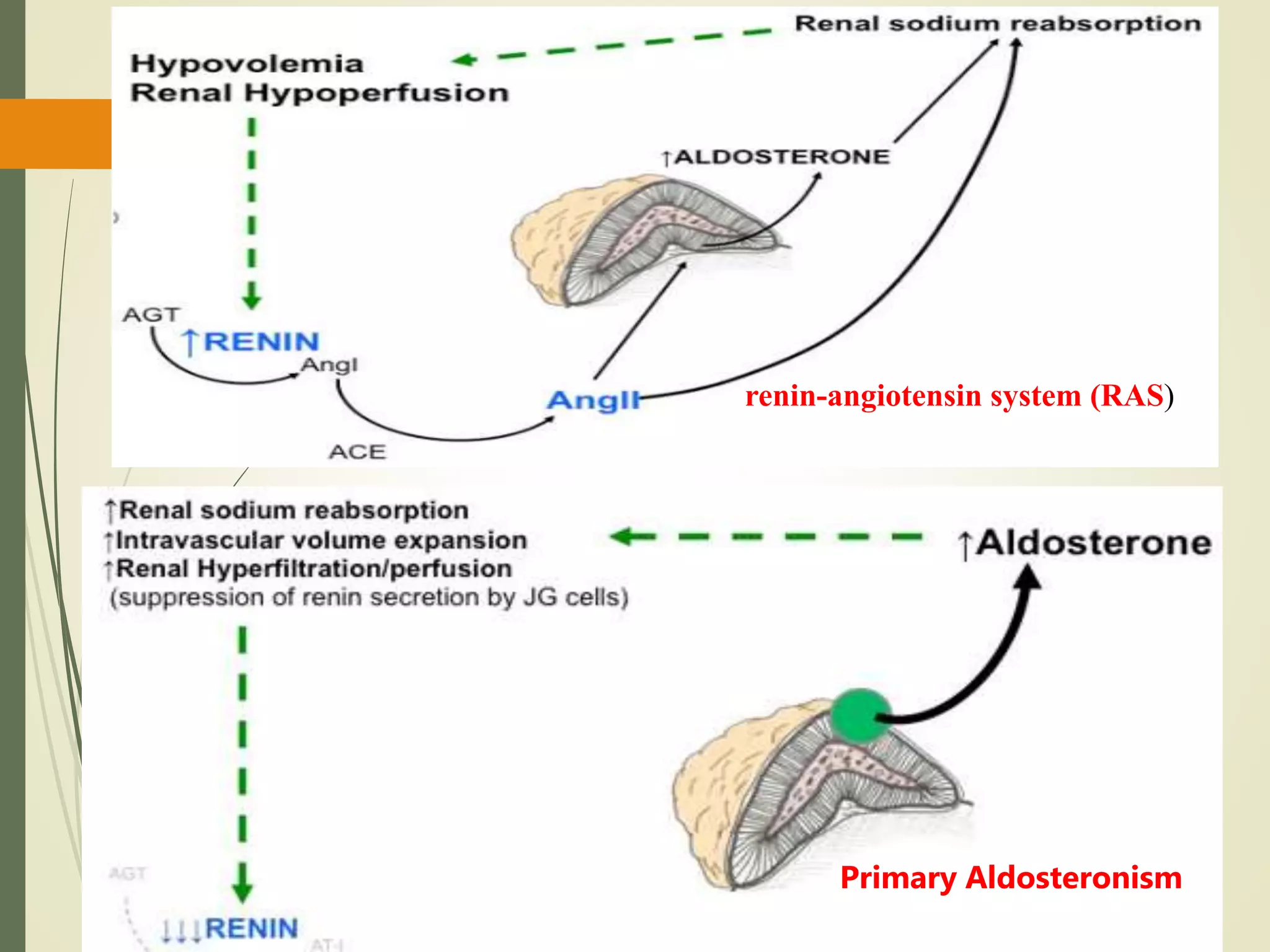
renin-angiotensin system (RAS)
Primary Aldosteronism
PRIMARY
HYPERALDOSTERONISM
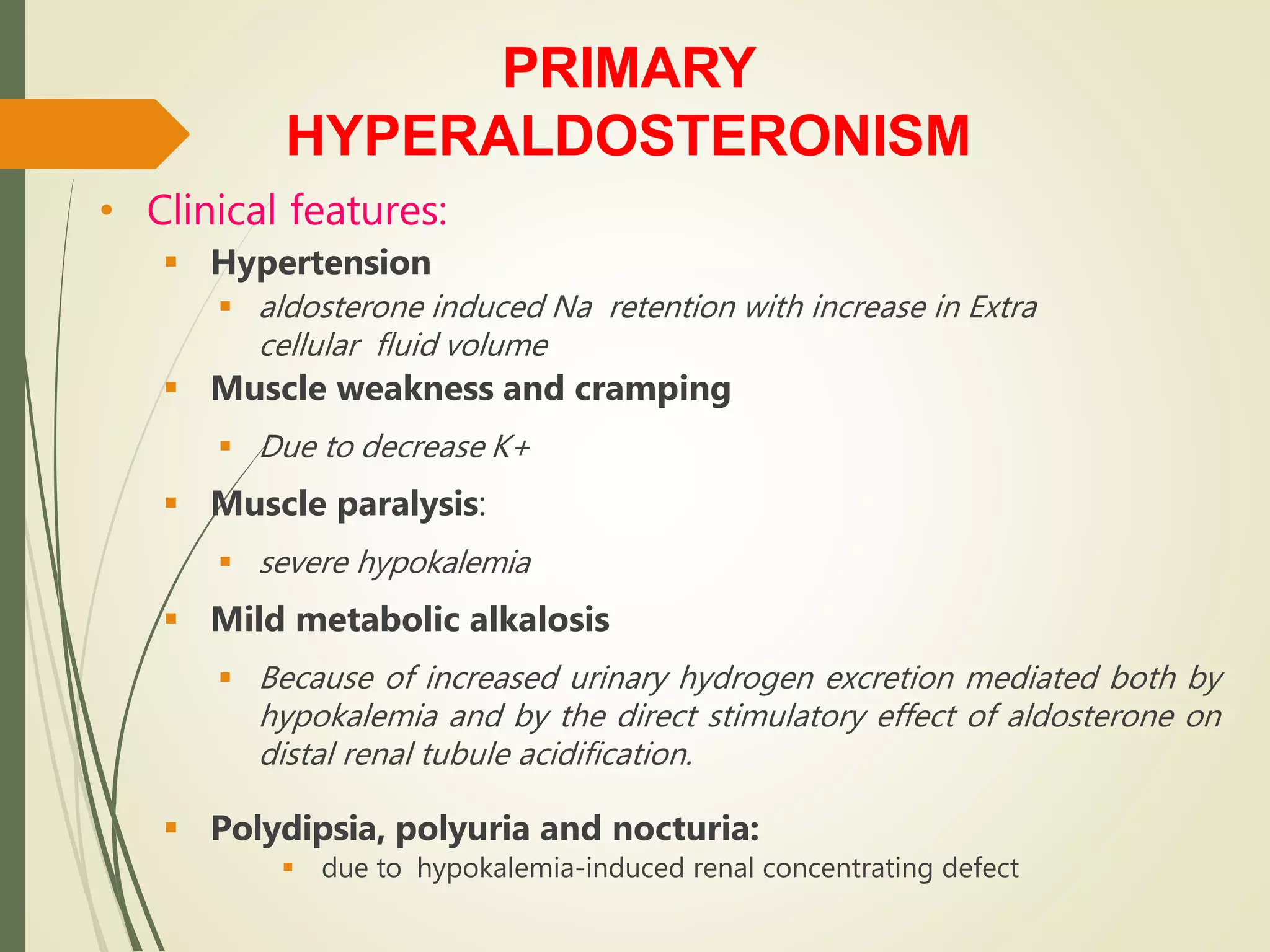
• Clinical features:
 Hypertension
 aldosterone induced Na retention with increase in Extra
cellular fluid volume
 Muscle weakness and cramping
 Due to decrease K+
 Muscle paralysis:
 severe hypokalemia
 Mild metabolic alkalosis
 Because of increased urinary hydrogen excretion mediated both by
hypokalemia and by the direct stimulatory effect of aldosterone on
distal renal tubule acidification.
 Polydipsia, polyuria and nocturia:
 due to hypokalemia-induced renal concentrating defect
PRIMARY
HYPERALDOSTERONISM
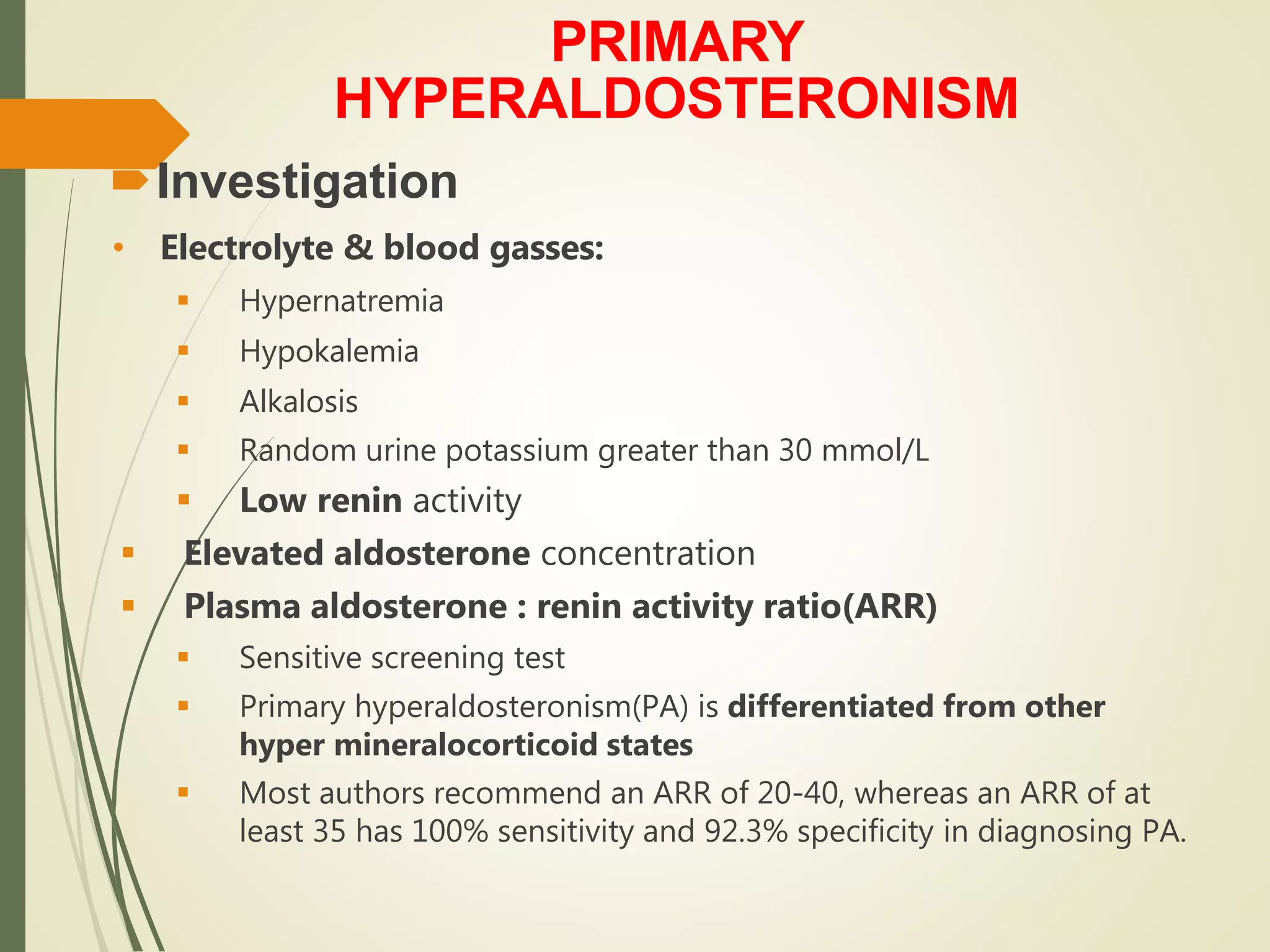
Investigation
• Electrolyte & blood gasses:
 Hypernatremia
 Hypokalemia
 Alkalosis
 Random urine potassium greater than 30 mmol/L
 Low renin activity
 Elevated aldosterone concentration
 Plasma aldosterone : renin activity ratio(ARR)
 Sensitive screening test
 Primary hyperaldosteronism(PA) is differentiated from other
hyper mineralocorticoid states
 Most authors recommend an ARR of 20-40, whereas an ARR of at
least 35 has 100% sensitivity and 92.3% specificity in diagnosing PA.
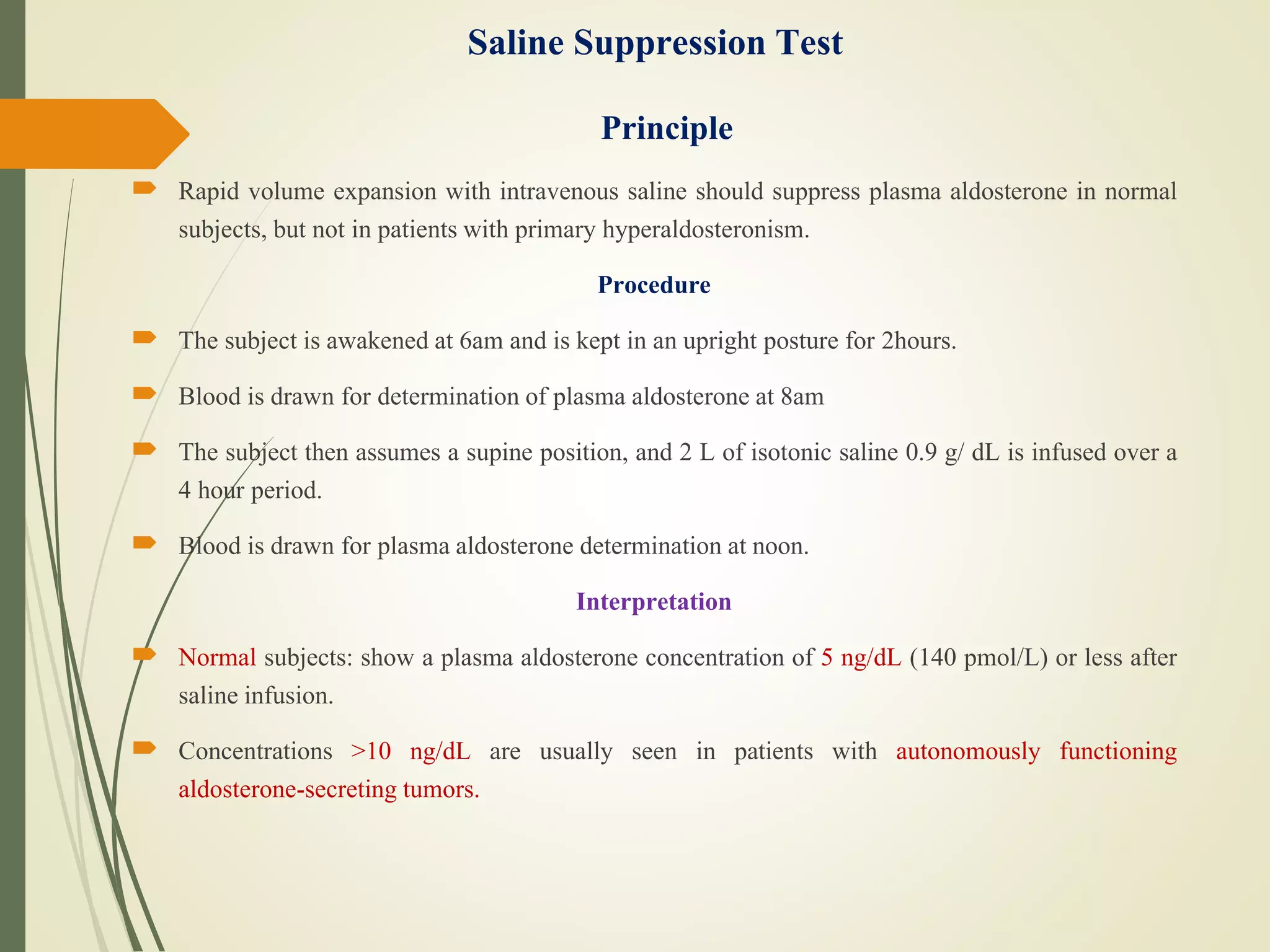
Saline Suppression Test
Principle
 Rapid volume expansion with intravenous saline should suppress plasma aldosterone in normal
subjects, but not in patients with primary hyperaldosteronism.
Procedure
 The subject is awakened at 6am and is kept in an upright posture for 2hours.
 Blood is drawn for determination of plasma aldosterone at 8am
 The subject then assumes a supine position, and 2 L of isotonic saline 0.9 g/ dL is infused over a
4 hour period.
 Blood is drawn for plasma aldosterone determination at noon.
Interpretation
 Normal subjects: show a plasma aldosterone concentration of 5 ng/dL (140 pmol/L) or less after
saline infusion.
 Concentrations >10 ng/dL are usually seen in patients with autonomously functioning
aldosterone-secreting tumors.
Adrenal venous sampling
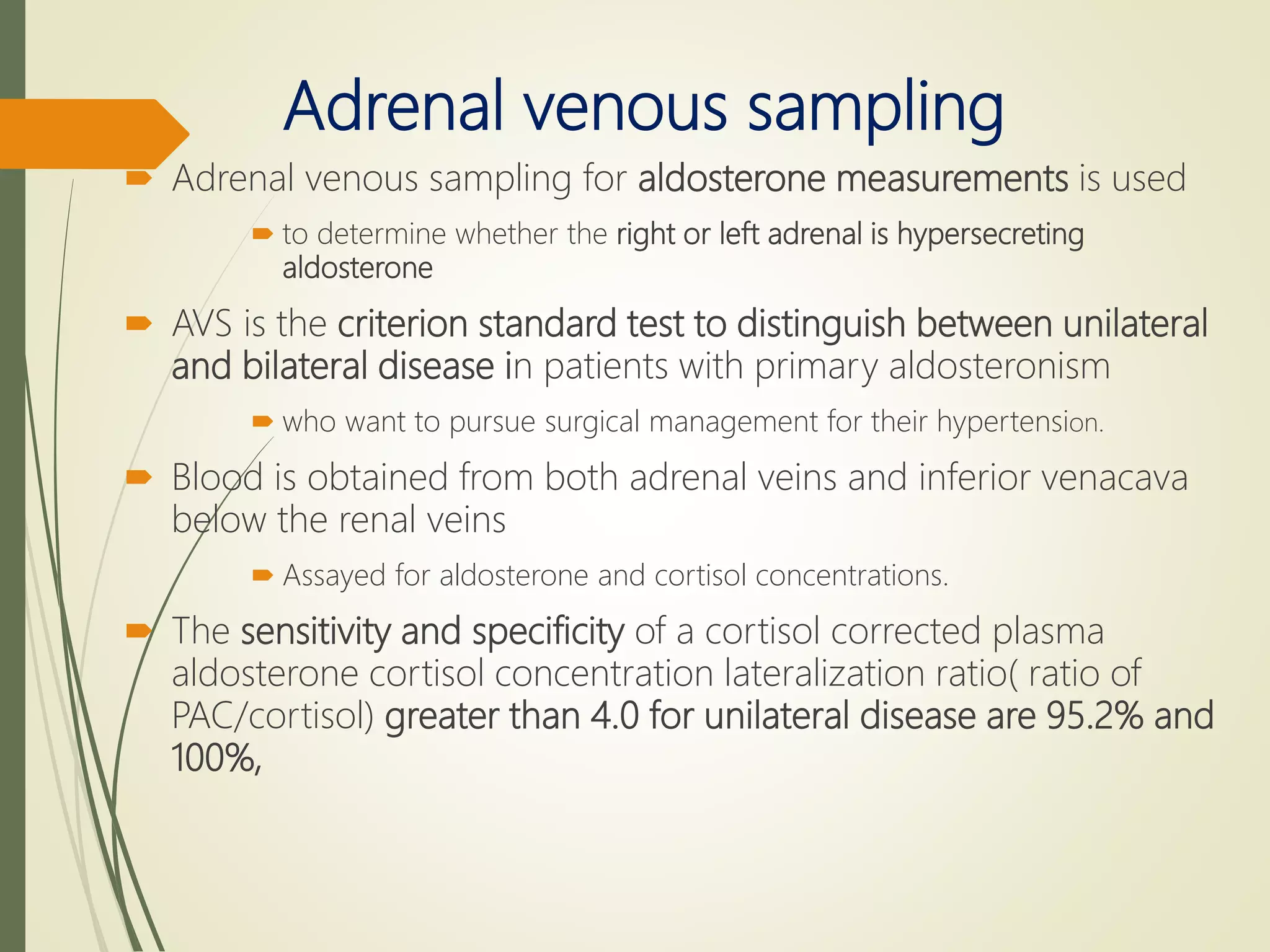
 Adrenal venous sampling for aldosterone measurements is used
 to determine whether the right or left adrenal is hypersecreting
aldosterone
 AVS is the criterion standard test to distinguish between unilateral
and bilateral disease in patients with primary aldosteronism
 who want to pursue surgical management for their hypertension.
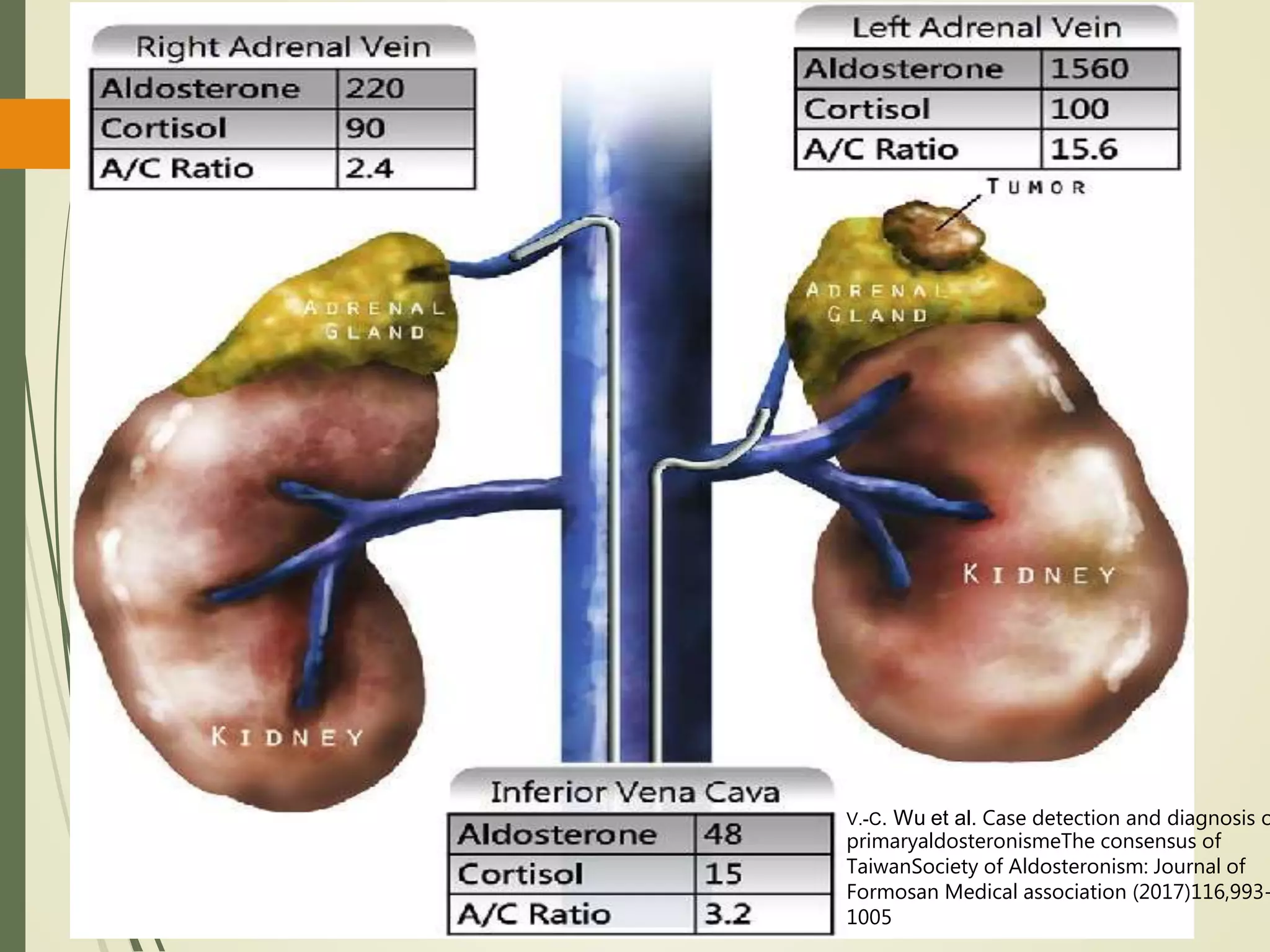
 Blood is obtained from both adrenal veins and inferior venacava
below the renal veins
 Assayed for aldosterone and cortisol concentrations.
 The sensitivity and specificity of a cortisol corrected plasma
aldosterone cortisol concentration lateralization ratio( ratio of
PAC/cortisol) greater than 4.0 for unilateral disease are 95.2% and
100%,
V.-C. Wu et al. Case detection and diagnosis o
primaryaldosteronismeThe consensus of
TaiwanSociety of Aldosteronism: Journal of
Formosan Medical association (2017)116,993-
1005
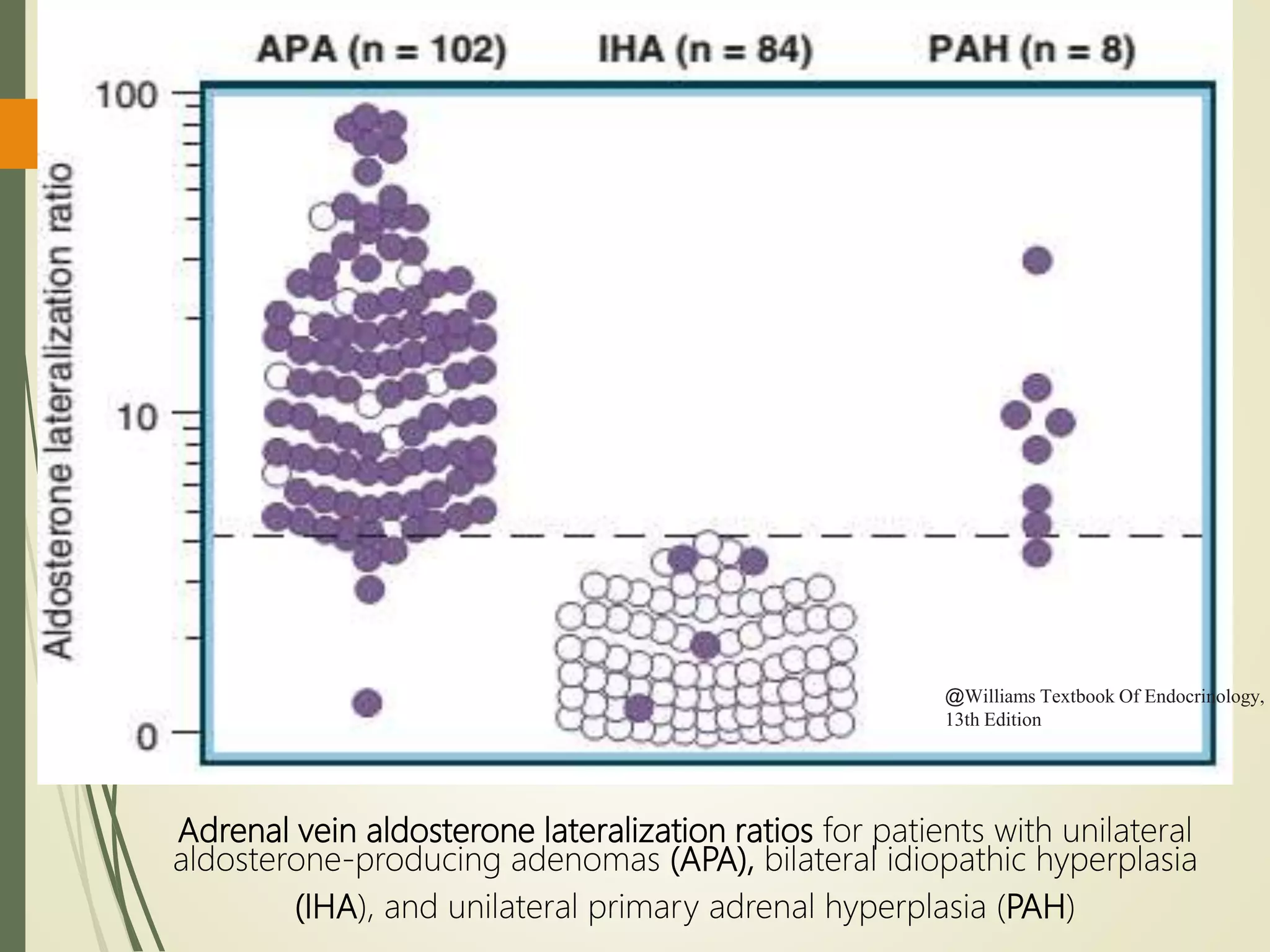
Adrenal vein aldosterone lateralization ratios for patients with unilateral
aldosterone-producing adenomas (APA), bilateral idiopathic hyperplasia
(IHA), and unilateral primary adrenal hyperplasia (PAH)
@Williams Textbook Of Endocrinology,
13th Edition
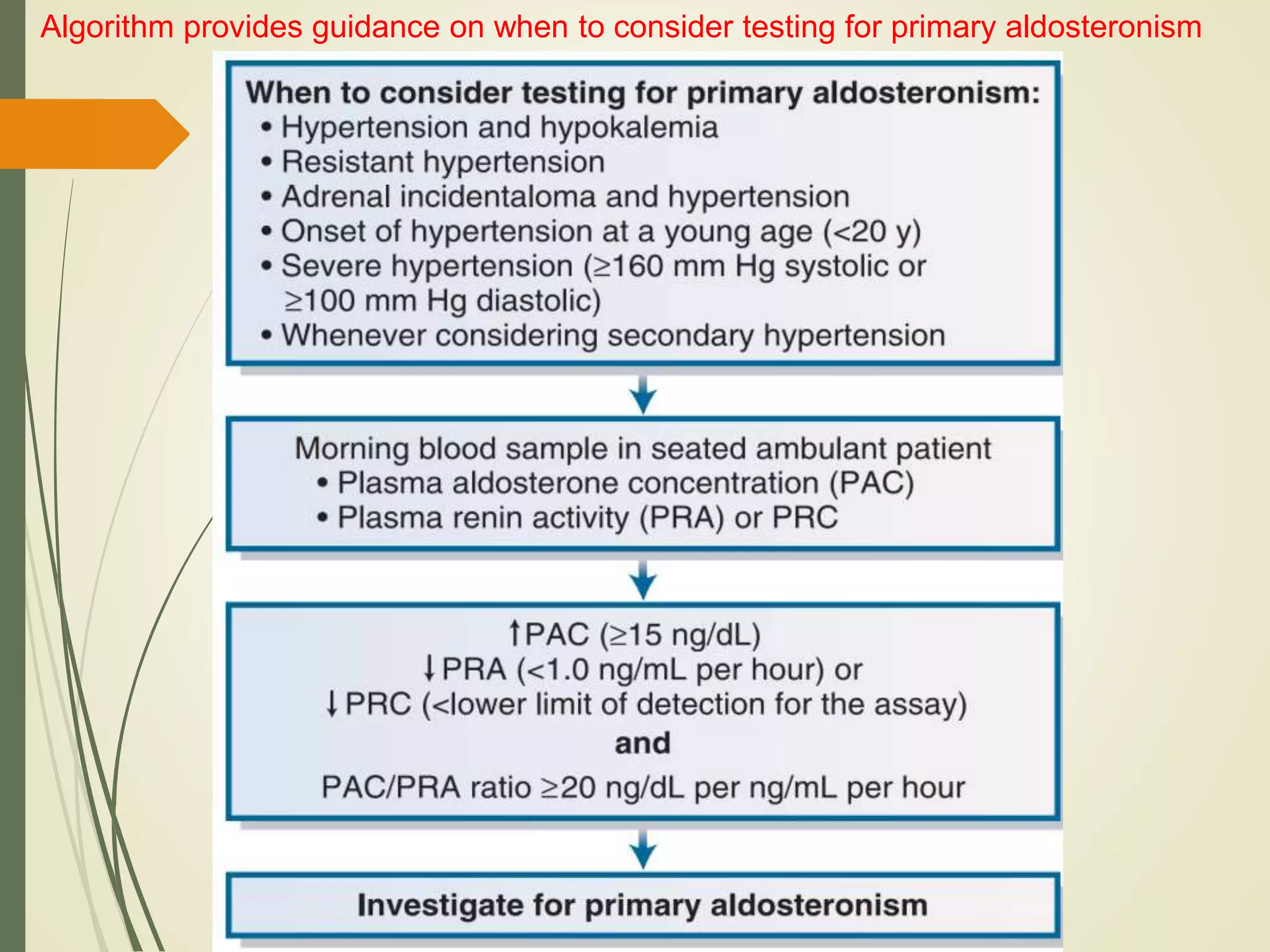
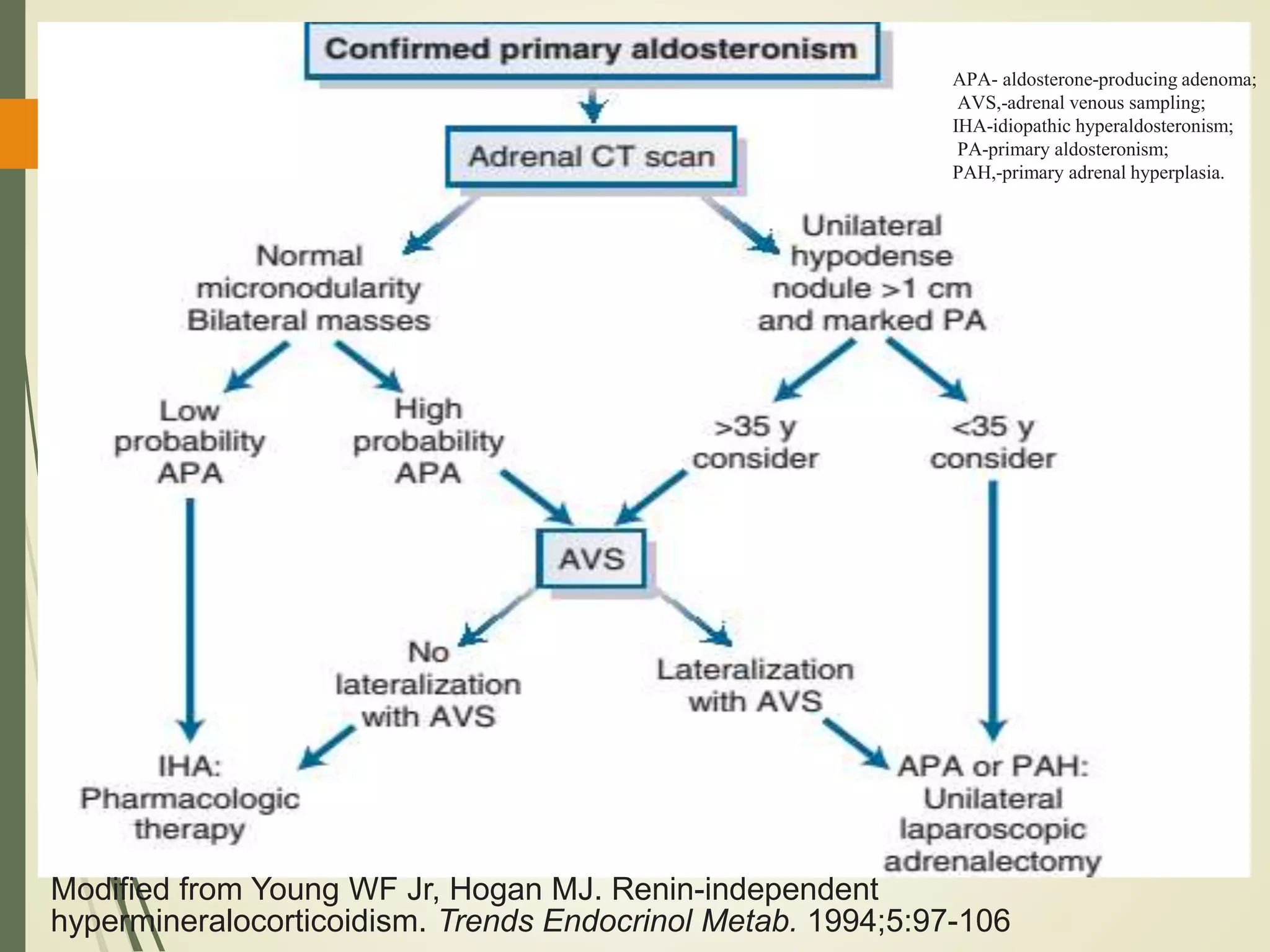
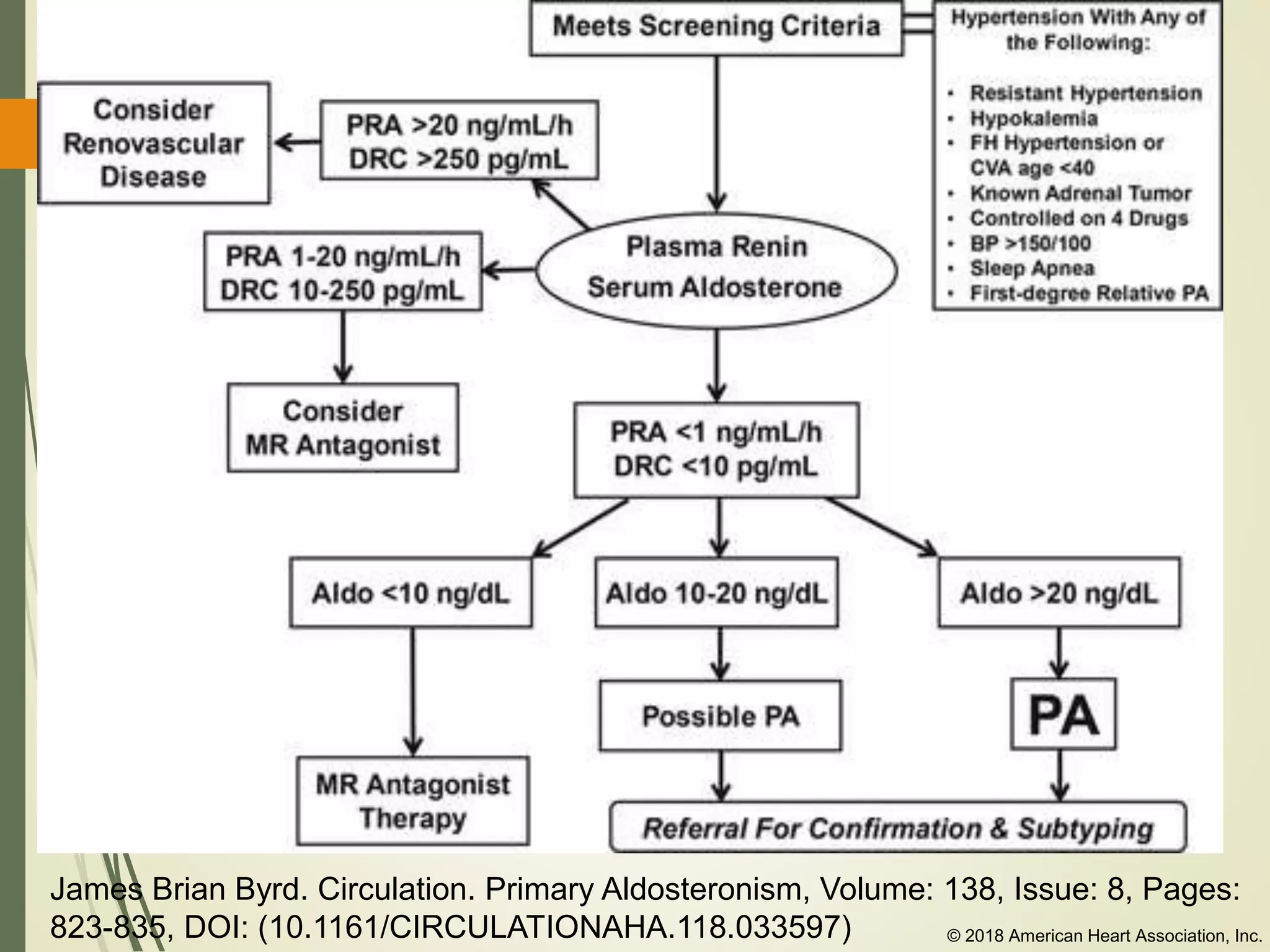
Algorithm provides guidance on when to consider testing for primary aldosteronism
Modified from Young WF Jr, Hogan MJ. Renin-independent
hypermineralocorticoidism. Trends Endocrinol Metab. 1994;5:97-106
APA- aldosterone-producing adenoma;
AVS,-adrenal venous sampling;
IHA-idiopathic hyperaldosteronism;
PA-primary aldosteronism;
PAH,-primary adrenal hyperplasia.
© 2018 American Heart Association, Inc.
James Brian Byrd. Circulation. Primary Aldosteronism, Volume: 138, Issue: 8, Pages:
823-835, DOI: (10.1161/CIRCULATIONAHA.118.033597)
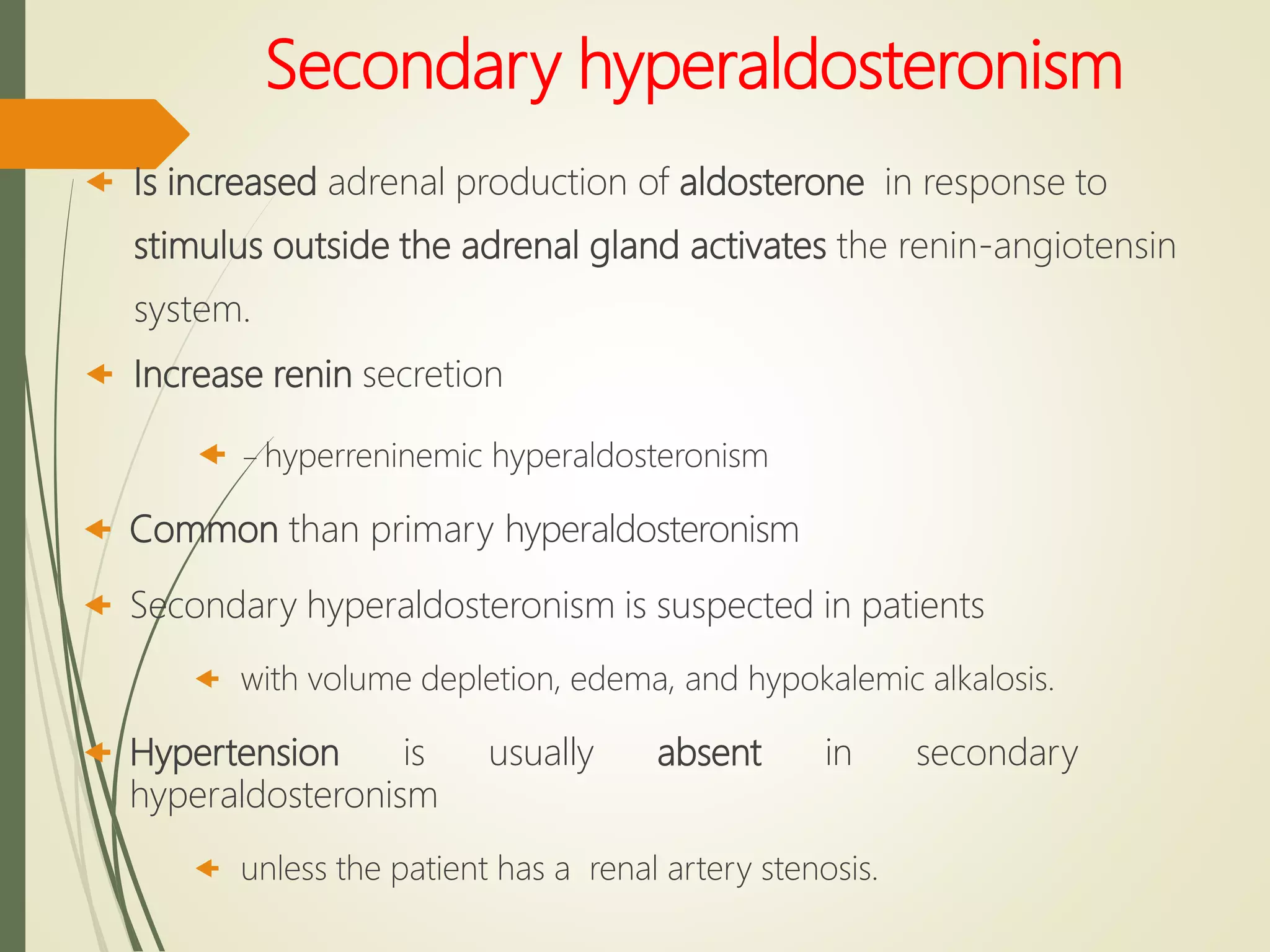
Secondary hyperaldosteronism
 Is increased adrenal production of aldosterone in response to
stimulus outside the adrenal gland activates the renin-angiotensin
system.
 Increase renin secretion
 – hyperreninemic hyperaldosteronism
 Common than primary hyperaldosteronism
 Secondary hyperaldosteronism is suspected in patients
 with volume depletion, edema, and hypokalemic alkalosis.
 Hypertension is usually absent in secondary
hyperaldosteronism
 unless the patient has a renal artery stenosis.
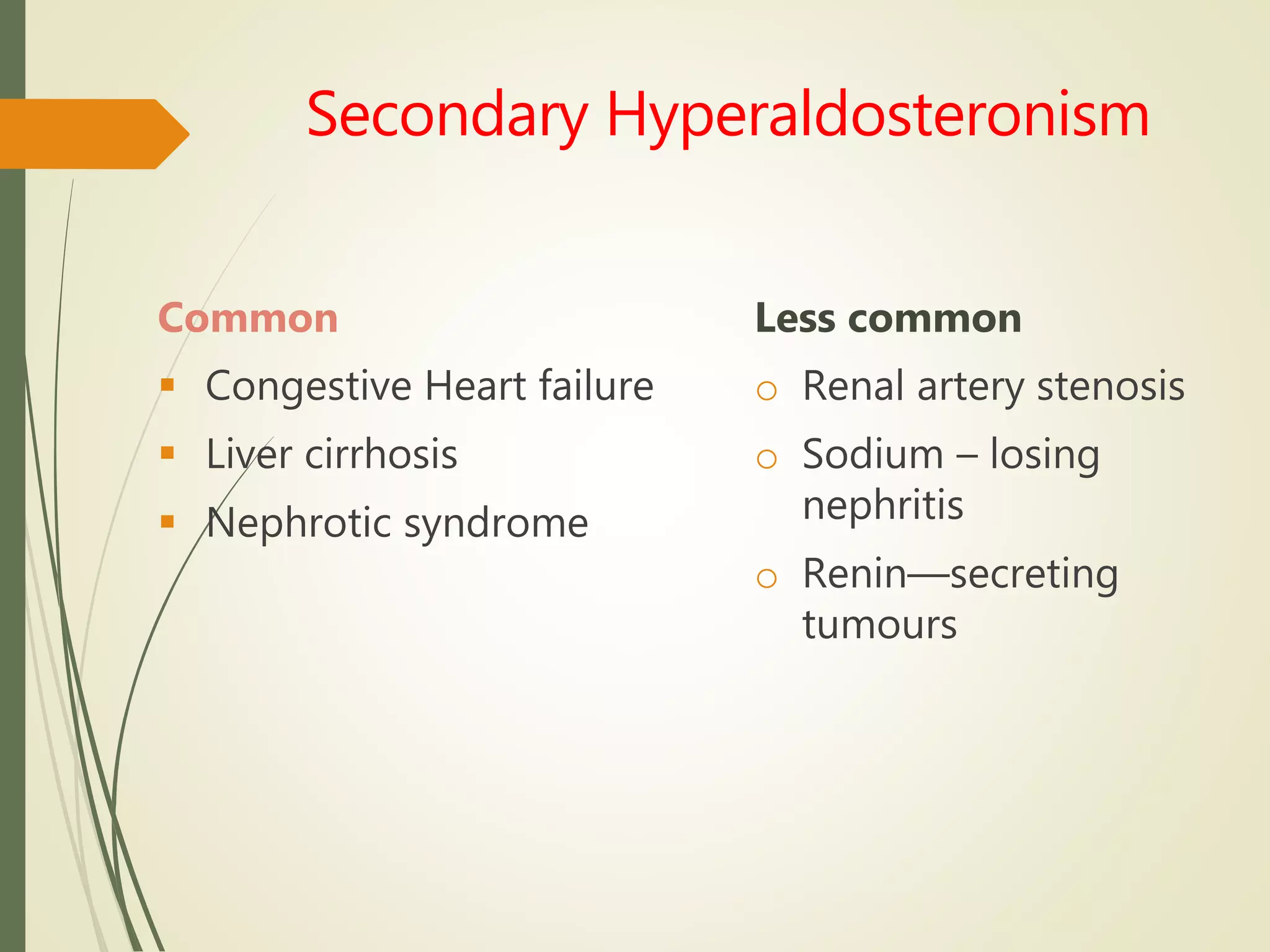
Secondary Hyperaldosteronism
Common
 Congestive Heart failure
 Liver cirrhosis
 Nephrotic syndrome
Less common
o Renal artery stenosis
o Sodium – losing
nephritis
o Renin—secreting
tumours
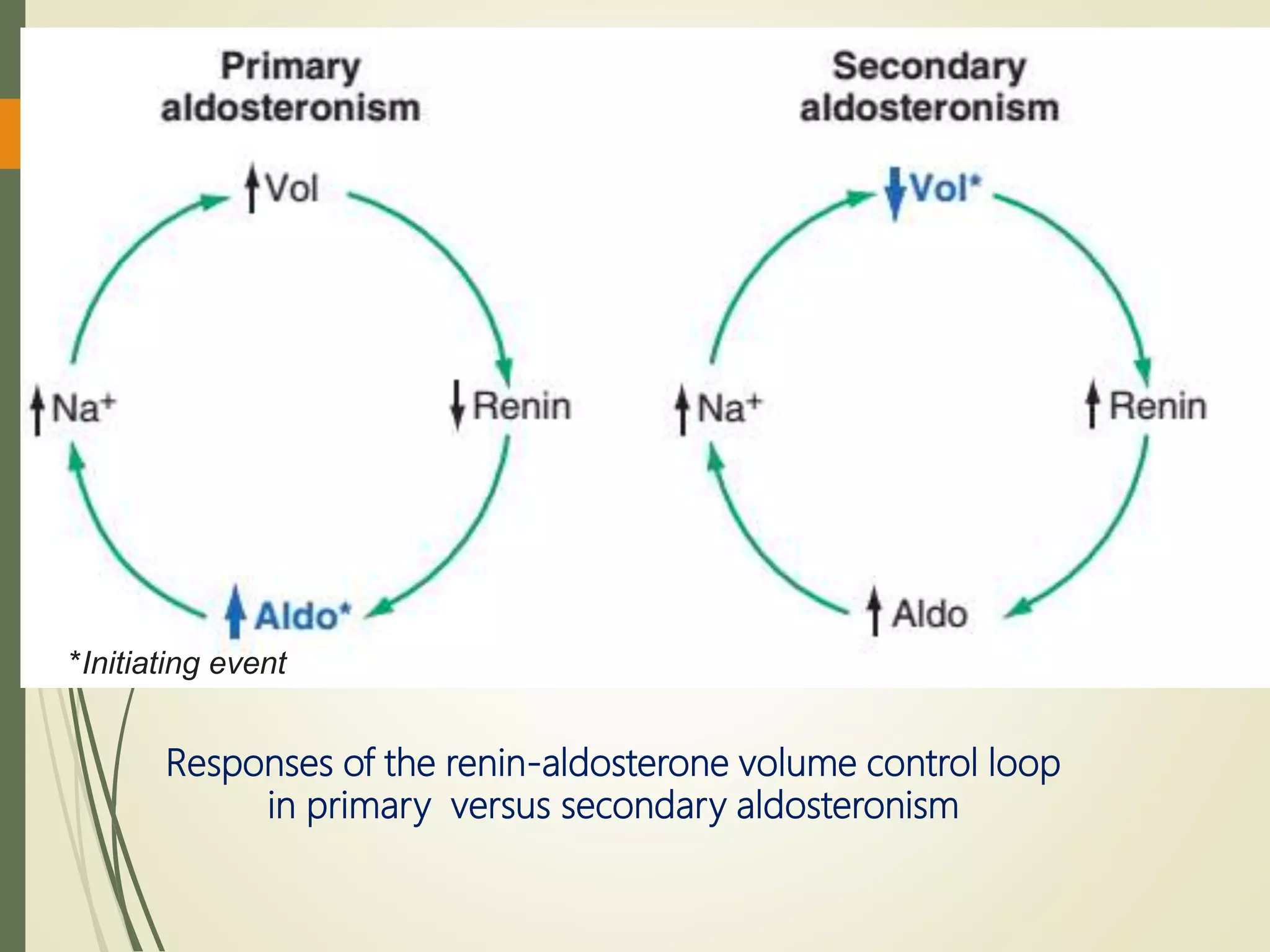
Responses of the renin-aldosterone volume control loop
in primary versus secondary aldosteronism
*Initiating event
Other Forms of
Mineralocorticoid Excess
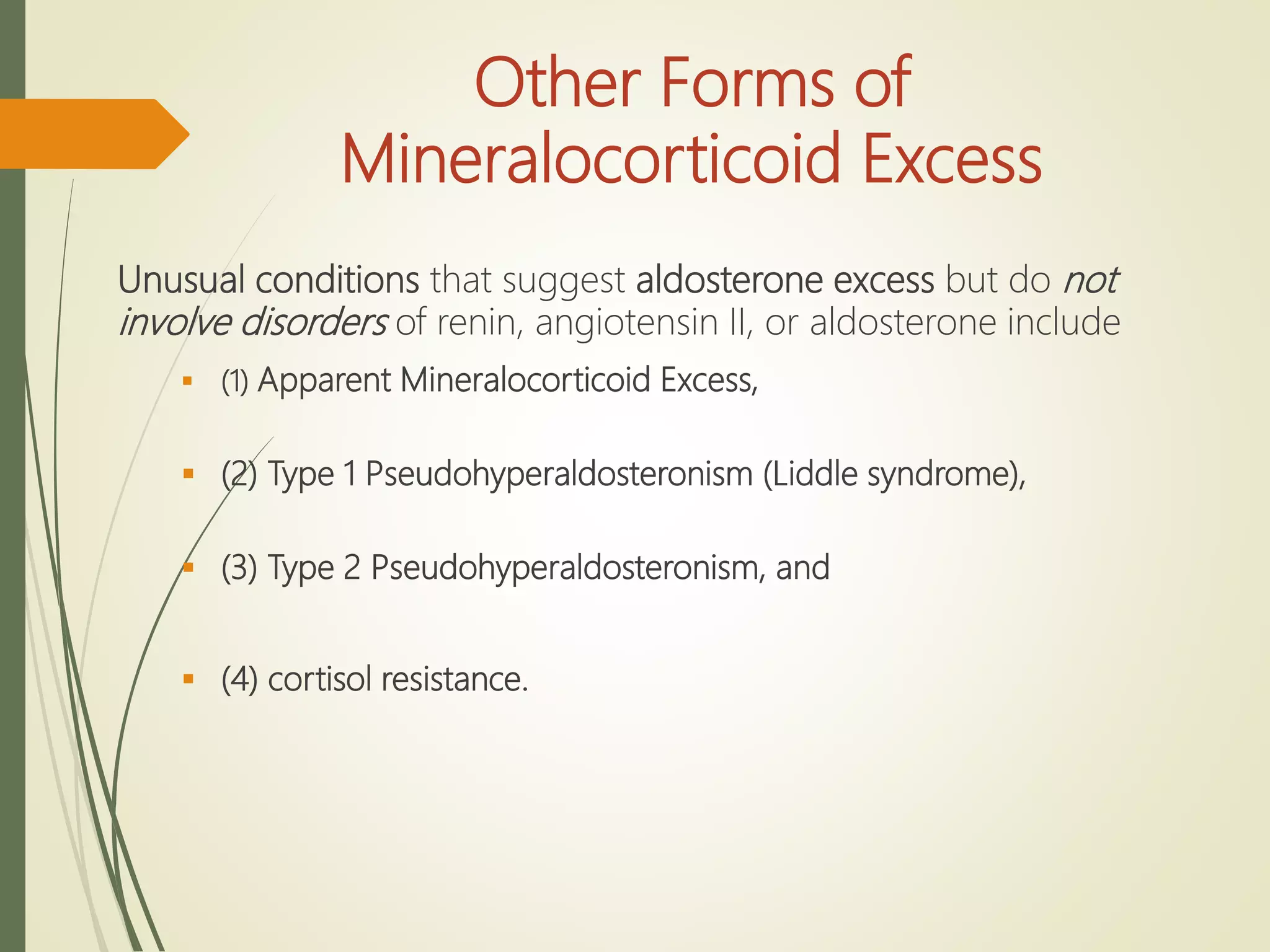
Unusual conditions that suggest aldosterone excess but do not
involve disorders of renin, angiotensin II, or aldosterone include
 (1) Apparent Mineralocorticoid Excess,
 (2) Type 1 Pseudohyperaldosteronism (Liddle syndrome),
 (3) Type 2 Pseudohyperaldosteronism, and
 (4) cortisol resistance.
Apparent mineralocorticoid
excess (AME)
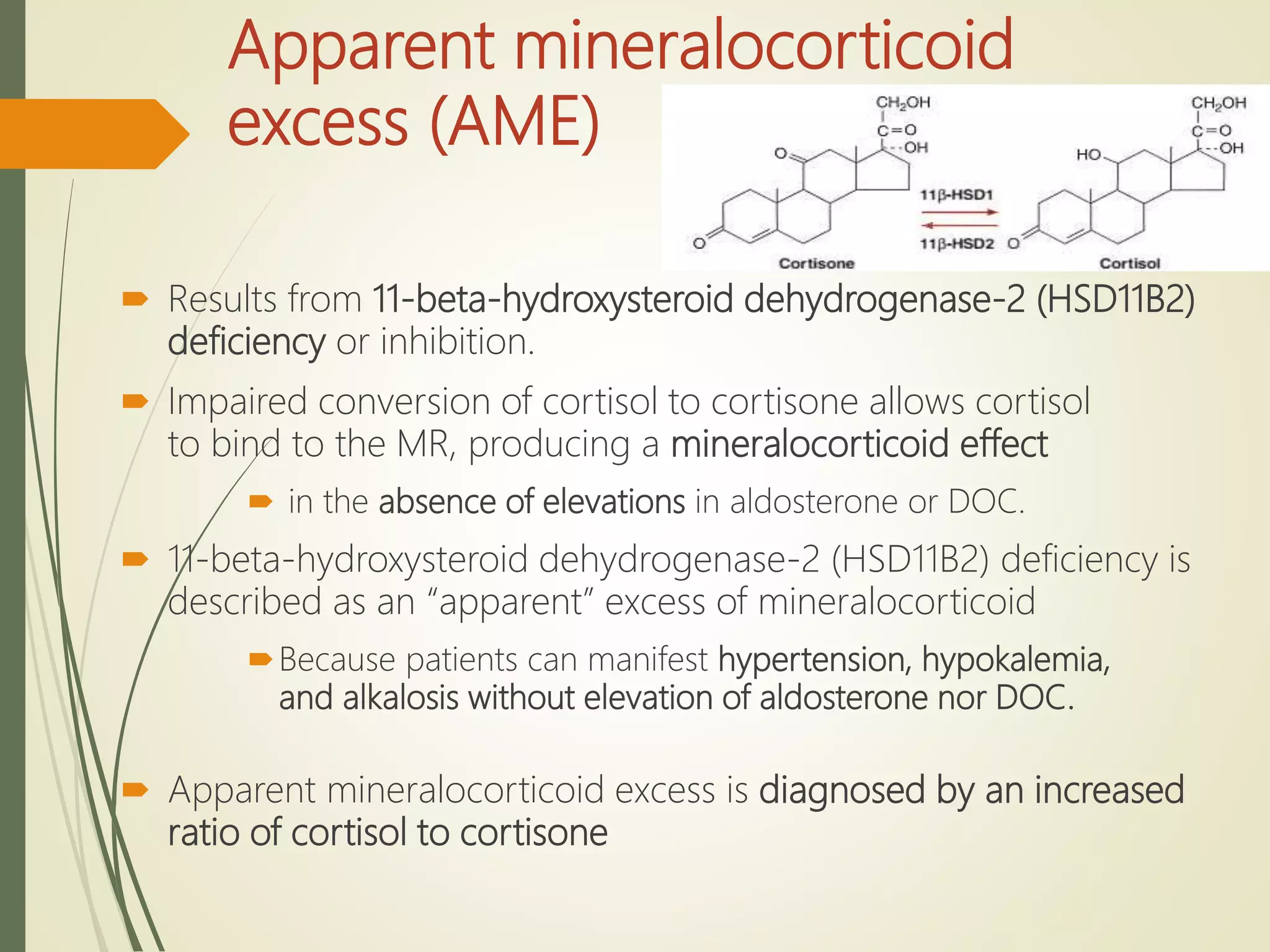
 Results from 11-beta-hydroxysteroid dehydrogenase-2 (HSD11B2)
deficiency or inhibition.
 Impaired conversion of cortisol to cortisone allows cortisol
to bind to the MR, producing a mineralocorticoid effect
 in the absence of elevations in aldosterone or DOC.
 11-beta-hydroxysteroid dehydrogenase-2 (HSD11B2) deficiency is
described as an “apparent” excess of mineralocorticoid
Because patients can manifest hypertension, hypokalemia,
and alkalosis without elevation of aldosterone nor DOC.
 Apparent mineralocorticoid excess is diagnosed by an increased
ratio of cortisol to cortisone
Type 1 pseudohyperaldosteronism
(Liddle syndrome )
 Results from gain-of-function mutations in the beta or gamma
subunit of the amiloride-sensitive Epithelial sodium channel
(ENaC)
 Consequences include
 excessive sodium reabsorption,
 expanded blood volume,
 hypertension,
 hypokalemia,
 alkalosis.
 Because the activity of ENaC is autonomous, both renin and
aldosterone are suppressed.
Type 2 pseudohyperaldosteronism
 is a gain-of- function mutation in the MR
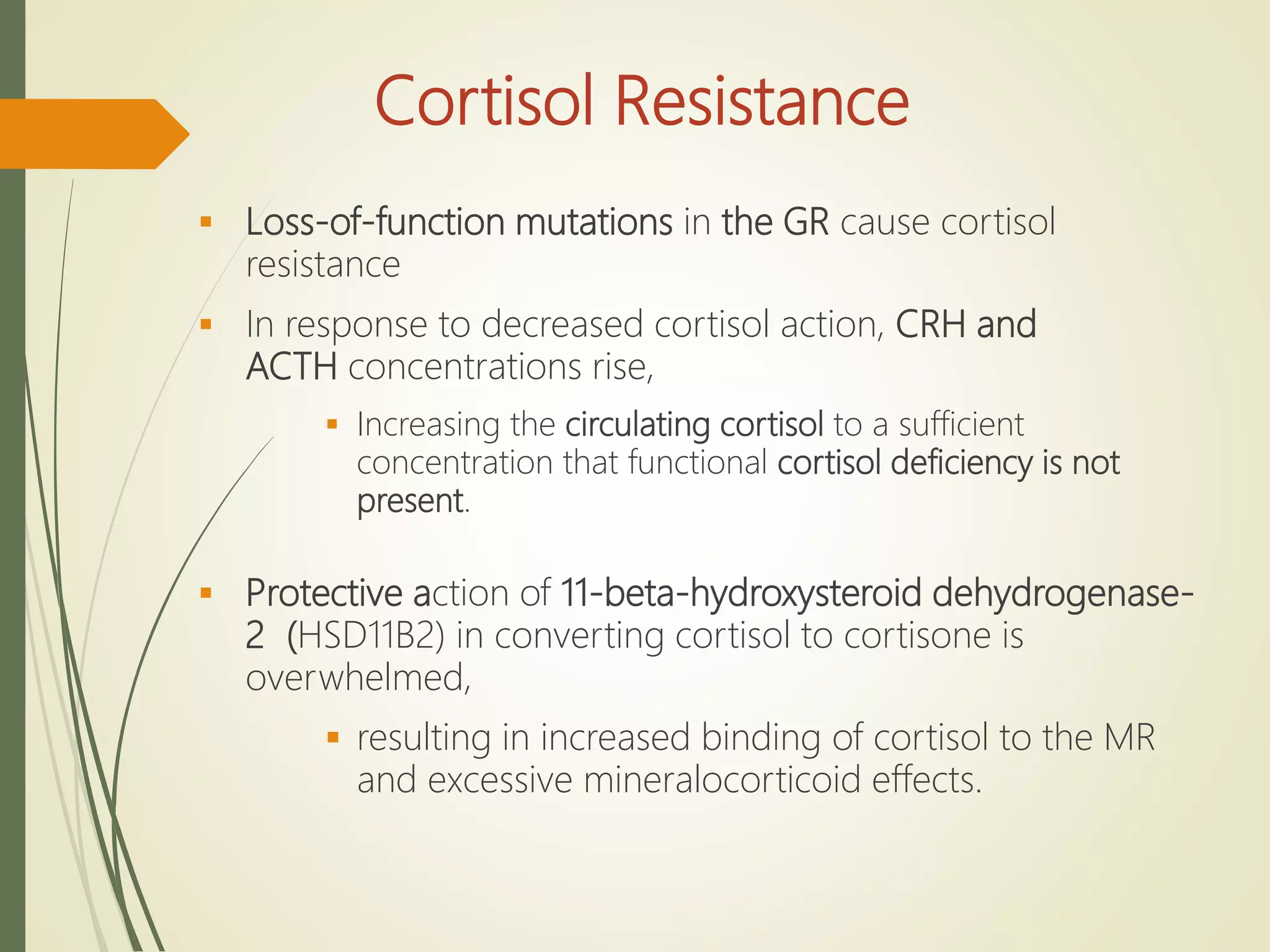
Cortisol Resistance
 Loss-of-function mutations in the GR cause cortisol
resistance
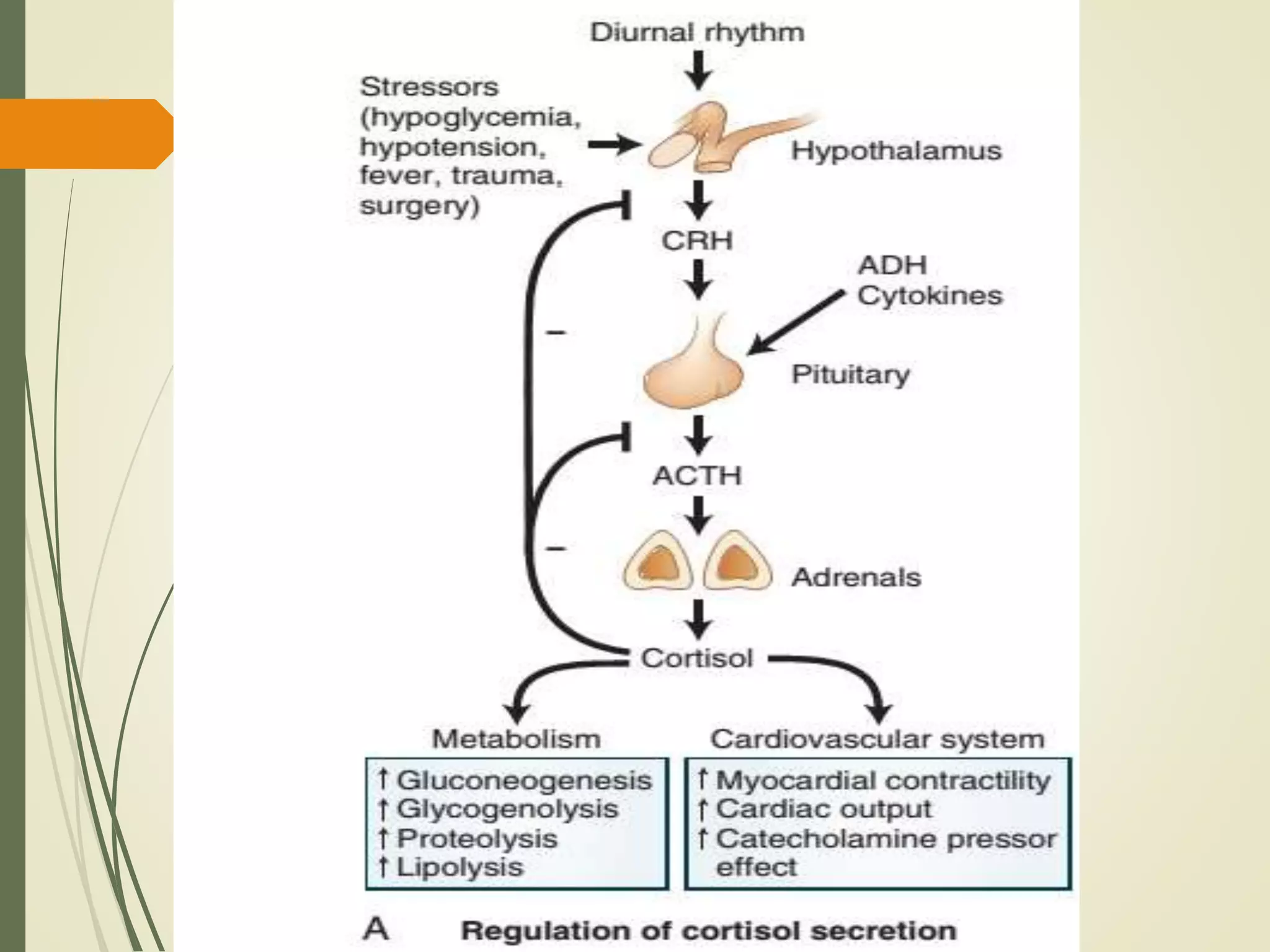
 In response to decreased cortisol action, CRH and
ACTH concentrations rise,
 Increasing the circulating cortisol to a sufficient
concentration that functional cortisol deficiency is not
present.
 Protective action of 11-beta-hydroxysteroid dehydrogenase-
2 (HSD11B2) in converting cortisol to cortisone is
overwhelmed,
 resulting in increased binding of cortisol to the MR
and excessive mineralocorticoid effects.
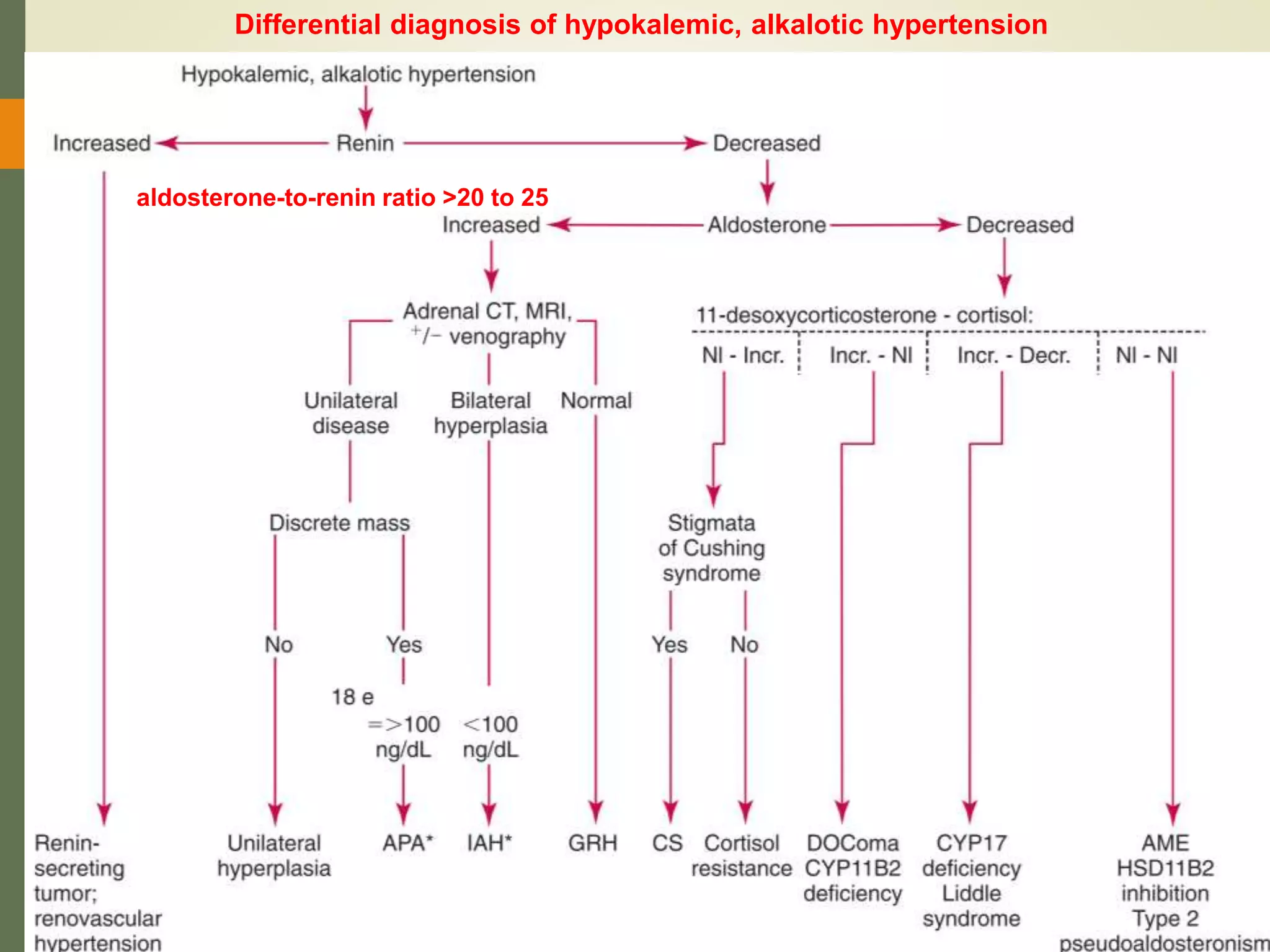
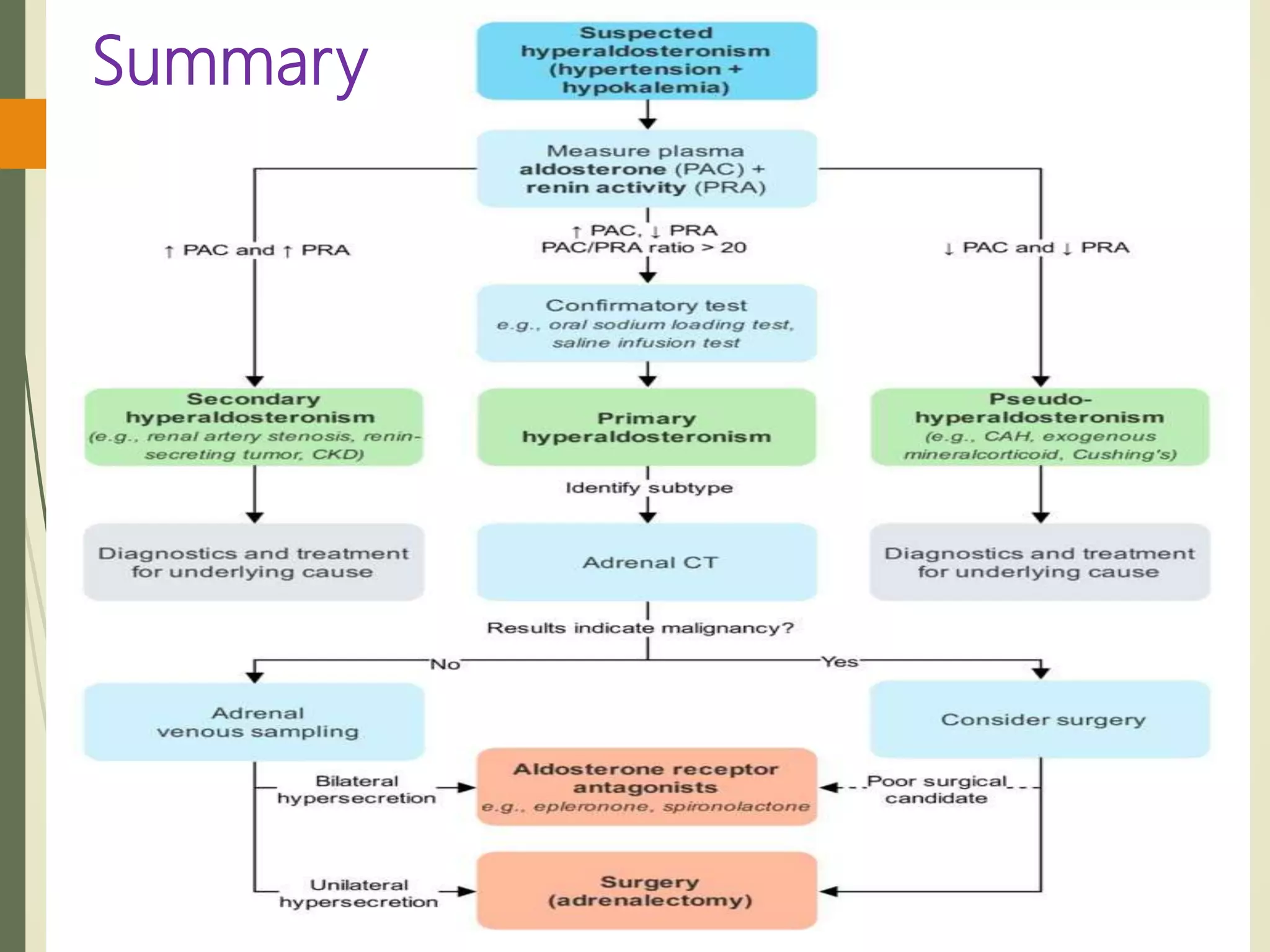
Differential diagnosis of hypokalemic, alkalotic hypertension
aldosterone-to-renin ratio >20 to 25
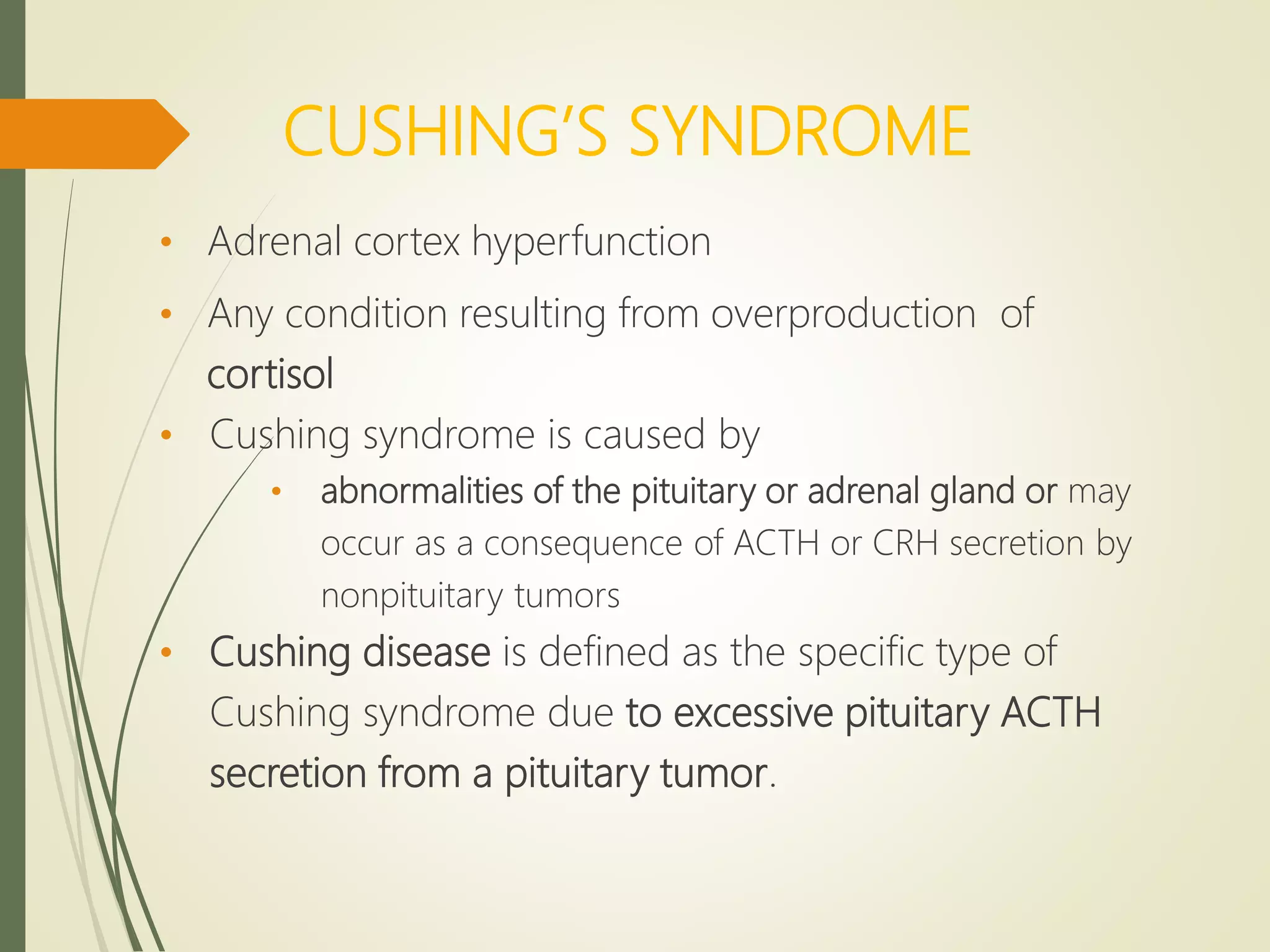
CUSHING’S SYNDROME
• Adrenal cortex hyperfunction
• Any condition resulting from overproduction of
cortisol
• Cushing syndrome is caused by
• abnormalities of the pituitary or adrenal gland or may
occur as a consequence of ACTH or CRH secretion by
nonpituitary tumors
• Cushing disease is defined as the specific type of
Cushing syndrome due to excessive pituitary ACTH
secretion from a pituitary tumor.
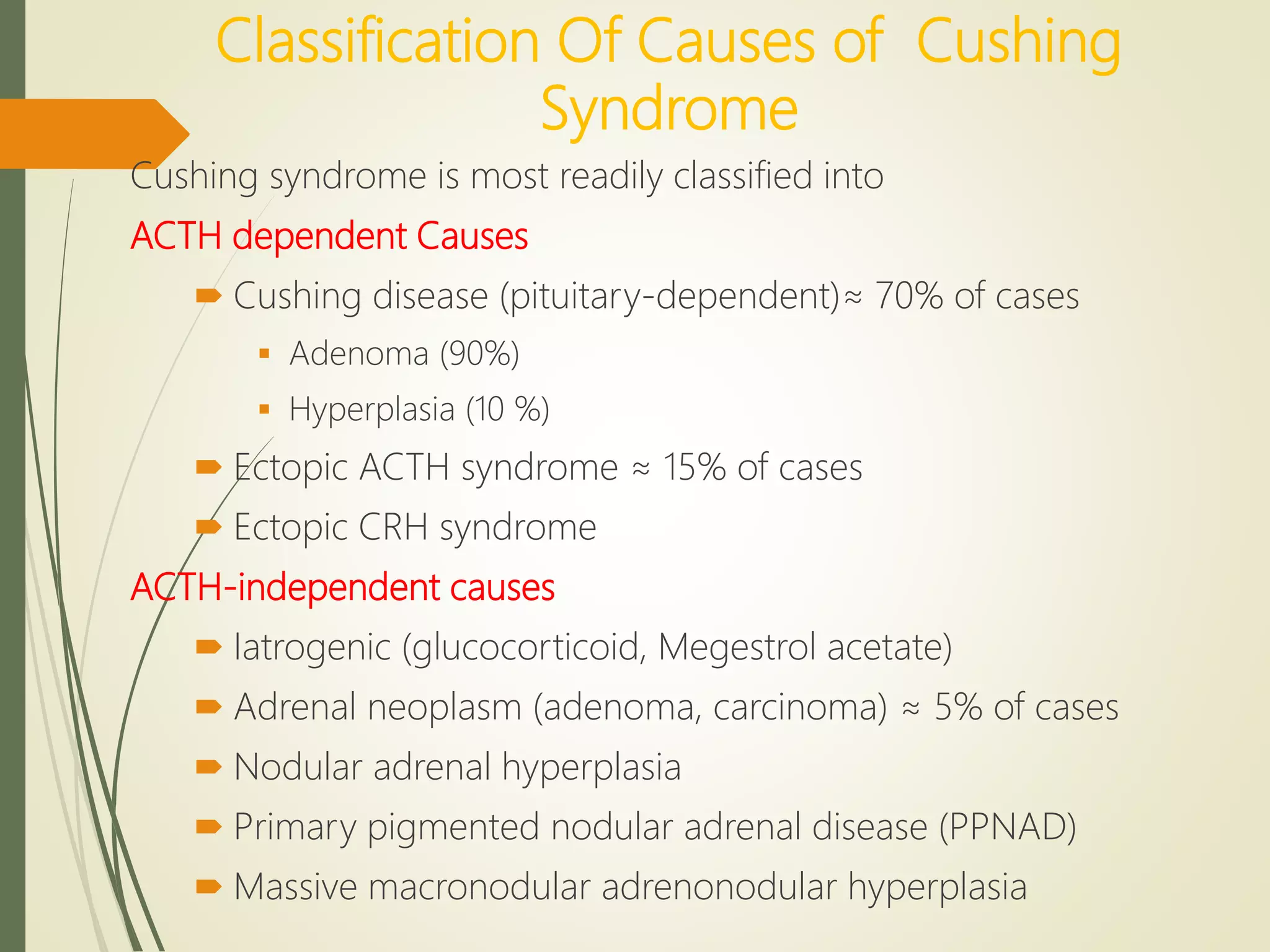
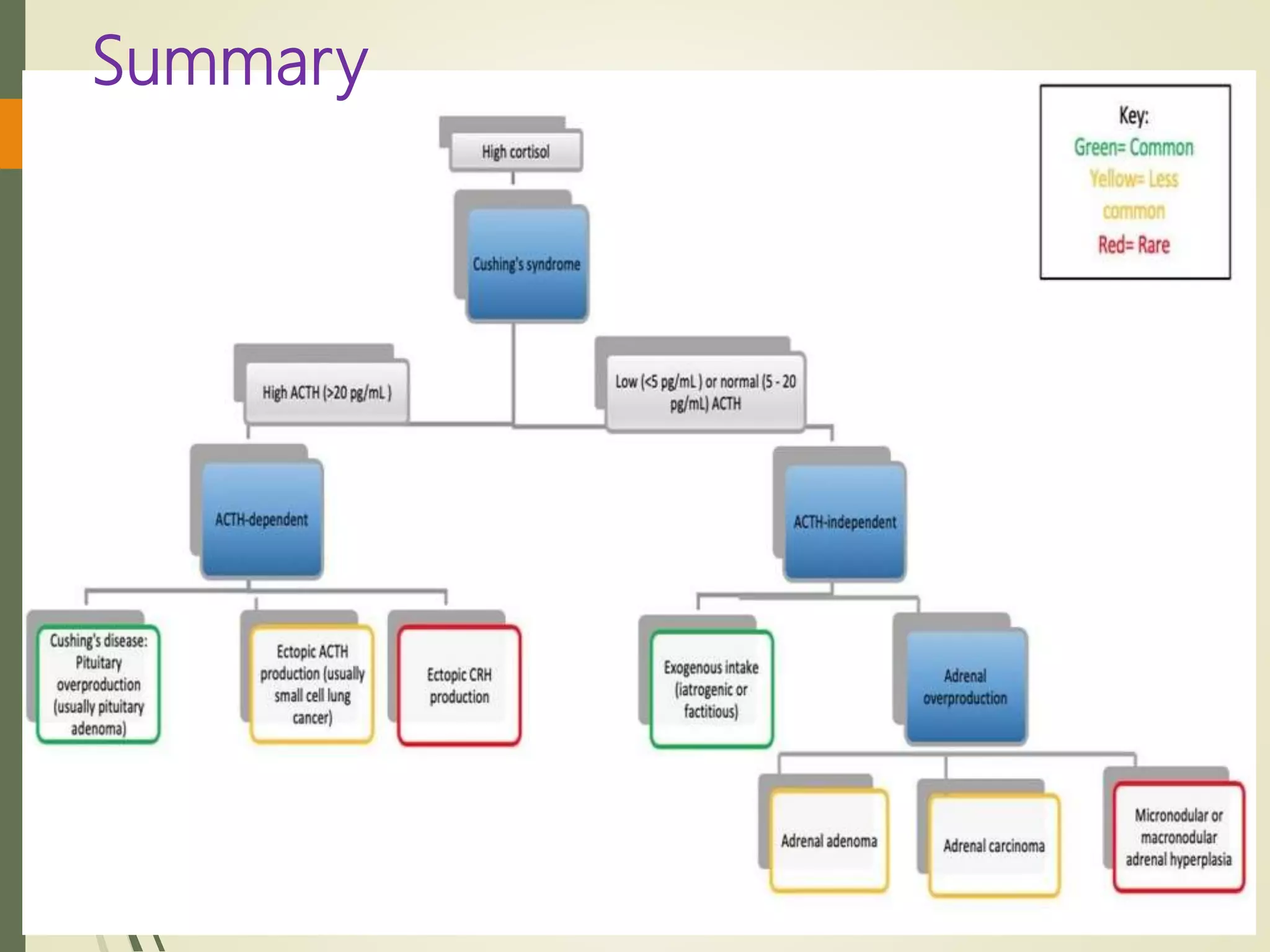
Classification Of Causes of Cushing
Syndrome
Cushing syndrome is most readily classified into
ACTH dependent Causes
 Cushing disease (pituitary-dependent)≈ 70% of cases
 Adenoma (90%)
 Hyperplasia (10 %)
 Ectopic ACTH syndrome ≈ 15% of cases
 Ectopic CRH syndrome
ACTH-independent causes
 Iatrogenic (glucocorticoid, Megestrol acetate)
 Adrenal neoplasm (adenoma, carcinoma) ≈ 5% of cases
 Nodular adrenal hyperplasia
 Primary pigmented nodular adrenal disease (PPNAD)
 Massive macronodular adrenonodular hyperplasia
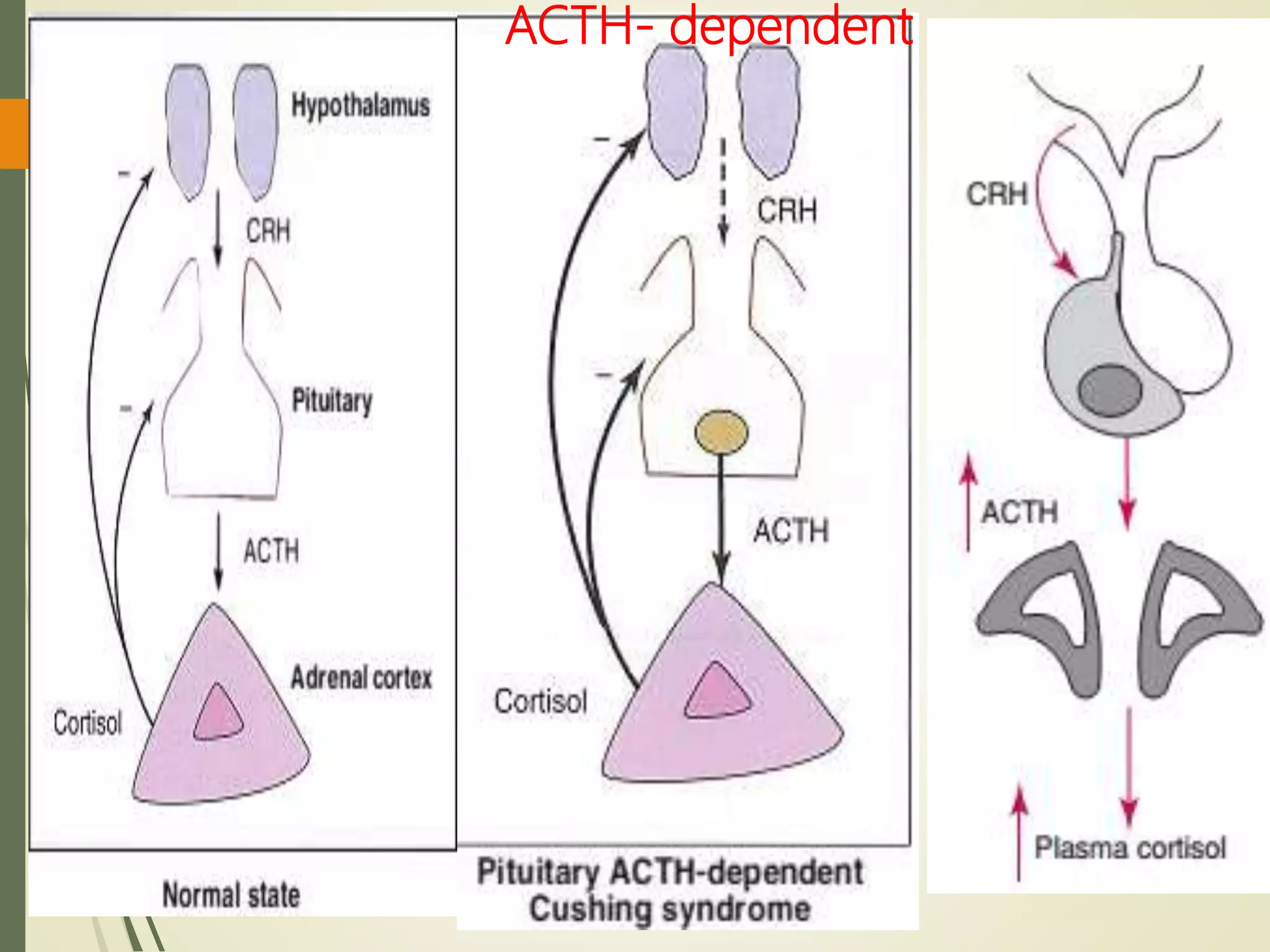
ACTH- dependent
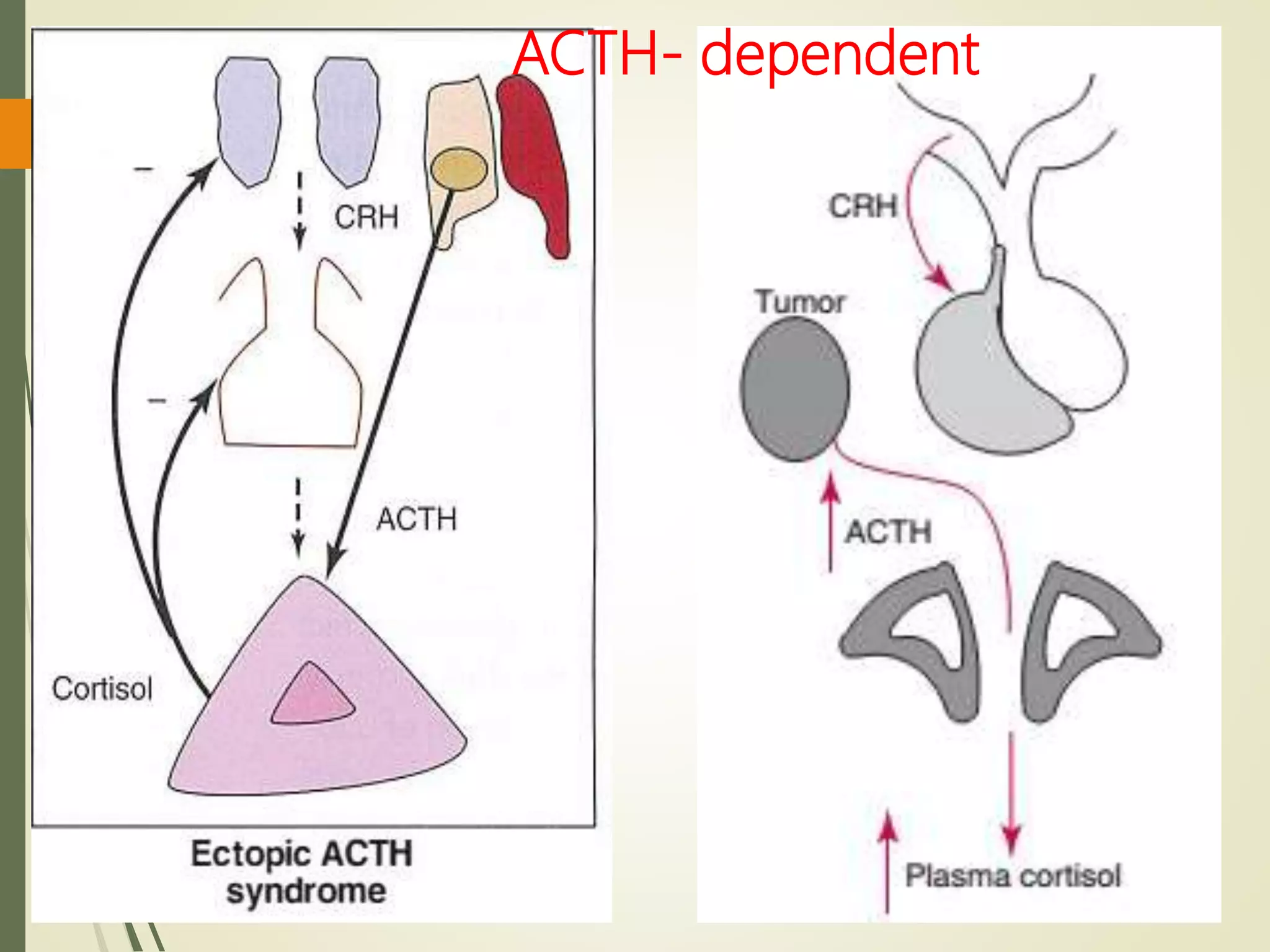
ACTH- dependent
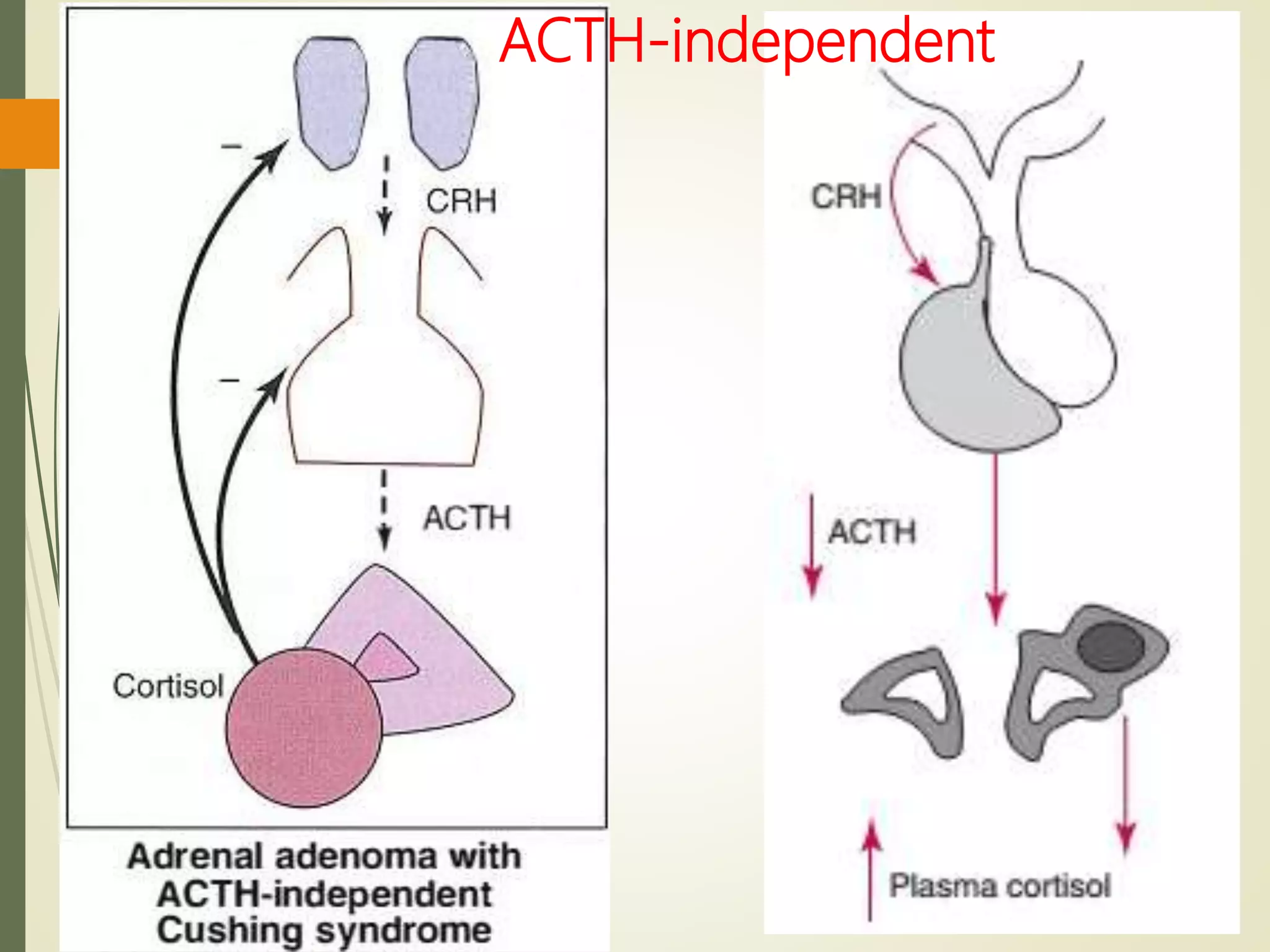
ACTH-independent
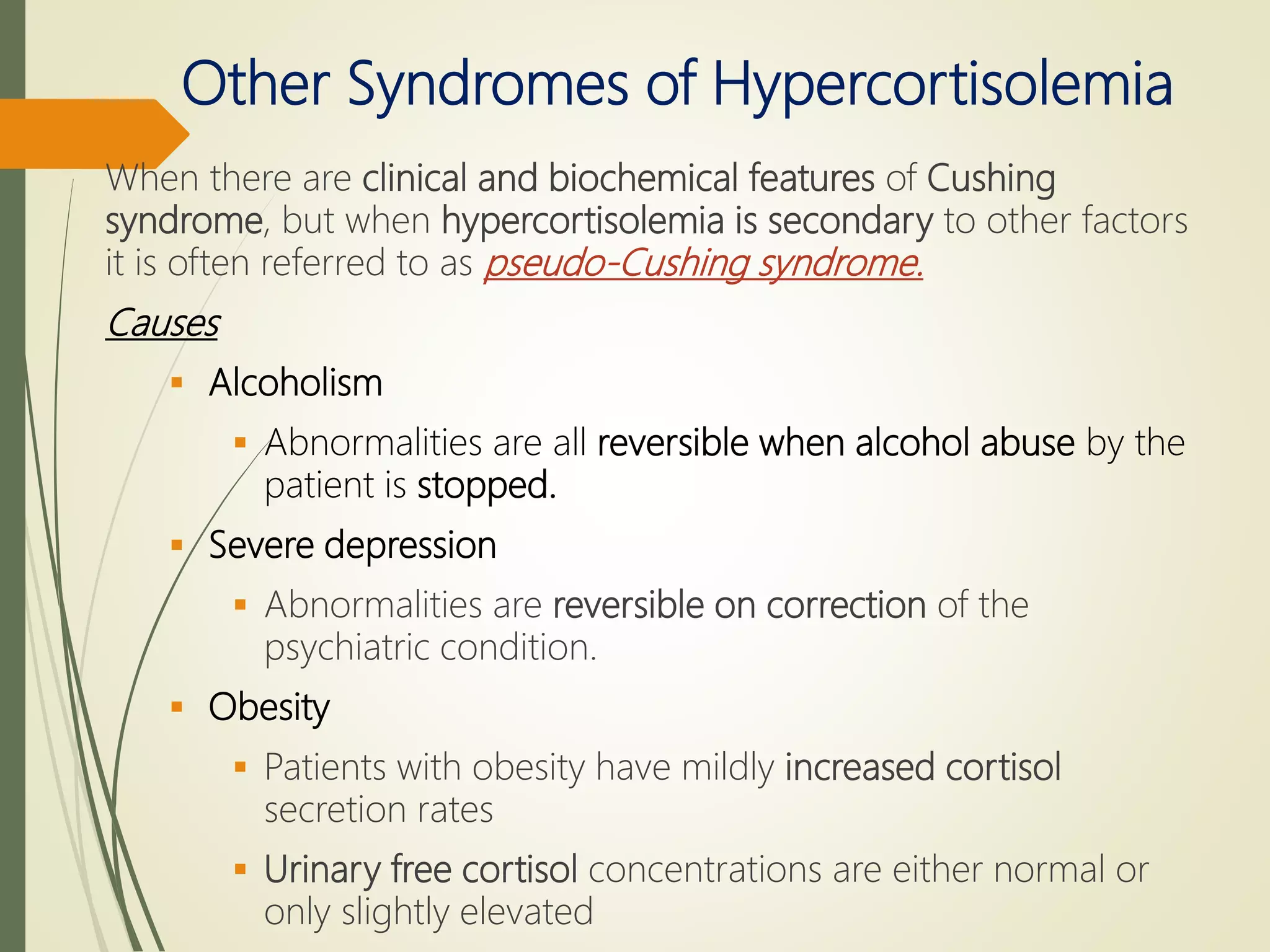
Other Syndromes of Hypercortisolemia
When there are clinical and biochemical features of Cushing
syndrome, but when hypercortisolemia is secondary to other factors
it is often referred to as pseudo-Cushing syndrome.
Causes
 Alcoholism
 Abnormalities are all reversible when alcohol abuse by the
patient is stopped.
 Severe depression
 Abnormalities are reversible on correction of the
psychiatric condition.
 Obesity
 Patients with obesity have mildly increased cortisol
secretion rates
 Urinary free cortisol concentrations are either normal or
only slightly elevated
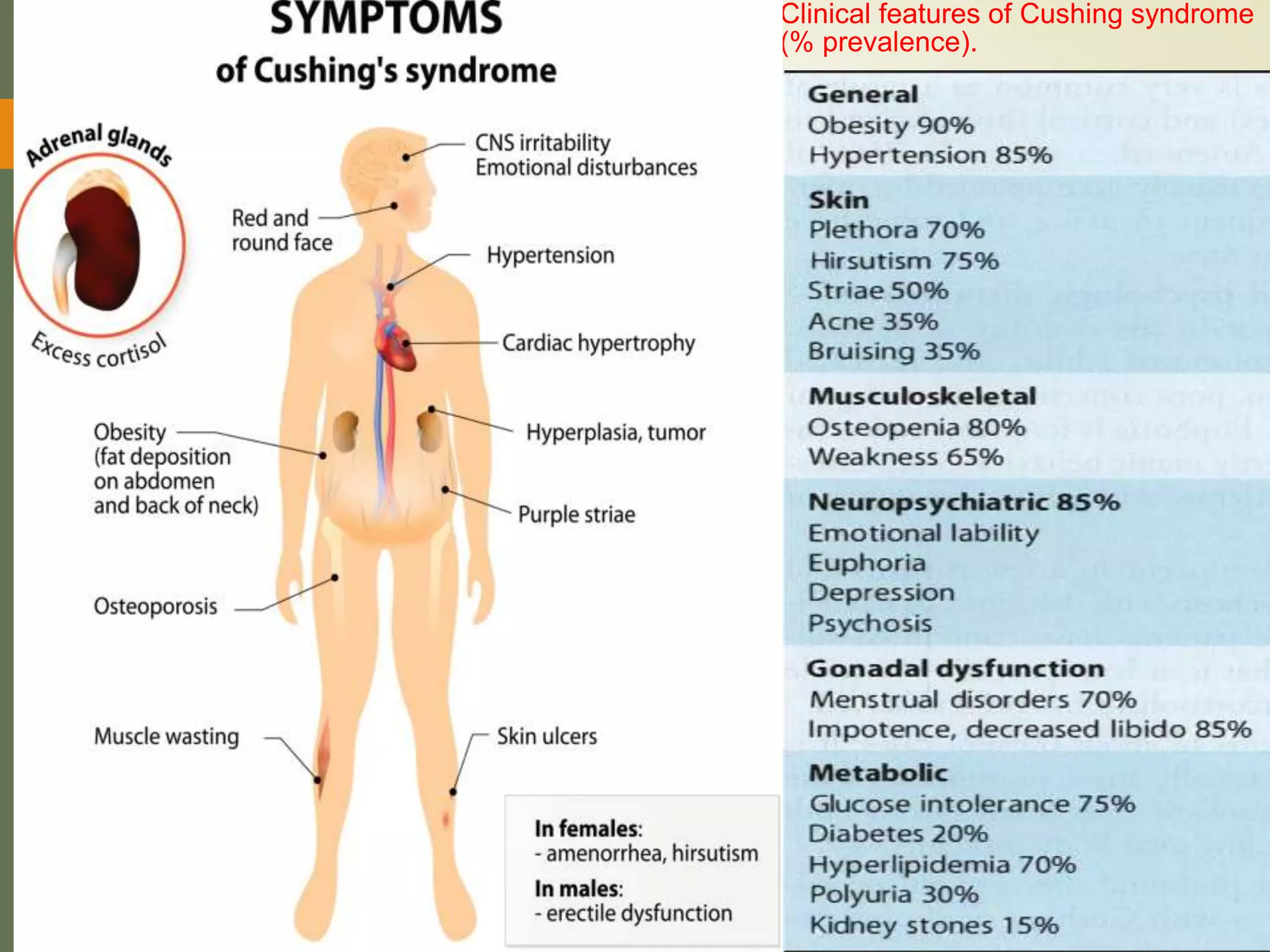
Clinical features of Cushing syndrome
(% prevalence).
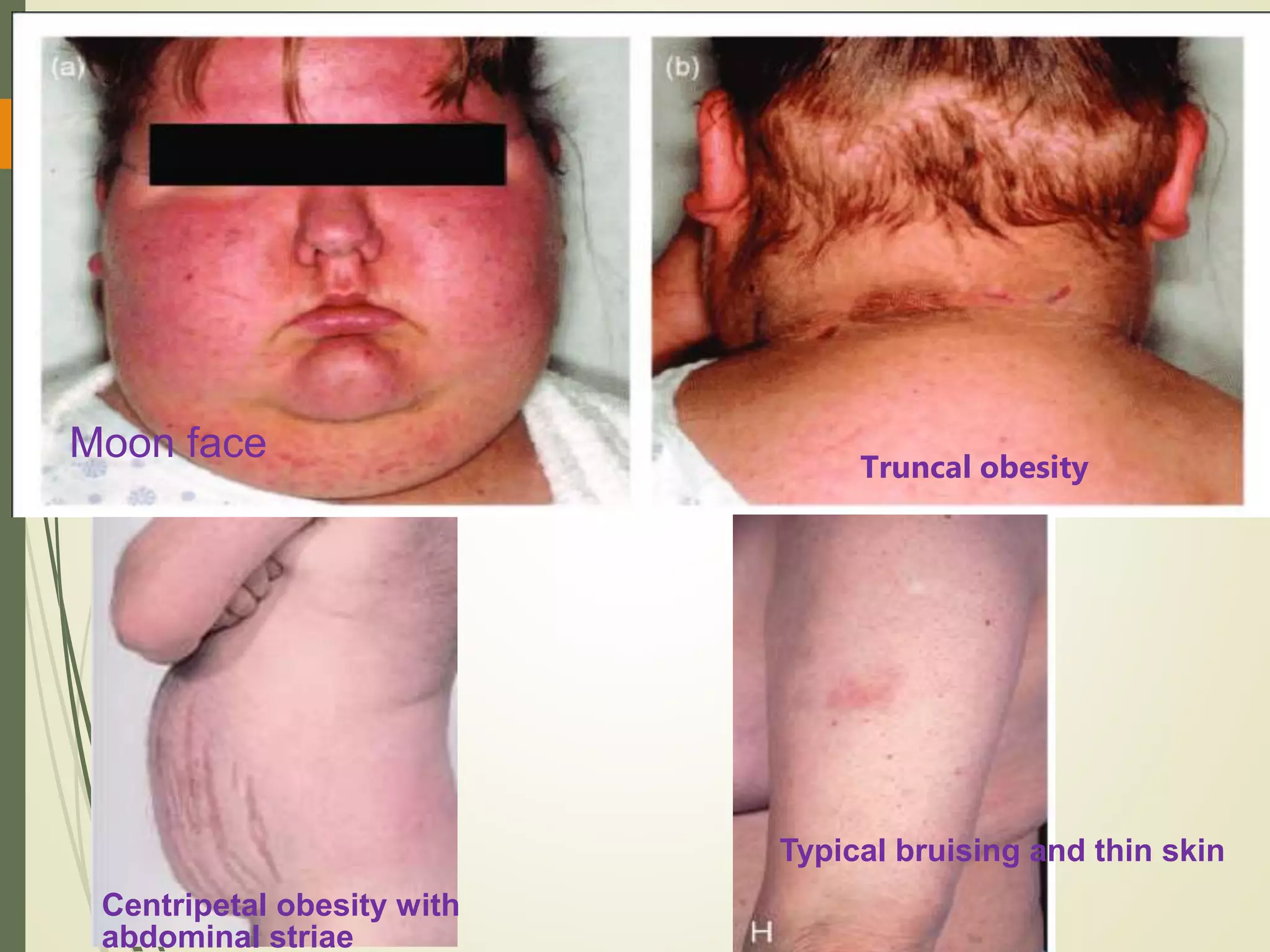
Moon face Truncal obesity
Centripetal obesity with
abdominal striae
Typical bruising and thin skin
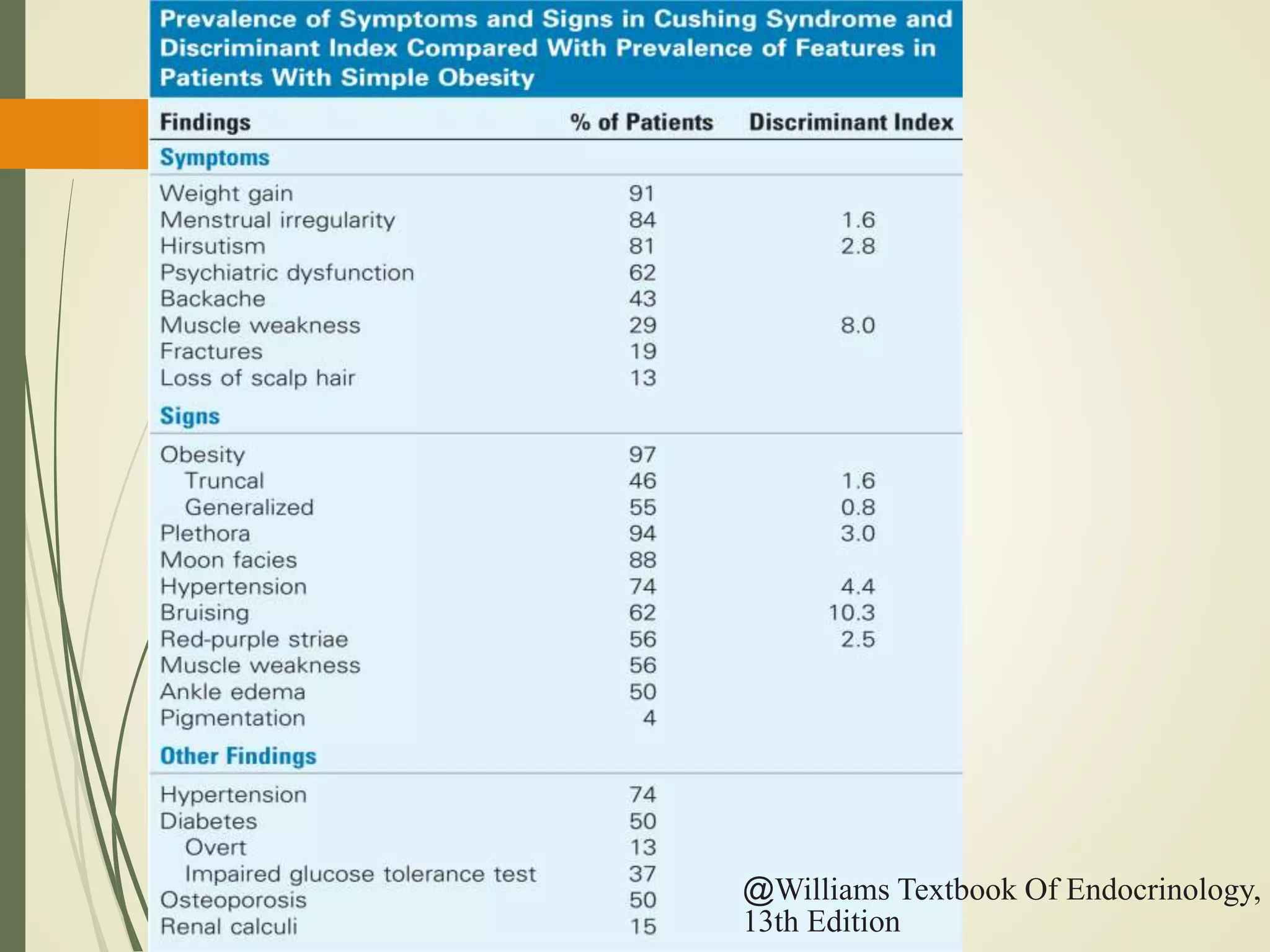
@Williams Textbook Of Endocrinology,
13th Edition
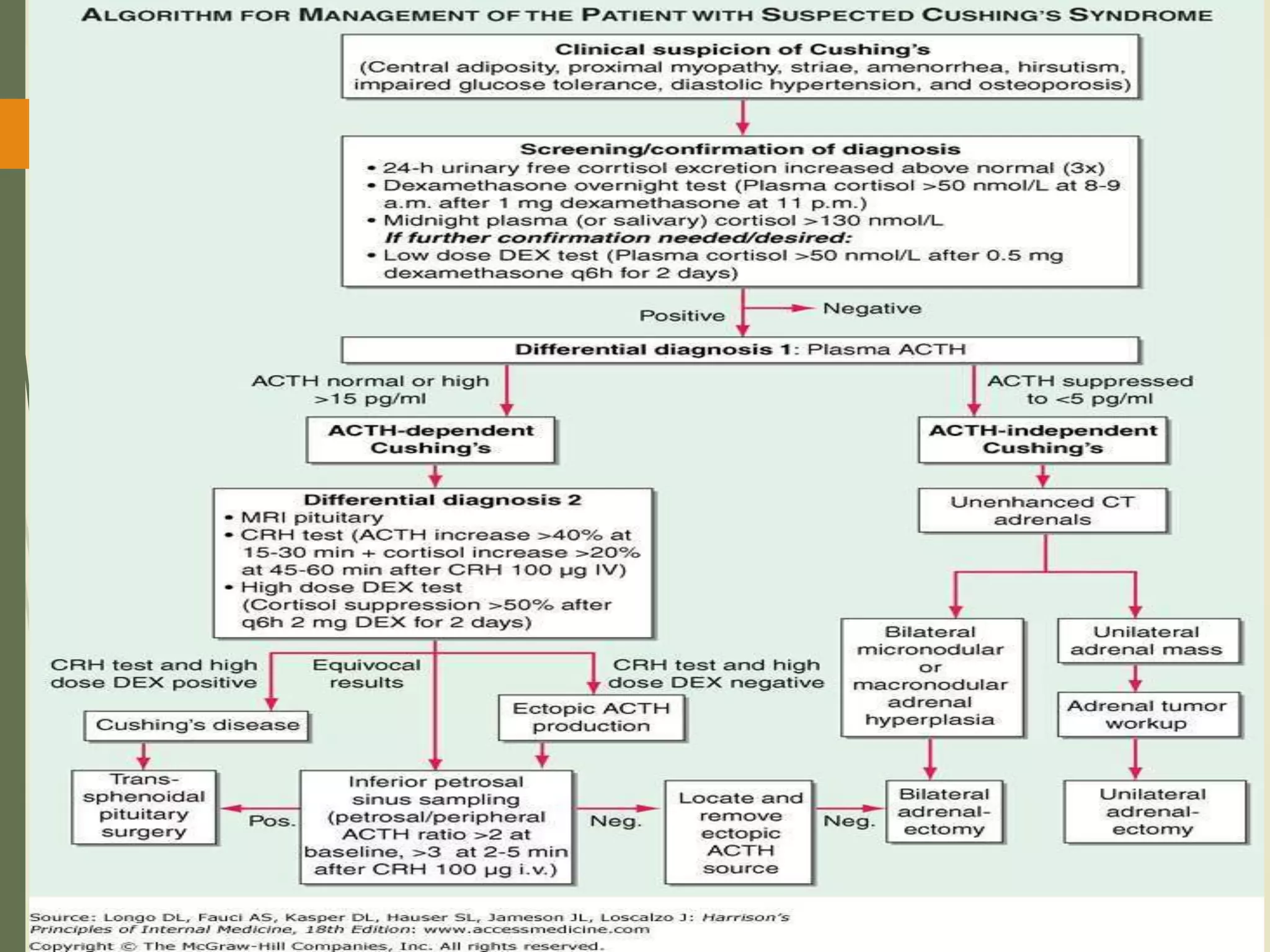
Diagnosis
Routine Laboratory Analysis
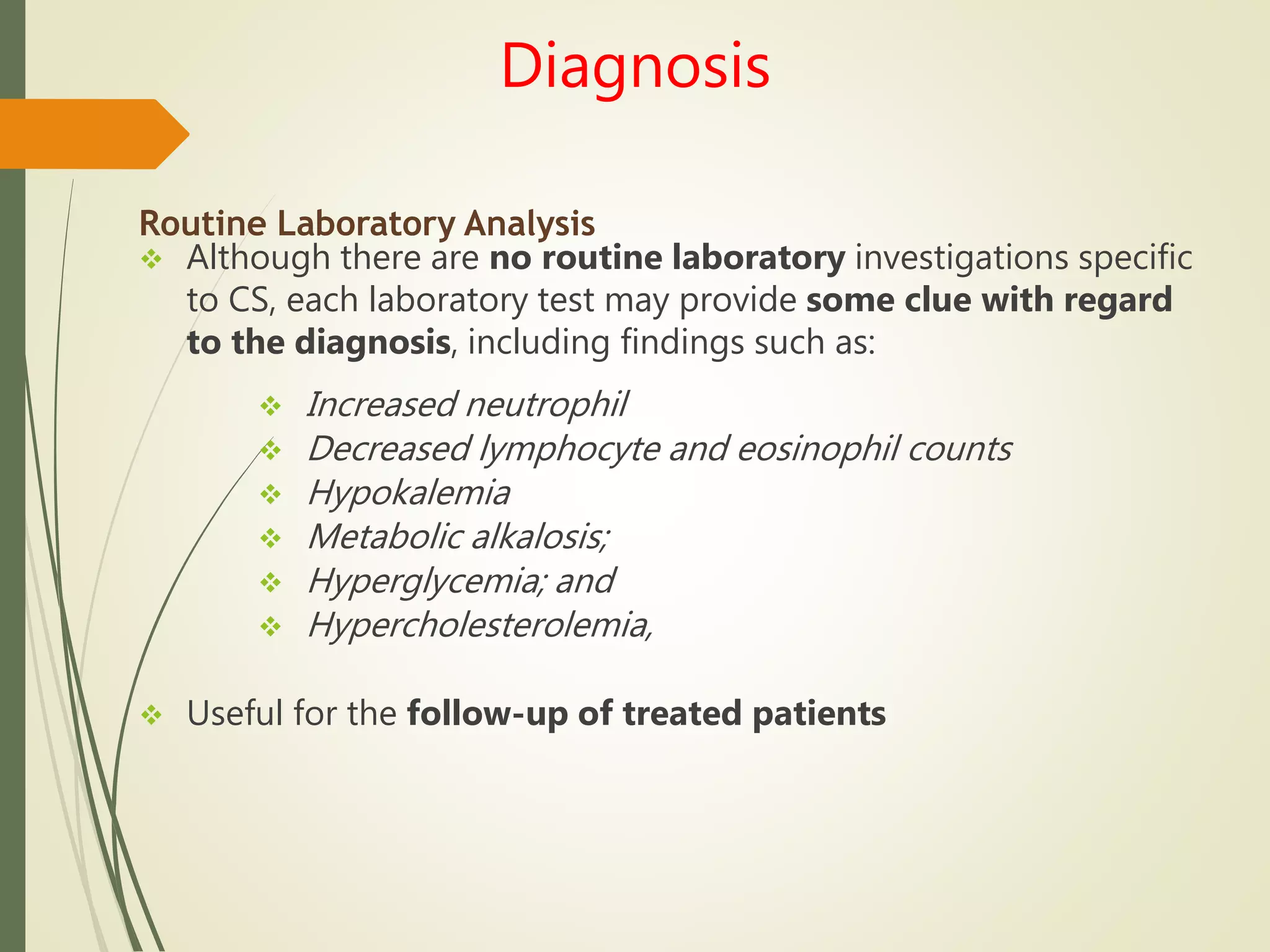
 Although there are no routine laboratory investigations specific
to CS, each laboratory test may provide some clue with regard
to the diagnosis, including findings such as:
 Increased neutrophil
 Decreased lymphocyte and eosinophil counts
 Hypokalemia
 Metabolic alkalosis;
 Hyperglycemia; and
 Hypercholesterolemia,
 Useful for the follow-up of treated patients
Diagnosis
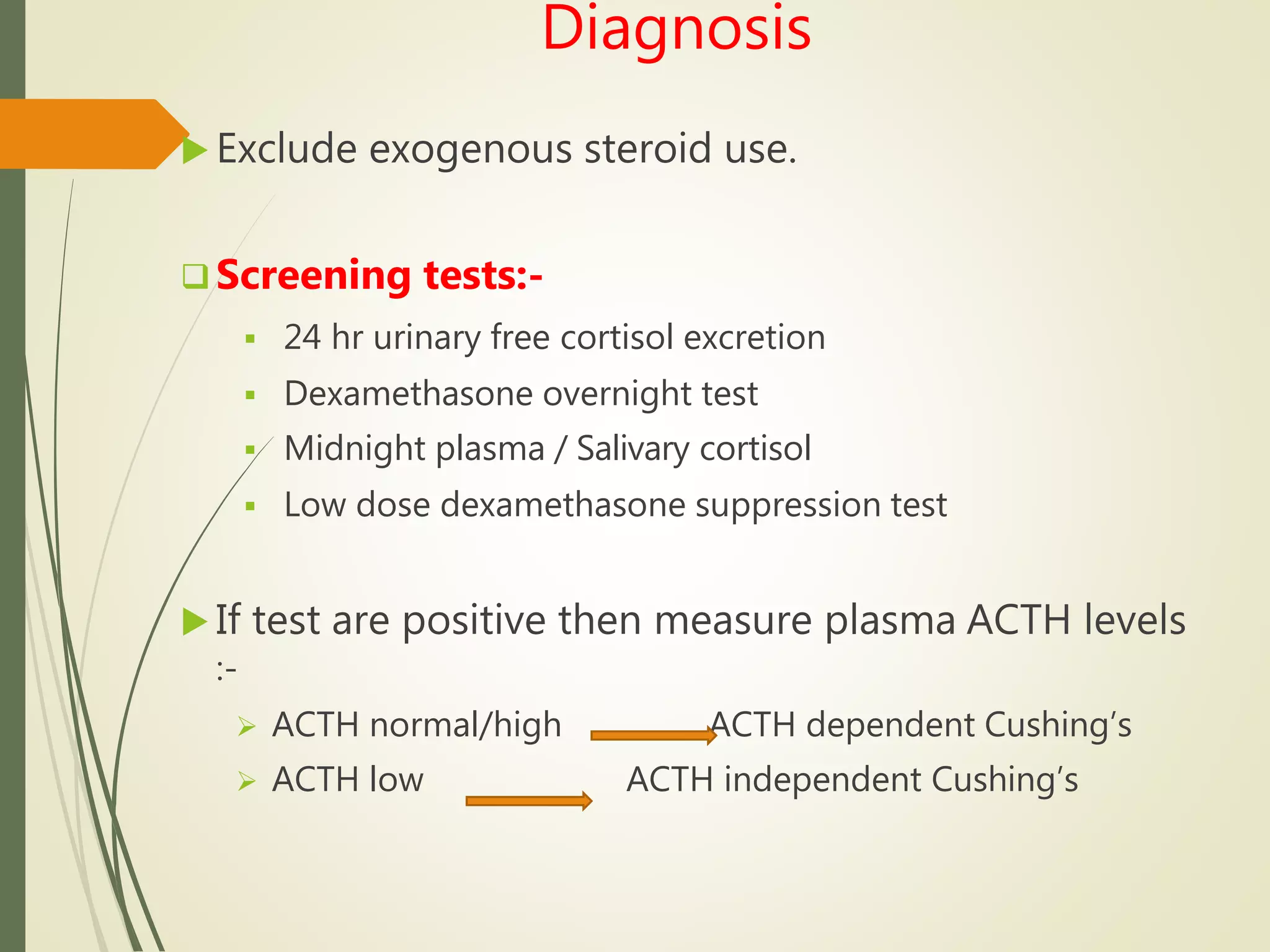
 Exclude exogenous steroid use.
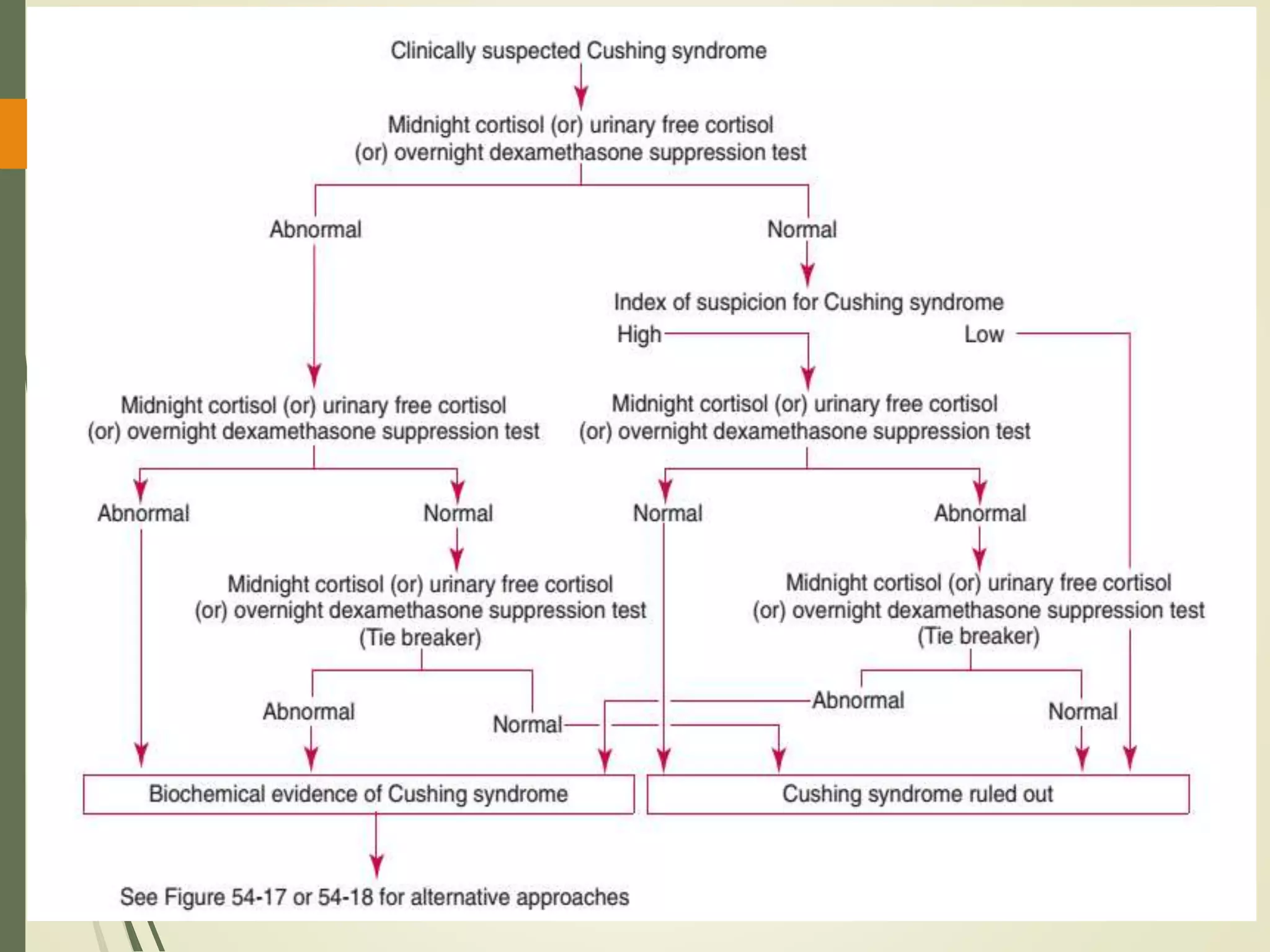
 Screening tests:-
 24 hr urinary free cortisol excretion
 Dexamethasone overnight test
 Midnight plasma / Salivary cortisol
 Low dose dexamethasone suppression test
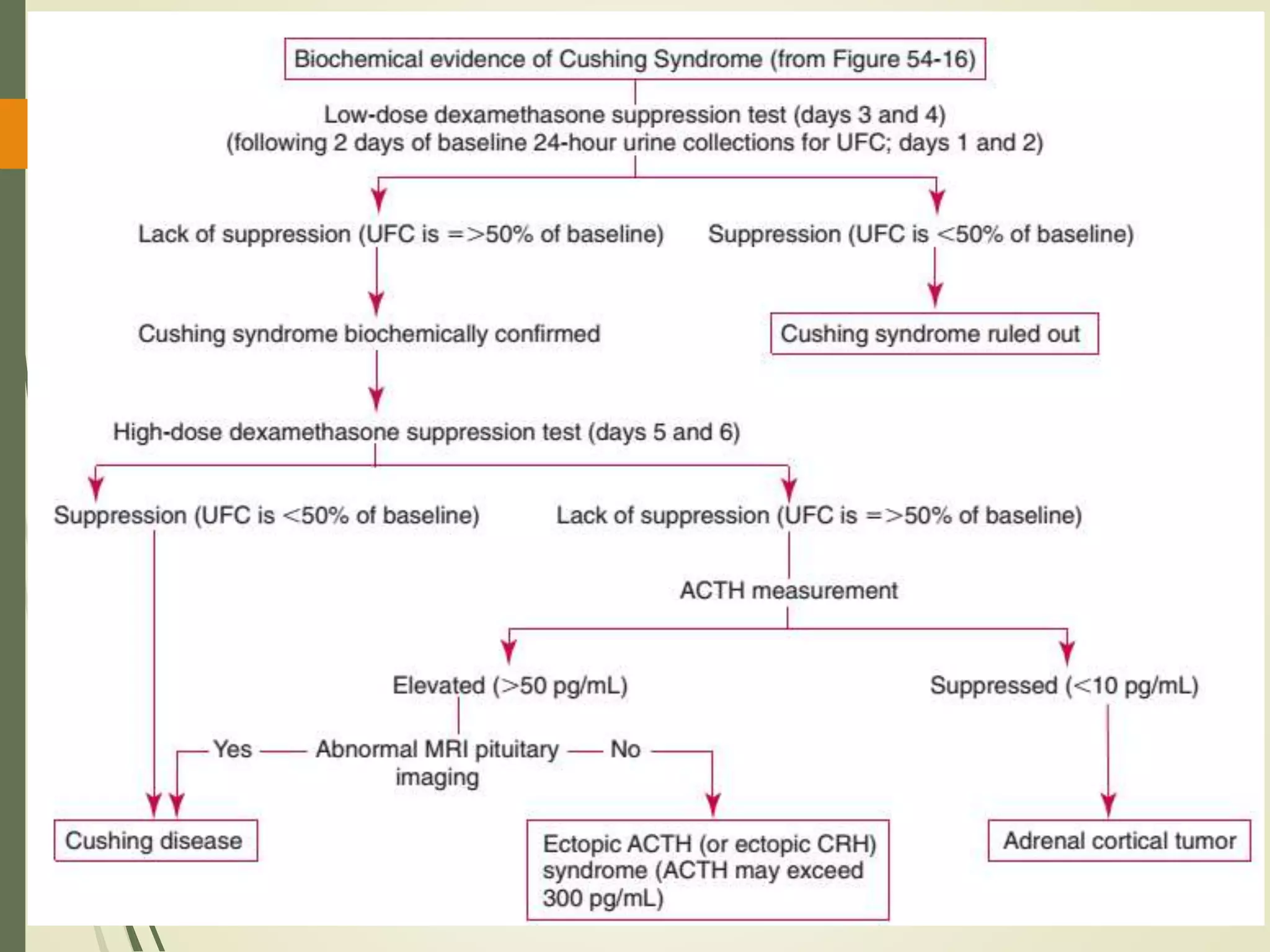
 If test are positive then measure plasma ACTH levels
:-
 ACTH normal/high ACTH dependent Cushing’s
 ACTH low ACTH independent Cushing’s
Diagnosis
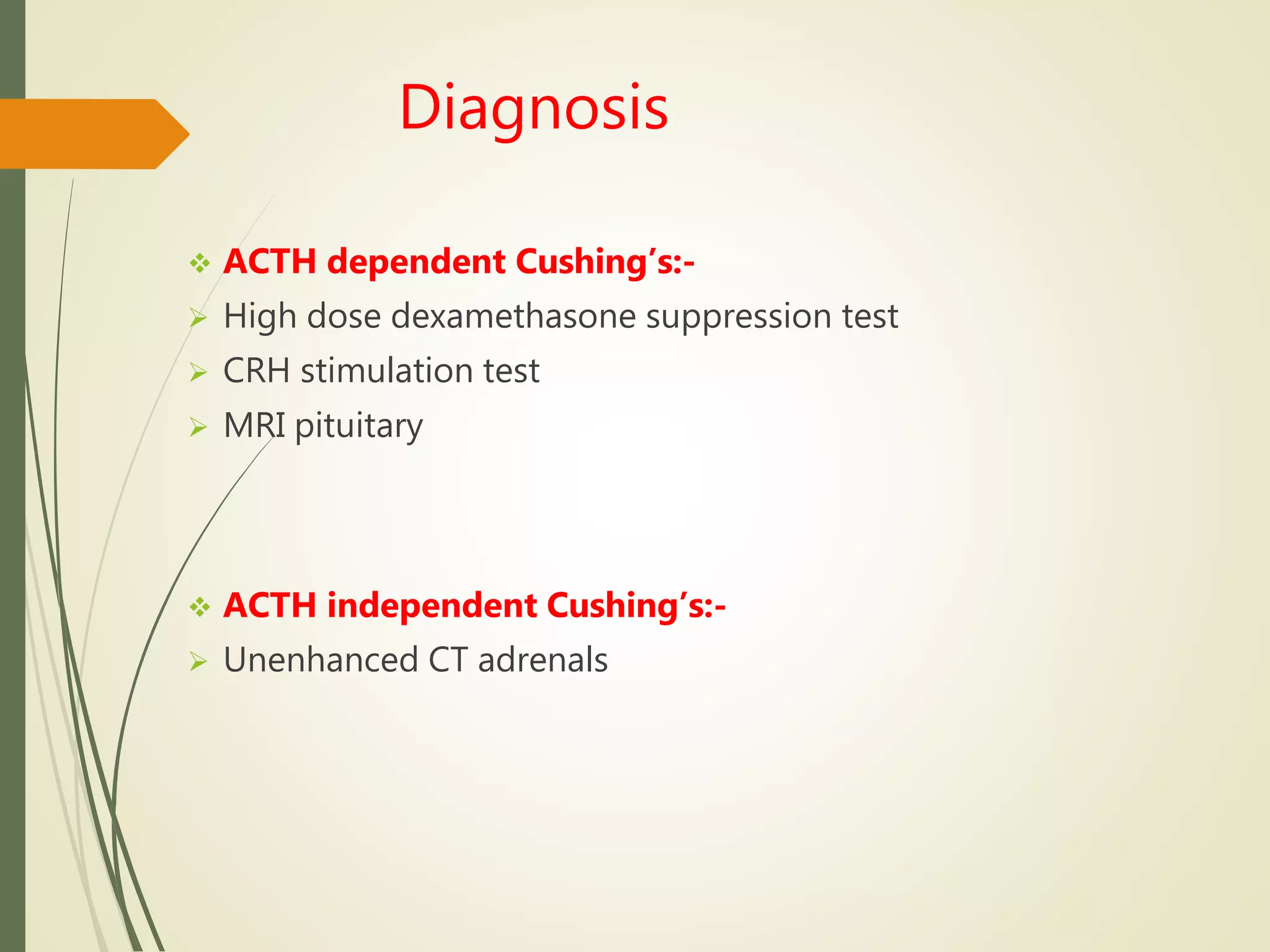
 ACTH dependent Cushing’s:-
 High dose dexamethasone suppression test
 CRH stimulation test
 MRI pituitary
 ACTH independent Cushing’s:-
 Unenhanced CT adrenals
Demonstration of increased cortisol
 Assessment of circadian rhythm in cortisol secretion
 24-Hour urinary free cortisol excretion
 Overnight / low dose dexamethasone suppression test
Assessment of circadian rhythm in cortisol secretion.
 Measure 8 am and 11 pm serum cortisol level
Normal : Serum value than value @ 8 am -3 to 20 µg/dL (80-550
nmol/L) average 10 to 12 µg /dl
@ 4 PM are approximately half of morning values.
@ 10 PM to 2 AM, the plasma cortisol concentrations less than 3 µg
/dL
Cushing’s syndrome : rhythm is loss
Pseudo-Cushing : normal circadian
Screening tests
24-Hour urinary free cortisol excretion
 less than 2% of secreted cortisol appears in urine as free
cortisol.
 Diagnostic accuracy is greater than 90%
 In general, a 24 hour urinary free cortisol concentration less
than 50 µg/d
 excludes the diagnosis of Cushing syndrome
Overnight Low dose Dexamethasone suppression test
 Dexamethasone suppresses ACTH and cortisol production in
normal subjects, but not in patients with Cushing syndrome.
 Differentiates those who have Cushing syndrome from those
who do not have.
Overnight Low dose Dexamethasone
suppression test
Procedure:
 1 mg of dexamethasone taken orally between 10 pm and 12 am
 Blood drawn at 8am next morning- for determination of serum
cortisol
Interpretation:
 In normal subjects cortisol: < 2µg/dl: excludes cushings
syndrome.
 Most patients with Cushing syndrome do not show adequate
suppression, and 0800 hours cortisol concentrations are
usually 10 μg/dL or greater.
Overnight Low dose
Dexamethasone suppression test
 Serum cortisol greater than 2 μg/dL may be seen also in cases of
 stress,
 obesity,
 acute or chronic illness,
 alcohol abuse,
 severe depression,
 pregnancy,
 estrogen therapy,
 failure to take dexamethasone, or treatment with phenytoin or
phenobarbital (which can enhance dexamethasone
metabolism).
Differential Diagnosis
Morning Plasma ACTH
 Differentiates ACTH-dependent from
ACTH-independent causes.
 In Cushing disease
 50% of patients have a 9 AM ACTH
level within the normal reference
range (2 to
11 pmol/L [9 to 52 pg/mL]);
 in the remainder- modestly
elevated.
 In the ectopic ACTH syndrome
 ACTH levels are high (usually >20
pmol/L [>90 pg/mL]);
 Overlap values are seen in
Cushing disease in 30% of cases
 In patients with adrenal tumors, plasma
ACTH is invariably undetectable (<1
pmol/L).
Differential Diagnosis
High-Dose Dexamethasone Suppression Test
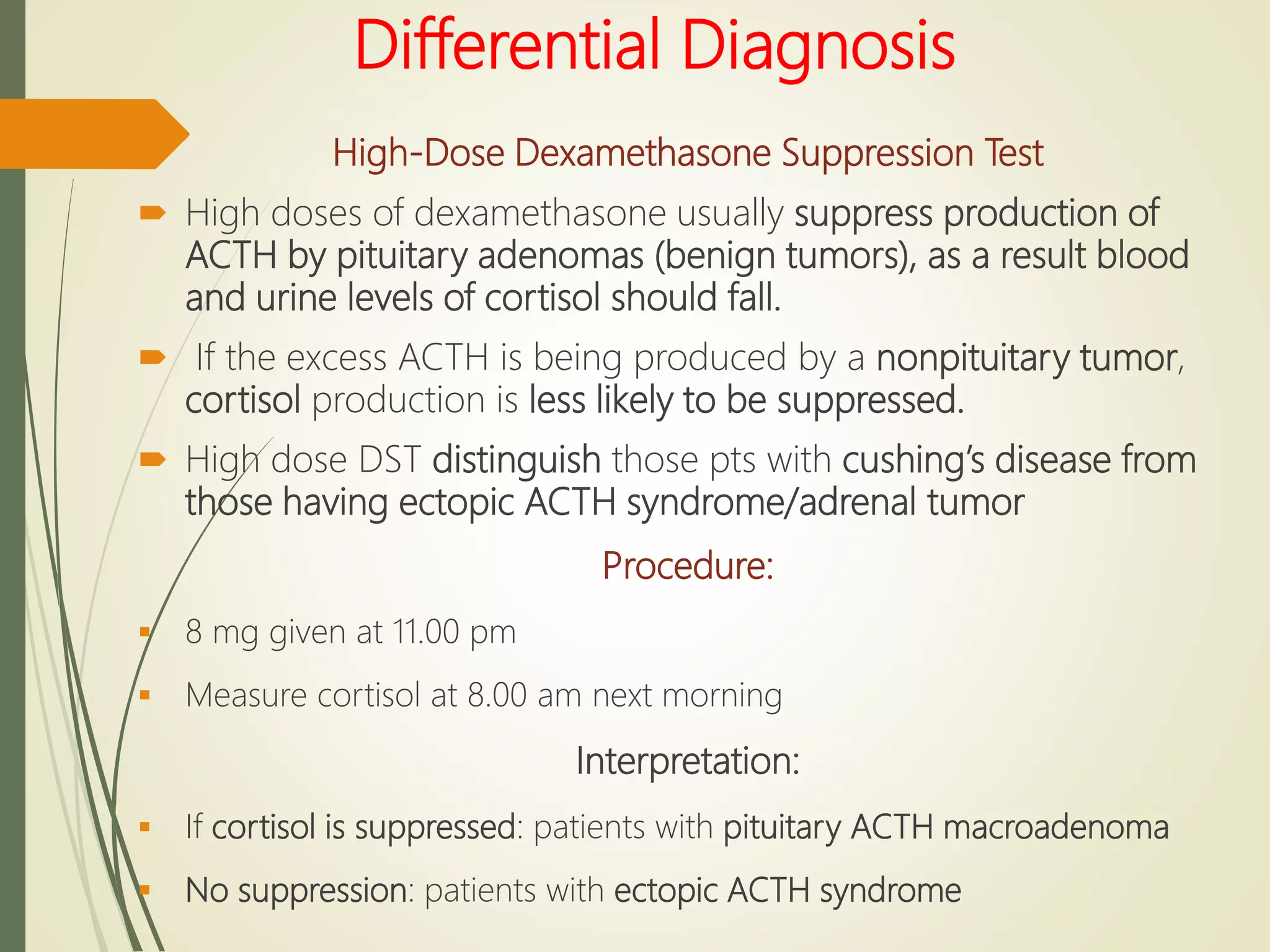
 High doses of dexamethasone usually suppress production of
ACTH by pituitary adenomas (benign tumors), as a result blood
and urine levels of cortisol should fall.
 If the excess ACTH is being produced by a nonpituitary tumor,
cortisol production is less likely to be suppressed.
 High dose DST distinguish those pts with cushing’s disease from
those having ectopic ACTH syndrome/adrenal tumor
Procedure:
 8 mg given at 11.00 pm
 Measure cortisol at 8.00 am next morning
Interpretation:
 If cortisol is suppressed: patients with pituitary ACTH macroadenoma
 No suppression: patients with ectopic ACTH syndrome
Differential Diagnosis
CRH stimulation test
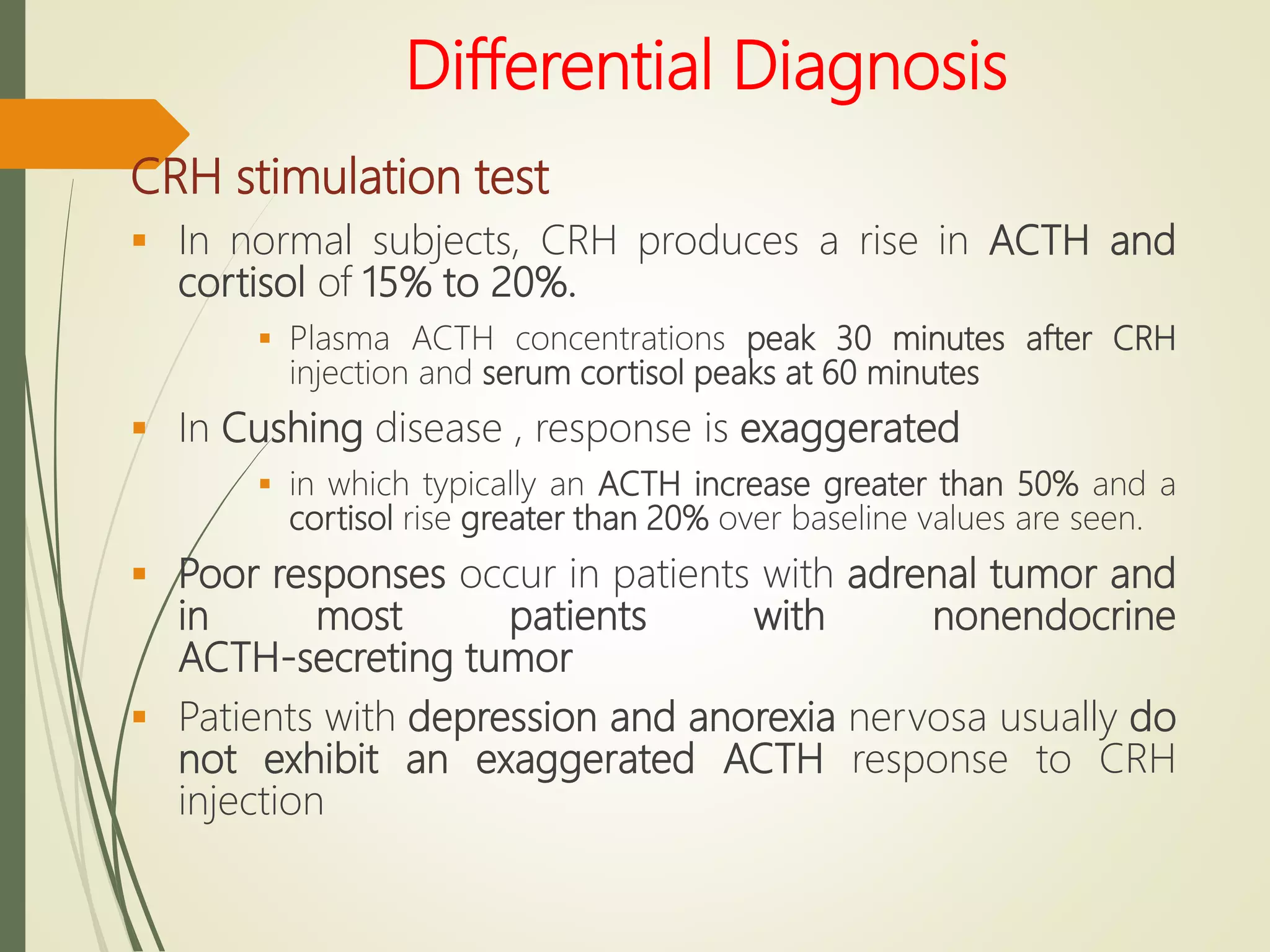
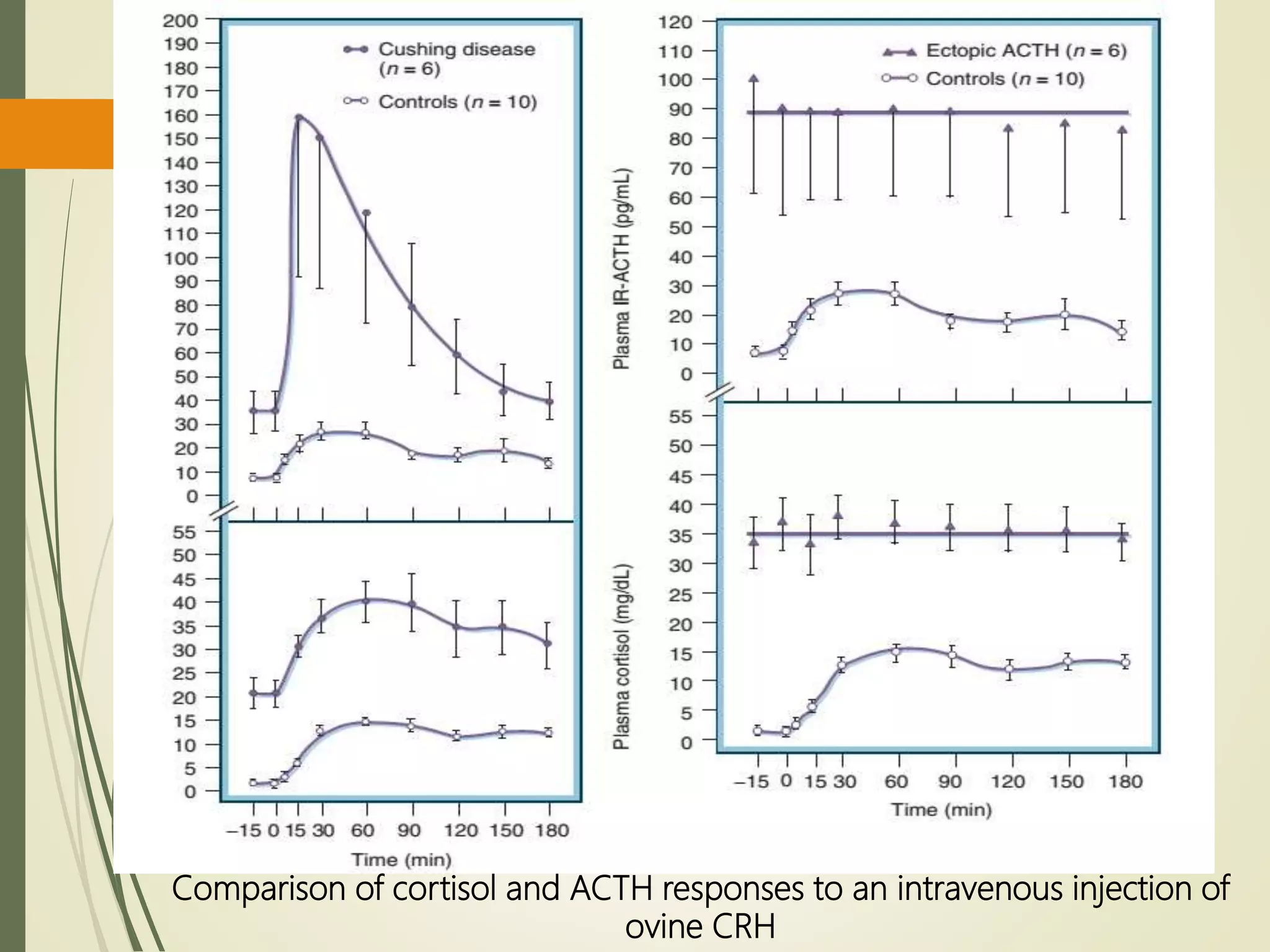
 In normal subjects, CRH produces a rise in ACTH and
cortisol of 15% to 20%.
 Plasma ACTH concentrations peak 30 minutes after CRH
injection and serum cortisol peaks at 60 minutes
 In Cushing disease , response is exaggerated
 in which typically an ACTH increase greater than 50% and a
cortisol rise greater than 20% over baseline values are seen.
 Poor responses occur in patients with adrenal tumor and
in most patients with nonendocrine
ACTH-secreting tumor
 Patients with depression and anorexia nervosa usually do
not exhibit an exaggerated ACTH response to CRH
injection
Comparison of cortisol and ACTH responses to an intravenous injection of
ovine CRH
Differential Diagnosis
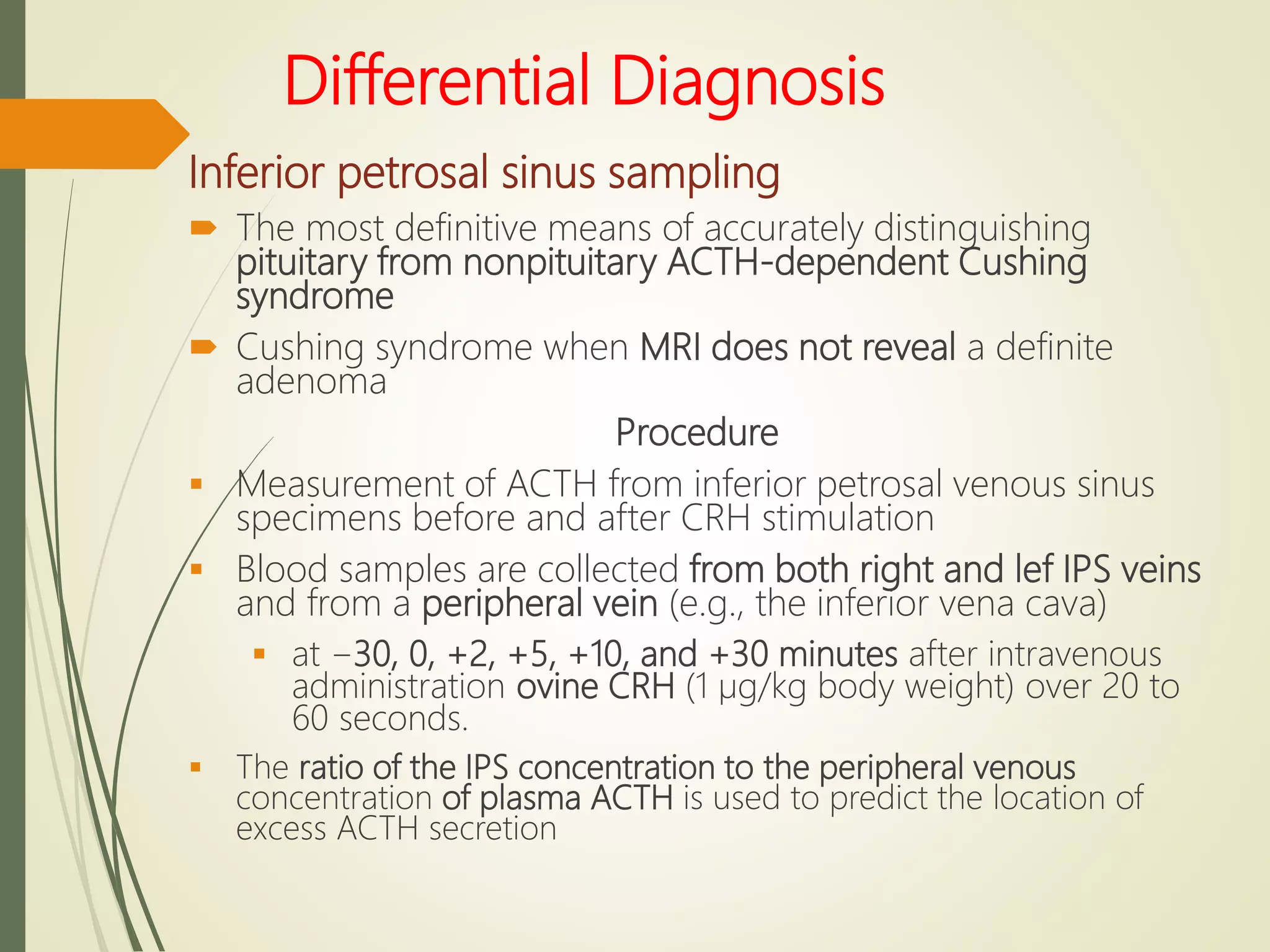
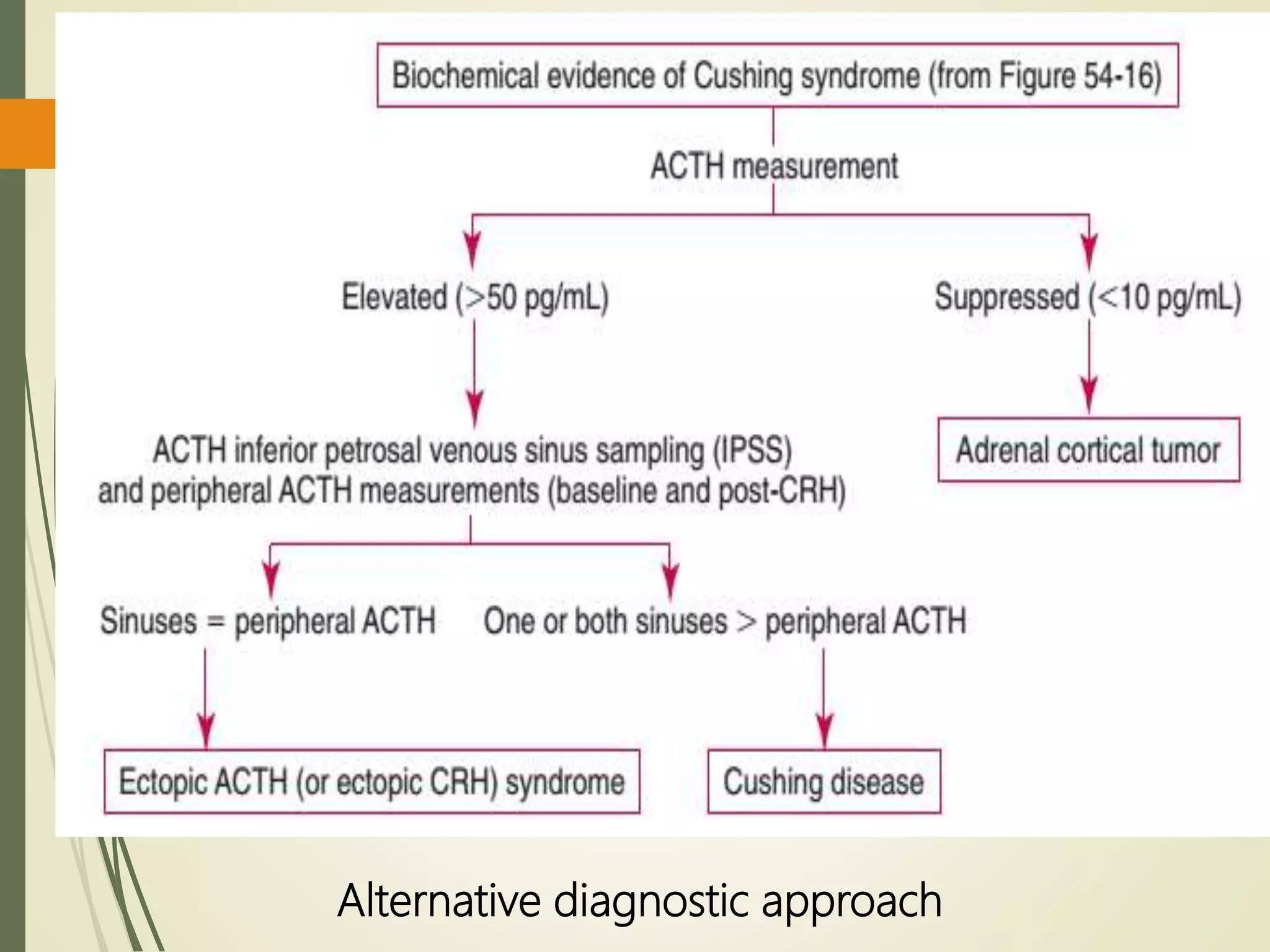
Inferior petrosal sinus sampling
 The most definitive means of accurately distinguishing
pituitary from nonpituitary ACTH-dependent Cushing
syndrome
 Cushing syndrome when MRI does not reveal a definite
adenoma
Procedure
 Measurement of ACTH from inferior petrosal venous sinus
specimens before and after CRH stimulation
 Blood samples are collected from both right and lef IPS veins
and from a peripheral vein (e.g., the inferior vena cava)
 at −30, 0, +2, +5, +10, and +30 minutes after intravenous
administration ovine CRH (1 µg/kg body weight) over 20 to
60 seconds.
 The ratio of the IPS concentration to the peripheral venous
concentration of plasma ACTH is used to predict the location of
excess ACTH secretion
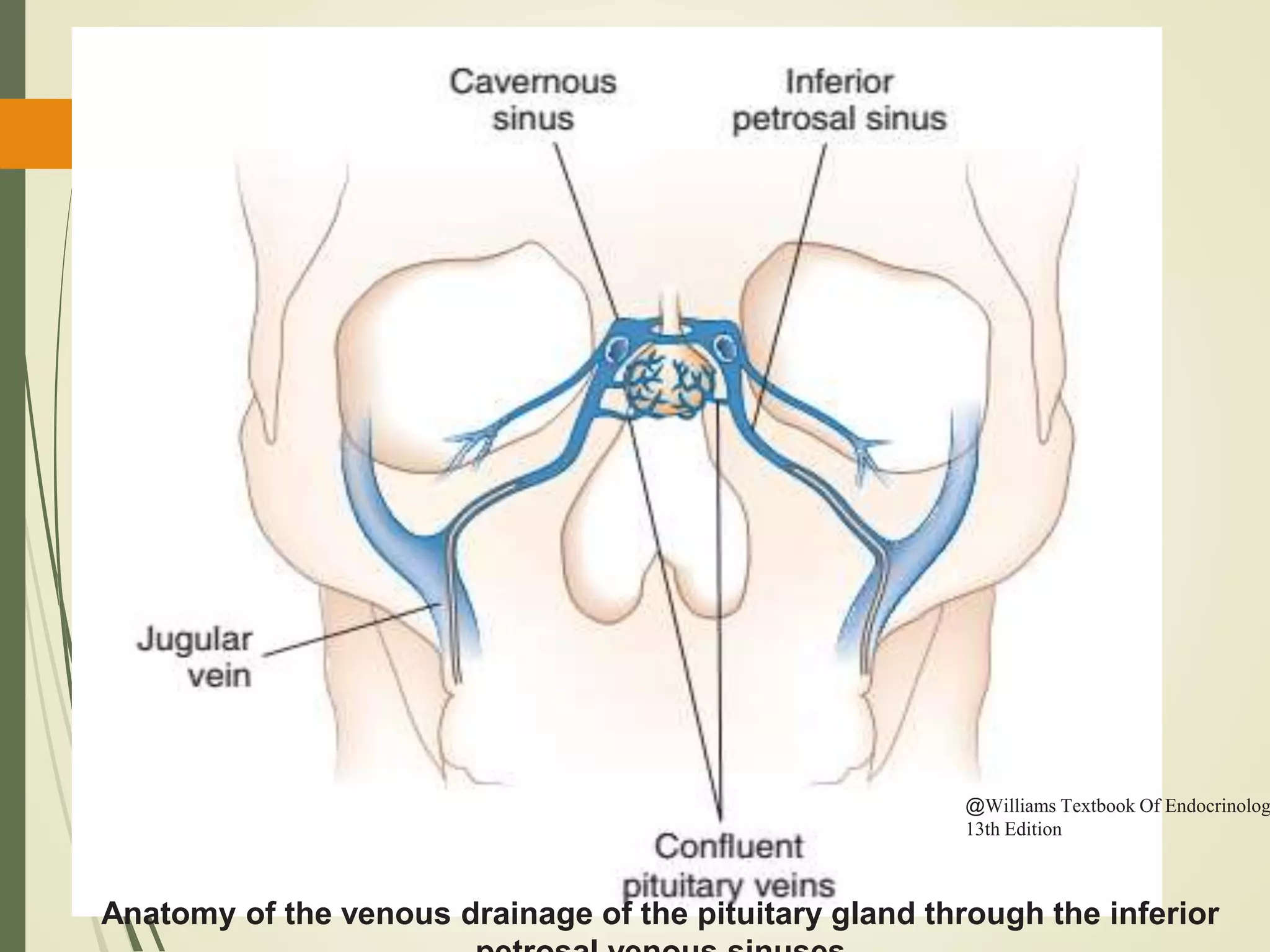
Anatomy of the venous drainage of the pituitary gland through the inferior
@Williams Textbook Of Endocrinolog
13th Edition
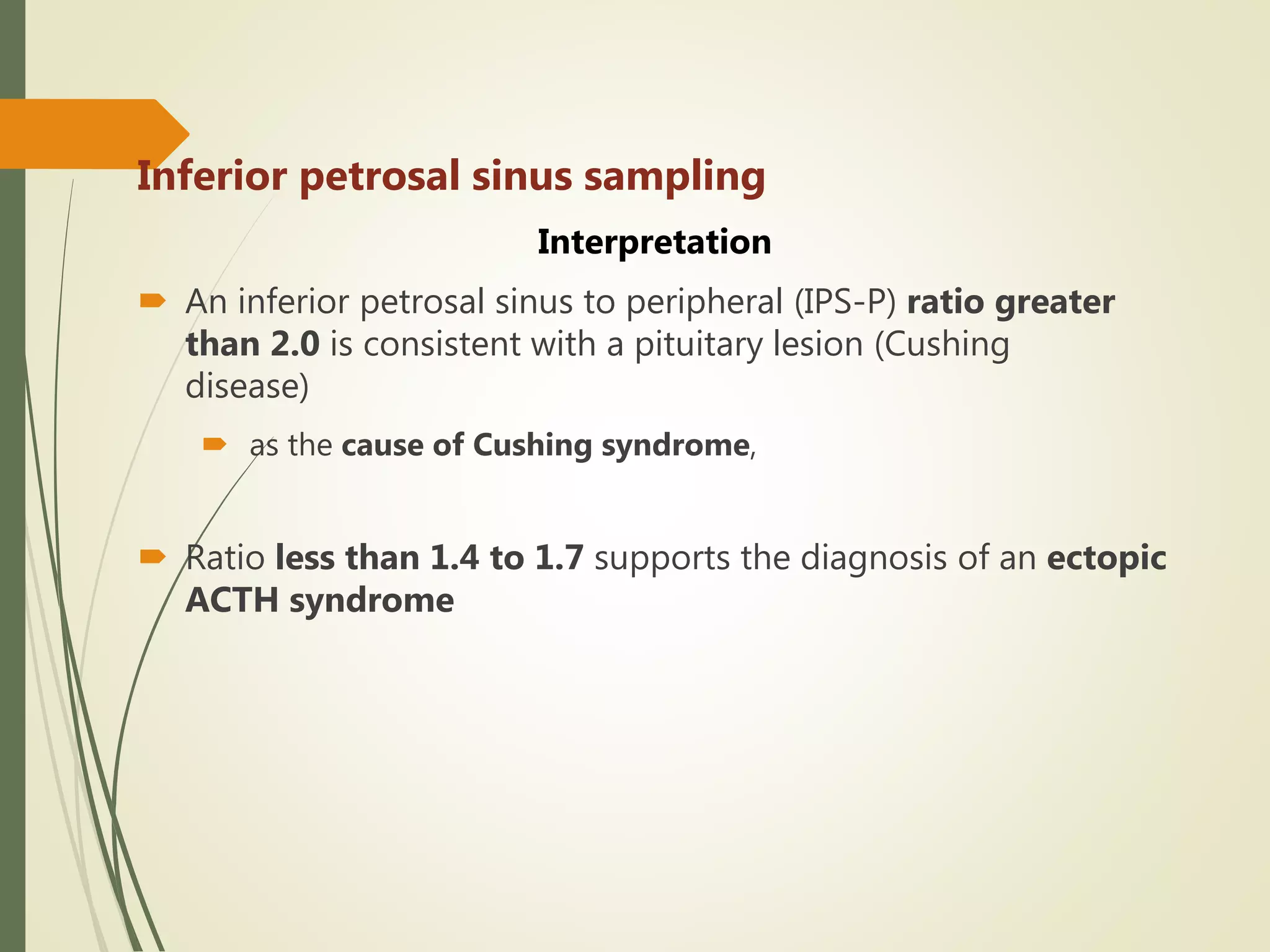
Inferior petrosal sinus sampling
Interpretation
 An inferior petrosal sinus to peripheral (IPS-P) ratio greater
than 2.0 is consistent with a pituitary lesion (Cushing
disease)
 as the cause of Cushing syndrome,
 Ratio less than 1.4 to 1.7 supports the diagnosis of an ectopic
ACTH syndrome
Alternative diagnostic approach
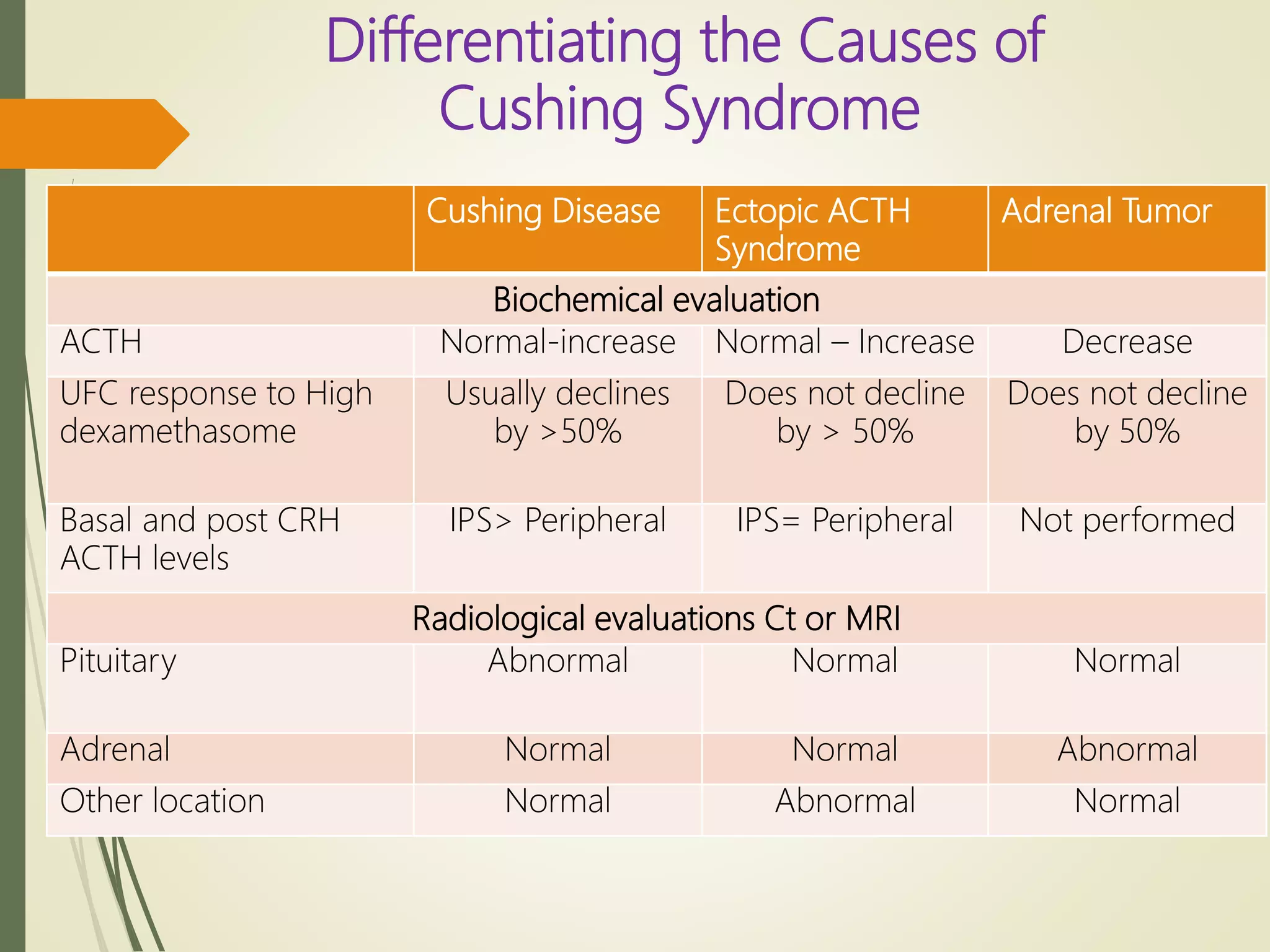
Cushing Disease Ectopic ACTH
Syndrome
Adrenal Tumor
Biochemical evaluation
ACTH Normal-increase Normal – Increase Decrease
UFC response to High
dexamethasome
Usually declines
by >50%
Does not decline
by > 50%
Does not decline
by 50%
Basal and post CRH
ACTH levels
IPS> Peripheral IPS= Peripheral Not performed
Radiological evaluations Ct or MRI
Pituitary Abnormal Normal Normal
Adrenal Normal Normal Abnormal
Other location Normal Abnormal Normal
Differentiating the Causes of
Cushing Syndrome
Summary
Summary
Hyper function of adrenal

Hyper function of adrenal

  • 1.
    Hyperfunction of Adrenal Cortex Hari sharanmakaju M.Sc Clinical biochemistry PG Resident
  • 2.
    Adrenocortical Hyperfunction  Hyperfunction of the adrenal cortex produces clinical syndromes of mineralocorticoid excess, glucocorticoid excess, and androgen excess. Hyperaldosteronism:  A medical condition where too much aldosterone is produced by the adrenal glands, which can lead to sodium retention and potassium loss.  Types:  Primary hyperaldosteronism  Secondary hyperaldosteronism
  • 3.
    PRIMARY HYPERALDOSTERONISM  Also knownas hyporeninemic hyperaldosteronism / Conn’s Syndrome  was first described in 1955 by Conn in conjunction with an aldosterone-producing adrenal adenoma (APA)  Characterized by autonomous excessive production of aldosterone by adrenal glands  Presents with : hypertension , hypokalemic alkalosis renal K+ wasting
  • 4.
    PRIMARY HYPERALDOSTERONISM Causes:  Aldosterone-producing adenoma(APA) ≈30% of cases  Bilateral idiopathic hyperplasia (IHA) ≈60% of cases  Unilateral (primary) adrenal hyperplasia ≈2% of cases  Aldosterone-producing adrenocortical carcinoma <1 % of cases  Familial hyperaldosteronism (FH)  Glucocorticoid-remediable aldosteronism (FH type I) <1%of cases  FH type II (APA or IHA) <6% of cases  FH type III(germline KCNJ5 mutations)—<1% of cases
  • 5.
  • 6.
    PRIMARY HYPERALDOSTERONISM • Clinical features: Hypertension  aldosterone induced Na retention with increase in Extra cellular fluid volume  Muscle weakness and cramping  Due to decrease K+  Muscle paralysis:  severe hypokalemia  Mild metabolic alkalosis  Because of increased urinary hydrogen excretion mediated both by hypokalemia and by the direct stimulatory effect of aldosterone on distal renal tubule acidification.  Polydipsia, polyuria and nocturia:  due to hypokalemia-induced renal concentrating defect
  • 7.
    PRIMARY HYPERALDOSTERONISM Investigation • Electrolyte &blood gasses:  Hypernatremia  Hypokalemia  Alkalosis  Random urine potassium greater than 30 mmol/L  Low renin activity  Elevated aldosterone concentration  Plasma aldosterone : renin activity ratio(ARR)  Sensitive screening test  Primary hyperaldosteronism(PA) is differentiated from other hyper mineralocorticoid states  Most authors recommend an ARR of 20-40, whereas an ARR of at least 35 has 100% sensitivity and 92.3% specificity in diagnosing PA.
  • 8.
    Saline Suppression Test Principle Rapid volume expansion with intravenous saline should suppress plasma aldosterone in normal subjects, but not in patients with primary hyperaldosteronism. Procedure  The subject is awakened at 6am and is kept in an upright posture for 2hours.  Blood is drawn for determination of plasma aldosterone at 8am  The subject then assumes a supine position, and 2 L of isotonic saline 0.9 g/ dL is infused over a 4 hour period.  Blood is drawn for plasma aldosterone determination at noon. Interpretation  Normal subjects: show a plasma aldosterone concentration of 5 ng/dL (140 pmol/L) or less after saline infusion.  Concentrations >10 ng/dL are usually seen in patients with autonomously functioning aldosterone-secreting tumors.
  • 9.
    Adrenal venous sampling Adrenal venous sampling for aldosterone measurements is used  to determine whether the right or left adrenal is hypersecreting aldosterone  AVS is the criterion standard test to distinguish between unilateral and bilateral disease in patients with primary aldosteronism  who want to pursue surgical management for their hypertension.  Blood is obtained from both adrenal veins and inferior venacava below the renal veins  Assayed for aldosterone and cortisol concentrations.  The sensitivity and specificity of a cortisol corrected plasma aldosterone cortisol concentration lateralization ratio( ratio of PAC/cortisol) greater than 4.0 for unilateral disease are 95.2% and 100%,
  • 10.
    V.-C. Wu etal. Case detection and diagnosis o primaryaldosteronismeThe consensus of TaiwanSociety of Aldosteronism: Journal of Formosan Medical association (2017)116,993- 1005
  • 11.
    Adrenal vein aldosteronelateralization ratios for patients with unilateral aldosterone-producing adenomas (APA), bilateral idiopathic hyperplasia (IHA), and unilateral primary adrenal hyperplasia (PAH) @Williams Textbook Of Endocrinology, 13th Edition
  • 12.
    Algorithm provides guidanceon when to consider testing for primary aldosteronism
  • 13.
    Modified from YoungWF Jr, Hogan MJ. Renin-independent hypermineralocorticoidism. Trends Endocrinol Metab. 1994;5:97-106 APA- aldosterone-producing adenoma; AVS,-adrenal venous sampling; IHA-idiopathic hyperaldosteronism; PA-primary aldosteronism; PAH,-primary adrenal hyperplasia.
  • 14.
    © 2018 AmericanHeart Association, Inc. James Brian Byrd. Circulation. Primary Aldosteronism, Volume: 138, Issue: 8, Pages: 823-835, DOI: (10.1161/CIRCULATIONAHA.118.033597)
  • 15.
    Secondary hyperaldosteronism  Isincreased adrenal production of aldosterone in response to stimulus outside the adrenal gland activates the renin-angiotensin system.  Increase renin secretion  – hyperreninemic hyperaldosteronism  Common than primary hyperaldosteronism  Secondary hyperaldosteronism is suspected in patients  with volume depletion, edema, and hypokalemic alkalosis.  Hypertension is usually absent in secondary hyperaldosteronism  unless the patient has a renal artery stenosis.
  • 16.
    Secondary Hyperaldosteronism Common  CongestiveHeart failure  Liver cirrhosis  Nephrotic syndrome Less common o Renal artery stenosis o Sodium – losing nephritis o Renin—secreting tumours
  • 17.
    Responses of therenin-aldosterone volume control loop in primary versus secondary aldosteronism *Initiating event
  • 18.
    Other Forms of MineralocorticoidExcess Unusual conditions that suggest aldosterone excess but do not involve disorders of renin, angiotensin II, or aldosterone include  (1) Apparent Mineralocorticoid Excess,  (2) Type 1 Pseudohyperaldosteronism (Liddle syndrome),  (3) Type 2 Pseudohyperaldosteronism, and  (4) cortisol resistance.
  • 19.
    Apparent mineralocorticoid excess (AME) Results from 11-beta-hydroxysteroid dehydrogenase-2 (HSD11B2) deficiency or inhibition.  Impaired conversion of cortisol to cortisone allows cortisol to bind to the MR, producing a mineralocorticoid effect  in the absence of elevations in aldosterone or DOC.  11-beta-hydroxysteroid dehydrogenase-2 (HSD11B2) deficiency is described as an “apparent” excess of mineralocorticoid Because patients can manifest hypertension, hypokalemia, and alkalosis without elevation of aldosterone nor DOC.  Apparent mineralocorticoid excess is diagnosed by an increased ratio of cortisol to cortisone
  • 20.
    Type 1 pseudohyperaldosteronism (Liddlesyndrome )  Results from gain-of-function mutations in the beta or gamma subunit of the amiloride-sensitive Epithelial sodium channel (ENaC)  Consequences include  excessive sodium reabsorption,  expanded blood volume,  hypertension,  hypokalemia,  alkalosis.  Because the activity of ENaC is autonomous, both renin and aldosterone are suppressed. Type 2 pseudohyperaldosteronism  is a gain-of- function mutation in the MR
  • 21.
    Cortisol Resistance  Loss-of-functionmutations in the GR cause cortisol resistance  In response to decreased cortisol action, CRH and ACTH concentrations rise,  Increasing the circulating cortisol to a sufficient concentration that functional cortisol deficiency is not present.  Protective action of 11-beta-hydroxysteroid dehydrogenase- 2 (HSD11B2) in converting cortisol to cortisone is overwhelmed,  resulting in increased binding of cortisol to the MR and excessive mineralocorticoid effects.
  • 22.
    Differential diagnosis ofhypokalemic, alkalotic hypertension aldosterone-to-renin ratio >20 to 25
  • 24.
    CUSHING’S SYNDROME • Adrenalcortex hyperfunction • Any condition resulting from overproduction of cortisol • Cushing syndrome is caused by • abnormalities of the pituitary or adrenal gland or may occur as a consequence of ACTH or CRH secretion by nonpituitary tumors • Cushing disease is defined as the specific type of Cushing syndrome due to excessive pituitary ACTH secretion from a pituitary tumor.
  • 25.
    Classification Of Causesof Cushing Syndrome Cushing syndrome is most readily classified into ACTH dependent Causes  Cushing disease (pituitary-dependent)≈ 70% of cases  Adenoma (90%)  Hyperplasia (10 %)  Ectopic ACTH syndrome ≈ 15% of cases  Ectopic CRH syndrome ACTH-independent causes  Iatrogenic (glucocorticoid, Megestrol acetate)  Adrenal neoplasm (adenoma, carcinoma) ≈ 5% of cases  Nodular adrenal hyperplasia  Primary pigmented nodular adrenal disease (PPNAD)  Massive macronodular adrenonodular hyperplasia
  • 26.
  • 27.
  • 28.
  • 29.
    Other Syndromes ofHypercortisolemia When there are clinical and biochemical features of Cushing syndrome, but when hypercortisolemia is secondary to other factors it is often referred to as pseudo-Cushing syndrome. Causes  Alcoholism  Abnormalities are all reversible when alcohol abuse by the patient is stopped.  Severe depression  Abnormalities are reversible on correction of the psychiatric condition.  Obesity  Patients with obesity have mildly increased cortisol secretion rates  Urinary free cortisol concentrations are either normal or only slightly elevated
  • 30.
    Clinical features ofCushing syndrome (% prevalence).
  • 31.
    Moon face Truncalobesity Centripetal obesity with abdominal striae Typical bruising and thin skin
  • 32.
    @Williams Textbook OfEndocrinology, 13th Edition
  • 33.
    Diagnosis Routine Laboratory Analysis Although there are no routine laboratory investigations specific to CS, each laboratory test may provide some clue with regard to the diagnosis, including findings such as:  Increased neutrophil  Decreased lymphocyte and eosinophil counts  Hypokalemia  Metabolic alkalosis;  Hyperglycemia; and  Hypercholesterolemia,  Useful for the follow-up of treated patients
  • 34.
    Diagnosis  Exclude exogenoussteroid use.  Screening tests:-  24 hr urinary free cortisol excretion  Dexamethasone overnight test  Midnight plasma / Salivary cortisol  Low dose dexamethasone suppression test  If test are positive then measure plasma ACTH levels :-  ACTH normal/high ACTH dependent Cushing’s  ACTH low ACTH independent Cushing’s
  • 35.
    Diagnosis  ACTH dependentCushing’s:-  High dose dexamethasone suppression test  CRH stimulation test  MRI pituitary  ACTH independent Cushing’s:-  Unenhanced CT adrenals
  • 36.
    Demonstration of increasedcortisol  Assessment of circadian rhythm in cortisol secretion  24-Hour urinary free cortisol excretion  Overnight / low dose dexamethasone suppression test Assessment of circadian rhythm in cortisol secretion.  Measure 8 am and 11 pm serum cortisol level Normal : Serum value than value @ 8 am -3 to 20 µg/dL (80-550 nmol/L) average 10 to 12 µg /dl @ 4 PM are approximately half of morning values. @ 10 PM to 2 AM, the plasma cortisol concentrations less than 3 µg /dL Cushing’s syndrome : rhythm is loss Pseudo-Cushing : normal circadian
  • 37.
    Screening tests 24-Hour urinaryfree cortisol excretion  less than 2% of secreted cortisol appears in urine as free cortisol.  Diagnostic accuracy is greater than 90%  In general, a 24 hour urinary free cortisol concentration less than 50 µg/d  excludes the diagnosis of Cushing syndrome Overnight Low dose Dexamethasone suppression test  Dexamethasone suppresses ACTH and cortisol production in normal subjects, but not in patients with Cushing syndrome.  Differentiates those who have Cushing syndrome from those who do not have.
  • 38.
    Overnight Low doseDexamethasone suppression test Procedure:  1 mg of dexamethasone taken orally between 10 pm and 12 am  Blood drawn at 8am next morning- for determination of serum cortisol Interpretation:  In normal subjects cortisol: < 2µg/dl: excludes cushings syndrome.  Most patients with Cushing syndrome do not show adequate suppression, and 0800 hours cortisol concentrations are usually 10 μg/dL or greater.
  • 39.
    Overnight Low dose Dexamethasonesuppression test  Serum cortisol greater than 2 μg/dL may be seen also in cases of  stress,  obesity,  acute or chronic illness,  alcohol abuse,  severe depression,  pregnancy,  estrogen therapy,  failure to take dexamethasone, or treatment with phenytoin or phenobarbital (which can enhance dexamethasone metabolism).
  • 40.
    Differential Diagnosis Morning PlasmaACTH  Differentiates ACTH-dependent from ACTH-independent causes.  In Cushing disease  50% of patients have a 9 AM ACTH level within the normal reference range (2 to 11 pmol/L [9 to 52 pg/mL]);  in the remainder- modestly elevated.  In the ectopic ACTH syndrome  ACTH levels are high (usually >20 pmol/L [>90 pg/mL]);  Overlap values are seen in Cushing disease in 30% of cases  In patients with adrenal tumors, plasma ACTH is invariably undetectable (<1 pmol/L).
  • 41.
    Differential Diagnosis High-Dose DexamethasoneSuppression Test  High doses of dexamethasone usually suppress production of ACTH by pituitary adenomas (benign tumors), as a result blood and urine levels of cortisol should fall.  If the excess ACTH is being produced by a nonpituitary tumor, cortisol production is less likely to be suppressed.  High dose DST distinguish those pts with cushing’s disease from those having ectopic ACTH syndrome/adrenal tumor Procedure:  8 mg given at 11.00 pm  Measure cortisol at 8.00 am next morning Interpretation:  If cortisol is suppressed: patients with pituitary ACTH macroadenoma  No suppression: patients with ectopic ACTH syndrome
  • 42.
    Differential Diagnosis CRH stimulationtest  In normal subjects, CRH produces a rise in ACTH and cortisol of 15% to 20%.  Plasma ACTH concentrations peak 30 minutes after CRH injection and serum cortisol peaks at 60 minutes  In Cushing disease , response is exaggerated  in which typically an ACTH increase greater than 50% and a cortisol rise greater than 20% over baseline values are seen.  Poor responses occur in patients with adrenal tumor and in most patients with nonendocrine ACTH-secreting tumor  Patients with depression and anorexia nervosa usually do not exhibit an exaggerated ACTH response to CRH injection
  • 43.
    Comparison of cortisoland ACTH responses to an intravenous injection of ovine CRH
  • 44.
    Differential Diagnosis Inferior petrosalsinus sampling  The most definitive means of accurately distinguishing pituitary from nonpituitary ACTH-dependent Cushing syndrome  Cushing syndrome when MRI does not reveal a definite adenoma Procedure  Measurement of ACTH from inferior petrosal venous sinus specimens before and after CRH stimulation  Blood samples are collected from both right and lef IPS veins and from a peripheral vein (e.g., the inferior vena cava)  at −30, 0, +2, +5, +10, and +30 minutes after intravenous administration ovine CRH (1 µg/kg body weight) over 20 to 60 seconds.  The ratio of the IPS concentration to the peripheral venous concentration of plasma ACTH is used to predict the location of excess ACTH secretion
  • 45.
    Anatomy of thevenous drainage of the pituitary gland through the inferior @Williams Textbook Of Endocrinolog 13th Edition
  • 46.
    Inferior petrosal sinussampling Interpretation  An inferior petrosal sinus to peripheral (IPS-P) ratio greater than 2.0 is consistent with a pituitary lesion (Cushing disease)  as the cause of Cushing syndrome,  Ratio less than 1.4 to 1.7 supports the diagnosis of an ectopic ACTH syndrome
  • 49.
  • 50.
    Cushing Disease EctopicACTH Syndrome Adrenal Tumor Biochemical evaluation ACTH Normal-increase Normal – Increase Decrease UFC response to High dexamethasome Usually declines by >50% Does not decline by > 50% Does not decline by 50% Basal and post CRH ACTH levels IPS> Peripheral IPS= Peripheral Not performed Radiological evaluations Ct or MRI Pituitary Abnormal Normal Normal Adrenal Normal Normal Abnormal Other location Normal Abnormal Normal Differentiating the Causes of Cushing Syndrome
  • 52.
  • 53.

Editor's Notes

  • #11 The picture demonstrates left A/C ratio is 15.6 and right A/C ratio is 2.4. Left side divide to right side is 15.6/2.4 is 6.5. Thus, aldosterone secretion is significantly predominant at left side. Furthermore, the picture demonstrates right A/C ratio is 2.4 and peripheral A/C ratio is 3.2. In other words, right side presents a phenomenon of contralateral suppression. Therefore, the AVS shows left lateralization.
  • #13 PRA: 1-20ng/ml/per hour PRC: 20-250pg/ml
  • #14 side-to-side aldosterone-to-cortisol ratios of 4 or greater are consistent with aldosteronoma, whereas side to-side ratios of 3 or less are consistent with IAH.
  • #16 Whereas hypertension is present in primary hyperaldosteronism Measurements of renin and aldosterone concentrations are seldom needed in cases of secondary hyperaldosteronism,
  • #23 glucocorticoid-remediable hyperaldosteronismg (GRH) DOComa (DOC-secreting adrenal adenoma) AME, Apparent mineralocorticoid excess, bilateral idiopathic adrenal hyperplasia (IAH), 18e( 18 hydroxycorticosterone ) If the concentration of renin is elevated, diagnostic considerations include a juxtaglomerular renin-secreting tumor (a reninoma) and renovascular hypertension (assuming that intrinsic renal disease has been ruled out, which can cause elevated renin and aldosterone, leading to hypertension). If renin is suppressed and aldosterone is elevated (an aldosterone-torenin ratio >20 to 25), imaging and venography can help separate unilateral disease without a discrete mass (rare unilateral adrenal hyperplasia), unilateral disease with a discrete mass (aldosteronoma), bilateral idiopathic adrenal hyperplasia (IAH), or the rare condition of glucocorticoid-remediable hyperaldosteronism, with no masses or hyperplasia (see text for details). If aldosterone is not elevated, 11-desoxycorticosterone (DOC) and cortisol should be assayed, allowing the discrimination of several entities: Cushing syndrome or cortisol resistance (normal DOC and elevated cortisol), DOComa (DOC-secreting adrenal adenoma) or CYP11B2 (aldosterone synthase) defiiency (increased DOC and normal cortisol), defiiency of CYP17 (17-hydroxylase defiiency) (increased DOC and decreased cortisol), and end-organ disorders (normal DOC and cortisol).* In familial hyperaldosteronism type 2, aldosterone-producing adrenal adenoma (APA), IAH, or combined disease can be observed. AME, Apparent mineralocorticoid excess; decr, decrease; incr, increase; Nl, normal.
  • #25 Mineralocorticoid and androgen may also be excessive
  • #30 HIV, anorexia nervosa, and depression are associated with elevated serum cortisol concentration. poorly controlled diabetes mellitus, and pregnancy
  • #35 salivary cortisol <0.112 µg/dL)
  • #37 concentrations >9 µg/dL) suggest loss of diurnal variation.
  • #39 A postdexamethasone 0800 hours cortisol cutoff of less than 5 μg/dL is more sensitive for the detection of Cushing syndrome but is less specific. <2 µg/dL) as the cutoff point, this test is reported to have a 97% to 100% true-positive rate and a false-positive rate of less than 1%
  • #41 Skin pigmentation is rare in Cushing disease but common in the ectopic ACTH syndrome.
  • #46 Blood leaves the anterior lobe of the pituitary and drains into the cavernous sinuses, which then empty into the inferior petrosal sinuses and subsequently into the jugular bulb and vein