University of Chakwal,Pakistan
Topic:Upregulation and downregulation
of Luteinizing hormone
Department of Zoology
Presented by: Alishba Qirat
Roll# 20M-UOC/ZOL-25
BS Zoology
Session: 2020-2024
Subject: Endocrinology
Instructor Name: Dr.Syeda Nadia Ahmad
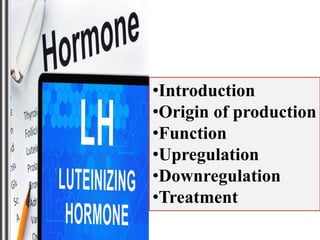
•Introduction
•Origin of production
•Function
•Upregulation
•Downregulation
•Treatment
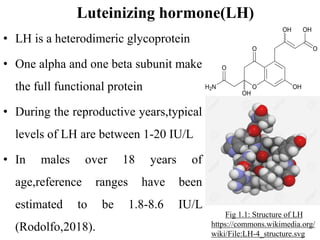
Luteinizing hormone(LH)
• LH is a heterodimeric glycoprotein
• One alpha and one beta subunit make
the full functional protein
• During the reproductive years,typical
levels of LH are between 1-20 IU/L
• In males over 18 years of
age,reference ranges have been
estimated to be 1.8-8.6 IU/L
(Rodolfo,2018).
Fig 1.1: Structure of LH
https://commons.wikimedia.org/
wiki/File:LH-4_structure.svg
Origin of production
• Luteinizing Hormone(LH) is
produced in the pituitary gland
under the regulation of the
Gonadotrophic releasing hormone
(GnRH).
• It is then released into the blood
stream towards the target tissues.
• LH levels are normally low during
childhood and in women,high after
menopause(Holesh,2022).
Fig.1.2 : HPG Axis
https://www.sciencedirect.com/topics/
neuroscience/hypothalamic-pituitary-
gonadal-axis
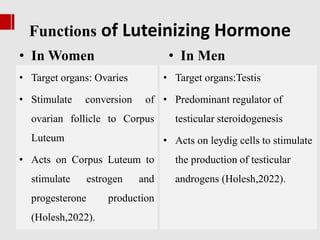
Functions of Luteinizing Hormone
• In Women
• Target organs: Ovaries
• Stimulate conversion of
ovarian follicle to Corpus
Luteum
• Acts on Corpus Luteum to
stimulate estrogen and
progesterone production
(Holesh,2022).
• In Men
• Target organs:Testis
• Predominant regulator of
testicular steroidogenesis
• Acts on leydig cells to stimulate
the production of testicular
androgens (Holesh,2022).
On day 14 there is a burst of LH that
triggers ovulation
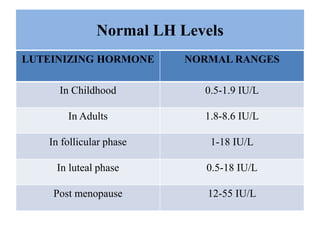
Normal LH Levels
LUTEINIZING HORMONE NORMAL RANGES
In Childhood 0.5-1.9 IU/L
In Adults 1.8-8.6 IU/L
In follicular phase 1-18 IU/L
In luteal phase 0.5-18 IU/L
Post menopause 12-55 IU/L
UPREGULATION
OF LH
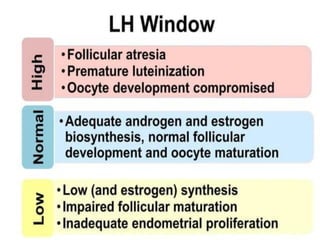
High LH levels can signify
that sex organs aren’t
producing enough steroid
hormones needed for a
reproductive process to
take place. This is typical
of when the ovaries and
testes have exhausted their
ability to produce estrogen
and testosterone, from
genetic, autoimmune,
surgical, or physiologic
causes.
Elevated LH Levels
Thyroid Diseases
and Adrenal gland
Disorders
High levels of LH in a woman’s blood can be a sign of
“primary ovarian failure,”
It can happen because of
• Metabolic disorder
• Genetic disorder
• Autoimmune disorder or have a low number of follicles,
the tiny sacs in ovaries
• In male, abnormally high LH levels can be a sign of
primary testicular failure Gone through chemotherapy or
radiation therapy (Gaskins et al.,2021).
DOWNREGULATION
OF LH
Low LH levels can
signify that pituitary
gland isn’t making the
LH needed to spur
changes in your body
that support sexual
development,repro-
duction.
• Low levels of LH may be a sign of “secondary ovarian
failure,” which means the problem starts with the pituitary
gland or hypothalamus.
• Low LH levels are linked to late puberty, and high levels are
linked to early puberty.
• LH deficiency can be congenital or acquired but based on
HPG axis.
• Causes of LH deficiency can subdivided into hypothalmic
and pituitary causes(Gaskins et al,2021).
Hypothalamic Causes
1. Kallmann Syndrome
• Congenital cause of LH deficiency
• Decreased production of GnRH hormone
• Reduced production of sex hormones
• As a result absence of puberty and secondary sexual
characteristics
2. LH beta-subunit mutations
• Mutations in beta subunit of LH
3. Idiopathic Hypogonadotropic hypogonadism
• Complete or partial absence of GnRH-induced release of
LH.
4. Stress related hypogonadotropic hypogonadism
• Due to hypothalamic suppression
• By prolonged strenuous physical exercise and extreme
weight loss.
• Cause elevation in CRH which inhibit GnRH release
(kalantaridou et al.,2004).
Pituitary Causes
1. Hyperprolactinemia
• High level of prolactin inhibits the secretion of LH from
anterior pituitary.
• Result in hypogonadism,infertility.
2. Sheehan syndrome
• Caused by massive haemorrhage during childbirth.
• Causes ischemic infarction of pituitary gland (kalantaridou
et al.,2004).
Epidemiology
• Hypogonadotropic hypogonadism is between 1 to 10000 in
men and women.
• Almost 66% of cases are associated with kalmann syndrome
,more common in men.
• Stress-related HH is common in young women and accounts
for 30% cases.
• About 52% of women suffering from PCOs and 30% of
them are unaware (Samperi et al.,2022).
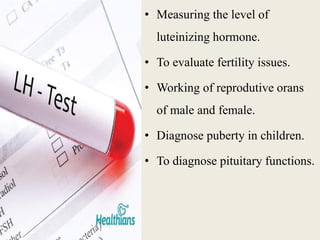
• Measuring the level of
luteinizing hormone.
• To evaluate fertility issues.
• Working of reprodutive orans
of male and female.
• Diagnose puberty in children.
• To diagnose pituitary functions.
Treatment
• Treatment will either target LH levels directly or make
up for the lack of LH by targetting other Processes
• With exercise and low glycaemic nutrition.
• In addition antioxidant have been shown effective in
reducing the LH levels.
• Women with LH deficiency should receive estrogen
replacement Therapy or hormone replacement therapy
(Wortmann et al.,2019)
References
• Holesh JE, Bass AN, Lord M,StatPearls Publishing;
Treasure Island (FL): May 8, 2022. Physiology, Ovulation.
• Gaskins AJ, Mumford SL, Wactawski-Wende J,
Schisterman EF.Luteinizing hormone levels in reproductive-
aged women.Eur J Nutr;51(2):249- 253. Accessed
1/08/2021.
LH hormone.pdf

LH hormone.pdf

  • 1.
  • 2.
    Topic:Upregulation and downregulation ofLuteinizing hormone Department of Zoology Presented by: Alishba Qirat Roll# 20M-UOC/ZOL-25 BS Zoology Session: 2020-2024 Subject: Endocrinology Instructor Name: Dr.Syeda Nadia Ahmad
  • 3.
  • 4.
    Luteinizing hormone(LH) • LHis a heterodimeric glycoprotein • One alpha and one beta subunit make the full functional protein • During the reproductive years,typical levels of LH are between 1-20 IU/L • In males over 18 years of age,reference ranges have been estimated to be 1.8-8.6 IU/L (Rodolfo,2018). Fig 1.1: Structure of LH https://commons.wikimedia.org/ wiki/File:LH-4_structure.svg
  • 5.
    Origin of production •Luteinizing Hormone(LH) is produced in the pituitary gland under the regulation of the Gonadotrophic releasing hormone (GnRH). • It is then released into the blood stream towards the target tissues. • LH levels are normally low during childhood and in women,high after menopause(Holesh,2022). Fig.1.2 : HPG Axis https://www.sciencedirect.com/topics/ neuroscience/hypothalamic-pituitary- gonadal-axis
  • 6.
    Functions of LuteinizingHormone • In Women • Target organs: Ovaries • Stimulate conversion of ovarian follicle to Corpus Luteum • Acts on Corpus Luteum to stimulate estrogen and progesterone production (Holesh,2022). • In Men • Target organs:Testis • Predominant regulator of testicular steroidogenesis • Acts on leydig cells to stimulate the production of testicular androgens (Holesh,2022).
  • 7.
    On day 14there is a burst of LH that triggers ovulation
  • 8.
    Normal LH Levels LUTEINIZINGHORMONE NORMAL RANGES In Childhood 0.5-1.9 IU/L In Adults 1.8-8.6 IU/L In follicular phase 1-18 IU/L In luteal phase 0.5-18 IU/L Post menopause 12-55 IU/L
  • 10.
    UPREGULATION OF LH High LHlevels can signify that sex organs aren’t producing enough steroid hormones needed for a reproductive process to take place. This is typical of when the ovaries and testes have exhausted their ability to produce estrogen and testosterone, from genetic, autoimmune, surgical, or physiologic causes.
  • 11.
    Elevated LH Levels ThyroidDiseases and Adrenal gland Disorders
  • 12.
    High levels ofLH in a woman’s blood can be a sign of “primary ovarian failure,” It can happen because of • Metabolic disorder • Genetic disorder • Autoimmune disorder or have a low number of follicles, the tiny sacs in ovaries • In male, abnormally high LH levels can be a sign of primary testicular failure Gone through chemotherapy or radiation therapy (Gaskins et al.,2021).
  • 13.
    DOWNREGULATION OF LH Low LHlevels can signify that pituitary gland isn’t making the LH needed to spur changes in your body that support sexual development,repro- duction.
  • 14.
    • Low levelsof LH may be a sign of “secondary ovarian failure,” which means the problem starts with the pituitary gland or hypothalamus. • Low LH levels are linked to late puberty, and high levels are linked to early puberty. • LH deficiency can be congenital or acquired but based on HPG axis. • Causes of LH deficiency can subdivided into hypothalmic and pituitary causes(Gaskins et al,2021).
  • 15.
    Hypothalamic Causes 1. KallmannSyndrome • Congenital cause of LH deficiency • Decreased production of GnRH hormone • Reduced production of sex hormones • As a result absence of puberty and secondary sexual characteristics 2. LH beta-subunit mutations • Mutations in beta subunit of LH
  • 16.
    3. Idiopathic Hypogonadotropichypogonadism • Complete or partial absence of GnRH-induced release of LH. 4. Stress related hypogonadotropic hypogonadism • Due to hypothalamic suppression • By prolonged strenuous physical exercise and extreme weight loss. • Cause elevation in CRH which inhibit GnRH release (kalantaridou et al.,2004).
  • 17.
    Pituitary Causes 1. Hyperprolactinemia •High level of prolactin inhibits the secretion of LH from anterior pituitary. • Result in hypogonadism,infertility. 2. Sheehan syndrome • Caused by massive haemorrhage during childbirth. • Causes ischemic infarction of pituitary gland (kalantaridou et al.,2004).
  • 18.
    Epidemiology • Hypogonadotropic hypogonadismis between 1 to 10000 in men and women. • Almost 66% of cases are associated with kalmann syndrome ,more common in men. • Stress-related HH is common in young women and accounts for 30% cases. • About 52% of women suffering from PCOs and 30% of them are unaware (Samperi et al.,2022).
  • 19.
    • Measuring thelevel of luteinizing hormone. • To evaluate fertility issues. • Working of reprodutive orans of male and female. • Diagnose puberty in children. • To diagnose pituitary functions.
  • 20.
    Treatment • Treatment willeither target LH levels directly or make up for the lack of LH by targetting other Processes • With exercise and low glycaemic nutrition. • In addition antioxidant have been shown effective in reducing the LH levels. • Women with LH deficiency should receive estrogen replacement Therapy or hormone replacement therapy (Wortmann et al.,2019)
  • 21.
    References • Holesh JE,Bass AN, Lord M,StatPearls Publishing; Treasure Island (FL): May 8, 2022. Physiology, Ovulation. • Gaskins AJ, Mumford SL, Wactawski-Wende J, Schisterman EF.Luteinizing hormone levels in reproductive- aged women.Eur J Nutr;51(2):249- 253. Accessed 1/08/2021.