International Journal of Modern Engineering Research (IJMER)
              www.ijmer.com               Vol.2, Issue.4, July-Aug 2012 pp-1741-1746        ISSN: 2249-6645

        Experimental Investigation of Cotton Seed Oil and Neem Methyl
                       Esters as Biodiesel On Ci Engine

                                      K.Dilip Kumar1 P.Ravindra Kumar2
                                              1,2
                                              Dept.of Mechanical Engineering,
                         L.B.Reddy College of Engineering, Mylavaram-521230,JNTU, KAKINADA
                                                        A.P, India

Abstract: In a modern day world alternative source of energy are given importance due to gradual depletion of fossil fuels
reserves vegetable oils can be used as an alternative to diesel in CI engines. The use of vegetable oils in CI engine results in
low CO and HC emissions compared to conventional diesel fuel. The present study covers the various aspects of biodiesels
fuel derived from cottonseed oil. Cottonseed oil is converted to cottonseed oil methyl esters by transesterification process
            An experimental investigations were carried out on C.I.engine with Bio Diesel blends of cotton seed Methyl
Esters and Neem Oil Methyl Esters .The engine used for the experiments was single cylinder Four Stroke water cooled,
constant speed diesel engine . cotton seed Methyl ester (CSOME) and Neem oil methyl ester (NOME) are derived through
transesterification process and parameters of transesterification were optimized. The blends of various proportions of the
CSOME & NOME with diesel were prepared, analyzed and compared with diesel fuel, and comparison was made to suggest
the better option among the bio diesel.
          Various Tests have been carried out to examine properties, performance of different blends (C05, C10, C15, and
C20) of CSOME and NOME in comparison to diesel. From the experimental Results it is indicated that C20 have closer
performance to diesel. However, its diesel blends showed reasonable efficiencies. From the experimental results it is
observed that cotton seed methyl ester gives better performance compared to Neem methyl esters and also the emissions and
smoke for these diesel blends are less as compare to the pure diesel.

Keywords: Bio-diesel, Properties, Transesterification, Optimization, cottonseed oil methyl Ester (CSOME),
 Neem oil methyl ester (NOME)

                                                      I.     Introduction
Energy is key input for technological, industrial, social and economical development of a nation. Five generations (125
years) ago, wood supplied up to 90% of our energy needs. Due to the convenience and low prices of fossil fuels wood use
has fallen globally. The present energy scenario now is heavily biased towards the conventional energy sources such as
petroleum products, coal, atomic energy etc, which are finite in nature besides causing environmental pollution. Of the
available energy, the present energy utilization pattern is heavily biased for meeting the high energy requirement in urban
and metropolitan cities. There are different types of BioDiesels are available such as Sunflower, Soyabean, Cottonseed,
Linseed, Mahua, Jatropha, Pongamia, etc .[3]. The vegetable oils can be used in Diesel engines by various techniques such as
fuel modifications by Transesterification , Diesel Vegetable blends and Vegetable oil heating etc.[4]. The present work was
to investigate the evolution of Cotton seed and Neem seed oils with Diesel. Experiments were carried out at constant speed
1500 rpm and at different loads with different blends.

1.1 Fuel Modification
          The alternative diesel fuels must be technically and environmentally acceptable and economically competitive.
From the view point s of requirements, triglycerides (vegetable oils or animal fats) and their derivatives may be considered
as viable alternative for diesel fuels [5]. The problems with substituting triglycerides for diesel fuels are mostly associated
with high viscosity, low volatility and poly un-saturated character. The problems have been mitigated by developing
vegetable oil derivatives that approximate the properties and performance and make them compatible with the hydro carbon
based diesel fuels by following methods: Dilution (blending), Pyrolysis (cracking), Micro-emulsification [7] and
Transesterification.

1.1.1    Transesterification:
         Transesterification is the reaction of vegetable oil or animal fat with an alcohol, in most cases methanol, to form
esters and glycerol. The transesterification reaction is affected by alcohol type, molar ratio of glycerides to alcohol, type and
amount of catalyst, reaction temperature, reaction time and free fatty acids and water content of vegetable oils or animal fats.
The transesterification reaction proceeds with or without a catalyst by using primary or secondary monohydric aliphatic
alcohols having 1–8 carbon atoms as follows:
Triglycerides + Alcohol Glycerin + Mono-alkyl esters
         Generally, the reaction temperature near the boiling point of the alcohol is recommended. Nevertheless, the reaction
may be carried out at room temperature. The reactions take place at low temperatures (~65°C) and at modest pressures (2
atm, 1 atm = 101.325 kPa). Bio-diesel is further purified by washing and evaporation to remove any remaining methanol.
The oil (87%), alcohol (9%), and catalyst (1%) are the inputs in the production of bio-diesel (86%), the main output . Pre-
treatment is not required if the reaction is carried out under high pressure (9000 kPa) and high temperature (~240°C), where
                                                      www.ijmer.com                                              1741 | P a g e
International Journal of Modern Engineering Research (IJMER)
             www.ijmer.com                Vol.2, Issue.4, July-Aug 2012 pp-1741-1746           ISSN: 2249-6645
simultaneous esterification and transesterification take place with maximum yield obtained at temperatures ranging from 60
to 80°C at a molar ratio of 6:1. The alcohols employed in the transesterification are generally short chain alcohols such as
methanol, ethanol, propanol, and butanol. It was reported that when transesterification of soybean oil using methanol,
ethanol and butanol was performed, 96–98% of ester could be obtained after 1 h of reaction.

                                                  Table 1. Properties of Diesel and Crude Oils

                      S.NO      PROPERTY                    DIESEL                COTTONSEED             NEEMSEED
                                Calorific
                      1                                     43,000 kJ/kg          39,648kJ/kg            35,125 kJ/kg
                                Value
                      2         Flash Point                 440 C                 2340C                  1780C
                      3         Fire Point                  490 C                 1920 C                 2090 C

                      4         Viscosity                   0.278 poise           2.52 poise             1.864 poise

                      5         Density                     835 kg/m3             850 kg/m3              928 kg/m3
,
                                                      Table 1.1 Blending percentage of fuel
                                              FUEL                    BIO-DIESEL                        DIESEL
                  NOTATION                    QUANTITY                QUANTITY                          QUANTITY
                                              (Liters)                (ml)                              (ml)
                  C10                         1                       100                               900

                  C20                         1                             200                         800

                  C30                         1                             300                         700


                               Table 1.2 Properties of Pure Diesel, Cottonseed oil With Neem oil

                                                              Cottonseed
                          Property                  Diesel                          C10          C20            C30
                                                              Methyl Ester

                          Heating value
                                                    43000     39648                 42308        42116          41834
                          (kJ/kg)

                          Carbon
                          residue (% by             <0.35     0.42                  0.39         0.38           0.36
                          weight)

                          Density (g/cc)
                                                    0.815     0.850                 0.830        0.852          0.862

                          Kinematic
                                                    3.5       6.0                   4.68         4.87           5.05
                          Viscosity(cSt)


                                              3
                                  VISCOSITY


                                              2
                                                                                                              COTTON
                                              1
                                                                                                              NEEM
                                              0
                                                                                                              DIESEL
                                                   CRUDE C5           C10     C15     C20      C100
                                                                       BLENDS

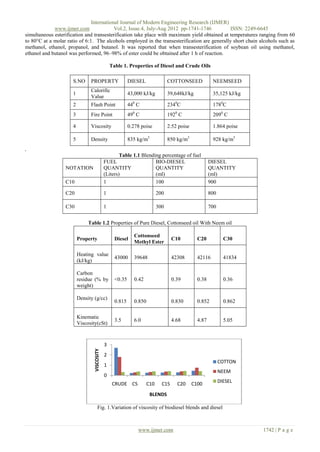
                                      Fig. 1.Variation of viscosity of biodiesel blends and diesel


                                                                www.ijmer.com                                           1742 | P a g e
International Journal of Modern Engineering Research (IJMER)
              www.ijmer.com               Vol.2, Issue.4, July-Aug 2012 pp-1741-1746        ISSN: 2249-6645
                                               II.      Experimental set up
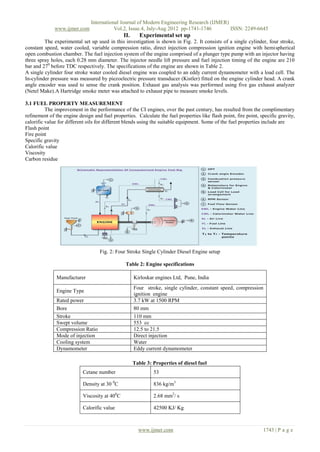
         The experimental set up used in this investigation is shown in Fig. 2. It consists of a single cylinder, four stroke,
constant speed, water cooled, variable compression ratio, direct injection compression ignition engine with hemispherical
open combustion chamber. The fuel injection system of the engine comprised of a plunger type pump with an injector having
three spray holes, each 0.28 mm diameter. The injector needle lift pressure and fuel injection timing of the engine are 210
bar and 270 before TDC respectively. The specifications of the engine are shown in Table 2.
A single cylinder four stroke water cooled diesel engine was coupled to an eddy current dynamometer with a load cell. The
In-cylinder pressure was measured by piezoelectric pressure transducer (Kistler) fitted on the engine cylinder head. A crank
angle encoder was used to sense the crank position. Exhaust gas analysis was performed using five gas exhaust analyzer
(Netel Make).A Hartridge smoke meter was attached to exhaust pipe to measure smoke levels.

3.1 FUEL PROPERTY MEASUREMENT
          The improvement in the performance of the CI engines, over the past century, has resulted from the complimentary
refinement of the engine design and fuel properties. Calculate the fuel properties like flash point, fire point, specific gravity,
calorific value for different oils for different blends using the suitable equipment. Some of the fuel properties include are
Flash point
Fire point
Specific gravity
Calorific value
Viscosity
Carbon residue


                                   Fig. 2: Four Stroke Single Cylinder Diesel Engine setup

                                                Table 2: Engine specifications

               Manufacturer                          Kirloskar engines Ltd, Pune, India
                                                     Four stroke, single cylinder, constant speed, compression
               Engine Type
                                                     ignition engine
               Rated power                           3.7 kW at 1500 RPM
               Bore                                  80 mm
               Stroke                                110 mm
               Swept volume                          553 cc
               Compression Ratio                     12.5 to 21.5
               Mode of injection                     Direct injection
               Cooling system                        Water
               Dynamometer                           Eddy current dynamometer

                                                     Table 3: Properties of diesel fuel
                           Cetane number                      53

                           Density at 30 0C                   836 kg/m3

                           Viscosity at 400C                  2.68 mm2/ s

                           Calorific value                    42500 KJ/ Kg


                                                       www.ijmer.com                                              1743 | P a g e
International Journal of Modern Engineering Research (IJMER)
             www.ijmer.com                                Vol.2, Issue.4, July-Aug 2012 pp-1741-1746        ISSN: 2249-6645


                                                         (a)                                       (b)
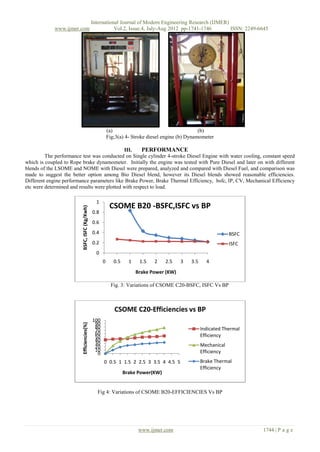
                                                         Fig;3(a) 4- Stroke diesel engine (b) Dynamometer

                                             III.     PERFORMANCE
         The performance test was conducted on Single cylinder 4-stroke Diesel Engine with water cooling, constant speed
which is coupled to Rope brake dynamometer. Initially the engine was tested with Pure Diesel and later on with different
blends of the LSOME and NOME with Diesel were prepared, analyzed and compared with Diesel Fuel, and comparison was
made to suggest the better option among Bio Diesel blend, however its Diesel blends showed reasonable efficiencies.
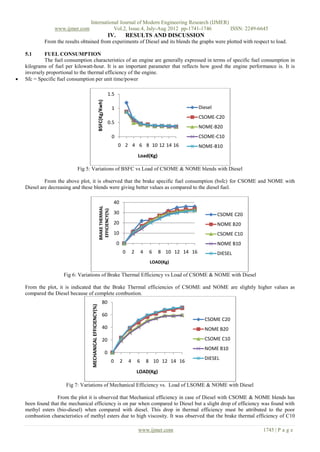
Different engine performance parameters like Brake Power, Brake Thermal Efficiency, bsfc, IP, CV, Mechanical Efficiency
etc were determined and results were plotted with respect to load.

                                                 1
                                                          CSOME B20 -BSFC,ISFC vs BP
                         BSFC, ISFC (Kg/Kwh)


                                               0.8
                                               0.6
                                               0.4                                                                BSFC
                                               0.2                                                                ISFC
                                                 0
                                                     0      0.5     1    1.5   2    2.5    3   3.5     4
                                                                        Brake Power (KW)

                                                           Fig. 3: Variations of CSOME C20-BSFC, ISFC Vs BP


                                                            CSOME C20-Efficiencies vs BP
                                               100
                                                90
                         Efficiencies(%)


                                                80                                                   Indicated Thermal
                                                70
                                                60                                                   Efficiency
                                                50
                                                40
                                                30                                                   Mechanical
                                                20
                                                10                                                   Efficiency
                                                 0
                                                     0 0.5 1 1.5 2 2.5 3 3.5 4 4.5 5                 Brake Thermal
                                                                                                     Efficiency
                                                                  Brake Power(KW)


                                                 Fig 4: Variations of CSOME B20-EFFICIENCIES Vs BP


                                                                         www.ijmer.com                                   1744 | P a g e
International Journal of Modern Engineering Research (IJMER)
                 www.ijmer.com               Vol.2, Issue.4, July-Aug 2012 pp-1741-1746        ISSN: 2249-6645
                                                                                IV.           RESULTS AND DISCUSSION
            From the results obtained from experiments of Diesel and its blends the graphs were plotted with respect to load.

    5.1      FUEL CONSUMPTION
             The fuel consumption characteristics of an engine are generally expressed in terms of specific fuel consumption in
    kilograms of fuel per kilowatt-hour. It is an important parameter that reflects how good the engine performance is. It is
    inversely proportional to the thermal efficiency of the engine.
   Sfc = Specific fuel consumption per unit time/power

                                                                                1.5
                                                             BSFC(Kg/Kwh)
                                                                                 1                                                     Diesel
                                                                                                                                       CSOME-C20
                                                                                0.5
                                                                                                                                       NOME-B20
                                                                                 0                                                     CSOME-C10
                                                                                      0 2 4 6 8 10 12 14 16                            NOME-B10
                                                                                                          Load(Kg)

                           Fig 5: Variations of BSFC vs Load of CSOME & NOME blends with Diesel

             From the above plot, it is observed that the brake specific fuel consumption (bsfc) for CSOME and NOME with
    Diesel are decreasing and these blends were giving better values as compared to the diesel fuel.

                                                                                  40
                                                              BRAKE THERMAL
                                                               EFFICIENCY(%)


                                                                                  30                                                            CSOME C20
                                                                                  20                                                            NOME B20
                                                                                  10                                                            CSOME C10
                                                                                      0                                                         NOME B10
                                                                                              0       2       4    6   8 10 12 14 16            DIESEL
                                                                                                                   LOAD(Kg)

                     Fig 6: Variations of Brake Thermal Efficiency vs Load of CSOME & NOME with Diesel

    From the plot, it is indicated that the Brake Thermal efficiencies of CSOME and NOME are slightly higher values as
    compared the Diesel because of complete combustion.
                                                                     80
                                  MECHANICAL EFFICIENCY(%)


                                                                     60
                                                                                                                                         CSOME C20
                                                                     40                                                                  NOME B20

                                                                     20                                                                  CSOME C10
                                                                                                                                         NOME B10
                                                                            0
                                                                                                                                         DIESEL
                                                                                 0        2       4       6       8 10 12 14 16
                                                                                                          LOAD(Kg)

                      Fig 7: Variations of Mechanical Efficiency vs. Load of LSOME & NOME with Diesel

                  From the plot it is observed that Mechanical efficiency in case of Diesel with CSOME & NOME blends has
    been found that the mechanical efficiency is on par when compared to Diesel but a slight drop of efficiency was found with
    methyl esters (bio-diesel) when compared with diesel. This drop in thermal efficiency must be attributed to the poor
    combustion characteristics of methyl esters due to high viscosity. It was observed that the brake thermal efficiency of C10

                                                                                                          www.ijmer.com                                     1745 | P a g e
International Journal of Modern Engineering Research (IJMER)
             www.ijmer.com                Vol.2, Issue.4, July-Aug 2012 pp-1741-1746          ISSN: 2249-6645
and C20 are very close to brake thermal efficiency of diesel. C20 methyl ester had equal efficiency with diesel. So C20 can
be suggested as best blend for bio-diesel preparation.

                                                   V.    CONCLUSION
         In the current investigation, it has confirmed that COTTONSEED and NEEM oil may be used as resource to obtain
the bio diesel. The methyl esters of Cottonseed and Neem seed along with diesel may reduce the environmental impacts of
transportation and also reduce the dependency on crude oil imports, and also provide employments in agricultural field. The
conclusions are summarized as follows.
1. There was increase in Brake Thermal Efficiency of CSOME –C20 as compared to Pure Diesel because of complete
     combustion.
2. It was observed that the smoke and emissions for the blends of CSOME and NOME are less as compared to Pure Diesel.
3. Properties of the 20% blend of LSOME are nearer to the Diesel Fuel.
4. Thus the above investigations suggest that blend of CSOME – C20 is the optimum blend which can produce better
     values with Pure Diesel for Diesel engines as far as performance and emissions were considered.

                                                              References
[1]     Srinivasa rao. P, Goplalakrishna KV. ―Esterified oils as fuels in diesel engines‖, 11 th national conference on IC Engines, IIT
        Madras, India, 1983.
[2]     Tomasevic AV, Marinkovic SS ―Methanolysis of used frying oil‖. Fuel process technology 2003; 81:1-6.
[3]     A.S Ramadhas, S.Jayaraj, C Muraleedharan, ―use of vegetable oils as IC engine fuels A review‖, Renewable energy,
        Vol.29,203,727-742.
[4]     Canakci and Vam Geroen (2003) ―A pilot plant to produce biodiesel form high free fatty acid feedstock‖, American society of
        agricultural engineers, 46(4), PP: 945-954
[5]     Jon H. Van Gerpen, Charles L. Peterson, Carroll E. Goering, Biodiesel: An Alternative Fuel for             Compression Ignition
        Engines, For presentation at the 2007 Agricultural Equipment Technology Conference Louisville, Kentucky, USA 11-14
        February 2007.
[6]     ASTM. 2002. D 6751 – Standard specification for biodiesel fuel (B100) blend stock for distillate     fuels. West Conshohocken,
        Penn: ASTM International..
[7]     Rupinder Sing, Biodiesel Production from Jatropha (Source- Kurukshetra, volume-55, No-4,             February- Prof. (Dr.) R. K.
        Khotoliya, Dr. Harminder Kaur &2007).
[8]     Knothe, G. 2005b. Cetane numbers—the history of vegetable oil-based diesel fuels. Chapter 2 in G. Knothe, J. Van Gerpen, and
        J. Krahl, eds. The Biodiesel Handbook. Champaign, Ill.: American Oil Chemists’ Society Press.
[9]     Peterson, C.L. 1980. Vegetable oils—Renewable fuels for diesel engines. ASAE Paper No. PNW 80- 105. St. Joseph, Mich.:
        ASAE.
[10]    Dizge N, Aydine C,Imer DY, Bayramoglu M, Tanriseven A, Keskinler B. Biodiesel production from sunflower, soybean and
        waste cooking oils by transesterification using lipase immobilized onto a novel microporus polymer.bioresour technol
        2009;100:1983-91
[11]    NBB. Biodiesel production and quality. Fuel fact sheets. Usa: National Biodiesel   board:2007
[12]    Bondioli p,Gasparoli A,Lanzani A, Fedeli E, veronese S, Sala M. storage stability of biodieseal. J Am oil chem soc 1995;
        72:699-702.
[13]    Bhattacharya S and Reddy CS (1994) Vegetable oils as fuels for internal combustion engines: a review, Instt.57, 157-166.
[14]    Srivastava A and Prasad R (2000) Triglycerides –based diesel fuels, Renewable & Sustainable Energy Rev.4,111-133.
[15]    Ayhan Demirbas , ― A Survey of Bio Diesel fuels from vegetable oils via Catalytic and Non Catalytic Alcohol
        Transesterifications and other methods‖ Journal of Energy Conversion and Management , September 2002.


                                                       www.ijmer.com                                                   1746 | P a g e

Ab02417411746

  • 1.
    International Journal ofModern Engineering Research (IJMER) www.ijmer.com Vol.2, Issue.4, July-Aug 2012 pp-1741-1746 ISSN: 2249-6645 Experimental Investigation of Cotton Seed Oil and Neem Methyl Esters as Biodiesel On Ci Engine K.Dilip Kumar1 P.Ravindra Kumar2 1,2 Dept.of Mechanical Engineering, L.B.Reddy College of Engineering, Mylavaram-521230,JNTU, KAKINADA A.P, India Abstract: In a modern day world alternative source of energy are given importance due to gradual depletion of fossil fuels reserves vegetable oils can be used as an alternative to diesel in CI engines. The use of vegetable oils in CI engine results in low CO and HC emissions compared to conventional diesel fuel. The present study covers the various aspects of biodiesels fuel derived from cottonseed oil. Cottonseed oil is converted to cottonseed oil methyl esters by transesterification process An experimental investigations were carried out on C.I.engine with Bio Diesel blends of cotton seed Methyl Esters and Neem Oil Methyl Esters .The engine used for the experiments was single cylinder Four Stroke water cooled, constant speed diesel engine . cotton seed Methyl ester (CSOME) and Neem oil methyl ester (NOME) are derived through transesterification process and parameters of transesterification were optimized. The blends of various proportions of the CSOME & NOME with diesel were prepared, analyzed and compared with diesel fuel, and comparison was made to suggest the better option among the bio diesel. Various Tests have been carried out to examine properties, performance of different blends (C05, C10, C15, and C20) of CSOME and NOME in comparison to diesel. From the experimental Results it is indicated that C20 have closer performance to diesel. However, its diesel blends showed reasonable efficiencies. From the experimental results it is observed that cotton seed methyl ester gives better performance compared to Neem methyl esters and also the emissions and smoke for these diesel blends are less as compare to the pure diesel. Keywords: Bio-diesel, Properties, Transesterification, Optimization, cottonseed oil methyl Ester (CSOME), Neem oil methyl ester (NOME) I. Introduction Energy is key input for technological, industrial, social and economical development of a nation. Five generations (125 years) ago, wood supplied up to 90% of our energy needs. Due to the convenience and low prices of fossil fuels wood use has fallen globally. The present energy scenario now is heavily biased towards the conventional energy sources such as petroleum products, coal, atomic energy etc, which are finite in nature besides causing environmental pollution. Of the available energy, the present energy utilization pattern is heavily biased for meeting the high energy requirement in urban and metropolitan cities. There are different types of BioDiesels are available such as Sunflower, Soyabean, Cottonseed, Linseed, Mahua, Jatropha, Pongamia, etc .[3]. The vegetable oils can be used in Diesel engines by various techniques such as fuel modifications by Transesterification , Diesel Vegetable blends and Vegetable oil heating etc.[4]. The present work was to investigate the evolution of Cotton seed and Neem seed oils with Diesel. Experiments were carried out at constant speed 1500 rpm and at different loads with different blends. 1.1 Fuel Modification The alternative diesel fuels must be technically and environmentally acceptable and economically competitive. From the view point s of requirements, triglycerides (vegetable oils or animal fats) and their derivatives may be considered as viable alternative for diesel fuels [5]. The problems with substituting triglycerides for diesel fuels are mostly associated with high viscosity, low volatility and poly un-saturated character. The problems have been mitigated by developing vegetable oil derivatives that approximate the properties and performance and make them compatible with the hydro carbon based diesel fuels by following methods: Dilution (blending), Pyrolysis (cracking), Micro-emulsification [7] and Transesterification. 1.1.1 Transesterification: Transesterification is the reaction of vegetable oil or animal fat with an alcohol, in most cases methanol, to form esters and glycerol. The transesterification reaction is affected by alcohol type, molar ratio of glycerides to alcohol, type and amount of catalyst, reaction temperature, reaction time and free fatty acids and water content of vegetable oils or animal fats. The transesterification reaction proceeds with or without a catalyst by using primary or secondary monohydric aliphatic alcohols having 1–8 carbon atoms as follows: Triglycerides + Alcohol Glycerin + Mono-alkyl esters Generally, the reaction temperature near the boiling point of the alcohol is recommended. Nevertheless, the reaction may be carried out at room temperature. The reactions take place at low temperatures (~65°C) and at modest pressures (2 atm, 1 atm = 101.325 kPa). Bio-diesel is further purified by washing and evaporation to remove any remaining methanol. The oil (87%), alcohol (9%), and catalyst (1%) are the inputs in the production of bio-diesel (86%), the main output . Pre- treatment is not required if the reaction is carried out under high pressure (9000 kPa) and high temperature (~240°C), where www.ijmer.com 1741 | P a g e
  • 2.
    International Journal ofModern Engineering Research (IJMER) www.ijmer.com Vol.2, Issue.4, July-Aug 2012 pp-1741-1746 ISSN: 2249-6645 simultaneous esterification and transesterification take place with maximum yield obtained at temperatures ranging from 60 to 80°C at a molar ratio of 6:1. The alcohols employed in the transesterification are generally short chain alcohols such as methanol, ethanol, propanol, and butanol. It was reported that when transesterification of soybean oil using methanol, ethanol and butanol was performed, 96–98% of ester could be obtained after 1 h of reaction. Table 1. Properties of Diesel and Crude Oils S.NO PROPERTY DIESEL COTTONSEED NEEMSEED Calorific 1 43,000 kJ/kg 39,648kJ/kg 35,125 kJ/kg Value 2 Flash Point 440 C 2340C 1780C 3 Fire Point 490 C 1920 C 2090 C 4 Viscosity 0.278 poise 2.52 poise 1.864 poise 5 Density 835 kg/m3 850 kg/m3 928 kg/m3 , Table 1.1 Blending percentage of fuel FUEL BIO-DIESEL DIESEL NOTATION QUANTITY QUANTITY QUANTITY (Liters) (ml) (ml) C10 1 100 900 C20 1 200 800 C30 1 300 700 Table 1.2 Properties of Pure Diesel, Cottonseed oil With Neem oil Cottonseed Property Diesel C10 C20 C30 Methyl Ester Heating value 43000 39648 42308 42116 41834 (kJ/kg) Carbon residue (% by <0.35 0.42 0.39 0.38 0.36 weight) Density (g/cc) 0.815 0.850 0.830 0.852 0.862 Kinematic 3.5 6.0 4.68 4.87 5.05 Viscosity(cSt) 3 VISCOSITY 2 COTTON 1 NEEM 0 DIESEL CRUDE C5 C10 C15 C20 C100 BLENDS Fig. 1.Variation of viscosity of biodiesel blends and diesel www.ijmer.com 1742 | P a g e
  • 3.
    International Journal ofModern Engineering Research (IJMER) www.ijmer.com Vol.2, Issue.4, July-Aug 2012 pp-1741-1746 ISSN: 2249-6645 II. Experimental set up The experimental set up used in this investigation is shown in Fig. 2. It consists of a single cylinder, four stroke, constant speed, water cooled, variable compression ratio, direct injection compression ignition engine with hemispherical open combustion chamber. The fuel injection system of the engine comprised of a plunger type pump with an injector having three spray holes, each 0.28 mm diameter. The injector needle lift pressure and fuel injection timing of the engine are 210 bar and 270 before TDC respectively. The specifications of the engine are shown in Table 2. A single cylinder four stroke water cooled diesel engine was coupled to an eddy current dynamometer with a load cell. The In-cylinder pressure was measured by piezoelectric pressure transducer (Kistler) fitted on the engine cylinder head. A crank angle encoder was used to sense the crank position. Exhaust gas analysis was performed using five gas exhaust analyzer (Netel Make).A Hartridge smoke meter was attached to exhaust pipe to measure smoke levels. 3.1 FUEL PROPERTY MEASUREMENT The improvement in the performance of the CI engines, over the past century, has resulted from the complimentary refinement of the engine design and fuel properties. Calculate the fuel properties like flash point, fire point, specific gravity, calorific value for different oils for different blends using the suitable equipment. Some of the fuel properties include are Flash point Fire point Specific gravity Calorific value Viscosity Carbon residue Fig. 2: Four Stroke Single Cylinder Diesel Engine setup Table 2: Engine specifications Manufacturer Kirloskar engines Ltd, Pune, India Four stroke, single cylinder, constant speed, compression Engine Type ignition engine Rated power 3.7 kW at 1500 RPM Bore 80 mm Stroke 110 mm Swept volume 553 cc Compression Ratio 12.5 to 21.5 Mode of injection Direct injection Cooling system Water Dynamometer Eddy current dynamometer Table 3: Properties of diesel fuel Cetane number 53 Density at 30 0C 836 kg/m3 Viscosity at 400C 2.68 mm2/ s Calorific value 42500 KJ/ Kg www.ijmer.com 1743 | P a g e
  • 4.
    International Journal ofModern Engineering Research (IJMER) www.ijmer.com Vol.2, Issue.4, July-Aug 2012 pp-1741-1746 ISSN: 2249-6645 (a) (b) Fig;3(a) 4- Stroke diesel engine (b) Dynamometer III. PERFORMANCE The performance test was conducted on Single cylinder 4-stroke Diesel Engine with water cooling, constant speed which is coupled to Rope brake dynamometer. Initially the engine was tested with Pure Diesel and later on with different blends of the LSOME and NOME with Diesel were prepared, analyzed and compared with Diesel Fuel, and comparison was made to suggest the better option among Bio Diesel blend, however its Diesel blends showed reasonable efficiencies. Different engine performance parameters like Brake Power, Brake Thermal Efficiency, bsfc, IP, CV, Mechanical Efficiency etc were determined and results were plotted with respect to load. 1 CSOME B20 -BSFC,ISFC vs BP BSFC, ISFC (Kg/Kwh) 0.8 0.6 0.4 BSFC 0.2 ISFC 0 0 0.5 1 1.5 2 2.5 3 3.5 4 Brake Power (KW) Fig. 3: Variations of CSOME C20-BSFC, ISFC Vs BP CSOME C20-Efficiencies vs BP 100 90 Efficiencies(%) 80 Indicated Thermal 70 60 Efficiency 50 40 30 Mechanical 20 10 Efficiency 0 0 0.5 1 1.5 2 2.5 3 3.5 4 4.5 5 Brake Thermal Efficiency Brake Power(KW) Fig 4: Variations of CSOME B20-EFFICIENCIES Vs BP www.ijmer.com 1744 | P a g e
  • 5.
    International Journal ofModern Engineering Research (IJMER) www.ijmer.com Vol.2, Issue.4, July-Aug 2012 pp-1741-1746 ISSN: 2249-6645 IV. RESULTS AND DISCUSSION From the results obtained from experiments of Diesel and its blends the graphs were plotted with respect to load. 5.1 FUEL CONSUMPTION The fuel consumption characteristics of an engine are generally expressed in terms of specific fuel consumption in kilograms of fuel per kilowatt-hour. It is an important parameter that reflects how good the engine performance is. It is inversely proportional to the thermal efficiency of the engine.  Sfc = Specific fuel consumption per unit time/power 1.5 BSFC(Kg/Kwh) 1 Diesel CSOME-C20 0.5 NOME-B20 0 CSOME-C10 0 2 4 6 8 10 12 14 16 NOME-B10 Load(Kg) Fig 5: Variations of BSFC vs Load of CSOME & NOME blends with Diesel From the above plot, it is observed that the brake specific fuel consumption (bsfc) for CSOME and NOME with Diesel are decreasing and these blends were giving better values as compared to the diesel fuel. 40 BRAKE THERMAL EFFICIENCY(%) 30 CSOME C20 20 NOME B20 10 CSOME C10 0 NOME B10 0 2 4 6 8 10 12 14 16 DIESEL LOAD(Kg) Fig 6: Variations of Brake Thermal Efficiency vs Load of CSOME & NOME with Diesel From the plot, it is indicated that the Brake Thermal efficiencies of CSOME and NOME are slightly higher values as compared the Diesel because of complete combustion. 80 MECHANICAL EFFICIENCY(%) 60 CSOME C20 40 NOME B20 20 CSOME C10 NOME B10 0 DIESEL 0 2 4 6 8 10 12 14 16 LOAD(Kg) Fig 7: Variations of Mechanical Efficiency vs. Load of LSOME & NOME with Diesel From the plot it is observed that Mechanical efficiency in case of Diesel with CSOME & NOME blends has been found that the mechanical efficiency is on par when compared to Diesel but a slight drop of efficiency was found with methyl esters (bio-diesel) when compared with diesel. This drop in thermal efficiency must be attributed to the poor combustion characteristics of methyl esters due to high viscosity. It was observed that the brake thermal efficiency of C10 www.ijmer.com 1745 | P a g e
  • 6.
    International Journal ofModern Engineering Research (IJMER) www.ijmer.com Vol.2, Issue.4, July-Aug 2012 pp-1741-1746 ISSN: 2249-6645 and C20 are very close to brake thermal efficiency of diesel. C20 methyl ester had equal efficiency with diesel. So C20 can be suggested as best blend for bio-diesel preparation. V. CONCLUSION In the current investigation, it has confirmed that COTTONSEED and NEEM oil may be used as resource to obtain the bio diesel. The methyl esters of Cottonseed and Neem seed along with diesel may reduce the environmental impacts of transportation and also reduce the dependency on crude oil imports, and also provide employments in agricultural field. The conclusions are summarized as follows. 1. There was increase in Brake Thermal Efficiency of CSOME –C20 as compared to Pure Diesel because of complete combustion. 2. It was observed that the smoke and emissions for the blends of CSOME and NOME are less as compared to Pure Diesel. 3. Properties of the 20% blend of LSOME are nearer to the Diesel Fuel. 4. Thus the above investigations suggest that blend of CSOME – C20 is the optimum blend which can produce better values with Pure Diesel for Diesel engines as far as performance and emissions were considered. References [1] Srinivasa rao. P, Goplalakrishna KV. ―Esterified oils as fuels in diesel engines‖, 11 th national conference on IC Engines, IIT Madras, India, 1983. [2] Tomasevic AV, Marinkovic SS ―Methanolysis of used frying oil‖. Fuel process technology 2003; 81:1-6. [3] A.S Ramadhas, S.Jayaraj, C Muraleedharan, ―use of vegetable oils as IC engine fuels A review‖, Renewable energy, Vol.29,203,727-742. [4] Canakci and Vam Geroen (2003) ―A pilot plant to produce biodiesel form high free fatty acid feedstock‖, American society of agricultural engineers, 46(4), PP: 945-954 [5] Jon H. Van Gerpen, Charles L. Peterson, Carroll E. Goering, Biodiesel: An Alternative Fuel for Compression Ignition Engines, For presentation at the 2007 Agricultural Equipment Technology Conference Louisville, Kentucky, USA 11-14 February 2007. [6] ASTM. 2002. D 6751 – Standard specification for biodiesel fuel (B100) blend stock for distillate fuels. West Conshohocken, Penn: ASTM International.. [7] Rupinder Sing, Biodiesel Production from Jatropha (Source- Kurukshetra, volume-55, No-4, February- Prof. (Dr.) R. K. Khotoliya, Dr. Harminder Kaur &2007). [8] Knothe, G. 2005b. Cetane numbers—the history of vegetable oil-based diesel fuels. Chapter 2 in G. Knothe, J. Van Gerpen, and J. Krahl, eds. The Biodiesel Handbook. Champaign, Ill.: American Oil Chemists’ Society Press. [9] Peterson, C.L. 1980. Vegetable oils—Renewable fuels for diesel engines. ASAE Paper No. PNW 80- 105. St. Joseph, Mich.: ASAE. [10] Dizge N, Aydine C,Imer DY, Bayramoglu M, Tanriseven A, Keskinler B. Biodiesel production from sunflower, soybean and waste cooking oils by transesterification using lipase immobilized onto a novel microporus polymer.bioresour technol 2009;100:1983-91 [11] NBB. Biodiesel production and quality. Fuel fact sheets. Usa: National Biodiesel board:2007 [12] Bondioli p,Gasparoli A,Lanzani A, Fedeli E, veronese S, Sala M. storage stability of biodieseal. J Am oil chem soc 1995; 72:699-702. [13] Bhattacharya S and Reddy CS (1994) Vegetable oils as fuels for internal combustion engines: a review, Instt.57, 157-166. [14] Srivastava A and Prasad R (2000) Triglycerides –based diesel fuels, Renewable & Sustainable Energy Rev.4,111-133. [15] Ayhan Demirbas , ― A Survey of Bio Diesel fuels from vegetable oils via Catalytic and Non Catalytic Alcohol Transesterifications and other methods‖ Journal of Energy Conversion and Management , September 2002. www.ijmer.com 1746 | P a g e