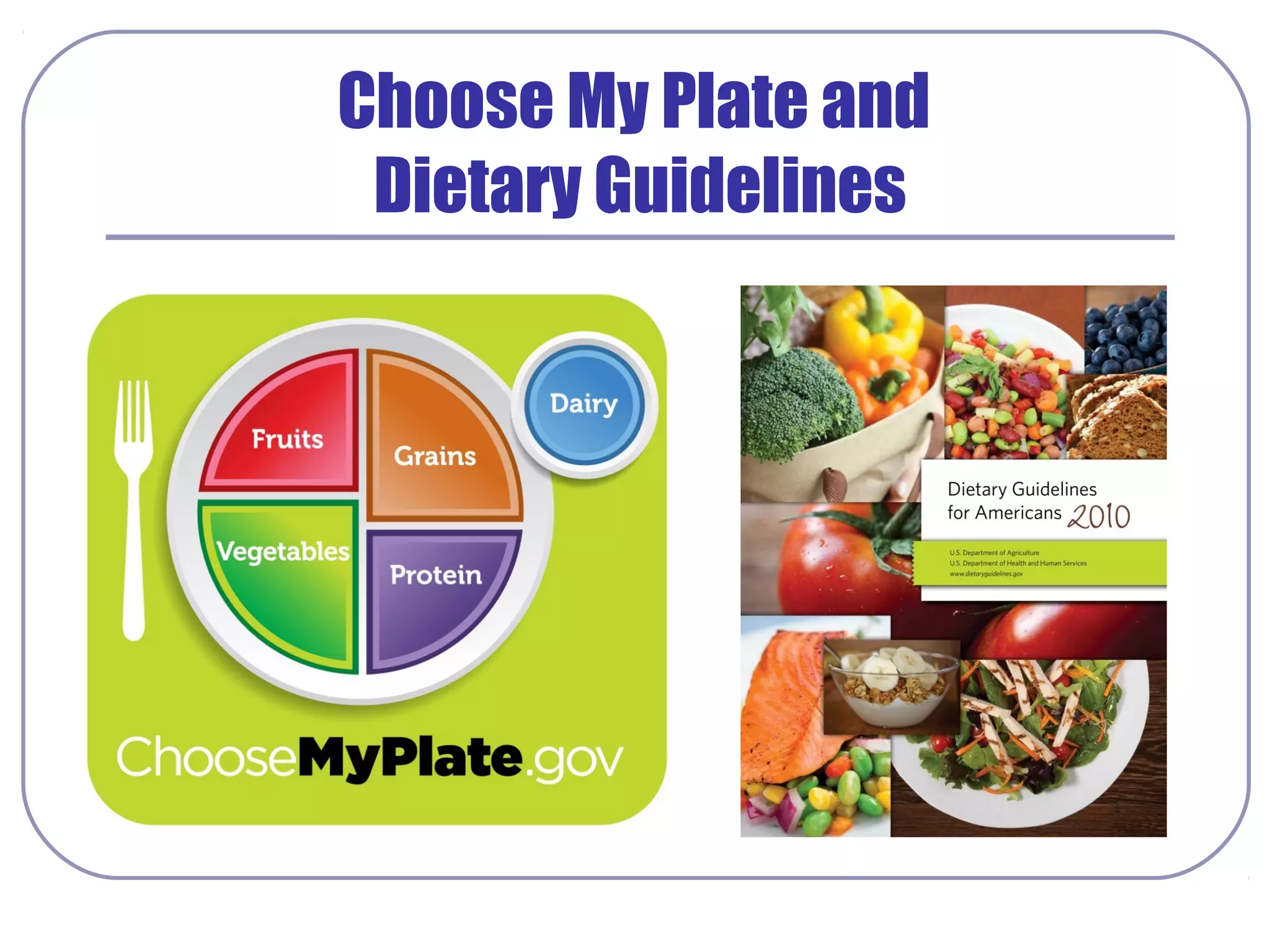
Choose My Plate and
Dietary Guidelines
Make half your plate fruits &
vegetables!
1.) Choose a variety of fresh, frozen, canned or
dried fruits and vegetables.
2.) Eat a rainbow!
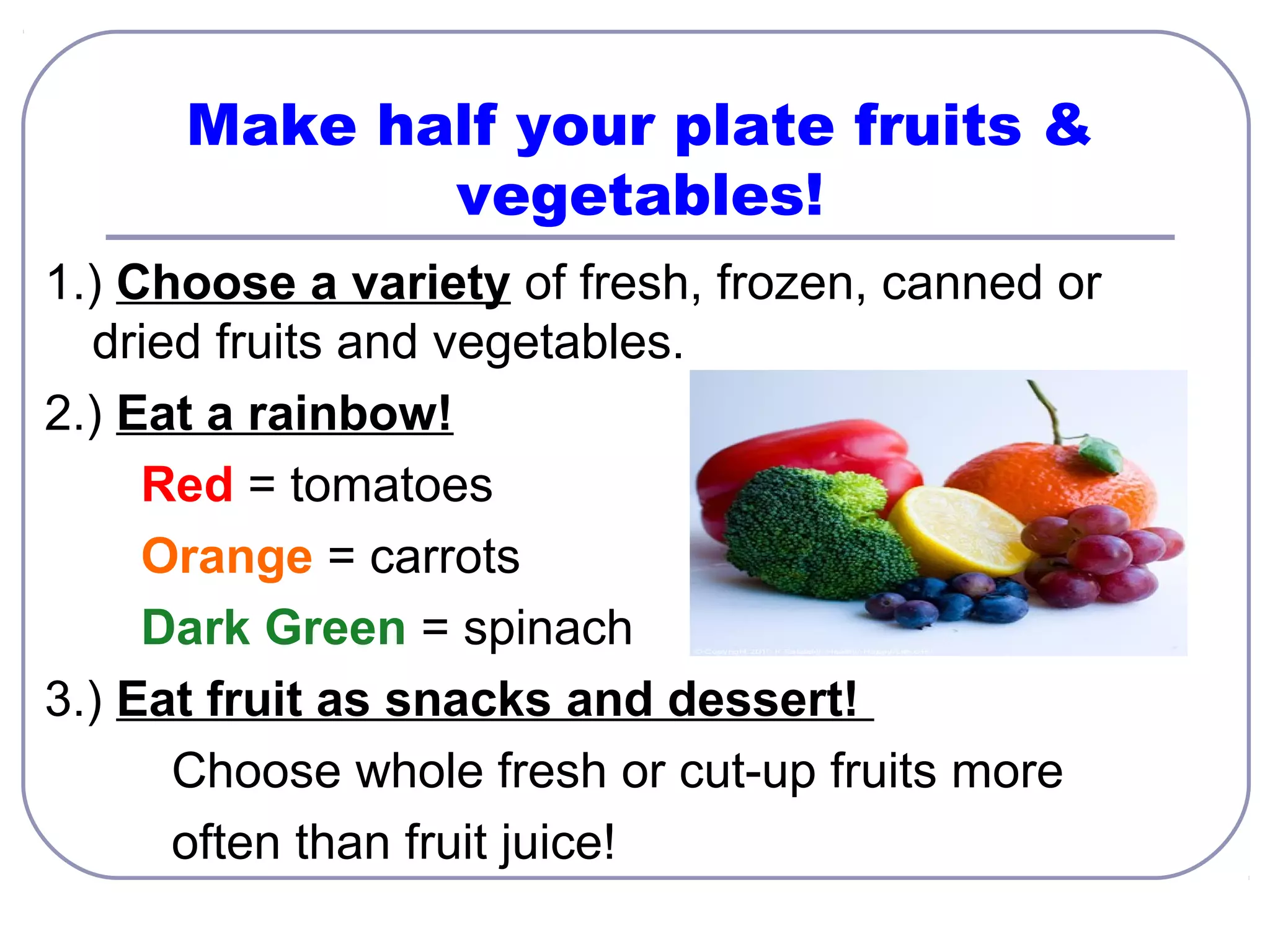
Red = tomatoes
Orange = carrots
Dark Green = spinach
3.) Eat fruit as snacks and dessert!
Choose whole fresh or cut-up fruits more
often than fruit juice!
Switch to skim or 1% milk!
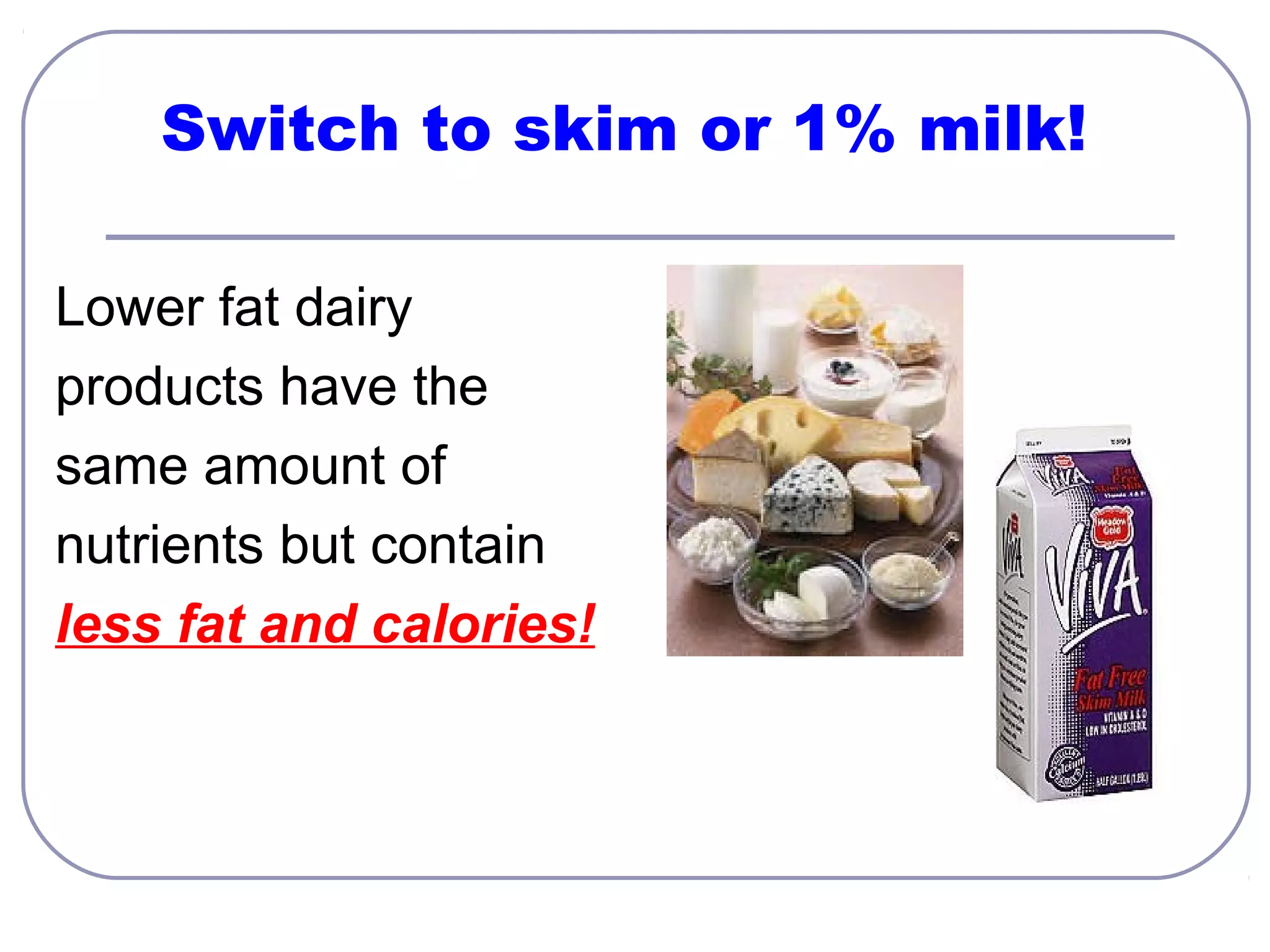
Lower fat dairy
products have the
same amount of
nutrients but contain
less fat and calories!
Make at least half your grain whole!
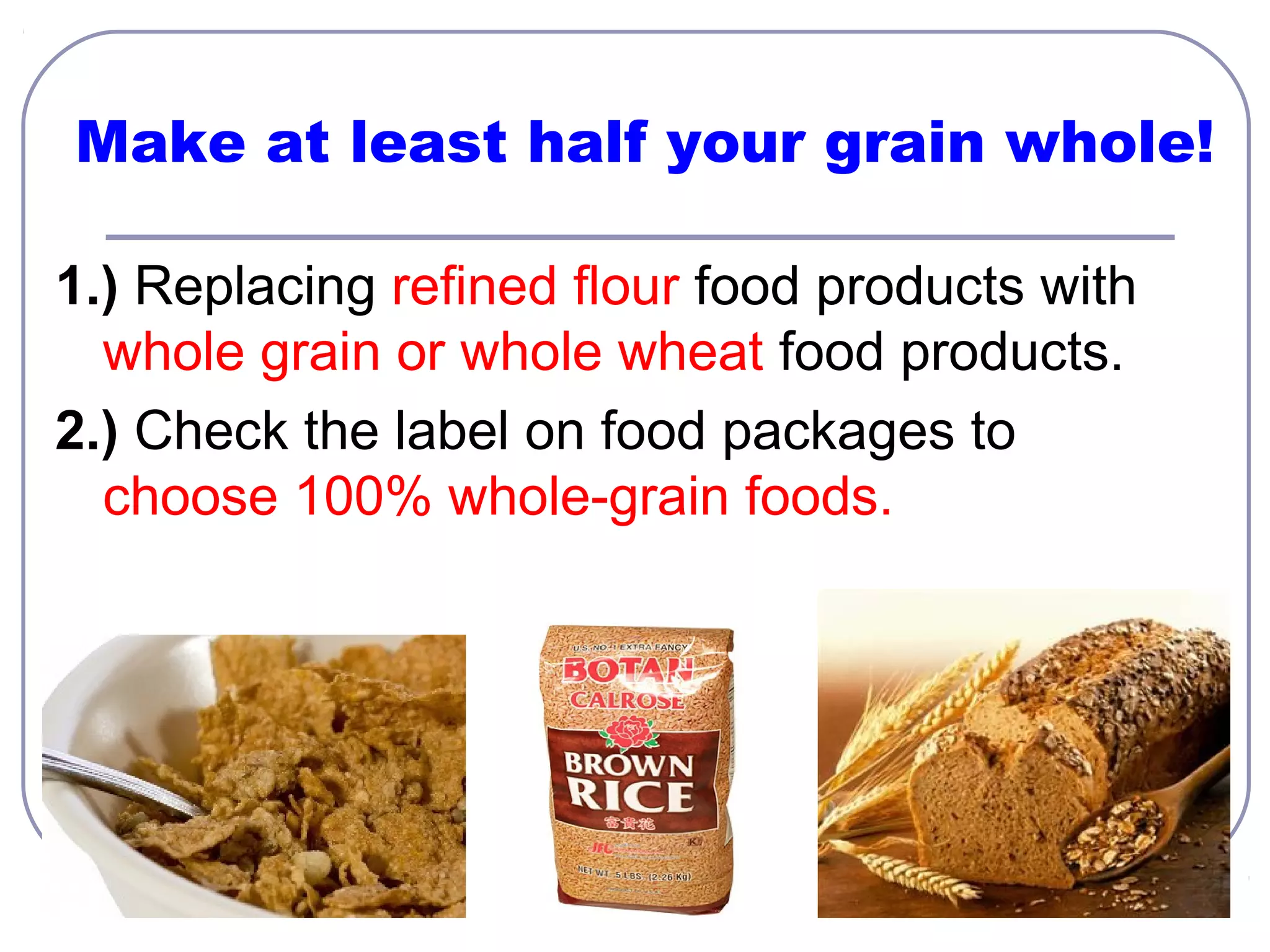
1.) Replacing refined flour food products with
whole grain or whole wheat food products.
2.) Check the label on food packages to
choose 100% whole-grain foods.
Vary your protein food choices!
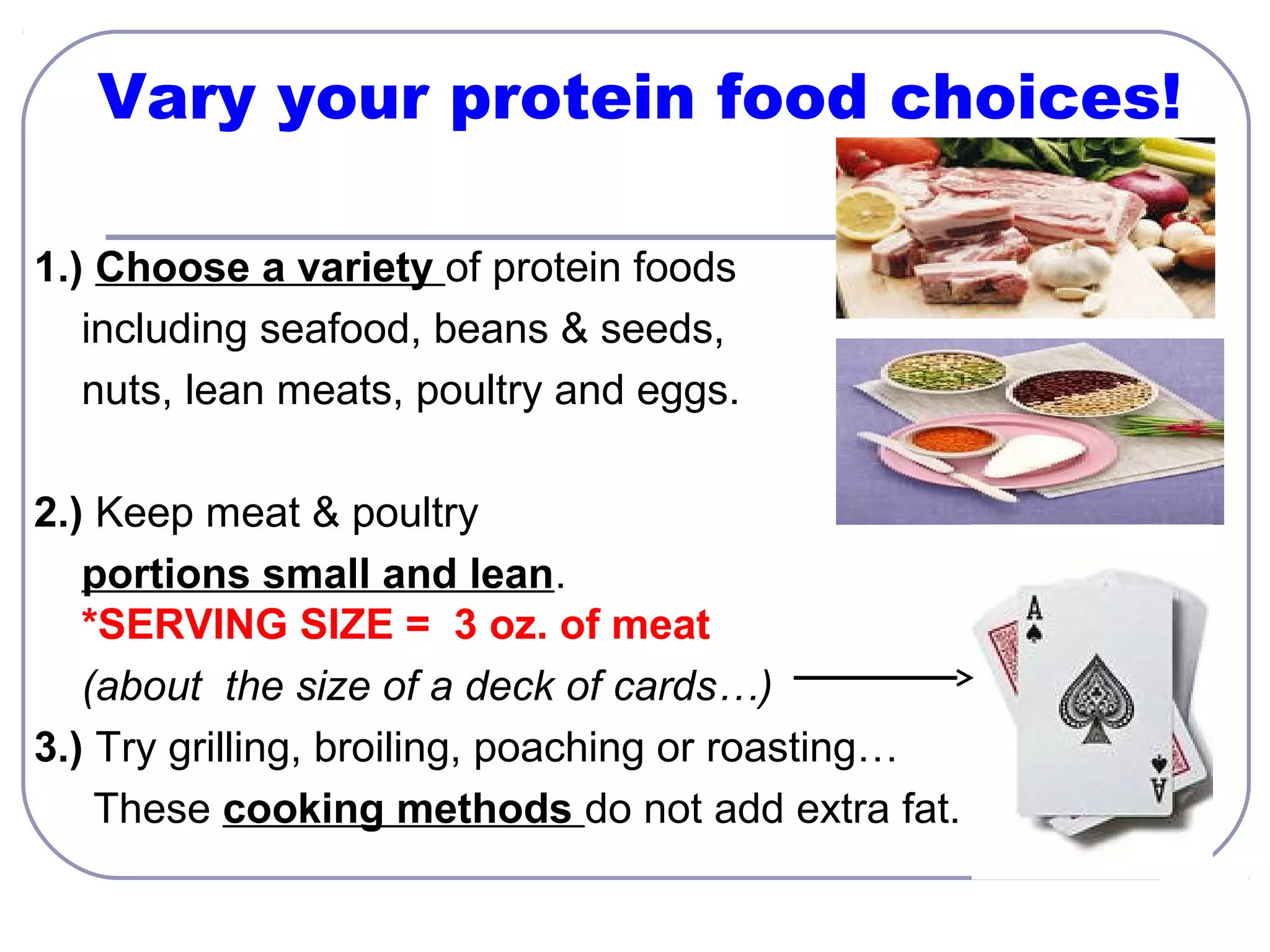
1.) Choose a variety of protein foods
including seafood, beans & seeds,
nuts, lean meats, poultry and eggs.
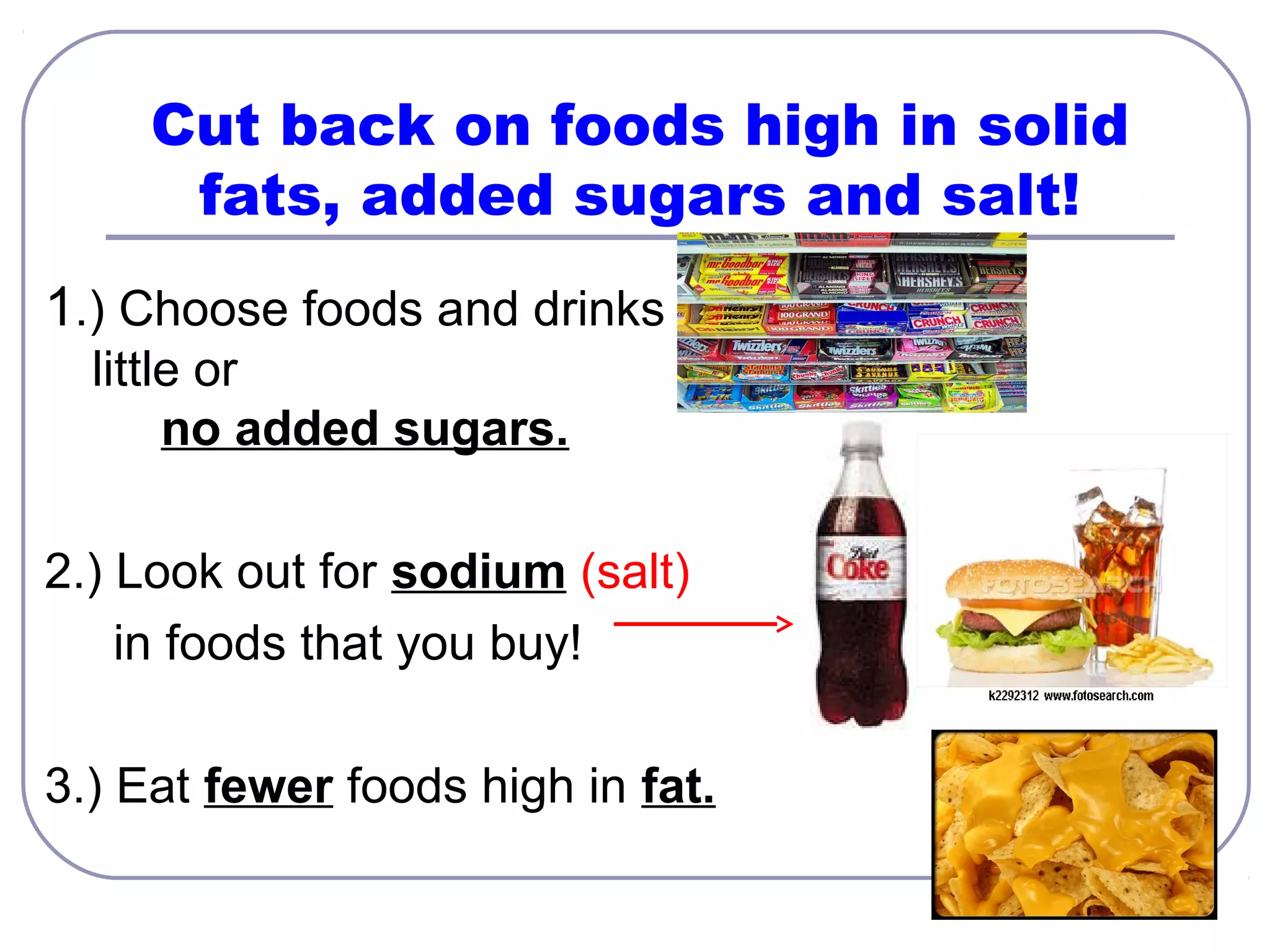
2.) Keep meat & poultry
portions small and lean.
*SERVING SIZE = 3 oz. of meat
(about the size of a deck of cards…)
3.) Try grilling, broiling, poaching or roasting…
These cooking methods do not add extra fat.
Cut back on foods high in solid
fats, added sugars and salt!
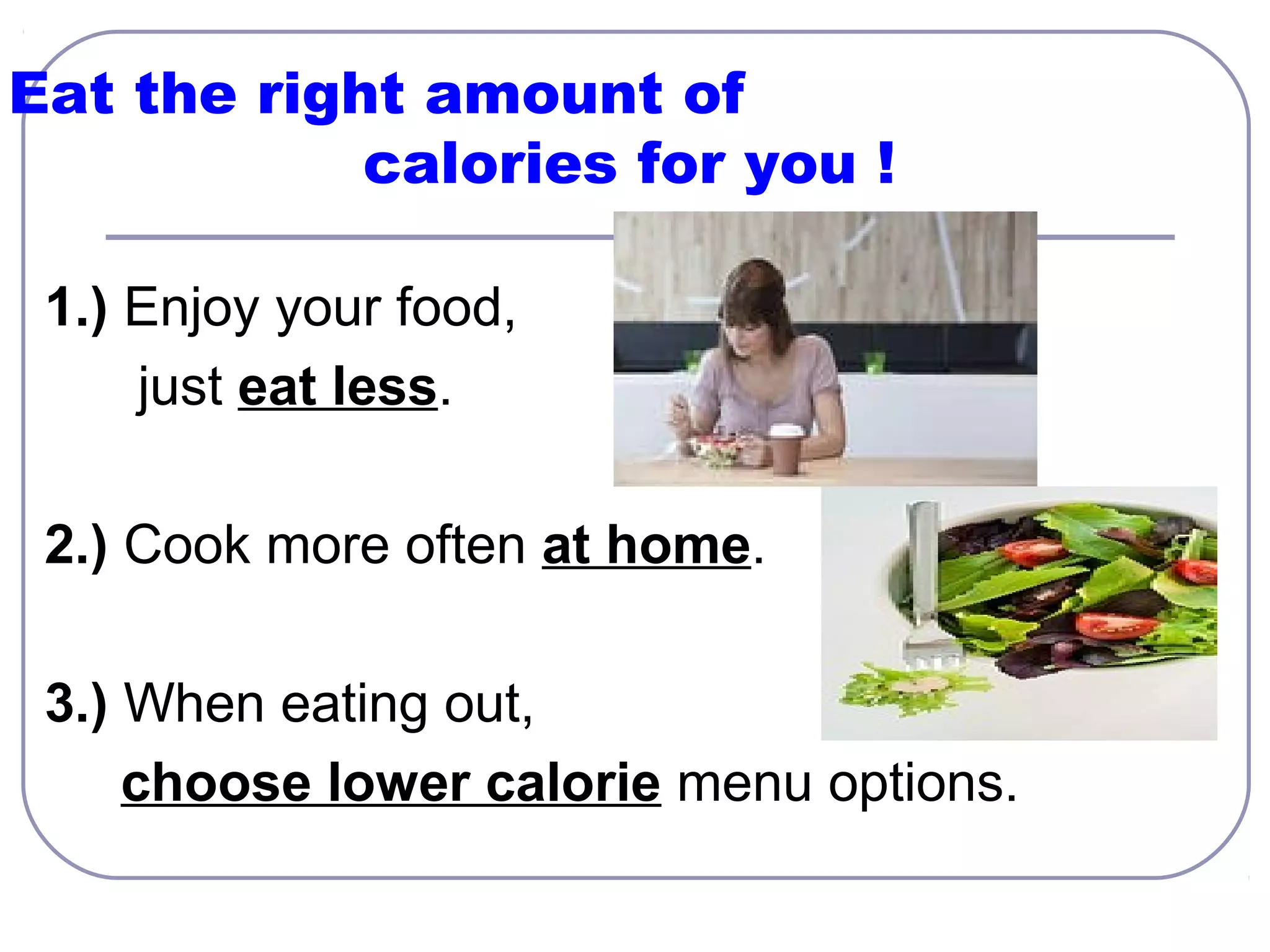
1.) Choose foods and drinks with
little or
no added sugars.
2.) Look out for sodium (salt)
in foods that you buy!
3.) Eat fewer foods high in fat.
Eat the right amount of
calories for you !
1.) Enjoy your food,
just eat less.
2.) Cook more often at home.
3.) When eating out,
choose lower calorie menu options.
Be physically active your way!
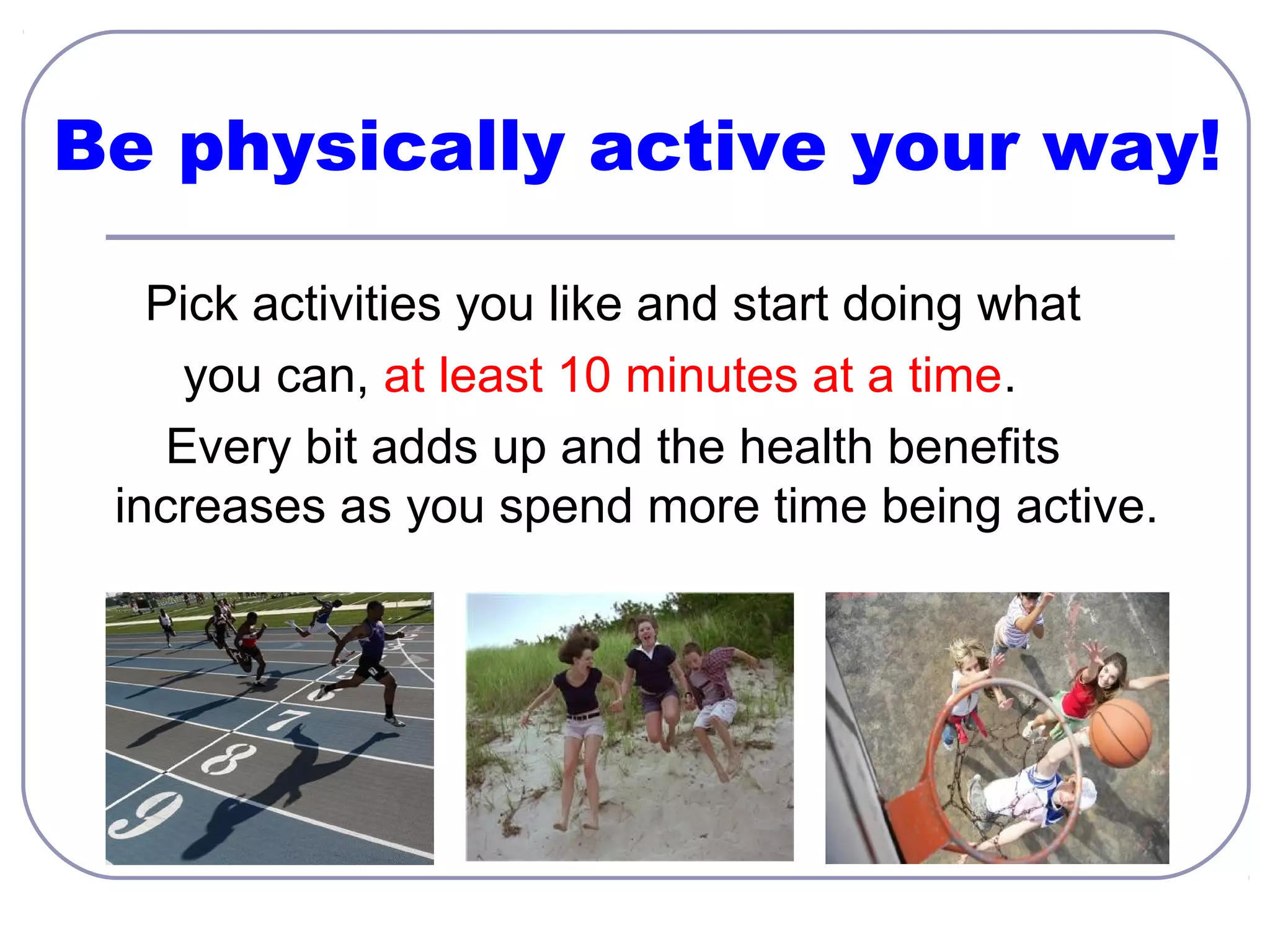
Pick activities you like and start doing what
you can, at least 10 minutes at a time.
Every bit adds up and the health benefits
increases as you spend more time being active.
Nutrients:
Energy Producing! (calories)
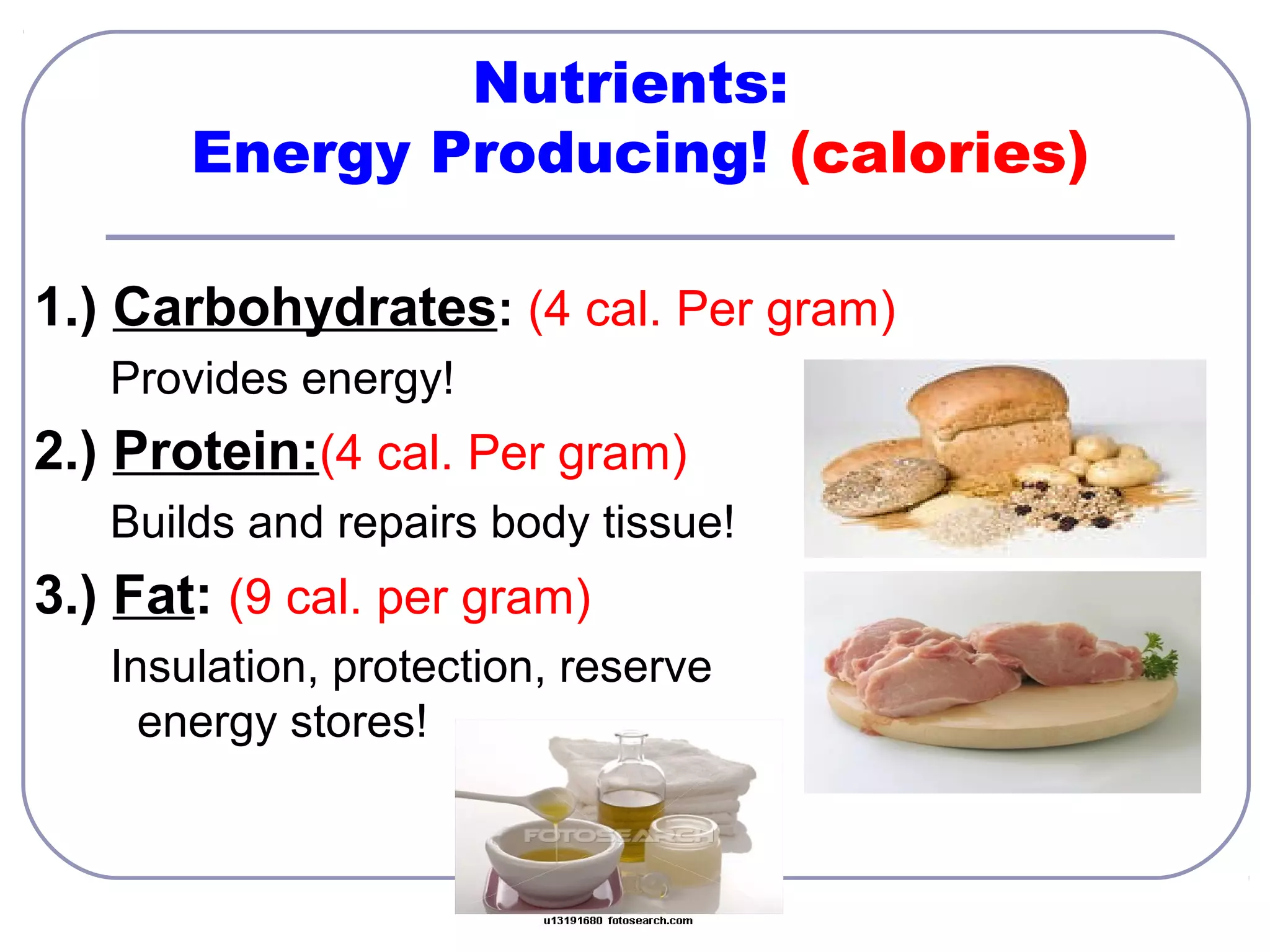
1.) Carbohydrates: (4 cal. Per gram)
Provides energy!

2.) Protein:(4 cal. Per gram)
Builds and repairs body tissue!

3.) Fat: (9 cal. per gram)
Insulation, protection, reserve
energy stores!
Nutrients :
Non-energy producing (no calories)
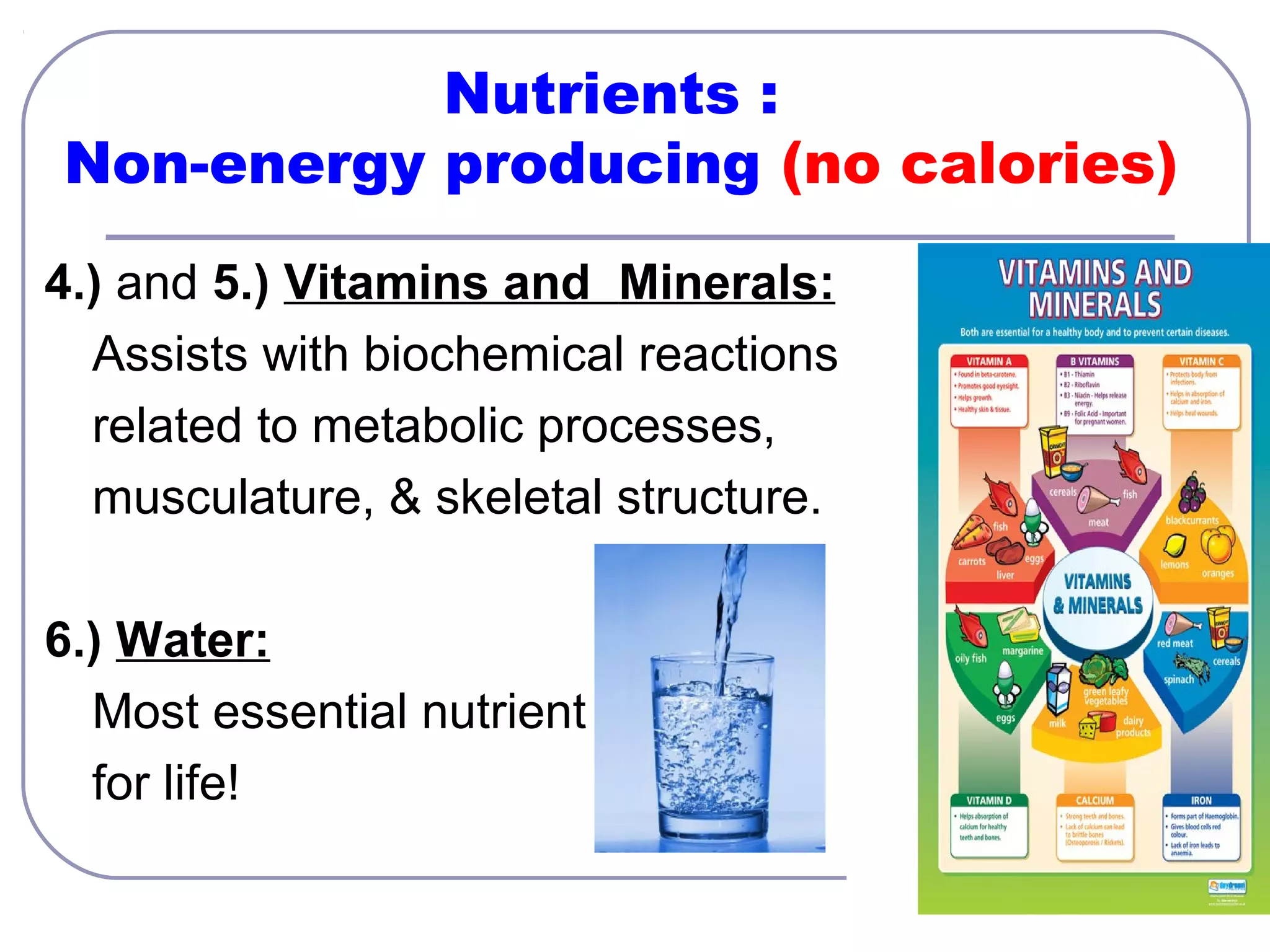
4.) and 5.) Vitamins and Minerals:
Assists with biochemical reactions
related to metabolic processes,
musculature, & skeletal structure.
6.) Water:
Most essential nutrient
for life!
How are foods sorted into groups?

By Nutrient…..
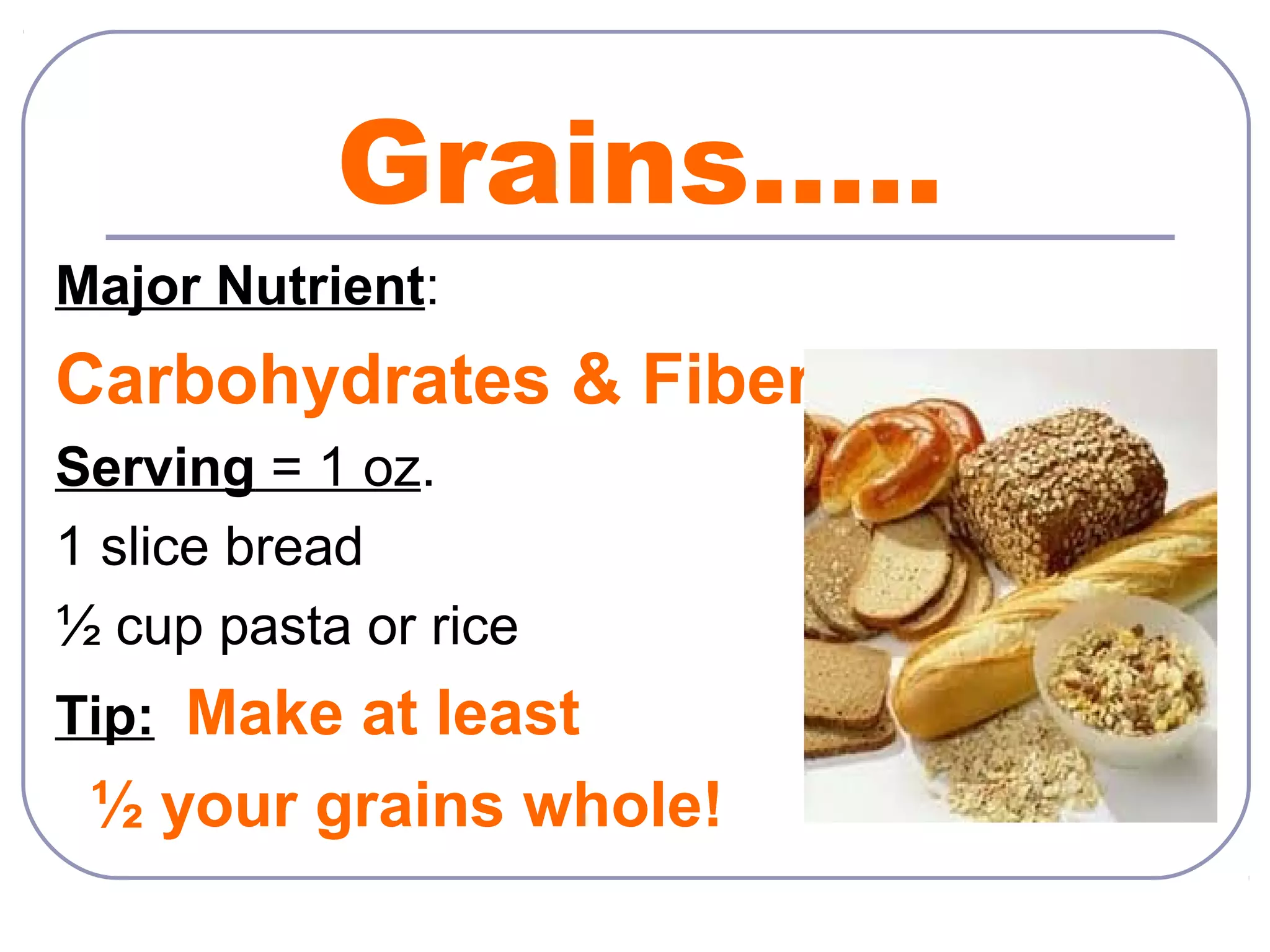
Grains…..
Major Nutrient:

Carbohydrates & Fiber
Serving = 1 oz.
1 slice bread
½ cup pasta or rice
Tip: Make at least

½ your grains whole!
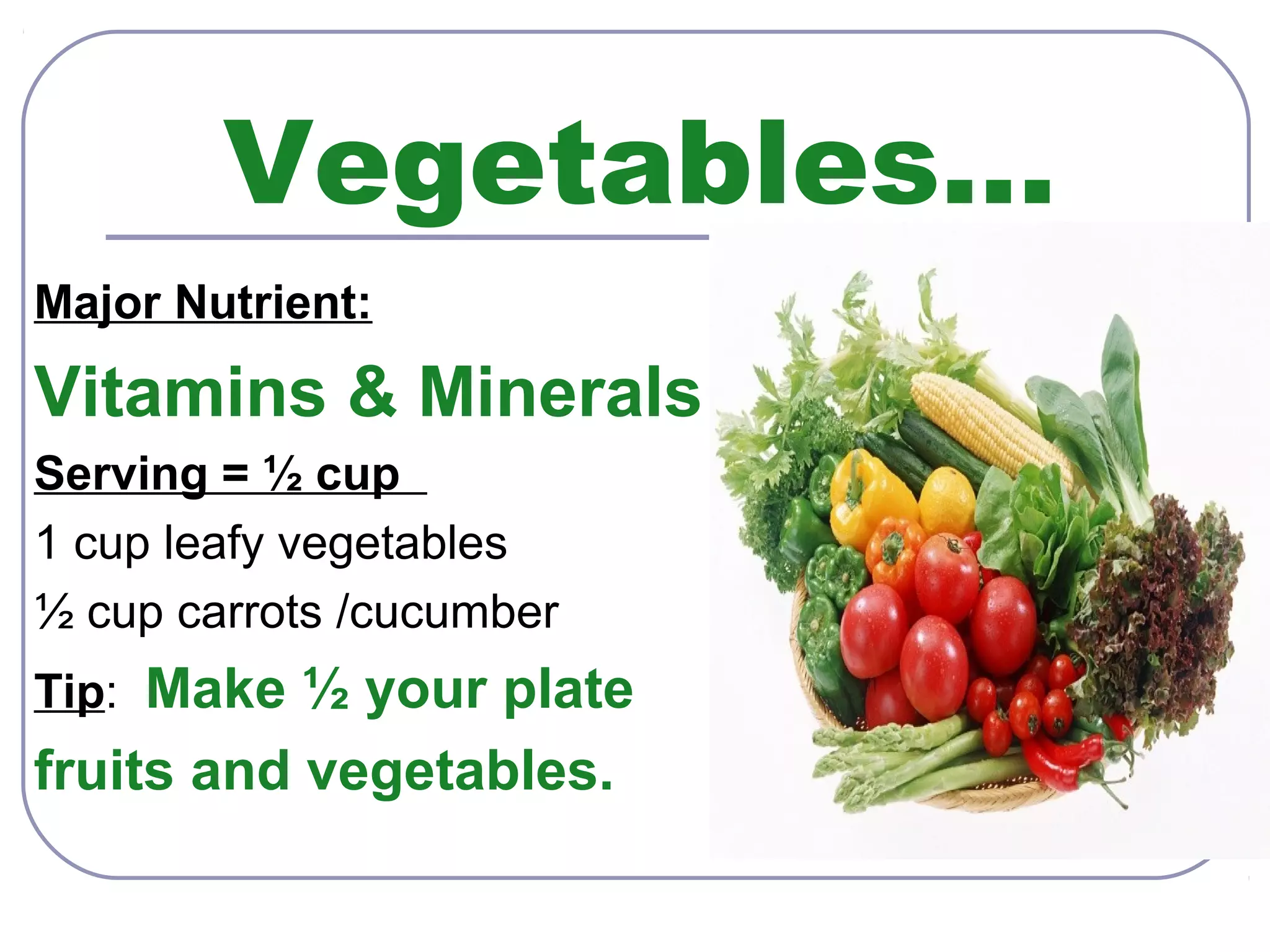
Vegetables…
Major Nutrient:

Vitamins & Minerals
Serving = ½ cup
1 cup leafy vegetables
½ cup carrots /cucumber
Tip: Make ½ your plate

fruits and vegetables.
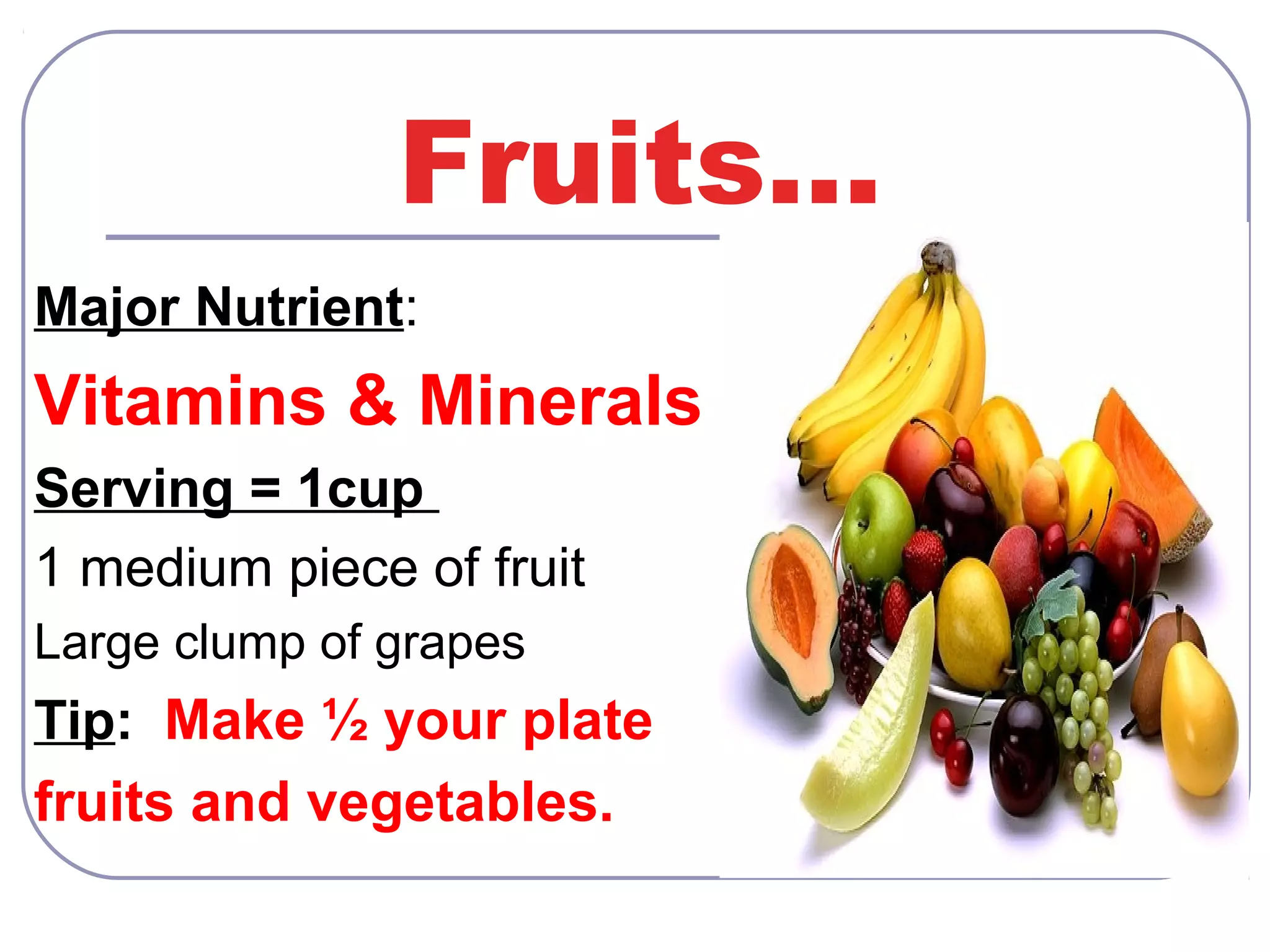
Fruits…
Major Nutrient:

Vitamins & Minerals
Serving = 1cup
1 medium piece of fruit
Large clump of grapes

Tip: Make ½ your plate
fruits and vegetables.
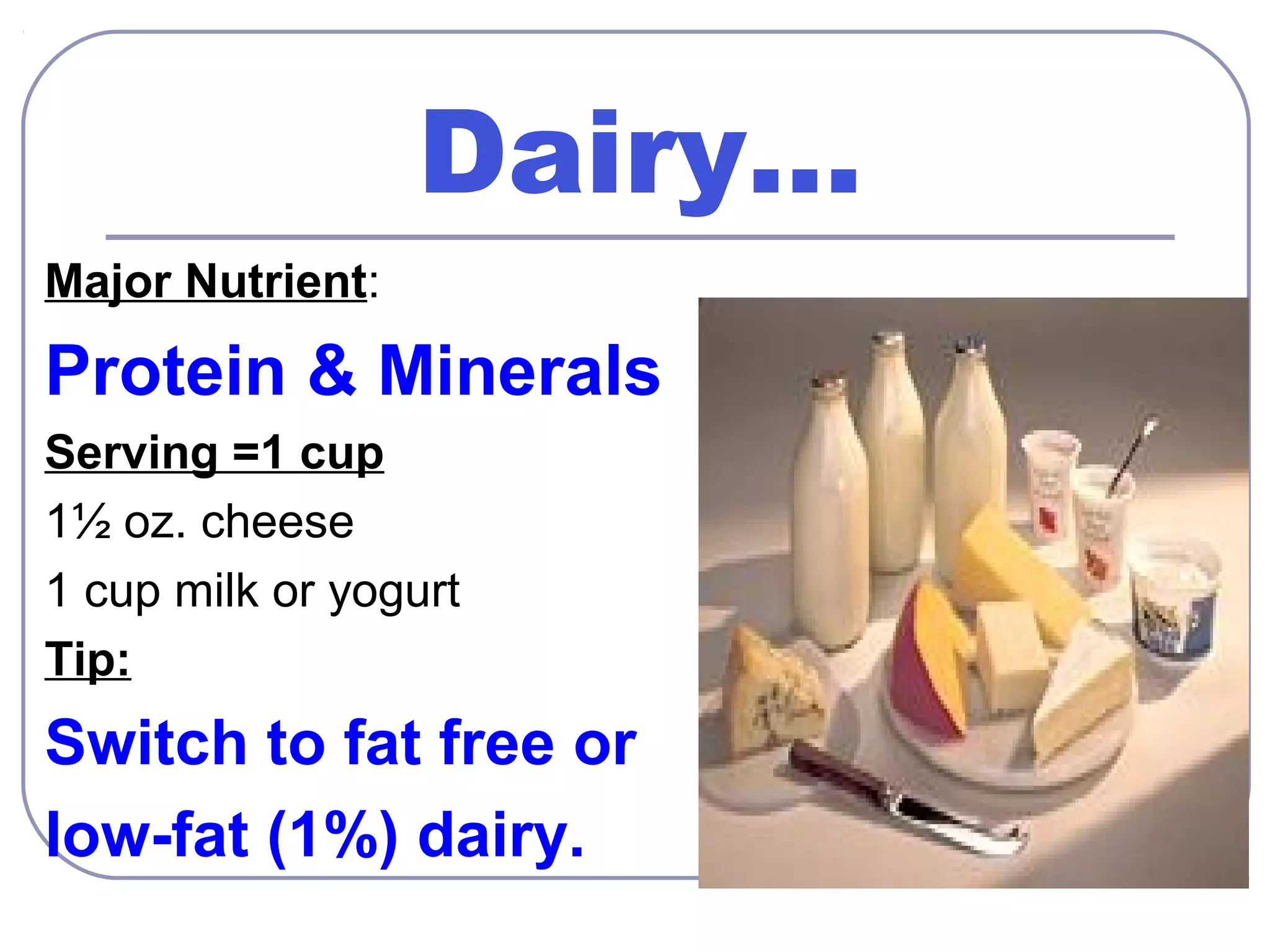
Dairy…
Major Nutrient:

Protein & Minerals
Serving =1 cup
1½ oz. cheese
1 cup milk or yogurt
Tip:

Switch to fat free or
low-fat (1%) dairy.
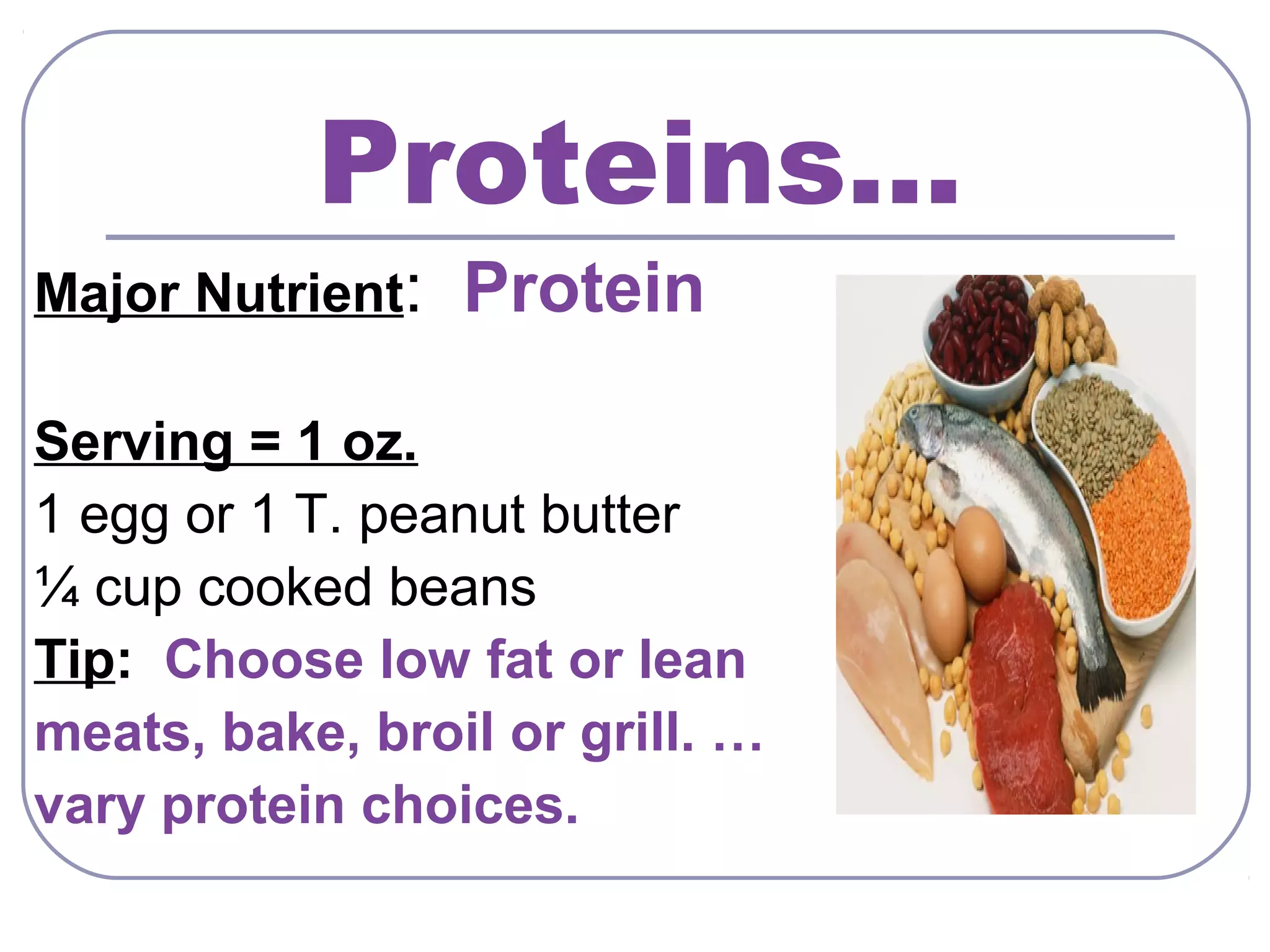
Proteins…
Major Nutrient:

Protein

Serving = 1 oz.
1 egg or 1 T. peanut butter
¼ cup cooked beans
Tip: Choose low fat or lean
meats, bake, broil or grill. …
vary protein choices.
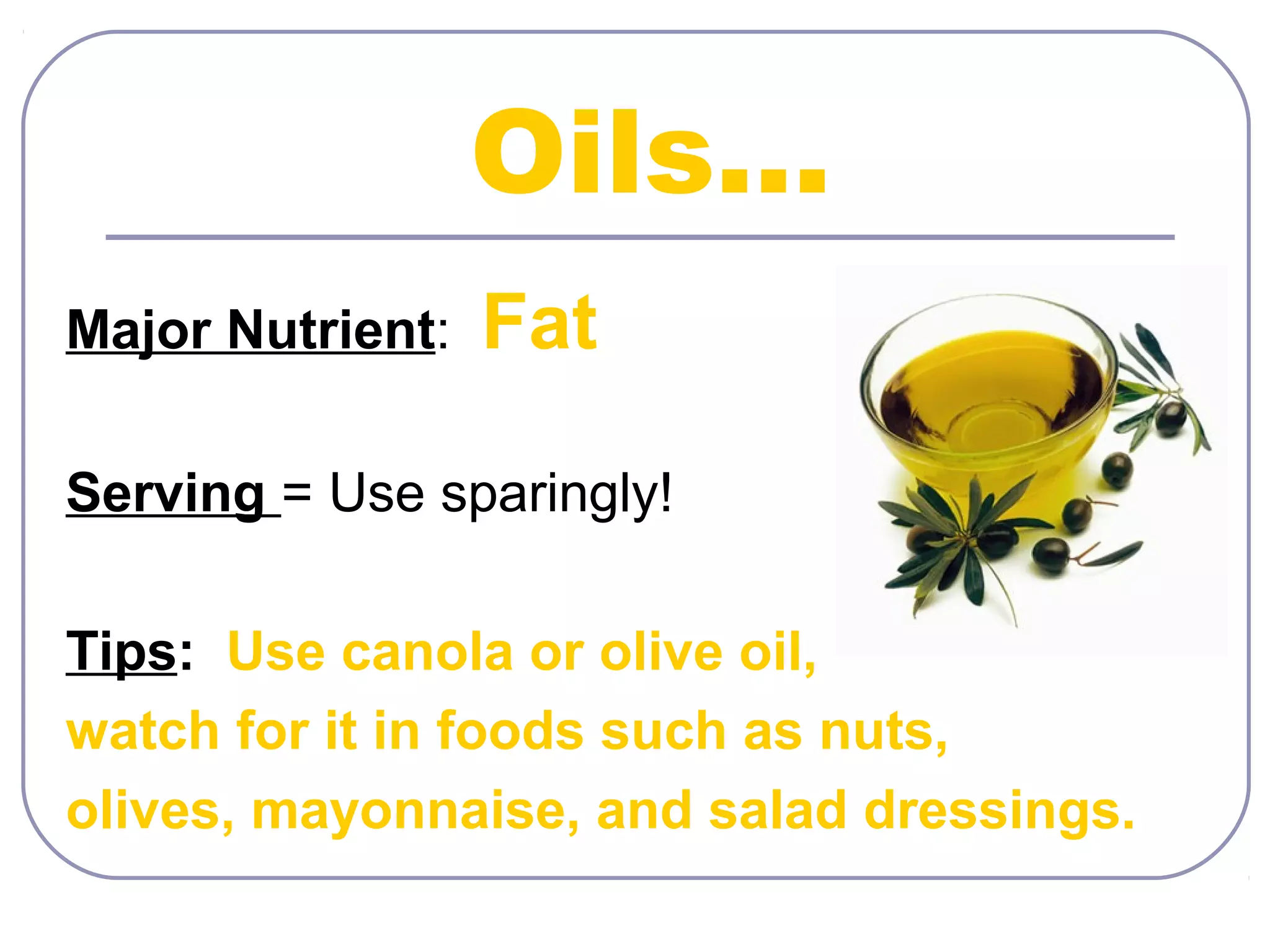
Oils…
Major Nutrient:

Fat

Serving = Use sparingly!
Tips: Use canola or olive oil,
watch for it in foods such as nuts,
olives, mayonnaise, and salad dressings.
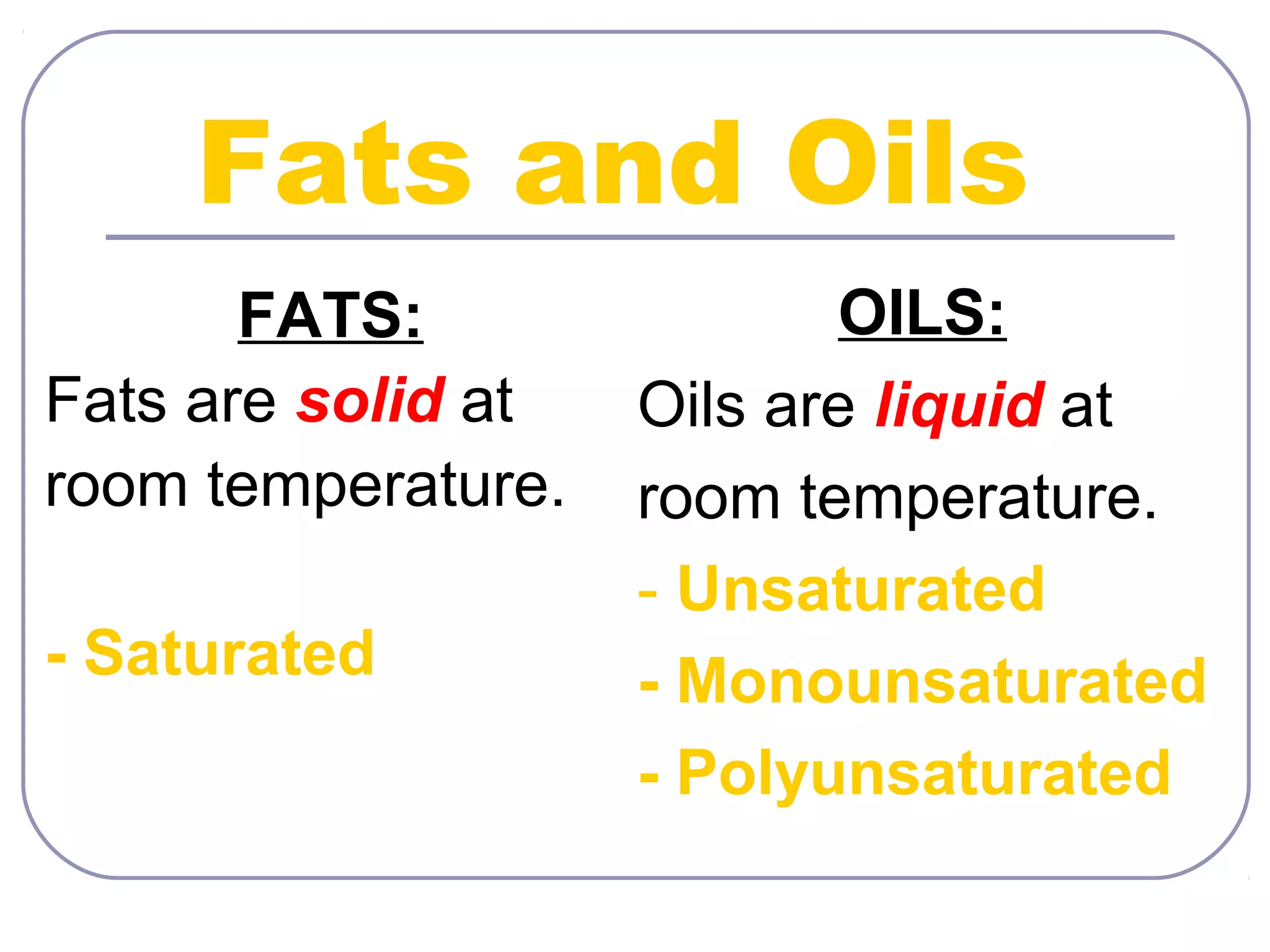
Fats and Oils
FATS:
Fats are solid at
room temperature.
- Saturated

OILS:
Oils are liquid at
room temperature.
- Unsaturated
- Monounsaturated
- Polyunsaturated
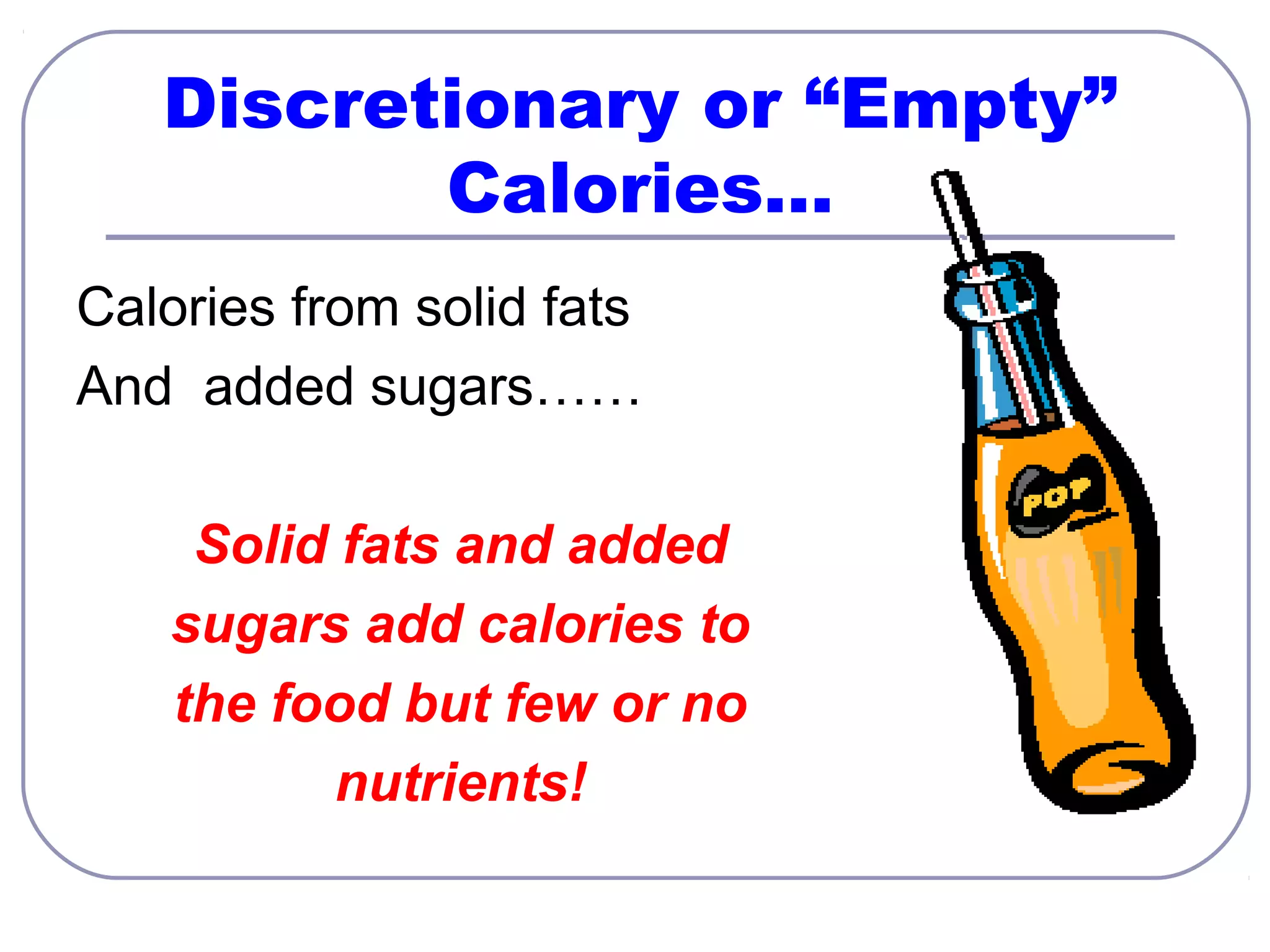
Discretionary or “Empty”
Calories…
Calories from solid fats
And added sugars……
Solid fats and added
sugars add calories to
the food but few or no
nutrients!
Recommendations for
Physical Activity
Kids 2-5 yrs. – Just let them play!
Kids 6-17 yrs. – 60 minutes a day!
Adults18+yrs.– At least 2.5 hours
a week moderate exercise.
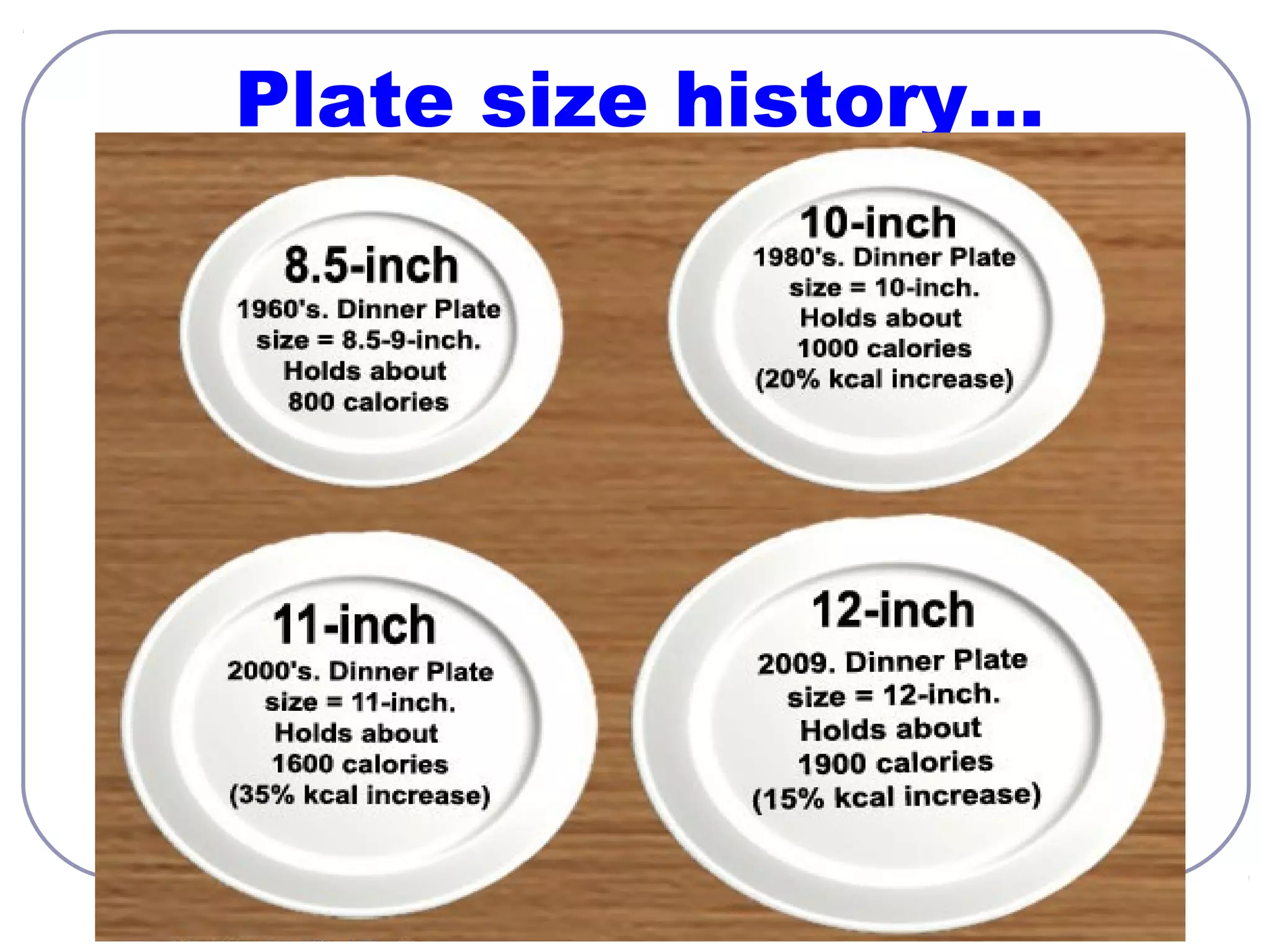
Plate size history…
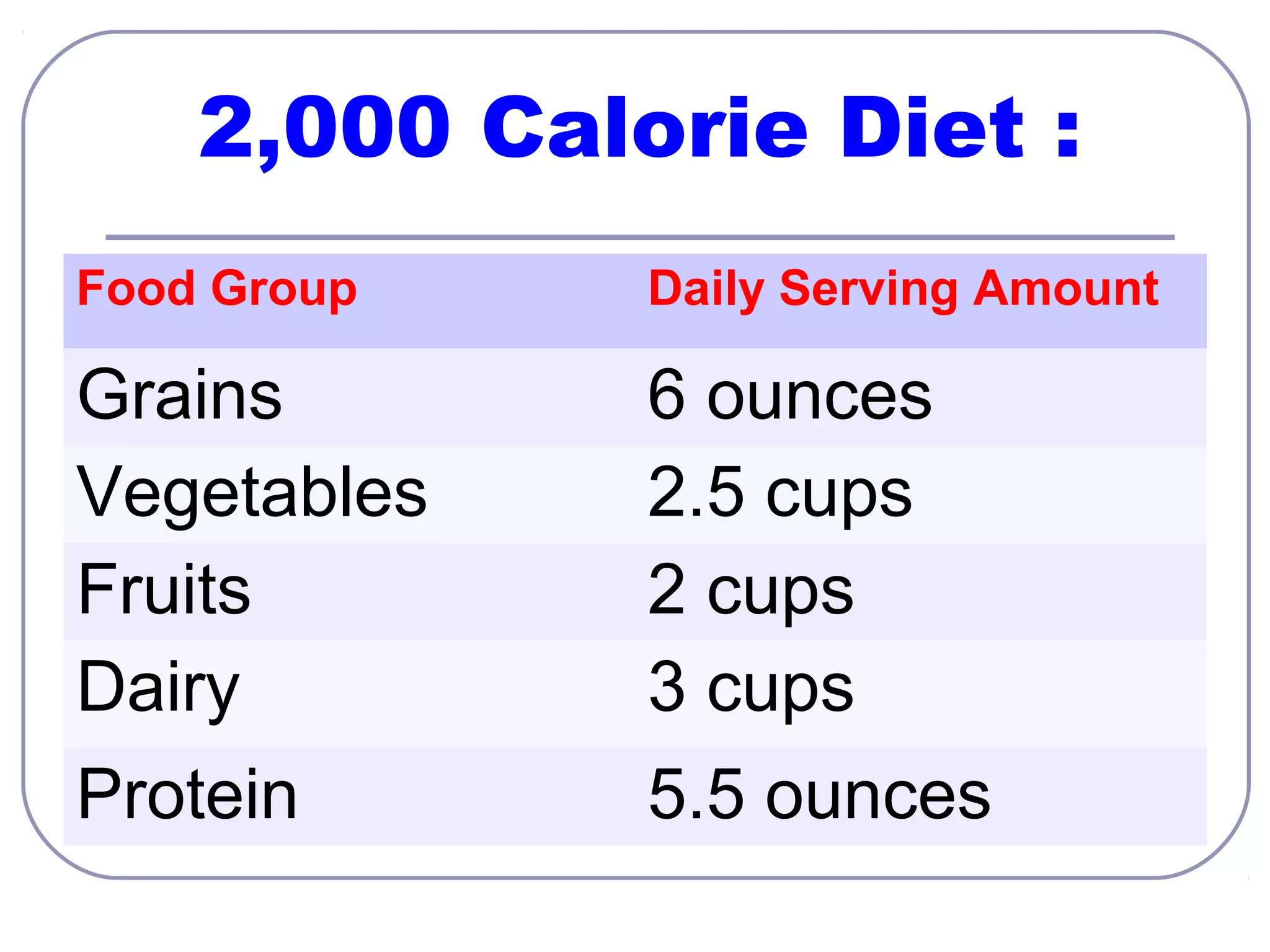
2,000 Calorie Diet :
Food Group

Daily Serving Amount

Grains
Vegetables
Fruits
Dairy

6 ounces
2.5 cups
2 cups
3 cups

Protein

5.5 ounces
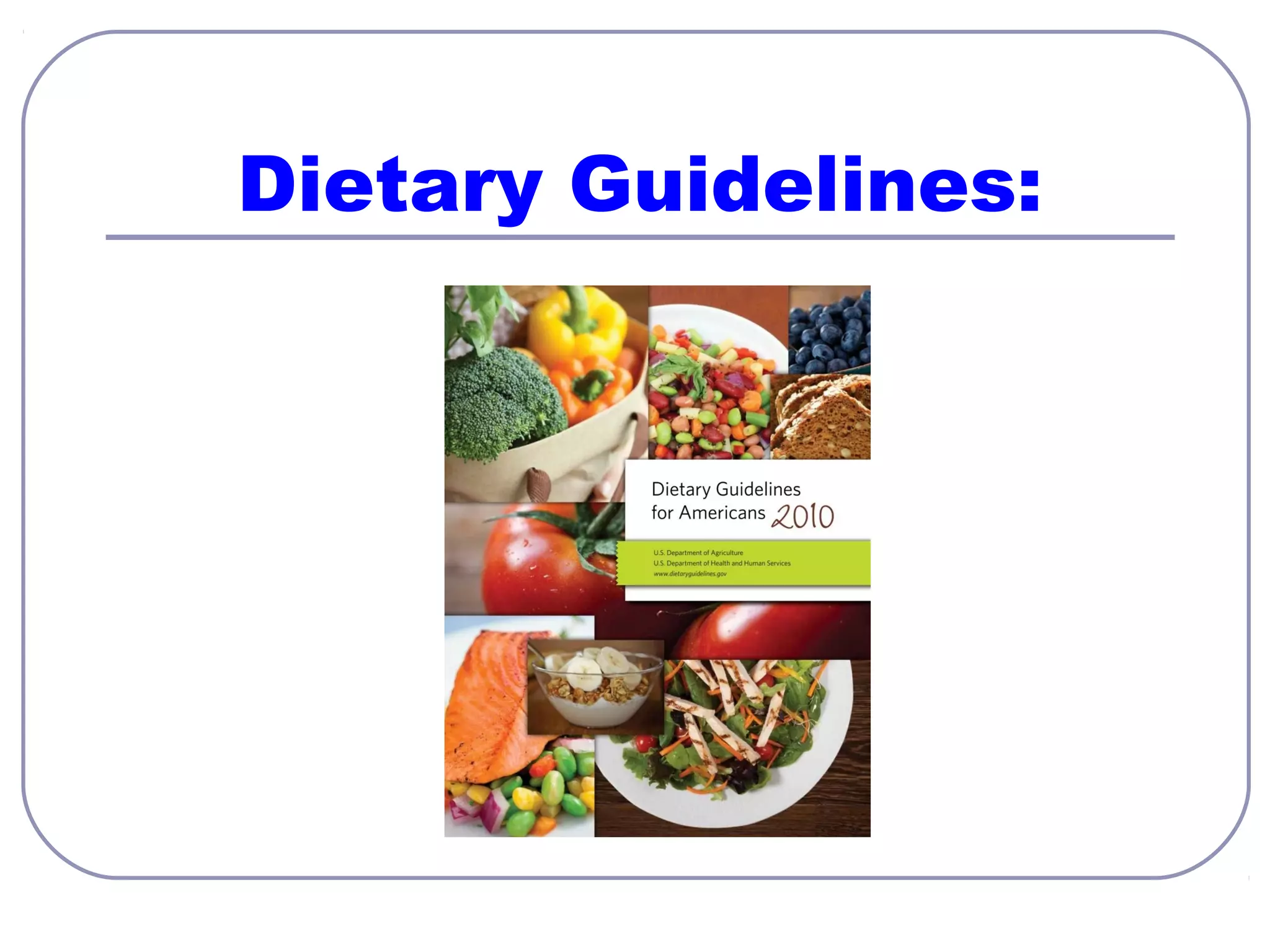
Dietary Guidelines:
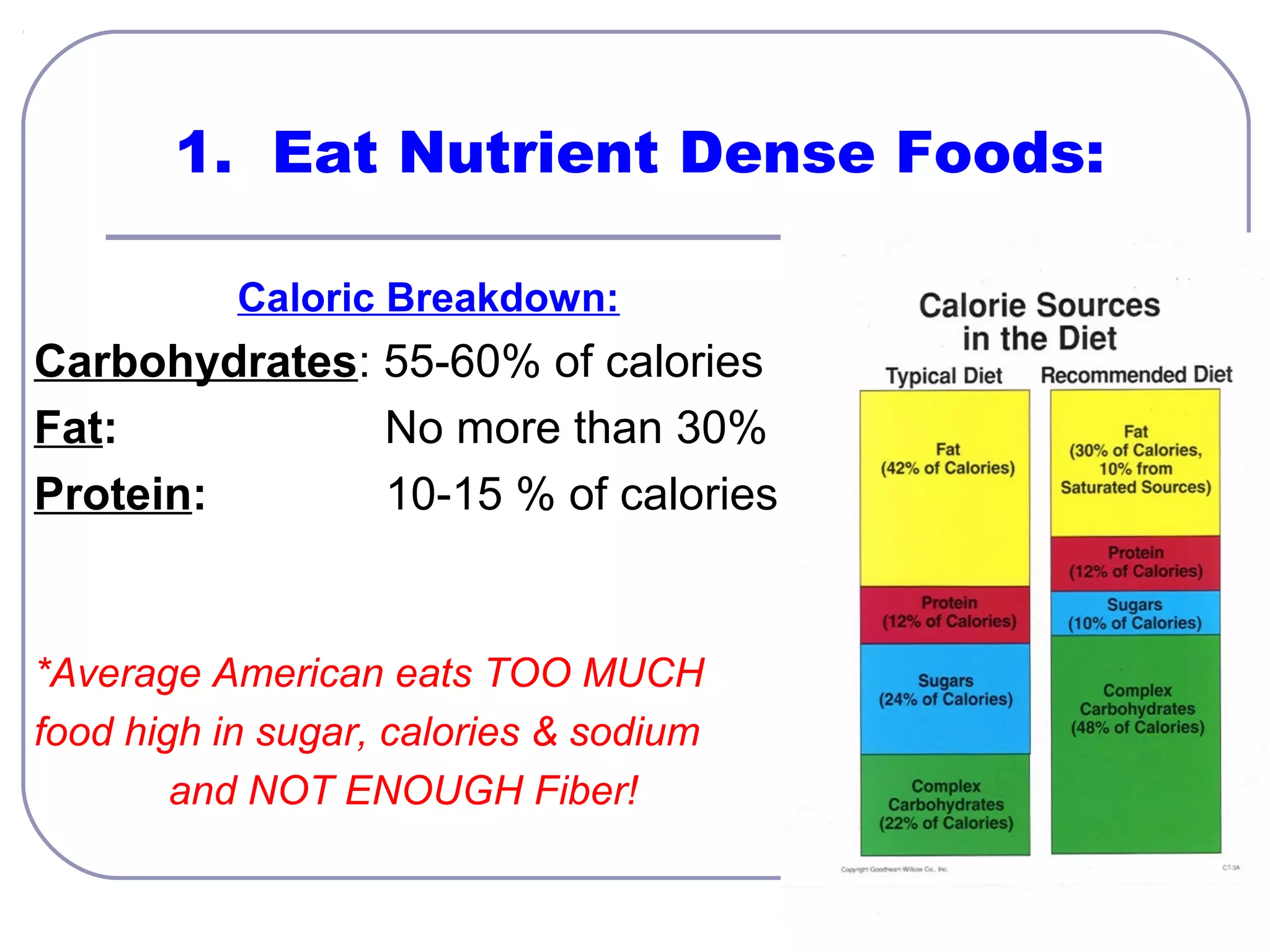
1. Eat Nutrient Dense Foods:
Caloric Breakdown:

Carbohydrates: 55-60% of calories
Fat:
No more than 30%
Protein:
10-15 % of calories

*Average American eats TOO MUCH
food high in sugar, calories & sodium
and NOT ENOUGH Fiber!
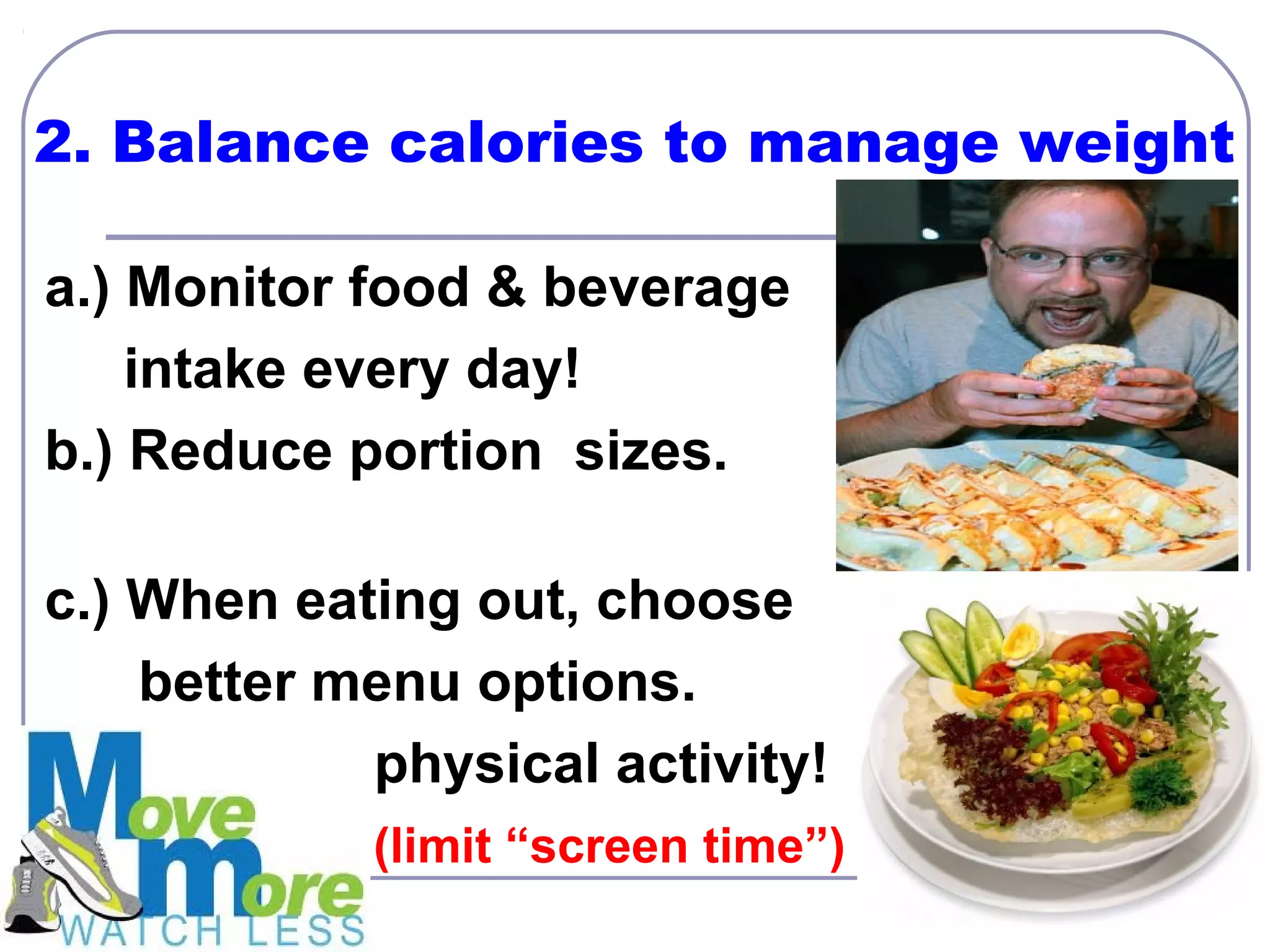
2. Balance calories to manage weight
a.) Monitor food & beverage
intake every day!
b.) Reduce portion sizes.
c.) When eating out, choose
better menu options.
d.) Increase physical activity!
(limit “screen time”)
3. Reduce sodium, fats, added
sugars, refined grains
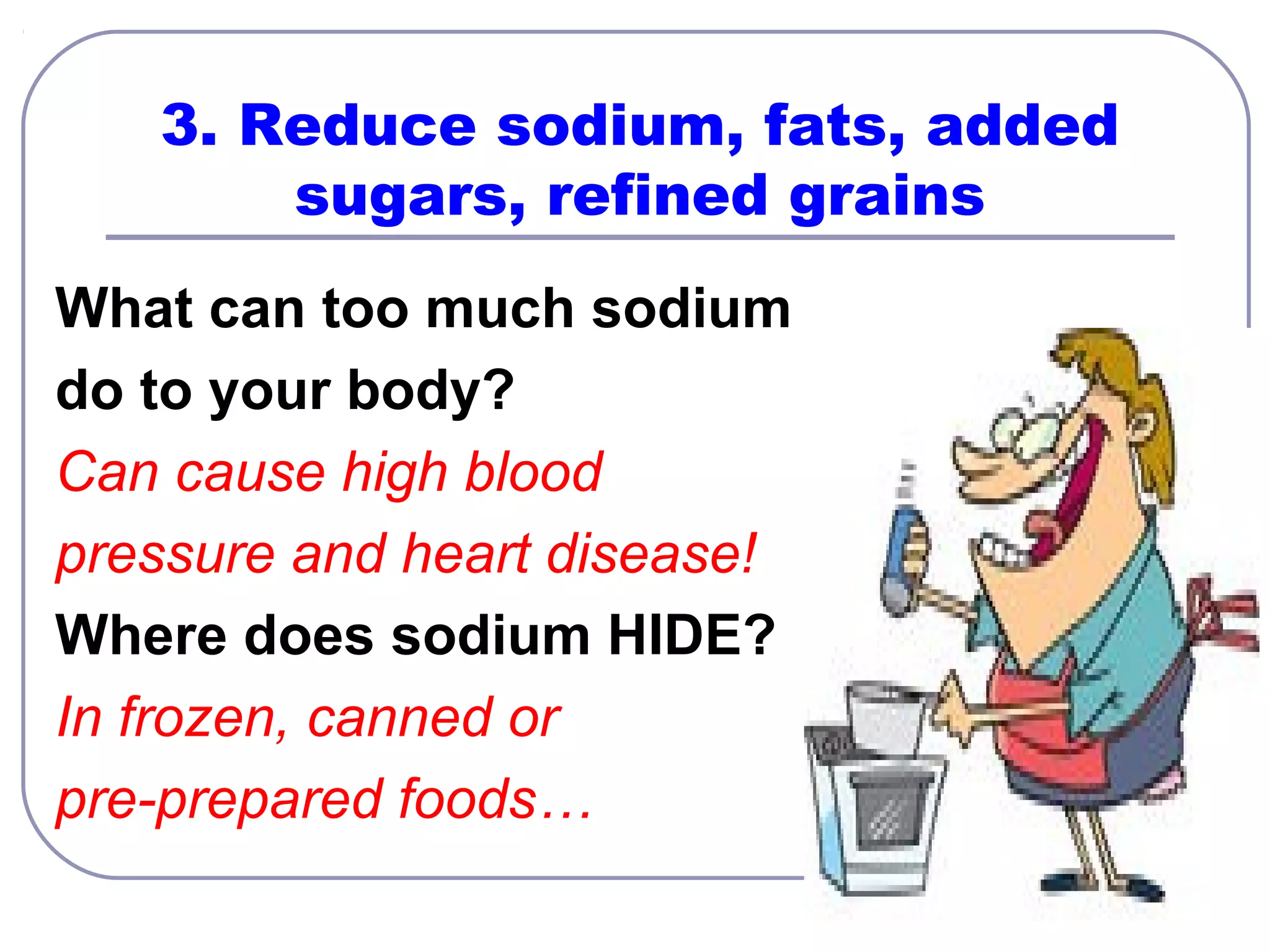
What can too much sodium
do to your body?
Can cause high blood
pressure and heart disease!
Where does sodium HIDE?
In frozen, canned or
pre-prepared foods…
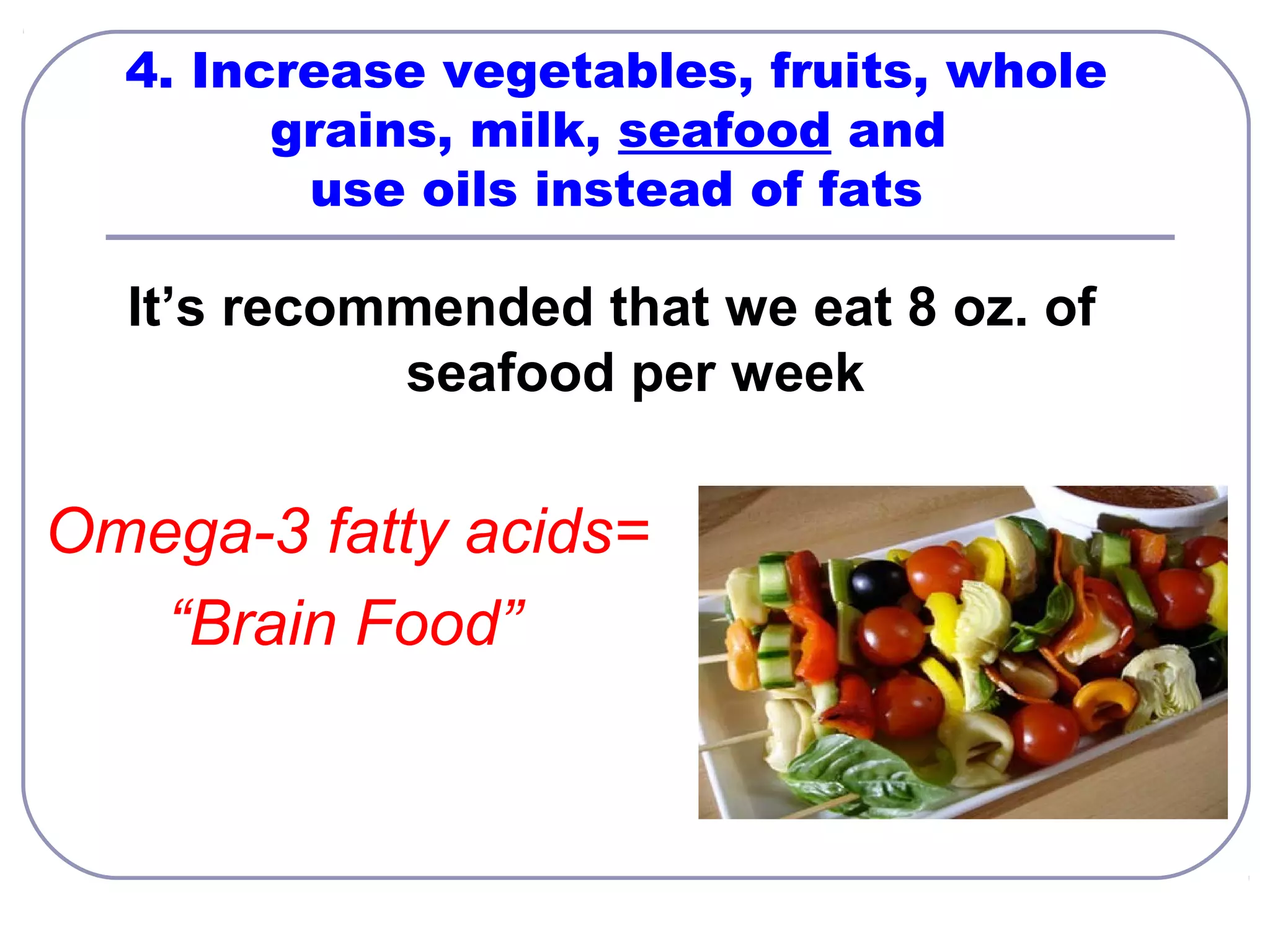
4. Increase vegetables, fruits, whole
grains, milk, seafood and
use oils instead of fats

It’s recommended that we eat 8 oz. of
seafood per week

Omega-3 fatty acids=
“Brain Food”
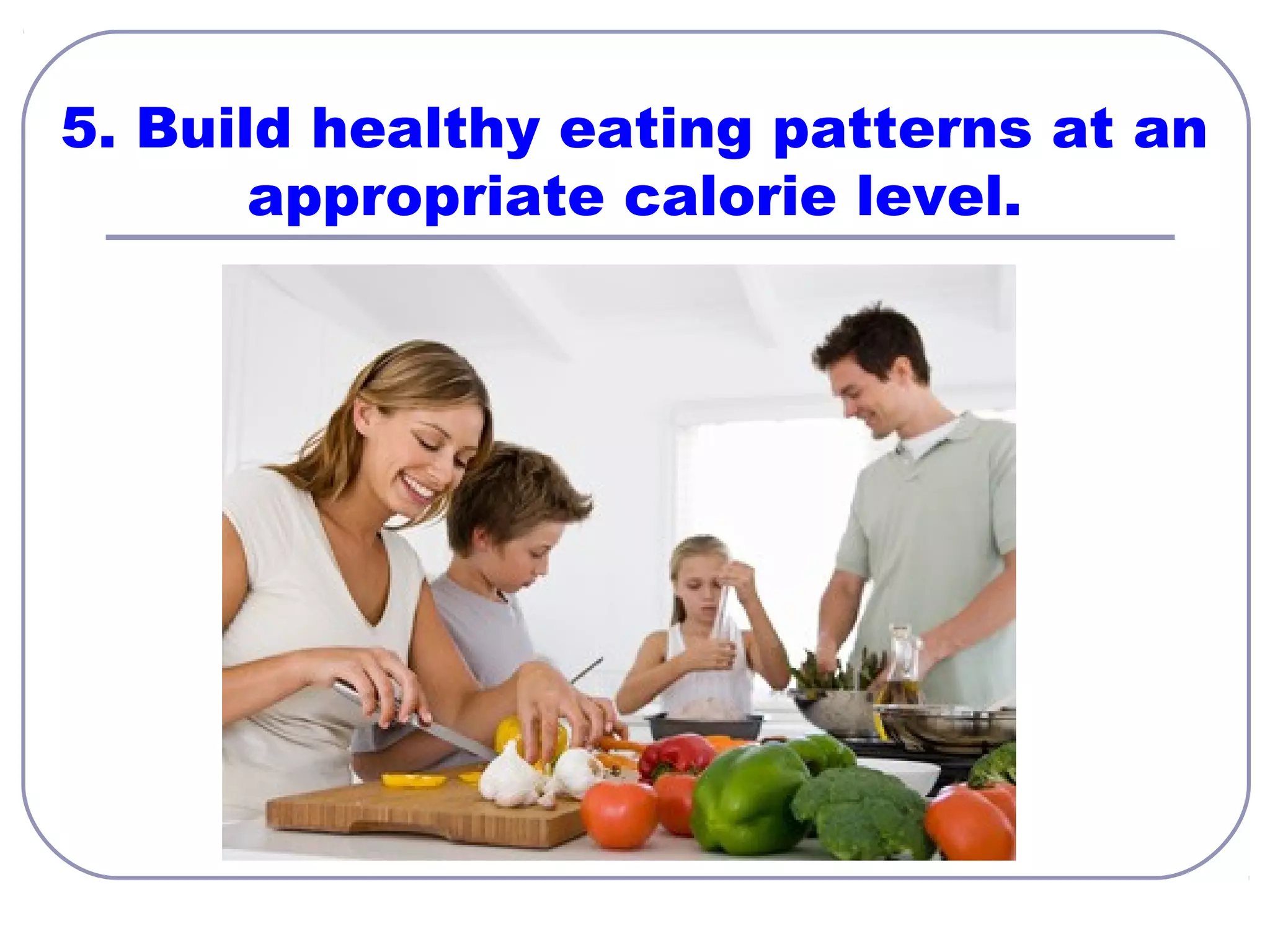
5. Build healthy eating patterns at an
appropriate calorie level.
6. Get plenty of physical exercise!

Fn1 ppt. my plate dietary guidelines

  • 1.
    Choose My Plateand Dietary Guidelines
  • 2.
    Make half yourplate fruits & vegetables! 1.) Choose a variety of fresh, frozen, canned or dried fruits and vegetables. 2.) Eat a rainbow! Red = tomatoes Orange = carrots Dark Green = spinach 3.) Eat fruit as snacks and dessert! Choose whole fresh or cut-up fruits more often than fruit juice!
  • 3.
    Switch to skimor 1% milk! Lower fat dairy products have the same amount of nutrients but contain less fat and calories!
  • 4.
    Make at leasthalf your grain whole! 1.) Replacing refined flour food products with whole grain or whole wheat food products. 2.) Check the label on food packages to choose 100% whole-grain foods.
  • 5.
    Vary your proteinfood choices! 1.) Choose a variety of protein foods including seafood, beans & seeds, nuts, lean meats, poultry and eggs. 2.) Keep meat & poultry portions small and lean. *SERVING SIZE = 3 oz. of meat (about the size of a deck of cards…) 3.) Try grilling, broiling, poaching or roasting… These cooking methods do not add extra fat.
  • 6.
    Cut back onfoods high in solid fats, added sugars and salt! 1.) Choose foods and drinks with little or no added sugars. 2.) Look out for sodium (salt) in foods that you buy! 3.) Eat fewer foods high in fat.
  • 7.
    Eat the rightamount of calories for you ! 1.) Enjoy your food, just eat less. 2.) Cook more often at home. 3.) When eating out, choose lower calorie menu options.
  • 8.
    Be physically activeyour way! Pick activities you like and start doing what you can, at least 10 minutes at a time. Every bit adds up and the health benefits increases as you spend more time being active.
  • 9.
    Nutrients: Energy Producing! (calories) 1.)Carbohydrates: (4 cal. Per gram) Provides energy! 2.) Protein:(4 cal. Per gram) Builds and repairs body tissue! 3.) Fat: (9 cal. per gram) Insulation, protection, reserve energy stores!
  • 10.
    Nutrients : Non-energy producing(no calories) 4.) and 5.) Vitamins and Minerals: Assists with biochemical reactions related to metabolic processes, musculature, & skeletal structure. 6.) Water: Most essential nutrient for life!
  • 11.
    How are foodssorted into groups? By Nutrient…..
  • 12.
    Grains….. Major Nutrient: Carbohydrates &Fiber Serving = 1 oz. 1 slice bread ½ cup pasta or rice Tip: Make at least ½ your grains whole!
  • 13.
    Vegetables… Major Nutrient: Vitamins &Minerals Serving = ½ cup 1 cup leafy vegetables ½ cup carrots /cucumber Tip: Make ½ your plate fruits and vegetables.
  • 14.
    Fruits… Major Nutrient: Vitamins &Minerals Serving = 1cup 1 medium piece of fruit Large clump of grapes Tip: Make ½ your plate fruits and vegetables.
  • 15.
    Dairy… Major Nutrient: Protein &Minerals Serving =1 cup 1½ oz. cheese 1 cup milk or yogurt Tip: Switch to fat free or low-fat (1%) dairy.
  • 16.
    Proteins… Major Nutrient: Protein Serving =1 oz. 1 egg or 1 T. peanut butter ¼ cup cooked beans Tip: Choose low fat or lean meats, bake, broil or grill. … vary protein choices.
  • 17.
    Oils… Major Nutrient: Fat Serving =Use sparingly! Tips: Use canola or olive oil, watch for it in foods such as nuts, olives, mayonnaise, and salad dressings.
  • 18.
    Fats and Oils FATS: Fatsare solid at room temperature. - Saturated OILS: Oils are liquid at room temperature. - Unsaturated - Monounsaturated - Polyunsaturated
  • 19.
    Discretionary or “Empty” Calories… Caloriesfrom solid fats And added sugars…… Solid fats and added sugars add calories to the food but few or no nutrients!
  • 20.
    Recommendations for Physical Activity Kids2-5 yrs. – Just let them play! Kids 6-17 yrs. – 60 minutes a day! Adults18+yrs.– At least 2.5 hours a week moderate exercise.
  • 21.
  • 22.
    2,000 Calorie Diet: Food Group Daily Serving Amount Grains Vegetables Fruits Dairy 6 ounces 2.5 cups 2 cups 3 cups Protein 5.5 ounces
  • 23.
  • 24.
    1. Eat NutrientDense Foods: Caloric Breakdown: Carbohydrates: 55-60% of calories Fat: No more than 30% Protein: 10-15 % of calories *Average American eats TOO MUCH food high in sugar, calories & sodium and NOT ENOUGH Fiber!
  • 25.
    2. Balance caloriesto manage weight a.) Monitor food & beverage intake every day! b.) Reduce portion sizes. c.) When eating out, choose better menu options. d.) Increase physical activity! (limit “screen time”)
  • 26.
    3. Reduce sodium,fats, added sugars, refined grains What can too much sodium do to your body? Can cause high blood pressure and heart disease! Where does sodium HIDE? In frozen, canned or pre-prepared foods…
  • 27.
    4. Increase vegetables,fruits, whole grains, milk, seafood and use oils instead of fats It’s recommended that we eat 8 oz. of seafood per week Omega-3 fatty acids= “Brain Food”
  • 28.
    5. Build healthyeating patterns at an appropriate calorie level.
  • 29.
    6. Get plentyof physical exercise!