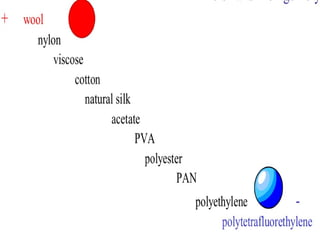
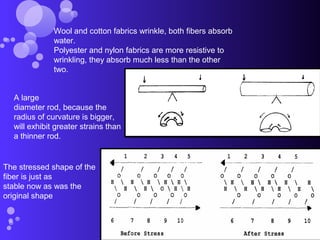
Wool and cotton fabrics wrinkle, both fibers absorb
water.
Polyester and nylon fabrics are more resistive to
wrinkling, they absorb much less than the other
two.
A large
diameter rod, because the
radius of curvature is bigger,
will exhibit greater strains than
a thinner rod.
The stressed shape of the
fiber is just as
stable now as was the
original shape
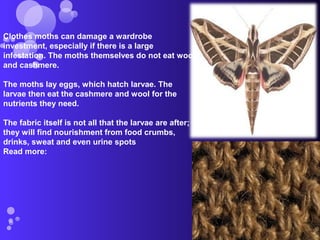
Clothes moths can damage a wardrobe
investment, especially if there is a large
infestation. The moths themselves do not eat wool
and cashmere.
The moths lay eggs, which hatch larvae. The
larvae then eat the cashmere and wool for the
nutrients they need.
The fabric itself is not all that the larvae are after;
they will find nourishment from food crumbs,
drinks, sweat and even urine spots
Read more:
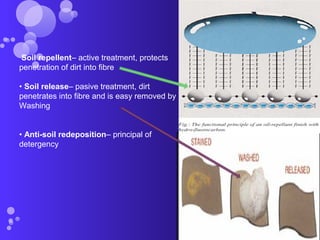
Soil repellent– active treatment, protects
penetration of dirt into fibre
• Soil release– pasive treatment, dirt
penetrates into fibre and is easy removed by
Washing
• Anti-soil redeposition– principal of
detergency
Dirt types
1. Dry – solid particles in air
2. Wet – suspension – soil in water
– solutions – fruit juices
– strong bondings to substrate
3. Fatty – fats, oils
Direct contact with dirts
• Electrostatic polarization of dust particles
(synthetic materials)
Contact forces
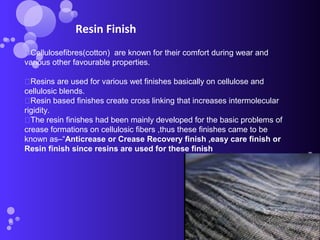
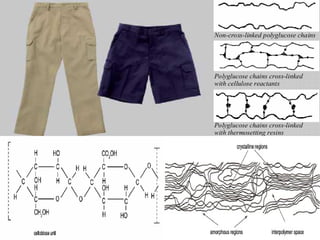
Cellulosefibres(cotton) are known for their comfort during wear and
various other favourable properties.
Resins are used for various wet finishes basically on cellulose and
cellulosic blends.
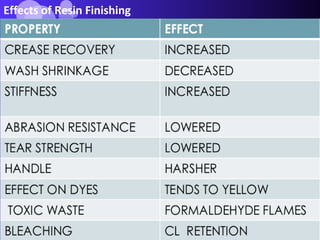
Resin based finishes create cross linking that increases intermolecular
rigidity.
The resin finishes had been mainly developed for the basic problems of
crease formations on cellulosic fibers ,thus these finishes came to be
known as–“Anticrease or Crease Recovery finish ,easy care finish or
Resin finish since resins are used for these finish
Resin Finish
Effects of Resin Finishing
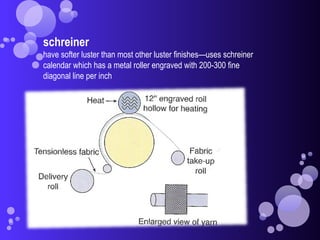
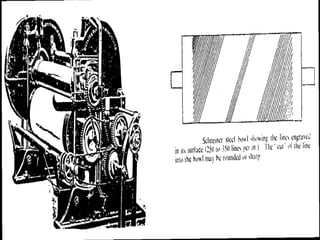
schreiner
have softer luster than most other luster finishes—uses schreiner
calendar which has a metal roller engraved with 200-300 fine
diagonal line per inch
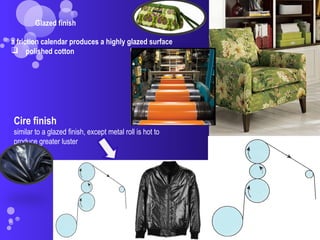
a friction calendar produces a highly glazed surface
 polished cotton
Glazed finish
Cire finish
similar to a glazed finish, except metal roll is hot to
produce greater luster
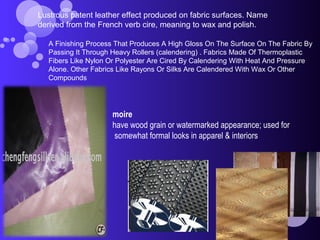
moire
have wood grain or watermarked appearance; used for
somewhat formal looks in apparel & interiors
Lustrous patent leather effect produced on fabric surfaces. Name
derived from the French verb cire, meaning to wax and polish.
A Finishing Process That Produces A High Gloss On The Surface On The Fabric By
Passing It Through Heavy Rollers (calendering) . Fabrics Made Of Thermoplastic
Fibers Like Nylon Or Polyester Are Cired By Calendering With Heat And Pressure
Alone. Other Fabrics Like Rayons Or Silks Are Calendered With Wax Or Other
Compounds
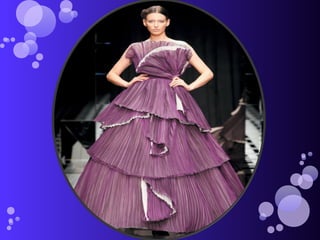
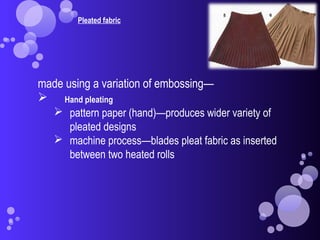
Pleated fabric
made using a variation of embossing—
 Hand pleating
 pattern paper (hand)—produces wider variety of
pleated designs
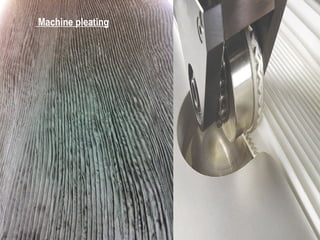
 machine process—blades pleat fabric as inserted
between two heated rolls
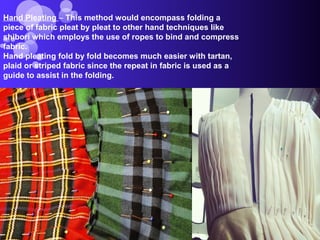
Hand Pleating – This method would encompass folding a
piece of fabric pleat by pleat to other hand techniques like
shibori which employs the use of ropes to bind and compress
fabric.
Hand pleating fold by fold becomes much easier with tartan,
plaid or striped fabric since the repeat in fabric is used as a
guide to assist in the folding.
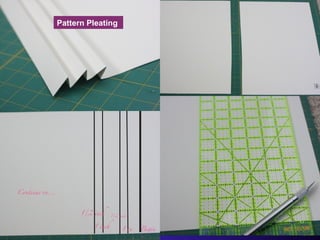
Pattern Pleating – This method of pleating employs the use of a
cardboard pattern or a tool referred to as a “pleaters board.” Pleating
boards are still used and sold today but mainly for the home sewer.
Fabric is stuffed into spaces on and then pressed with a steam iron
Pattern Pleating
Machine pleating
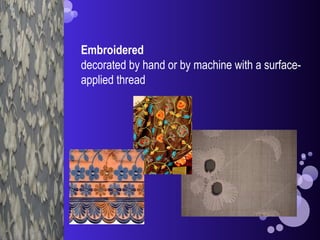
Embroidered
decorated by hand or by machine with a surface-
applied thread
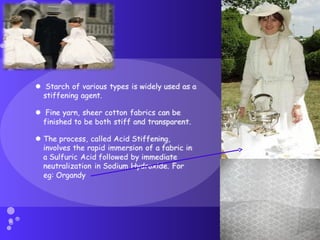
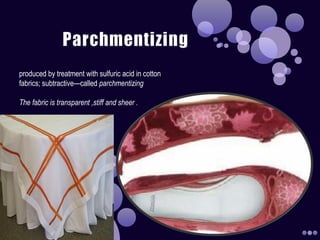
produced by treatment with sulfuric acid in cotton
fabrics; subtractive—called parchmentizing
The fabric is transparent ,stiff and sheer .
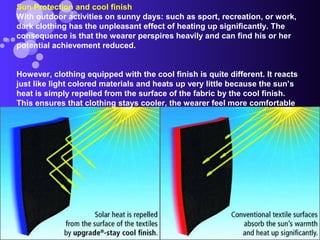
Sun Protection and cool finish
With outdoor activities on sunny days: such as sport, recreation, or work,
dark clothing has the unpleasant effect of heating up significantly. The
consequence is that the wearer perspires heavily and can find his or her
potential achievement reduced.
However, clothing equipped with the cool finish is quite different. It reacts
just like light colored materials and heats up very little because the sun’s
heat is simply repelled from the surface of the fabric by the cool finish.
This ensures that clothing stays cooler, the wearer feel more comfortable
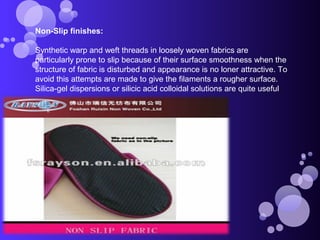
Non-Slip finishes:
Synthetic warp and weft threads in loosely woven fabrics are
particularly prone to slip because of their surface smoothness when the
structure of fabric is disturbed and appearance is no loner attractive. To
avoid this attempts are made to give the filaments a rougher surface.
Silica-gel dispersions or silicic acid colloidal solutions are quite useful
fabric and garment finishing methods

fabric and garment finishing methods

  • 37.
    Wool and cottonfabrics wrinkle, both fibers absorb water. Polyester and nylon fabrics are more resistive to wrinkling, they absorb much less than the other two. A large diameter rod, because the radius of curvature is bigger, will exhibit greater strains than a thinner rod. The stressed shape of the fiber is just as stable now as was the original shape
  • 45.
    Clothes moths candamage a wardrobe investment, especially if there is a large infestation. The moths themselves do not eat wool and cashmere. The moths lay eggs, which hatch larvae. The larvae then eat the cashmere and wool for the nutrients they need. The fabric itself is not all that the larvae are after; they will find nourishment from food crumbs, drinks, sweat and even urine spots Read more:
  • 48.
    Soil repellent– activetreatment, protects penetration of dirt into fibre • Soil release– pasive treatment, dirt penetrates into fibre and is easy removed by Washing • Anti-soil redeposition– principal of detergency
  • 49.
    Dirt types 1. Dry– solid particles in air 2. Wet – suspension – soil in water – solutions – fruit juices – strong bondings to substrate 3. Fatty – fats, oils Direct contact with dirts • Electrostatic polarization of dust particles (synthetic materials) Contact forces
  • 57.
    Cellulosefibres(cotton) are knownfor their comfort during wear and various other favourable properties. Resins are used for various wet finishes basically on cellulose and cellulosic blends. Resin based finishes create cross linking that increases intermolecular rigidity. The resin finishes had been mainly developed for the basic problems of crease formations on cellulosic fibers ,thus these finishes came to be known as–“Anticrease or Crease Recovery finish ,easy care finish or Resin finish since resins are used for these finish Resin Finish
  • 58.
  • 62.
    schreiner have softer lusterthan most other luster finishes—uses schreiner calendar which has a metal roller engraved with 200-300 fine diagonal line per inch
  • 67.
    a friction calendarproduces a highly glazed surface  polished cotton Glazed finish Cire finish similar to a glazed finish, except metal roll is hot to produce greater luster
  • 68.
    moire have wood grainor watermarked appearance; used for somewhat formal looks in apparel & interiors Lustrous patent leather effect produced on fabric surfaces. Name derived from the French verb cire, meaning to wax and polish. A Finishing Process That Produces A High Gloss On The Surface On The Fabric By Passing It Through Heavy Rollers (calendering) . Fabrics Made Of Thermoplastic Fibers Like Nylon Or Polyester Are Cired By Calendering With Heat And Pressure Alone. Other Fabrics Like Rayons Or Silks Are Calendered With Wax Or Other Compounds
  • 71.
    Pleated fabric made usinga variation of embossing—  Hand pleating  pattern paper (hand)—produces wider variety of pleated designs  machine process—blades pleat fabric as inserted between two heated rolls
  • 72.
    Hand Pleating –This method would encompass folding a piece of fabric pleat by pleat to other hand techniques like shibori which employs the use of ropes to bind and compress fabric. Hand pleating fold by fold becomes much easier with tartan, plaid or striped fabric since the repeat in fabric is used as a guide to assist in the folding.
  • 73.
    Pattern Pleating –This method of pleating employs the use of a cardboard pattern or a tool referred to as a “pleaters board.” Pleating boards are still used and sold today but mainly for the home sewer. Fabric is stuffed into spaces on and then pressed with a steam iron
  • 74.
  • 75.
  • 76.
    Embroidered decorated by handor by machine with a surface- applied thread
  • 77.
    produced by treatmentwith sulfuric acid in cotton fabrics; subtractive—called parchmentizing The fabric is transparent ,stiff and sheer .
  • 83.
    Sun Protection andcool finish With outdoor activities on sunny days: such as sport, recreation, or work, dark clothing has the unpleasant effect of heating up significantly. The consequence is that the wearer perspires heavily and can find his or her potential achievement reduced. However, clothing equipped with the cool finish is quite different. It reacts just like light colored materials and heats up very little because the sun’s heat is simply repelled from the surface of the fabric by the cool finish. This ensures that clothing stays cooler, the wearer feel more comfortable
  • 84.
    Non-Slip finishes: Synthetic warpand weft threads in loosely woven fabrics are particularly prone to slip because of their surface smoothness when the structure of fabric is disturbed and appearance is no loner attractive. To avoid this attempts are made to give the filaments a rougher surface. Silica-gel dispersions or silicic acid colloidal solutions are quite useful