Welcome to Our Presentation 
Topic: Blended Dyeing
Introduction: 
Blending of two or more different types of 
fibres is of crucial significance to the textile 
industry. The yarns and fabrics produced 
display a range of desirable properties that 
otherwise could not be achieved by a single 
textile component. The technical and 
commercial requirements of blended fibres 
place great demands on dyers and colorists to 
achieve high-quality, reproducible results under 
production conditions .Blends any textile 
materials, a from fibres through yarns to 
fabrics, which are deliberate combinations of 
chemically or physically different fibrous 
polymer
Types of Blends: 
Fiber blends: Different fiber types 
blended into a single yarn. 
Combination fiber blends: (a) Yarns of 
different fiber types woven, knitted, or 
bonded into fabric. 
(b) Single yarns composed of blended 
fibres plied together.
Some Reasons for Blending of 
fibers: 
To facilitate processing 
To improve properties 
To produce multi-colored fabrics 
To reduce cost, to increase cost
Factors affecting the choice of 
dyeing methods: 
* Colorist effect required (Union, reserve, tone-in-tone). 
* Colorfastness required of the resultant dyeing. 
* Suitability of the dyeing for subsequent finishing 
processes. 
* Compatibility of dyes from different application 
categories with one another. 
* Availability of particular types of batch, semi-continuous 
and continuous dyeing equipment. 
* Cost of the dyes and chemicals involved. 
* Economics of the overall process.
Important factors in dyeing 
blends: 
* Dye selectivity 
* Dye bath conditions 
a. Dye auxiliaries 
b. Dye bath temperature 
c. Stress on fabric. 
*Dyestuff blockage 
a. Retarding agents 
b. Dye-molecule blockage 
*Determination of dyeing on various fibers: 
a. Leach outs 
b. Riders
Important considerations in 
dyeing blends: 
Singeing – Natural fibers vs. Synthetics. 
Desiring – Sizes normally used can differ. 
Scouring – Effects of detergent and alkali. 
Bleaching –Choice of bleach adverse 
effects of bleaching. 
Mercerization – Castigation effects of 
sodium hydroxide. 
Heat setting- Effects of high temperature 
dry or wet heat.
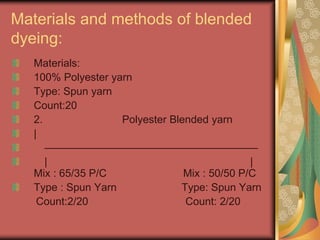
Materials and methods of blended 
dyeing: 
Materials: 
100% Polyester yarn 
Type: Spun yarn 
Count:20 
2. Polyester Blended yarn 
| 
———————————————————— 
| | 
Mix : 65/35 P/C Mix : 50/50 P/C 
Type : Spun Yarn Type: Spun Yarn 
Count:2/20 Count: 2/20
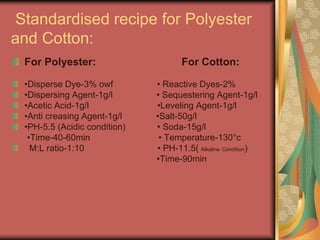
Standardised recipe for Polyester 
and Cotton: 
For Polyester: For Cotton: 
•Disperse Dye-3% owf • Reactive Dyes-2% 
•Dispersing Agent-1g/l • Sequestering Agent-1g/l 
•Acetic Acid-1g/l •Leveling Agent-1g/l 
•Anti creasing Agent-1g/l •Salt-50g/l 
•PH-5.5 (Acidic condition) • Soda-15g/l 
•Time-40-60min • Temperature-130°c 
M:L ratio-1:10 • PH-11.5( Alkaline Condition) 
•Time-90min
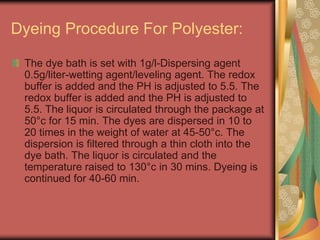
Dyeing Procedure For Polyester: 
The dye bath is set with 1g/l-Dispersing agent 
0.5g/liter-wetting agent/leveling agent. The redox 
buffer is added and the PH is adjusted to 5.5. The 
redox buffer is added and the PH is adjusted to 
5.5. The liquor is circulated through the package at 
50°c for 15 min. The dyes are dispersed in 10 to 
20 times in the weight of water at 45-50°c. The 
dispersion is filtered through a thin cloth into the 
dye bath. The liquor is circulated and the 
temperature raised to 130°c in 30 mins. Dyeing is 
continued for 40-60 min.
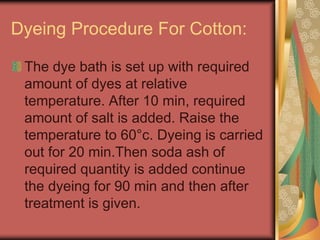
Dyeing Procedure For Cotton: 
The dye bath is set up with required 
amount of dyes at relative 
temperature. After 10 min, required 
amount of salt is added. Raise the 
temperature to 60°c. Dyeing is carried 
out for 20 min.Then soda ash of 
required quantity is added continue 
the dyeing for 90 min and then after 
treatment is given.
Conclusion : 
We have learnt by this assignment how to 
make Blended dyeing, its dyeing 
procedure, recipe, factors affecting the 
choice of dyeing methods etc. So, all the 
reasons, it is very important for every 
textile students and this knowledge will 
be help in our future job life.
Blended Dyeing

Blended Dyeing

  • 1.
    Welcome to OurPresentation Topic: Blended Dyeing
  • 2.
    Introduction: Blending oftwo or more different types of fibres is of crucial significance to the textile industry. The yarns and fabrics produced display a range of desirable properties that otherwise could not be achieved by a single textile component. The technical and commercial requirements of blended fibres place great demands on dyers and colorists to achieve high-quality, reproducible results under production conditions .Blends any textile materials, a from fibres through yarns to fabrics, which are deliberate combinations of chemically or physically different fibrous polymer
  • 3.
    Types of Blends: Fiber blends: Different fiber types blended into a single yarn. Combination fiber blends: (a) Yarns of different fiber types woven, knitted, or bonded into fabric. (b) Single yarns composed of blended fibres plied together.
  • 4.
    Some Reasons forBlending of fibers: To facilitate processing To improve properties To produce multi-colored fabrics To reduce cost, to increase cost
  • 5.
    Factors affecting thechoice of dyeing methods: * Colorist effect required (Union, reserve, tone-in-tone). * Colorfastness required of the resultant dyeing. * Suitability of the dyeing for subsequent finishing processes. * Compatibility of dyes from different application categories with one another. * Availability of particular types of batch, semi-continuous and continuous dyeing equipment. * Cost of the dyes and chemicals involved. * Economics of the overall process.
  • 6.
    Important factors indyeing blends: * Dye selectivity * Dye bath conditions a. Dye auxiliaries b. Dye bath temperature c. Stress on fabric. *Dyestuff blockage a. Retarding agents b. Dye-molecule blockage *Determination of dyeing on various fibers: a. Leach outs b. Riders
  • 7.
    Important considerations in dyeing blends: Singeing – Natural fibers vs. Synthetics. Desiring – Sizes normally used can differ. Scouring – Effects of detergent and alkali. Bleaching –Choice of bleach adverse effects of bleaching. Mercerization – Castigation effects of sodium hydroxide. Heat setting- Effects of high temperature dry or wet heat.
  • 8.
    Materials and methodsof blended dyeing: Materials: 100% Polyester yarn Type: Spun yarn Count:20 2. Polyester Blended yarn | ———————————————————— | | Mix : 65/35 P/C Mix : 50/50 P/C Type : Spun Yarn Type: Spun Yarn Count:2/20 Count: 2/20
  • 9.
    Standardised recipe forPolyester and Cotton: For Polyester: For Cotton: •Disperse Dye-3% owf • Reactive Dyes-2% •Dispersing Agent-1g/l • Sequestering Agent-1g/l •Acetic Acid-1g/l •Leveling Agent-1g/l •Anti creasing Agent-1g/l •Salt-50g/l •PH-5.5 (Acidic condition) • Soda-15g/l •Time-40-60min • Temperature-130°c M:L ratio-1:10 • PH-11.5( Alkaline Condition) •Time-90min
  • 10.
    Dyeing Procedure ForPolyester: The dye bath is set with 1g/l-Dispersing agent 0.5g/liter-wetting agent/leveling agent. The redox buffer is added and the PH is adjusted to 5.5. The redox buffer is added and the PH is adjusted to 5.5. The liquor is circulated through the package at 50°c for 15 min. The dyes are dispersed in 10 to 20 times in the weight of water at 45-50°c. The dispersion is filtered through a thin cloth into the dye bath. The liquor is circulated and the temperature raised to 130°c in 30 mins. Dyeing is continued for 40-60 min.
  • 11.
    Dyeing Procedure ForCotton: The dye bath is set up with required amount of dyes at relative temperature. After 10 min, required amount of salt is added. Raise the temperature to 60°c. Dyeing is carried out for 20 min.Then soda ash of required quantity is added continue the dyeing for 90 min and then after treatment is given.
  • 12.
    Conclusion : Wehave learnt by this assignment how to make Blended dyeing, its dyeing procedure, recipe, factors affecting the choice of dyeing methods etc. So, all the reasons, it is very important for every textile students and this knowledge will be help in our future job life.