Cancer genetics
Cancer genetics “ all cancer is genetic, but some cancers are more genetic than others” “ cancer runs in families”
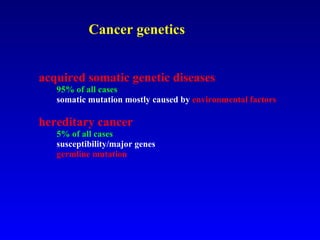
Cancer genetics   acquired somatic   genetic diseases 95% of all cases somatic mutation mostly caused by  environmental factors   hereditary   cancer 5% of all cases susceptibility/major genes germline mutation
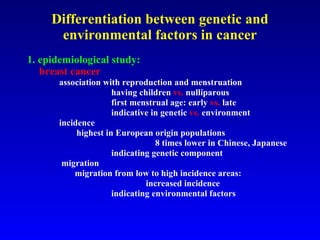
Differentiation between genetic and environmental factors in cancer 1. epidemiological study: breast cancer   association with reproduction and menstruation   having children  vs.  nulliparous   first menstrual age: early  vs.  late   indicative in genetic  vs.  environment incidence  highest in European origin populations   8 times lower in Chinese, Japanese   indicating genetic component   migration    migration from low to high incidence areas:  increased incidence   indicating environmental factors
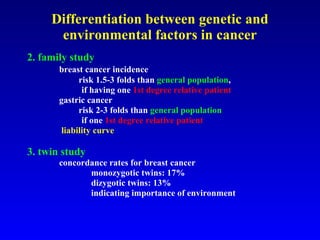
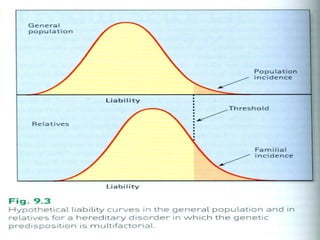
Differentiation between genetic and environmental factors in cancer 2. family study breast cancer incidence  risk 1.5-3 folds than  general population ,   if having one  1st degree relative   patient gastric cancer risk 2-3 folds than  general population     if one  1st degree relative patient   liability curve 3. twin study concordance rates for breast cancer monozygotic twins: 17% dizygotic twins: 13% indicating importance of environment
 
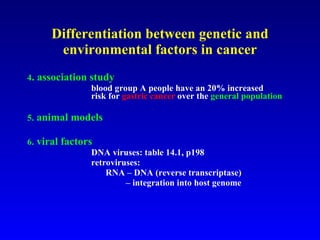
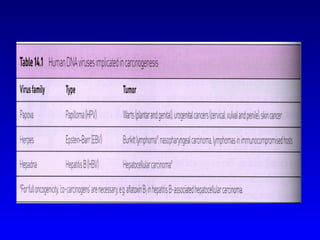
Differentiation between genetic and environmental factors in cancer 4 . association study blood group A people have an 20% increased  risk for  gastric cancer  over the  general population 5.  animal models 6.  viral factors DNA viruses: table 14.1, p198 retroviruses:  RNA – DNA (reverse transcriptase)  –  integration into host genome
 
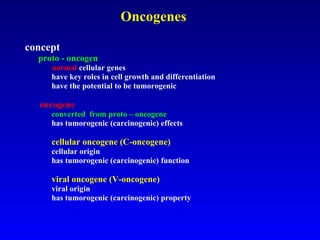
Oncogenes concept   proto - oncogen normal  cellular genes have key roles in cell growth and differentiation have the potential to be tumorogenic   oncogene converted  from proto – oncogene has tumorogenic (carcinogenic) effects   cellular oncogene (C-oncogene) cellular origin  has tumorogenic (carcinogenic) function    viral oncogene (V-oncogene) viral origin  has tumorogenic (carcinogenic) property
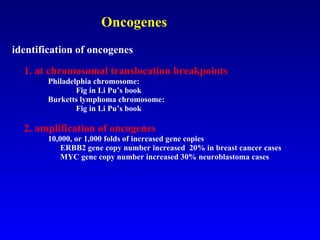
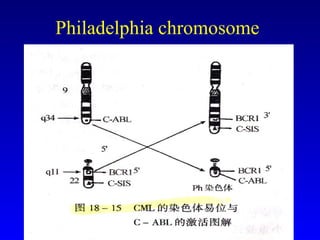
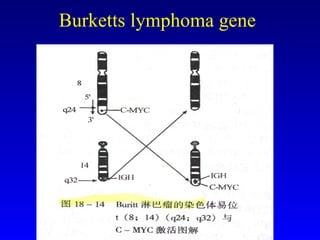
Oncogenes   identification of oncogenes  1. at chromosomal translocation breakpoints   Philadelphia chromosome:  Fig in Li Pu’s book   Burketts lymphoma chromosome:  Fig in Li Pu’s book 2. amplification of oncogenes   10,000, or 1,000 folds of increased gene copies   ERBB2 gene copy number increased  20% in breast cancer cases   MYC gene copy number increased 30% neuroblastoma cases
Philadelphia chromosome
Burketts lymphoma gene
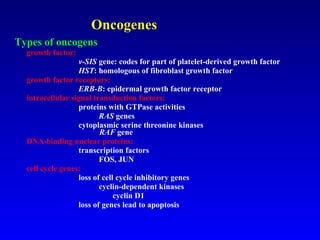
Oncogenes Types of oncogens growth factor:   v-SIS  gene: codes for part of platelet-derived growth factor HST : homologous of fibroblast growth factor growth factor receptors: ERB-B : epidermal growth factor receptor intracellular signal transduction factors: proteins with GTPase activities   RAS  genes cytoplasmic serine threonine kinases   RAF  gene DNA-binding nuclear proteins: transcription factors   FOS, JUN cell cycle genes: loss of cell cycle inhibitory genes   cyclin-dependent kinases    cyclin D1 loss of genes lead to apoptosis
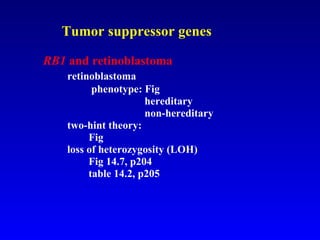
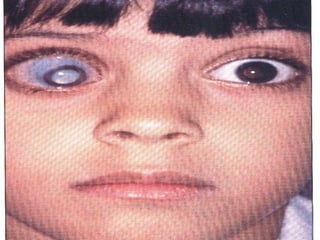
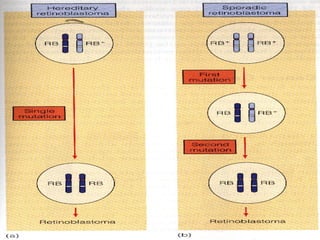
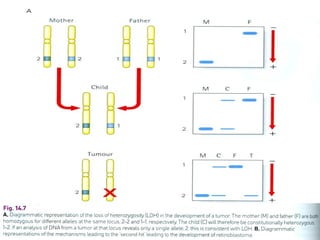
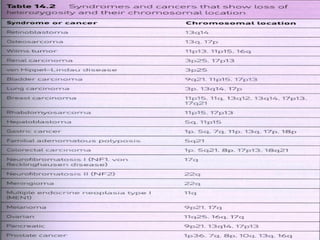
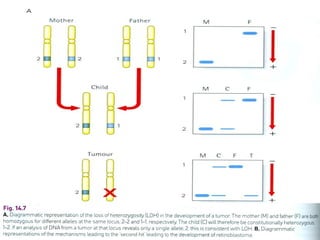
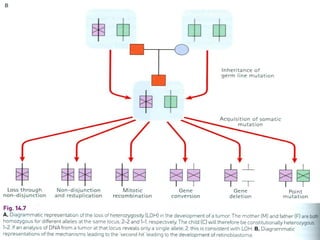
Tumor suppressor genes   RB1  and retinoblastoma   retinoblastoma     phenotype: Fig   hereditary   non-hereditary   two-hint theory:  Fig   loss of heterozygosity (LOH)  Fig 14.7, p204 table 14.2, p205


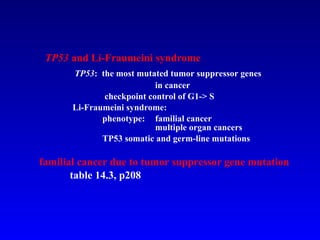
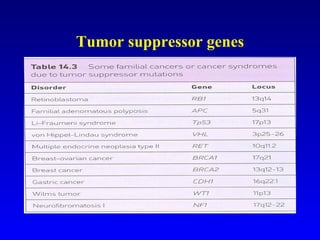
TP53  and Li-Fraumeini syndrome   TP53 :  the most mutated tumor suppressor genes  in cancer   checkpoint control of G1-> S     Li-Fraumeini syndrome:    phenotype:  familial cancer   multiple organ cancers   TP53 somatic and germ-line mutations familial cancer due to tumor suppressor gene mutation   table 14.3, p208
Tumor suppressor genes
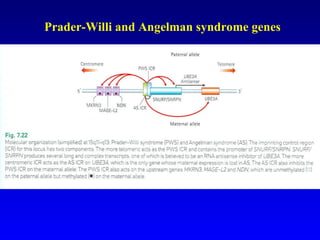
Epigenetics and cancer epigenetics  1. concept heritable changes to gene expression that are not due to  difference in gene  code (DNA sequence), transmitted  either  through mitosis  or  meiosis 2.  roles imprinting   the phenomenon of a gene or a region of a chromosome showing  differential expression depending on the parent of origin. Fig 7.22 X-inactivation regulation of gene expression
Prader-Willi and Angelman syndrome genes
Epigenetics and cancer 3. mechanisms of epigenetics re-imprinting in gamatogenesis methylation of DNA sequences  reduced expression maintain genome stability chromatin remodeling (histone modification) condensed or loosened super-coil structures   changes in transcriptional activity of sex genes  during development 4. epigenetics   in cancers   hypomethylation of oncogenes hypermethylation of tumor suppressor genes
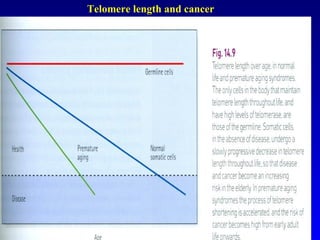
  Telomere length and cancer telomere:   chromosomal ends tandem repeats: TTAGGG for 10-15 Kb length maintained by telomerase shortened telomere in  cancer aging Fig 14.9
  Telomere length and cancer
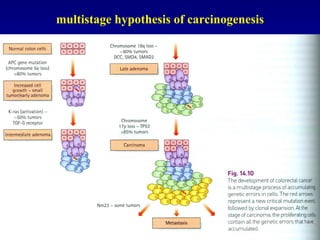
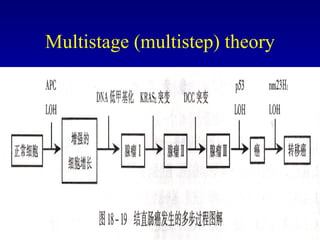
    Genetics of common cancers colorectal cancer 1. multistage hypothesis of carcinogenesis Fig 14.10
multistage hypothesis of carcinogenesis
Multistage (multistep) theory
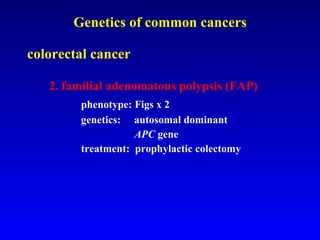
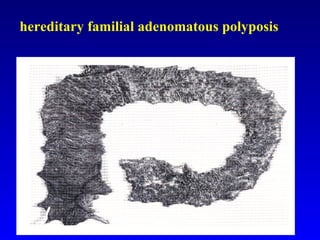
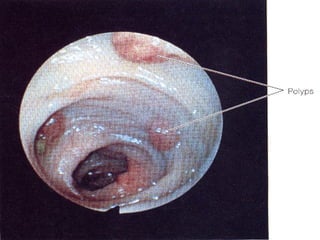
    Genetics of common cancers colorectal cancer 2. familial adenomatous polypsis (FAP) phenotype: Figs x 2 genetics:  autosomal dominant   APC  gene  treatment:  prophylactic colectomy
hereditary familial adenomatous polyposis
 
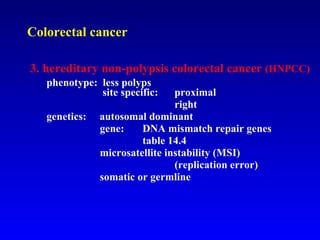
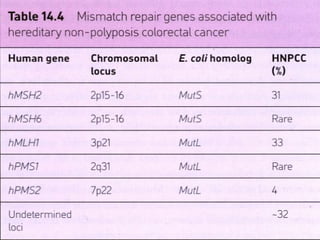
Colorectal cancer 3. hereditary non-polypsis colorectal cancer  (HNPCC) phenotype:  less polyps   site specific:  proximal right  genetics:  autosomal dominant   gene:  DNA mismatch repair genes table 14.4     microsatellite instability (MSI) (replication error)   somatic or germline
 
Breast cancer 1. incidence in west:   1 in 12 women aged 40-55  1 in 3 will be metastatic   2.  genetics (somatic form): cumulative changes   amplification:  ERB-B1 ERB-B2   LOH: 7q, 16q, 13q, 17p, etc Fig 14.7
 
Breast cancer 3.   familial breast cancer   (1)   autosomal dominant   (2)  BRCA1 :  chr 17   mutations in 40-50% early onset families   lifetime risk for family members:  60-85% if having the mutation   increased risk for : ovarian cancer in female    prostate cancer in male
Breast cancer (3)  BRCA2 ,  chr 13   30-40% early onset autosomal dominant families   female mutations carriers lifetime risk for family member as  BRCA1 heterozygotes: increased risk of ovarian cancer   male mutations carriers  6% lifetime risk for breast cancer, which is    100 - fold increased risk in comparison with the  general population
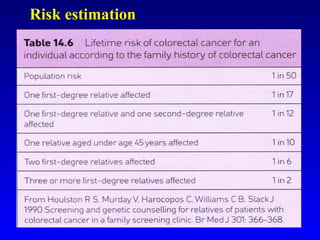
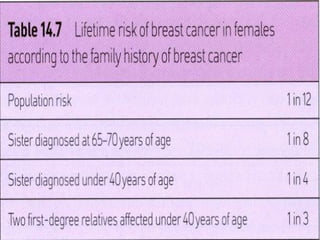
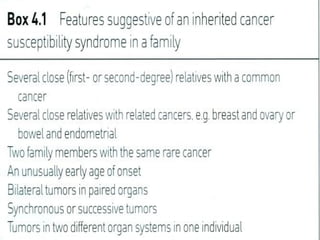
Genetic counseling in familial cancer inherited cancer-predisposing syndrome individual has more than one site cancers or at  different sites in various individuals of a family  than would be expected box 4.1   risk estimation table 14.6, 14.7
 
Risk estimation
 
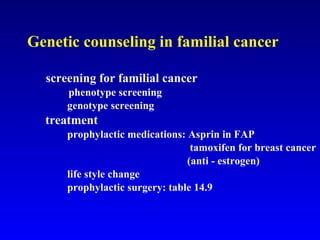
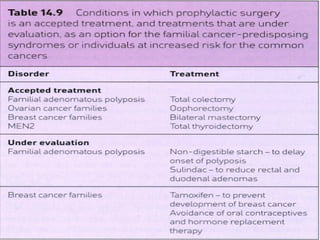
Genetic counseling in familial cancer screening for familial cancer   phenotype screening   genotype screening   treatment   prophylactic medications: Asprin in FAP   tamoxifen for breast cancer (anti - estrogen)   life style change   prophylactic surgery: table 14.9


7.Cancer Genetics.Oct.09

  • 1.
  • 2.
    Cancer genetics “all cancer is genetic, but some cancers are more genetic than others” “ cancer runs in families”
  • 3.
    Cancer genetics acquired somatic genetic diseases 95% of all cases somatic mutation mostly caused by environmental factors hereditary cancer 5% of all cases susceptibility/major genes germline mutation
  • 4.
    Differentiation between geneticand environmental factors in cancer 1. epidemiological study: breast cancer association with reproduction and menstruation having children vs. nulliparous first menstrual age: early vs. late indicative in genetic vs. environment incidence highest in European origin populations 8 times lower in Chinese, Japanese indicating genetic component migration migration from low to high incidence areas: increased incidence indicating environmental factors
  • 5.
    Differentiation between geneticand environmental factors in cancer 2. family study breast cancer incidence risk 1.5-3 folds than general population , if having one 1st degree relative patient gastric cancer risk 2-3 folds than general population if one 1st degree relative patient liability curve 3. twin study concordance rates for breast cancer monozygotic twins: 17% dizygotic twins: 13% indicating importance of environment
  • 6.
  • 7.
    Differentiation between geneticand environmental factors in cancer 4 . association study blood group A people have an 20% increased risk for gastric cancer over the general population 5. animal models 6. viral factors DNA viruses: table 14.1, p198 retroviruses: RNA – DNA (reverse transcriptase) – integration into host genome
  • 8.
  • 9.
    Oncogenes concept proto - oncogen normal cellular genes have key roles in cell growth and differentiation have the potential to be tumorogenic oncogene converted from proto – oncogene has tumorogenic (carcinogenic) effects cellular oncogene (C-oncogene) cellular origin has tumorogenic (carcinogenic) function viral oncogene (V-oncogene) viral origin has tumorogenic (carcinogenic) property
  • 10.
    Oncogenes identification of oncogenes 1. at chromosomal translocation breakpoints Philadelphia chromosome: Fig in Li Pu’s book Burketts lymphoma chromosome: Fig in Li Pu’s book 2. amplification of oncogenes 10,000, or 1,000 folds of increased gene copies ERBB2 gene copy number increased 20% in breast cancer cases MYC gene copy number increased 30% neuroblastoma cases
  • 11.
  • 12.
  • 13.
    Oncogenes Types ofoncogens growth factor: v-SIS gene: codes for part of platelet-derived growth factor HST : homologous of fibroblast growth factor growth factor receptors: ERB-B : epidermal growth factor receptor intracellular signal transduction factors: proteins with GTPase activities RAS genes cytoplasmic serine threonine kinases RAF gene DNA-binding nuclear proteins: transcription factors FOS, JUN cell cycle genes: loss of cell cycle inhibitory genes cyclin-dependent kinases cyclin D1 loss of genes lead to apoptosis
  • 14.
    Tumor suppressor genes RB1 and retinoblastoma retinoblastoma phenotype: Fig hereditary non-hereditary two-hint theory: Fig loss of heterozygosity (LOH) Fig 14.7, p204 table 14.2, p205
  • 15.
  • 16.
  • 17.
  • 18.
  • 19.
    TP53 andLi-Fraumeini syndrome TP53 : the most mutated tumor suppressor genes in cancer checkpoint control of G1-> S Li-Fraumeini syndrome: phenotype: familial cancer multiple organ cancers TP53 somatic and germ-line mutations familial cancer due to tumor suppressor gene mutation table 14.3, p208
  • 20.
  • 21.
    Epigenetics and cancerepigenetics 1. concept heritable changes to gene expression that are not due to difference in gene code (DNA sequence), transmitted either through mitosis or meiosis 2. roles imprinting the phenomenon of a gene or a region of a chromosome showing differential expression depending on the parent of origin. Fig 7.22 X-inactivation regulation of gene expression
  • 22.
  • 23.
    Epigenetics and cancer3. mechanisms of epigenetics re-imprinting in gamatogenesis methylation of DNA sequences reduced expression maintain genome stability chromatin remodeling (histone modification) condensed or loosened super-coil structures changes in transcriptional activity of sex genes during development 4. epigenetics in cancers hypomethylation of oncogenes hypermethylation of tumor suppressor genes
  • 24.
    Telomerelength and cancer telomere: chromosomal ends tandem repeats: TTAGGG for 10-15 Kb length maintained by telomerase shortened telomere in cancer aging Fig 14.9
  • 25.
    Telomerelength and cancer
  • 26.
    Genetics of common cancers colorectal cancer 1. multistage hypothesis of carcinogenesis Fig 14.10
  • 27.
  • 28.
  • 29.
    Genetics of common cancers colorectal cancer 2. familial adenomatous polypsis (FAP) phenotype: Figs x 2 genetics: autosomal dominant APC gene treatment: prophylactic colectomy
  • 30.
  • 31.
  • 32.
    Colorectal cancer 3.hereditary non-polypsis colorectal cancer (HNPCC) phenotype: less polyps site specific: proximal right genetics: autosomal dominant gene: DNA mismatch repair genes table 14.4 microsatellite instability (MSI) (replication error) somatic or germline
  • 33.
  • 34.
    Breast cancer 1.incidence in west: 1 in 12 women aged 40-55 1 in 3 will be metastatic 2. genetics (somatic form): cumulative changes amplification: ERB-B1 ERB-B2 LOH: 7q, 16q, 13q, 17p, etc Fig 14.7
  • 35.
  • 36.
    Breast cancer 3. familial breast cancer (1) autosomal dominant (2) BRCA1 : chr 17 mutations in 40-50% early onset families lifetime risk for family members: 60-85% if having the mutation increased risk for : ovarian cancer in female prostate cancer in male
  • 37.
    Breast cancer (3) BRCA2 , chr 13 30-40% early onset autosomal dominant families female mutations carriers lifetime risk for family member as BRCA1 heterozygotes: increased risk of ovarian cancer male mutations carriers 6% lifetime risk for breast cancer, which is 100 - fold increased risk in comparison with the general population
  • 38.
    Genetic counseling infamilial cancer inherited cancer-predisposing syndrome individual has more than one site cancers or at different sites in various individuals of a family than would be expected box 4.1 risk estimation table 14.6, 14.7
  • 39.
  • 40.
  • 41.
  • 42.
    Genetic counseling infamilial cancer screening for familial cancer phenotype screening genotype screening treatment prophylactic medications: Asprin in FAP tamoxifen for breast cancer (anti - estrogen) life style change prophylactic surgery: table 14.9
  • 43.
  • 44.
  • 45.
  • 46.
  • 47.