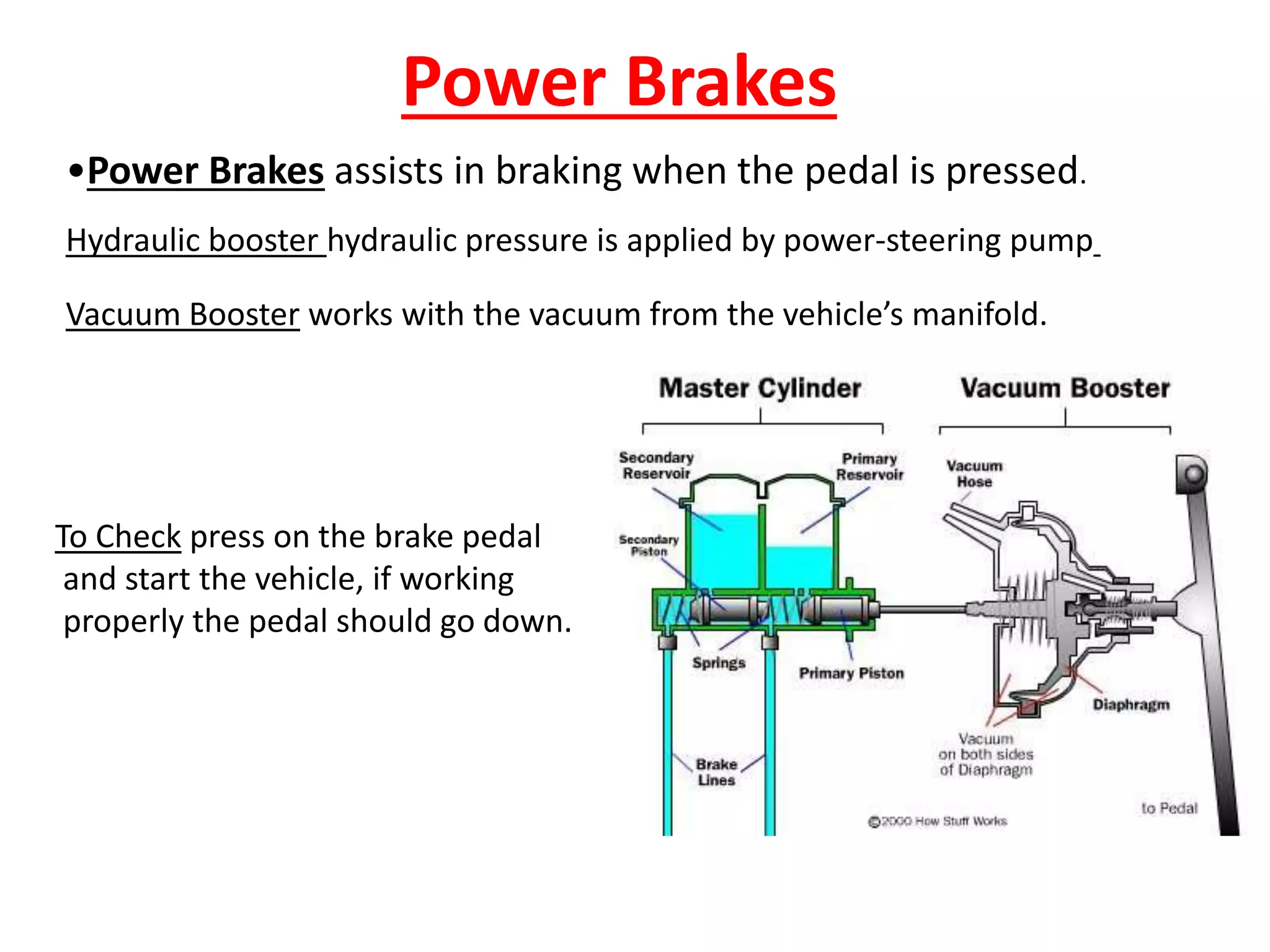
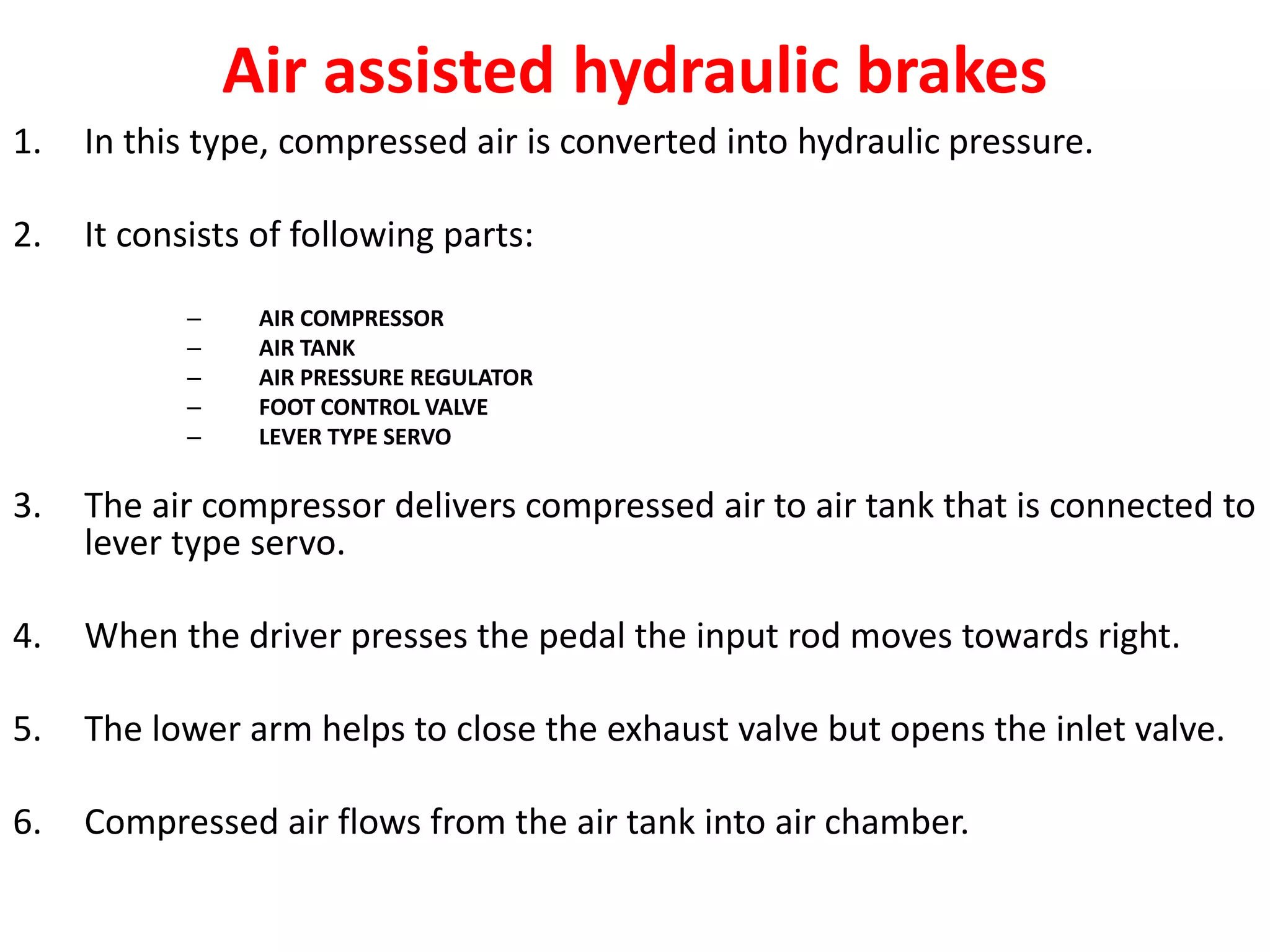
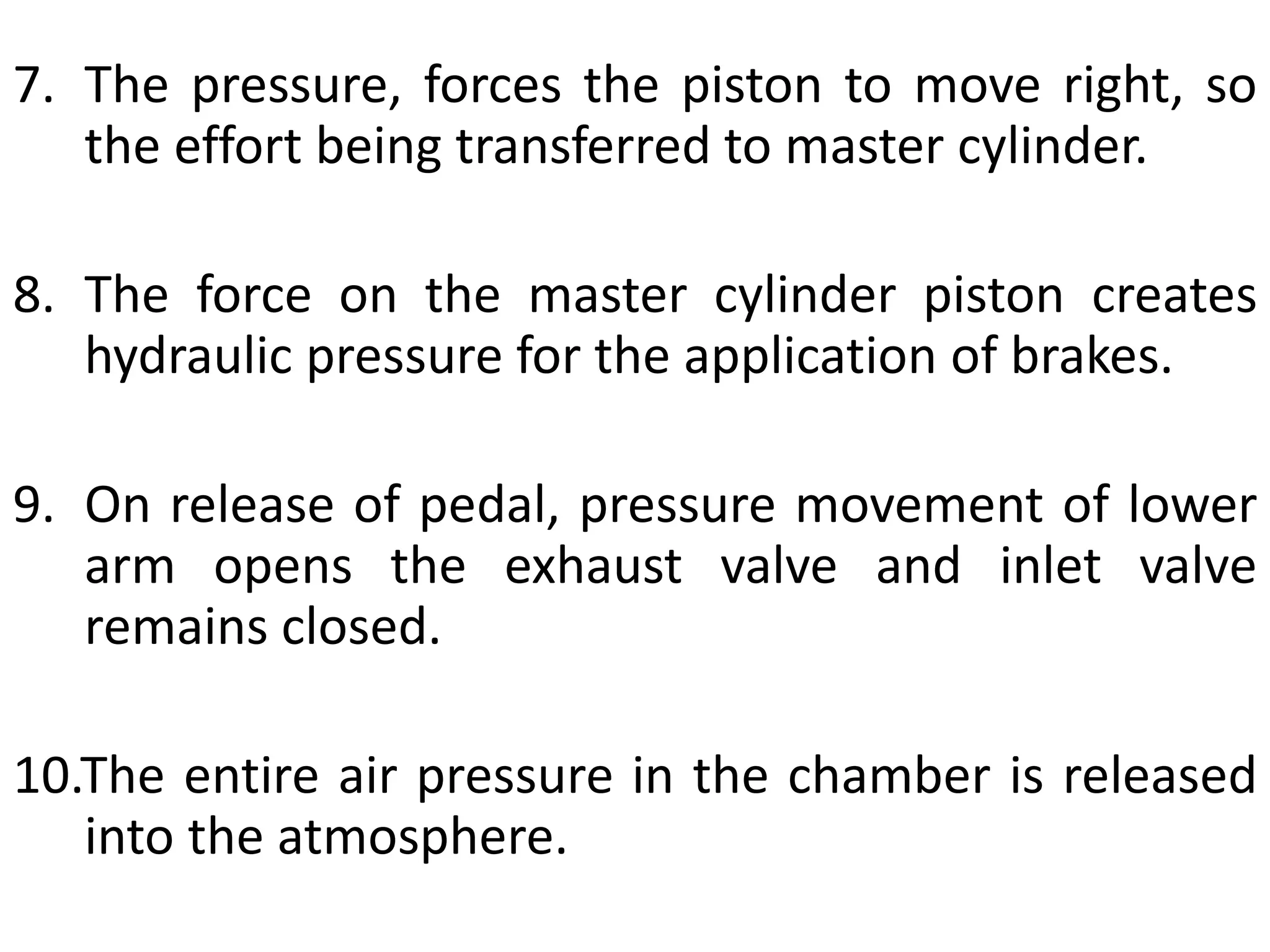
Power assisted brakes use either hydraulic or vacuum pressure to reduce the amount of force needed to press the brake pedal. Hydraulic systems use pressure from the power steering pump or an air compressor, while vacuum systems use pressure from the intake manifold. Both types work by creating pressure on one side of a booster piston to multiply the force applied through the brake pedal to the master cylinder. When the pedal is pressed, it closes off the pressure source and applies hydraulic pressure to the brakes. Releasing the pedal vents the booster pressure and allows the pedal to return freely. Servo brakes provide additional braking power needed for heavier vehicles through mechanical, hydraulic, or vacuum assisted systems.











![Electronic fuel injection system [EFI]](https://cdn.slidesharecdn.com/ss_thumbnails/efibilkulfinal-171227111232-thumbnail.jpg?width=640&height=640&fit=bounds)


