Computer Ethics

  Code of Ethics
Computer Ethics
• deals with how computing professionals
  should make decisions regarding professional
  and social conduct.
Ten Commandments of Computer
              Ethics
• Commandment - an instruction; a
  requirement

• Ethics – a code of conduct on how a person
  should live
1. You shall not use a computer to harm other
   people
  – Intentionally interfering with other people’s work
  – Invading the privacy of individuals
2. You shall not interfere with other people's
computer work
  – Degrading or disrupting equipment, software, or
    system performance.
  – Using resources to interfere with the proper
    operation of any computer, or destroy data.
  – Intentionally interfering with other people’s work
  – Invading the privacy of individuals
3. You shall not snoop around in other people's
computer files.
  – Using an account owned by another user, or
    allowing another user to access your account.
  – Invading the privacy of individuals
4. You shall not use a computer to steal.
  – Using resources in any manner that breaks the law
    or violates company policy. This can include the
    unauthorised copying or transmission of software
5. You shall not use a computer to bear false
witness.
  – You should not be responsible for creating or
    forwarding “chain” letters.
  – You should not download, store, print, or
    distributing files or messages that are profane,
    obscene, threatening, or that use language that
    offends or is aimed at degrading others.
6. You shall not copy or use proprietary software
for which you have not paid.
  – You should not use resources in any manner that
    violates company policy or breaks the law,
    including the Copyright, Designs and Patents Act.
    This means that you should not be copying or
    transmitting software for which you do not have a
    licence
7. You shall not use other people's computer
resources without authorisation or proper
compensation.
  – You should not try to pass off information
    obtained via the Internet or as part of your
    working life as your own. You should always give
    proper credit to the source.
  – You should not post personal communication
    without the original author’s consent.
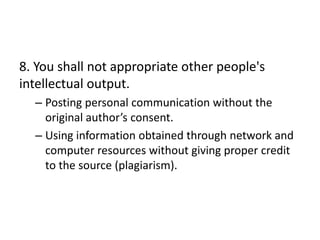
8. You shall not appropriate other people's
intellectual output.
  – Posting personal communication without the
    original author’s consent.
  – Using information obtained through network and
    computer resources without giving proper credit
    to the source (plagiarism).
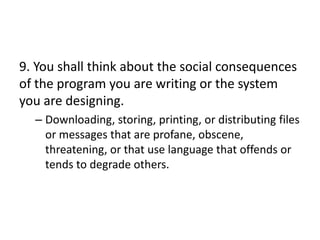
9. You shall think about the social consequences
of the program you are writing or the system
you are designing.
  – Downloading, storing, printing, or distributing files
    or messages that are profane, obscene,
    threatening, or that use language that offends or
    tends to degrade others.
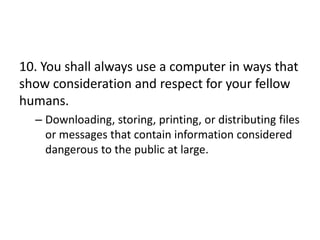
10. You shall always use a computer in ways that
show consideration and respect for your fellow
humans.
  – Downloading, storing, printing, or distributing files
    or messages that contain information considered
    dangerous to the public at large.

7 computer ethics

  • 1.
    Computer Ethics Code of Ethics
  • 2.
    Computer Ethics • dealswith how computing professionals should make decisions regarding professional and social conduct.
  • 3.
    Ten Commandments ofComputer Ethics • Commandment - an instruction; a requirement • Ethics – a code of conduct on how a person should live
  • 4.
    1. You shallnot use a computer to harm other people – Intentionally interfering with other people’s work – Invading the privacy of individuals
  • 5.
    2. You shallnot interfere with other people's computer work – Degrading or disrupting equipment, software, or system performance. – Using resources to interfere with the proper operation of any computer, or destroy data. – Intentionally interfering with other people’s work – Invading the privacy of individuals
  • 6.
    3. You shallnot snoop around in other people's computer files. – Using an account owned by another user, or allowing another user to access your account. – Invading the privacy of individuals 4. You shall not use a computer to steal. – Using resources in any manner that breaks the law or violates company policy. This can include the unauthorised copying or transmission of software
  • 7.
    5. You shallnot use a computer to bear false witness. – You should not be responsible for creating or forwarding “chain” letters. – You should not download, store, print, or distributing files or messages that are profane, obscene, threatening, or that use language that offends or is aimed at degrading others.
  • 8.
    6. You shallnot copy or use proprietary software for which you have not paid. – You should not use resources in any manner that violates company policy or breaks the law, including the Copyright, Designs and Patents Act. This means that you should not be copying or transmitting software for which you do not have a licence
  • 9.
    7. You shallnot use other people's computer resources without authorisation or proper compensation. – You should not try to pass off information obtained via the Internet or as part of your working life as your own. You should always give proper credit to the source. – You should not post personal communication without the original author’s consent.
  • 10.
    8. You shallnot appropriate other people's intellectual output. – Posting personal communication without the original author’s consent. – Using information obtained through network and computer resources without giving proper credit to the source (plagiarism).
  • 11.
    9. You shallthink about the social consequences of the program you are writing or the system you are designing. – Downloading, storing, printing, or distributing files or messages that are profane, obscene, threatening, or that use language that offends or tends to degrade others.
  • 12.
    10. You shallalways use a computer in ways that show consideration and respect for your fellow humans. – Downloading, storing, printing, or distributing files or messages that contain information considered dangerous to the public at large.