Ethics In ComputingBy:- Lakshan Dinuka Bamunusinghe        (IDM-Dip ICT)
What is ethics?Ethics is a set of moral principles that govern the behavior of a group or individual.
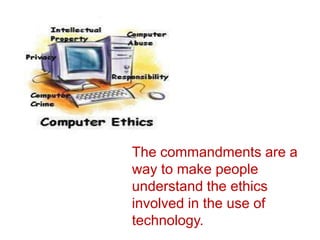
What is Computer ethics?Computer ethics is set of moral principles that regulate the use of computers. Some common issues of computer ethics include intellectual property rights (such as copyrighted electronic content), privacy concerns, and how computers affect society.
Ten Commandments of Computer Ethics.should not use a computer to harm other people.should not interfere with other people's computer work.should  not snoop around in other people's files.should not use a computer to steal. should not use a computer to bear false witness.should not use or copy software for which you have not paid. should not use other people's computer resources without authorization.should not appropriate other people's intellectual output. should think about the social consequences of the program you write.should use a computer in ways that show consideration and respect.
1). Should not use a computer to harm other people.This commandment makes clear that it is unethical to use a computer to harm another user. It Includes, Harming or corrupting some other user's   data or files.
 Wrong to steal someone's personal information by means of a computer.
 Manipulate or destroy the files of other people through the use of a computer.
 Writing a programs intended to bring perform . 2). Should not interfere with other people's computer work.Under this category, discussing about the viruses, because viruses are small programs built with intent to harm or disrupt the useful computer programs. Some viruses aim at overloading the computer memory by an excessive use of computer resources.
 These viruses tend to fail a computer in executing the desired tasks.
 They lead to the dysfunction of a computer.3).should  not snoop around in other people's files.We know that it is wrong to read another person’s  letters or documents. In computing,Reading another person’s e-mail.
 Obtaining another persons private files.
 Snooping around in another person's files or reading someone else's personal messages4).should not use a computer to steal.If some one using computers to steal using the network connections it is illegal.Stealing of an employee database from a company data base.
 Breaking into a bank and retrieving confidential information.
 Illegal transfer of money or funds through the computers.5). Should not use a computer to bear false witness.Computer are the easiest way to spread information by using internet. Spreading the wrong information without any responsibility.
 Involving to provide the incorrect information to someone using internet. 6).should not use or copy software for which you have not paid.Software is result of a person or a group. software is also subject to copyrights, like any other literary book or something created by a person.
 Obtaining a copy of software without paying or illegally.
 Downloading a software from any other web sites without paying.CD sale in America from 1995 to 2005..

Ethics in computing

  • 1.
    Ethics In ComputingBy:-Lakshan Dinuka Bamunusinghe (IDM-Dip ICT)
  • 2.
    What is ethics?Ethicsis a set of moral principles that govern the behavior of a group or individual.
  • 3.
    What is Computerethics?Computer ethics is set of moral principles that regulate the use of computers. Some common issues of computer ethics include intellectual property rights (such as copyrighted electronic content), privacy concerns, and how computers affect society.
  • 4.
    Ten Commandments ofComputer Ethics.should not use a computer to harm other people.should not interfere with other people's computer work.should not snoop around in other people's files.should not use a computer to steal. should not use a computer to bear false witness.should not use or copy software for which you have not paid. should not use other people's computer resources without authorization.should not appropriate other people's intellectual output. should think about the social consequences of the program you write.should use a computer in ways that show consideration and respect.
  • 5.
    1). Should notuse a computer to harm other people.This commandment makes clear that it is unethical to use a computer to harm another user. It Includes, Harming or corrupting some other user's data or files.
  • 6.
    Wrong tosteal someone's personal information by means of a computer.
  • 7.
    Manipulate ordestroy the files of other people through the use of a computer.
  • 8.
    Writing aprograms intended to bring perform . 2). Should not interfere with other people's computer work.Under this category, discussing about the viruses, because viruses are small programs built with intent to harm or disrupt the useful computer programs. Some viruses aim at overloading the computer memory by an excessive use of computer resources.
  • 9.
    These virusestend to fail a computer in executing the desired tasks.
  • 10.
    They leadto the dysfunction of a computer.3).should not snoop around in other people's files.We know that it is wrong to read another person’s letters or documents. In computing,Reading another person’s e-mail.
  • 11.
    Obtaining anotherpersons private files.
  • 12.
    Snooping aroundin another person's files or reading someone else's personal messages4).should not use a computer to steal.If some one using computers to steal using the network connections it is illegal.Stealing of an employee database from a company data base.
  • 13.
    Breaking intoa bank and retrieving confidential information.
  • 14.
    Illegal transferof money or funds through the computers.5). Should not use a computer to bear false witness.Computer are the easiest way to spread information by using internet. Spreading the wrong information without any responsibility.
  • 15.
    Involving toprovide the incorrect information to someone using internet. 6).should not use or copy software for which you have not paid.Software is result of a person or a group. software is also subject to copyrights, like any other literary book or something created by a person.
  • 16.
    Obtaining acopy of software without paying or illegally.
  • 17.
    Downloading asoftware from any other web sites without paying.CD sale in America from 1995 to 2005..