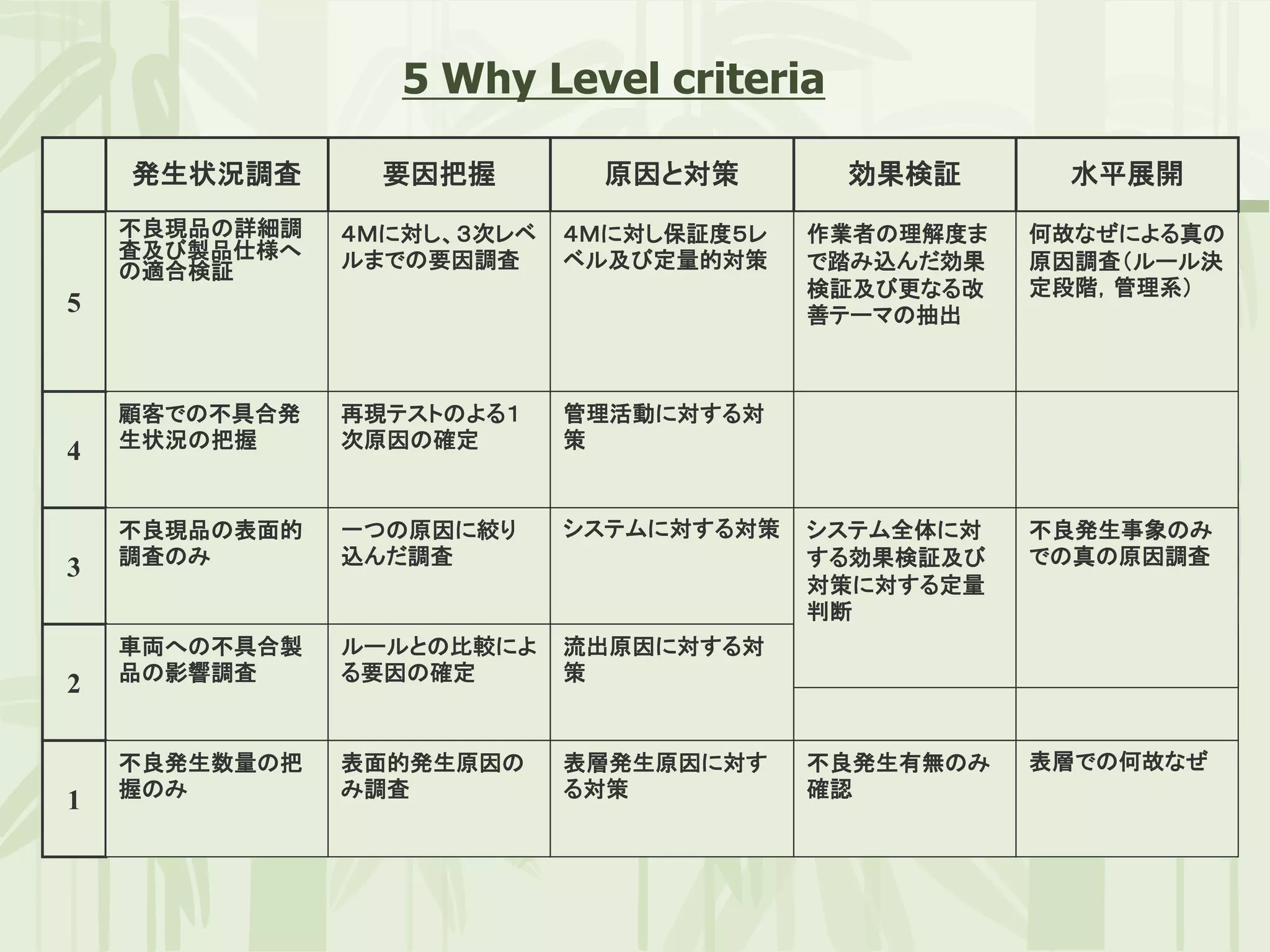
発生状況調査 要因把握 原因と対策 効果検証 水平展開
4
顧客での不具合発
生状況の把握
再現テストのよる1
次原因の確定
管理活動に対する対
策
3
不良現品の表面的
調査のみ
一つの原因に絞り
込んだ調査
システムに対する対策
2
車両への不具合製
品の影響調査
ルールとの比較によ
る要因の確定
流出原因に対する対
策
1
不良発生数量の把
握のみ
表面的発生原因の
み調査
表層発生原因に対す
る対策
不良発生有無のみ
確認
表層での何故なぜ
5
不良現品の詳細調
査及び製品仕様へ
の適合検証
4Mに対し、3次レベ
ルまでの要因調査
4Mに対し保証度5レ
ベル及び定量的対策
作業者の理解度ま
で踏み込んだ効果
検証及び更なる改
善テーマの抽出
何故なぜによる真の
原因調査(ルール決
定段階,管理系)
システム全体に対
する効果検証及び
対策に対する定量
判断
不良発生事象のみ
での真の原因調査
5 Why Level criteria
Status of
Problem
Grasp of the
fact (5-Why)
Cause &
countermeasure
Countermeasure
effectiveness
Horizontal
deployment
4
Grasp of detected
condition on actual
parts, site,
phenomenon.
Confirmation of root
cause by re-
occurrence test.
Countermeasure to the
quality system or
management activities.
3
Brief investigation on
actual rejected items.
Focus on one most
possible cause,
investigation in depth
to root cause.
Confirmation on
countermeasure to root
cause.
2
Investigation of
influence to vehicle
by defected items.
Compare the actual
reject to quality
standard, investigate
on occurrence.
Countermeasure to
outflow.
1
Only grasp of
rejected item and
quantity.
Some investigations
on occurrence of
reject.
Countermeasure to
occurrence.
Monitor on
reoccurrence.
Why-Why is done to
the surface level only.
5
Detail investigation
on actual rejected
items and
confirmation of
meeting to
specification
(product & process.)
Investigation on the
root cause of reject
till 3rd level to 4 M .
High assurance degree
of countermeasure to
4 M ( ex. Regulated
Pokayoke ) &
measurable
countermeasure.
Effectiveness
evaluation till related
personnel understand
& able to apply on
more improvement
items.
Extracting of root
causes by Why-Why
questioning to rule
making stage and
management area.
(Preventive actions.
Able to apply the
solution on other
operations.)
Effectiveness
evaluation to overall
system & measurable
judgment of
countermeasure.
Extracting of root
causes to the defects
occurrence
phenomenon only.
( Not enough Why-
Why, only corrective
actions. )
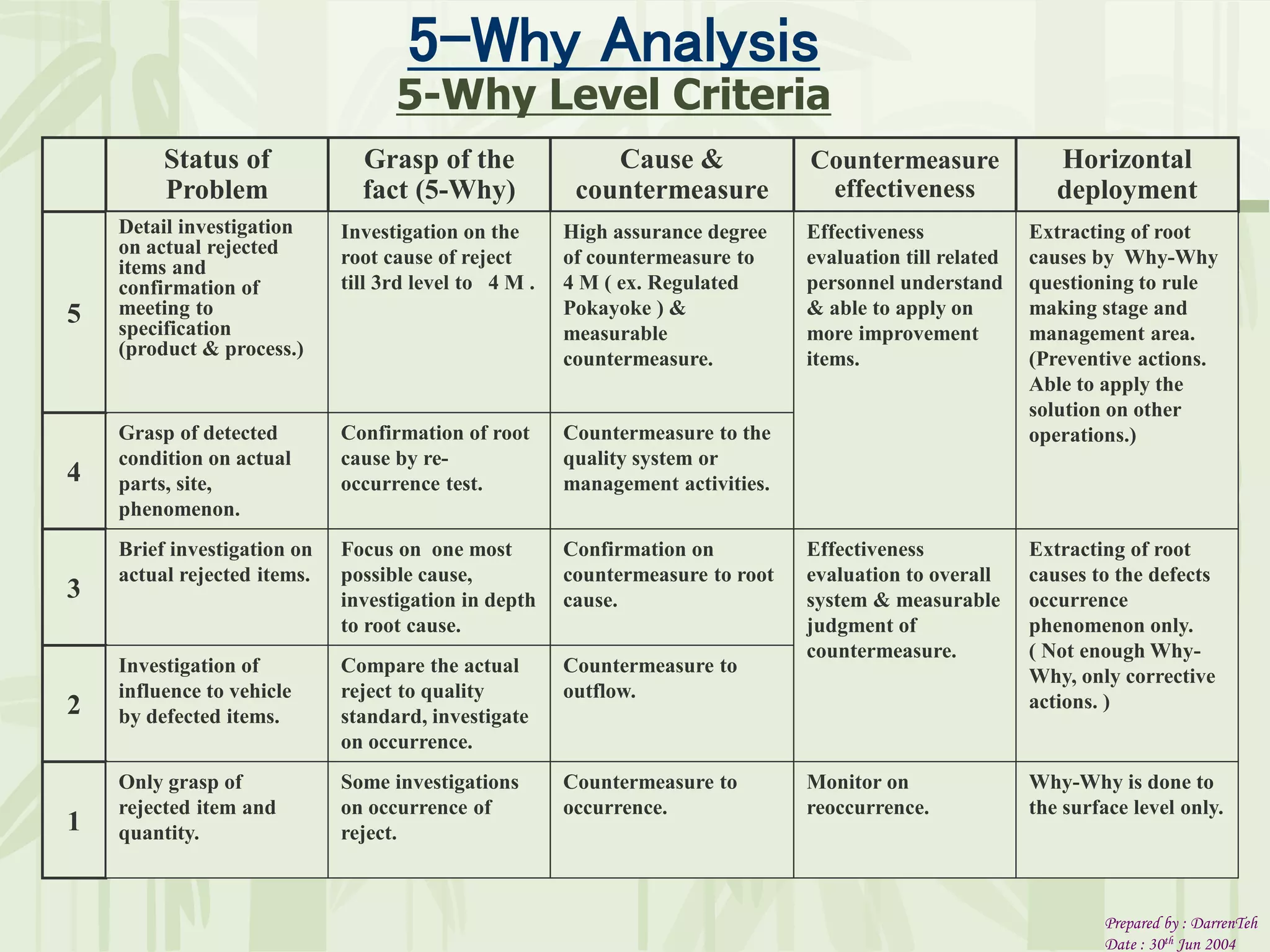
5-Why Level Criteria
5-Why Analysis
Prepared by : DarrenTeh
Date : 30th Jun 2004
5-Why Analysis
Prepared by : DarrenTeh
Date : 30th Jun 2004
5-Why Level Criteria
1) Assist to carry out “Self-Appraisal” on 5-Why
Analysis Report.
2) When received 5-Why report from supplier or
other department, first carry out some
investigations, or shangen shugi on the problem
status and contents before simply use the
Judgment Matrix.
5-Why Analysis
Prepared by : DarrenTeh
Date : 30th Jun 2004
Case Study 2
5-Why Analysis
Prepared by : DarrenTeh
Date : 30th Jun 2004
Case Study 2
Group A
1) Zhu Gao Feng (TSA) (Presentation)
2) Xie Shi Jun (TSA)
3) Wang Chun Yi (SIT)
4) Chen Ting Yuan (SIT)
Group B
1) Prapon (STC)
2) Babar (SPK) (Presentation)
3) Suha (SVL)
Group C
SVL / PVL staff
5-Why Analysis
Prepared by : DarrenTeh
Date : 30th Jun 2004
Use the same 5-Why reports as case study 1, and make presentation :
• Judge if the 5-Why report is analyzed appropriately according to
judgment matrix, and explain your reasons.
Case Study 2
5-Why Analysis
Prepared by : DarrenTeh
Date : 30th Jun 2004
Case Study 2
Status of Problems
Grasp of The Facts (why-
why)
Cause & Countermeasure
Countermeasure
Effectiveness
Horizontal Deployment
Level 1 to 5
Discussion
5-Why Analysis
Prepared by : DarrenTeh
Date : 30th Jun 2004
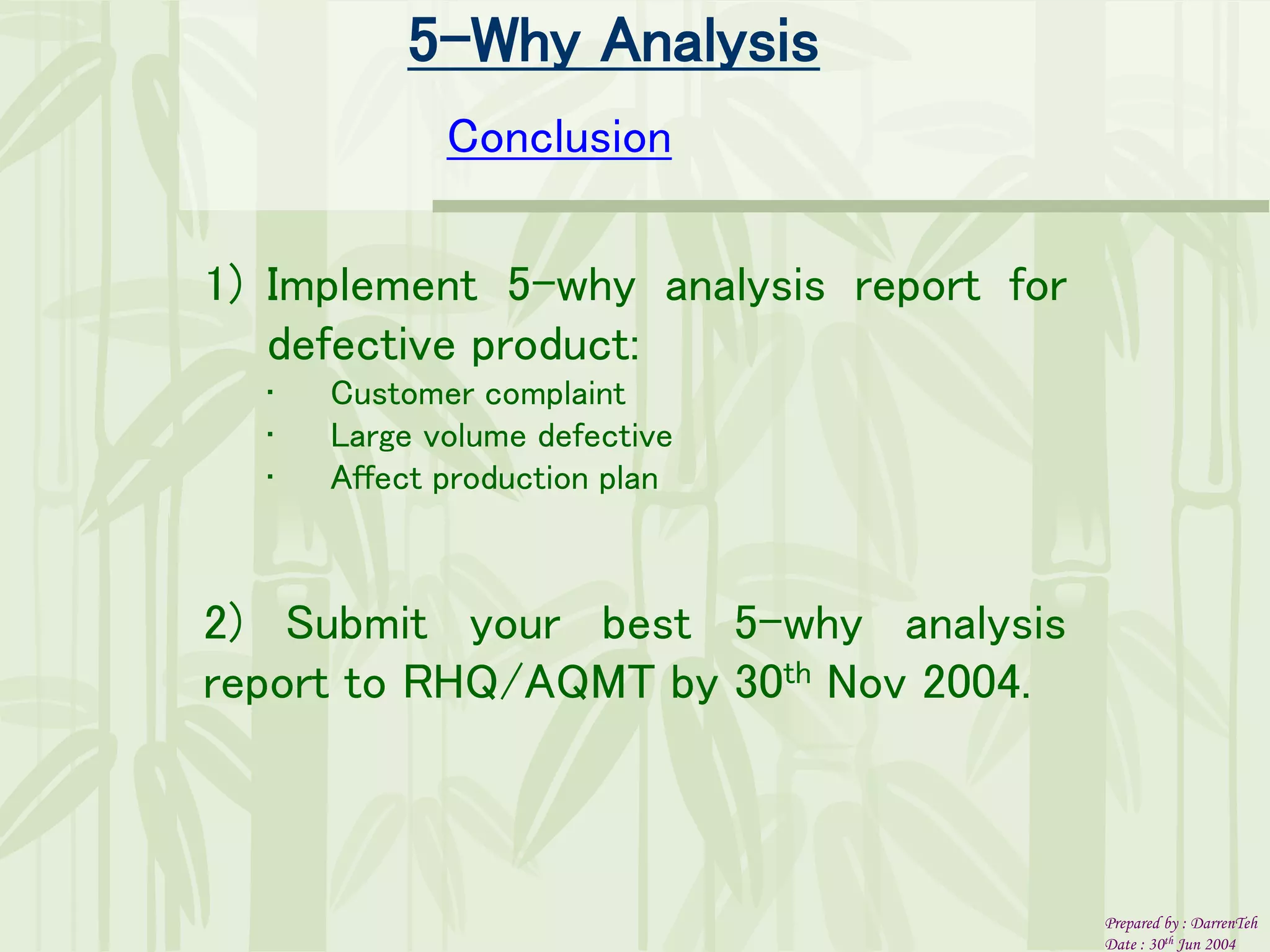
Conclusion
1) Implement 5-why analysis report for
defective product:
• Customer complaint
• Large volume defective
• Affect production plan
2) Submit your best 5-why analysis
report to RHQ/AQMT by 30th Nov 2004.
5 why criteria matrix

5 why criteria matrix

  • 1.
    発生状況調査 要因把握 原因と対策効果検証 水平展開 4 顧客での不具合発 生状況の把握 再現テストのよる1 次原因の確定 管理活動に対する対 策 3 不良現品の表面的 調査のみ 一つの原因に絞り 込んだ調査 システムに対する対策 2 車両への不具合製 品の影響調査 ルールとの比較によ る要因の確定 流出原因に対する対 策 1 不良発生数量の把 握のみ 表面的発生原因の み調査 表層発生原因に対す る対策 不良発生有無のみ 確認 表層での何故なぜ 5 不良現品の詳細調 査及び製品仕様へ の適合検証 4Mに対し、3次レベ ルまでの要因調査 4Mに対し保証度5レ ベル及び定量的対策 作業者の理解度ま で踏み込んだ効果 検証及び更なる改 善テーマの抽出 何故なぜによる真の 原因調査(ルール決 定段階,管理系) システム全体に対 する効果検証及び 対策に対する定量 判断 不良発生事象のみ での真の原因調査 5 Why Level criteria
  • 2.
    Status of Problem Grasp ofthe fact (5-Why) Cause & countermeasure Countermeasure effectiveness Horizontal deployment 4 Grasp of detected condition on actual parts, site, phenomenon. Confirmation of root cause by re- occurrence test. Countermeasure to the quality system or management activities. 3 Brief investigation on actual rejected items. Focus on one most possible cause, investigation in depth to root cause. Confirmation on countermeasure to root cause. 2 Investigation of influence to vehicle by defected items. Compare the actual reject to quality standard, investigate on occurrence. Countermeasure to outflow. 1 Only grasp of rejected item and quantity. Some investigations on occurrence of reject. Countermeasure to occurrence. Monitor on reoccurrence. Why-Why is done to the surface level only. 5 Detail investigation on actual rejected items and confirmation of meeting to specification (product & process.) Investigation on the root cause of reject till 3rd level to 4 M . High assurance degree of countermeasure to 4 M ( ex. Regulated Pokayoke ) & measurable countermeasure. Effectiveness evaluation till related personnel understand & able to apply on more improvement items. Extracting of root causes by Why-Why questioning to rule making stage and management area. (Preventive actions. Able to apply the solution on other operations.) Effectiveness evaluation to overall system & measurable judgment of countermeasure. Extracting of root causes to the defects occurrence phenomenon only. ( Not enough Why- Why, only corrective actions. ) 5-Why Level Criteria 5-Why Analysis Prepared by : DarrenTeh Date : 30th Jun 2004
  • 3.
    5-Why Analysis Prepared by: DarrenTeh Date : 30th Jun 2004 5-Why Level Criteria 1) Assist to carry out “Self-Appraisal” on 5-Why Analysis Report. 2) When received 5-Why report from supplier or other department, first carry out some investigations, or shangen shugi on the problem status and contents before simply use the Judgment Matrix.
  • 4.
    5-Why Analysis Prepared by: DarrenTeh Date : 30th Jun 2004 Case Study 2
  • 5.
    5-Why Analysis Prepared by: DarrenTeh Date : 30th Jun 2004 Case Study 2 Group A 1) Zhu Gao Feng (TSA) (Presentation) 2) Xie Shi Jun (TSA) 3) Wang Chun Yi (SIT) 4) Chen Ting Yuan (SIT) Group B 1) Prapon (STC) 2) Babar (SPK) (Presentation) 3) Suha (SVL) Group C SVL / PVL staff
  • 6.
    5-Why Analysis Prepared by: DarrenTeh Date : 30th Jun 2004 Use the same 5-Why reports as case study 1, and make presentation : • Judge if the 5-Why report is analyzed appropriately according to judgment matrix, and explain your reasons. Case Study 2
  • 7.
    5-Why Analysis Prepared by: DarrenTeh Date : 30th Jun 2004 Case Study 2 Status of Problems Grasp of The Facts (why- why) Cause & Countermeasure Countermeasure Effectiveness Horizontal Deployment Level 1 to 5 Discussion
  • 9.
    5-Why Analysis Prepared by: DarrenTeh Date : 30th Jun 2004 Conclusion 1) Implement 5-why analysis report for defective product: • Customer complaint • Large volume defective • Affect production plan 2) Submit your best 5-why analysis report to RHQ/AQMT by 30th Nov 2004.