Downloaded 381 times

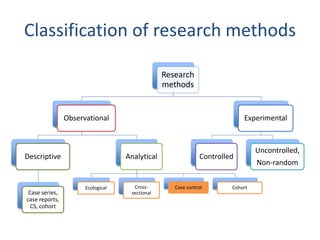

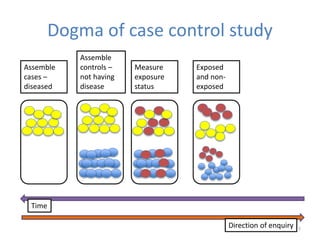
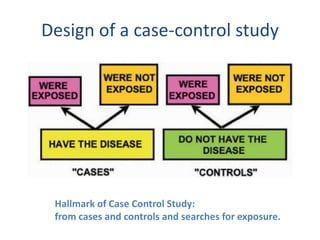
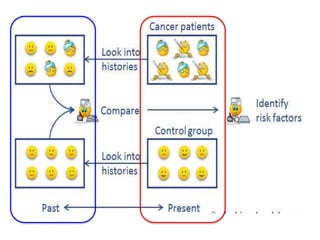
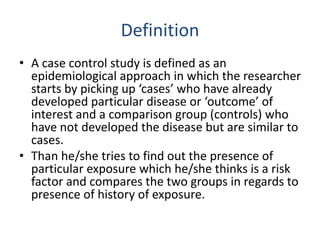
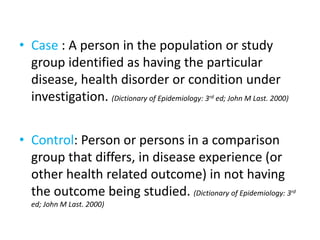
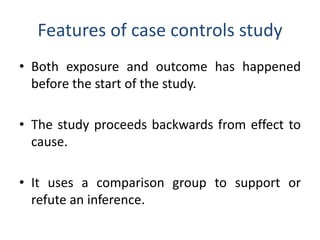
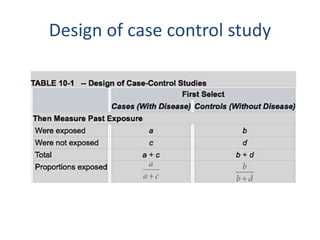
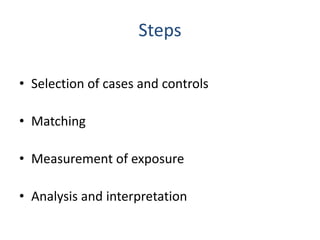
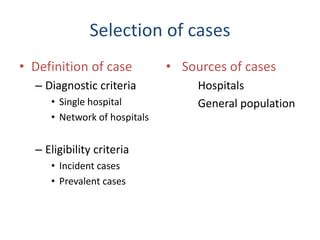
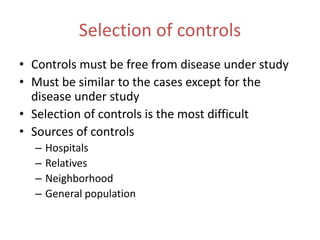
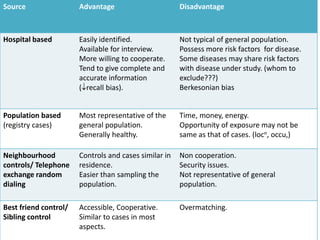
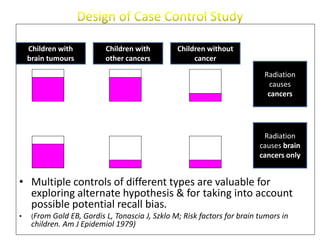


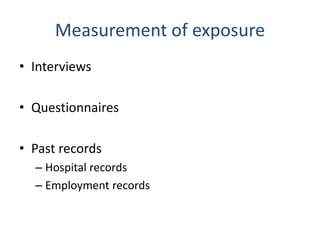

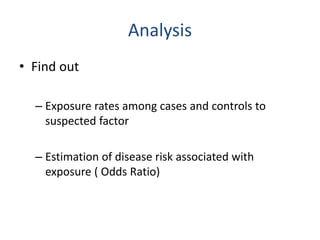
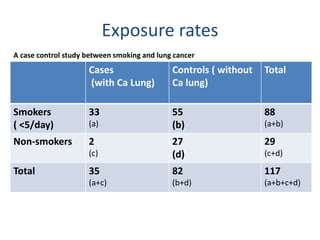
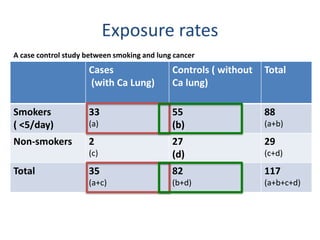
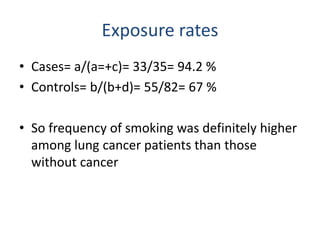

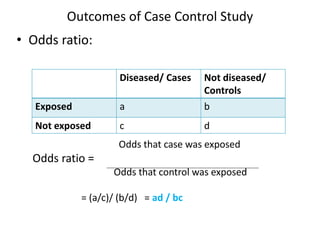
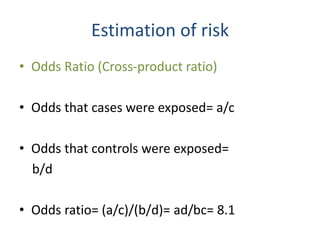
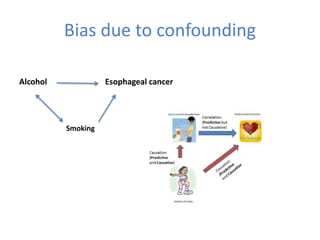
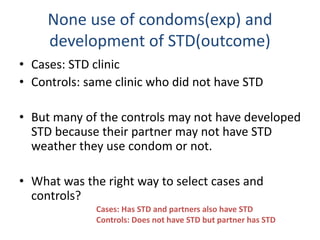
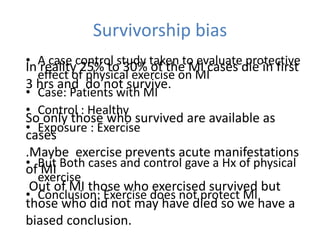

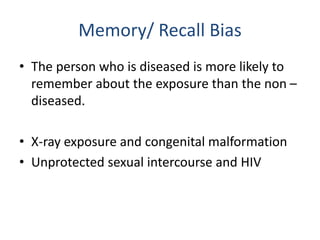
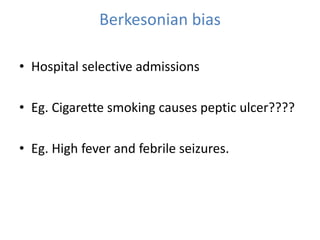
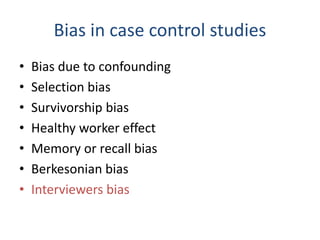
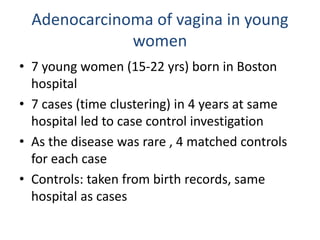
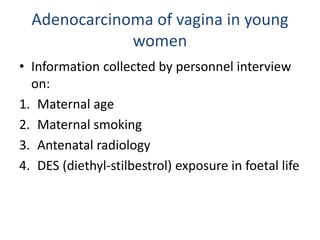
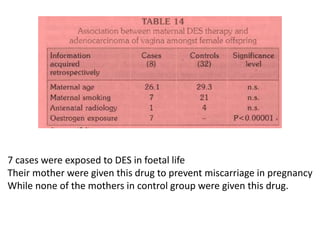


This document discusses case control studies and provides examples to illustrate their use. It defines a case control study as an epidemiological approach that starts with identified "cases" who have a disease and compares them to "controls" who do not have the disease. The study then examines past exposure history to identify potential risk factors. Key aspects of case control studies covered include selecting appropriate cases and controls, matching on important variables, measuring past exposure, calculating odds ratios to estimate disease risk associated with exposures, and potential biases like selection bias, recall bias, and survivorship bias. Examples are provided of early case control studies that helped identify links between smoking and lung cancer, and between rubella infection and cataracts.


