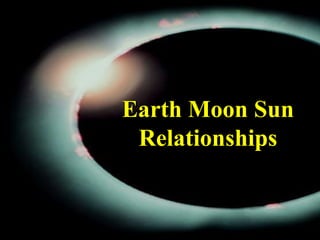
Earth Moon SunEarth Moon Sun
RelationshipsRelationships
RotationRotation versus Revolutionversus Revolution
• RotationRotation is the turning of a body about
an axis.
– The earth rotates once every 24 hours.
• RevolutionRevolution is the motion of one body
around another.
– The earth revolves around the sun once
every 364 ¼ days.
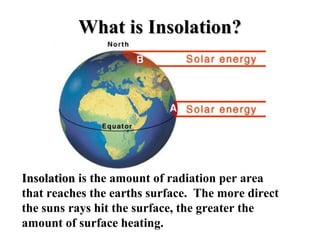
What is Insolation?What is Insolation?
InsolationInsolation is the amount of radiation per area
that reaches the earths surface. The more direct
the suns rays hit the surface, the greater the
amount of surface heating.
Examples of Insolation
Why Does the Length of Day onWhy Does the Length of Day on
Earth Change?Earth Change?
• The tilt of the Earth’s axistilt of the Earth’s axis, and the
rotation and revolution of the Earthrotation and revolution of the Earth
is responsible for the changes in the
length of day and night.
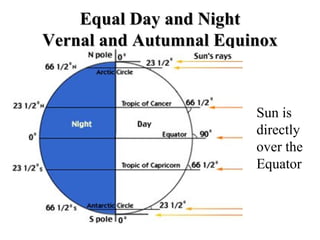
Equal Day and NightEqual Day and Night
Vernal and Autumnal EquinoxVernal and Autumnal Equinox
Sun is
directly
over the
Equator
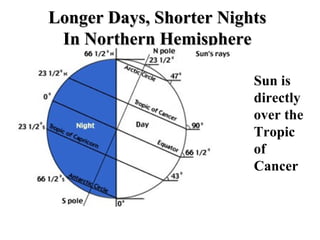
Longer Days, Shorter NightsLonger Days, Shorter Nights
In Northern HemisphereIn Northern Hemisphere
Sun is
directly
over the
Tropic
of
Cancer
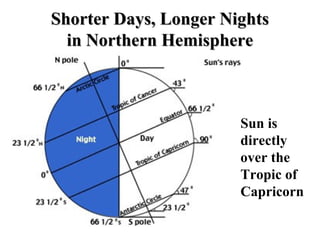
Shorter Days, Longer NightsShorter Days, Longer Nights
in Northern Hemispherein Northern Hemisphere
Sun is
directly
over the
Tropic of
Capricorn
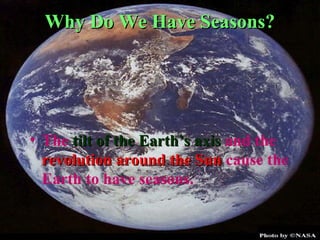
Why Do We Have Seasons?Why Do We Have Seasons?
• The tilt of the Earth’s axistilt of the Earth’s axis and the
revolution around the Sunrevolution around the Sun cause the
Earth to have seasons.
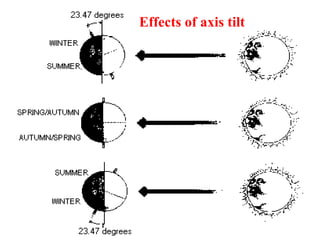
Effects of axis tilt
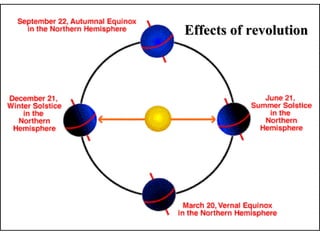
Effects of revolutionEffects of revolution
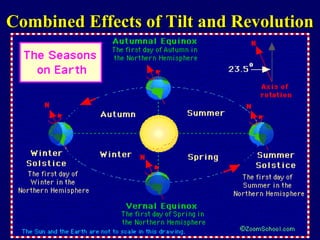
Combined Effects of Tilt and RevolutionCombined Effects of Tilt and Revolution
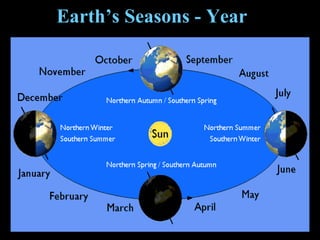
Earth’s Seasons - YearEarth’s Seasons - Year
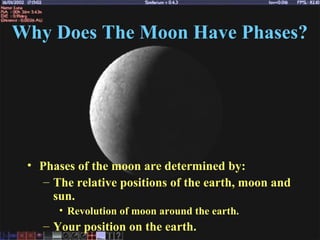
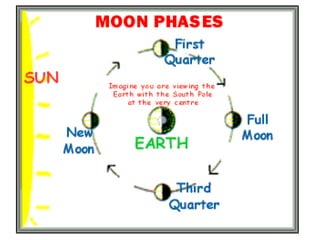
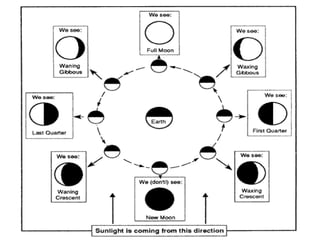
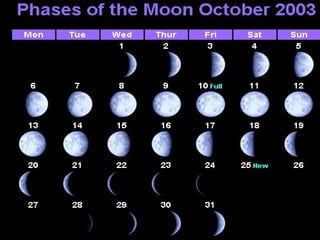
Why Does The Moon Have Phases?
• Phases of the moon are determined by:
– The relative positions of the earth, moon and
sun.
• Revolution of moon around the earth.
– Your position on the earth.
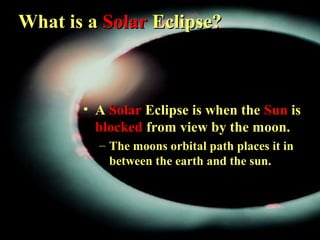
What is aWhat is a SolarSolar Eclipse?Eclipse?
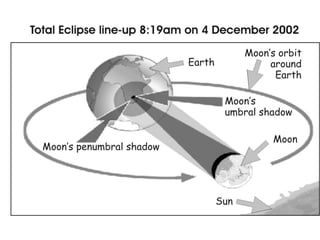
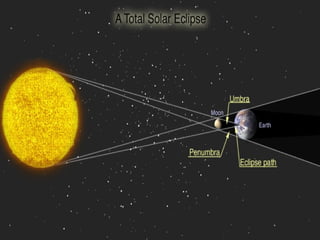
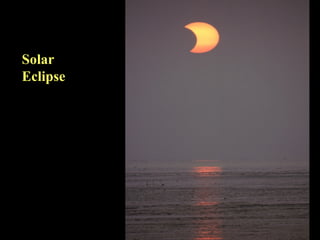
• A SolarSolar Eclipse is when the SunSun is
blockedblocked from view by the moon.
– The moons orbital path places it in
between the earth and the sun.
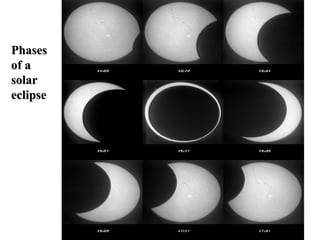
PhasesPhases
of aof a
solarsolar
eclipseeclipse
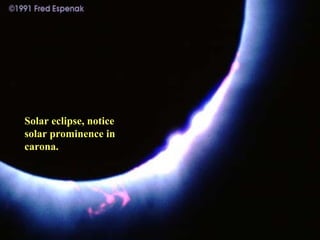
Solar eclipse, notice
solar prominence in
carona.
SolarSolar
EclipseEclipse
What is a Lunar Eclipse?What is a Lunar Eclipse?
• A Lunar eclipse is when the moon is
blocked by the shadow of the earth.
– The moon’s orbital path takes it into
the shadow of the earth.
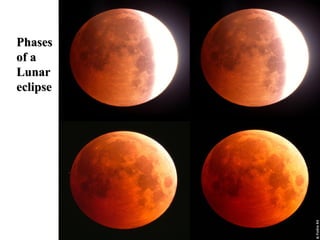
PhasesPhases
of aof a
LunarLunar
eclipseeclipse
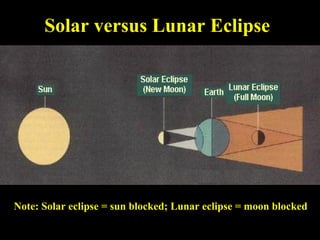
Solar versus Lunar EclipseSolar versus Lunar Eclipse
Note: Solar eclipse = sun blocked; Lunar eclipse = moon blocked

Earth moon sun

  • 1.
    Earth Moon SunEarthMoon Sun RelationshipsRelationships
  • 2.
    RotationRotation versus RevolutionversusRevolution • RotationRotation is the turning of a body about an axis. – The earth rotates once every 24 hours. • RevolutionRevolution is the motion of one body around another. – The earth revolves around the sun once every 364 ¼ days.
  • 3.
    What is Insolation?Whatis Insolation? InsolationInsolation is the amount of radiation per area that reaches the earths surface. The more direct the suns rays hit the surface, the greater the amount of surface heating.
  • 4.
  • 5.
    Why Does theLength of Day onWhy Does the Length of Day on Earth Change?Earth Change? • The tilt of the Earth’s axistilt of the Earth’s axis, and the rotation and revolution of the Earthrotation and revolution of the Earth is responsible for the changes in the length of day and night.
  • 6.
    Equal Day andNightEqual Day and Night Vernal and Autumnal EquinoxVernal and Autumnal Equinox Sun is directly over the Equator
  • 7.
    Longer Days, ShorterNightsLonger Days, Shorter Nights In Northern HemisphereIn Northern Hemisphere Sun is directly over the Tropic of Cancer
  • 8.
    Shorter Days, LongerNightsShorter Days, Longer Nights in Northern Hemispherein Northern Hemisphere Sun is directly over the Tropic of Capricorn
  • 9.
    Why Do WeHave Seasons?Why Do We Have Seasons? • The tilt of the Earth’s axistilt of the Earth’s axis and the revolution around the Sunrevolution around the Sun cause the Earth to have seasons.
  • 10.
  • 11.
  • 12.
    Combined Effects ofTilt and RevolutionCombined Effects of Tilt and Revolution
  • 13.
    Earth’s Seasons -YearEarth’s Seasons - Year
  • 14.
    Why Does TheMoon Have Phases? • Phases of the moon are determined by: – The relative positions of the earth, moon and sun. • Revolution of moon around the earth. – Your position on the earth.
  • 18.
    What is aWhatis a SolarSolar Eclipse?Eclipse? • A SolarSolar Eclipse is when the SunSun is blockedblocked from view by the moon. – The moons orbital path places it in between the earth and the sun.
  • 21.
  • 22.
    Solar eclipse, notice solarprominence in carona.
  • 23.
  • 24.
    What is aLunar Eclipse?What is a Lunar Eclipse? • A Lunar eclipse is when the moon is blocked by the shadow of the earth. – The moon’s orbital path takes it into the shadow of the earth.
  • 25.
  • 26.
    Solar versus LunarEclipseSolar versus Lunar Eclipse Note: Solar eclipse = sun blocked; Lunar eclipse = moon blocked