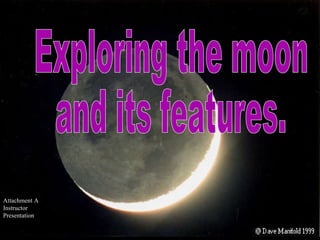
Exploring the moon and its features. Attachment A Instructor Presentation
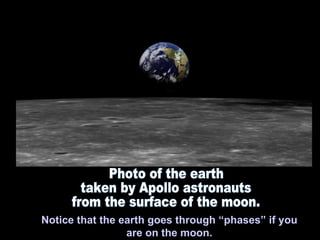
Photo of the earth taken by Apollo astronauts from the surface of the moon. Notice that the earth goes through “phases” if you are on the moon.
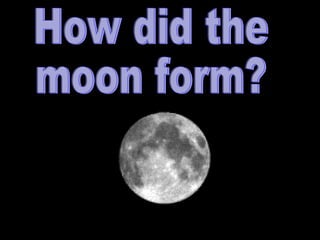
How did the moon form?
 
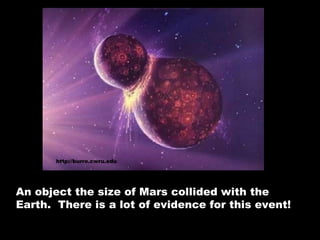
An object the size of Mars collided with the Earth.  There is a lot of evidence for this event! http://burro.cwru.edu
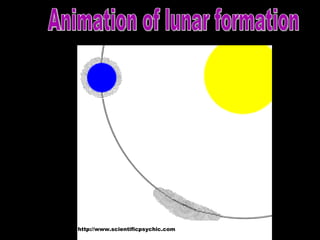
http://www.scientificpsychic.com Animation of lunar formation
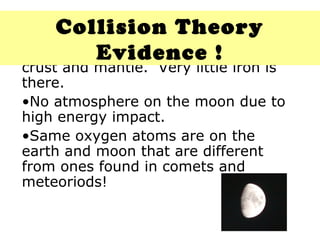
Material on the moon is like our crust and mantle.  Very little iron is there. No atmosphere on the moon due to high energy impact. Same oxygen atoms are on the earth and moon that are different from ones found in comets and meteoriods! Collision Theory Evidence !
What theory best describes the formation of the moon? Collision Theory Mastery Question
What evidence supports the collision theory of lunar formation? Similar surface composition No atmosphere due to the force of impact Similar oxygen atoms – different than on other celestial objects Mastery Question
Why do you think we have not yet found the point of impact on Earth? Self-expressive Question
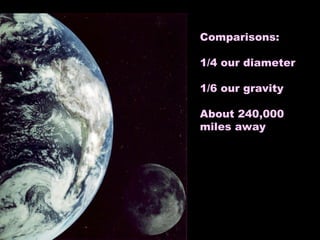
Comparisons: 1/4 our diameter 1/6 our gravity About 240,000 miles away
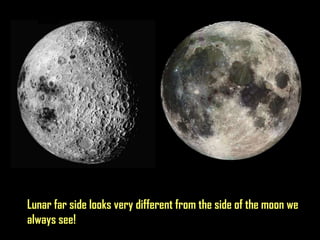
Lunar far side looks very different from the side of the moon we always see!
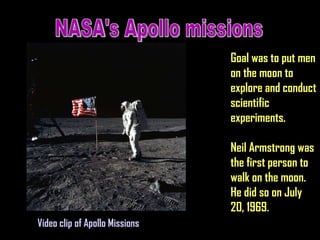
NASA's Apollo missions Goal was to put men on the moon to explore and conduct scientific experiments. Neil Armstrong was the first person to walk on the moon.  He did so on July 20, 1969. Video clip of Apollo Missions
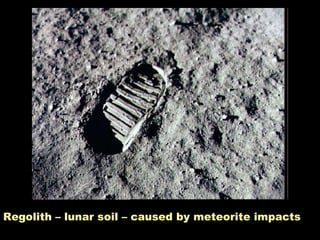
Regolith – lunar soil – caused by meteorite impacts
Why is the footprint still visible? Why hasn’t it changed? No atmosphere No agents of weathering and erosion Understanding Question – connection to previously learned material
 
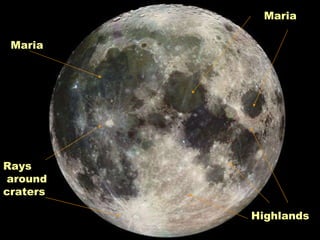
Maria Rays around  craters Maria Highlands
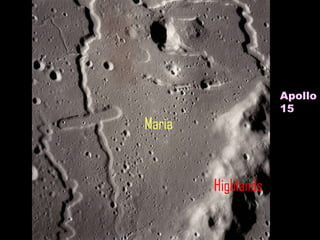
Apollo 15 Maria Highlands
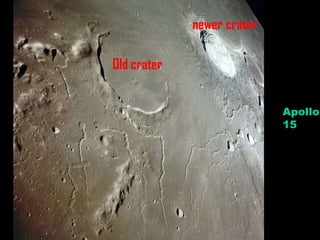
Apollo 15 Old crater newer crater
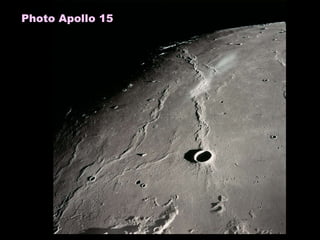
Photo Apollo 15
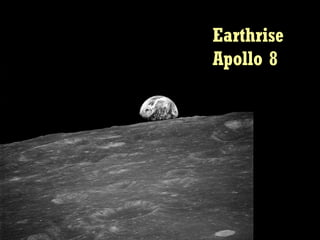
Earthrise  Apollo 8
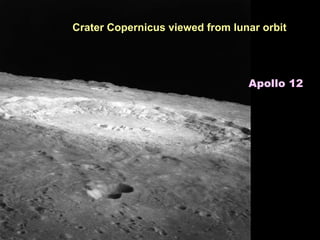
Crater Copernicus viewed from lunar orbit Apollo 12
What are three features of the moon? Maria Highlands Craters Mastery Question
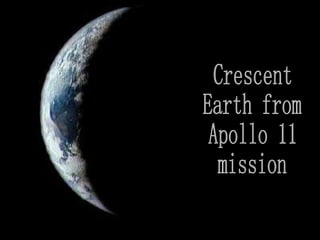
Crescent Earth from Apollo 11 mission
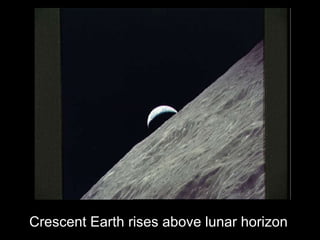
Crescent Earth rises above lunar horizon
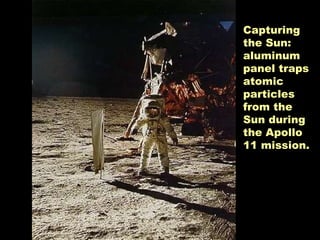
Capturing the Sun: aluminum panel traps atomic particles from the Sun during the Apollo 11 mission.
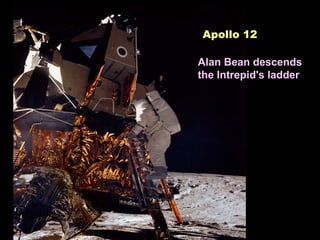
Apollo 12 Alan Bean descends the Intrepid's ladder
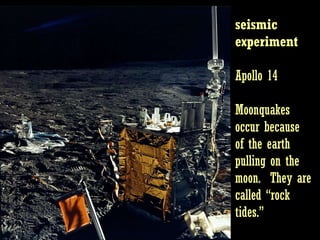
seismic experiment Apollo 14 Moonquakes occur because of the earth pulling on the moon.  They are called “rock tides.”
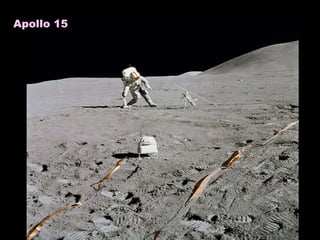
Apollo 15
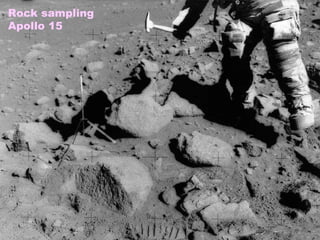
Rock sampling Apollo 15
 
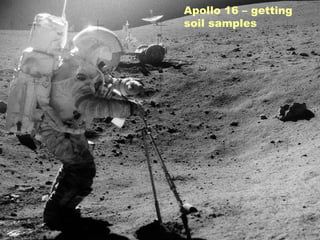
Apollo 16 – getting soil samples
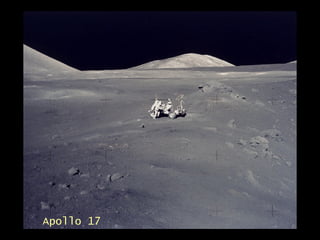
Apollo 17
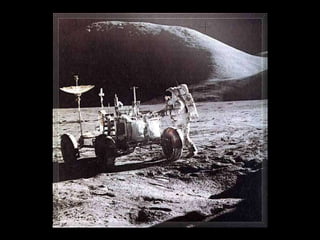
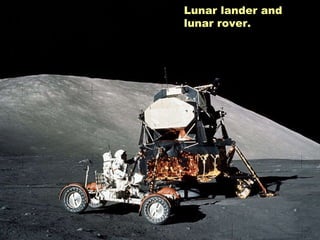
Lunar lander and lunar rover.
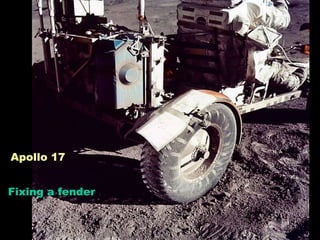
Fixing a fender Apollo 17
Do you think NASA should send another mission to the moon? YES! Learn more  Possible life? Future colonization Find the Man in the Moon NO! We have been there 17 times already Too much money Need to explore elsewhere Interpersonal Question
Do other lunar formation theories have merit?
Your assignment… Choose one of the other three lunar formation theories. Write a news release describing new evidence that proves your theory.

Moon Formation and Structure

  • 1.
    Exploring the moonand its features. Attachment A Instructor Presentation
  • 2.
    Photo of theearth taken by Apollo astronauts from the surface of the moon. Notice that the earth goes through “phases” if you are on the moon.
  • 3.
    How did themoon form?
  • 4.
  • 5.
    An object thesize of Mars collided with the Earth. There is a lot of evidence for this event! http://burro.cwru.edu
  • 6.
  • 7.
    Material on themoon is like our crust and mantle. Very little iron is there. No atmosphere on the moon due to high energy impact. Same oxygen atoms are on the earth and moon that are different from ones found in comets and meteoriods! Collision Theory Evidence !
  • 8.
    What theory bestdescribes the formation of the moon? Collision Theory Mastery Question
  • 9.
    What evidence supportsthe collision theory of lunar formation? Similar surface composition No atmosphere due to the force of impact Similar oxygen atoms – different than on other celestial objects Mastery Question
  • 10.
    Why do youthink we have not yet found the point of impact on Earth? Self-expressive Question
  • 11.
    Comparisons: 1/4 ourdiameter 1/6 our gravity About 240,000 miles away
  • 12.
    Lunar far sidelooks very different from the side of the moon we always see!
  • 13.
    NASA's Apollo missionsGoal was to put men on the moon to explore and conduct scientific experiments. Neil Armstrong was the first person to walk on the moon. He did so on July 20, 1969. Video clip of Apollo Missions
  • 14.
    Regolith – lunarsoil – caused by meteorite impacts
  • 15.
    Why is thefootprint still visible? Why hasn’t it changed? No atmosphere No agents of weathering and erosion Understanding Question – connection to previously learned material
  • 16.
  • 17.
    Maria Rays around craters Maria Highlands
  • 18.
    Apollo 15 MariaHighlands
  • 19.
    Apollo 15 Oldcrater newer crater
  • 20.
  • 21.
  • 22.
    Crater Copernicus viewedfrom lunar orbit Apollo 12
  • 23.
    What are threefeatures of the moon? Maria Highlands Craters Mastery Question
  • 24.
    Crescent Earth fromApollo 11 mission
  • 25.
    Crescent Earth risesabove lunar horizon
  • 26.
    Capturing the Sun:aluminum panel traps atomic particles from the Sun during the Apollo 11 mission.
  • 27.
    Apollo 12 AlanBean descends the Intrepid's ladder
  • 28.
    seismic experiment Apollo14 Moonquakes occur because of the earth pulling on the moon. They are called “rock tides.”
  • 29.
  • 30.
  • 31.
  • 32.
    Apollo 16 –getting soil samples
  • 33.
  • 34.
    Lunar lander andlunar rover.
  • 35.
    Fixing a fenderApollo 17
  • 36.
    Do you thinkNASA should send another mission to the moon? YES! Learn more Possible life? Future colonization Find the Man in the Moon NO! We have been there 17 times already Too much money Need to explore elsewhere Interpersonal Question
  • 37.
    Do other lunarformation theories have merit?
  • 38.
    Your assignment… Chooseone of the other three lunar formation theories. Write a news release describing new evidence that proves your theory.