IMMUNOLOGY
IMMUNOLOGY
IMMUNITY
ANTIGENS
ANTIBODIES - IMMUNOGLOBULINS
ANTIGEN - ANTIBODY REACTIONS
COMPLEMENT SYSTEM
STRUCTURE AND FUNCTION OF IMMUNE SYSTEM
IMMUNE RESPONSE
HYPERSENSITIVITY
AUTOIMMUNITY
ORAL IMMUNOLOGY
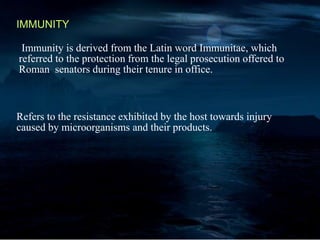
IMMUNITY
Immunity is derived from the Latin word Immunitae, which
referred to the protection from the legal prosecution offered to
Roman senators during their tenure in office.
Refers to the resistance exhibited by the host towards injury
caused by microorganisms and their products.
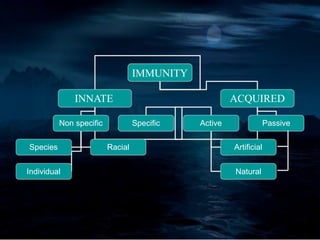
IMMUNITY
INNATE ACQUIRED
Non specific Specific Active Passive
Species Racial Artificial
Individual Natural
INNATE IMMUNITY
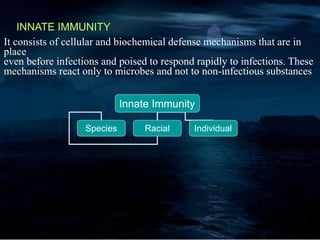
It consists of cellular and biochemical defense mechanisms that are in
place
even before infections and poised to respond rapidly to infections. These
mechanisms react only to microbes and not to non-infectious substances
Innate Immunity
Species Racial Individual
Determinants of innate immunity
.I. Age
II. Hormonal Influences
III. Nutrition
MECHANISMS OF INNATE IMMUNITY
I. Epithelial surfaces
Skin
Mucosa of the respiratory tract
Human eye.
Flushing action of urine
II. Antibacterial substances in Blood and tissues
III. Inflammation
IV. Fever
V. Cellular factors
ACQUIRED IMMUNITY
Immunity develops as a response to infection and is
adaptive to the infection, it is called adaptive immunity.
characteristics
Specificity for distinct molecules.
An ability to remember and respond more vigorously to repeated
exposure to the same microbe.
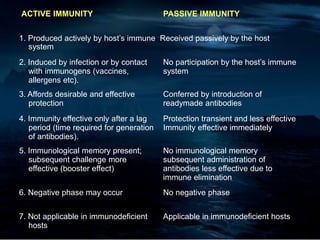
ACTIVE IMMUNITY PASSIVE IMMUNITY
1. Produced actively by host’s immune Received passively by the host
system
2. Induced by infection or by contact
with immunogens (vaccines,
allergens etc).
3. Affords desirable and effective
protection
4. Immunity effective only after a lag
period (time required for generation
of antibodies).
5. Immunological memory present;
subsequent challenge more
effective (booster effect)
6. Negative phase may occur
7. Not applicable in immunodeficient
hosts
No participation by the host’s immune
system
Conferred by introduction of
readymade antibodies
Protection transient and less effective
Immunity effective immediately
No immunological memory
subsequent administration of
antibodies less effective due to
immune elimination
No negative phase
Applicable in immunodeficient hosts
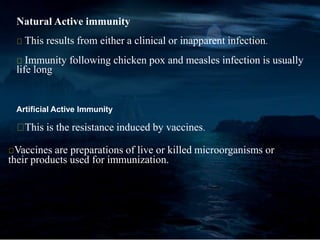
Natural Active immunity
This results from either a clinical or inapparent infection.
Immunity following chicken pox and measles infection is usually
life long
Artificial Active Immunity
This is the resistance induced by vaccines.
Vaccines are preparations of live or killed microorganisms or
their products used for immunization.
TYPES OF VACCINES:
A.LIVE VACCINES
BCG
MMR
SABIN
B.KILLED VACCINES
TAB
SALK
CHOLERA
C.BACTERIAL PRODUCTS
TETANUS AND
DIPHTHERIA TOXOID
Natural Passive immunity
This is the resistance passively transferred from the mother to the
baby in infants, maternal antibodies are transmitted predominantly
through placenta.
.
Artificial passive immunity
This is the resistance passively transferred to a recipient by
administration of antibodies.
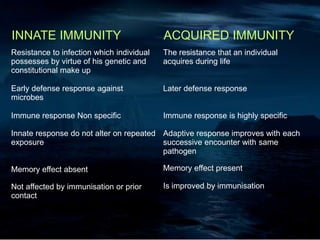
INNATE IMMUNITY
Resistance to infection which individual
possesses by virtue of his genetic and
constitutional make up
Early defense response against
microbes
Immune response Non specific
Innate response do not alter on repeated
exposure
Memory effect absent
Not affected by immunisation or prior
contact
ACQUIRED IMMUNITY
The resistance that an individual
acquires during life
Later defense response
Immune response is highly specific
Adaptive response improves with each
successive encounter with same
pathogen
Memory effect present
Is improved by immunisation
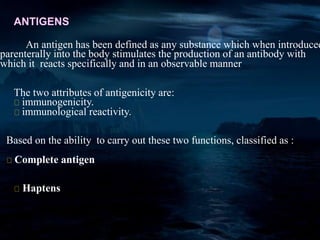
ANTIGENS
An antigen has been defined as any substance which when introduced
parenterally into the body stimulates the production of an antibody with
which it reacts specifically and in an observable manner
The two attributes of antigenicity are:
immunogenicity.
immunological reactivity.
Based on the ability to carry out these two functions, classified as :
Complete antigen
Haptens
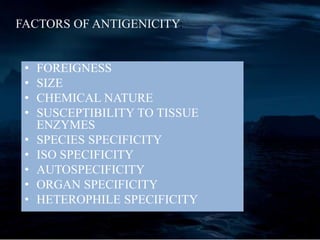
FACTORS OF ANTIGENICITY:
• FOREIGNESS
• SIZE
• CHEMICAL NATURE
• SUSCEPTIBILITY TO TISSUE
ENZYMES
• SPECIES SPECIFICITY
• ISO SPECIFICITY
• AUTOSPECIFICITY
• ORGAN SPECIFICITY
• HETEROPHILE SPECIFICITY
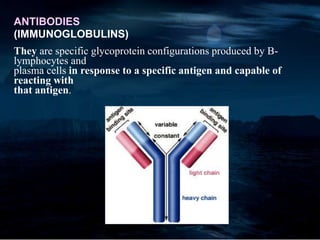
ANTIBODIES
(IMMUNOGLOBULINS)
They are specific glycoprotein configurations produced by B-
lymphocytes and
plasma cells in response to a specific antigen and capable of
reacting with
that antigen.
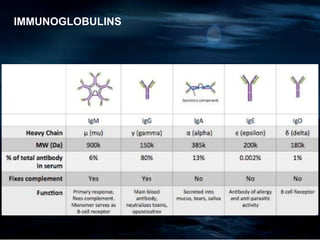
IMMUNOGLOBULINS
ANTIGEN-ANTIBODY REACTIONS
Antigens and antibodies, by definition, combine with each other
specifically and in an observable manner.
General features of antigen-antibody reactions
I. The reaction is specific, an antigen combining only with its
homologous antibody and vice versa.
2. Entire molecules react and not fragments.
3. There is no denaturation of the antigen or the antibody during the
reaction.
4. The combination occurs at the surface. Therefore, it is the surface
antigens that are immunologically relevant.
5. The combination is firm but reversible..
6. Both antigens and antibodies participate in the formation of agglutinate
or precipitates.
7. Antigens and antibodies can combine in varyring proportions, unlike
chemicals with fixed valencies. Both antigens and antibodies are
multivalent.
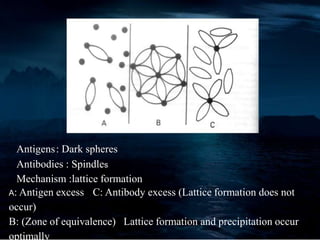
Antigens: Dark spheres
Antibodies : Spindles
Mechanism :lattice formation
A: Antigen excess C: Antibody excess (Lattice formation does not
occur)
B: (Zone of equivalence) Lattice formation and precipitation occur
optimally
Applications of precipitation reaction
It is very sensitive in the detection of antigens as little as 1 pg of protein
can be detected by precipitation tests.
Finds forensic application in the identification of blood and seminal
stains, and in testing for food adulterants.
.
AGGLUTINATION REACTION
When a particulate antigen is mixed with its antibody in the presence o
electrolytes at a suitable temperature and pH, the particles are clumped
agglutinated.
Agglutination is more sensitive than precipitation for the detection of
antibodies..
Agglutination occurs optimally when antigens and antibodies react in
equivalent proportions.
Applications of agglutination reaction
Slide agglutination: When a drop of the appropriate antiserum added to
a smooth, uniform suspension of a particulate antigen in a drop of saline
on a slide or tile, agglutination takes place. A positive result is indicated
by clumping together of the particles an the clearing of the drop. It is the
method used for
blood grouping
cross matching.
Tube agglutination:
When a fixed volume of a particulate antigen
suspension is added to an equal volume of serial dilutions of an antiser
in test tubes, the agglutination titre of the serum can be estimated.
Tube agglutination is routinely employed for the serological diagnosis
typhoid,
brucellosis and
typhus fever.
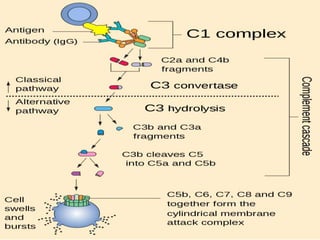
COMPLEMENT SYSTEM:
The term complement refers to a system of factors, which
occur in normal serum and are activated characteristically by Antigen
antibody interaction and subsequently mediate a number of
biologically significant consequences.
• It is a non-specific serologic reagent in that complement from one
species can react with antibody from other species.
• It has 9 components which reacts in specific sequence as a cascade
through classical or alternate pathway
• Classical pathway is triggered by specific ag-ab complex whereas
alternate pathway intiated by endo toxin,lps or zymosan
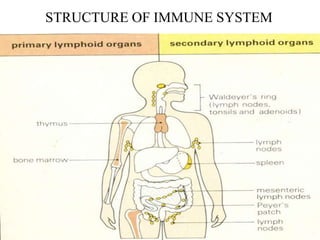
STRUCTURE OF IMMUNE SYSTEM
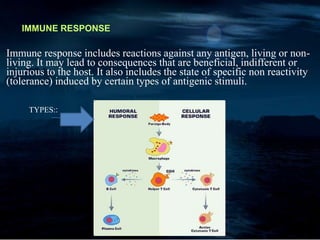
IMMUNE RESPONSE
Immune response includes reactions against any antigen, living or non-
living. It may lead to consequences that are beneficial, indifferent or
injurious to the host. It also includes the state of specific non reactivity
(tolerance) induced by certain types of antigenic stimuli.
TYPES::
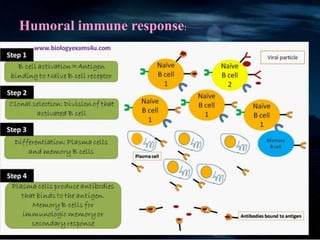
Humoral immune response:
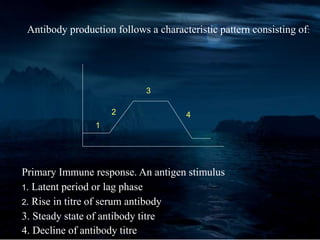
Antibody production follows a characteristic pattern consisting of:
3
2
1
4
Primary Immune response. An antigen stimulus
1. Latent period or lag phase
2. Rise in titre of serum antibody
3. Steady state of antibody titre
4. Decline of antibody titre
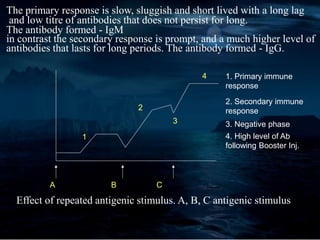
The primary response is slow, sluggish and short lived with a long lag
and low titre of antibodies that does not persist for long.
The antibody formed - IgM
in contrast the secondary response is prompt, and a much higher level of
antibodies that lasts for long periods. The antibody formed - IgG.
4
2
3
1
A B C
Effect of repeated antigenic stimulus. A, B, C antigenic stimulus
1. Primary immune
response
2. Secondary immune
response
3. Negative phase
4. High level of Ab
following Booster Inj.
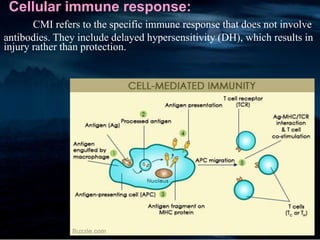
Cellular immune response:
CMI refers to the specific immune response that does not involve
antibodies. They include delayed hypersensitivity (DH), which results in
injury rather than protection.
Functions:
• Delayed hypersensitivity
• Infections
bacteria (for example, tuberculosis, leprosy, brucellosis)
fungi (for ex. Histoplasmoses, coccidioidomycosis),
protozoa (ex. Leishmaniasis, trypanosomiasis) and
viruses (for ex: measles, mumps).
• Transplantation and tumour immunity
• Auto immune disorders
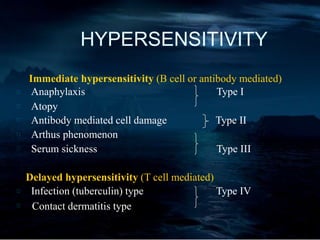
HYPERSENSITIVITY
Immediate hypersensitivity (B cell or antibody mediated)
Anaphylaxis Type I
Atopy
Antibody mediated cell damage Type II
Arthus phenomenon
Serum sickness Type III
Delayed hypersensitivity (T cell mediated)
Infection (tuberculin) type Type IV
Contact dermatitis type
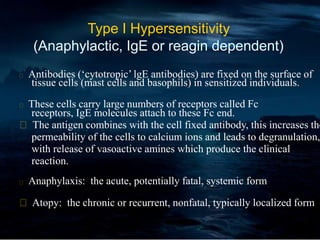
Type I Hypersensitivity
(Anaphylactic, IgE or reagin dependent)
Antibodies (‘cytotropic’ lgE antibodies) are fixed on the surface of
tissue cells (mast cells and basophils) in sensitized individuals.
These cells carry large numbers of receptors called Fc
receptors, IgE molecules attach to these Fc end.
The antigen combines with the cell fixed antibody, this increases the
permeability of the cells to calcium ions and leads to degranulation,
with release of vasoactive amines which produce the clinical
reaction.
Anaphylaxis: the acute, potentially fatal, systemic form
Atopy: the chronic or recurrent, nonfatal, typically localized form
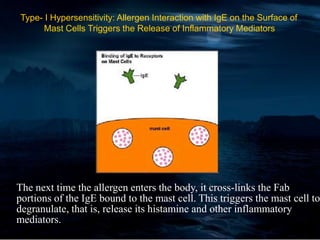
Type- I Hypersensitivity: Allergen Interaction with IgE on the Surface of
Mast Cells Triggers the Release of Inflammatory Mediators
The next time the allergen enters the body, it cross-links the Fab
portions of the IgE bound to the mast cell. This triggers the mast cell to
degranulate, that is, release its histamine and other inflammatory
mediators.
Anaphylaxis
(ana = without, phylaxis = protection)
classical immediate hypersensitivity reaction
The inflammatory agents released, causes:
dilatation of blood vessels.
increased capillary permeability.
constriction of bronchial airways.
stimulation of mucous secretion.
stimulation of nerve endings.
Treatment:
• epinephrine. 0.3 - 0.5ml of 1:1000 Epinephrine s.c. or i.m. with
repeated doses, if required at 20 mts.
• antihistamines diphenhydramine 50-100mg i.m. / i.v.
• Nasally administered steroids. Corticosteroids are potent anti-
inflammatory agents.
• sodium cromolyn. Sodium cromolyn prevents mast cells from
releasing histamines.
• Aminophylline 0.25-0.5 gm i.v. for bronchospasm
ATOPY: (out of place or strangeness)
Refer to naturally occurring familial hypersensitivities of human beings,
typified by hay fever and asthma.
Inhalants (for example, pollen, house dust)
Ingestants (for example, eggs, milk).
Generally not good antigens when injected parenterally but induce IgE
antibodies.
It is difficult to induce atopy artificially.
Often associated with a deficiency of IgA. This association has led to
the suggestion that IgA deficiency may predispose to atopy.
Clinical features includes:
conjunctivitis,
rhinitis,
gastrointestinal symptoms and dermatitis following exposure through
eyes, respiratory tract, intestine or skin, respectively.
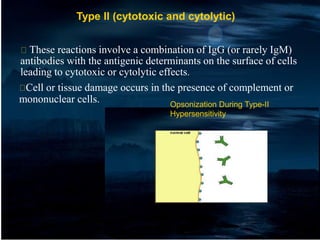
Type II (cytotoxic and cytolytic)
These reactions involve a combination of IgG (or rarely IgM)
antibodies with the antigenic determinants on the surface of cells
leading to cytotoxic or cytolytic effects.
Cell or tissue damage occurs in the presence of complement or
mononuclear cells. Opsonization During Type-II
Hypersensitivity
Examples include:
AB and Rh blood group reactions;
Autoimmune diseases such as:
Rheumatic fever
Idiopathic thrombocytopenia purpura
Myasthenia gravis
Good pasture's syndrome
Graves' disease
Multiple sclerosis
Some drug reactions
TYPE III (IMMUNE COMPLEX - MEDIATED)
A hypersensitivity resulting from large quantities of soluble antigen-
antibody complexes passing between endothelial cells of the blood
vessels and becoming trapped on the surrounding basement membrane.
The antigen/antibody complexes then activate the classical complement
pathway.
It cause:
a. massive inflammation
b. influx of neutrophils
c. MAC lysis of surrounding tissue cells
d. aggregation of platelets
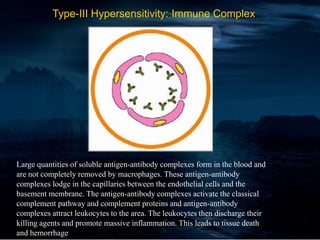
Type-III Hypersensitivity: Immune Complex
Large quantities of soluble antigen-antibody complexes form in the blood and
are not completely removed by macrophages. These antigen-antibody
complexes lodge in the capillaries between the endothelial cells and the
basement membrane. The antigen-antibody complexes activate the classical
complement pathway and complement proteins and antigen-antibody
complexes attract leukocytes to the area. The leukocytes then discharge their
killing agents and promote massive inflammation. This leads to tissue death
and hemorrhage
ARTHUS REACTION
Arthus (1903) observed that when; rabbits were repeatedly
injected subcutaneously with normal horse serum, the initial injections
had no local effect but with later injections, there occurred intense
local reaction consisting of edema, induration and hemorrhagic
necrosis. This is known as the Arthus reaction
The tissue damage is due to formation of antigen-antibody precipitates
causing complement activation and release of inflammatory
molecules. This leads to increased vascular permeability and
infiltration of the site with neutrophils.
For example, intrapulmonary Arthus-like reaction to inhaled antigens,
such as thermophilic actinomycetes from mouldy hay or grain
causes Farmer's lung and other types of hypersensitivity pneumonitis.
SERUM SICKNESS
appeared 7-12 days following single inj. of a high conc. of foreign
serum such as diphtheria antitoxin.
Clinical syndrome consists of fever, lymphadenopathy,
spleenomegaly, arthritis, glomerulonephritis, endocarditis, vasculitis,
urticarial rashes, abdominal pain, nausea and vomiting.
. Serum sickness differs from other types of
hypersensitivity reaction in that a single injection can serve both as
the sensitizing dose and the shocking dose.
TYPE IV (DELAYED HYPERSENSITIVITY)
It is cell-mediated rather than antibody-mediated.
Mechanism:
T8-lymphocytes become sensitized to an antigen and differentiate
into cytotoxic T-lymphocytes, while Th1 type T4-lymphocytes
become sensitized to an antigen and produce cytokines.
CTLs, cytokines, and/or macrophages then cause harm rather
than benefit.
Examples include:
tuberculosis, leprosy, smallpox, measles, herpes infections,
candidiasis, and histoplasmosis;
the skin test reactions seen for tuberculosis and other infections;
contact dermatitis like poison ivy;
type-1 insulin-dependent diabetes
multiple sclerosis, where T-lymphocytes and macrophages secrete
cytokines that destroy the myelin sheath that insulates the nerve fibers
of neurons;
chronic transplant rejection as seen in host versus graft rejection or
graft versus host rejection.
Tuberculin (infection) type
When a small dose of tuberculin is injected intradermally in an
individual sensitized to tuberculoprotein by prior infection or
immunisation, an indurated inflammatory reaction develops at the
site within 48-72 hours. In unsensitized individuals, the tuberculin
injection provokes no response.
The tuberculin test therefore provides useful indication of the state
of delayed hypersensitivity to the bacilli.
Tuberculin type hypersensitivity develops in many infections with
bacteria, fungi, viruses and parasites, especially when the infection
is subacute or chronic and the pathogen intracellular.
Contact dermatitis type
Delayed hypersensitivity usually occurs due to skin contact with variety
of substances-
Sensitization is particularly liable when contact is with an
inflamed area of skin and when the chemical is applied in an oily
base.
The substances involved are in themselves not antigenic but may
acquire antigenicity on combination with skin proteins. Sensitization
requires percutaneous absorption.
Langerhans cells of the skin capture locally applied hapten and
migrate to the draining lymph nodes, present hapten along with MHC
molecules, to T cells. The sensitized T cells travel to the skin site,
where on contacting the antigen they release various lymphokines
Contact with the allergen in a sensitized individual leads to
‘contact dermatitis’, characterized by maculopapular lesions to
vesicles that break down, leaving behind raw weeping areas
typical of acute eczematous dermatitis.
Hypersensitivity is detected by the ‘patch test’.
Metals : nickel and chromium,
Chemicals : dyes, picryl chloride, dinitrochlorobenzene,
Drugs : penicillin
AUTOIMMUNITY
The immune reaction to self-antigens
Autoimmunity is a condition in which structural or functional
damage is produced by the action of immunologically competent
cells or antibodies against the normal components of the body.
Autoimmunity literally means ‘protection against self’ but it
actually implies injury to self. It is also known as ‘Autoallergy’.
Autoimmunity also implies loss of self-tolerance.
Features of diseases of autoimmune origin
1. An elevated level of immunoglobulins
2. Demonstrable autoantibodies
3. Accumulation of lymphocytes and plasma cells at site of lesion
4.Immuno suppressant
5. Genetic predisposition
6.Incidence higher among females
7.Chronic :usually non reversible
Mechanisms of Autoimmune Disease
Breakdown of one or more of the mechanisms of self-tolerance can
unleash an immunologic attack on tissues that lead to development
of autoimmune diseases.
Failure of tolerance
Failure of Activation induced Cell Death: Defects in this pathway
may allow persistence and proliferation of autoreactive T cells in
peripheral tissues, which may lead to autoimmune disease.
Breakdown of T-Cell Anergy: Autoreactive T cells that escape central
deletion are rendered anergic when they encounter self-antigens in the
absence of costimulation.
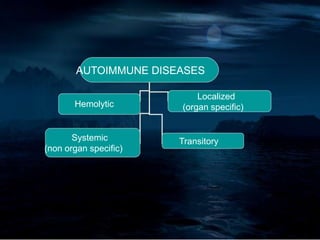
AUTOIMMUNE DISEASES
Localized
Hemolytic
Systemic
(non organ specific)
(organ specific)
Transitory
HEMOLYTIC AUTOIMMUNE DISEASES
1. Autoimmune hemolytic anemias: Autoantibodies against RBC are
demonstrable. Two group of anemias are:
Cold autoantibodies: Complete agglutinating antibodies belonging
to IgM class
Warm autoantibodies: Incomplete nonagglutinating antibodies
belonging to IgG class
2. Autoimmune thrombocytopenia: Autoantibodies directed against
platelets eg. In Idiopathic thrombocytopenia purpura
3. Autoimmune leucopenia: nonagglutinating antileucocyte antibodies
in serum of SLE and RA patients
LOCALIZED (ORGAN SPECIFIC) AUTOIMMUNE DISEASES
1. Autoimmune diseases of thyroid gland: Hashimoto’s disease and
Thyrotoxicosis (Graves’ disease)
2. Addison’s disease: Antibodies directed against cells of Zona
glomerulosa
3. Autoimmune Orchitis: Antibodies against sperms and germinal cells
4. Myasthenia Gravis: Antibody against acetyl choline receptors on
myoneural junctions of striated muscles
5. Autoimmune diseases of Eye: In cataract surgery autoimmune
response to lens protein leads to intraocular inflammation
(phacoanaphylaxis)
6. Pernicious anemia: Antibodies directed against parietal cell of gastric
mucosa and intrinsic factor
7. Autoimmune disease of Skin: Pemphigus vulgaris, Bullous
pemphigoid and dermatitis herpetiformis
SYSTEMIC (NONORGAN SPECFIC) AUTOIMMUNE DISORDERS
1. Systemic lupus erythematosus: Autoantibodies directed against:
Cell nuclei, intracytoplasmic cell constituents, immunoglobulins and
thyroid gland
2. Rheumatoid arthritis: Presence autoantibody called as Rheumatoid
factor against the Fc fragment of immunoglobulin
3. Polyarteritis nodosa
4. Sjogren’s syndrome
TRANSITORY AUTOIMMUNE PROCESSES
Includes conditions like Anemias, thrombocytopenias or nephritis that
follow infection or drug therapy. They induces antigenic alteration in
self antigens. Disease is transient.
ORAL IMMUNOLOGY
The health of the mouth is dependent on the integrity of mucosa,
saliva, gingival crevicular fluid and their immune components, which
does not normally allow microorganisms to penetrate.
The oral tissues are drained by an anatomically well defined collection
of extraoral lymph nodes and intraoral lymphoid tissue aggregations.
I The tonsils (palatine and lingual)
2 Salivary gland, plasma cells and lymphocytes
3 Gingival aggregation of plasma cells, lymphocytes, macro-phages
4 The scattered submucosal lymphoid cells
The functional significance of intraoral lymphoid tissue has not
been clearly defined. It appears that
The tonsils guards the entry into the digestive and respiratory
tracts
The gingival lymphoid aggregation responding to the dental
bacterial plaque accumulation.
The salivary lymphoid tissue for secretary IgA synthesis and
protection against infection within the salivary gland.
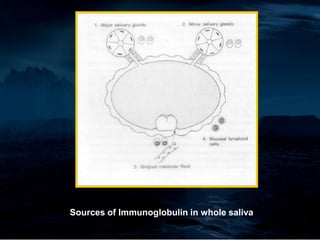
Sources of Immunoglobulin in whole saliva
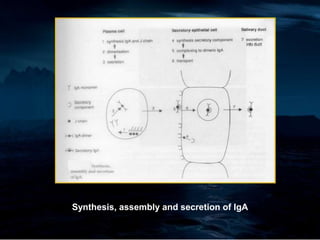
Synthesis, assembly and secretion of IgA
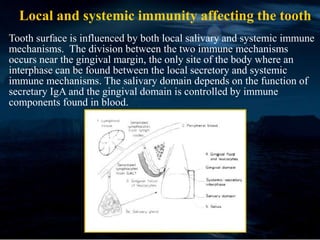
Local and systemic immunity affecting the tooth
Tooth surface is influenced by both local salivary and systemic immune
mechanisms. The division between the two immune mechanisms
occurs near the gingival margin, the only site of the body where an
interphase can be found between the local secretory and systemic
immune mechanisms. The salivary domain depends on the function of
secretary IgA and the gingival domain is controlled by immune
components found in blood.
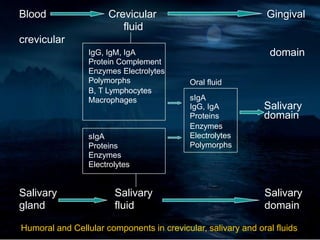
Blood Crevicular
fluid
crevicular
IgG, IgM, IgA
Protein Complement
Enzymes Electrolytes
Polymorphs
B, T Lymphocytes
Macrophages
sIgA
Proteins
Enzymes
Electrolytes
Salivary Salivary
gland fluid
Gingival
domain
Oral fluid
sIgA
IgG, IgA Salivary
Proteins domain
Enzymes
Electrolytes
Polymorphs
Salivary
domain
Humoral and Cellular components in crevicular, salivary and oral fluids
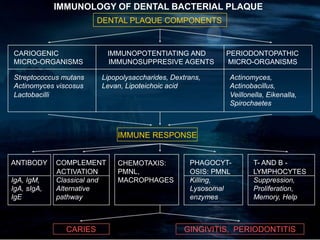
IMMUNOLOGY OF DENTAL BACTERIAL PLAQUE
DENTAL PLAQUE COMPONENTS
CARIOGENIC IMMUNOPOTENTIATING AND PERIODONTOPATHIC
MICRO-ORGANISMS IMMUNOSUPPRESIVE AGENTS MICRO-ORGANISMS
Streptococcus mutans Lipopolysaccharides, Dextrans, Actinomyces,
Actinomyces viscosus Levan, Lipoteichoic acid Actinobacillus,
Lactobacilli Veillonella, Eikenalla,
Spirochaetes
IMMUNE RESPONSE
ANTIBODY COMPLEMENT
ACTIVATION
IgA, IgM, Classical and
IgA, sIgA, Alternative
IgE pathway
CHEMOTAXIS:
PMNL,
MACROPHAGES
PHAGOCYT- T- AND B -
OSIS: PMNL LYMPHOCYTES
Killing, Suppression,
Lysosomal Proliferation,
enzymes Memory, Help
CARIES GINGIVITIS, PERIODONTITIS
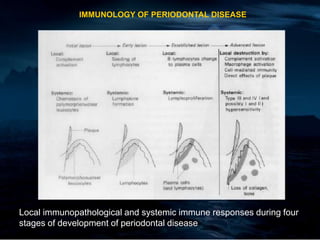
IMMUNOLOGY OF PERIODONTAL DISEASE
Local immunopathological and systemic immune responses during four
stages of development of periodontal disease
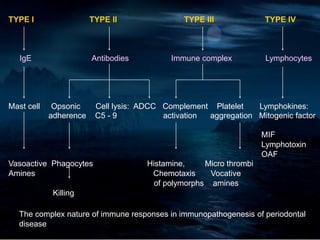
TYPE I TYPE II TYPE III TYPE IV
IgE Antibodies Immune complex Lymphocytes
Mast cell Opsonic Cell lysis: ADCC Complement Platelet Lymphokines:
adherence C5 - 9 activation aggregation Mitogenic factor
MIF
Lymphotoxin
OAF
Vasoactive Phagocytes Histamine, Micro thrombi
Amines Chemotaxis Vocative
of polymorphs amines
Killing
The complex nature of immune responses in immunopathogenesis of periodontal
disease
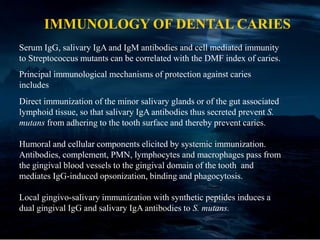
IMMUNOLOGY OF DENTAL CARIES
Serum IgG, salivary IgA and IgM antibodies and cell mediated immunity
to Streptococcus mutants can be correlated with the DMF index of caries.
Principal immunological mechanisms of protection against caries
includes
Direct immunization of the minor salivary glands or of the gut associated
lymphoid tissue, so that salivary IgA antibodies thus secreted prevent S.
mutans from adhering to the tooth surface and thereby prevent caries.
Humoral and cellular components elicited by systemic immunization.
Antibodies, complement, PMN, lymphocytes and macrophages pass from
the gingival blood vessels to the gingival domain of the tooth and
mediates IgG-induced opsonization, binding and phagocytosis.
Local gingivo-salivary immunization with synthetic peptides induces a
dual gingival IgG and salivary IgA antibodies to S. mutans.
IMMUNOLOGY OF ORAL INFECTION
Primary herpetic
infection
incubation period is between 2 and 7 days.
Within the first week of onset of clinical manifestations sensitized
lymphocytes to HSV can be detected in the peripheral blood but no
significant antibodies or macrophage migration inhibition factor (MIF)
After 2 weeks significant antibody titres and MIF appear. Recovery
from infection coincides therefore with the appearance of antibody and
of MIF.
Recurrent HSV infection
CD4-T cells produce interferon and decreased interferon production
has been correlated with an increased frequency of recurrent HSV
infections.
Due to selective deficiency in cell-mediated immunity
deficiency of MIF production and decreased cytotoxicity by
sensitized
CD8 cells may play a part in re-current infection.
IMMUNOLOGICAL FEATURES OF CANDIDIASIS
Seen in patient with defective generation or differentiation of
lymphoid stem cells
T-cell immune responses prevents muco-cutaneous candidiasis and serum
IgG and IgM antibodies prevents systemic candidiasis.
Immunodeficiencies of cellular, humoral or phagocytic components play
important part in candidiasis.
Oral candidiasis is found in patients with AIDS who have a deficiency
of CD4 cells.
Patients with B-lymphocyte defects alone are not susceptible to
candidiasis,
unless they also have a concurrent T-cell deficiency, as in the severe
combined immunodeficiency syndrome.
IMMUNOLOGICAL AND AUTOIMMUNE DISORDERS OF ORAL MUCOSA
Recurrent aphthous ulcers
• RAU show an association with HLA-B12 and it offers
immunogenic basis for development of the disease
• Cell mediated immunity is involved
• Hypersensitivity reactions type 3 and 4
• Immunohistological investigation no. of CD4 and CD8
cells, Langerhans cells and macrophages.
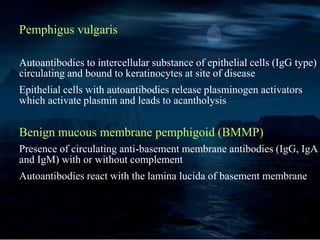
Pemphigus vulgaris
Autoantibodies to intercellular substance of epithelial cells (IgG type)
circulating and bound to keratinocytes at site of disease
Epithelial cells with autoantibodies release plasminogen activators
which activate plasmin and leads to acantholysis
Benign mucous membrane pemphigoid (BMMP)
Presence of circulating anti-basement membrane antibodies (IgG, IgA
and IgM) with or without complement
Autoantibodies react with the lamina lucida of basement membrane
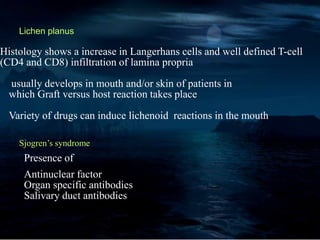
Lichen planus
Histology shows a increase in Langerhans cells and well defined T-cell
(CD4 and CD8) infiltration of lamina propria
usually develops in mouth and/or skin of patients in
which Graft versus host reaction takes place
Variety of drugs can induce lichenoid reactions in the mouth
Sjogren’s syndrome
Presence of
Antinuclear factor
Organ specific antibodies
Salivary duct antibodies
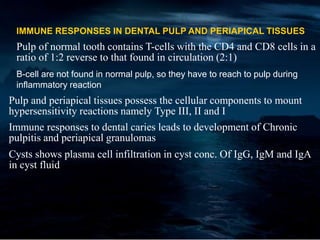
IMMUNE RESPONSES IN DENTAL PULP AND PERIAPICAL TISSUES
Pulp of normal tooth contains T-cells with the CD4 and CD8 cells in a
ratio of 1:2 reverse to that found in circulation (2:1)
B-cell are not found in normal pulp, so they have to reach to pulp during
inflammatory reaction
Pulp and periapical tissues possess the cellular components to mount
hypersensitivity reactions namely Type III, II and I
Immune responses to dental caries leads to development of Chronic
pulpitis and periapical granulomas
Cysts shows plasma cell infiltration in cyst conc. Of IgG, IgM and IgA
in cyst fluid
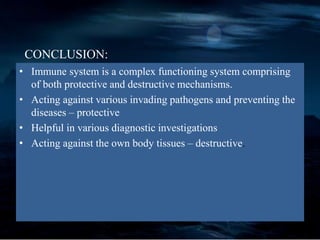
CONCLUSION:
• Immune system is a complex functioning system comprising
of both protective and destructive mechanisms.
• Acting against various invading pathogens and preventing the
diseases – protective
• Helpful in various diagnostic investigations
• Acting against the own body tissues – destructive.
REFERENCES:
• TEXT BOOK OF MICROBIOLOGY FOR DENTAL
STUDENTS-3RD EDITION ,PROF.C.P BAVEJA
• LIPPINCOTT’S ILLUSTRATED REVIEW S ON
IMMUNOLOGY – RICHARD A HARVEY
• ESSENTIALS OF GENERAL PATHOLOGY – HARSH
MOHAN
• WEB REFERENCES AND IMAGES
QUESTIONS:
AUTO IMMUNITY (SHORT ESSAY)
THANK YOU

3.immunity

  • 2.
  • 3.
    IMMUNOLOGY IMMUNITY ANTIGENS ANTIBODIES - IMMUNOGLOBULINS ANTIGEN- ANTIBODY REACTIONS COMPLEMENT SYSTEM STRUCTURE AND FUNCTION OF IMMUNE SYSTEM IMMUNE RESPONSE HYPERSENSITIVITY AUTOIMMUNITY ORAL IMMUNOLOGY
  • 4.
    IMMUNITY Immunity is derivedfrom the Latin word Immunitae, which referred to the protection from the legal prosecution offered to Roman senators during their tenure in office. Refers to the resistance exhibited by the host towards injury caused by microorganisms and their products.
  • 5.
    IMMUNITY INNATE ACQUIRED Non specificSpecific Active Passive Species Racial Artificial Individual Natural
  • 6.
    INNATE IMMUNITY It consistsof cellular and biochemical defense mechanisms that are in place even before infections and poised to respond rapidly to infections. These mechanisms react only to microbes and not to non-infectious substances Innate Immunity Species Racial Individual
  • 7.
    Determinants of innateimmunity .I. Age II. Hormonal Influences III. Nutrition
  • 8.
    MECHANISMS OF INNATEIMMUNITY I. Epithelial surfaces Skin Mucosa of the respiratory tract Human eye. Flushing action of urine II. Antibacterial substances in Blood and tissues III. Inflammation IV. Fever V. Cellular factors
  • 9.
    ACQUIRED IMMUNITY Immunity developsas a response to infection and is adaptive to the infection, it is called adaptive immunity. characteristics Specificity for distinct molecules. An ability to remember and respond more vigorously to repeated exposure to the same microbe.
  • 10.
    ACTIVE IMMUNITY PASSIVEIMMUNITY 1. Produced actively by host’s immune Received passively by the host system 2. Induced by infection or by contact with immunogens (vaccines, allergens etc). 3. Affords desirable and effective protection 4. Immunity effective only after a lag period (time required for generation of antibodies). 5. Immunological memory present; subsequent challenge more effective (booster effect) 6. Negative phase may occur 7. Not applicable in immunodeficient hosts No participation by the host’s immune system Conferred by introduction of readymade antibodies Protection transient and less effective Immunity effective immediately No immunological memory subsequent administration of antibodies less effective due to immune elimination No negative phase Applicable in immunodeficient hosts
  • 11.
    Natural Active immunity Thisresults from either a clinical or inapparent infection. Immunity following chicken pox and measles infection is usually life long Artificial Active Immunity This is the resistance induced by vaccines. Vaccines are preparations of live or killed microorganisms or their products used for immunization.
  • 12.
    TYPES OF VACCINES: A.LIVEVACCINES BCG MMR SABIN B.KILLED VACCINES TAB SALK CHOLERA C.BACTERIAL PRODUCTS TETANUS AND DIPHTHERIA TOXOID
  • 13.
    Natural Passive immunity Thisis the resistance passively transferred from the mother to the baby in infants, maternal antibodies are transmitted predominantly through placenta. . Artificial passive immunity This is the resistance passively transferred to a recipient by administration of antibodies.
  • 14.
    INNATE IMMUNITY Resistance toinfection which individual possesses by virtue of his genetic and constitutional make up Early defense response against microbes Immune response Non specific Innate response do not alter on repeated exposure Memory effect absent Not affected by immunisation or prior contact ACQUIRED IMMUNITY The resistance that an individual acquires during life Later defense response Immune response is highly specific Adaptive response improves with each successive encounter with same pathogen Memory effect present Is improved by immunisation
  • 15.
    ANTIGENS An antigen hasbeen defined as any substance which when introduced parenterally into the body stimulates the production of an antibody with which it reacts specifically and in an observable manner The two attributes of antigenicity are: immunogenicity. immunological reactivity. Based on the ability to carry out these two functions, classified as : Complete antigen Haptens
  • 16.
    FACTORS OF ANTIGENICITY: •FOREIGNESS • SIZE • CHEMICAL NATURE • SUSCEPTIBILITY TO TISSUE ENZYMES • SPECIES SPECIFICITY • ISO SPECIFICITY • AUTOSPECIFICITY • ORGAN SPECIFICITY • HETEROPHILE SPECIFICITY
  • 17.
    ANTIBODIES (IMMUNOGLOBULINS) They are specificglycoprotein configurations produced by B- lymphocytes and plasma cells in response to a specific antigen and capable of reacting with that antigen.
  • 18.
  • 19.
    ANTIGEN-ANTIBODY REACTIONS Antigens andantibodies, by definition, combine with each other specifically and in an observable manner.
  • 20.
    General features ofantigen-antibody reactions I. The reaction is specific, an antigen combining only with its homologous antibody and vice versa. 2. Entire molecules react and not fragments. 3. There is no denaturation of the antigen or the antibody during the reaction. 4. The combination occurs at the surface. Therefore, it is the surface antigens that are immunologically relevant.
  • 21.
    5. The combinationis firm but reversible.. 6. Both antigens and antibodies participate in the formation of agglutinate or precipitates. 7. Antigens and antibodies can combine in varyring proportions, unlike chemicals with fixed valencies. Both antigens and antibodies are multivalent.
  • 22.
    Antigens: Dark spheres Antibodies: Spindles Mechanism :lattice formation A: Antigen excess C: Antibody excess (Lattice formation does not occur) B: (Zone of equivalence) Lattice formation and precipitation occur optimally
  • 23.
    Applications of precipitationreaction It is very sensitive in the detection of antigens as little as 1 pg of protein can be detected by precipitation tests. Finds forensic application in the identification of blood and seminal stains, and in testing for food adulterants. .
  • 24.
    AGGLUTINATION REACTION When aparticulate antigen is mixed with its antibody in the presence o electrolytes at a suitable temperature and pH, the particles are clumped agglutinated. Agglutination is more sensitive than precipitation for the detection of antibodies.. Agglutination occurs optimally when antigens and antibodies react in equivalent proportions.
  • 25.
    Applications of agglutinationreaction Slide agglutination: When a drop of the appropriate antiserum added to a smooth, uniform suspension of a particulate antigen in a drop of saline on a slide or tile, agglutination takes place. A positive result is indicated by clumping together of the particles an the clearing of the drop. It is the method used for blood grouping cross matching. Tube agglutination: When a fixed volume of a particulate antigen suspension is added to an equal volume of serial dilutions of an antiser in test tubes, the agglutination titre of the serum can be estimated. Tube agglutination is routinely employed for the serological diagnosis typhoid, brucellosis and typhus fever.
  • 26.
    COMPLEMENT SYSTEM: The termcomplement refers to a system of factors, which occur in normal serum and are activated characteristically by Antigen antibody interaction and subsequently mediate a number of biologically significant consequences. • It is a non-specific serologic reagent in that complement from one species can react with antibody from other species. • It has 9 components which reacts in specific sequence as a cascade through classical or alternate pathway • Classical pathway is triggered by specific ag-ab complex whereas alternate pathway intiated by endo toxin,lps or zymosan
  • 28.
  • 29.
    IMMUNE RESPONSE Immune responseincludes reactions against any antigen, living or non- living. It may lead to consequences that are beneficial, indifferent or injurious to the host. It also includes the state of specific non reactivity (tolerance) induced by certain types of antigenic stimuli. TYPES::
  • 30.
  • 31.
    Antibody production followsa characteristic pattern consisting of: 3 2 1 4 Primary Immune response. An antigen stimulus 1. Latent period or lag phase 2. Rise in titre of serum antibody 3. Steady state of antibody titre 4. Decline of antibody titre
  • 32.
    The primary responseis slow, sluggish and short lived with a long lag and low titre of antibodies that does not persist for long. The antibody formed - IgM in contrast the secondary response is prompt, and a much higher level of antibodies that lasts for long periods. The antibody formed - IgG. 4 2 3 1 A B C Effect of repeated antigenic stimulus. A, B, C antigenic stimulus 1. Primary immune response 2. Secondary immune response 3. Negative phase 4. High level of Ab following Booster Inj.
  • 33.
    Cellular immune response: CMIrefers to the specific immune response that does not involve antibodies. They include delayed hypersensitivity (DH), which results in injury rather than protection.
  • 34.
    Functions: • Delayed hypersensitivity •Infections bacteria (for example, tuberculosis, leprosy, brucellosis) fungi (for ex. Histoplasmoses, coccidioidomycosis), protozoa (ex. Leishmaniasis, trypanosomiasis) and viruses (for ex: measles, mumps). • Transplantation and tumour immunity • Auto immune disorders
  • 35.
    HYPERSENSITIVITY Immediate hypersensitivity (Bcell or antibody mediated) Anaphylaxis Type I Atopy Antibody mediated cell damage Type II Arthus phenomenon Serum sickness Type III Delayed hypersensitivity (T cell mediated) Infection (tuberculin) type Type IV Contact dermatitis type
  • 36.
    Type I Hypersensitivity (Anaphylactic,IgE or reagin dependent) Antibodies (‘cytotropic’ lgE antibodies) are fixed on the surface of tissue cells (mast cells and basophils) in sensitized individuals. These cells carry large numbers of receptors called Fc receptors, IgE molecules attach to these Fc end. The antigen combines with the cell fixed antibody, this increases the permeability of the cells to calcium ions and leads to degranulation, with release of vasoactive amines which produce the clinical reaction. Anaphylaxis: the acute, potentially fatal, systemic form Atopy: the chronic or recurrent, nonfatal, typically localized form
  • 37.
    Type- I Hypersensitivity:Allergen Interaction with IgE on the Surface of Mast Cells Triggers the Release of Inflammatory Mediators The next time the allergen enters the body, it cross-links the Fab portions of the IgE bound to the mast cell. This triggers the mast cell to degranulate, that is, release its histamine and other inflammatory mediators.
  • 38.
    Anaphylaxis (ana = without,phylaxis = protection) classical immediate hypersensitivity reaction The inflammatory agents released, causes: dilatation of blood vessels. increased capillary permeability. constriction of bronchial airways. stimulation of mucous secretion. stimulation of nerve endings.
  • 39.
    Treatment: • epinephrine. 0.3- 0.5ml of 1:1000 Epinephrine s.c. or i.m. with repeated doses, if required at 20 mts. • antihistamines diphenhydramine 50-100mg i.m. / i.v. • Nasally administered steroids. Corticosteroids are potent anti- inflammatory agents. • sodium cromolyn. Sodium cromolyn prevents mast cells from releasing histamines. • Aminophylline 0.25-0.5 gm i.v. for bronchospasm
  • 40.
    ATOPY: (out ofplace or strangeness) Refer to naturally occurring familial hypersensitivities of human beings, typified by hay fever and asthma. Inhalants (for example, pollen, house dust) Ingestants (for example, eggs, milk). Generally not good antigens when injected parenterally but induce IgE antibodies. It is difficult to induce atopy artificially. Often associated with a deficiency of IgA. This association has led to the suggestion that IgA deficiency may predispose to atopy. Clinical features includes: conjunctivitis, rhinitis, gastrointestinal symptoms and dermatitis following exposure through eyes, respiratory tract, intestine or skin, respectively.
  • 41.
    Type II (cytotoxicand cytolytic) These reactions involve a combination of IgG (or rarely IgM) antibodies with the antigenic determinants on the surface of cells leading to cytotoxic or cytolytic effects. Cell or tissue damage occurs in the presence of complement or mononuclear cells. Opsonization During Type-II Hypersensitivity
  • 42.
    Examples include: AB andRh blood group reactions; Autoimmune diseases such as: Rheumatic fever Idiopathic thrombocytopenia purpura Myasthenia gravis Good pasture's syndrome Graves' disease Multiple sclerosis Some drug reactions
  • 43.
    TYPE III (IMMUNECOMPLEX - MEDIATED) A hypersensitivity resulting from large quantities of soluble antigen- antibody complexes passing between endothelial cells of the blood vessels and becoming trapped on the surrounding basement membrane. The antigen/antibody complexes then activate the classical complement pathway. It cause: a. massive inflammation b. influx of neutrophils c. MAC lysis of surrounding tissue cells d. aggregation of platelets
  • 44.
    Type-III Hypersensitivity: ImmuneComplex Large quantities of soluble antigen-antibody complexes form in the blood and are not completely removed by macrophages. These antigen-antibody complexes lodge in the capillaries between the endothelial cells and the basement membrane. The antigen-antibody complexes activate the classical complement pathway and complement proteins and antigen-antibody complexes attract leukocytes to the area. The leukocytes then discharge their killing agents and promote massive inflammation. This leads to tissue death and hemorrhage
  • 45.
    ARTHUS REACTION Arthus (1903)observed that when; rabbits were repeatedly injected subcutaneously with normal horse serum, the initial injections had no local effect but with later injections, there occurred intense local reaction consisting of edema, induration and hemorrhagic necrosis. This is known as the Arthus reaction The tissue damage is due to formation of antigen-antibody precipitates causing complement activation and release of inflammatory molecules. This leads to increased vascular permeability and infiltration of the site with neutrophils. For example, intrapulmonary Arthus-like reaction to inhaled antigens, such as thermophilic actinomycetes from mouldy hay or grain causes Farmer's lung and other types of hypersensitivity pneumonitis.
  • 46.
    SERUM SICKNESS appeared 7-12days following single inj. of a high conc. of foreign serum such as diphtheria antitoxin. Clinical syndrome consists of fever, lymphadenopathy, spleenomegaly, arthritis, glomerulonephritis, endocarditis, vasculitis, urticarial rashes, abdominal pain, nausea and vomiting. . Serum sickness differs from other types of hypersensitivity reaction in that a single injection can serve both as the sensitizing dose and the shocking dose.
  • 47.
    TYPE IV (DELAYEDHYPERSENSITIVITY) It is cell-mediated rather than antibody-mediated. Mechanism: T8-lymphocytes become sensitized to an antigen and differentiate into cytotoxic T-lymphocytes, while Th1 type T4-lymphocytes become sensitized to an antigen and produce cytokines. CTLs, cytokines, and/or macrophages then cause harm rather than benefit.
  • 48.
    Examples include: tuberculosis, leprosy,smallpox, measles, herpes infections, candidiasis, and histoplasmosis; the skin test reactions seen for tuberculosis and other infections; contact dermatitis like poison ivy; type-1 insulin-dependent diabetes multiple sclerosis, where T-lymphocytes and macrophages secrete cytokines that destroy the myelin sheath that insulates the nerve fibers of neurons; chronic transplant rejection as seen in host versus graft rejection or graft versus host rejection.
  • 49.
    Tuberculin (infection) type Whena small dose of tuberculin is injected intradermally in an individual sensitized to tuberculoprotein by prior infection or immunisation, an indurated inflammatory reaction develops at the site within 48-72 hours. In unsensitized individuals, the tuberculin injection provokes no response. The tuberculin test therefore provides useful indication of the state of delayed hypersensitivity to the bacilli. Tuberculin type hypersensitivity develops in many infections with bacteria, fungi, viruses and parasites, especially when the infection is subacute or chronic and the pathogen intracellular.
  • 50.
    Contact dermatitis type Delayedhypersensitivity usually occurs due to skin contact with variety of substances- Sensitization is particularly liable when contact is with an inflamed area of skin and when the chemical is applied in an oily base. The substances involved are in themselves not antigenic but may acquire antigenicity on combination with skin proteins. Sensitization requires percutaneous absorption. Langerhans cells of the skin capture locally applied hapten and migrate to the draining lymph nodes, present hapten along with MHC molecules, to T cells. The sensitized T cells travel to the skin site, where on contacting the antigen they release various lymphokines
  • 51.
    Contact with theallergen in a sensitized individual leads to ‘contact dermatitis’, characterized by maculopapular lesions to vesicles that break down, leaving behind raw weeping areas typical of acute eczematous dermatitis. Hypersensitivity is detected by the ‘patch test’. Metals : nickel and chromium, Chemicals : dyes, picryl chloride, dinitrochlorobenzene, Drugs : penicillin
  • 52.
    AUTOIMMUNITY The immune reactionto self-antigens Autoimmunity is a condition in which structural or functional damage is produced by the action of immunologically competent cells or antibodies against the normal components of the body. Autoimmunity literally means ‘protection against self’ but it actually implies injury to self. It is also known as ‘Autoallergy’. Autoimmunity also implies loss of self-tolerance.
  • 53.
    Features of diseasesof autoimmune origin 1. An elevated level of immunoglobulins 2. Demonstrable autoantibodies 3. Accumulation of lymphocytes and plasma cells at site of lesion 4.Immuno suppressant 5. Genetic predisposition 6.Incidence higher among females 7.Chronic :usually non reversible
  • 54.
    Mechanisms of AutoimmuneDisease Breakdown of one or more of the mechanisms of self-tolerance can unleash an immunologic attack on tissues that lead to development of autoimmune diseases. Failure of tolerance Failure of Activation induced Cell Death: Defects in this pathway may allow persistence and proliferation of autoreactive T cells in peripheral tissues, which may lead to autoimmune disease. Breakdown of T-Cell Anergy: Autoreactive T cells that escape central deletion are rendered anergic when they encounter self-antigens in the absence of costimulation.
  • 55.
  • 56.
    HEMOLYTIC AUTOIMMUNE DISEASES 1.Autoimmune hemolytic anemias: Autoantibodies against RBC are demonstrable. Two group of anemias are: Cold autoantibodies: Complete agglutinating antibodies belonging to IgM class Warm autoantibodies: Incomplete nonagglutinating antibodies belonging to IgG class 2. Autoimmune thrombocytopenia: Autoantibodies directed against platelets eg. In Idiopathic thrombocytopenia purpura 3. Autoimmune leucopenia: nonagglutinating antileucocyte antibodies in serum of SLE and RA patients
  • 57.
    LOCALIZED (ORGAN SPECIFIC)AUTOIMMUNE DISEASES 1. Autoimmune diseases of thyroid gland: Hashimoto’s disease and Thyrotoxicosis (Graves’ disease) 2. Addison’s disease: Antibodies directed against cells of Zona glomerulosa 3. Autoimmune Orchitis: Antibodies against sperms and germinal cells 4. Myasthenia Gravis: Antibody against acetyl choline receptors on myoneural junctions of striated muscles
  • 58.
    5. Autoimmune diseasesof Eye: In cataract surgery autoimmune response to lens protein leads to intraocular inflammation (phacoanaphylaxis) 6. Pernicious anemia: Antibodies directed against parietal cell of gastric mucosa and intrinsic factor 7. Autoimmune disease of Skin: Pemphigus vulgaris, Bullous pemphigoid and dermatitis herpetiformis
  • 59.
    SYSTEMIC (NONORGAN SPECFIC)AUTOIMMUNE DISORDERS 1. Systemic lupus erythematosus: Autoantibodies directed against: Cell nuclei, intracytoplasmic cell constituents, immunoglobulins and thyroid gland 2. Rheumatoid arthritis: Presence autoantibody called as Rheumatoid factor against the Fc fragment of immunoglobulin 3. Polyarteritis nodosa 4. Sjogren’s syndrome TRANSITORY AUTOIMMUNE PROCESSES Includes conditions like Anemias, thrombocytopenias or nephritis that follow infection or drug therapy. They induces antigenic alteration in self antigens. Disease is transient.
  • 60.
    ORAL IMMUNOLOGY The healthof the mouth is dependent on the integrity of mucosa, saliva, gingival crevicular fluid and their immune components, which does not normally allow microorganisms to penetrate. The oral tissues are drained by an anatomically well defined collection of extraoral lymph nodes and intraoral lymphoid tissue aggregations. I The tonsils (palatine and lingual) 2 Salivary gland, plasma cells and lymphocytes 3 Gingival aggregation of plasma cells, lymphocytes, macro-phages 4 The scattered submucosal lymphoid cells
  • 61.
    The functional significanceof intraoral lymphoid tissue has not been clearly defined. It appears that The tonsils guards the entry into the digestive and respiratory tracts The gingival lymphoid aggregation responding to the dental bacterial plaque accumulation. The salivary lymphoid tissue for secretary IgA synthesis and protection against infection within the salivary gland.
  • 62.
  • 63.
    Synthesis, assembly andsecretion of IgA
  • 64.
    Local and systemicimmunity affecting the tooth Tooth surface is influenced by both local salivary and systemic immune mechanisms. The division between the two immune mechanisms occurs near the gingival margin, the only site of the body where an interphase can be found between the local secretory and systemic immune mechanisms. The salivary domain depends on the function of secretary IgA and the gingival domain is controlled by immune components found in blood.
  • 65.
    Blood Crevicular fluid crevicular IgG, IgM,IgA Protein Complement Enzymes Electrolytes Polymorphs B, T Lymphocytes Macrophages sIgA Proteins Enzymes Electrolytes Salivary Salivary gland fluid Gingival domain Oral fluid sIgA IgG, IgA Salivary Proteins domain Enzymes Electrolytes Polymorphs Salivary domain Humoral and Cellular components in crevicular, salivary and oral fluids
  • 66.
    IMMUNOLOGY OF DENTALBACTERIAL PLAQUE DENTAL PLAQUE COMPONENTS CARIOGENIC IMMUNOPOTENTIATING AND PERIODONTOPATHIC MICRO-ORGANISMS IMMUNOSUPPRESIVE AGENTS MICRO-ORGANISMS Streptococcus mutans Lipopolysaccharides, Dextrans, Actinomyces, Actinomyces viscosus Levan, Lipoteichoic acid Actinobacillus, Lactobacilli Veillonella, Eikenalla, Spirochaetes IMMUNE RESPONSE ANTIBODY COMPLEMENT ACTIVATION IgA, IgM, Classical and IgA, sIgA, Alternative IgE pathway CHEMOTAXIS: PMNL, MACROPHAGES PHAGOCYT- T- AND B - OSIS: PMNL LYMPHOCYTES Killing, Suppression, Lysosomal Proliferation, enzymes Memory, Help CARIES GINGIVITIS, PERIODONTITIS
  • 67.
    IMMUNOLOGY OF PERIODONTALDISEASE Local immunopathological and systemic immune responses during four stages of development of periodontal disease
  • 68.
    TYPE I TYPEII TYPE III TYPE IV IgE Antibodies Immune complex Lymphocytes Mast cell Opsonic Cell lysis: ADCC Complement Platelet Lymphokines: adherence C5 - 9 activation aggregation Mitogenic factor MIF Lymphotoxin OAF Vasoactive Phagocytes Histamine, Micro thrombi Amines Chemotaxis Vocative of polymorphs amines Killing The complex nature of immune responses in immunopathogenesis of periodontal disease
  • 69.
    IMMUNOLOGY OF DENTALCARIES Serum IgG, salivary IgA and IgM antibodies and cell mediated immunity to Streptococcus mutants can be correlated with the DMF index of caries. Principal immunological mechanisms of protection against caries includes Direct immunization of the minor salivary glands or of the gut associated lymphoid tissue, so that salivary IgA antibodies thus secreted prevent S. mutans from adhering to the tooth surface and thereby prevent caries. Humoral and cellular components elicited by systemic immunization. Antibodies, complement, PMN, lymphocytes and macrophages pass from the gingival blood vessels to the gingival domain of the tooth and mediates IgG-induced opsonization, binding and phagocytosis. Local gingivo-salivary immunization with synthetic peptides induces a dual gingival IgG and salivary IgA antibodies to S. mutans.
  • 70.
  • 71.
    Primary herpetic infection incubation periodis between 2 and 7 days. Within the first week of onset of clinical manifestations sensitized lymphocytes to HSV can be detected in the peripheral blood but no significant antibodies or macrophage migration inhibition factor (MIF) After 2 weeks significant antibody titres and MIF appear. Recovery from infection coincides therefore with the appearance of antibody and of MIF.
  • 72.
    Recurrent HSV infection CD4-Tcells produce interferon and decreased interferon production has been correlated with an increased frequency of recurrent HSV infections. Due to selective deficiency in cell-mediated immunity deficiency of MIF production and decreased cytotoxicity by sensitized CD8 cells may play a part in re-current infection.
  • 73.
    IMMUNOLOGICAL FEATURES OFCANDIDIASIS Seen in patient with defective generation or differentiation of lymphoid stem cells T-cell immune responses prevents muco-cutaneous candidiasis and serum IgG and IgM antibodies prevents systemic candidiasis. Immunodeficiencies of cellular, humoral or phagocytic components play important part in candidiasis. Oral candidiasis is found in patients with AIDS who have a deficiency of CD4 cells. Patients with B-lymphocyte defects alone are not susceptible to candidiasis, unless they also have a concurrent T-cell deficiency, as in the severe combined immunodeficiency syndrome.
  • 74.
    IMMUNOLOGICAL AND AUTOIMMUNEDISORDERS OF ORAL MUCOSA Recurrent aphthous ulcers • RAU show an association with HLA-B12 and it offers immunogenic basis for development of the disease • Cell mediated immunity is involved • Hypersensitivity reactions type 3 and 4 • Immunohistological investigation no. of CD4 and CD8 cells, Langerhans cells and macrophages.
  • 75.
    Pemphigus vulgaris Autoantibodies tointercellular substance of epithelial cells (IgG type) circulating and bound to keratinocytes at site of disease Epithelial cells with autoantibodies release plasminogen activators which activate plasmin and leads to acantholysis Benign mucous membrane pemphigoid (BMMP) Presence of circulating anti-basement membrane antibodies (IgG, IgA and IgM) with or without complement Autoantibodies react with the lamina lucida of basement membrane
  • 76.
    Lichen planus Histology showsa increase in Langerhans cells and well defined T-cell (CD4 and CD8) infiltration of lamina propria usually develops in mouth and/or skin of patients in which Graft versus host reaction takes place Variety of drugs can induce lichenoid reactions in the mouth Sjogren’s syndrome Presence of Antinuclear factor Organ specific antibodies Salivary duct antibodies
  • 77.
    IMMUNE RESPONSES INDENTAL PULP AND PERIAPICAL TISSUES Pulp of normal tooth contains T-cells with the CD4 and CD8 cells in a ratio of 1:2 reverse to that found in circulation (2:1) B-cell are not found in normal pulp, so they have to reach to pulp during inflammatory reaction Pulp and periapical tissues possess the cellular components to mount hypersensitivity reactions namely Type III, II and I Immune responses to dental caries leads to development of Chronic pulpitis and periapical granulomas Cysts shows plasma cell infiltration in cyst conc. Of IgG, IgM and IgA in cyst fluid
  • 78.
    CONCLUSION: • Immune systemis a complex functioning system comprising of both protective and destructive mechanisms. • Acting against various invading pathogens and preventing the diseases – protective • Helpful in various diagnostic investigations • Acting against the own body tissues – destructive.
  • 79.
    REFERENCES: • TEXT BOOKOF MICROBIOLOGY FOR DENTAL STUDENTS-3RD EDITION ,PROF.C.P BAVEJA • LIPPINCOTT’S ILLUSTRATED REVIEW S ON IMMUNOLOGY – RICHARD A HARVEY • ESSENTIALS OF GENERAL PATHOLOGY – HARSH MOHAN • WEB REFERENCES AND IMAGES
  • 80.
  • 81.