MINERALS
Dr.aesha zafna
Postgraduate
Dept of public health dentistry
Cids,virajpet
CONTENTS
Introduction
Definitions
Functions of minerals
Classification of minerals
Major minerals : Ca, P, Mg, K, Na, Cl, S
Trace elements: Cr, Co, I, Fe, Mn, Mo, Se, Zn, F
Conclusion
References
DEFINITION
NUTRITION:-
W.H.O: the science of food and its relationship to
health.
It is concerned primarily with the part played by
the nutrient in body growth, development and
maintenance.
NIZEL: the science which deals with the study of
nutrients and foods and their effects on the nature
and function of the organism under different
conditions of age, health and disease.
DCNA 2003: the science, how the body utilizes food
DEFINITION
FOOD:-
NIZEL: anything that is eaten, drunk or absorbed for
maintenance of life, growth & repair of the tissue
DIET:-
NIZEL: total oral intake of a substance that provides
nourishment & supply
DCNA 1999: the customary allowance of food & drink
taken by any person from day to day
DEFINITION
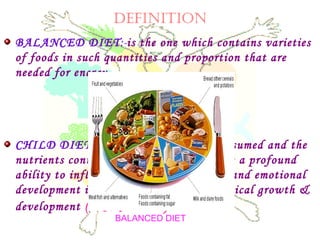
BALANCED DIET:-is the one which contains varieties
of foods in such quantities and proportion that are
needed for energy
CHILD DIET:- combination of food consumed and the
nutrients contained there in, which have a profound
ability to influence cognition, behavior and emotional
development in addition to ultimate physical growth &
development (DCNA 2003)
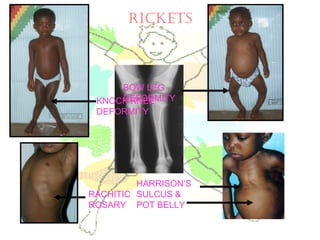
BALANCED DIET
DEFINITION
ESSENTIAL ELEMENT: -
Mertz’s defines an essential element as one,
whose deficient intake consistently results in
suboptimal physiologic function that can be
prevented or reversed by supplementation with
physiologic levels of the element
Eg. Vitamins & Minerals
DEFINITION
MINERAL: -
A naturally occurring inorganic substance with a
definite and predictable chemical composition and
physical properties.
A naturally occurring, usually inorganic, solid
consisting of either a single element or a compound, and
having a definite chemical composition and a systematic
internal arrangement of atoms
An inorganic compound needed by the body for good
health, proper metabolic functioning, and disease
DEFINITION
HEALTH:-
WHO 1948 - A state of complete physical, mental and
social well being and not merely the absence of disease
or infirmity.
ORAL HEALTH:-
WHO - means more than good teeth; it is integral to
general health and essential for well being. It implies
being free of chronic oro-facial pain, oral and
pharyngeal (throat) cancer, oral tissue lesions, birth
defects such as cleft lip and palate, and other diseases
and disorders that affect the oral, dental and
FUNCTIONS
Structural components for the body
Nerve and muscle function
Blood clotting
Tissue growth and repair
Acid- base balance of body fluids
Cofactors for enzymes in chemical reaction
within the body
CLASSIFICATION
MAJOR MINERALS:
Required in amounts greater
than 100 mg/day
1. Calcium
2. Phosphorus
3. Magnesium
4. Potassium
5. Sodium
6. Chloride
7. Sulfur
TRACE ELEMENTS:
Required in amounts lesser than
100 mg/day
1. Chromium
2. Cobalt
3. Copper
4. Iodine
5. Iron
6. Manganese
7. Molybdenum
8. Selenium
9. Zinc
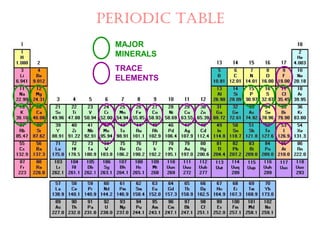
PERIODIC TABLE
MAJOR
MINERALS
TRACE
ELEMENTS
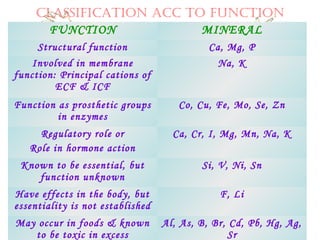
CLASSIFICATION ACC TO FUNCTION
FUNCTION MINERAL
Structural function Ca, Mg, P
Involved in membrane
function: Principal cations of
ECF & ICF
Na, K
Function as prosthetic groups
in enzymes
Co, Cu, Fe, Mo, Se, Zn
Regulatory role or
Role in hormone action
Ca, Cr, I, Mg, Mn, Na, K
Known to be essential, but
function unknown
Si, V, Ni, Sn
Have effects in the body, but
essentiality is not established
F, Li
May occur in foods & known
to be toxic in excess
Al, As, B, Br, Cd, Pb, Hg, Ag,
Sr
CLASSIFICATION
In 1962 new guidelines were established re-defining
‘Essentiality’
Following four categories:
(I)    MAIN (OR CONSTITUENT)
(II)   INTEGRATING (ESSENTIAL)
(III)  FACULTATIVE (PARTLY
ESSENTIAL/BENEFICIAL)PROFESSOR G N
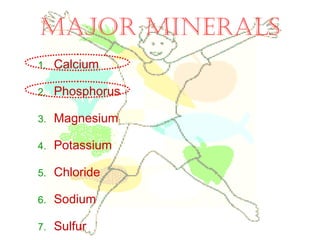
MAJOR MINERALS
1. Calcium
2. Phosphorus
3. Magnesium
4. Potassium
5. Chloride
6. Sodium
7. Sulfur
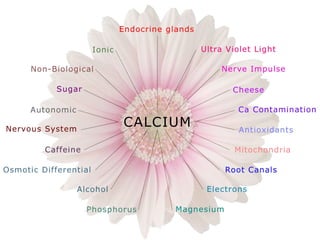
CALCIUM
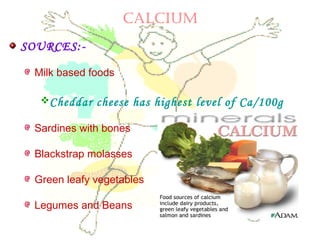
SOURCES:-
Milk based foods
Cheddar cheese has highest level of Ca/100g
Sardines with bones
Blackstrap molasses
Green leafy vegetables
Legumes and Beans
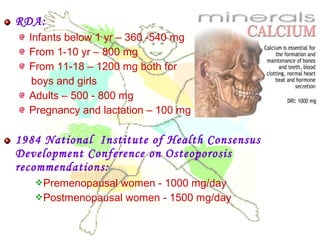
RDA:
Infants below 1 yr – 360 -540 mg
From 1-10 yr – 800 mg
From 11-18 – 1200 mg both for
boys and girls
Adults – 500 - 800 mg
Pregnancy and lactation – 100 mg
1984 National Institute of Health Consensus
Development Conference on Osteoporosis
recommendations:
Premenopausal women - 1000 mg/day
Postmenopausal women - 1500 mg/day
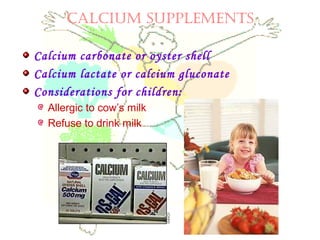
CALCIUM SUPPLEMENTS
Calcium carbonate or oyster shell
Calcium lactate or calcium gluconate
Considerations for children:
Allergic to cow’s milk
Refuse to drink milk
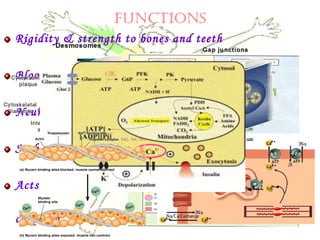
Rigidity & strength to bones and teeth
Blood coagulation
Neuromuscular contraction
Stabilize cell membrane and permeability
Acts as a secondary messenger/ stimulus response
coupling
FUNCTIONS
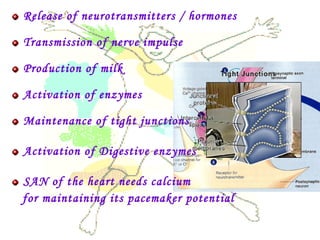
Release of neurotransmitters / hormones
Transmission of nerve impulse
Production of milk
Activation of enzymes
Maintenance of tight junctions
Activation of Digestive enzymes
SAN of the heart needs calcium
for maintaining its pacemaker potential
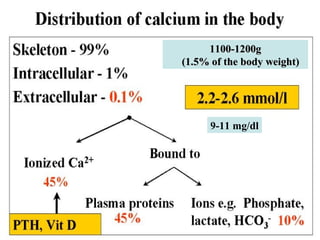
1100-1200g1100-1200g
(1.5% of the body weight)(1.5% of the body weight)
9-11 mg/dl
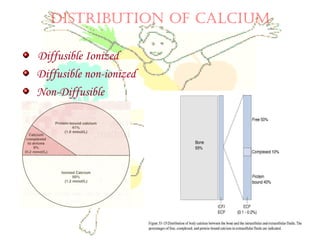
DISTRIBUTION OF CALCIUM
Diffusible Ionized
Diffusible non-ionized
Non-Diffusible
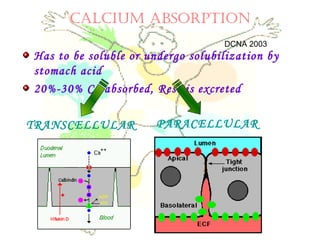
CALCIUM ABSORPTION
Has to be soluble or undergo solubilization by
stomach acid
20%-30% Ca absorbed, Rest is excreted
TRANSCELLULAR PARACELLULAR
DCNA 2003
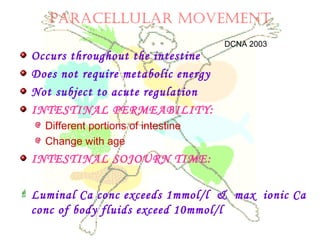
PARACELLULAR MOVEMENT
Occurs throughout the intestine
Does not require metabolic energy
Not subject to acute regulation
INTESTINAL PERMEABILITY:
Different portions of intestine
Change with age
INTESTINAL SOJOURN TIME:
 Luminal Ca conc exceeds 1mmol/l & max ionic Ca
conc of body fluids exceed 10mmol/l
DCNA 2003
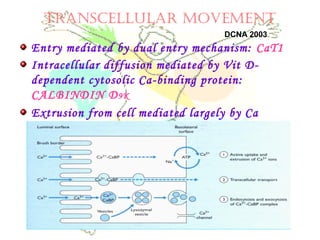
TRANSCELLULAR MOVEMENT
Entry mediated by dual entry mechanism: CaT1
Intracellular diffusion mediated by Vit D-
dependent cytosolic Ca-binding protein:
CALBINDIN D9K
Extrusion from cell mediated largely by Ca
extruding enzyme: CaATPase
DCNA 2003
CAT1
Two entry components:
Carrier-mediated transport – < 5mmol/L
Channel flow-like mechanism - > 5mmol/L
Upregulated by 1,25 dihydroxyvitamin D3
Regulated by:
Intracellular Ca conc
Cytosolic Ca binding to a channel domain
Some other molecule that acts as a channel gate
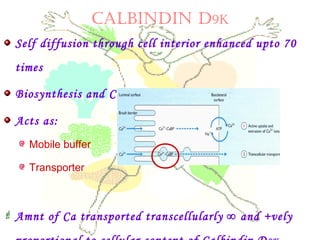
CALBINDIN D9K
Self diffusion through cell interior enhanced upto 70
times
Biosynthesis and Conc ∞ Vit D3
Acts as:
Mobile buffer
Transporter
 Amnt of Ca transported transcellularly ∞ and +vely
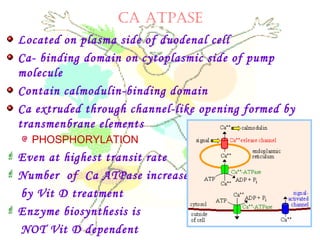
CA ATPASE
Located on plasma side of duodenal cell
Ca- binding domain on cytoplasmic side of pump
molecule
Contain calmodulin-binding domain
Ca extruded through channel-like opening formed by
transmenbrane elements
PHOSPHORYLATION
 Even at highest transit rate
 Number of Ca ATPase increased
by Vit D treatment
 Enzyme biosynthesis is
NOT Vit D dependent
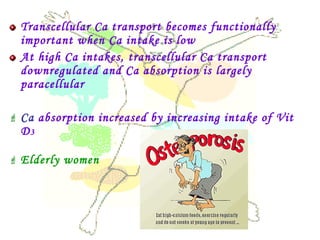
Transcellular Ca transport becomes functionally
important when Ca intake is low
At high Ca intakes, transcellular Ca transport
downregulated and Ca absorption is largely
paracellular
 Ca absorption increased by increasing intake of Vit
D3
 Elderly women
FACTORS AFFECTING ABSORPTION
Needs of the body
Growing child
Pregnancy and lactation
Gastric acidity
Hormonal influences
Vit D
Ca to P ratio
1:1 or 2:1
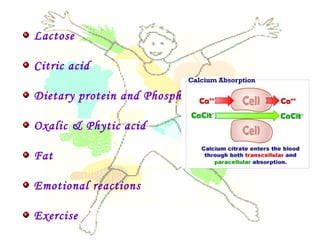
Lactose
Citric acid
Dietary protein and Phosphorus
Oxalic & Phytic acid
Fat
Emotional reactions
Exercise
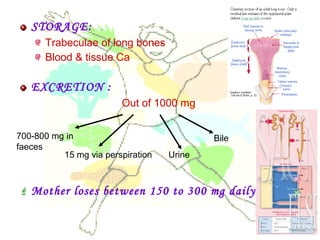
STORAGE:
Trabeculae of long bones
Blood & tissue Ca
EXCRETION :
Out of 1000 mg
 Mother loses between 150 to 300 mg daily in milk
700-800 mg in
faeces
15 mg via perspiration Urine
Bile
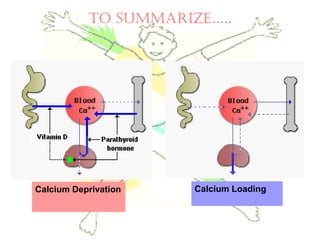
TO SUMMARIZE…..
Calcium Deprivation Calcium Loading
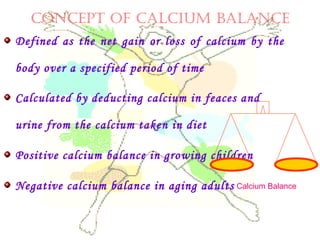
CONCEPT OF CALCIUM BALANCE
Defined as the net gain or loss of calcium by the
body over a specified period of time
Calculated by deducting calcium in feaces and
urine from the calcium taken in diet
Positive calcium balance in growing children
Negative calcium balance in aging adults Calcium Balance
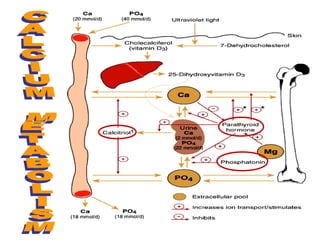
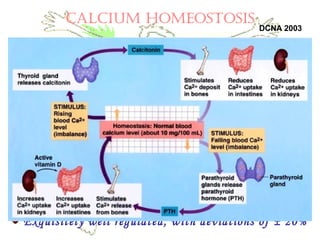
CALCIUM HOMEOSTOSIS
Involves an immediate adjustment required to
maintain a constant free plasma calcium
concentration on a minute to minute basis
Plasma Ca is in very rapid, dynamic equilibrium with
Ca in ECF
Depends upon rapid exchange between bone and ECF
Calcium pool is defined as all of the Ca in
extracellular volume
Exquisitely well regulated, with deviations of ± 20%
DCNA 2003
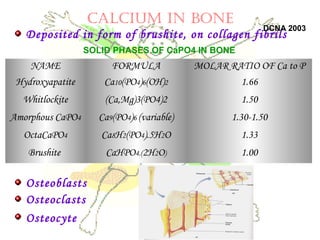
CALCIUM IN BONE
Deposited in form of brushite, on collagen fibrils
Osteoblasts
Osteoclasts
Osteocyte
NAME FORMULA MOLAR RATIO OF Ca to P
Hydroxyapatite Ca10(PO4)6(OH)2 1.66
Whitlockite (Ca,Mg)3(PO4)2 1.50
Amorphous CaPO4 Ca9(PO4)6 (variable) 1.30-1.50
OctaCaPO4 Ca8H2(PO4).5H2O 1.33
Brushite CaHPO4.(2H2O) 1.00
SOLID PHASES OF CaPO4 IN BONE
DCNA 2003
Highest content per unit volume
Privileged sites
Neither osteoporosis nor most bone disease have
specific effects on tooth health
Studies:
Klametti & collaborators
Nishida & colleagues
Oshiro & colleagues
CALCIUM IN TEETH
J Clin Periodontol 1994
J Periodontol 2000
DCNA 2003
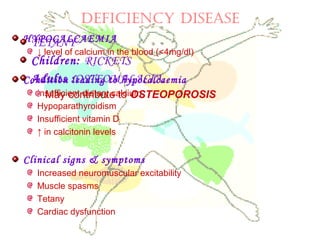
DEFICIENCY DISEASE
HYPOCALCAEMIA
↓ level of calcium in the blood (<4mg/dl)
Condition leading to hypocalcaemia
Insufficient dietary calcium
Hypoparathyroidism
Insufficient vitamin D
↑ in calcitonin levels
Clinical signs & symptoms
Increased neuromuscular excitability
Muscle spasms
Tetany
Cardiac dysfunction
TETANY
Children: RICKETS
Adults :OSTEOMALACIA.
May contribute to OSTEOPOROSIS
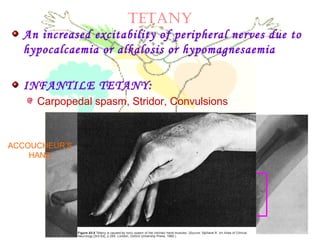
TETANY
An increased excitability of peripheral nerves due to
hypocalcaemia or alkalosis or hypomagnesaemia
INFANTILE TETANY:
Carpopedal spasm, Stridor, Convulsions
ACCOUCHEUR’S
HAND
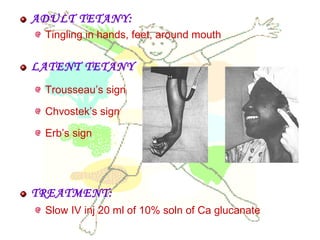
ADULT TETANY:
Tingling in hands, feet, around mouth
LATENT TETANY
Trousseau’s sign
Chvostek’s sign
Erb’s sign
TREATMENT:
Slow IV inj 20 ml of 10% soln of Ca glucanate
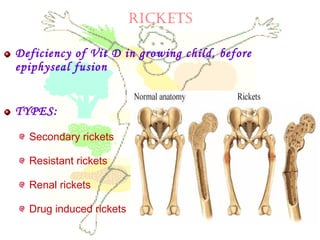
Deficiency of Vit D in growing child, before
epiphyseal fusion
TYPES:
Secondary rickets
Resistant rickets
Renal rickets
Drug induced rickets
RICKETS
KNOCK KNEE
DEFORMITY
BOW LEG
DEFORMITY
RACHITIC
ROSARY
HARRISON’S
SULCUS &
POT BELLY
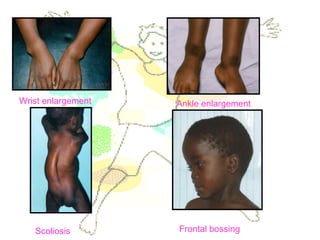
RICKETS
Wrist enlargement Ankle enlargement
Scoliosis Frontal bossing
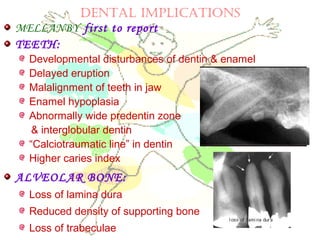
DENTAL IMPLICATIONS
MELLANBY first to report
TEETH:
Developmental disturbances of dentin & enamel
Delayed eruption
Malalignment of teeth in jaw
Enamel hypoplasia
Abnormally wide predentin zone
& interglobular dentin
“Calciotraumatic line” in dentin
Higher caries index
ALVEOLAR BONE:
Loss of lamina dura
Reduced density of supporting bone
Loss of trabeculae
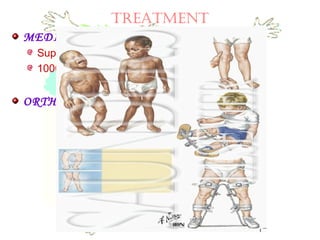
TREATMENT
MEDICAL INTERVENTION:
Supplementation of dietary Ca & Vit D
1000-5000 IU
ORTHOPEDIC INTERVENTION:
OSTEOMALACIA
OSTEOPOROSIS
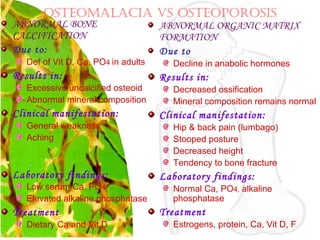
OSTEOMALACIA VS OSTEOPOROSIS
ABNORMAL BONE
CALCIFICATION
Due to:
Def of Vit D, Ca, PO4 in adults
Results in:
Excessive uncalcified osteoid
Abnormal mineral composition
Clinical manifestation:
General weakness
Aching
Laboratory findings:
Low serum Ca, PO4
Elevated alkaline phosphatase
Treatment
Dietary Ca and Vit D
ABNORMAL ORGANIC MATRIX
FORMATION
Due to
Decline in anabolic hormones
Results in:
Decreased ossification
Mineral composition remains normal
Clinical manifestation:
Hip & back pain (lumbago)
Stooped posture
Decreased height
Tendency to bone fracture
Laboratory findings:
Normal Ca, PO4, alkaline
phosphatase
Treatment
Estrogens, protein, Ca, Vit D, F
TOXICITY
HYPERCALCEMIA
Conditions leading to hypercalcemia
Hyperparathyroidism
Acute osteoporosis
Thyrotoxicosis
Vitamin D intoxication
Symptoms
Tiredness, loss of appetite, nausea, vomiting,
polyuria, dehydration, loss of muscle tone.
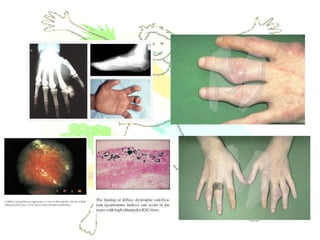
PATHOLOGICAL CALCIFICATION
DYSTROPHIC CALCIFICATION:
Precipitation of calcium in degenerating and dead tissues
METASTATIC CALCIFICATION:
Excess amount of calcium in the blood which gets deposited
in the previously undamaged tissues
CALCINOSIS:
Presence of calcification in or under the skin
Can be associated with scleroderma.
2 types:
Calcinosis circumscripta
Calcinosis universalis
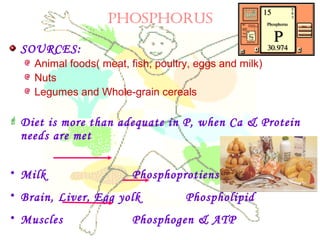
PHOSPHORUS
SOURCES:
Animal foods( meat, fish, poultry, eggs and milk)
Nuts
Legumes and Whole-grain cereals
 Diet is more than adequate in P, when Ca & Protein
needs are met
• Milk Phosphoprotiens
• Brain, Liver, Egg yolk Phospholipid
• Muscles Phosphogen & ATP
RDA:
Adequate Intake
0-6 months - 100 mg
6-12 months - 275 mg
Estimated Average Requirements
1-3 years - 380 mg
4-8 years - 405 mg
9-18 years -1,055 mg
19-70+ years - 800-1200 mg
Pregnant & lactating women
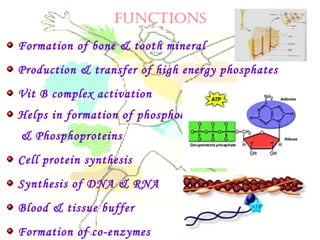
FUNCTIONS
Formation of bone & tooth mineral
Production & transfer of high energy phosphates
Vit B complex activation
Helps in formation of phospholipids
& Phosphoproteins
Cell protein synthesis
Synthesis of DNA & RNA
Blood & tissue buffer
Formation of co-enzymes
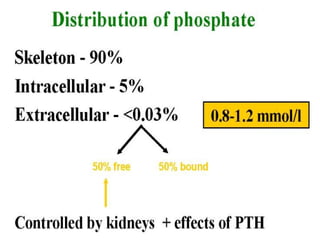
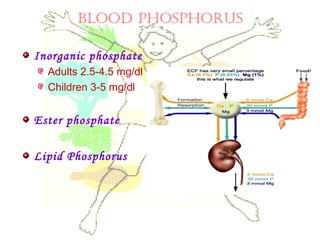
BLOOD PHOSPHORUS
Inorganic phosphate
Adults 2.5-4.5 mg/dl
Children 3-5 mg/dl
Ester phosphate
Lipid Phosphorus
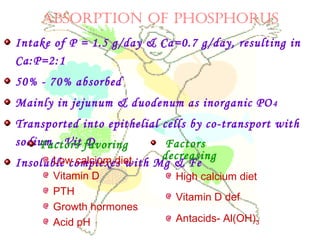
ABSORPTION OF PHOSPHORUS
Intake of P = 1.5 g/day & Ca=0.7 g/day, resulting in
Ca:P=2:1
50% - 70% absorbed
Mainly in jejunum & duodenum as inorganic PO4
Transported into epithelial cells by co-transport with
sodium - Vit D
Insoluble complexes with Mg & Fe
Factors favoring
Low calcium diet
Vitamin D
PTH
Growth hormones
Acid pH
Factors
decreasing
High calcium diet
Vitamin D def
Antacids- Al(OH)3
STORAGE:
85% in bones and teeth
15% in liver, pancreas & brain
EXCRETION :
2
/3 in Urine
Fecal Phosphorus
DEFICIENCY
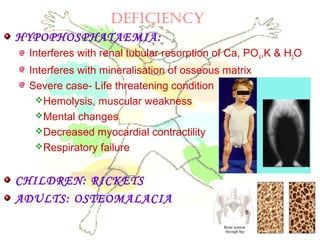
HYPOPHOSPHATAEMIA:
Interferes with renal tubular resorption of Ca, PO4,K & H2O
Interferes with mineralisation of osseous matrix
Severe case- Life threatening condition
Hemolysis, muscular weakness
Mental changes
Decreased myocardial contractility
Respiratory failure
CHILDREN: RICKETS
ADULTS: OSTEOMALACIA
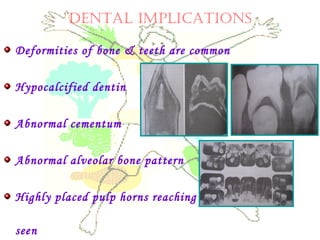
DENTAL IMPLICATIONS
Deformities of bone & teeth are common
Hypocalcified dentin
Abnormal cementum
Abnormal alveolar bone pattern
Highly placed pulp horns reaching up to DEJ are
seen
TOXICITY
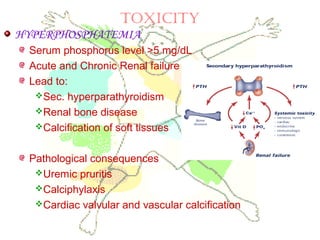
HYPERPHOSPHATEMIA
Serum phosphorus level >5 mg/dL
Acute and Chronic Renal failure
Lead to:
Sec. hyperparathyroidism
Renal bone disease
Calcification of soft tissues
Pathological consequences
Uremic pruritis
Calciphylaxis
Cardiac valvular and vascular calcification
PLASMA CALCIUM AND PHOSPHATE
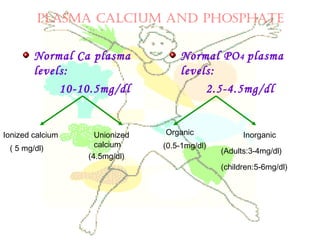
Normal Ca plasma
levels:
10-10.5mg/dl
Normal PO4 plasma
levels:
2.5-4.5mg/dl
Ionized calcium Unionized
calcium( 5 mg/dl)
(4.5mg/dl)
Organic Inorganic
(0.5-1mg/dl)
(Adults:3-4mg/dl)
(children:5-6mg/dl)
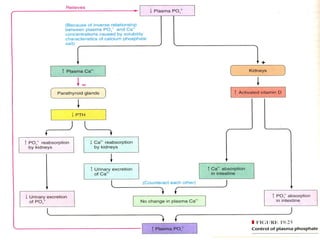
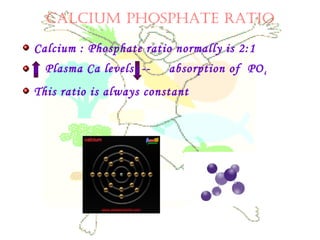
CALCIUM PHOSPHATE RATIO
Calcium : Phosphate ratio normally is 2:1
Plasma Ca levels -- absorption of PO4
This ratio is always constant
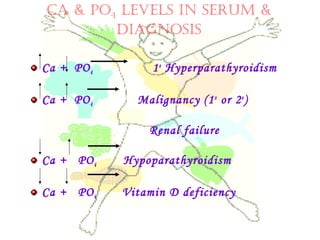
CA & PO4 LEVELS IN SERUM &
DIAGNOSIS
Ca + PO4 1o
Hyperparathyroidism
Ca + PO4 Malignancy (1o
or 2o
)
Renal failure
Ca + PO4 Hypoparathyroidism
Ca + PO4 Vitamin D deficiency
MAJOR MINERALS
1. Calcium
2. Phosphorus
3. Magnesium
4. Potassium
5. Chloride
6. Sodium
7. Sulfur
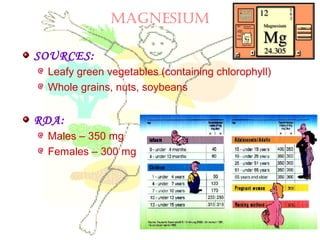
MAGNESIUM
SOURCES:
Leafy green vegetables (containing chlorophyll)
Whole grains, nuts, soybeans
RDA:
Males – 350 mg
Females – 300 mg
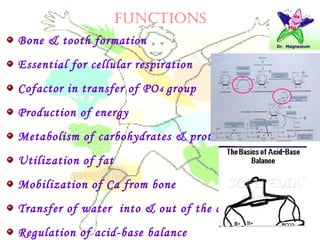
FUNCTIONS
Bone & tooth formation
Essential for cellular respiration
Cofactor in transfer of PO4 group
Production of energy
Metabolism of carbohydrates & protein
Utilization of fat
Mobilization of Ca from bone
Transfer of water into & out of the cells
Regulation of acid-base balance
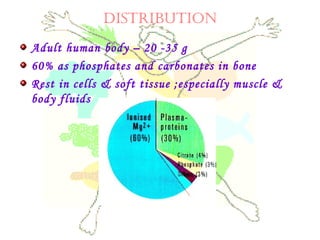
DISTRIBUTION
Adult human body – 20 -35 g
60% as phosphates and carbonates in bone
Rest in cells & soft tissue ;especially muscle &
body fluids
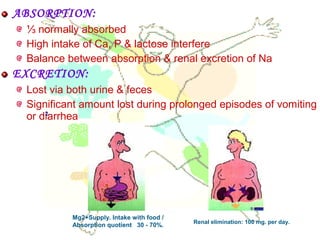
ABSORPTION:
⅓ normally absorbed
High intake of Ca, P & lactose interfere
Balance between absorption & renal excretion of Na
EXCRETION:
Lost via both urine & feces
Significant amount lost during prolonged episodes of vomiting
or diarrhea2.
Renal elimination: 100 mg. per day.
Mg2+Supply. Intake with food /
Absorption quotient 30 - 70%.
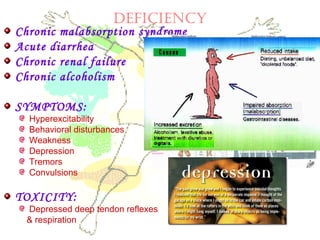
DEFICIENCY
Chronic malabsorption syndrome
Acute diarrhea
Chronic renal failure
Chronic alcoholism
SYMPTOMS:
Hyperexcitability
Behavioral disturbances
Weakness
Depression
Tremors
Convulsions
TOXICITY:
Depressed deep tendon reflexes
& respiration
DENTAL IMPLICATIONS
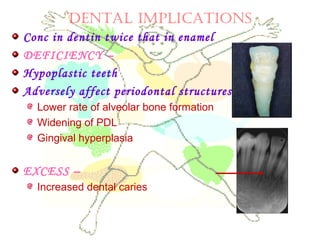
Conc in dentin twice that in enamel
DEFICIENCY –
Hypoplastic teeth
Adversely affect periodontal structures
Lower rate of alveolar bone formation
Widening of PDL
Gingival hyperplasia
EXCESS –
Increased dental caries
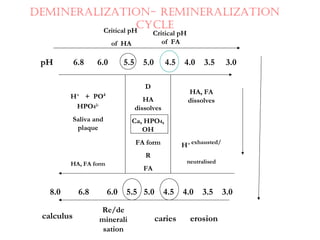
pH 6.8 6.0 5.5 5.0 4.5 4.0 3.5 3.0
8.0 6.8 6.0 5.5 5.0 4.5 4.0 3.5 3.0
Critical pH
of HA
DEMINErALIZATION- rEMINErALIZATION
CyCLE
Critical pH
of FA
D
HA
dissolves
Ca, HPO4,
OH
FA form
R
FA
HA, FA
dissolves
H+ exhausted/
neutralised
H+
+ PO4
HPO42-
Saliva and
plaque
HA, FA form
calculus
Re/de
minerali
sation
caries erosion
PErIODONTAL DISEASE CAUSED By DIETAry
CALCIUM DEfICIENCy Or DIETAry PhOSPhOrUS
ExCESS
Henrikson – high incidence of periodontal disease in
India is due to low dietary Ca intake
Alveolar bone most susceptible to resorption
Krook et al – induced osteoporosis, complete
remineralization occurred in all affected bones
 Alveolar bone – greatest degree of remineralization &
demineralization
Lutwak et al – demineralization of alveolar bone
reversed by daily dietary Ca supplements
Glickman – low dietary Ca can be a sec conditioning
factor that stimulates periodontal disease process
POTASSIUM
SOURCES:
Vegetables, fruit, nuts
RDA:
2-4 gm
Greatest during periods of rapid growth
fUNCTION
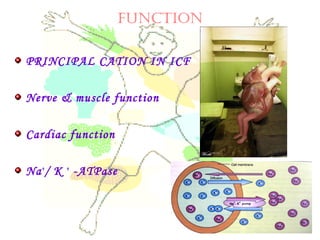
PRINCIPAL CATION IN ICF
Nerve & muscle function
Cardiac function
Na+
/ K +
-ATPase
DISTrIBUTION
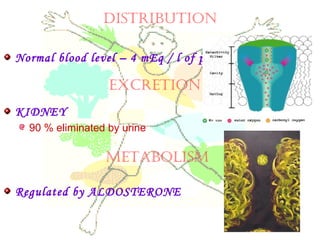
Normal blood level – 4 mEq / l of plasma
KIDNEY
90 % eliminated by urine
Regulated by ALDOSTERONE
ExCrETION
METABOLISM
DEfICIENCy
Occurs secondary to illness, injury, or diuretic therapy
Gastrointestinal disorders – loss through diarrhea &
vomiting
General malnutritional states
Excessive doses of cortisone or hydrocortisone
Associated with FVD:
Weakness, Confusion, Arrhythmias
TREATMENT:
DIABETIC ACIDOSIS
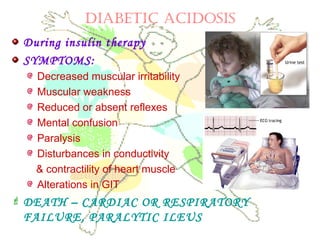
During insulin therapy
SYMPTOMS:
Decreased muscular irritability
Muscular weakness
Reduced or absent reflexes
Mental confusion
Paralysis
Disturbances in conductivity
& contractility of heart muscle
Alterations in GIT
 DEATH – CARDIAC OR RESPIRATORY
FAILURE, PARALYTIC ILEUS
TOxICITy
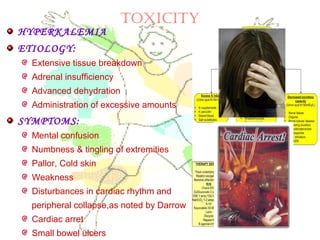
HYPERKALEMIA
ETIOLOGY:
Extensive tissue breakdown
Adrenal insufficiency
Advanced dehydration
Administration of excessive amounts
SYMPTOMS:
Mental confusion
Numbness & tingling of extremities
Pallor, Cold skin
Weakness
Disturbances in cardiac rhythm and
peripheral collapse,as noted by Darrow
Cardiac arret
Small bowel ulcers
SODIUM
SOURCES:
Table salt
Salt added to prepared food
Processed food
RDA:
0.5 g
HBM – 0.4 g ; cow’s milk – 1.7 g
 Profuse sweating : 1 gm ingested for each liter of
water
ICF
ECF
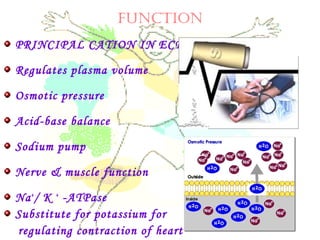
fUNCTION
PRINCIPAL CATION IN ECF
Regulates plasma volume
Osmotic pressure
Acid-base balance
Sodium pump
Nerve & muscle function
Na+
/ K +
-ATPase
Substitute for potassium for
regulating contraction of heart
DISTrIBUTION
Normal 70 kg adult male – 83-97 gm
>⅓ skeleton ECF Enamel ash 0.3%
Normal blood level – 160 mg/dl of whole blood, or
340 mg/dl of plasma (147.8 mEq/l of plasma)
KIDNEY
Desoxycorticosterone, cortisone, hydrocortisone
SWEAT
Hot environment
Before acclimatization – 2-3 gm/l
After acclimatization – 0.5 gm/l
ExCrETION
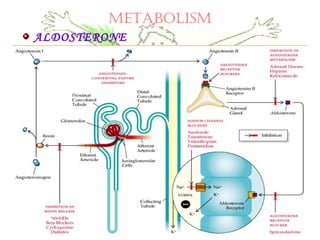
METABOLISM
ALDOSTERONE
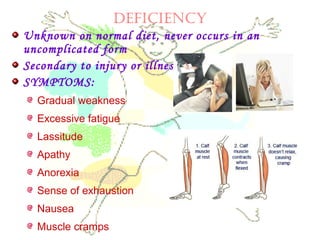
DEfICIENCy
Unknown on normal diet, never occurs in an
uncomplicated form
Secondary to injury or illness
SYMPTOMS:
Gradual weakness
Excessive fatigue
Lassitude
Apathy
Anorexia
Sense of exhaustion
Nausea
Muscle cramps
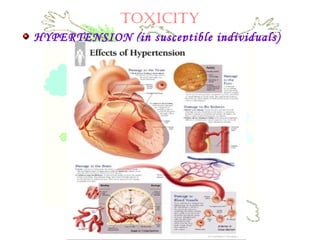
TOxICITy
HYPERTENSION (in susceptible individuals)
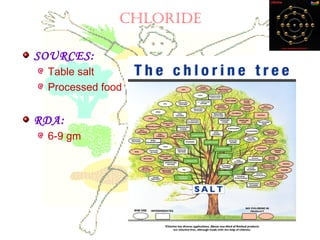
ChLOrIDE
SOURCES:
Table salt
Processed food
RDA:
6-9 gm
fUNCTION
Important mineral constituent of ECF
Fluid & electrolyte balance
Production of Gastric fluid
Chloride shift in HCO3 –
transport in erythrocytes
Activates salivary amylase
DISTrIBUTION
Normal blood plasma conc – 550 - 650 mg / dl as
NaCl
KIDNEY
Threshold substance – reabsorbed through glomeruli
ExCrETION
DEfICIENCy
Infant fed salt-free formula
Sec to vomiting, diuretic therapy, renal disease
Lost in pyloric obstruction with gastric tetany
Signs of Hyperexcitability & convulsions
SULfUr
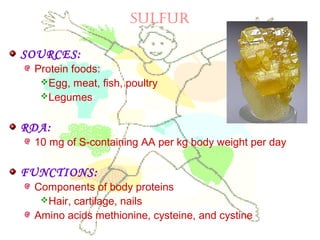
SOURCES:
Protein foods:
Egg, meat, fish, poultry
Legumes
RDA:
10 mg of S-containing AA per kg body weight per day
FUNCTIONS:
Components of body proteins
Hair, cartilage, nails
Amino acids methionine, cysteine, and cystine
Sulfhydryl group - important structural and catalytic
effects
Cystine residues in the α-keratins are responsible for
the structural qualities of hair, hooves, and quills
Disulfide bridging - insulin, chymotrypsin,
immunoglobulins
KIDNEY
Urine - between 0.7 and 1.4g
75% SO4
--
5% 20% - organic sulfhydryls or thiomethyl
ExCrETION
fUNCTION
DEfICIENCy
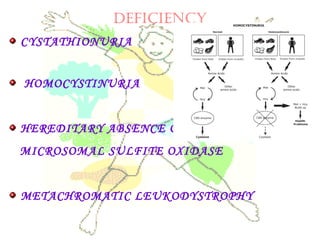
CYSTATHIONURIA
HOMOCYSTINURIA
HEREDITARY ABSENCE OF
MICROSOMAL SULFITE OXIDASE
METACHROMATIC LEUKODYSTROPHY
TrACE ELEMENTS
DEFINITION:
Trace elements, as the name implies, are those that
we need to ingest only in tiny amounts - typically
in the range of micrograms to milligrams per day -
in order to maintain levels conducive to good
health.
TRACE - not more than 100 ppm (100 parts/ 106
or
100 mg/l).
CLASSIfICATION
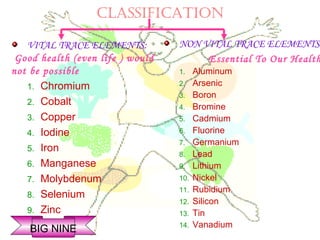
VITAL TRACE ELEMENTS:
Good health (even life ) would
not be possible
1. Chromium
2. Cobalt
3. Copper
4. Iodine
5. Iron
6. Manganese
7. Molybdenum
8. Selenium
9. Zinc
NON VITAL TRACE ELEMENTS:
Essential To Our Health
1. Aluminum
2. Arsenic
3. Boron
4. Bromine
5. Cadmium
6. Fluorine
7. Germanium
8. Lead
9. Lithium
10. Nickel
11. Rubidium
12. Silicon
13. Tin
14. Vanadium
BIG NINE
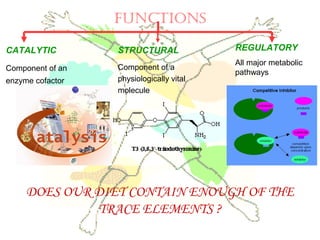
fUNCTIONS
CATALYTIC
Component of an
enzyme cofactor
STRUCTURAL
Component of a
physiologically vital
molecule
REGULATORY
All major metabolic
pathways
DOES OUR DIET CONTAIN ENOUGH OF THE
TRACE ELEMENTS ?
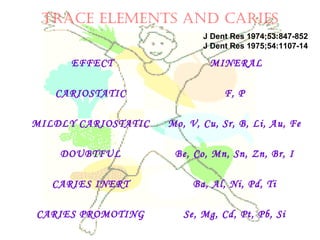
TrACE ELEMENTS AND CArIES
EFFECT MINERAL
CARIOSTATIC F, P
MILDLY CARIOSTATIC Mo, V, Cu, Sr, B, Li, Au, Fe
DOUBTFUL Be, Co, Mn, Sn, Zn, Br, I
CARIES INERT Ba, Al, Ni, Pd, Ti
CARIES PROMOTING Se, Mg, Cd, Pt, Pb, Si
J Dent Res 1974;53:847-852
J Dent Res 1975;54:1107-14
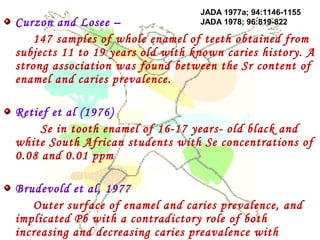
Curzon and Losee –
147 samples of whole enamel of teeth obtained from
subjects 11 to 19 years old with known caries history. A
strong association was found between the Sr content of
enamel and caries prevalence.
Retief et al (1976)
Se in tooth enamel of 16-17 years- old black and
white South African students with Se concentrations of
0.08 and 0.01 ppm
Brudevold et al, 1977
Outer surface of enamel and caries prevalence, and
implicated Pb with a contradictory role of both
increasing and decreasing caries preavalence with
JADA 1977a; 94:1146-1155
JADA 1978; 96:819-822
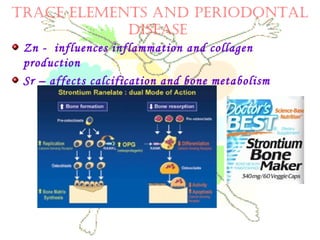
TrACE ELEMENTS AND PErIODONTAL
DISEASE
Zn - influences inflammation and collagen
production
Sr – affects calcification and bone metabolism
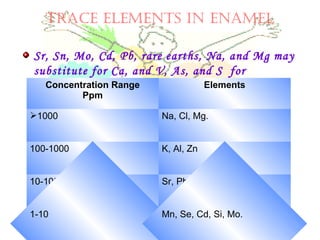
TrACE ELEMENTS IN ENAMEL
Sr, Sn, Mo, Cd, Pb, rare earths, Na, and Mg may
substitute for Ca, and V, As, and S for
phosphorusConcentration Range
Ppm
Elements
>1000
100-1000
10-100
1.10
1.0-0.9
< 0.1
Not detected
Na, Cl, Mg
K ,S, Zn, Si, Sr, F
Fe, Al, Pb, B, Ba
Cu, Rb, Br, Mo, Cd,
I, Ti, Mn, Cr, Sn
Ni, Li, Ag, Nb, Se,
Be, Zr, Co, W, Sb, Hg
As, Cs, V, Au, La, Ce,
Pr, Nd, Sm, Tb, Y
Sc, Ga, Ge, Ru, Pd, In,
Te, Eu, Gd, Dy, Ho, Er,
Tm, Lu, Hf, Ta, Re, Os,
Ir, Pt, Ti, Bi Rh
Concentration Range
Ppm
Elements
1000 Na, Cl, Mg.
100-1000 K, Al, Zn
10-100 Sr, Pb, Ba, Cu, Ni, Ti, Fe.
1-10 Mn, Se, Cd, Si, Mo.
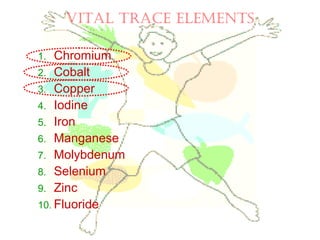
VITAL TrACE ELEMENTS
1. Chromium
2. Cobalt
3. Copper
4. Iodine
5. Iron
6. Manganese
7. Molybdenum
8. Selenium
9. Zinc
10. Fluoride
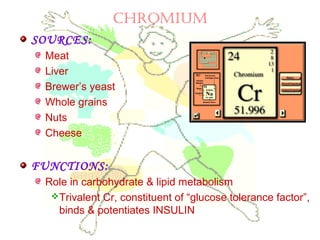
ChrOMIUM
SOURCES:
Meat
Liver
Brewer’s yeast
Whole grains
Nuts
Cheese
FUNCTIONS:
Role in carbohydrate & lipid metabolism
Trivalent Cr, constituent of “glucose tolerance factor”,
binds & potentiates INSULIN
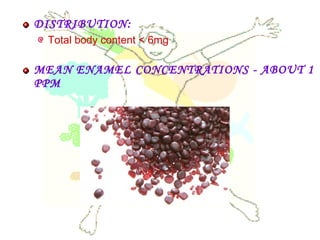
DISTRIBUTION:
Total body content < 6mg
MEAN ENAMEL CONCENTRATIONS - ABOUT 1
PPM
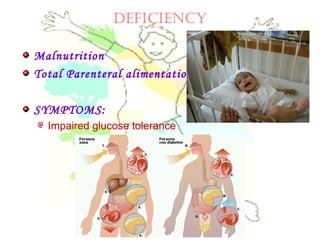
DEfICIENCy
Malnutrition
Total Parenteral alimentation
SYMPTOMS:
Impaired glucose tolerance
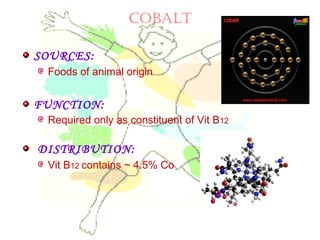
COBALT
SOURCES:
Foods of animal origin
FUNCTION:
Required only as constituent of Vit B12
DISTRIBUTION:
Vit B12 contains ~ 4.5% Co
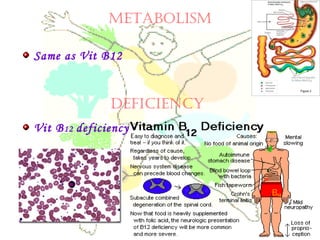
METABOLISM
Same as Vit B12
Vit B12 deficiency
DEfICIENCy
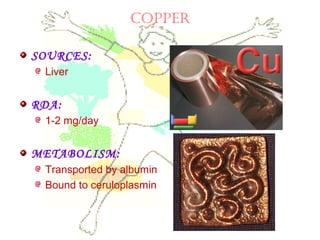
COPPEr
SOURCES:
Liver
RDA:
1-2 mg/day
METABOLISM:
Transported by albumin
Bound to ceruloplasmin
FUNCTION:
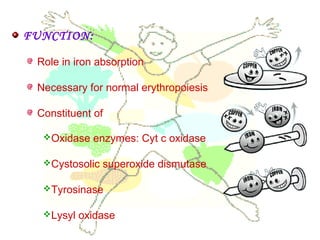
Role in iron absorption
Necessary for normal erythropoiesis
Constituent of
Oxidase enzymes: Cyt c oxidase
Cystosolic superoxide dismutase
Tyrosinase
Lysyl oxidase
deficiency
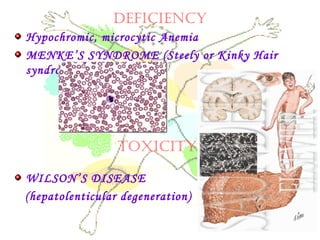
Hypochromic, microcytic Anemia
MENKE’S SYNDROME (Steely or Kinky Hair
syndrome)
WILSON’S DISEASE
(hepatolenticular degeneration)
toxicity
VitAL tRAce eLeMentS
1. Chromium
2. Cobalt
3. Copper
4. Iodine
5. Iron
6. Manganese
7. Molybdenum
8. Selenium
9. Zinc
10. Fluoride
iodine
SOURCES:
Iodized salt
Sea food
FUNCTION:
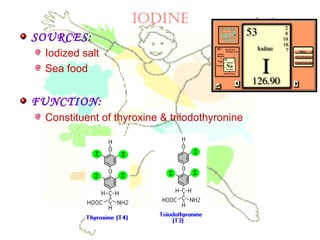
Constituent of thyroxine & triiodothyronine
DISTRIBUTION:
⅓ in thyroid
Ovaries also high concentration
Normal whole blood : 8 – 12 mcg/dl (3-30 mcg)
Protein-bound iodine : 3-8 mcg
Increased in:
Pregnancy
Hyperthyroidism
Decreased in:
Hypothyroidism
METABOLISM:
Stored in thyroid as thyroglobulin
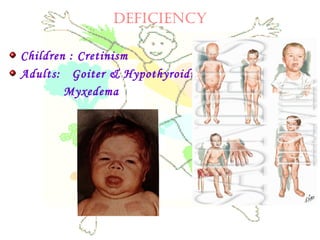
deficiency
Children : Cretinism
Adults: Goiter & Hypothyroidism
Myxedema
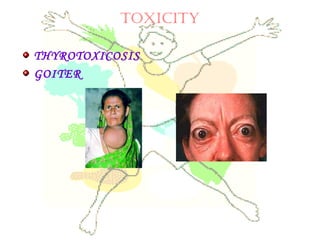
toxicity
THYROTOXICOSIS
GOITER
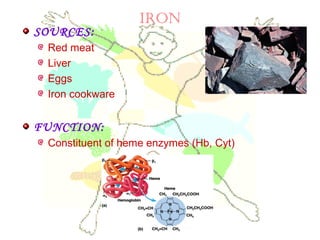
iRon
SOURCES:
Red meat
Liver
Eggs
Iron cookware
FUNCTION:
Constituent of heme enzymes (Hb, Cyt)
DISTRIBUTION:
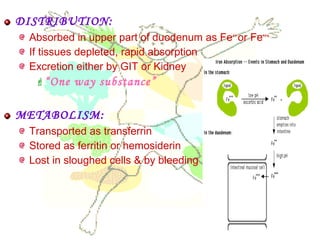
Absorbed in upper part of duodenum as Fe++
or Fe+++
If tissues depleted, rapid absorption
Excretion either by GIT or Kidney
“One way substance”
METABOLISM:
Transported as transferrin
Stored as ferritin or hemosiderin
Lost in sloughed cells & by bleeding
deficiency
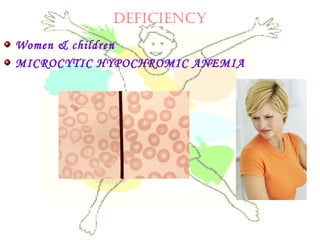
Women & children
MICROCYTIC HYPOCHROMIC ANEMIA
toxicity
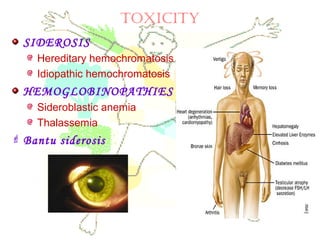
SIDEROSIS
Hereditary hemochromatosis
Idiopathic hemochromatosis
HEMOGLOBINOPATHIES
Sideroblastic anemia
Thalassemia
 Bantu siderosis
MAngAneSe
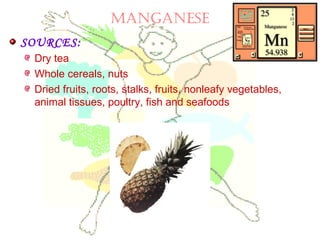
SOURCES:
Dry tea
Whole cereals, nuts
Dried fruits, roots, stalks, fruits, nonleafy vegetables,
animal tissues, poultry, fish and seafoods
FUNCTION:
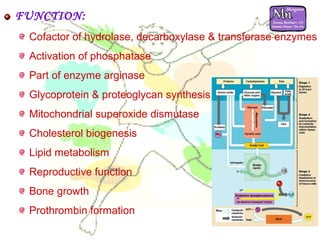
Cofactor of hydrolase, decarboxylase & transferase enzymes
Activation of phosphatase
Part of enzyme arginase
Glycoprotein & proteoglycan synthesis
Mitochondrial superoxide dismutase
Cholesterol biogenesis
Lipid metabolism
Reproductive function
Bone growth
Prothrombin formation
DISTRIBUTION:
Liver & lymph nodes
Teeth
ABSORPTION:
Small intestine
Used throughout the body in enzyme systems
Excess Ca, Fe and Co compete for binding sites
EXCRETION:
Intestinal wall
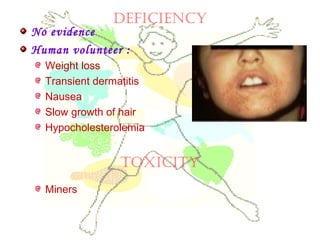
deficiency
No evidence
Human volunteer :
Weight loss
Transient dermatitis
Nausea
Slow growth of hair
Hypocholesterolemia
Miners
toxicity
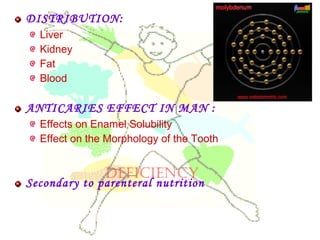
MoLyBdenUM
Molybdos (Greek - lead )
SOURCES:
Meats
Grains
Legumes
FUNCTION:
Constituent of oxidase enzymes (Xanthine oxidase)
DISTRIBUTION:
Liver
Kidney
Fat
Blood
ANTICARIES EFFECT IN MAN :
Effects on Enamel Solubility
Effect on the Morphology of the Tooth
Secondary to parenteral nutrition
deficiency
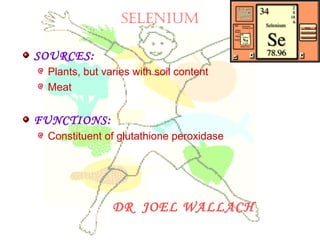
SeLeniUM
SOURCES:
Plants, but varies with soil content
Meat
FUNCTIONS:
Constituent of glutathione peroxidase
DR JOEL WALLACH
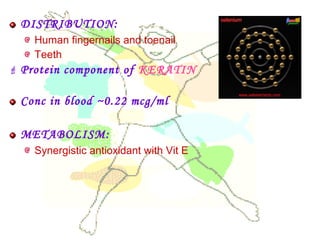
DISTRIBUTION:
Human fingernails and toenail
Teeth
 Protein component of KERATIN
Conc in blood ~0.22 mcg/ml
METABOLISM:
Synergistic antioxidant with Vit E
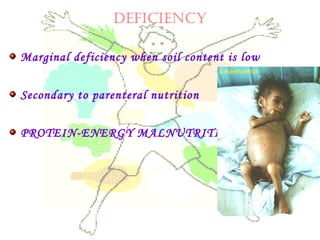
deficiency
Marginal deficiency when soil content is low
Secondary to parenteral nutrition
PROTEIN-ENERGY MALNUTRITION
toxicity
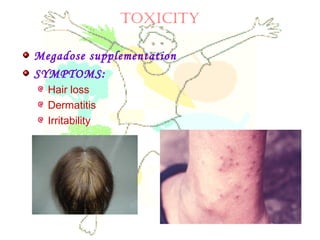
Megadose supplementation
SYMPTOMS:
Hair loss
Dermatitis
Irritability
Zinc
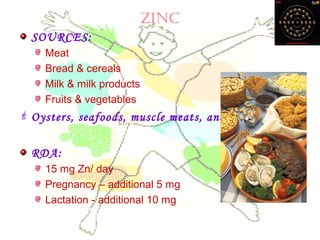
SOURCES:
Meat
Bread & cereals
Milk & milk products
Fruits & vegetables
 Oysters, seafoods, muscle meats, and nuts
RDA:
15 mg Zn/ day
Pregnancy – additional 5 mg
Lactation - additional 10 mg
fUnctionS
Cofactor of many enzymes:
Lactate dehydrogenase
Alkaline phosphatase
Carbonic anhydrase
Choroid and iris of eye - up to 14,600 ppm
Liver
Enamel & dentin – 0.02%
Bone, nails & hair
 Teeth of tuberculosis pts apparently have higher
diStRiBUtion
ABSORPTION:
Small intestine
Duodenum
Ileum
High Cu levels reduced Zn absorption
Ca, Fe, Cd, and Cr compete with it for binding sites
Phytate in bread
EXCRETION:
Mainly excreted in the feces
deficiency
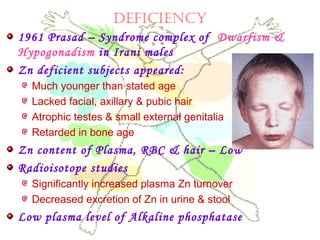
1961 Prasad – Syndrome complex of Dwarfism &
Hypogonadism in Irani males
Zn deficient subjects appeared:
Much younger than stated age
Lacked facial, axillary & pubic hair
Atrophic testes & small external genitalia
Retarded in bone age
Zn content of Plasma, RBC & hair – Low
Radioisotope studies
Significantly increased plasma Zn turnover
Decreased excretion of Zn in urine & stool
Low plasma level of Alkaline phosphatase
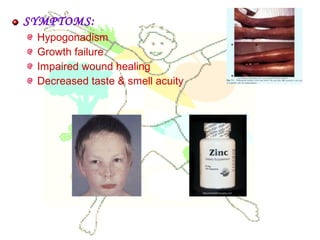
SYMPTOMS:
Hypogonadism
Growth failure
Impaired wound healing
Decreased taste & smell acuity
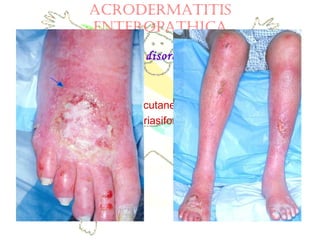
AcRodeRMAtitiS
enteRoPAtHicA
Specific multi-organ disorder
SYMPTOMS:
Diarrhea
Wide range of mucocutaneous problems
Eczematous, psoriasiform, vesicular lesions
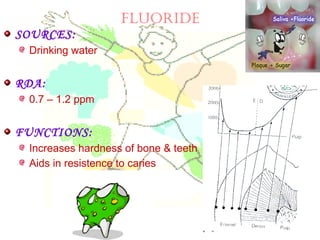
fLUoRide
SOURCES:
Drinking water
RDA:
0.7 – 1.2 ppm
FUNCTIONS:
Increases hardness of bone & teeth
Aids in resistence to caries
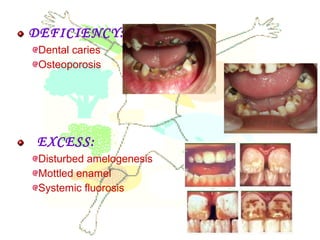
DEFICIENCY:
Dental caries
Osteoporosis
EXCESS:
Disturbed amelogenesis
Mottled enamel
Systemic fluorosis
RefeRenceS
Nutrition in Preventive dentistry- Abraham E. Nizel
Textbook of Medical Physiology 10th
ed, Guyton & Hall
Essentials of Medical Physiology - Sembulingam
Concise Medical Physiology, Sujit K Chaudhuri, 2nd
ed
Nutrition, diet and oral health- Anderw J. Rugg-Gunn
Harper’s illustrated Biochemistry- Harper
A Textbook of Oral Pathology- Shafer
Cariology – E.Newbrun
Nutrition - Robert pollack
The Importance of Minerals to Health - David E Marsh
Preventive & Social medicine - Park & park
DCNA 2003
JADA 1997;128:1306-1313
J Clin Periodontol 1994;21:184-8
J Periodontol 2000;71:1057-66
JADA 1977a; 94:1146-1155
JADA 1978; 96:819-822
J Dent Res 1974;53:847-852
J Dent Res 1975;54:1107- 1114
2.minerals

2.minerals

  • 2.
    MINERALS Dr.aesha zafna Postgraduate Dept ofpublic health dentistry Cids,virajpet
  • 3.
    CONTENTS Introduction Definitions Functions of minerals Classificationof minerals Major minerals : Ca, P, Mg, K, Na, Cl, S Trace elements: Cr, Co, I, Fe, Mn, Mo, Se, Zn, F Conclusion References
  • 5.
    DEFINITION NUTRITION:- W.H.O: the scienceof food and its relationship to health. It is concerned primarily with the part played by the nutrient in body growth, development and maintenance. NIZEL: the science which deals with the study of nutrients and foods and their effects on the nature and function of the organism under different conditions of age, health and disease. DCNA 2003: the science, how the body utilizes food
  • 6.
    DEFINITION FOOD:- NIZEL: anything thatis eaten, drunk or absorbed for maintenance of life, growth & repair of the tissue DIET:- NIZEL: total oral intake of a substance that provides nourishment & supply DCNA 1999: the customary allowance of food & drink taken by any person from day to day
  • 7.
    DEFINITION BALANCED DIET:-is theone which contains varieties of foods in such quantities and proportion that are needed for energy CHILD DIET:- combination of food consumed and the nutrients contained there in, which have a profound ability to influence cognition, behavior and emotional development in addition to ultimate physical growth & development (DCNA 2003) BALANCED DIET
  • 8.
    DEFINITION ESSENTIAL ELEMENT: - Mertz’sdefines an essential element as one, whose deficient intake consistently results in suboptimal physiologic function that can be prevented or reversed by supplementation with physiologic levels of the element Eg. Vitamins & Minerals
  • 9.
    DEFINITION MINERAL: - A naturallyoccurring inorganic substance with a definite and predictable chemical composition and physical properties. A naturally occurring, usually inorganic, solid consisting of either a single element or a compound, and having a definite chemical composition and a systematic internal arrangement of atoms An inorganic compound needed by the body for good health, proper metabolic functioning, and disease
  • 10.
    DEFINITION HEALTH:- WHO 1948 -A state of complete physical, mental and social well being and not merely the absence of disease or infirmity. ORAL HEALTH:- WHO - means more than good teeth; it is integral to general health and essential for well being. It implies being free of chronic oro-facial pain, oral and pharyngeal (throat) cancer, oral tissue lesions, birth defects such as cleft lip and palate, and other diseases and disorders that affect the oral, dental and
  • 11.
    FUNCTIONS Structural components forthe body Nerve and muscle function Blood clotting Tissue growth and repair Acid- base balance of body fluids Cofactors for enzymes in chemical reaction within the body
  • 12.
    CLASSIFICATION MAJOR MINERALS: Required inamounts greater than 100 mg/day 1. Calcium 2. Phosphorus 3. Magnesium 4. Potassium 5. Sodium 6. Chloride 7. Sulfur TRACE ELEMENTS: Required in amounts lesser than 100 mg/day 1. Chromium 2. Cobalt 3. Copper 4. Iodine 5. Iron 6. Manganese 7. Molybdenum 8. Selenium 9. Zinc
  • 13.
  • 14.
    CLASSIFICATION ACC TOFUNCTION FUNCTION MINERAL Structural function Ca, Mg, P Involved in membrane function: Principal cations of ECF & ICF Na, K Function as prosthetic groups in enzymes Co, Cu, Fe, Mo, Se, Zn Regulatory role or Role in hormone action Ca, Cr, I, Mg, Mn, Na, K Known to be essential, but function unknown Si, V, Ni, Sn Have effects in the body, but essentiality is not established F, Li May occur in foods & known to be toxic in excess Al, As, B, Br, Cd, Pb, Hg, Ag, Sr
  • 15.
    CLASSIFICATION In 1962 newguidelines were established re-defining ‘Essentiality’ Following four categories: (I)    MAIN (OR CONSTITUENT) (II)   INTEGRATING (ESSENTIAL) (III)  FACULTATIVE (PARTLY ESSENTIAL/BENEFICIAL)PROFESSOR G N
  • 16.
    MAJOR MINERALS 1. Calcium 2.Phosphorus 3. Magnesium 4. Potassium 5. Chloride 6. Sodium 7. Sulfur
  • 18.
    CALCIUM SOURCES:- Milk based foods Cheddarcheese has highest level of Ca/100g Sardines with bones Blackstrap molasses Green leafy vegetables Legumes and Beans
  • 19.
    RDA: Infants below 1yr – 360 -540 mg From 1-10 yr – 800 mg From 11-18 – 1200 mg both for boys and girls Adults – 500 - 800 mg Pregnancy and lactation – 100 mg 1984 National Institute of Health Consensus Development Conference on Osteoporosis recommendations: Premenopausal women - 1000 mg/day Postmenopausal women - 1500 mg/day
  • 20.
    CALCIUM SUPPLEMENTS Calcium carbonateor oyster shell Calcium lactate or calcium gluconate Considerations for children: Allergic to cow’s milk Refuse to drink milk
  • 21.
    Rigidity & strengthto bones and teeth Blood coagulation Neuromuscular contraction Stabilize cell membrane and permeability Acts as a secondary messenger/ stimulus response coupling FUNCTIONS
  • 22.
    Release of neurotransmitters/ hormones Transmission of nerve impulse Production of milk Activation of enzymes Maintenance of tight junctions Activation of Digestive enzymes SAN of the heart needs calcium for maintaining its pacemaker potential
  • 23.
    1100-1200g1100-1200g (1.5% of thebody weight)(1.5% of the body weight) 9-11 mg/dl
  • 24.
    DISTRIBUTION OF CALCIUM DiffusibleIonized Diffusible non-ionized Non-Diffusible
  • 25.
    CALCIUM ABSORPTION Has tobe soluble or undergo solubilization by stomach acid 20%-30% Ca absorbed, Rest is excreted TRANSCELLULAR PARACELLULAR DCNA 2003
  • 26.
    PARACELLULAR MOVEMENT Occurs throughoutthe intestine Does not require metabolic energy Not subject to acute regulation INTESTINAL PERMEABILITY: Different portions of intestine Change with age INTESTINAL SOJOURN TIME:  Luminal Ca conc exceeds 1mmol/l & max ionic Ca conc of body fluids exceed 10mmol/l DCNA 2003
  • 27.
    TRANSCELLULAR MOVEMENT Entry mediatedby dual entry mechanism: CaT1 Intracellular diffusion mediated by Vit D- dependent cytosolic Ca-binding protein: CALBINDIN D9K Extrusion from cell mediated largely by Ca extruding enzyme: CaATPase DCNA 2003
  • 28.
    CAT1 Two entry components: Carrier-mediatedtransport – < 5mmol/L Channel flow-like mechanism - > 5mmol/L Upregulated by 1,25 dihydroxyvitamin D3 Regulated by: Intracellular Ca conc Cytosolic Ca binding to a channel domain Some other molecule that acts as a channel gate
  • 29.
    CALBINDIN D9K Self diffusionthrough cell interior enhanced upto 70 times Biosynthesis and Conc ∞ Vit D3 Acts as: Mobile buffer Transporter  Amnt of Ca transported transcellularly ∞ and +vely
  • 30.
    CA ATPASE Located onplasma side of duodenal cell Ca- binding domain on cytoplasmic side of pump molecule Contain calmodulin-binding domain Ca extruded through channel-like opening formed by transmenbrane elements PHOSPHORYLATION  Even at highest transit rate  Number of Ca ATPase increased by Vit D treatment  Enzyme biosynthesis is NOT Vit D dependent
  • 31.
    Transcellular Ca transportbecomes functionally important when Ca intake is low At high Ca intakes, transcellular Ca transport downregulated and Ca absorption is largely paracellular  Ca absorption increased by increasing intake of Vit D3  Elderly women
  • 32.
    FACTORS AFFECTING ABSORPTION Needsof the body Growing child Pregnancy and lactation Gastric acidity Hormonal influences Vit D Ca to P ratio 1:1 or 2:1
  • 33.
    Lactose Citric acid Dietary proteinand Phosphorus Oxalic & Phytic acid Fat Emotional reactions Exercise
  • 34.
    STORAGE: Trabeculae of longbones Blood & tissue Ca EXCRETION : Out of 1000 mg  Mother loses between 150 to 300 mg daily in milk 700-800 mg in faeces 15 mg via perspiration Urine Bile
  • 36.
  • 37.
    CONCEPT OF CALCIUMBALANCE Defined as the net gain or loss of calcium by the body over a specified period of time Calculated by deducting calcium in feaces and urine from the calcium taken in diet Positive calcium balance in growing children Negative calcium balance in aging adults Calcium Balance
  • 38.
    CALCIUM HOMEOSTOSIS Involves animmediate adjustment required to maintain a constant free plasma calcium concentration on a minute to minute basis Plasma Ca is in very rapid, dynamic equilibrium with Ca in ECF Depends upon rapid exchange between bone and ECF Calcium pool is defined as all of the Ca in extracellular volume Exquisitely well regulated, with deviations of ± 20% DCNA 2003
  • 39.
    CALCIUM IN BONE Depositedin form of brushite, on collagen fibrils Osteoblasts Osteoclasts Osteocyte NAME FORMULA MOLAR RATIO OF Ca to P Hydroxyapatite Ca10(PO4)6(OH)2 1.66 Whitlockite (Ca,Mg)3(PO4)2 1.50 Amorphous CaPO4 Ca9(PO4)6 (variable) 1.30-1.50 OctaCaPO4 Ca8H2(PO4).5H2O 1.33 Brushite CaHPO4.(2H2O) 1.00 SOLID PHASES OF CaPO4 IN BONE DCNA 2003
  • 40.
    Highest content perunit volume Privileged sites Neither osteoporosis nor most bone disease have specific effects on tooth health Studies: Klametti & collaborators Nishida & colleagues Oshiro & colleagues CALCIUM IN TEETH J Clin Periodontol 1994 J Periodontol 2000 DCNA 2003
  • 41.
    DEFICIENCY DISEASE HYPOCALCAEMIA ↓ levelof calcium in the blood (<4mg/dl) Condition leading to hypocalcaemia Insufficient dietary calcium Hypoparathyroidism Insufficient vitamin D ↑ in calcitonin levels Clinical signs & symptoms Increased neuromuscular excitability Muscle spasms Tetany Cardiac dysfunction TETANY Children: RICKETS Adults :OSTEOMALACIA. May contribute to OSTEOPOROSIS
  • 42.
    TETANY An increased excitabilityof peripheral nerves due to hypocalcaemia or alkalosis or hypomagnesaemia INFANTILE TETANY: Carpopedal spasm, Stridor, Convulsions ACCOUCHEUR’S HAND
  • 43.
    ADULT TETANY: Tingling inhands, feet, around mouth LATENT TETANY Trousseau’s sign Chvostek’s sign Erb’s sign TREATMENT: Slow IV inj 20 ml of 10% soln of Ca glucanate
  • 44.
    Deficiency of VitD in growing child, before epiphyseal fusion TYPES: Secondary rickets Resistant rickets Renal rickets Drug induced rickets RICKETS
  • 45.
  • 46.
    Wrist enlargement Ankleenlargement Scoliosis Frontal bossing
  • 47.
    DENTAL IMPLICATIONS MELLANBY firstto report TEETH: Developmental disturbances of dentin & enamel Delayed eruption Malalignment of teeth in jaw Enamel hypoplasia Abnormally wide predentin zone & interglobular dentin “Calciotraumatic line” in dentin Higher caries index ALVEOLAR BONE: Loss of lamina dura Reduced density of supporting bone Loss of trabeculae
  • 48.
    TREATMENT MEDICAL INTERVENTION: Supplementation ofdietary Ca & Vit D 1000-5000 IU ORTHOPEDIC INTERVENTION:
  • 49.
  • 50.
    OSTEOMALACIA VS OSTEOPOROSIS ABNORMALBONE CALCIFICATION Due to: Def of Vit D, Ca, PO4 in adults Results in: Excessive uncalcified osteoid Abnormal mineral composition Clinical manifestation: General weakness Aching Laboratory findings: Low serum Ca, PO4 Elevated alkaline phosphatase Treatment Dietary Ca and Vit D ABNORMAL ORGANIC MATRIX FORMATION Due to Decline in anabolic hormones Results in: Decreased ossification Mineral composition remains normal Clinical manifestation: Hip & back pain (lumbago) Stooped posture Decreased height Tendency to bone fracture Laboratory findings: Normal Ca, PO4, alkaline phosphatase Treatment Estrogens, protein, Ca, Vit D, F
  • 51.
    TOXICITY HYPERCALCEMIA Conditions leading tohypercalcemia Hyperparathyroidism Acute osteoporosis Thyrotoxicosis Vitamin D intoxication Symptoms Tiredness, loss of appetite, nausea, vomiting, polyuria, dehydration, loss of muscle tone.
  • 52.
    PATHOLOGICAL CALCIFICATION DYSTROPHIC CALCIFICATION: Precipitationof calcium in degenerating and dead tissues METASTATIC CALCIFICATION: Excess amount of calcium in the blood which gets deposited in the previously undamaged tissues CALCINOSIS: Presence of calcification in or under the skin Can be associated with scleroderma. 2 types: Calcinosis circumscripta Calcinosis universalis
  • 54.
    PHOSPHORUS SOURCES: Animal foods( meat,fish, poultry, eggs and milk) Nuts Legumes and Whole-grain cereals  Diet is more than adequate in P, when Ca & Protein needs are met • Milk Phosphoprotiens • Brain, Liver, Egg yolk Phospholipid • Muscles Phosphogen & ATP
  • 55.
    RDA: Adequate Intake 0-6 months- 100 mg 6-12 months - 275 mg Estimated Average Requirements 1-3 years - 380 mg 4-8 years - 405 mg 9-18 years -1,055 mg 19-70+ years - 800-1200 mg Pregnant & lactating women
  • 56.
    FUNCTIONS Formation of bone& tooth mineral Production & transfer of high energy phosphates Vit B complex activation Helps in formation of phospholipids & Phosphoproteins Cell protein synthesis Synthesis of DNA & RNA Blood & tissue buffer Formation of co-enzymes
  • 58.
    BLOOD PHOSPHORUS Inorganic phosphate Adults2.5-4.5 mg/dl Children 3-5 mg/dl Ester phosphate Lipid Phosphorus
  • 59.
    ABSORPTION OF PHOSPHORUS Intakeof P = 1.5 g/day & Ca=0.7 g/day, resulting in Ca:P=2:1 50% - 70% absorbed Mainly in jejunum & duodenum as inorganic PO4 Transported into epithelial cells by co-transport with sodium - Vit D Insoluble complexes with Mg & Fe Factors favoring Low calcium diet Vitamin D PTH Growth hormones Acid pH Factors decreasing High calcium diet Vitamin D def Antacids- Al(OH)3
  • 60.
    STORAGE: 85% in bonesand teeth 15% in liver, pancreas & brain EXCRETION : 2 /3 in Urine Fecal Phosphorus
  • 61.
    DEFICIENCY HYPOPHOSPHATAEMIA: Interferes with renaltubular resorption of Ca, PO4,K & H2O Interferes with mineralisation of osseous matrix Severe case- Life threatening condition Hemolysis, muscular weakness Mental changes Decreased myocardial contractility Respiratory failure CHILDREN: RICKETS ADULTS: OSTEOMALACIA
  • 62.
    DENTAL IMPLICATIONS Deformities ofbone & teeth are common Hypocalcified dentin Abnormal cementum Abnormal alveolar bone pattern Highly placed pulp horns reaching up to DEJ are seen
  • 63.
    TOXICITY HYPERPHOSPHATEMIA Serum phosphorus level>5 mg/dL Acute and Chronic Renal failure Lead to: Sec. hyperparathyroidism Renal bone disease Calcification of soft tissues Pathological consequences Uremic pruritis Calciphylaxis Cardiac valvular and vascular calcification
  • 64.
    PLASMA CALCIUM ANDPHOSPHATE Normal Ca plasma levels: 10-10.5mg/dl Normal PO4 plasma levels: 2.5-4.5mg/dl Ionized calcium Unionized calcium( 5 mg/dl) (4.5mg/dl) Organic Inorganic (0.5-1mg/dl) (Adults:3-4mg/dl) (children:5-6mg/dl)
  • 65.
    CALCIUM PHOSPHATE RATIO Calcium: Phosphate ratio normally is 2:1 Plasma Ca levels -- absorption of PO4 This ratio is always constant
  • 66.
    CA & PO4LEVELS IN SERUM & DIAGNOSIS Ca + PO4 1o Hyperparathyroidism Ca + PO4 Malignancy (1o or 2o ) Renal failure Ca + PO4 Hypoparathyroidism Ca + PO4 Vitamin D deficiency
  • 67.
    MAJOR MINERALS 1. Calcium 2.Phosphorus 3. Magnesium 4. Potassium 5. Chloride 6. Sodium 7. Sulfur
  • 68.
    MAGNESIUM SOURCES: Leafy green vegetables(containing chlorophyll) Whole grains, nuts, soybeans RDA: Males – 350 mg Females – 300 mg
  • 69.
    FUNCTIONS Bone & toothformation Essential for cellular respiration Cofactor in transfer of PO4 group Production of energy Metabolism of carbohydrates & protein Utilization of fat Mobilization of Ca from bone Transfer of water into & out of the cells Regulation of acid-base balance
  • 70.
    DISTRIBUTION Adult human body– 20 -35 g 60% as phosphates and carbonates in bone Rest in cells & soft tissue ;especially muscle & body fluids
  • 71.
    ABSORPTION: ⅓ normally absorbed Highintake of Ca, P & lactose interfere Balance between absorption & renal excretion of Na EXCRETION: Lost via both urine & feces Significant amount lost during prolonged episodes of vomiting or diarrhea2. Renal elimination: 100 mg. per day. Mg2+Supply. Intake with food / Absorption quotient 30 - 70%.
  • 72.
    DEFICIENCY Chronic malabsorption syndrome Acutediarrhea Chronic renal failure Chronic alcoholism SYMPTOMS: Hyperexcitability Behavioral disturbances Weakness Depression Tremors Convulsions TOXICITY: Depressed deep tendon reflexes & respiration
  • 73.
    DENTAL IMPLICATIONS Conc indentin twice that in enamel DEFICIENCY – Hypoplastic teeth Adversely affect periodontal structures Lower rate of alveolar bone formation Widening of PDL Gingival hyperplasia EXCESS – Increased dental caries
  • 74.
    pH 6.8 6.05.5 5.0 4.5 4.0 3.5 3.0 8.0 6.8 6.0 5.5 5.0 4.5 4.0 3.5 3.0 Critical pH of HA DEMINErALIZATION- rEMINErALIZATION CyCLE Critical pH of FA D HA dissolves Ca, HPO4, OH FA form R FA HA, FA dissolves H+ exhausted/ neutralised H+ + PO4 HPO42- Saliva and plaque HA, FA form calculus Re/de minerali sation caries erosion
  • 75.
    PErIODONTAL DISEASE CAUSEDBy DIETAry CALCIUM DEfICIENCy Or DIETAry PhOSPhOrUS ExCESS Henrikson – high incidence of periodontal disease in India is due to low dietary Ca intake Alveolar bone most susceptible to resorption Krook et al – induced osteoporosis, complete remineralization occurred in all affected bones  Alveolar bone – greatest degree of remineralization & demineralization Lutwak et al – demineralization of alveolar bone reversed by daily dietary Ca supplements Glickman – low dietary Ca can be a sec conditioning factor that stimulates periodontal disease process
  • 76.
    POTASSIUM SOURCES: Vegetables, fruit, nuts RDA: 2-4gm Greatest during periods of rapid growth
  • 77.
    fUNCTION PRINCIPAL CATION INICF Nerve & muscle function Cardiac function Na+ / K + -ATPase
  • 78.
    DISTrIBUTION Normal blood level– 4 mEq / l of plasma KIDNEY 90 % eliminated by urine Regulated by ALDOSTERONE ExCrETION METABOLISM
  • 79.
    DEfICIENCy Occurs secondary toillness, injury, or diuretic therapy Gastrointestinal disorders – loss through diarrhea & vomiting General malnutritional states Excessive doses of cortisone or hydrocortisone Associated with FVD: Weakness, Confusion, Arrhythmias TREATMENT:
  • 80.
    DIABETIC ACIDOSIS During insulintherapy SYMPTOMS: Decreased muscular irritability Muscular weakness Reduced or absent reflexes Mental confusion Paralysis Disturbances in conductivity & contractility of heart muscle Alterations in GIT  DEATH – CARDIAC OR RESPIRATORY FAILURE, PARALYTIC ILEUS
  • 81.
    TOxICITy HYPERKALEMIA ETIOLOGY: Extensive tissue breakdown Adrenalinsufficiency Advanced dehydration Administration of excessive amounts SYMPTOMS: Mental confusion Numbness & tingling of extremities Pallor, Cold skin Weakness Disturbances in cardiac rhythm and peripheral collapse,as noted by Darrow Cardiac arret Small bowel ulcers
  • 82.
    SODIUM SOURCES: Table salt Salt addedto prepared food Processed food RDA: 0.5 g HBM – 0.4 g ; cow’s milk – 1.7 g  Profuse sweating : 1 gm ingested for each liter of water
  • 83.
    ICF ECF fUNCTION PRINCIPAL CATION INECF Regulates plasma volume Osmotic pressure Acid-base balance Sodium pump Nerve & muscle function Na+ / K + -ATPase Substitute for potassium for regulating contraction of heart
  • 84.
    DISTrIBUTION Normal 70 kgadult male – 83-97 gm >⅓ skeleton ECF Enamel ash 0.3% Normal blood level – 160 mg/dl of whole blood, or 340 mg/dl of plasma (147.8 mEq/l of plasma) KIDNEY Desoxycorticosterone, cortisone, hydrocortisone SWEAT Hot environment Before acclimatization – 2-3 gm/l After acclimatization – 0.5 gm/l ExCrETION
  • 85.
  • 86.
    DEfICIENCy Unknown on normaldiet, never occurs in an uncomplicated form Secondary to injury or illness SYMPTOMS: Gradual weakness Excessive fatigue Lassitude Apathy Anorexia Sense of exhaustion Nausea Muscle cramps
  • 87.
  • 88.
  • 89.
    fUNCTION Important mineral constituentof ECF Fluid & electrolyte balance Production of Gastric fluid Chloride shift in HCO3 – transport in erythrocytes Activates salivary amylase
  • 90.
    DISTrIBUTION Normal blood plasmaconc – 550 - 650 mg / dl as NaCl KIDNEY Threshold substance – reabsorbed through glomeruli ExCrETION
  • 91.
    DEfICIENCy Infant fed salt-freeformula Sec to vomiting, diuretic therapy, renal disease Lost in pyloric obstruction with gastric tetany Signs of Hyperexcitability & convulsions
  • 92.
    SULfUr SOURCES: Protein foods: Egg, meat,fish, poultry Legumes RDA: 10 mg of S-containing AA per kg body weight per day FUNCTIONS: Components of body proteins Hair, cartilage, nails Amino acids methionine, cysteine, and cystine
  • 93.
    Sulfhydryl group -important structural and catalytic effects Cystine residues in the α-keratins are responsible for the structural qualities of hair, hooves, and quills Disulfide bridging - insulin, chymotrypsin, immunoglobulins KIDNEY Urine - between 0.7 and 1.4g 75% SO4 -- 5% 20% - organic sulfhydryls or thiomethyl ExCrETION fUNCTION
  • 94.
  • 95.
    TrACE ELEMENTS DEFINITION: Trace elements,as the name implies, are those that we need to ingest only in tiny amounts - typically in the range of micrograms to milligrams per day - in order to maintain levels conducive to good health. TRACE - not more than 100 ppm (100 parts/ 106 or 100 mg/l).
  • 96.
    CLASSIfICATION VITAL TRACE ELEMENTS: Goodhealth (even life ) would not be possible 1. Chromium 2. Cobalt 3. Copper 4. Iodine 5. Iron 6. Manganese 7. Molybdenum 8. Selenium 9. Zinc NON VITAL TRACE ELEMENTS: Essential To Our Health 1. Aluminum 2. Arsenic 3. Boron 4. Bromine 5. Cadmium 6. Fluorine 7. Germanium 8. Lead 9. Lithium 10. Nickel 11. Rubidium 12. Silicon 13. Tin 14. Vanadium BIG NINE
  • 97.
    fUNCTIONS CATALYTIC Component of an enzymecofactor STRUCTURAL Component of a physiologically vital molecule REGULATORY All major metabolic pathways DOES OUR DIET CONTAIN ENOUGH OF THE TRACE ELEMENTS ?
  • 98.
    TrACE ELEMENTS ANDCArIES EFFECT MINERAL CARIOSTATIC F, P MILDLY CARIOSTATIC Mo, V, Cu, Sr, B, Li, Au, Fe DOUBTFUL Be, Co, Mn, Sn, Zn, Br, I CARIES INERT Ba, Al, Ni, Pd, Ti CARIES PROMOTING Se, Mg, Cd, Pt, Pb, Si J Dent Res 1974;53:847-852 J Dent Res 1975;54:1107-14
  • 99.
    Curzon and Losee– 147 samples of whole enamel of teeth obtained from subjects 11 to 19 years old with known caries history. A strong association was found between the Sr content of enamel and caries prevalence. Retief et al (1976) Se in tooth enamel of 16-17 years- old black and white South African students with Se concentrations of 0.08 and 0.01 ppm Brudevold et al, 1977 Outer surface of enamel and caries prevalence, and implicated Pb with a contradictory role of both increasing and decreasing caries preavalence with JADA 1977a; 94:1146-1155 JADA 1978; 96:819-822
  • 100.
    TrACE ELEMENTS ANDPErIODONTAL DISEASE Zn - influences inflammation and collagen production Sr – affects calcification and bone metabolism
  • 101.
    TrACE ELEMENTS INENAMEL Sr, Sn, Mo, Cd, Pb, rare earths, Na, and Mg may substitute for Ca, and V, As, and S for phosphorusConcentration Range Ppm Elements >1000 100-1000 10-100 1.10 1.0-0.9 < 0.1 Not detected Na, Cl, Mg K ,S, Zn, Si, Sr, F Fe, Al, Pb, B, Ba Cu, Rb, Br, Mo, Cd, I, Ti, Mn, Cr, Sn Ni, Li, Ag, Nb, Se, Be, Zr, Co, W, Sb, Hg As, Cs, V, Au, La, Ce, Pr, Nd, Sm, Tb, Y Sc, Ga, Ge, Ru, Pd, In, Te, Eu, Gd, Dy, Ho, Er, Tm, Lu, Hf, Ta, Re, Os, Ir, Pt, Ti, Bi Rh Concentration Range Ppm Elements 1000 Na, Cl, Mg. 100-1000 K, Al, Zn 10-100 Sr, Pb, Ba, Cu, Ni, Ti, Fe. 1-10 Mn, Se, Cd, Si, Mo.
  • 102.
    VITAL TrACE ELEMENTS 1.Chromium 2. Cobalt 3. Copper 4. Iodine 5. Iron 6. Manganese 7. Molybdenum 8. Selenium 9. Zinc 10. Fluoride
  • 103.
    ChrOMIUM SOURCES: Meat Liver Brewer’s yeast Whole grains Nuts Cheese FUNCTIONS: Rolein carbohydrate & lipid metabolism Trivalent Cr, constituent of “glucose tolerance factor”, binds & potentiates INSULIN
  • 104.
    DISTRIBUTION: Total body content< 6mg MEAN ENAMEL CONCENTRATIONS - ABOUT 1 PPM
  • 105.
  • 106.
    COBALT SOURCES: Foods of animalorigin FUNCTION: Required only as constituent of Vit B12 DISTRIBUTION: Vit B12 contains ~ 4.5% Co
  • 107.
    METABOLISM Same as VitB12 Vit B12 deficiency DEfICIENCy
  • 108.
  • 109.
    FUNCTION: Role in ironabsorption Necessary for normal erythropoiesis Constituent of Oxidase enzymes: Cyt c oxidase Cystosolic superoxide dismutase Tyrosinase Lysyl oxidase
  • 110.
    deficiency Hypochromic, microcytic Anemia MENKE’SSYNDROME (Steely or Kinky Hair syndrome) WILSON’S DISEASE (hepatolenticular degeneration) toxicity
  • 111.
    VitAL tRAce eLeMentS 1.Chromium 2. Cobalt 3. Copper 4. Iodine 5. Iron 6. Manganese 7. Molybdenum 8. Selenium 9. Zinc 10. Fluoride
  • 112.
  • 113.
    DISTRIBUTION: ⅓ in thyroid Ovariesalso high concentration Normal whole blood : 8 – 12 mcg/dl (3-30 mcg) Protein-bound iodine : 3-8 mcg Increased in: Pregnancy Hyperthyroidism Decreased in: Hypothyroidism METABOLISM: Stored in thyroid as thyroglobulin
  • 114.
    deficiency Children : Cretinism Adults:Goiter & Hypothyroidism Myxedema
  • 115.
  • 116.
  • 117.
    DISTRIBUTION: Absorbed in upperpart of duodenum as Fe++ or Fe+++ If tissues depleted, rapid absorption Excretion either by GIT or Kidney “One way substance” METABOLISM: Transported as transferrin Stored as ferritin or hemosiderin Lost in sloughed cells & by bleeding
  • 118.
  • 119.
  • 120.
    MAngAneSe SOURCES: Dry tea Whole cereals,nuts Dried fruits, roots, stalks, fruits, nonleafy vegetables, animal tissues, poultry, fish and seafoods
  • 121.
    FUNCTION: Cofactor of hydrolase,decarboxylase & transferase enzymes Activation of phosphatase Part of enzyme arginase Glycoprotein & proteoglycan synthesis Mitochondrial superoxide dismutase Cholesterol biogenesis Lipid metabolism Reproductive function Bone growth Prothrombin formation
  • 122.
    DISTRIBUTION: Liver & lymphnodes Teeth ABSORPTION: Small intestine Used throughout the body in enzyme systems Excess Ca, Fe and Co compete for binding sites EXCRETION: Intestinal wall
  • 123.
    deficiency No evidence Human volunteer: Weight loss Transient dermatitis Nausea Slow growth of hair Hypocholesterolemia Miners toxicity
  • 124.
    MoLyBdenUM Molybdos (Greek -lead ) SOURCES: Meats Grains Legumes FUNCTION: Constituent of oxidase enzymes (Xanthine oxidase)
  • 125.
    DISTRIBUTION: Liver Kidney Fat Blood ANTICARIES EFFECT INMAN : Effects on Enamel Solubility Effect on the Morphology of the Tooth Secondary to parenteral nutrition deficiency
  • 126.
    SeLeniUM SOURCES: Plants, but varieswith soil content Meat FUNCTIONS: Constituent of glutathione peroxidase DR JOEL WALLACH
  • 127.
    DISTRIBUTION: Human fingernails andtoenail Teeth  Protein component of KERATIN Conc in blood ~0.22 mcg/ml METABOLISM: Synergistic antioxidant with Vit E
  • 128.
    deficiency Marginal deficiency whensoil content is low Secondary to parenteral nutrition PROTEIN-ENERGY MALNUTRITION
  • 129.
  • 130.
    Zinc SOURCES: Meat Bread & cereals Milk& milk products Fruits & vegetables  Oysters, seafoods, muscle meats, and nuts RDA: 15 mg Zn/ day Pregnancy – additional 5 mg Lactation - additional 10 mg
  • 131.
    fUnctionS Cofactor of manyenzymes: Lactate dehydrogenase Alkaline phosphatase Carbonic anhydrase Choroid and iris of eye - up to 14,600 ppm Liver Enamel & dentin – 0.02% Bone, nails & hair  Teeth of tuberculosis pts apparently have higher diStRiBUtion
  • 132.
    ABSORPTION: Small intestine Duodenum Ileum High Culevels reduced Zn absorption Ca, Fe, Cd, and Cr compete with it for binding sites Phytate in bread EXCRETION: Mainly excreted in the feces
  • 133.
    deficiency 1961 Prasad –Syndrome complex of Dwarfism & Hypogonadism in Irani males Zn deficient subjects appeared: Much younger than stated age Lacked facial, axillary & pubic hair Atrophic testes & small external genitalia Retarded in bone age Zn content of Plasma, RBC & hair – Low Radioisotope studies Significantly increased plasma Zn turnover Decreased excretion of Zn in urine & stool Low plasma level of Alkaline phosphatase
  • 134.
    SYMPTOMS: Hypogonadism Growth failure Impaired woundhealing Decreased taste & smell acuity
  • 135.
    AcRodeRMAtitiS enteRoPAtHicA Specific multi-organ disorder SYMPTOMS: Diarrhea Widerange of mucocutaneous problems Eczematous, psoriasiform, vesicular lesions
  • 136.
    fLUoRide SOURCES: Drinking water RDA: 0.7 –1.2 ppm FUNCTIONS: Increases hardness of bone & teeth Aids in resistence to caries
  • 137.
  • 139.
    RefeRenceS Nutrition in Preventivedentistry- Abraham E. Nizel Textbook of Medical Physiology 10th ed, Guyton & Hall Essentials of Medical Physiology - Sembulingam Concise Medical Physiology, Sujit K Chaudhuri, 2nd ed Nutrition, diet and oral health- Anderw J. Rugg-Gunn Harper’s illustrated Biochemistry- Harper A Textbook of Oral Pathology- Shafer Cariology – E.Newbrun Nutrition - Robert pollack The Importance of Minerals to Health - David E Marsh Preventive & Social medicine - Park & park
  • 140.
    DCNA 2003 JADA 1997;128:1306-1313 JClin Periodontol 1994;21:184-8 J Periodontol 2000;71:1057-66 JADA 1977a; 94:1146-1155 JADA 1978; 96:819-822 J Dent Res 1974;53:847-852 J Dent Res 1975;54:1107- 1114

Editor's Notes

  • #2 Pic represents the importance of K in the life of plants &amp; animals
  • #5 Before biological life was to emerge, to swim in the nurturing nutritious primordial broth, minerals had been around for a long, long time, having been born in the thermo-nuclear furnace of a star. In that sense, our bodies are made from particles of star dust. Apart from (perhaps) our DNA, they are the only part of our physical presence we can be sure of leaving behind: a few pounds of minerals and trace elements. (Trace elements are also minerals but present only in tiny particles and tiny amounts in our soil, water and food – sometimes only a fraction of a part per million.) When our tiny bit of broken-off star cooled, and water eventually covered the earth, this primordial soup in which life first formed, was rich in minerals. When dry land appeared, and life emerged, the mineral and nutrient-rich environment provided the building blocks of life and helped power evolution. Much later, when animal life made its entrance, the soils were rich in minerals. Now after thousands of years of weathering, farming, cropping and grazing, most of the minerals have been removed and washed back to the oceans
  • #14      At a time when we have just begun to get our minds around the 43 or so “essential nutrients”, we are now informed there may be some 40 more: many of which, unless we were familiar with the list of the so called ‘periodic elements’, we barely knew existed.
  • #16 Current debate centres on: (i) how many of the 78 known minerals are essential to human health and maintenance (60 have been found in human blood and are known to be needed in the diet on a regular basis; (ii) what is the best way to get them on a regular basis and (iii) in what form.     So first, what’s essential? A hundred years ago the body was believed to consist of 14 elements, ten of them minerals: phosphorus, sulphur, calcium, magnesium, sodium, potassium, chloride, fluorine, silicon and iron.     By 1950 copper, manganese, zinc and cobalt were found to be essential, followed shortly by molybdenum, then selenium (1957). 1975 saw the inclusion of fluorine and silicon (after they had been deleted from earlier lists); boron followed a few years later. Under this new classification, previously unresearched elements are now being examined. This has already resulted in the discovery that depletion of trace elements can occur both in embryonic development and post-natal periods. Deficiencies of trace elements in sucklers were discovered in animals being suckled by mothers running trace element deficiencies. Human milk contains 60 trace elements including aluminium, bromine, vanadium and nickel, which were previously considered unimportant.     So the list grows. Professor GN Schrauzer6 admits that ‘since the number of essential or beneficial trace elements may be much larger than is presently assumed, the claim that we need 90 nutrients for health can be rationalised’
  • #17 Ca is fifth most abundant element of earth. Found in variety of rocks (limestone) &amp; throughout the oceans &amp; waters of globe. As life evolved in oceans, ways had to be found to deal with ca in surrounding. Unrestricted entry would’ve resulted in cell death. Early in evolution, therefore, cells were forced to develop mechanisms for restricting Ca entry. At the same time, cells developed ways to utilize PO4 for large variety of processes including intracellular energy storage, signaling &amp; diverse enzyme events, thrby preventing ppt of CaPO4
  • #18 When org left ocean &amp; begun to colonize dry land, they had to be equipped with structures that would provide support. Org that had developed ext sk were in a position to do so. Ultimately, int sk evolved. Both types of org had to evolve mech for accumulating Ca &amp; storing it in solid form extracellularly. At the same time, if Ca conc of body &amp; body fluids were kept from varying erratically, then mech had to evolve to regulate rates of bone ca deposition &amp; resorption
  • #21 Caco3 at a dose of 1500 mg provides 600 mg of elemental ca
  • #27 IST determines to a large degree the amount of Ca that is absorbed by PC route, inasmuch as the rate of body fluid circulation, particularly of the blood, is so fast that virtually all CA that diffuses through the tight junc &amp; on to body fluis is swept away within instant. Total sojourn time during which fluid is propelled in small intestine – 3 hrs, with atleast 1 hr in ileum
  • #28 Extrusion is not a rate limiting step, but can be upregulated by vit D
  • #29 Entry in duodenal cell, acts to prevent unhindered ca entry. Regulatory mech
  • #30 When ca crosses the brush border of cell &amp; enters cytosol
  • #31 Ca extrusion from duodenal cell
  • #32 Ca absorp does not respond well to inc doses of metabolite
  • #40 Incr acidity, solubility, dec ca binding affinity. Min to min regulation of plasma Ca must be by an exchange process between plasma ca &amp; various bone salts. Newly deposited bone salts with relatively low Ca binding affinity r found in assoc with osteoblast, mature bone salts with high binding affinity assoc with osteoclast. Osteoblast only bone cell with Pth hr receptor. Only osteoclast – calcitonin receptors
  • #41 OSTEO IMPERFECTA, hypophosphatasia, hypoparathyroidism
  • #42 older people losing several inches of height as calcium is leached out of the bones; either: (i) through not getting enough calcium in the diet; (ii) ingesting it in unassimilable forms; (iii) not having the other minerals (including magnesium, selenium, boron, actinium) and vitamins (e.g. vitamin D) necessary for its healthy uptake and metabolism; (iv) adverse drug effects; or (v) a diet too high in salt, fibre or protein.
  • #43 Hypocalcemia – malabsorption, hypopara,osteomalacia,acute pancreatitis, chr renal failure Alkalosis- repeated vomiting of gastric juice, exc intake of oral alkalis, hyperventilation, pri hyperaldosteronism Metacarpophalangeal joints r flexed, interphalangeal joints r extended &amp; opposition of thumb
  • #44 Trousseau’s sign - Spasm of the muscles of the upper extremity causing flexion of wrist and thumb and extension of fingers. Clinically can be produced by applying pressure with sphygmomanometer cuff on the upper arm Chvostek’s sign-Contraction of ipsilateral facial muscles when tapping facial nerve over the angle of the mandible. Erbs sign-Hyperexitability of muscles to electrical stimulation
  • #45 Sec R- dec ca, p. Res R(vit D res R) or familial hypophosphatemia- inability to reabosorb ca,p,H2O, Renal R- not synthesise 1 alpha hydroxylase
  • #51 Severe periodontitis, Rx- if sec to malabsorption--- daily dietary fat intake must be severely restricted
  • #62 Decreased Intake (Starvation, Malabsorption, Vomiting) Increased cell uptake (High dietary carbohydrate, Liver disease) Increased Excretion (Diuretics, Hypomagnesaemia, Increased PTH)
  • #64 What is it? Hyperphosphatemia is defined as a serum phosphorus level &amp;gt;5 mg/dL (1.6 mmol/L), usually in the form of inorganic phosphorus. The most common causes of this condition are acute and chronic renal failure. Hyperphosphatemia can be a consequence of decreased filtration rate, increased tubular resorption of PO4, or increased phosphorus load. The pathophysiology of hyperphosphatemia involves decreased Ca++ due to increased serum phosphorus, increased parathyroid hormone secretion, and associated sequelae.Elevated serum phosphorus levels are associated with the progression of kidney disease and other consequences such as secondary hyperparathyroidism, renal bone disease, and calcification of soft tissues.1 These sequelae may lead to a 27% greater risk of mortality in patients with serum phosphorus levels &amp;gt;6.5 mg/dL.2 Untreated, virtually all patients with end-stage renal disease will develop hyperphosphatemia. Pathological consequences Uremic pruritis Secondary hyperparathyroidism Calciphylaxis Cardiac valvular and vascular calcification
  • #80 Toxicity not reported
  • #93 Lowest in teeth
  • #94 Disulfide bridging is also responsible for maintaining the permanent physical conformation of many regulatory and enzymatic proteins
  • #95 Several diseases caused by genetic disorders in the metabolism of sulfur Cystathionuria -Increased urinary excretion of cystathionine, convulsed states, and mental retardation Homocystinuria-Increaded urinary excretion of homocystine, convulsive states, and mental retardation
  • #98 Whether such a diet contains enough of a certain trace element depends mainly on the mineral content of the soil in which the crops that go into that diet are grown (or the mineral content of the soil that grew the grass that fed the cow that gave the milk that you poured on your breakfast cereal). The soil in some geographic regions is known to be deficient in this or that trace element, so foodstuffs derived from that soil will be deficient also. - the entire country of New Zealand, e.g., is low in selenium - virtually everyone can be affected. Many other places throughout the world are low in selenium, including parts of China, Egypt, and the United States. the crucial question is: deficiencies of which trace elements? There is no easy way to know, because there are so many dietary variables involved. And, unless the deficiencies are so serious that they cause overt disease (which is rare, especially in the developed nations), their symptoms are usually very hard to identify as such, because there is a great deal of overlap among them, and most of them can easily arise from many other causes as well. The most common symptoms are malaise, loss of appetite, anemia, infections, skin lesions, and low-grade neuropathy (a disease or abnormality of the nervous system).
  • #101 Zn, which influences inflammation and collagen production, could affect periodontal tissues and disease susceptibility. Likewise, if Sr affects calcification and bone metabolism, then it may be possible that this element could modify the effects of bone resorption.
  • #102 The trace element composition of the mineralized tissues is related to those elements incorporated into the apatite crystal lattice during the mineralizing period and to those which diffuse into the tissue after the completion of mineralization. It follows that the trace element content of teeth reflects both the trace element biological environment during the time of tooth development and the oral environment (for enamel) of the vascular environment (for dentin) associated with erupted tooth. For example, Pb and Sr concentrations in surface enamel are age dependent, the levels being associated with the availability of trace elements in the environment. Hydroxyapatite is not a single entity but rather a continuous series of apatites each differing by atomic substitutions for some of the basic stoichiometric elements
  • #104 Cr bridge
  • #123 an efficient homeostatic mechanism which regulates the level of Mn in the body
  • #124 Human volunteer undergoing a study of vitamin K deficiency
  • #127 The story of the trace element selenium illustrates the still unfolding mystery of the significance of minerals. Before 1957 selenium was not considered important in the diet. But now we know it’s essential. When genes replicate they are always producing incorrect copies of DNA. However, we have a ‘DNA correction unit’ which destroys inaccurately replicated DNA. This process involves a certain enzyme reaction which requires selenium in order to function. If there’s not enough selenium available, the unit shuts down and allows faulty DNA to be released into the system. Selenium deficiency is now linked with cancer (as are vitamins A,C,E, essential fatty acids, zinc and other minerals). Many soils in different parts of the world are deficient in selenium (Se). Dr Joel Wallach’s veterinary work included the discovery of selenium deficiency heralding the onset of cystic fibrosis in animals. He went on to propose a model for the onset of cystic fibrosis in humans. It was for this work he was nominated for the Nobel Prize in medicine in 1991
  • #133 in vivo studies show that the duodenum is the site of maximal Zn absorption. The ileum has been shown to absorb Zn most rapidly in in-vitro studies
  • #136 Acrodermatitis enteropathica is classically a disease of infancy or childhood related to the malabsorption of zinc. Zinc deficiency can be an acquired condition in adults as a result of inflammatory bowel disease or as a result of nutritional deprivation of zinc. Eczematous, psoriasiform, and vesicular lesions have been described, and most of these occur in acral locations and, sometimes, additionally on the face. The dermatosis (&amp;apos;nutritional dermatosis&amp;apos;) associated with zinc deficiency is stated to have the same pathology as that associated with niacin deficiency and that which is associated with the glucagonoma syndrome (necrolytic migratory erythema). Pallor of the superficial keratinocytes is seen in each of these. Spongiosis, infiltrates of polymorphonuclear leukocytes, intracellular edema, and intraepidermal vesicle formation have been described. It is likely that a variety of pathologic patterns may be observed as counterparts to the variety of clinical lesions observed.