More Related Content


Similar to 3. Differences between Prokaryotes and Eukaryotes.pdf


3. Differences between Prokaryotes and Eukaryotes.pdf
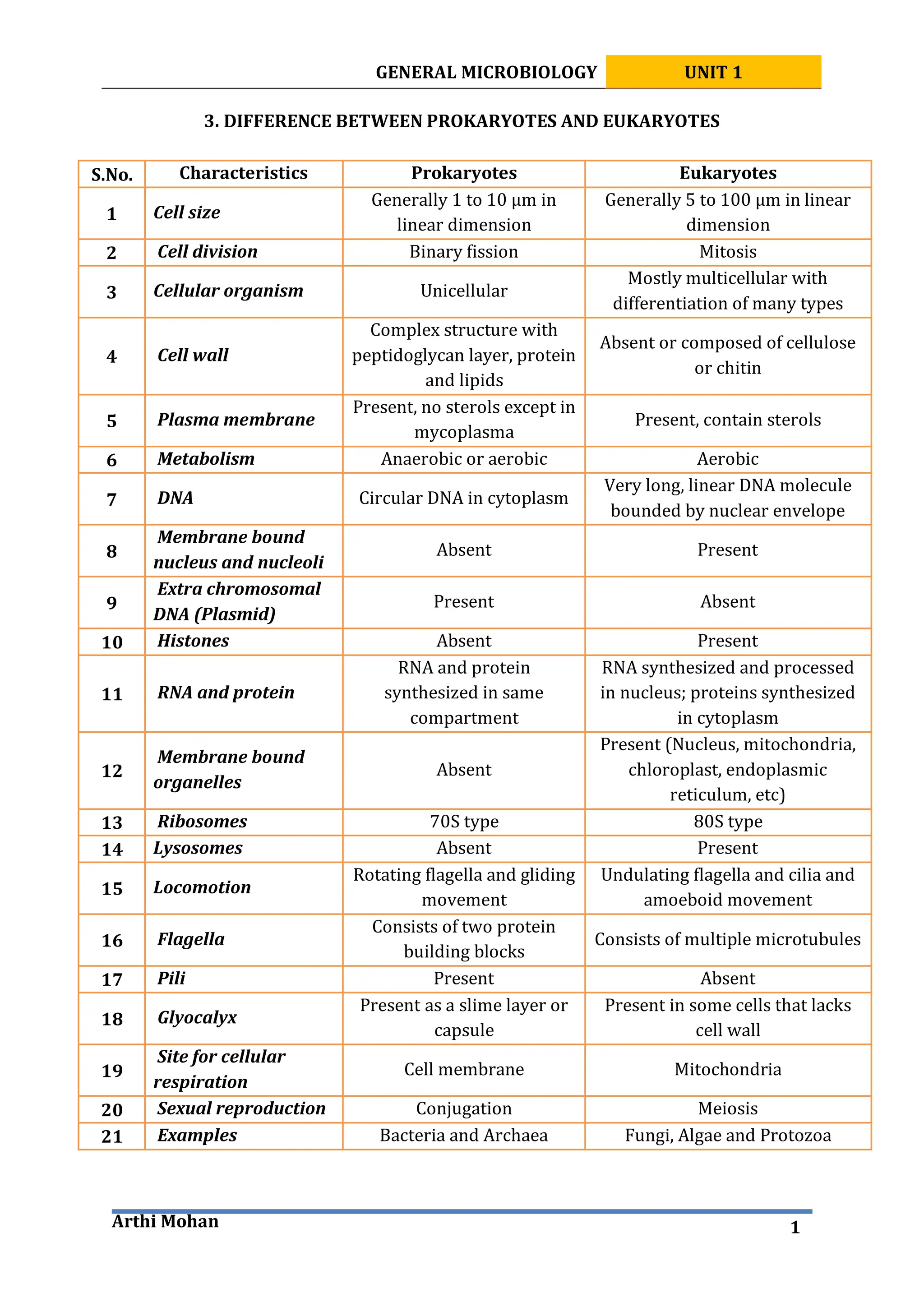
- 1. GENERAL MICROBIOLOGY UNIT1 Arthi Mohan 1 3. DIFFERENCE BETWEEN PROKARYOTES AND EUKARYOTES S.No. Characteristics Prokaryotes Eukaryotes 1 Cell size Generally 1 to 10 μm in linear dimension Generally 5 to 100 μm in linear dimension 2 Cell division Binary fission Mitosis 3 Cellular organism Unicellular Mostly multicellular with differentiation of many types 4 Cell wall Complex structure with peptidoglycan layer, protein and lipids Absent or composed of cellulose or chitin 5 Plasma membrane Present, no sterols except in mycoplasma Present, contain sterols 6 Metabolism Anaerobic or aerobic Aerobic 7 DNA Circular DNA in cytoplasm Very long, linear DNA molecule bounded by nuclear envelope 8 Membrane bound nucleus and nucleoli Absent Present 9 Extra chromosomal DNA (Plasmid) Present Absent 10 Histones Absent Present 11 RNA and protein RNA and protein synthesized in same compartment RNA synthesized and processed in nucleus; proteins synthesized in cytoplasm 12 Membrane bound organelles Absent Present (Nucleus, mitochondria, chloroplast, endoplasmic reticulum, etc) 13 Ribosomes 70S type 80S type 14 Lysosomes Absent Present 15 Locomotion Rotating flagella and gliding movement Undulating flagella and cilia and amoeboid movement 16 Flagella Consists of two protein building blocks Consists of multiple microtubules 17 Pili Present Absent 18 Glyocalyx Present as a slime layer or capsule Present in some cells that lacks cell wall 19 Site for cellular respiration Cell membrane Mitochondria 20 Sexual reproduction Conjugation Meiosis 21 Examples Bacteria and Archaea Fungi, Algae and Protozoa