DOCTOR OF PHARMACY
II YEAR
Coronary heart disease
170101
CHAPTER-1
Cardiovascular system
Dr. V. Chanukya (Pharm D)
Background
• Coronary heart disease (CHD), sometimes described as coronary
artery disease (CAD) or ischaemic heart disease (IHD), is a condition
in which the vascular supply to the heart is impeded by atheroma,
thrombosis or spasm of coronary arteries.
• This may impair the supply of oxygenated blood to cardiac tissue
sufficiently to cause myocardial ischaemia which, if severe or
prolonged, may cause the death of cardiac muscle cells.
• Myocardial ischaemia occurs when the oxygen demand exceeds
myocardial oxygen supply.
• The resultant ischaemic myocardium releases adenosine, the main
mediator of chest pain, by stimulating the A1 receptors located on the
cardiac nerve endings.
• Myocardial ischaemia may be ‘silent’ if the duration is of insufficient
length, the afferent cardiac nerves are damaged (as with diabetics) or
there is inhibition of the pain at the spinal or supraspinal level
• Factors increasing myocardial oxygen demand often precipitate
ischaemic episodes and are commonly associated with increased work
rate (heart rate) and increased work ldoad (force of contractility).
• Less commonly, myocardial ischaemia can also arise if oxygen
demand is abnormally increased, as may occur in patients with
thyrotoxicosis or severe ventricular hypertrophy due to hypertension.
• Myocardial oxygen supply is dependant on the luminal cross-sectional
area of the coronary artery and coronary arteriolar tone.
• Atheromatous plaques decrease the lumen diameter and, when
extensive, reduce the ability of the coronary artery to dilate in
response to increased myocardial oxygen demand.
• Ischaemia may also occur when the oxygen- carrying capacity of
blood is impaired, as in irondeficiency anaemia, or when the
circulatory volume is depleted.
• IHD may present as an acute coronary syndrome (acute coronary
syndrome includes unstable angina, non–ST-segment elevation
myocardial infarction or ST-segment elevation myocardial
infarction, chronic stable exertional angina pectoris, and ischemia
without clinical symptoms.
• Coronary artery vasospasm (variant or Prinzmetal angina)
produces similar symptoms but is not caused by atherosclerosis.
Epidemiology
• Almost 200,000 people die from cardiovascular disease (CVD) in the
UK each year with CHD accounting for almost a half of these.
• About 30% of premature deaths (below 75 years old) in men and 22%
of premature deaths in women result from CVD.
• Absence of established risk factors does not guarantee freedom from
CHD for any individual, and some individuals with several major risk
factors seem perversely healthy.
• Nonetheless, there is evidence that in developed countries, education
and publicity about the major risk factors have led to changes in social
habits, particularly with respect to a reduction in smoking and fat
consumption, and this has contributed to a decrease in the incidence of
CHD.
• The improvement in deaths from CHD has been chiefly among those
with higher incomes; however, the less prosperous social classes
continue to have almost unchanged levels of CHD.
• In most developed countries, CHD is the leading cause of adult death.
• In the UK, in comparison with Caucasians, people of South Asian
descent have a 45–50% higher death rate from CHD, and Caribbeans
and West Africans have a 35–50% lower rate.
• About 3.5% of UK adults have symptomatic CHD. One-third of men
aged 50–59 years of age have evidence of CHD, and this proportion
increases with age.
• In the UK, there are about 1.3 million people who have survived a
myocardial infarction and about 2 million who have, or have had,
angina and this equates to about 5% of men and 3% of women.
• Approximately 260,000 people suffer a myocardial infarction in any
year, of whom 40–50% die.
• Mortality increases with age and is probably not due to a particular
age-related factor but to the cumulative effect of risk factors that lead
to atheroma and thrombosis and hence to CAD.
• In the USA, age-related death rates for CHD have fallen by 25% over
a decade, but the total number of CHD deaths has fallen by only 10%
because the population is ageing.
• Similarly, in the UK the death rates are falling but the numbers living
with CHD are increasing.
• Women appear less susceptible to CHD than men, although they seem
to lose this protection after menopause, presumably because of
hormonal changes.
• Race has not proved to be a clear risk factor since the prevalence of
CHD seems to depend much more strongly on location and lifestyle
than on ethnic origin or place of birth. It has been shown that lower
social or economic class is associated with increased obesity, poor
cholesterol indicators, higher blood pressure and higher C-reactive
protein (CRP) measurements, an indicator of inflammatory activity.
Risk factors
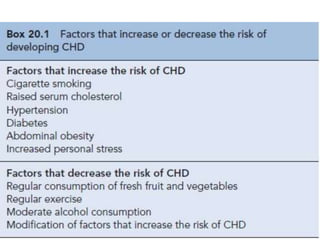
• Traditionally, the main potentially modifiable risk factors for CHD
have been considered to be hypertension, cigarette smoking, raised
serum cholesterol and diabetes.
• More recently psychological stress and abdominal obesity have gained
increased prominence.
• Patients with a combination of all these risk factors are at risk of
suffering a myocardial infarction some 500 times greater than
individuals without any of the risk factors.
• Epidemiological studies have shown associations between CHD and
prior infections with several common micro- organisms, including
Chlamydia pneumoniae and Helicobacter pylori, but a causal
connection has not been shown.
• The influence of fetal and infant growth conditions, and their
interaction with social conditions in childhood and adult life, has been
debated strongly for decades but it is clear that lower socio-economic
status and thinness in very early life are linked to higher incidences of
CHD.
Main coronary arteries
Aetiopathogenesis
• The vast majority of CHD occurs in patients with atherosclerosis of
the coronary arteries that starts before adulthood.
• The cause of spontaneous artherosclerosis is unclear, although it is
thought that in the presence of hypercholesterolaemia, a non-denuding
form of injury occurs to the endothelial lining of coronary arteries and
other vessels.
• Almost all adults, and 50% of children aged 11–14 years, have fatty
streaks in their coronary arteries.
Process of coronary atherosclerosis
• Coronary atherosclerosis is a complex inflammatory process
characterized by the accumulation of lipid, macrophages and smooth
muscle cells in intimal plaques in the large and medium-sized
epicardial coronary arteries.
• The vascular endothelium plays a critical role in maintaining vascular
integrity and homeostasis.
• Mechanical shear stresses (e.g. from morbid hypertension),
biochemical abnormalities (e.g. elevated and modified LDL, diabetes
mellitus, elevated plasma homocysteine), immunological factors (e.g.
free radicals from smoking), inflammation (e.g. infection such as
Chlamydia pneumoniae and Helicobactor pylori) and genetic
alteration may contribute to the initial endothelial ‘injury’ or
dysfunction, which is believed to trigger atherogenesis.
Pathophysiology -Atherosclerosis
• The development of atherosclerosis follows the endothelial
dysfunction, with increased permeability to and accumulation of
oxidized lipoproteins, which are taken up by macrophages at focal
sites within the endothelium to produce lipid-laden foam cells.
• Macroscopically, these lesions are seen as flat yellow dots or lines on
the endothelium of the artery and are known as ‘fatty streaks’.
• The ‘fatty streak’ progresses with the appearance of extracellular lipid
within the endothelium (‘transitional plaque’).
• Release of cytokines such as platelet-derived growth factor and
transforming growth factor-β (TGF-β) by monocytes, macrophages or
the damaged endothelium promotes further accumulation of
macrophages as well as smooth muscle cell migration and
proliferation.
• The proliferation of smooth muscle with the formation of a layer of
cells covering the extracellular lipid separates it from the adaptive
smooth muscle thickening in the endothelium.
• Collagen is produced in larger and larger quantities by the smooth
muscle and the whole sequence of events cumulates as an ‘advanced
or raised fibrolipid plaque’.
• The ‘advanced plaque’ may grow slowly and encroach on the lumen
or become unstable, undergo thrombosis and produce an obstruction
(‘complicated plaque’).
• Two different mechanisms are responsible for thrombosis on the
plaques.
• The first process is superficial endothelial injury, which involves
denudation of the endothelial covering over the plaque.
• Subendocardial connective tissue matrix is then exposed and platelet
adhesion occurs because of reaction with collagen.
• The thrombus is adherent to the surface of the plaque.
• The second process is deep endothelial fissuring, which involves an
advanced plaque with a lipid core.
• The plaque cap tears (ulcerates, fissures or ruptures), allowing blood
from the lumen to enter the inside of the plaque itself.
• The core with lamellar lipid surfaces, tissue factor (which triggers
platelet adhesion and activation) produced by macrophages and
exposed collagen, is highly thrombogenic.
• Thrombus forms within the plaque, expanding its volume and
distorting its shape.
• Thrombosis may then extend into the lumen.
Two different mechanisms are responsible for thrombosis
on the plaques
• A 50% reduction in luminal diameter (producing a reduction in
luminal cross-sectional area of approximately 70%) causes a
haemodynamically significant stenosis.
• At this point the smaller distal intramyocardial arteries and arterioles
are maximally dilated (coronary flow reserve is near zero), and any
increase in myocardial oxygen demand provokes ischaemia.
• CAD gives rise to a wide variety of clinical presentations, ranging
from relatively stable angina through to the acute coronary syndromes
of unstable angina and myocardial infarction.
• The smooth muscle cells, together with fibroblasts, synthesise and
secrete collagen, proteoglycans, elastin and glycoproteins that make
up a fibrous cap surrounding cells and necrotic tissue, together called
a plaque.
• The presence of atherosclerotic plaques results in narrowing of vessels
and a reduction in blood flow and a decrease in the ability of the
coronary vasculature to dilate and this may become manifest as
angina.
• Associated with the plaque rupture is a loss of endothelium.
• This can serve as a stimulus for the formation of a thrombus and result
in more acute manifestations of CHD, including unstable angina (UA)
and myocardial infarction.
• Plaque rupture caused by physical stresses or plaque erosion may
precipitate an acute reaction.
• Other pathological processes are probably involved, including
endothelial dysfunction which alters the fibrin–fibrinolysis
balance and the vasoconstriction–vasodilation balance.
• There is interest in the role of statins and angiotensin-converting
enzyme (ACE) inhibitors in modifying endothelial function.
• There is also great interest in the role of inflammation, especially in
acute episodes.
• At postmortem, many plaques are found to contain inflammatory
cells and inflammatory damage is found at the sites of plaque
rupture.
• Measurement of acute phase inflammatory reactions, such as
fibrinogen and CRP, has a predictive association with coronary
events.
• High-sensitivity CRP assays have been used in populations without
acute illness to stratify individuals into high-, medium- and low-risk
groups.
• In patients with other risk factors, however, CRP adds little prognostic
information.
• CRP is produced by atheroma, in addition to the major producer
which is the liver, and is an inflammatory agent as well as a marker of
inflammation.
• Evidence is emerging that drug therapy which reduces CRP in
otherwise healthy individuals reduces the incidence of major cardiac
events.
• Oxidative stress which involves the uncontrolled production of ROS
or a reduction in antioxidant species has been linked in the laboratory
to several aspects of cardiovascular pathogenesis including endothelial
malfunction, lipid metabolism, atheroma formation and plaque
rupture, but the clinical importance is unclear.
• The use of antioxidants has been disappointingly unsuccessful but
there is interest in peroxisome proliferator-activated receptor
(PPAR) agonists that modify ROS production; some of these are
already in use for treating diabetes and are associated with favourable
changes in many metabolic markers for CVD.
• Other agents that reduce ROS production include statins and drugs
that reduce angiotensin production.
• A number of factors are directly responsible for the development and
progression of endothelial dysfunction and atherosclerosis, including
hypertension, age, male gender, tobacco use, diabetes mellitus,
obesity, and dyslipidemias.
MARCH -2019 170101 /Chapter-3 /S29
EDUCATION FOR PEACE & PROGRESS
COPY RIGHTS RESERVED
Santhiram College of Pharmacy, Nandyal
Ischemic heart disease
Angina
• Ischemic heart disease (IHD) is defined as a lack of oxygen and
decreased or no blood flow to the myocardium resulting from
coronary artery narrowing or obstruction.
• IHD may present as an acute coronary syndrome (ACS, which
includes unstable angina and non–ST-segment elevation or ST-
segment elevation myocardial infarction [MI]), chronic stable
exertional angina, ischemia without symptoms, or ischemia due to
coronary artery vasospasm (variant or Prinzmetal angina).
• The primary clinical manifestation of CHD is chest pain.
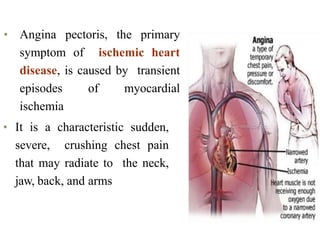
• Angina pectoris, the primary
symptom of ischemic heart
disease, is caused by transient
episodes of myocardial
ischemia
• It is a characteristic sudden,
severe, crushing chest pain
that may radiate to the neck,
jaw, back, and arms
Pathophysiology ofangina
•Ischemia results due to an imbalance in the myocardial oxygen
supply– demand relationship.
• This imbalance may be caused by an increase in myocardial oxygen
demand (which is determined by heart rate,ventricular contractility, and
ventricular wall tension) or by a decrease in myocardial oxygen supply
(primarily determined by coronary blood flow, but occasionally
modified by the oxygen-carrying capacity of the blood) or sometimes
by both.
Types ofangina
• Stable angina, effort-induced angina, classic or typical
angina
• Unstable angina
• Prinzmetal, variant, vasospastic, or rest angina
1. Stable angina, effort-induced angina, classic or typical angina
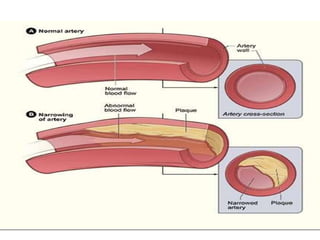
• Classic angina reduction of coronary perfusion due to a
fixed obstruction of a coronary artery produced by atherosclerosis.
• Fixed obstruction the blood supply cannot increase, and the
heart becomes vulnerable to ischemia whenever there is increased
demand, such as that produced by physical activity, emotional stress or
excitement, or any other cause of increased cardiac workload
• Stable angina is a clinical syndrome characterised by discomfort in the
chest, jaw, shoulder, back, or arms, typically elicited by exertion or
emotional stress and relieved by rest or nitroglycerin
• When the pattern of chest pain and effort needed to trigger the chest
pains do not vary over time, the angina is named “stable angina.”
• Chest pain arising from stable coronary atheromatous disease leads to
stable angina and normally arises when narrowing of the coronary
artery lumen exceeds 50% of the original luminal diameter.
• Stable angina is characterized by chest pain and breathlessness on
exertion; symptoms are relieved promptly by rest.
• A stable coronary atheromatous plaque may become unstable as a
result of either plaque erosion or rupture.
• Characteristically, the discomfort (it is often not described by the
patient as a pain) occurs after a predictable level of exertion,
classically when climbing hills or stairs, and resolves within a few
minutes on resting.
• Unfortunately, the clinical manifestations of angina are very variable.
• Many patients mistake the discomfort for indigestion
• Some patients, particularly diabetics and the elderly, may not
experience pain at all but present with breathlessness or fatigue; this is
termed silent ischaemia.
• Many episodes of ischemia do not cause symptoms of angina (silent
ischemia).
2. Unstable angina
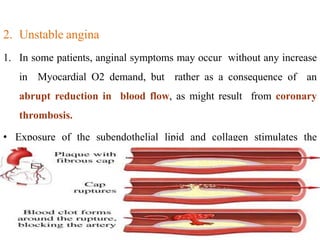
1. In some patients, anginal symptoms may occur without any increase
in Myocardial O2 demand, but rather as a consequence of an
abrupt reduction in blood flow, as might result from coronary
thrombosis.
• Exposure of the subendothelial lipid and collagen stimulates the
formation of thrombus which causes sudden narrowing of the vessel.
• Any episode of rest angina longer than 20 minutes, any new-onset
angina, any increasing angina, or even sudden development of shortness
of breath are suggestive of unstable angina
• The symptoms are not relieved by rest or nitroglycerin.
• Unstable angina is a form of acute coronary syndrome and requires
hospital admission and more aggressive therapy to prevent progression to
MI and death
• Unstable angina is stratified into categories of low, intermediate, or
high risk for short-term death or nonfatal MI.
Features of high-risk unstable angina include (but are not limited to):
1) Accelerating tempo of ischemic symptoms in the preceding 48 hours;
2) Pain at rest lasting more than 20 minutes;
3) Age greater than 75 years;
4) St-segment changes;
5) Clinical findings of pulmonary edema, mitral regurgitation, S3, rales,
hypotension, bradycardia, or tachycardia
3. Prinzmetal, variant, vasospastic, or rest angina
• Prinzmetal, in his original description of variant angina pectoris, noted
the waxing and waning course of this syndrome associated with ST-
segment elevation and that it most commonly resolves without
progression to MI.
• Patients who develop variant angina are usually younger, have fewer
coronary risk factors but more commonly smoke than patients with
chronic stable angina.
• Hyperventilation, exercise, and exposure to cold may precipitate
variant angina attacks, or there may be no apparent precipitating
cause.
• The onset of chest discomfort is usually in the early morning hours.
• The exact cause of variant angina is not well understood but may be
an imbalance between endothelium-produced vasodilator factors
(prostacyclin, nitric oxide) and vasoconstrictor factors (e.g.,
endothelin, angiotensin II) as well as an imbalance of autonomic
control characterized by parasympathetic dominance or inflammation
may also play a role.
• More recently there have been a number potential common
adrenoreceptor polymorphisms that may predispose patients to
developing vasospasm.
• The diagnosis of variant angina is based on ST-segment elevation
during transient chest discomfort (usually at rest) that resolves when
the chest discomfort diminishes in patients who have normal or
nonobstructive coronary lesions.
• In the absence of ST-segment elevation, provocative test using
ergonovine, acetylcholine, or methacholine may be used to precipitate
coronary artery spasm, St segment elevation and typical symptoms.
• Nitrates and calcium antagonists should be withdrawn prior to
provocative testing.
• Provocative testing should not be used in patients with high-grade
lesions.
• Hyperventilation may also be used to provoke spasm and patients who
positive a hyperventilation test are more likely to have higher
frequency of attacks, multivessel disease, and a high degree of AV
block or ventricular tachycardia.
• Optimization of therapy includes dose titration using sufficiently high
doses to obtain clinical efficacy without unacceptable adverse effects
in individual patients.
• All patients should be treated for acute attacks and maintained on
prophylactic treatment for 6 to 12 months following the initial
episode.
Diagnosis
• Important aspects of the clinical history include the nature or
quality of the chest pain, precipitating factors, duration, pain
radiation, and the response to nitroglycerin or rest.
• There appears to be little relationship between the historical features
of angina and the severity or extent of coronary artery vessel
involvement.
• Ischemic chest pain may resemble pain arising from a variety of non
cardiac sources, and the differential diagnosis of anginal pain from
other etiologies may be difficult based on history alone.
• The patient should be asked about existing personal risk factors for
coronary heart disease (CHD) including smoking, hypertension, and
diabetes mellitus.
• A detailed family history should be obtained that includes
information about premature CHD, hypertension, familial lipid
disorders, and diabetes mellitus.
• There are few signs on physical examination to indicate the
presence of coronary artery disease (CAD).
• Findings on the cardiac examination may include abnormal
precordial systolic bulge, decreased intensity of S1, paradoxical
splitting of S2, S3, S4, apical systolic murmur, and diastolic
murmur.
• Elevated HR or blood pressure can yield an increased DP and may be
associated with angina.
• Non cardiac physical findings suggesting significant cardiovascular
disease include abdominal aortic aneurysms or peripheral vascular
disease.
• Recommended laboratory tests include hemoglobin (to ensure
adequate oxygen-carrying capacity), fasting glucose (to exclude
diabetes), and fasting lipoprotein panel.
• Important risk factors in some patients may include C-reactive
protein; homocysteine level; evidence of Chlamydia infection; and
elevations in lipoprotein (a), fibrinogen, and plasminogen
activator inhibitor.
• Cardiac enzymes should all be normal in stable angina.
• Troponin T or I, myoglobin, and creatinine kinase MB may be
elevated in unstable angina.
• The resting ECG is normal in about one-half of patients with angina
who are not experiencing an acute attack.
• Typical ST-T-wave changes include depression, T-wave inversion, and
ST-segment elevation.
• Variant angina is associated with ST-segment elevation, whereas
silent ischemia may produce elevation or depression.
• Significant ischemia is associated with ST segment depression of
greater than 2 mm, exertional hypotension, and reduced exercise
tolerance.
• Exercise tolerance (stress) testing (ETT) is recommended for patients
with an intermediate probability of CAD.
• Results correlate well with the likelihood of progressing to angina,
occurrence of acute MI, and cardiovascular death.
• Ischemic ST-segment depression during ETT is an independent risk
factor for cardiovascular events and mortality.
• Thallium myocardial perfusion scintigraphy may be used in
conjunction with ETT to detect reversible and irreversible defects in
blood flow to the myocardium.
• Radionuclide angiocardiography is used to measure ejection fraction
(EF), regional ventricular performance, cardiac output, ventricular
volumes, valvular regurgitation, asynchrony or wall motion
abnormalities, and intracardiac shunts.
• Ultrarapid computed tomography may minimize artifact from heart
motion during contraction and relaxation and provides a
semiquantitative assessment of calcium content in coronary arteries.
• Echocardiography is useful if the history or physical findings suggest
valvular pericardial disease or ventricular dysfunction.
• In patients unable to exercise, pharmacologic stress echocardiography
(e.g., dobutamine, dipyridamole, or adenosine) may identify
abnormalities that would occur during stress.
• Cardiac catheterization and coronary angiography are used in patients
with suspected CAD to document the presence and severity of disease
as well as for prognostic purposes.
• Interventional catheterization is used for thrombolytic therapy in
patients with acute MI and for managing patients with significant
CAD to relieve obstruction through percutaneous transluminal
coronary angioplasty, atherectomy, laser treatment, or stent placement.
• A chest radiograph should be done if the patient has heart failure
symptoms.
Treatment
• Risk-factor modification
• Primary prevention through the modification of risk factors should
significantly reduce the prevalence of IHD. Secondary intervention is
effective in reducing subsequent morbidity and mortality.
• Risk factors for IHD are additive and can be classified as alterable or
unalterable.
• Unalterable risk factors include gender, age, family history or genetic
composition, environmental influences, and, to some extent, diabetes
mellitus.
• Alterable risk factors include smoking, hypertension, hyperlipidemia,
obesity, sedentary lifestyle, hyperuricemia, psychosocial factors such
as stress and type A behavior patterns, and the use of drugs that may
be detrimental (e.g., progestins, corticosteroids, and cyclosporine).
• Although thiazide diuretics and β-blockers (nonselective without
intrinsic sympathomimetic activity) may elevate both cholesterol and
triglycerides by 10% to 20%, and these effects may be detrimental, no
objective evidence exists from prospective well-controlled studies to
support avoiding these drugs.
Pharmacologic therapy
Antithrombotic drugs
• One of the major complications arising from atheromatous plaque
is thrombus formation.
• This causes an increase in plaque size and may result in myocardial
infarction.
• Antiplatelet agents, in particular aspirin, are effective in preventing
platelet activation and thus thrombus formation.
• Aspirin is of proven benefit in all forms of established CHD, although
the risk– benefit ratio in people at risk of CHD is less clear.
Antiplatelets mechanism
• Mechanism and site of action of antiplatelet agents. COX-1: cyclooxygenase-1;
GP: glycoprotein; PAR-1: protease-activated receptor 1; TP: thromboxane
prostanoid; TxA 2 : thromboxane A 2. VWF: von Willebrand factor
Aspirin
• Aspirin acts via irreversible inhibition of platelet COX-1 and thus
thromboxane production, which is normally complete with chronic
dosing of 75 mg/day.
• This antiplatelet action is apparent within an hour of taking a dose of
300 mg.
• The effect on platelets lasts for the lifetime of the platelet.
• The optimal maintenance dose seems to be 75–150 mg day with lower
doses having limited cardiac risk protection and higher doses
increasing the risk of gastro-intestinal side effects.
• Dyspepsia is relatively common in patients taking aspirin and patients
should be advised to take the medicine with or immediately after food.
• Enteric-coated preparations are no safer, and patients with ongoing
symptoms of dyspepsia may require concomitant acid suppression
with a proton pump inhibitor or switching to clopidogrel.
• Adverse reactions to aspirin include allergy, including bronchospasm.
• The benefits and risk of using aspirin in patients with asthma or a
previous history of gastro-intestinal bleeding need to be carefully
considered.
Clopidogrel
• Clopidogrel inhibits ADP activation of platelets and is useful as an
alternative to aspirin in patients who are allergic or cannot tolerate
aspirin.
• The usual dose is 300 mg once, then 75 mg daily.
• Although less likely to cause gastric erosion and ulceration,
gastrointestinal bleeding is still a major complication of clopidogrel
therapy.
• There is evidence that the combination of a proton pump inhibitor and
aspirin is as effective as using clopidogrel alone in patients with a
history of upper gastrointestinal bleeding.
COX-2 inhibitors
• The analgesic and anti-inflammatory action of non-steroidal anti-
inflammatory drugs (NSAIDs) is believed to depend mainly on their
inhibition of COX-2, and the unwanted gastro-intestinal effects of
NSAIDs on their inhibition of COX-1.
• COX-2 inhibition reduces the production of prostacyclin, which has
vasodilatory and platelet- inhibiting effects.
• Studies have raised concern about the cardiovascular safety of
NSAIDs.
• In NSAIDs with high COX-2 specificity increase the risk of
myocardial infarction and should be avoided where possible in
patients with stable angina.
ACE inhibitors
• ACE inhibitors are established treatments for hypertension and heart
failure, and have proven beneficial post myocardial infarction.
• In addition to the vasodilation caused by inhibiting the production
of angiotensin II, ACE inhibitors have anti-inflammatory,
antithrombotic and antiproliferative properties.
• Some of these effects are mediated by actions on vascular
endothelium and might be expected to be of benefit in all patients with
CAD.
• ACE inhibitors also reduce the production of ROS.
• Statins
• Studies have repeatedly demonstrated the benefit of reducing
cholesterol, especially low-density lipoprotein-cholesterol (LDL-
C), in patients with CHD.
• Earlier studies focused on patients with ‘elevated’ cholesterol, but all
patients with coronary risk factors benefit from reduction of their
serum cholesterol level.
• It is now clear that there is no ‘safe’ level of cholesterol for patients
with CAD and that there is a continuum of risk down to very low
cholesterol levels.
• Levels of LDL-C of <2 mmol/L and total cholesterol <4 mmol/L are
recommended for patients with established CVD (NICE, 2008).
• Statins should be prescribed alongside lifestyle advice for both
primary prevention of CVD and in those with established CVD (see
Chapter 24 for more detail).
• In addition to cholesterol-lowering properties, statins also have
antithrombotic, anti-inflammatory and antiproliferative
properties.
• They are also important in restoring normal endothelial function
and inhibit the production of ROS in the vessel wall.
• There is some evidence that patients with elevated levels of CRP
have better outcomes with statin therapy even if cholesterol levels
are not raised.
• Most patients with stable angina will be on statins for their
cholesterol-lowering effects.
• It is important, however, to recognise that these drugs may have
beneficial effects independent of cholesterol lowering and this makes
them valuable even in patients with ‘normal’ cholesterol levels.
Medication for Symptom relief and prevention
β-Adrenergic Blocking Agents
• Decreased HR, contractility, and blood pressure reduce MVO2
and oxygen demand in patients with effort-induced angina.
• β-Blockers do not improve oxygen supply and, in certain
instances, unopposed α-adrenergic stimulation may lead to
coronary vasoconstriction.
• β-Blockers improve symptoms in about 80% of patients with chronic
exertional stable angina, and objective measures of efficacy
demonstrate improved exercise duration and delay in the time at
which ST-segment changes and initial or limiting symptoms occur.
• β-Blockade may allow angina patients previously limited by
symptoms to perform more exercise and ultimately improve overall
cardiovascular performance through a training effect.
• Ideal candidates for β-blockers include patients in whom physical
activity is a prominent cause of attacks; those with coexisting
hypertension, supraventricular arrhythmias, or postmyocardial
infarction angina; and those with anxiety associated with anginal
episodes.
• β-Blockers may be used safely in angina and heart failure.
• β-Blockade is effective in chronic exertional angina as monotherapy
and in combination with nitrates and/or calcium channel antagonists.
• β-Blockers are the first-line drugs in chronic angina requiring daily
maintenance therapy because they are more effective in reducing
episodes of silent ischemia and early morning peak of ischemic
activity and improving mortality after Q-wave MI than nitrates or
calcium channel antagonists.
• If β-blockers are ineffective or not tolerated, then monotherapy with a
calcium channel antagonist or combination therapy may be instituted.
• Reflex tachycardia from nitrates can be blunted with β-blocker
therapy, making this a useful combination.
• Patients with severe angina, rest angina, or variant angina may be
better treated with calcium channel antagonists or long-acting nitrates.
• Initial doses of β-blockers should be at the lower end of the usual
dosing range and titrated to response.
• Treatment objectives include lowering the resting HR to 50 to 60
beats/min and limiting maximal exercise HR to about 100 beats/min
or less.
• HR with modest exercise should be no more than about 20 beats/min
above resting HR (or a 10% increment over resting HR).
• There is little evidence to suggest superiority of any particular β-
blocker.
• Those with longer half-lives may be administered less frequently, but
even propranolol may be given twice a day in most patients.
• Membrane stabilizing activity is irrelevant in the treatment of angina.
• Intrinsic sympathomimetic activity appears to be detrimental in
patients with rest or severe angina because the reduction in HR would
be minimized, therefore limiting a reduction in MVO2.
• Cardioselective β-blockers may be used in some patients to minimize
adverse effects such as bronchospasm, intermittent claudication, and
sexual dysfunction.
• Combined nonselective β- and α-blockade with labetalol may be
useful in some patients with marginal left ventricular (LV) reserve.
• Adverse effects of β-blockade include hypotension, heart failure,
bradycardia, heart block, bronchospasm, altered glucose metabolism,
fatigue, malaise, and depression.
• Abrupt withdrawal in patients with angina has been associated with
increased severity and number of pain episodes and MI.
• Tapering of therapy over about 2 days should minimize the risk of
withdrawal reactions if therapy is to be discontinued.
Nitrates
• The action of nitrates appears to be mediated indirectly through
reduction of MVO2 secondary to venodilation and arterial-arteriolar
dilation, leading to a reduction in wall stress from reduced ventricular
volume and pressure.
• Direct actions on the coronary circulation include dilation of large and
small intramural coronary arteries, collateral dilation, coronary artery
stenosis dilation, abolition of normal tone in narrowed vessels, and
relief of spasm.
• Pharmacokinetic characteristics common to nitrates include a large
first pass effect of hepatic metabolism, short to very short half-lives
(except for isosorbide mononitrate [ISMN]), large volumes of
distribution, high clearance rates, and large interindividual variations
in plasma or blood concentrations.
• The half-life of nitroglycerin is 1 to 5 minutes regardless of the route,
hence the potential advantage of sustained-release and transdermal
products.
• Isosorbide dinitrate (ISDN) is metabolized to ISMN.
• ISMN has a half-life of about 5 hours and may be given once or twice
daily, depending on the product chosen.
• Nitrate therapy may be used to terminate an acute anginal attack, to
prevent effort- or stress-induced attacks, or for long-term prophylaxis,
usually in combination with β-blockers or calcium channel
antagonists.
• Sublingual, buccal, or spray nitroglycerin products are preferred for
alleviation of anginal attacks because of rapid absorption.
• Symptoms may be prevented by prophylactic oral or transdermal
products (usually in combination with β-blockers or calcium channel
antagonists), but development of tolerance may be problematic.
• Sublingual nitroglycerin , 0.3 to 0.4 mg, relieves pain in about 75%
of patients within 3 minutes, with another 15% becoming pain-free in
5 to 15 minutes.
• Pain persisting beyond 20 to 30 minutes after use of two to three
nitroglycerin tablets suggests ACS, and the patient should be
instructed to seek emergency aid.
• Chewable, oral, and transdermal products are acceptable for long
term prophylaxis of angina.
• Dosing of long-acting preparations should be adjusted to provide a
hemodynamic response.
• This may require doses of oral ISDN ranging from 10 to 60 mg as
often as every 3 to 4 hours due to tolerance or first-pass metabolism.
• Intermittent (10 to 12 hours on, 12 to 14 hours off) transdermal
nitroglycerin therapy may produce modest but significant
improvement in exercise time in chronic stable angina.
• Adverse effects include postural hypotension with associated CNS
symptoms, reflex tachycardia, headaches and flushing, and occasional
nausea.
• Excessive hypotension may result in MI or stroke.
• Noncardiovascular adverse effects include rash (especially with
transdermal nitroglycerin) and methemoglobinemia with high doses
given for extended periods.
• Nitrates may be combined with other drugs with complementary
mechanisms of action for chronic prophylactic therapy.
• Combination therapy is generally used in patients with more frequent
symptoms or symptoms that do not respond to β -blockers alone
(nitrates plus β-blockers or calcium channel antagonists), in patients
intolerant of β-blockers or calcium channel antagonists, and in
patients having an element of vasospasm leading to decreased supply
(nitrates plus calcium channel antagonists).
Calcium Channel Antagonists
• Direct actions include vasodilation of systemic arterioles and coronary
arteries, leading to a reduction of arterial pressure and coronary
vascular resistance as well as depression of myocardial contractility
and the conduction velocity of the sinoatrial and atrioventricular (AV)
nodes.
• Reflex β-adrenergic stimulation overcomes much of the negative
inotropic effect, and depression of contractility becomes clinically
apparent only in the presence of LV dysfunction and when other
negative inotropic drugs are used concurrently.
• Verapamil and diltiazem cause less peripheral vasodilation than
dihydropyridines such as nifedipine but greater decreases in AV
node conduction.
• MVO2 is reduced with all calcium channel antagonists primarily
because of reduced wall tension secondary to reduced arterial
pressure.
• Overall, the benefit provided by calcium channel antagonists is related
to reduced MVO2 rather than improved oxygen supply.
• Good candidates for calcium channel antagonists include patients
with contraindications or intolerance to β-blockers, coexisting
conduction system disease (excluding the use of verapamil and
possibly diltiazem),
• In contrast to the β-blockers, calcium channel antagonists have the
potential to improve coronary blood flow through areas of fixed
coronary obstruction by inhibiting coronary artery vasomotion and
vasospasm.
• Prinzmetal angina, peripheral vascular disease, severe ventricular
dysfunction, and concurrent hypertension.
• Amlodipine is probably the agent of choice in severe ventricular
dysfunction, and the other dihydropyridines should be used with
caution if the EF is less than 40%.
Nicorandil
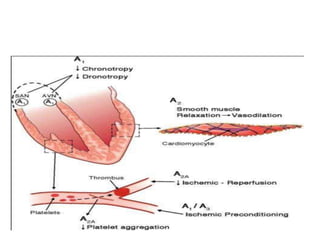
• Nicorandil is a compound that exhibits the properties of a nitrate but
which also activates ATP-dependent potassium channels.
• The IONA Study Group (2002) compared nicorandil with placebo as
‘add-on’ treatment in 5126 high-risk patients with stable angina.
• The main benefit for patients in the nicorandil group was a reduction
in unplaned admission to hospital with chest pain.
• The study did not tell us when to add nicorandil to combinations of
antianginals such as β-blockers, CCBs and long-acting nitrates
Nicorandil mechanism of action
• There is a theoretical benefit from these agents in their action to
promote ischaemic preconditioning.
• This phenomenon is seen when myocardial tissue is exposed to a
period of ischaemia prior to sustained coronary artery occlusion.
• Prior exposure to ischaemia renders the myocardial tissue more
resistant to permanent damage.
• This mechanism is mimicked by the action of nicorandil.
Ranolazine
• The mechanism of action of ranolazine has not been determined, but it
may be related to reduction in calcium overload in ischemic myocytes
through inhibition of the late sodium current.
• Its antianginal effects do not depend on reductions in HR or blood
pressure.
• Ranolazine is indicated for the treatment of chronic angina.
• Based on controlled trials, the improvement in exercise time is a
modest increase of 15 to about 45 seconds compared with placebo.
• In a large ACS trial, ranolazine reduced recurrent ischemia but did not
improve the primary efficacy composite end point of cardiovascular
death, MI, or recurrent ischemia.
• Because it prolongs the QT interval, ranolazine should be reserved for
patients who have not achieved an adequate response to other
antianginal drugs.
• It should be used in combination with amlodipine, β-blockers, or
nitrates. The most common adverse effects are dizziness, headache,
constipation, and nausea.
• Ranolazine should be started at 500 mg twice daily and increased to
• 1,000 mg twice daily if needed based on symptoms.
Ivabradine
• Ivabridine represents a class of antianginal agents which block the If
current.
• If is a mixed Na+–K+ inward current activated by hyperpolarisation
and modulated by the autonomic nervous system.
• This regulates pacemaker activity in the sinoatrial node and controls
heart rate.
• Inhibition, therefore, reduces heart rate without affecting the force of
contraction.
• Ivabridine is similar in efficacy to atenolol and CCBs and may be of
particular use in patients in whom β-blockers are contraindicated.
• The most frequent adverse drug reactions are dose-dependent transient
visual symptoms that manifest as transient enhanced brightness
commonly associated with abrupt changes in light intensity.
• They may be related to the action of ivabradine at hyperpolarisation-
activated, cyclic nucleotide-gated cation current channels present in
the retina.
• Visual symptoms may resolve spontaneously during therapy or after
drug discontinuation.
Algorithm for the medical management of stable angina
Treatment of stable angina pectoris
• Pharmacological therapy can be considered a viable alternative to
invasive strategies, providing similar results without the complications
associated with percutaneous coronary intervention (PCI).
• An algorithm for addressing both these principles is outlined in
previous slide.
• In addition, diabetes, hypertension and dyslipidaemia in patients with
stable angina should be well controlled.
• Smoking cessation, without or with pharmacological support, and
weight loss should be attempted.
Treatment of coronary artery spasm
and variant angina pectoris
• All patients should be treated for acute attacks and maintained on
prophylactic treatment for 6 to 12 months after the initial episode.
• Aggravating factors such as alcohol or cocaine use and cigarette
smoking should be stopped.
• Nitrates are the mainstay of therapy, and most patients respond
rapidly to sublingual nitroglycerin or ISDN.
• IV and intracoronary nitroglycerin may be useful for patients not
responding to sublingual preparations.
• Because calcium channel antagonists may be more effective, have few
serious adverse effects, and can be given less frequently than nitrates,
some authorities consider them the agents of choice for variant angina.
• Nifedipine, verapamil, and diltiazem are all equally effective as
single agents for initial management.
• Patients unresponsive to calcium channel antagonists alone may have
nitrates added.
• Combination therapy with nifedipine plus diltiazem or nifedipine plus
verapamil is reported to be useful in patients unresponsive to single-
drug regimens.
• β-Blockers have little or no role in the management of variant angina
as they may induce coronary vasoconstriction and prolong ischemia.
3 angina pectoris

3 angina pectoris

  • 1.
    DOCTOR OF PHARMACY IIYEAR Coronary heart disease 170101 CHAPTER-1 Cardiovascular system Dr. V. Chanukya (Pharm D)
  • 2.
    Background • Coronary heartdisease (CHD), sometimes described as coronary artery disease (CAD) or ischaemic heart disease (IHD), is a condition in which the vascular supply to the heart is impeded by atheroma, thrombosis or spasm of coronary arteries. • This may impair the supply of oxygenated blood to cardiac tissue sufficiently to cause myocardial ischaemia which, if severe or prolonged, may cause the death of cardiac muscle cells. • Myocardial ischaemia occurs when the oxygen demand exceeds myocardial oxygen supply. • The resultant ischaemic myocardium releases adenosine, the main mediator of chest pain, by stimulating the A1 receptors located on the cardiac nerve endings.
  • 4.
    • Myocardial ischaemiamay be ‘silent’ if the duration is of insufficient length, the afferent cardiac nerves are damaged (as with diabetics) or there is inhibition of the pain at the spinal or supraspinal level • Factors increasing myocardial oxygen demand often precipitate ischaemic episodes and are commonly associated with increased work rate (heart rate) and increased work ldoad (force of contractility). • Less commonly, myocardial ischaemia can also arise if oxygen demand is abnormally increased, as may occur in patients with thyrotoxicosis or severe ventricular hypertrophy due to hypertension. • Myocardial oxygen supply is dependant on the luminal cross-sectional area of the coronary artery and coronary arteriolar tone.
  • 5.
    • Atheromatous plaquesdecrease the lumen diameter and, when extensive, reduce the ability of the coronary artery to dilate in response to increased myocardial oxygen demand. • Ischaemia may also occur when the oxygen- carrying capacity of blood is impaired, as in irondeficiency anaemia, or when the circulatory volume is depleted. • IHD may present as an acute coronary syndrome (acute coronary syndrome includes unstable angina, non–ST-segment elevation myocardial infarction or ST-segment elevation myocardial infarction, chronic stable exertional angina pectoris, and ischemia without clinical symptoms. • Coronary artery vasospasm (variant or Prinzmetal angina) produces similar symptoms but is not caused by atherosclerosis.
  • 7.
    Epidemiology • Almost 200,000people die from cardiovascular disease (CVD) in the UK each year with CHD accounting for almost a half of these. • About 30% of premature deaths (below 75 years old) in men and 22% of premature deaths in women result from CVD. • Absence of established risk factors does not guarantee freedom from CHD for any individual, and some individuals with several major risk factors seem perversely healthy. • Nonetheless, there is evidence that in developed countries, education and publicity about the major risk factors have led to changes in social habits, particularly with respect to a reduction in smoking and fat consumption, and this has contributed to a decrease in the incidence of CHD.
  • 8.
    • The improvementin deaths from CHD has been chiefly among those with higher incomes; however, the less prosperous social classes continue to have almost unchanged levels of CHD. • In most developed countries, CHD is the leading cause of adult death. • In the UK, in comparison with Caucasians, people of South Asian descent have a 45–50% higher death rate from CHD, and Caribbeans and West Africans have a 35–50% lower rate. • About 3.5% of UK adults have symptomatic CHD. One-third of men aged 50–59 years of age have evidence of CHD, and this proportion increases with age.
  • 9.
    • In theUK, there are about 1.3 million people who have survived a myocardial infarction and about 2 million who have, or have had, angina and this equates to about 5% of men and 3% of women. • Approximately 260,000 people suffer a myocardial infarction in any year, of whom 40–50% die. • Mortality increases with age and is probably not due to a particular age-related factor but to the cumulative effect of risk factors that lead to atheroma and thrombosis and hence to CAD. • In the USA, age-related death rates for CHD have fallen by 25% over a decade, but the total number of CHD deaths has fallen by only 10% because the population is ageing.
  • 10.
    • Similarly, inthe UK the death rates are falling but the numbers living with CHD are increasing. • Women appear less susceptible to CHD than men, although they seem to lose this protection after menopause, presumably because of hormonal changes. • Race has not proved to be a clear risk factor since the prevalence of CHD seems to depend much more strongly on location and lifestyle than on ethnic origin or place of birth. It has been shown that lower social or economic class is associated with increased obesity, poor cholesterol indicators, higher blood pressure and higher C-reactive protein (CRP) measurements, an indicator of inflammatory activity.
  • 11.
    Risk factors • Traditionally,the main potentially modifiable risk factors for CHD have been considered to be hypertension, cigarette smoking, raised serum cholesterol and diabetes. • More recently psychological stress and abdominal obesity have gained increased prominence. • Patients with a combination of all these risk factors are at risk of suffering a myocardial infarction some 500 times greater than individuals without any of the risk factors.
  • 13.
    • Epidemiological studieshave shown associations between CHD and prior infections with several common micro- organisms, including Chlamydia pneumoniae and Helicobacter pylori, but a causal connection has not been shown. • The influence of fetal and infant growth conditions, and their interaction with social conditions in childhood and adult life, has been debated strongly for decades but it is clear that lower socio-economic status and thinness in very early life are linked to higher incidences of CHD.
  • 14.
  • 15.
    Aetiopathogenesis • The vastmajority of CHD occurs in patients with atherosclerosis of the coronary arteries that starts before adulthood. • The cause of spontaneous artherosclerosis is unclear, although it is thought that in the presence of hypercholesterolaemia, a non-denuding form of injury occurs to the endothelial lining of coronary arteries and other vessels. • Almost all adults, and 50% of children aged 11–14 years, have fatty streaks in their coronary arteries.
  • 16.
    Process of coronaryatherosclerosis • Coronary atherosclerosis is a complex inflammatory process characterized by the accumulation of lipid, macrophages and smooth muscle cells in intimal plaques in the large and medium-sized epicardial coronary arteries. • The vascular endothelium plays a critical role in maintaining vascular integrity and homeostasis. • Mechanical shear stresses (e.g. from morbid hypertension), biochemical abnormalities (e.g. elevated and modified LDL, diabetes mellitus, elevated plasma homocysteine), immunological factors (e.g. free radicals from smoking), inflammation (e.g. infection such as Chlamydia pneumoniae and Helicobactor pylori) and genetic alteration may contribute to the initial endothelial ‘injury’ or dysfunction, which is believed to trigger atherogenesis.
  • 17.
  • 18.
    • The developmentof atherosclerosis follows the endothelial dysfunction, with increased permeability to and accumulation of oxidized lipoproteins, which are taken up by macrophages at focal sites within the endothelium to produce lipid-laden foam cells. • Macroscopically, these lesions are seen as flat yellow dots or lines on the endothelium of the artery and are known as ‘fatty streaks’. • The ‘fatty streak’ progresses with the appearance of extracellular lipid within the endothelium (‘transitional plaque’). • Release of cytokines such as platelet-derived growth factor and transforming growth factor-β (TGF-β) by monocytes, macrophages or the damaged endothelium promotes further accumulation of macrophages as well as smooth muscle cell migration and proliferation.
  • 19.
    • The proliferationof smooth muscle with the formation of a layer of cells covering the extracellular lipid separates it from the adaptive smooth muscle thickening in the endothelium. • Collagen is produced in larger and larger quantities by the smooth muscle and the whole sequence of events cumulates as an ‘advanced or raised fibrolipid plaque’. • The ‘advanced plaque’ may grow slowly and encroach on the lumen or become unstable, undergo thrombosis and produce an obstruction (‘complicated plaque’).
  • 20.
    • Two differentmechanisms are responsible for thrombosis on the plaques. • The first process is superficial endothelial injury, which involves denudation of the endothelial covering over the plaque. • Subendocardial connective tissue matrix is then exposed and platelet adhesion occurs because of reaction with collagen. • The thrombus is adherent to the surface of the plaque.
  • 21.
    • The secondprocess is deep endothelial fissuring, which involves an advanced plaque with a lipid core. • The plaque cap tears (ulcerates, fissures or ruptures), allowing blood from the lumen to enter the inside of the plaque itself. • The core with lamellar lipid surfaces, tissue factor (which triggers platelet adhesion and activation) produced by macrophages and exposed collagen, is highly thrombogenic. • Thrombus forms within the plaque, expanding its volume and distorting its shape. • Thrombosis may then extend into the lumen.
  • 22.
    Two different mechanismsare responsible for thrombosis on the plaques
  • 23.
    • A 50%reduction in luminal diameter (producing a reduction in luminal cross-sectional area of approximately 70%) causes a haemodynamically significant stenosis. • At this point the smaller distal intramyocardial arteries and arterioles are maximally dilated (coronary flow reserve is near zero), and any increase in myocardial oxygen demand provokes ischaemia. • CAD gives rise to a wide variety of clinical presentations, ranging from relatively stable angina through to the acute coronary syndromes of unstable angina and myocardial infarction.
  • 24.
    • The smoothmuscle cells, together with fibroblasts, synthesise and secrete collagen, proteoglycans, elastin and glycoproteins that make up a fibrous cap surrounding cells and necrotic tissue, together called a plaque. • The presence of atherosclerotic plaques results in narrowing of vessels and a reduction in blood flow and a decrease in the ability of the coronary vasculature to dilate and this may become manifest as angina. • Associated with the plaque rupture is a loss of endothelium.
  • 25.
    • This canserve as a stimulus for the formation of a thrombus and result in more acute manifestations of CHD, including unstable angina (UA) and myocardial infarction. • Plaque rupture caused by physical stresses or plaque erosion may precipitate an acute reaction. • Other pathological processes are probably involved, including endothelial dysfunction which alters the fibrin–fibrinolysis balance and the vasoconstriction–vasodilation balance. • There is interest in the role of statins and angiotensin-converting enzyme (ACE) inhibitors in modifying endothelial function.
  • 26.
    • There isalso great interest in the role of inflammation, especially in acute episodes. • At postmortem, many plaques are found to contain inflammatory cells and inflammatory damage is found at the sites of plaque rupture. • Measurement of acute phase inflammatory reactions, such as fibrinogen and CRP, has a predictive association with coronary events. • High-sensitivity CRP assays have been used in populations without acute illness to stratify individuals into high-, medium- and low-risk groups. • In patients with other risk factors, however, CRP adds little prognostic information.
  • 27.
    • CRP isproduced by atheroma, in addition to the major producer which is the liver, and is an inflammatory agent as well as a marker of inflammation. • Evidence is emerging that drug therapy which reduces CRP in otherwise healthy individuals reduces the incidence of major cardiac events. • Oxidative stress which involves the uncontrolled production of ROS or a reduction in antioxidant species has been linked in the laboratory to several aspects of cardiovascular pathogenesis including endothelial malfunction, lipid metabolism, atheroma formation and plaque rupture, but the clinical importance is unclear.
  • 28.
    • The useof antioxidants has been disappointingly unsuccessful but there is interest in peroxisome proliferator-activated receptor (PPAR) agonists that modify ROS production; some of these are already in use for treating diabetes and are associated with favourable changes in many metabolic markers for CVD. • Other agents that reduce ROS production include statins and drugs that reduce angiotensin production. • A number of factors are directly responsible for the development and progression of endothelial dysfunction and atherosclerosis, including hypertension, age, male gender, tobacco use, diabetes mellitus, obesity, and dyslipidemias.
  • 29.
    MARCH -2019 170101/Chapter-3 /S29 EDUCATION FOR PEACE & PROGRESS COPY RIGHTS RESERVED Santhiram College of Pharmacy, Nandyal Ischemic heart disease Angina
  • 30.
    • Ischemic heartdisease (IHD) is defined as a lack of oxygen and decreased or no blood flow to the myocardium resulting from coronary artery narrowing or obstruction. • IHD may present as an acute coronary syndrome (ACS, which includes unstable angina and non–ST-segment elevation or ST- segment elevation myocardial infarction [MI]), chronic stable exertional angina, ischemia without symptoms, or ischemia due to coronary artery vasospasm (variant or Prinzmetal angina). • The primary clinical manifestation of CHD is chest pain.
  • 31.
    • Angina pectoris,the primary symptom of ischemic heart disease, is caused by transient episodes of myocardial ischemia • It is a characteristic sudden, severe, crushing chest pain that may radiate to the neck, jaw, back, and arms
  • 32.
    Pathophysiology ofangina •Ischemia resultsdue to an imbalance in the myocardial oxygen supply– demand relationship. • This imbalance may be caused by an increase in myocardial oxygen demand (which is determined by heart rate,ventricular contractility, and ventricular wall tension) or by a decrease in myocardial oxygen supply (primarily determined by coronary blood flow, but occasionally modified by the oxygen-carrying capacity of the blood) or sometimes by both.
  • 34.
    Types ofangina • Stableangina, effort-induced angina, classic or typical angina • Unstable angina • Prinzmetal, variant, vasospastic, or rest angina
  • 35.
    1. Stable angina,effort-induced angina, classic or typical angina • Classic angina reduction of coronary perfusion due to a fixed obstruction of a coronary artery produced by atherosclerosis. • Fixed obstruction the blood supply cannot increase, and the heart becomes vulnerable to ischemia whenever there is increased demand, such as that produced by physical activity, emotional stress or excitement, or any other cause of increased cardiac workload • Stable angina is a clinical syndrome characterised by discomfort in the chest, jaw, shoulder, back, or arms, typically elicited by exertion or emotional stress and relieved by rest or nitroglycerin
  • 36.
    • When thepattern of chest pain and effort needed to trigger the chest pains do not vary over time, the angina is named “stable angina.” • Chest pain arising from stable coronary atheromatous disease leads to stable angina and normally arises when narrowing of the coronary artery lumen exceeds 50% of the original luminal diameter. • Stable angina is characterized by chest pain and breathlessness on exertion; symptoms are relieved promptly by rest. • A stable coronary atheromatous plaque may become unstable as a result of either plaque erosion or rupture.
  • 37.
    • Characteristically, thediscomfort (it is often not described by the patient as a pain) occurs after a predictable level of exertion, classically when climbing hills or stairs, and resolves within a few minutes on resting. • Unfortunately, the clinical manifestations of angina are very variable. • Many patients mistake the discomfort for indigestion • Some patients, particularly diabetics and the elderly, may not experience pain at all but present with breathlessness or fatigue; this is termed silent ischaemia. • Many episodes of ischemia do not cause symptoms of angina (silent ischemia).
  • 39.
    2. Unstable angina 1.In some patients, anginal symptoms may occur without any increase in Myocardial O2 demand, but rather as a consequence of an abrupt reduction in blood flow, as might result from coronary thrombosis. • Exposure of the subendothelial lipid and collagen stimulates the formation of thrombus which causes sudden narrowing of the vessel.
  • 40.
    • Any episodeof rest angina longer than 20 minutes, any new-onset angina, any increasing angina, or even sudden development of shortness of breath are suggestive of unstable angina • The symptoms are not relieved by rest or nitroglycerin. • Unstable angina is a form of acute coronary syndrome and requires hospital admission and more aggressive therapy to prevent progression to MI and death
  • 41.
    • Unstable anginais stratified into categories of low, intermediate, or high risk for short-term death or nonfatal MI. Features of high-risk unstable angina include (but are not limited to): 1) Accelerating tempo of ischemic symptoms in the preceding 48 hours; 2) Pain at rest lasting more than 20 minutes; 3) Age greater than 75 years; 4) St-segment changes; 5) Clinical findings of pulmonary edema, mitral regurgitation, S3, rales, hypotension, bradycardia, or tachycardia
  • 42.
    3. Prinzmetal, variant,vasospastic, or rest angina • Prinzmetal, in his original description of variant angina pectoris, noted the waxing and waning course of this syndrome associated with ST- segment elevation and that it most commonly resolves without progression to MI. • Patients who develop variant angina are usually younger, have fewer coronary risk factors but more commonly smoke than patients with chronic stable angina. • Hyperventilation, exercise, and exposure to cold may precipitate variant angina attacks, or there may be no apparent precipitating cause.
  • 43.
    • The onsetof chest discomfort is usually in the early morning hours. • The exact cause of variant angina is not well understood but may be an imbalance between endothelium-produced vasodilator factors (prostacyclin, nitric oxide) and vasoconstrictor factors (e.g., endothelin, angiotensin II) as well as an imbalance of autonomic control characterized by parasympathetic dominance or inflammation may also play a role. • More recently there have been a number potential common adrenoreceptor polymorphisms that may predispose patients to developing vasospasm.
  • 44.
    • The diagnosisof variant angina is based on ST-segment elevation during transient chest discomfort (usually at rest) that resolves when the chest discomfort diminishes in patients who have normal or nonobstructive coronary lesions. • In the absence of ST-segment elevation, provocative test using ergonovine, acetylcholine, or methacholine may be used to precipitate coronary artery spasm, St segment elevation and typical symptoms. • Nitrates and calcium antagonists should be withdrawn prior to provocative testing. • Provocative testing should not be used in patients with high-grade lesions.
  • 45.
    • Hyperventilation mayalso be used to provoke spasm and patients who positive a hyperventilation test are more likely to have higher frequency of attacks, multivessel disease, and a high degree of AV block or ventricular tachycardia. • Optimization of therapy includes dose titration using sufficiently high doses to obtain clinical efficacy without unacceptable adverse effects in individual patients. • All patients should be treated for acute attacks and maintained on prophylactic treatment for 6 to 12 months following the initial episode.
  • 46.
    Diagnosis • Important aspectsof the clinical history include the nature or quality of the chest pain, precipitating factors, duration, pain radiation, and the response to nitroglycerin or rest. • There appears to be little relationship between the historical features of angina and the severity or extent of coronary artery vessel involvement. • Ischemic chest pain may resemble pain arising from a variety of non cardiac sources, and the differential diagnosis of anginal pain from other etiologies may be difficult based on history alone.
  • 47.
    • The patientshould be asked about existing personal risk factors for coronary heart disease (CHD) including smoking, hypertension, and diabetes mellitus. • A detailed family history should be obtained that includes information about premature CHD, hypertension, familial lipid disorders, and diabetes mellitus. • There are few signs on physical examination to indicate the presence of coronary artery disease (CAD). • Findings on the cardiac examination may include abnormal precordial systolic bulge, decreased intensity of S1, paradoxical splitting of S2, S3, S4, apical systolic murmur, and diastolic murmur.
  • 48.
    • Elevated HRor blood pressure can yield an increased DP and may be associated with angina. • Non cardiac physical findings suggesting significant cardiovascular disease include abdominal aortic aneurysms or peripheral vascular disease. • Recommended laboratory tests include hemoglobin (to ensure adequate oxygen-carrying capacity), fasting glucose (to exclude diabetes), and fasting lipoprotein panel. • Important risk factors in some patients may include C-reactive protein; homocysteine level; evidence of Chlamydia infection; and elevations in lipoprotein (a), fibrinogen, and plasminogen activator inhibitor.
  • 49.
    • Cardiac enzymesshould all be normal in stable angina. • Troponin T or I, myoglobin, and creatinine kinase MB may be elevated in unstable angina. • The resting ECG is normal in about one-half of patients with angina who are not experiencing an acute attack. • Typical ST-T-wave changes include depression, T-wave inversion, and ST-segment elevation. • Variant angina is associated with ST-segment elevation, whereas silent ischemia may produce elevation or depression. • Significant ischemia is associated with ST segment depression of greater than 2 mm, exertional hypotension, and reduced exercise tolerance.
  • 50.
    • Exercise tolerance(stress) testing (ETT) is recommended for patients with an intermediate probability of CAD. • Results correlate well with the likelihood of progressing to angina, occurrence of acute MI, and cardiovascular death. • Ischemic ST-segment depression during ETT is an independent risk factor for cardiovascular events and mortality. • Thallium myocardial perfusion scintigraphy may be used in conjunction with ETT to detect reversible and irreversible defects in blood flow to the myocardium.
  • 51.
    • Radionuclide angiocardiographyis used to measure ejection fraction (EF), regional ventricular performance, cardiac output, ventricular volumes, valvular regurgitation, asynchrony or wall motion abnormalities, and intracardiac shunts. • Ultrarapid computed tomography may minimize artifact from heart motion during contraction and relaxation and provides a semiquantitative assessment of calcium content in coronary arteries. • Echocardiography is useful if the history or physical findings suggest valvular pericardial disease or ventricular dysfunction.
  • 52.
    • In patientsunable to exercise, pharmacologic stress echocardiography (e.g., dobutamine, dipyridamole, or adenosine) may identify abnormalities that would occur during stress. • Cardiac catheterization and coronary angiography are used in patients with suspected CAD to document the presence and severity of disease as well as for prognostic purposes. • Interventional catheterization is used for thrombolytic therapy in patients with acute MI and for managing patients with significant CAD to relieve obstruction through percutaneous transluminal coronary angioplasty, atherectomy, laser treatment, or stent placement. • A chest radiograph should be done if the patient has heart failure symptoms.
  • 53.
    Treatment • Risk-factor modification •Primary prevention through the modification of risk factors should significantly reduce the prevalence of IHD. Secondary intervention is effective in reducing subsequent morbidity and mortality. • Risk factors for IHD are additive and can be classified as alterable or unalterable. • Unalterable risk factors include gender, age, family history or genetic composition, environmental influences, and, to some extent, diabetes mellitus.
  • 54.
    • Alterable riskfactors include smoking, hypertension, hyperlipidemia, obesity, sedentary lifestyle, hyperuricemia, psychosocial factors such as stress and type A behavior patterns, and the use of drugs that may be detrimental (e.g., progestins, corticosteroids, and cyclosporine). • Although thiazide diuretics and β-blockers (nonselective without intrinsic sympathomimetic activity) may elevate both cholesterol and triglycerides by 10% to 20%, and these effects may be detrimental, no objective evidence exists from prospective well-controlled studies to support avoiding these drugs.
  • 55.
    Pharmacologic therapy Antithrombotic drugs •One of the major complications arising from atheromatous plaque is thrombus formation. • This causes an increase in plaque size and may result in myocardial infarction. • Antiplatelet agents, in particular aspirin, are effective in preventing platelet activation and thus thrombus formation. • Aspirin is of proven benefit in all forms of established CHD, although the risk– benefit ratio in people at risk of CHD is less clear.
  • 56.
    Antiplatelets mechanism • Mechanismand site of action of antiplatelet agents. COX-1: cyclooxygenase-1; GP: glycoprotein; PAR-1: protease-activated receptor 1; TP: thromboxane prostanoid; TxA 2 : thromboxane A 2. VWF: von Willebrand factor
  • 58.
    Aspirin • Aspirin actsvia irreversible inhibition of platelet COX-1 and thus thromboxane production, which is normally complete with chronic dosing of 75 mg/day. • This antiplatelet action is apparent within an hour of taking a dose of 300 mg. • The effect on platelets lasts for the lifetime of the platelet. • The optimal maintenance dose seems to be 75–150 mg day with lower doses having limited cardiac risk protection and higher doses increasing the risk of gastro-intestinal side effects.
  • 59.
    • Dyspepsia isrelatively common in patients taking aspirin and patients should be advised to take the medicine with or immediately after food. • Enteric-coated preparations are no safer, and patients with ongoing symptoms of dyspepsia may require concomitant acid suppression with a proton pump inhibitor or switching to clopidogrel. • Adverse reactions to aspirin include allergy, including bronchospasm. • The benefits and risk of using aspirin in patients with asthma or a previous history of gastro-intestinal bleeding need to be carefully considered.
  • 60.
    Clopidogrel • Clopidogrel inhibitsADP activation of platelets and is useful as an alternative to aspirin in patients who are allergic or cannot tolerate aspirin. • The usual dose is 300 mg once, then 75 mg daily. • Although less likely to cause gastric erosion and ulceration, gastrointestinal bleeding is still a major complication of clopidogrel therapy. • There is evidence that the combination of a proton pump inhibitor and aspirin is as effective as using clopidogrel alone in patients with a history of upper gastrointestinal bleeding.
  • 61.
    COX-2 inhibitors • Theanalgesic and anti-inflammatory action of non-steroidal anti- inflammatory drugs (NSAIDs) is believed to depend mainly on their inhibition of COX-2, and the unwanted gastro-intestinal effects of NSAIDs on their inhibition of COX-1. • COX-2 inhibition reduces the production of prostacyclin, which has vasodilatory and platelet- inhibiting effects. • Studies have raised concern about the cardiovascular safety of NSAIDs. • In NSAIDs with high COX-2 specificity increase the risk of myocardial infarction and should be avoided where possible in patients with stable angina.
  • 62.
    ACE inhibitors • ACEinhibitors are established treatments for hypertension and heart failure, and have proven beneficial post myocardial infarction. • In addition to the vasodilation caused by inhibiting the production of angiotensin II, ACE inhibitors have anti-inflammatory, antithrombotic and antiproliferative properties. • Some of these effects are mediated by actions on vascular endothelium and might be expected to be of benefit in all patients with CAD. • ACE inhibitors also reduce the production of ROS.
  • 63.
    • Statins • Studieshave repeatedly demonstrated the benefit of reducing cholesterol, especially low-density lipoprotein-cholesterol (LDL- C), in patients with CHD. • Earlier studies focused on patients with ‘elevated’ cholesterol, but all patients with coronary risk factors benefit from reduction of their serum cholesterol level. • It is now clear that there is no ‘safe’ level of cholesterol for patients with CAD and that there is a continuum of risk down to very low cholesterol levels.
  • 64.
    • Levels ofLDL-C of <2 mmol/L and total cholesterol <4 mmol/L are recommended for patients with established CVD (NICE, 2008). • Statins should be prescribed alongside lifestyle advice for both primary prevention of CVD and in those with established CVD (see Chapter 24 for more detail). • In addition to cholesterol-lowering properties, statins also have antithrombotic, anti-inflammatory and antiproliferative properties. • They are also important in restoring normal endothelial function and inhibit the production of ROS in the vessel wall.
  • 65.
    • There issome evidence that patients with elevated levels of CRP have better outcomes with statin therapy even if cholesterol levels are not raised. • Most patients with stable angina will be on statins for their cholesterol-lowering effects. • It is important, however, to recognise that these drugs may have beneficial effects independent of cholesterol lowering and this makes them valuable even in patients with ‘normal’ cholesterol levels.
  • 66.
    Medication for Symptomrelief and prevention β-Adrenergic Blocking Agents • Decreased HR, contractility, and blood pressure reduce MVO2 and oxygen demand in patients with effort-induced angina. • β-Blockers do not improve oxygen supply and, in certain instances, unopposed α-adrenergic stimulation may lead to coronary vasoconstriction. • β-Blockers improve symptoms in about 80% of patients with chronic exertional stable angina, and objective measures of efficacy demonstrate improved exercise duration and delay in the time at which ST-segment changes and initial or limiting symptoms occur.
  • 67.
    • β-Blockade mayallow angina patients previously limited by symptoms to perform more exercise and ultimately improve overall cardiovascular performance through a training effect. • Ideal candidates for β-blockers include patients in whom physical activity is a prominent cause of attacks; those with coexisting hypertension, supraventricular arrhythmias, or postmyocardial infarction angina; and those with anxiety associated with anginal episodes. • β-Blockers may be used safely in angina and heart failure.
  • 68.
    • β-Blockade iseffective in chronic exertional angina as monotherapy and in combination with nitrates and/or calcium channel antagonists. • β-Blockers are the first-line drugs in chronic angina requiring daily maintenance therapy because they are more effective in reducing episodes of silent ischemia and early morning peak of ischemic activity and improving mortality after Q-wave MI than nitrates or calcium channel antagonists. • If β-blockers are ineffective or not tolerated, then monotherapy with a calcium channel antagonist or combination therapy may be instituted. • Reflex tachycardia from nitrates can be blunted with β-blocker therapy, making this a useful combination.
  • 69.
    • Patients withsevere angina, rest angina, or variant angina may be better treated with calcium channel antagonists or long-acting nitrates. • Initial doses of β-blockers should be at the lower end of the usual dosing range and titrated to response. • Treatment objectives include lowering the resting HR to 50 to 60 beats/min and limiting maximal exercise HR to about 100 beats/min or less. • HR with modest exercise should be no more than about 20 beats/min above resting HR (or a 10% increment over resting HR). • There is little evidence to suggest superiority of any particular β- blocker.
  • 70.
    • Those withlonger half-lives may be administered less frequently, but even propranolol may be given twice a day in most patients. • Membrane stabilizing activity is irrelevant in the treatment of angina. • Intrinsic sympathomimetic activity appears to be detrimental in patients with rest or severe angina because the reduction in HR would be minimized, therefore limiting a reduction in MVO2. • Cardioselective β-blockers may be used in some patients to minimize adverse effects such as bronchospasm, intermittent claudication, and sexual dysfunction. • Combined nonselective β- and α-blockade with labetalol may be useful in some patients with marginal left ventricular (LV) reserve.
  • 71.
    • Adverse effectsof β-blockade include hypotension, heart failure, bradycardia, heart block, bronchospasm, altered glucose metabolism, fatigue, malaise, and depression. • Abrupt withdrawal in patients with angina has been associated with increased severity and number of pain episodes and MI. • Tapering of therapy over about 2 days should minimize the risk of withdrawal reactions if therapy is to be discontinued.
  • 72.
    Nitrates • The actionof nitrates appears to be mediated indirectly through reduction of MVO2 secondary to venodilation and arterial-arteriolar dilation, leading to a reduction in wall stress from reduced ventricular volume and pressure. • Direct actions on the coronary circulation include dilation of large and small intramural coronary arteries, collateral dilation, coronary artery stenosis dilation, abolition of normal tone in narrowed vessels, and relief of spasm.
  • 73.
    • Pharmacokinetic characteristicscommon to nitrates include a large first pass effect of hepatic metabolism, short to very short half-lives (except for isosorbide mononitrate [ISMN]), large volumes of distribution, high clearance rates, and large interindividual variations in plasma or blood concentrations. • The half-life of nitroglycerin is 1 to 5 minutes regardless of the route, hence the potential advantage of sustained-release and transdermal products. • Isosorbide dinitrate (ISDN) is metabolized to ISMN. • ISMN has a half-life of about 5 hours and may be given once or twice daily, depending on the product chosen.
  • 75.
    • Nitrate therapymay be used to terminate an acute anginal attack, to prevent effort- or stress-induced attacks, or for long-term prophylaxis, usually in combination with β-blockers or calcium channel antagonists. • Sublingual, buccal, or spray nitroglycerin products are preferred for alleviation of anginal attacks because of rapid absorption. • Symptoms may be prevented by prophylactic oral or transdermal products (usually in combination with β-blockers or calcium channel antagonists), but development of tolerance may be problematic.
  • 76.
    • Sublingual nitroglycerin, 0.3 to 0.4 mg, relieves pain in about 75% of patients within 3 minutes, with another 15% becoming pain-free in 5 to 15 minutes. • Pain persisting beyond 20 to 30 minutes after use of two to three nitroglycerin tablets suggests ACS, and the patient should be instructed to seek emergency aid. • Chewable, oral, and transdermal products are acceptable for long term prophylaxis of angina. • Dosing of long-acting preparations should be adjusted to provide a hemodynamic response.
  • 77.
    • This mayrequire doses of oral ISDN ranging from 10 to 60 mg as often as every 3 to 4 hours due to tolerance or first-pass metabolism. • Intermittent (10 to 12 hours on, 12 to 14 hours off) transdermal nitroglycerin therapy may produce modest but significant improvement in exercise time in chronic stable angina. • Adverse effects include postural hypotension with associated CNS symptoms, reflex tachycardia, headaches and flushing, and occasional nausea. • Excessive hypotension may result in MI or stroke.
  • 78.
    • Noncardiovascular adverseeffects include rash (especially with transdermal nitroglycerin) and methemoglobinemia with high doses given for extended periods. • Nitrates may be combined with other drugs with complementary mechanisms of action for chronic prophylactic therapy. • Combination therapy is generally used in patients with more frequent symptoms or symptoms that do not respond to β -blockers alone (nitrates plus β-blockers or calcium channel antagonists), in patients intolerant of β-blockers or calcium channel antagonists, and in patients having an element of vasospasm leading to decreased supply (nitrates plus calcium channel antagonists).
  • 79.
    Calcium Channel Antagonists •Direct actions include vasodilation of systemic arterioles and coronary arteries, leading to a reduction of arterial pressure and coronary vascular resistance as well as depression of myocardial contractility and the conduction velocity of the sinoatrial and atrioventricular (AV) nodes. • Reflex β-adrenergic stimulation overcomes much of the negative inotropic effect, and depression of contractility becomes clinically apparent only in the presence of LV dysfunction and when other negative inotropic drugs are used concurrently.
  • 80.
    • Verapamil anddiltiazem cause less peripheral vasodilation than dihydropyridines such as nifedipine but greater decreases in AV node conduction. • MVO2 is reduced with all calcium channel antagonists primarily because of reduced wall tension secondary to reduced arterial pressure. • Overall, the benefit provided by calcium channel antagonists is related to reduced MVO2 rather than improved oxygen supply.
  • 81.
    • Good candidatesfor calcium channel antagonists include patients with contraindications or intolerance to β-blockers, coexisting conduction system disease (excluding the use of verapamil and possibly diltiazem), • In contrast to the β-blockers, calcium channel antagonists have the potential to improve coronary blood flow through areas of fixed coronary obstruction by inhibiting coronary artery vasomotion and vasospasm. • Prinzmetal angina, peripheral vascular disease, severe ventricular dysfunction, and concurrent hypertension. • Amlodipine is probably the agent of choice in severe ventricular dysfunction, and the other dihydropyridines should be used with caution if the EF is less than 40%.
  • 82.
    Nicorandil • Nicorandil isa compound that exhibits the properties of a nitrate but which also activates ATP-dependent potassium channels. • The IONA Study Group (2002) compared nicorandil with placebo as ‘add-on’ treatment in 5126 high-risk patients with stable angina. • The main benefit for patients in the nicorandil group was a reduction in unplaned admission to hospital with chest pain. • The study did not tell us when to add nicorandil to combinations of antianginals such as β-blockers, CCBs and long-acting nitrates
  • 83.
  • 84.
    • There isa theoretical benefit from these agents in their action to promote ischaemic preconditioning. • This phenomenon is seen when myocardial tissue is exposed to a period of ischaemia prior to sustained coronary artery occlusion. • Prior exposure to ischaemia renders the myocardial tissue more resistant to permanent damage. • This mechanism is mimicked by the action of nicorandil.
  • 85.
    Ranolazine • The mechanismof action of ranolazine has not been determined, but it may be related to reduction in calcium overload in ischemic myocytes through inhibition of the late sodium current. • Its antianginal effects do not depend on reductions in HR or blood pressure. • Ranolazine is indicated for the treatment of chronic angina. • Based on controlled trials, the improvement in exercise time is a modest increase of 15 to about 45 seconds compared with placebo.
  • 87.
    • In alarge ACS trial, ranolazine reduced recurrent ischemia but did not improve the primary efficacy composite end point of cardiovascular death, MI, or recurrent ischemia. • Because it prolongs the QT interval, ranolazine should be reserved for patients who have not achieved an adequate response to other antianginal drugs. • It should be used in combination with amlodipine, β-blockers, or nitrates. The most common adverse effects are dizziness, headache, constipation, and nausea. • Ranolazine should be started at 500 mg twice daily and increased to • 1,000 mg twice daily if needed based on symptoms.
  • 88.
    Ivabradine • Ivabridine representsa class of antianginal agents which block the If current. • If is a mixed Na+–K+ inward current activated by hyperpolarisation and modulated by the autonomic nervous system. • This regulates pacemaker activity in the sinoatrial node and controls heart rate. • Inhibition, therefore, reduces heart rate without affecting the force of contraction.
  • 89.
    • Ivabridine issimilar in efficacy to atenolol and CCBs and may be of particular use in patients in whom β-blockers are contraindicated. • The most frequent adverse drug reactions are dose-dependent transient visual symptoms that manifest as transient enhanced brightness commonly associated with abrupt changes in light intensity. • They may be related to the action of ivabradine at hyperpolarisation- activated, cyclic nucleotide-gated cation current channels present in the retina. • Visual symptoms may resolve spontaneously during therapy or after drug discontinuation.
  • 90.
    Algorithm for themedical management of stable angina
  • 91.
    Treatment of stableangina pectoris • Pharmacological therapy can be considered a viable alternative to invasive strategies, providing similar results without the complications associated with percutaneous coronary intervention (PCI). • An algorithm for addressing both these principles is outlined in previous slide. • In addition, diabetes, hypertension and dyslipidaemia in patients with stable angina should be well controlled. • Smoking cessation, without or with pharmacological support, and weight loss should be attempted.
  • 92.
    Treatment of coronaryartery spasm and variant angina pectoris • All patients should be treated for acute attacks and maintained on prophylactic treatment for 6 to 12 months after the initial episode. • Aggravating factors such as alcohol or cocaine use and cigarette smoking should be stopped. • Nitrates are the mainstay of therapy, and most patients respond rapidly to sublingual nitroglycerin or ISDN. • IV and intracoronary nitroglycerin may be useful for patients not responding to sublingual preparations.
  • 93.
    • Because calciumchannel antagonists may be more effective, have few serious adverse effects, and can be given less frequently than nitrates, some authorities consider them the agents of choice for variant angina. • Nifedipine, verapamil, and diltiazem are all equally effective as single agents for initial management. • Patients unresponsive to calcium channel antagonists alone may have nitrates added. • Combination therapy with nifedipine plus diltiazem or nifedipine plus verapamil is reported to be useful in patients unresponsive to single- drug regimens. • β-Blockers have little or no role in the management of variant angina as they may induce coronary vasoconstriction and prolong ischemia.