Iron Toxicity
Done by:
Mohammed AL Zahrani
Outline
• Chemical properties
• Epidemiology of iron poisoning
• Sources of iron
• Iron absorption
• Toxicity of iron
• Pathophysiology of iron poisoning
• Diagnosis
• Management
• Case of iron toxicity
• Hemochromatosis
CHEMICAL PROPERTIES
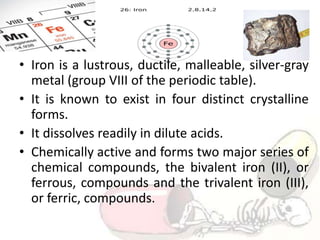
• Iron is a lustrous, ductile, malleable, silver-gray
metal (group VIII of the periodic table).
• It is known to exist in four distinct crystalline
forms.
• It dissolves readily in dilute acids.
• Chemically active and forms two major series of
chemical compounds, the bivalent iron (II), or
ferrous, compounds and the trivalent iron (III),
or ferric, compounds.
• One of the most abundant metals on Earth, as
well as an essential nutrient.
• Component of several metalloproteins and
plays a vital function (e.g. oxygen sensing and
transport, electron transfer, and catalysis)
• Has unique ability to serve as an electron
donor and acceptor renders this metal
irreplaceable and indispensable for life
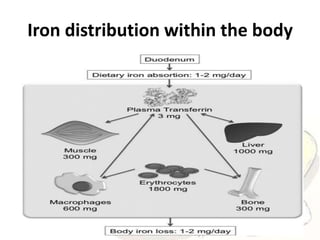
Iron distribution within the body
Epidemiology of Iron Poisoning
• The American Association of Poison Control
Centers (AAPCC) is a consortium of 66 regional
poison control and information centers
located throughout the United States.
http://www.aapcc.org/
In 1997, there were 26,544 AAPCC-reported
exposures for all types of iron-containing
compounds by children and adolescents
accounting for 1.7% of all reported pediatric
poisoning exposures
87% were in children younger than 6 years.
• Sixty-two percent of these
childhood exposures were to
pediatric multivitamin tablets,
which rarely lead to serious
toxicity after ingestion.
• Thirty percent of these exposures
were to adult preparations such
as iron pills or prenatal vitamins
with iron, which are responsible
for almost all of the serious
toxicity related to iron poisoning.
• Early series reported mortality rates of 50%
from iron poisoning
• For the past 10 years, there has been an
average of only 3 to 4 deaths per year
reported by the AAPCC
• The AAPCC did a special review of morbidity
and mortality in children younger than 6 years
for the period 1985-1990.
• Eight of 111 deaths during this period were
related to iron poisoning
Reasons Of Why Children Ingest Drugs?
• Developmental level
• Inadequate parental knowledge about the
toxic potential of individual agents
• Easy access to medications
• Imitative behavior
• Lack of supervision
• Intra-familial conflict
Sources Of Iron
• Iron preparations
are available most
commonly in the
form of iron salts.
The amount of
elemental iron in
each preparation
varies depending
upon the salt form
IRON ABSORPTION
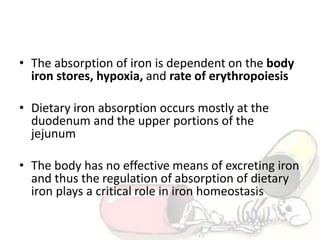
• The absorption of iron is dependent on the body
iron stores, hypoxia, and rate of erythropoiesis
• Dietary iron absorption occurs mostly at the
duodenum and the upper portions of the
jejunum
• The body has no effective means of excreting iron
and thus the regulation of absorption of dietary
iron plays a critical role in iron homeostasis
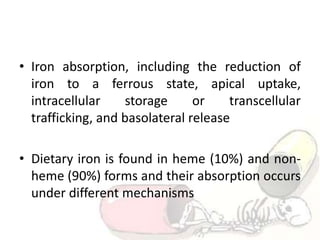
• Iron absorption, including the reduction of
iron to a ferrous state, apical uptake,
intracellular storage or transcellular
trafficking, and basolateral release
• Dietary iron is found in heme (10%) and non-
heme (90%) forms and their absorption occurs
under different mechanisms
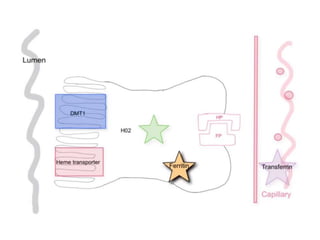
Absorption of dietary non-heme iron
1. Release of elemental iron from digested food
and its maintenance in a soluble form(GASTRIC ACID)
The low pH of the gastric effluent dissolves ingested inorganic iron and facilitates its
enzymatic reduction (Fe3+ is reduced to Fe2+) Which enzyme?
2. Iron is transported across the intestinal
epithelium by divalent metal transporter 1
(DMT-1)
ferric reductases present on the apical
surface of duodenal enterocytes
Absorption of dietary Heme iron
1. Absorbed into the enterocytes by Heme
carrier protein 1, a membrane protein found in the
proximal intestine, where heme absorption is greater
2. Metabolized by heme oxygenase to release
Fe2+
3. some intact heme iron crosses the cell,
leaving the enterocyte through the action of
the heme exporters
• Once inside the intestinal epithelial cell, iron is
exported across the basolateral membrane of
the enterocyte into the circulation where it
binds to transferrin
• Transferrin-bound iron enters target cells
through a process of receptor-mediated
endocytosis
• In RES Heme iron is metabolized by heme-
oxygenase, and iron is stored as ferritin
• Basolateral iron transport is mediated by
ferroportin 1 and then iron is oxidized by
Hephaestin before being bound by plasma
transferrin
Iron Absorption in Overdose
• Iron absorption is a highly regulated process
• How these processes are affected in overdose
is unknown.
• Supratherapeutic doses of iron are well
absorbed after ingestion
• Peak serum iron level is achieved within
several hours of ingestion
• It is unclear whether very high doses lead to
delayed absorption and peak level; however in
many reported cases, children became toxic
soon after ingestion.
• Iron pills can become conglomerated into a
mass in the stomach
• The patients are often reported to be
relatively asymptomatic:Iron bezoars reduce the rate of absorption
Toxicity of Iron
• Iron has the ability to produce oxygen free
radicals under aerobic conditions, which turns
it into a potential harmful component
• Free radicals are generated within the cell as
part of normal cellular mechanisms
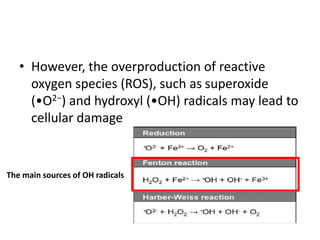
• However, the overproduction of reactive
oxygen species (ROS), such as superoxide
(•O2−) and hydroxyl (•OH) radicals may lead to
cellular damage
The main sources of OH radicals
• The resulting effects are impaired synthesis of
proteins, membrane lipids, and carbohydrates;
induction of proteases; and altered cell
proliferation
• In diseases of iron overload (e.g., HH), the
generation of free radicals leads to tissue
damage and organ failure.
• excess of free iron has been considered
carcinogenic, once the generation of free radicals
by this metal can promote DNA strand breaks,
oncogenes activation, and tumor suppressor
genes inhibition
• The role of iron in neurodegenerative disorders
such as Parkinson’s and Alzheimer’s diseases
suggested to be that iron overload increases
brain oxidative stress status
• Since no mechanism exists for excreting iron,
toxicity depends on the amount of iron
already in the body.
• Intravenously > Intramuscular > orally
• No clinical signs of toxicosis are expected in
dogs ingesting less than 20 mg/kg of
elemental iron
• Dogs ingesting between 20 and 60 mg/kg of
elemental iron can develop mild clinical signs
• Dogs greater than 60 mg/kg, serious clinical
signs can develop.
• Death from iron toxicity has been reported
from a wide range of doses (from 60 to 300
mg/kg).
Clinical signs
Pathophysiology of Iron
Poisoning
Stages Of Acute Iron Toxicity
• Stage I: local gastrointestinal effects
• Stage II: quiescent phase
• Stage III: systemic toxicity
• Stage IV: recovery
• Stage V: gastrointestinal obstruction
Stage I: Gastrointestinal Toxicity
• Nausea, vomiting, and diarrhea (5 mg Fe+2/kg)
• Gastrointestinal bleeding may lead to
hematemesis or bloody diarrhea
• Attributed to the direct local corrosive effects
of iron
• Occur early, usually within several hours
Stage I: Gastrointestinal Toxicity
• Pathologic effects are concentrated in the
stomach and duodenum, areas of small bowel
infarction can be observed distally; the colon is
rarely affected
• These initial local corrosive changes sometimes
lead to the formation of gastric antral and pyloric
strictures, which are observed in some patients
between 2 and 8 weeks after the initial episode
of poisoning Endoscopic image of :
gastric antral vascular
ectasia
Stage II: quiescent phase
• There is resolution of gastrointestinal
symptoms with apparent clinical improvement
• Some studies show that patients had
resolution of gastrointestinal symptoms, and
became critically ill after 24 hours and died.
• This stage would rarely be seen today. Why?
because children with significant early
gastrointestinal symptoms would receive fluid
resuscitation and chelation therapy soon after
presentation.
Stage III: Systemic Toxicity
• Clinically manifest as shock with associated
signs of hypoperfusion (pallor), cold
extremities, tachycardia, tachypnea,
hypotension(late finding).
• Hypovolemic shock and acidosis are the
primary determinants of this shock state, but
diminished cardiac function contributes.
Stage III: Systemic Toxicity
• Hypovolemic shock results from the
gastrointestinal fluid losses as well as
increased capillary permeability and possible
loss of venous tone.
• Myocardial dysfunction may be seen in severe
iron poisoning.
• Heart failure is frequently seen in chronic iron
overload due to free radical-induced damage
Stage III: Systemic Toxicity
Possible explanations for the acidosis have been proposed:
1. Conversion of free plasma iron to ferric hydroxide is
accompanied by a rise in hydrogen ion concentration
2. Free radical damage to mitochondrial membranes
prevents normal cellular respiration and electron
transport with the subsequent development of lactic
acidosis
3. Hypovolemia and attendant hypoperfusion contribute
to (but are not the primary causes of) acidosis
4. Cardiogenic shock contributes to hypoperfusion.
Stage III: Systemic Toxicity
• Hepatic injury: Portal blood delivers high
concentrations of iron to the liver(Ferritin) .
• Range from cloudy swelling to peri-portal
hepatic necrosis, and elevated transaminases
are observed
• Iron is concentrated within hepatic
mitochondria where it destroys mitochondrial
membranes  hepatic necrosis and metabolic
acidosis.
• Abnormalities in coagulation & inhibitory
effect on clotting factors
Stage IV: Clinical Recovery
• Begin soon after the initiation of fluid and
antidotal therapy.
• For severely poisoned patients recovery will
be marked by resolution of acidosis and other
signs of shock, usually within 3 to 4 days of
the acute poisoning
• Full recovery may take longer.
Stage V: Gastrointestinal Obstruction
• late onset of gastric and pyloric strictures,
which may occur 2 to 8 weeks after the initial
injury.
• These strictures occur in mucosa in which
there was previous damage, and they
frequently require surgical therapy
Diagnosis
Diagnosis
• Testing serum iron concentration is the best
method to confirm iron poisoning.
Repeat the serum iron test four to six hours
after initial measurement. WHY?
• Total iron-binding capacity
• An abdominal radiographic examination can
be useful to identify metallic objects.
Laboratory testing should include:
• Serum electrolytes, blood urea nitrogen
(BUN), and glucose
• Alanine and aspartate aminotransferases and
bilirubin
• Venous or arterial blood gases in moderately
and severely poisoned patients
• Complete blood count with differential
• Prothrombin and partial thromboplastin time
Peak serum iron concentrations typically
correlate with the following levels of
toxicity:
• Less than 350 mcg/dL – Minimal toxicity.
• Between 350 and 500 mcg/dL – Mild to
moderate GI symptoms (rarely develop
serious complications).
• Greater than 500 mcg/dL – Serious systemic
toxicity.
• Greater than 1000 mcg/dL – Significant
morbidity and mortality
• Toxicity may not be related to dose.
• The ideal serum iron level is a peak level
drawn between 2 and 6 hours after ingestion
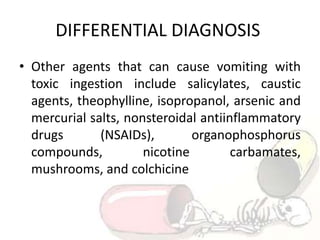
DIFFERENTIAL DIAGNOSIS
• Other agents that can cause vomiting with
toxic ingestion include salicylates, caustic
agents, theophylline, isopropanol, arsenic and
mercurial salts, nonsteroidal antiinflammatory
drugs (NSAIDs), organophosphorus
compounds, nicotine carbamates,
mushrooms, and colchicine
Clinical Management of
Iron Poisoning
• Clinical evaluation.
• Fluid resuscitation: establish intravenous
access and administer normal (0.9%) saline at
an initial dose of 20 mL/kg followed by a
continuous infusion
• Laboratory evaluation.
• Abdominal radiograph
Chelation Therapy
• Criteria for initiation of therapy include a history of iron
ingestion with:
1. Any clinical sign of shock
2. Lethargy, coma, or altered mental status
3. Persistent vomiting, diarrhea, hematemesis,
hematochezia, or other gastrointestinal symptoms
4. Positive anion-gap metabolic acidosis
5. Large number of pills on abdominal radiograph
6. Serum iron level greater than 500 μg/dL
7. Estimated dose greater than 60 mg Fe+2/kg.
• Deferoxamine is 15 mg/kg per hour as a
continuous intravenous infusion.
• Can be given at a dose of 90 mg/kg
intramuscularly (If IV access is not feasible)
• Chelation therapy should continue until there
is significant resolution of systemic toxicity,
specifically acidosis and shock.
• Deferoxamine SE: Hypotension, acute
respiratory distress syndrome (ARDS).
Gastrointestinal decontamination
• Any patient with probable or confirmed
significant exposure should have whole bowel
irrigation.
• polyethylene glycol-electrolyte solution at a
rate of 0.5 L/h for children or 2 L/h for
adolescents.
• SE: nausea, bloating, vomiting, and diarrhea
• Whole bowel irrigation is continued until the
effluent is clear.
Magnesium hydroxide might be used to reduce absorption but no
supporting data
• Patient with no history of abdominal pain, nausea,
vomiting, or diarrhea & with a normal physical
examination and remains asymptomatic for 6 hours,
the patient may be safely discharged.
• Patients with minimal gastrointestinal symptoms only
but an otherwise normal physical examination should
have abdominal radiographs, an arterial blood gas, and
electrolytes. If there are no pills visible on an
abdominal radiograph and there is no evidence of
metabolic acidosis after several hours, the patient is
unlikely to develop systemic toxicity.
• A serum iron level less than 500 μg/dL would support
identifying this as a low-risk patient. This patient may
be admitted to the hospital for observation or
discharged home with close follow-up.
• Any patient with more than mild gastrointestinal
symptoms or with evidence of altered mental status,
shock, or acidosis should receive chelation therapy
and be admitted to the hospital.
• Patients with severe toxicity may require intensive care
therapy.
• If a hospital has limited pediatric critical care facilities
or does not have access to toxicology consultation,
plans to transfer a patient to a tertiary care hospital
should be made early, before the patient becomes
unstable for transfer.
• Toxicological consultation should be requested
for patients who have significant toxicity or
who are receiving deferoxamine.
Management in the Pregnant Patient
• Deferoxamine is reported to be teratogenic
( pregnancy Class C ).
• deferoxamine should be administered to
pregnant women with signs and symptoms of
significant iron poisoning.
Case of Iron toxicity
©2005 Children’s Hospital of Michigan Regional Poison Control Center
Case History
A 2-year-old female child
presents to the emergency
department after a reported
ingestion of One-A-Day Kids
Scooby-Doo! Complete
Multivitamin with Iron tablets.
The amount of tablets taken is
unknown but mom thinks that
“half the bottle” may be missing
(50 tablets in a full bottle).
Case History
• The ingestion took place approximately 15-30
minutes ago. The child has no symptoms but
there is tablet residue in the mouth. There are
no other reported ingestions or exposures.
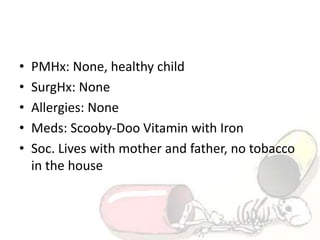
• PMHx: None, healthy child
• SurgHx: None
• Allergies: None
• Meds: Scooby-Doo Vitamin with Iron
• Soc. Lives with mother and father, no tobacco
in the house
Physical Examination
• Wt 16.4 kg , HR-112, Resp-26, Temp-37
• General: Playing/appears without distress. No
vomiting noted.
• Pupils equal, round, reactive, 4 mm bilaterally. No
pallor
• Ears, nose, mouth and throat: External inspection
of ears and nose are normal. Tympanic
membranes are normal. Oral mucosa normal,
some pill residue seen, tonsils normal.
Physical Examination
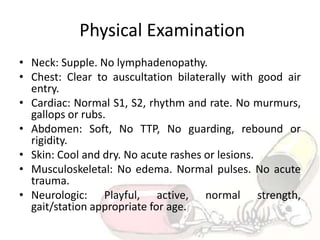
• Neck: Supple. No lymphadenopathy.
• Chest: Clear to auscultation bilaterally with good air
entry.
• Cardiac: Normal S1, S2, rhythm and rate. No murmurs,
gallops or rubs.
• Abdomen: Soft, No TTP, No guarding, rebound or
rigidity.
• Skin: Cool and dry. No acute rashes or lesions.
• Musculoskeletal: No edema. Normal pulses. No acute
trauma.
• Neurologic: Playful, active, normal strength,
gait/station appropriate for age.
Labs
• Na 136, K 4.0, Cl 104, bicarb 22, glucose 85
• WBC 6.9, Hb 11.5, Plt 345
• Serum iron 246 mcg/dl (1 hour level) Range
50-180 mcg/dl
How common are pediatric iron
overdoses?
• Iron ingestions in children have been known
to cause serious illness since at least the
1950s.
How much iron is in One-A-Day Kids
Scooby-Doo! Complete Multivitamin
with iron?
How much iron is in One-A-Day Kids
Scooby-Doo! Complete Multivitamin
with iron?
How much iron is in One-A-Day Kids
Scooby-Doo! Complete Multivitamin
with iron?
• One-A-Day Kids Scooby-Doo! Complete
Multivitamin contains 18 mg of elemental
iron.
Is this a potentially toxic ingestion of iron?
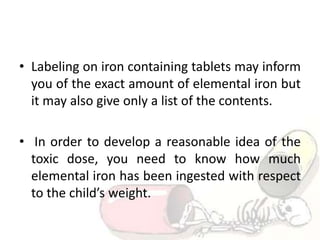
• Labeling on iron containing tablets may inform
you of the exact amount of elemental iron but
it may also give only a list of the contents.
• In order to develop a reasonable idea of the
toxic dose, you need to know how much
elemental iron has been ingested with respect
to the child’s weight.
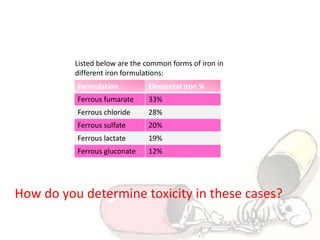
Formulation Elemental Iron %
Ferrous fumarate 33%
Ferrous chloride 28%
Ferrous sulfate 20%
Ferrous lactate 19%
Ferrous gluconate 12%
Listed below are the common forms of iron in
different iron formulations:
How do you determine toxicity in these cases?
• Ingestions of 10-20 mg/kg elemental iron may
produce toxic effects.
• Children ingesting more than 20 mg/kg should
be referred to the hospital.
• In this child’s worse case scenario, 25 tablets
(half-bottle) of 18 mg elemental iron suggest
an ingestion of about 27 mg/kg.
This child would be expected to develop some signs of toxicity,
and should be referred to the hospital if at home.
What is the pathophysiology of iron
toxicity?
• Corrosive effect on the GI mucosa (nausea,
vomiting, abdominal pain, hematemesis, and diarrhea)
• Cellular toxicity due to impaired oxidative
phosphorylation and mitochondrial
dysfunction.
• The end result is significant metabolic acidosis.
Hypovolemia
What manifestations are typically seen
in acute iron overdose?
• Stage I: local gastrointestinal effects
• Stage II: quiescent phase
• Stage III: systemic toxicity
• Stage IV: recovery
• Stage V: gastrointestinal obstruction
How does the serum iron level
correlate with clinical symptoms?
• Iron levels of 50-150 mcg/dl are considered
normal.
• Serious toxicity can develop with iron
levels of 350-500 mcg/dl.
• Levels greater than 500 mcg/dl are consistently
associated with significant toxicity.
Describe how you would help limit the
absorption of iron in these cases.
Should you give activated charcoal?
• Gastric lavage probably has limited value in
these cases.
• To limit the amount of iron absorbed we can
use deferoxamine, sodium bicarbonate,
phosphosoda, magnesium hydroxide, and
sodium polystyrene sulfonate.
• Whole bowel irrigation is recommended.
Should you give activated charcoal?
• Activated charcoal does not bind elemental iron
well; therefore its role in overdose is limited.
Is there an antidote for iron?
• The antidote for iron poisoning is
deferoxamine (DFO).
When the child can safely be
discharged from the emergency
department?
If a child remains asymptomatic with no GI
symptoms at 6 hours, they can be safely
discharged with follow-up.
Hemochromatosis
Iron overload
What is iron overload?
• A serious chronic condition that develops
when the body absorbs too much iron over
many years and excess iron builds up in organ
tissues (for example, heart tissue and liver
tissue).
What causes iron overload?
• Occurs as a result of a gene mutation that
causes the body to absorb more than a
healthy amount of iron.
• Iron overload less often occurs as a
complication of other blood disorders,
chronic transfusion therapy, chronic hepatitis,
or excessive iron ingestion.
Is iron overload dangerous?
• Yes, Iron overload is dangerous because it can
lead to hemochromatosis, a disease
characterized by fatigue, weakness, joint pain,
abdominal pain, or organ damage.
• It can eventually become a serious health
problem. The key to preventing
hemochromatosis is early diagnosis and
treatment.
Test for iron overload
• Simple blood tests can measure the iron levels
within patient body.
• The tests are inexpensive and can be done at
doctor’s office.
HEMOCHROMATOSIS
• Hemochromatosis is the disease that occurs as
a result of significant iron overload.
• It can have genetic or nongenetic causes.
• In the United States about one million people
have the disease, usually because of a gene
mutation.
• When the disease is genetic, it is called
hereditary hemochromatosis.
Early symptoms of hemochromatosis
• Fatigue, weakness, weight loss, joint pain, or
abdominal pain.
• Usually symptoms begin during middle age
• If hemochromatosis is not treated, it can lead
to these conditions:
Treatment for hemochromatosis
• Hemochromatosis can be treated by a
phlebotomy.
• It’s the same procedure that is used when you
donate blood.
• It is safe, simple, and effective
• Frequency depends on how much iron has
built up in patient’s body.
• Most people have them once or twice a week
for a year or more
• Phlebotomies will be for the rest of patient’s
life.
• SE: feel tired afterwards and like to rest for an
hour or so.
• It’s a good idea to drink liquids (water, milk, or
fruit juices) before and after a phlebotomy.
•
Without phlebotomies, hemochromatosis can
cause death. Treatment is worth the effort.
/What can the patient do to stay
healthy?
History
What form of iron was ingested?
Ferrous gluconate (12 percent elemental iron)
Ferrous sulfate (20 percent elemental iron)
Ferrous fumarate (33 percent elemental iron)
How many mg/kg of elemental iron was ingested?
When did the ingestion occur?
Diagnostic evaluation: For all patients with systemic symptoms, those who
have ingested >40 mg/kg of elemental iron, and those for whom the amount
of elemental iron ingested is unknown
Serum iron concentration: Measure serum iron concentration within 4 to 6
hours after ingestion (8 hours for extended release tablets)
Arterial or venous pH
Abdominal radiograph looking for radiopaque pills
Other initial labs: Electrolytes, BUN, creatinine, glucose, liver function tests,
prothrombin, partial thromboplastin time, CBC with differential, type and
cross match
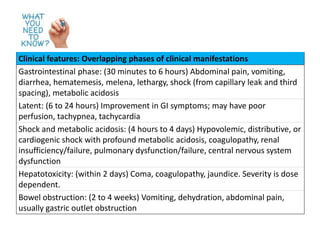
Clinical features: Overlapping phases of clinical manifestations
Gastrointestinal phase: (30 minutes to 6 hours) Abdominal pain, vomiting,
diarrhea, hematemesis, melena, lethargy, shock (from capillary leak and third
spacing), metabolic acidosis
Latent: (6 to 24 hours) Improvement in GI symptoms; may have poor
perfusion, tachypnea, tachycardia
Shock and metabolic acidosis: (4 hours to 4 days) Hypovolemic, distributive, or
cardiogenic shock with profound metabolic acidosis, coagulopathy, renal
insufficiency/failure, pulmonary dysfunction/failure, central nervous system
dysfunction
Hepatotoxicity: (within 2 days) Coma, coagulopathy, jaundice. Severity is dose
dependent.
Bowel obstruction: (2 to 4 weeks) Vomiting, dehydration, abdominal pain,
usually gastric outlet obstruction
Management
Secure airway and breathing
Treat volume depletion aggressively with isotonic infusion
Whole bowel irrigation: For all patients with a significant number of pills in
stomach and small intestine on radiograph
Deferoxamine: Continuous IV infusion (can cause hypotension). Begin at 15
mg/kg/hour. May increase to 35/mg/kg/hour during first 24 hours for severe
ingestions. A toxicologist and/or regional poison control center should be
consulted to determine the optimum dose of deferoxamine and duration of
therapy. Treat in the following circumstances:
Severe symptoms: Altered mental status, hemodynamic instability, persistent
vomiting, diarrhea
Anion gap metabolic acidosis
Serum iron concentration >500 mcg/dL
Significant number of pills on x-ray
Thank you for listening

Iron toxicity

  • 1.
  • 2.
    Outline • Chemical properties •Epidemiology of iron poisoning • Sources of iron • Iron absorption • Toxicity of iron • Pathophysiology of iron poisoning • Diagnosis • Management • Case of iron toxicity • Hemochromatosis
  • 3.
  • 4.
    • Iron isa lustrous, ductile, malleable, silver-gray metal (group VIII of the periodic table). • It is known to exist in four distinct crystalline forms. • It dissolves readily in dilute acids. • Chemically active and forms two major series of chemical compounds, the bivalent iron (II), or ferrous, compounds and the trivalent iron (III), or ferric, compounds.
  • 5.
    • One ofthe most abundant metals on Earth, as well as an essential nutrient. • Component of several metalloproteins and plays a vital function (e.g. oxygen sensing and transport, electron transfer, and catalysis) • Has unique ability to serve as an electron donor and acceptor renders this metal irreplaceable and indispensable for life
  • 6.
  • 7.
  • 8.
    • The AmericanAssociation of Poison Control Centers (AAPCC) is a consortium of 66 regional poison control and information centers located throughout the United States. http://www.aapcc.org/
  • 9.
    In 1997, therewere 26,544 AAPCC-reported exposures for all types of iron-containing compounds by children and adolescents accounting for 1.7% of all reported pediatric poisoning exposures 87% were in children younger than 6 years.
  • 10.
    • Sixty-two percentof these childhood exposures were to pediatric multivitamin tablets, which rarely lead to serious toxicity after ingestion. • Thirty percent of these exposures were to adult preparations such as iron pills or prenatal vitamins with iron, which are responsible for almost all of the serious toxicity related to iron poisoning.
  • 11.
    • Early seriesreported mortality rates of 50% from iron poisoning • For the past 10 years, there has been an average of only 3 to 4 deaths per year reported by the AAPCC
  • 12.
    • The AAPCCdid a special review of morbidity and mortality in children younger than 6 years for the period 1985-1990. • Eight of 111 deaths during this period were related to iron poisoning
  • 13.
    Reasons Of WhyChildren Ingest Drugs? • Developmental level • Inadequate parental knowledge about the toxic potential of individual agents • Easy access to medications • Imitative behavior • Lack of supervision • Intra-familial conflict
  • 14.
  • 16.
    • Iron preparations areavailable most commonly in the form of iron salts. The amount of elemental iron in each preparation varies depending upon the salt form
  • 17.
  • 18.
    • The absorptionof iron is dependent on the body iron stores, hypoxia, and rate of erythropoiesis • Dietary iron absorption occurs mostly at the duodenum and the upper portions of the jejunum • The body has no effective means of excreting iron and thus the regulation of absorption of dietary iron plays a critical role in iron homeostasis
  • 19.
    • Iron absorption,including the reduction of iron to a ferrous state, apical uptake, intracellular storage or transcellular trafficking, and basolateral release • Dietary iron is found in heme (10%) and non- heme (90%) forms and their absorption occurs under different mechanisms
  • 20.
    Absorption of dietarynon-heme iron 1. Release of elemental iron from digested food and its maintenance in a soluble form(GASTRIC ACID) The low pH of the gastric effluent dissolves ingested inorganic iron and facilitates its enzymatic reduction (Fe3+ is reduced to Fe2+) Which enzyme? 2. Iron is transported across the intestinal epithelium by divalent metal transporter 1 (DMT-1) ferric reductases present on the apical surface of duodenal enterocytes
  • 21.
    Absorption of dietaryHeme iron 1. Absorbed into the enterocytes by Heme carrier protein 1, a membrane protein found in the proximal intestine, where heme absorption is greater 2. Metabolized by heme oxygenase to release Fe2+ 3. some intact heme iron crosses the cell, leaving the enterocyte through the action of the heme exporters
  • 22.
    • Once insidethe intestinal epithelial cell, iron is exported across the basolateral membrane of the enterocyte into the circulation where it binds to transferrin • Transferrin-bound iron enters target cells through a process of receptor-mediated endocytosis • In RES Heme iron is metabolized by heme- oxygenase, and iron is stored as ferritin
  • 23.
    • Basolateral irontransport is mediated by ferroportin 1 and then iron is oxidized by Hephaestin before being bound by plasma transferrin
  • 26.
    Iron Absorption inOverdose • Iron absorption is a highly regulated process • How these processes are affected in overdose is unknown. • Supratherapeutic doses of iron are well absorbed after ingestion • Peak serum iron level is achieved within several hours of ingestion
  • 27.
    • It isunclear whether very high doses lead to delayed absorption and peak level; however in many reported cases, children became toxic soon after ingestion.
  • 28.
    • Iron pillscan become conglomerated into a mass in the stomach • The patients are often reported to be relatively asymptomatic:Iron bezoars reduce the rate of absorption
  • 29.
  • 30.
    • Iron hasthe ability to produce oxygen free radicals under aerobic conditions, which turns it into a potential harmful component • Free radicals are generated within the cell as part of normal cellular mechanisms
  • 31.
    • However, theoverproduction of reactive oxygen species (ROS), such as superoxide (•O2−) and hydroxyl (•OH) radicals may lead to cellular damage The main sources of OH radicals
  • 32.
    • The resultingeffects are impaired synthesis of proteins, membrane lipids, and carbohydrates; induction of proteases; and altered cell proliferation • In diseases of iron overload (e.g., HH), the generation of free radicals leads to tissue damage and organ failure.
  • 33.
    • excess offree iron has been considered carcinogenic, once the generation of free radicals by this metal can promote DNA strand breaks, oncogenes activation, and tumor suppressor genes inhibition • The role of iron in neurodegenerative disorders such as Parkinson’s and Alzheimer’s diseases suggested to be that iron overload increases brain oxidative stress status
  • 34.
    • Since nomechanism exists for excreting iron, toxicity depends on the amount of iron already in the body. • Intravenously > Intramuscular > orally
  • 35.
    • No clinicalsigns of toxicosis are expected in dogs ingesting less than 20 mg/kg of elemental iron • Dogs ingesting between 20 and 60 mg/kg of elemental iron can develop mild clinical signs • Dogs greater than 60 mg/kg, serious clinical signs can develop. • Death from iron toxicity has been reported from a wide range of doses (from 60 to 300 mg/kg).
  • 36.
  • 37.
    Stages Of AcuteIron Toxicity • Stage I: local gastrointestinal effects • Stage II: quiescent phase • Stage III: systemic toxicity • Stage IV: recovery • Stage V: gastrointestinal obstruction
  • 38.
    Stage I: GastrointestinalToxicity • Nausea, vomiting, and diarrhea (5 mg Fe+2/kg) • Gastrointestinal bleeding may lead to hematemesis or bloody diarrhea • Attributed to the direct local corrosive effects of iron • Occur early, usually within several hours
  • 39.
    Stage I: GastrointestinalToxicity • Pathologic effects are concentrated in the stomach and duodenum, areas of small bowel infarction can be observed distally; the colon is rarely affected • These initial local corrosive changes sometimes lead to the formation of gastric antral and pyloric strictures, which are observed in some patients between 2 and 8 weeks after the initial episode of poisoning Endoscopic image of : gastric antral vascular ectasia
  • 40.
    Stage II: quiescentphase • There is resolution of gastrointestinal symptoms with apparent clinical improvement • Some studies show that patients had resolution of gastrointestinal symptoms, and became critically ill after 24 hours and died. • This stage would rarely be seen today. Why? because children with significant early gastrointestinal symptoms would receive fluid resuscitation and chelation therapy soon after presentation.
  • 41.
    Stage III: SystemicToxicity • Clinically manifest as shock with associated signs of hypoperfusion (pallor), cold extremities, tachycardia, tachypnea, hypotension(late finding). • Hypovolemic shock and acidosis are the primary determinants of this shock state, but diminished cardiac function contributes.
  • 42.
    Stage III: SystemicToxicity • Hypovolemic shock results from the gastrointestinal fluid losses as well as increased capillary permeability and possible loss of venous tone. • Myocardial dysfunction may be seen in severe iron poisoning. • Heart failure is frequently seen in chronic iron overload due to free radical-induced damage
  • 43.
    Stage III: SystemicToxicity Possible explanations for the acidosis have been proposed: 1. Conversion of free plasma iron to ferric hydroxide is accompanied by a rise in hydrogen ion concentration 2. Free radical damage to mitochondrial membranes prevents normal cellular respiration and electron transport with the subsequent development of lactic acidosis 3. Hypovolemia and attendant hypoperfusion contribute to (but are not the primary causes of) acidosis 4. Cardiogenic shock contributes to hypoperfusion.
  • 44.
    Stage III: SystemicToxicity • Hepatic injury: Portal blood delivers high concentrations of iron to the liver(Ferritin) . • Range from cloudy swelling to peri-portal hepatic necrosis, and elevated transaminases are observed • Iron is concentrated within hepatic mitochondria where it destroys mitochondrial membranes  hepatic necrosis and metabolic acidosis. • Abnormalities in coagulation & inhibitory effect on clotting factors
  • 45.
    Stage IV: ClinicalRecovery • Begin soon after the initiation of fluid and antidotal therapy. • For severely poisoned patients recovery will be marked by resolution of acidosis and other signs of shock, usually within 3 to 4 days of the acute poisoning • Full recovery may take longer.
  • 46.
    Stage V: GastrointestinalObstruction • late onset of gastric and pyloric strictures, which may occur 2 to 8 weeks after the initial injury. • These strictures occur in mucosa in which there was previous damage, and they frequently require surgical therapy
  • 47.
  • 48.
    Diagnosis • Testing serumiron concentration is the best method to confirm iron poisoning. Repeat the serum iron test four to six hours after initial measurement. WHY? • Total iron-binding capacity • An abdominal radiographic examination can be useful to identify metallic objects.
  • 49.
    Laboratory testing shouldinclude: • Serum electrolytes, blood urea nitrogen (BUN), and glucose • Alanine and aspartate aminotransferases and bilirubin • Venous or arterial blood gases in moderately and severely poisoned patients • Complete blood count with differential • Prothrombin and partial thromboplastin time
  • 50.
    Peak serum ironconcentrations typically correlate with the following levels of toxicity: • Less than 350 mcg/dL – Minimal toxicity. • Between 350 and 500 mcg/dL – Mild to moderate GI symptoms (rarely develop serious complications). • Greater than 500 mcg/dL – Serious systemic toxicity. • Greater than 1000 mcg/dL – Significant morbidity and mortality
  • 51.
    • Toxicity maynot be related to dose. • The ideal serum iron level is a peak level drawn between 2 and 6 hours after ingestion
  • 52.
    DIFFERENTIAL DIAGNOSIS • Otheragents that can cause vomiting with toxic ingestion include salicylates, caustic agents, theophylline, isopropanol, arsenic and mercurial salts, nonsteroidal antiinflammatory drugs (NSAIDs), organophosphorus compounds, nicotine carbamates, mushrooms, and colchicine
  • 53.
  • 54.
    • Clinical evaluation. •Fluid resuscitation: establish intravenous access and administer normal (0.9%) saline at an initial dose of 20 mL/kg followed by a continuous infusion • Laboratory evaluation. • Abdominal radiograph
  • 55.
    Chelation Therapy • Criteriafor initiation of therapy include a history of iron ingestion with: 1. Any clinical sign of shock 2. Lethargy, coma, or altered mental status 3. Persistent vomiting, diarrhea, hematemesis, hematochezia, or other gastrointestinal symptoms 4. Positive anion-gap metabolic acidosis 5. Large number of pills on abdominal radiograph 6. Serum iron level greater than 500 μg/dL 7. Estimated dose greater than 60 mg Fe+2/kg.
  • 56.
    • Deferoxamine is15 mg/kg per hour as a continuous intravenous infusion. • Can be given at a dose of 90 mg/kg intramuscularly (If IV access is not feasible) • Chelation therapy should continue until there is significant resolution of systemic toxicity, specifically acidosis and shock. • Deferoxamine SE: Hypotension, acute respiratory distress syndrome (ARDS).
  • 57.
    Gastrointestinal decontamination • Anypatient with probable or confirmed significant exposure should have whole bowel irrigation. • polyethylene glycol-electrolyte solution at a rate of 0.5 L/h for children or 2 L/h for adolescents. • SE: nausea, bloating, vomiting, and diarrhea • Whole bowel irrigation is continued until the effluent is clear. Magnesium hydroxide might be used to reduce absorption but no supporting data
  • 58.
    • Patient withno history of abdominal pain, nausea, vomiting, or diarrhea & with a normal physical examination and remains asymptomatic for 6 hours, the patient may be safely discharged.
  • 59.
    • Patients withminimal gastrointestinal symptoms only but an otherwise normal physical examination should have abdominal radiographs, an arterial blood gas, and electrolytes. If there are no pills visible on an abdominal radiograph and there is no evidence of metabolic acidosis after several hours, the patient is unlikely to develop systemic toxicity. • A serum iron level less than 500 μg/dL would support identifying this as a low-risk patient. This patient may be admitted to the hospital for observation or discharged home with close follow-up.
  • 60.
    • Any patientwith more than mild gastrointestinal symptoms or with evidence of altered mental status, shock, or acidosis should receive chelation therapy and be admitted to the hospital. • Patients with severe toxicity may require intensive care therapy. • If a hospital has limited pediatric critical care facilities or does not have access to toxicology consultation, plans to transfer a patient to a tertiary care hospital should be made early, before the patient becomes unstable for transfer.
  • 61.
    • Toxicological consultationshould be requested for patients who have significant toxicity or who are receiving deferoxamine.
  • 62.
    Management in thePregnant Patient • Deferoxamine is reported to be teratogenic ( pregnancy Class C ). • deferoxamine should be administered to pregnant women with signs and symptoms of significant iron poisoning.
  • 63.
    Case of Irontoxicity ©2005 Children’s Hospital of Michigan Regional Poison Control Center
  • 64.
    Case History A 2-year-oldfemale child presents to the emergency department after a reported ingestion of One-A-Day Kids Scooby-Doo! Complete Multivitamin with Iron tablets. The amount of tablets taken is unknown but mom thinks that “half the bottle” may be missing (50 tablets in a full bottle).
  • 65.
    Case History • Theingestion took place approximately 15-30 minutes ago. The child has no symptoms but there is tablet residue in the mouth. There are no other reported ingestions or exposures.
  • 66.
    • PMHx: None,healthy child • SurgHx: None • Allergies: None • Meds: Scooby-Doo Vitamin with Iron • Soc. Lives with mother and father, no tobacco in the house
  • 67.
    Physical Examination • Wt16.4 kg , HR-112, Resp-26, Temp-37 • General: Playing/appears without distress. No vomiting noted. • Pupils equal, round, reactive, 4 mm bilaterally. No pallor • Ears, nose, mouth and throat: External inspection of ears and nose are normal. Tympanic membranes are normal. Oral mucosa normal, some pill residue seen, tonsils normal.
  • 68.
    Physical Examination • Neck:Supple. No lymphadenopathy. • Chest: Clear to auscultation bilaterally with good air entry. • Cardiac: Normal S1, S2, rhythm and rate. No murmurs, gallops or rubs. • Abdomen: Soft, No TTP, No guarding, rebound or rigidity. • Skin: Cool and dry. No acute rashes or lesions. • Musculoskeletal: No edema. Normal pulses. No acute trauma. • Neurologic: Playful, active, normal strength, gait/station appropriate for age.
  • 69.
    Labs • Na 136,K 4.0, Cl 104, bicarb 22, glucose 85 • WBC 6.9, Hb 11.5, Plt 345 • Serum iron 246 mcg/dl (1 hour level) Range 50-180 mcg/dl
  • 70.
    How common arepediatric iron overdoses? • Iron ingestions in children have been known to cause serious illness since at least the 1950s.
  • 71.
    How much ironis in One-A-Day Kids Scooby-Doo! Complete Multivitamin with iron?
  • 72.
    How much ironis in One-A-Day Kids Scooby-Doo! Complete Multivitamin with iron?
  • 73.
    How much ironis in One-A-Day Kids Scooby-Doo! Complete Multivitamin with iron? • One-A-Day Kids Scooby-Doo! Complete Multivitamin contains 18 mg of elemental iron. Is this a potentially toxic ingestion of iron?
  • 74.
    • Labeling oniron containing tablets may inform you of the exact amount of elemental iron but it may also give only a list of the contents. • In order to develop a reasonable idea of the toxic dose, you need to know how much elemental iron has been ingested with respect to the child’s weight.
  • 75.
    Formulation Elemental Iron% Ferrous fumarate 33% Ferrous chloride 28% Ferrous sulfate 20% Ferrous lactate 19% Ferrous gluconate 12% Listed below are the common forms of iron in different iron formulations: How do you determine toxicity in these cases?
  • 76.
    • Ingestions of10-20 mg/kg elemental iron may produce toxic effects. • Children ingesting more than 20 mg/kg should be referred to the hospital. • In this child’s worse case scenario, 25 tablets (half-bottle) of 18 mg elemental iron suggest an ingestion of about 27 mg/kg. This child would be expected to develop some signs of toxicity, and should be referred to the hospital if at home.
  • 77.
    What is thepathophysiology of iron toxicity? • Corrosive effect on the GI mucosa (nausea, vomiting, abdominal pain, hematemesis, and diarrhea) • Cellular toxicity due to impaired oxidative phosphorylation and mitochondrial dysfunction. • The end result is significant metabolic acidosis. Hypovolemia
  • 78.
    What manifestations aretypically seen in acute iron overdose? • Stage I: local gastrointestinal effects • Stage II: quiescent phase • Stage III: systemic toxicity • Stage IV: recovery • Stage V: gastrointestinal obstruction
  • 79.
    How does theserum iron level correlate with clinical symptoms? • Iron levels of 50-150 mcg/dl are considered normal. • Serious toxicity can develop with iron levels of 350-500 mcg/dl. • Levels greater than 500 mcg/dl are consistently associated with significant toxicity.
  • 80.
    Describe how youwould help limit the absorption of iron in these cases. Should you give activated charcoal? • Gastric lavage probably has limited value in these cases. • To limit the amount of iron absorbed we can use deferoxamine, sodium bicarbonate, phosphosoda, magnesium hydroxide, and sodium polystyrene sulfonate. • Whole bowel irrigation is recommended. Should you give activated charcoal? • Activated charcoal does not bind elemental iron well; therefore its role in overdose is limited.
  • 81.
    Is there anantidote for iron? • The antidote for iron poisoning is deferoxamine (DFO). When the child can safely be discharged from the emergency department? If a child remains asymptomatic with no GI symptoms at 6 hours, they can be safely discharged with follow-up.
  • 82.
  • 83.
    What is ironoverload? • A serious chronic condition that develops when the body absorbs too much iron over many years and excess iron builds up in organ tissues (for example, heart tissue and liver tissue).
  • 84.
    What causes ironoverload? • Occurs as a result of a gene mutation that causes the body to absorb more than a healthy amount of iron. • Iron overload less often occurs as a complication of other blood disorders, chronic transfusion therapy, chronic hepatitis, or excessive iron ingestion.
  • 85.
    Is iron overloaddangerous? • Yes, Iron overload is dangerous because it can lead to hemochromatosis, a disease characterized by fatigue, weakness, joint pain, abdominal pain, or organ damage. • It can eventually become a serious health problem. The key to preventing hemochromatosis is early diagnosis and treatment.
  • 86.
    Test for ironoverload • Simple blood tests can measure the iron levels within patient body. • The tests are inexpensive and can be done at doctor’s office.
  • 87.
    HEMOCHROMATOSIS • Hemochromatosis isthe disease that occurs as a result of significant iron overload. • It can have genetic or nongenetic causes. • In the United States about one million people have the disease, usually because of a gene mutation. • When the disease is genetic, it is called hereditary hemochromatosis.
  • 88.
    Early symptoms ofhemochromatosis • Fatigue, weakness, weight loss, joint pain, or abdominal pain. • Usually symptoms begin during middle age • If hemochromatosis is not treated, it can lead to these conditions:
  • 89.
    Treatment for hemochromatosis •Hemochromatosis can be treated by a phlebotomy. • It’s the same procedure that is used when you donate blood. • It is safe, simple, and effective • Frequency depends on how much iron has built up in patient’s body. • Most people have them once or twice a week for a year or more
  • 90.
    • Phlebotomies willbe for the rest of patient’s life. • SE: feel tired afterwards and like to rest for an hour or so. • It’s a good idea to drink liquids (water, milk, or fruit juices) before and after a phlebotomy. •
  • 91.
    Without phlebotomies, hemochromatosiscan cause death. Treatment is worth the effort.
  • 92.
    /What can thepatient do to stay healthy?
  • 94.
    History What form ofiron was ingested? Ferrous gluconate (12 percent elemental iron) Ferrous sulfate (20 percent elemental iron) Ferrous fumarate (33 percent elemental iron) How many mg/kg of elemental iron was ingested? When did the ingestion occur?
  • 95.
    Diagnostic evaluation: Forall patients with systemic symptoms, those who have ingested >40 mg/kg of elemental iron, and those for whom the amount of elemental iron ingested is unknown Serum iron concentration: Measure serum iron concentration within 4 to 6 hours after ingestion (8 hours for extended release tablets) Arterial or venous pH Abdominal radiograph looking for radiopaque pills Other initial labs: Electrolytes, BUN, creatinine, glucose, liver function tests, prothrombin, partial thromboplastin time, CBC with differential, type and cross match
  • 96.
    Clinical features: Overlappingphases of clinical manifestations Gastrointestinal phase: (30 minutes to 6 hours) Abdominal pain, vomiting, diarrhea, hematemesis, melena, lethargy, shock (from capillary leak and third spacing), metabolic acidosis Latent: (6 to 24 hours) Improvement in GI symptoms; may have poor perfusion, tachypnea, tachycardia Shock and metabolic acidosis: (4 hours to 4 days) Hypovolemic, distributive, or cardiogenic shock with profound metabolic acidosis, coagulopathy, renal insufficiency/failure, pulmonary dysfunction/failure, central nervous system dysfunction Hepatotoxicity: (within 2 days) Coma, coagulopathy, jaundice. Severity is dose dependent. Bowel obstruction: (2 to 4 weeks) Vomiting, dehydration, abdominal pain, usually gastric outlet obstruction
  • 97.
    Management Secure airway andbreathing Treat volume depletion aggressively with isotonic infusion Whole bowel irrigation: For all patients with a significant number of pills in stomach and small intestine on radiograph Deferoxamine: Continuous IV infusion (can cause hypotension). Begin at 15 mg/kg/hour. May increase to 35/mg/kg/hour during first 24 hours for severe ingestions. A toxicologist and/or regional poison control center should be consulted to determine the optimum dose of deferoxamine and duration of therapy. Treat in the following circumstances: Severe symptoms: Altered mental status, hemodynamic instability, persistent vomiting, diarrhea Anion gap metabolic acidosis Serum iron concentration >500 mcg/dL Significant number of pills on x-ray
  • 98.
    Thank you forlistening

Editor's Notes

  • #9 AAPCC collects standardized epidemiologic data about poisonings reported to these centers, and this information is published annually
  • #10 The American Association of Poison Control Centers (AAPCC)
  • #21 ferric reductases present on the apical surface of duodenal enterocytes
  • #22 These exporters are also expressed in liver, kidney, and erythroblast, suggesting that they may act at those sites
  • #32 Superoxide dismutase, glutathione peroxidase, and catalase normally metabolize and neutralize these free radicals
  • #38 Gastrointestinal (GI) phase: 30 minutes to 6 hours after ingestion ●Latent, or relative stability, phase: 6 to 24 hours after ingestion ●Shock and metabolic acidosis: 6 to 72 hours after ingestion ●Hepatotoxicity/hepatic necrosis: 12 to 96 hours after ingestion ●Bowel obstruction: 2 to 8 weeks after ingestion
  • #41 because children with significant early gastrointestinal symptoms would receive fluid resuscitation and chelation therapy soon after presentation.
  • #43 Myocardial dysfunction: due to inhibition of cardiac mitochondrial respiratory enzyme activity caused by iron loading contributes to myocardial dysfunction
  • #45 Portal blood delivers high concentrations of iron to the liver where it is taken up by both Kupffer's cells and hepatocytes and exceeds the storage capacity of ferritin Abnormalities in coagulation & inhibitory effect on clotting factors
  • #49 Serum iron concentrations can change dramatically during the first few hours after ingestion radiographic assess the success of gastrointestinal decontamination
  • #88 Indeed, it’ s important for all close family members to get their iron levels tested (parents, grandparents, sisters, brothers, and children) if anyone in the family has hemochromatosis.
  • #90 It’s the same procedure that is used when you donate blood. A nurse takes about a pint of blood from a vein in your arm. The procedure takes about an hour.