21st Century Professional
Development
Bridging the gap between
higher education and working life
Tampere University of Applied Sciences Digital_Alpaca
Hanna Teräs Marko Teräs
AACE e-Learn 2010 – Orlando, Florida
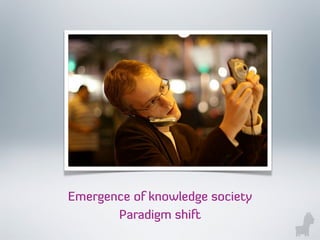
Emergence of knowledge society
Paradigm shift
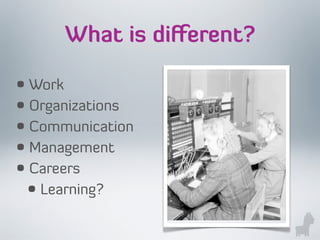
• Work
• Organizations
• Communication
• Management
• Careers
• Learning?
What is different?
21st century skills
• Subject matter independent
skills needed in knowledge
society working environment
• Learning and innovation skills
• Digital literacy skills
• Career and life skills
Trilling & Fadel (2009)
Image: Seier+Seier
Image: bekibartlett
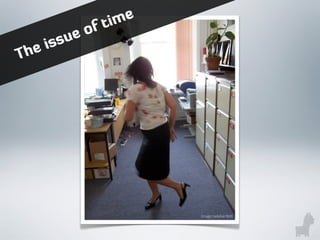
The issue of time
&%#!@ Facebook,
Twitter, Flickr, YouTube,
blog, wiki,
whatwasthatagain...
Image: megabn
WHO CAN HELP?
1. Inside universities: teachers who are skilled in
using new technology and have personal interest
towards it (good, but not enough!)
2. Expertise from outside the university: young
entrepreneurs and digital natives
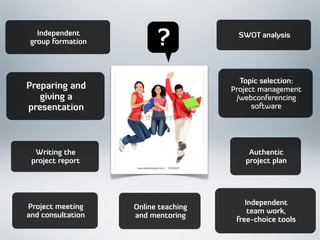
?
Writing the
project report
Preparing and
giving a
presentation
Independent
group formation
SWOT analysis
Topic selection:
Project management
/webconferencing
software
Authentic
project plan
Independent
team work,
free-choice tools
Online teaching
and mentoring
Project meeting
and consultation
Image: DustyReagan
Image: Matt Hamm
Image: Pink Moose
+
=
Image: Pink Moose
Image: Brittney Bush
+
Image: DustyReagan
Image: Matt Hamm
=
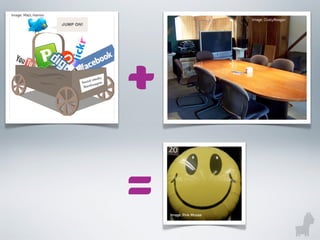
An integration of 21st century professional
development skills and social media to a study
unit on professional development
"Understanding social media and its efficient use is
something that should be taught to BBA students,
but we don't know how."
Why?
The changes have been more rapid outside than
inside schools (Downes 2005)
Why?
Starting point:
Teachers’ workshop – Dec 2009
How: Presentation + Workshop with coaching methods
Outcome: "We need to teach this, but don't know how."
Conclusion: Study module made by the entrepreneur.
University coaches included in the iteration process
through shared Google Docs.
Starting point:
Teachers’ workshop –
Dec 2009
The study module – 2010
~100 BBA students divided into 6 groups,
each of them having their own coach from
the University
The Study Module – 2010
How: 3 presentations + 3 sessions in small
groups
The Study Module – 2010
Topics:
1. Basics in Social Media & 21st century skills,
Self-development
2. Personal branding & Networking
3. Social media in employment & How companies use
social media (from marketing to inner communications)
The Study Module – 2010
2 assignment examples
from the group sessions
“Gather your group's travel program
to a single Google Doc together with
the group.
You can determine what's in it, who
creates it, shares it to others and
how you share the responsibilities.
Only thing important is that you
manage yourself in the trip.”
1. A Field Trip to another country
• In most cases, the students were amazing and fast with
the assignment.
• Students helped each other in the group.
• Some coaches knew what to do and let go of telling or
directing the students too much. Some coaches acted like
teachers.
• Some coaches less familiar with Google Docs were
positively surprised how well it worked and wanted
themselves to learn it better in the future.
Outcomes
“Imagine the job of your dreams. Start planning your
strategy how to get it, through building your personal
branding base, e.g. showing what your interests are and
what you are good at.
Possibilities: blogging, searching and networking with
people through social media, participating in
professional online networks and creating for example
LinkedIn profile as your organic CV.”
2. Personal branding
• For some students (and coaches) the assignment seemed
a bit vague.
• A coach: "For me this kind of openness feels a bit uneasy.
People can see, if you are searching for a job and see
everything that you are doing."
• Some people don't want to create online profiles and leave
anything personal in the Internet.
Outcomes
Overall conclusions of the study module
?
? ?
?
• The guest trainer was someone from the "real world" and
knew the topic well from many angles.
• Possibility for the students to get mentoring during the
module through email & social media – could’ve used it
more.
• The coaches learned with the students.
• From every group there was someone who had used the
technology a bit more than others – group help.
Advantages
• Two groups got valuable information from the guest
trainer which they implemented in their projects for actual
companies.
• Some of the students got valuable information for self-
development. New contacts through the guest trainer
which started new projects.
These happened with students who were proactive and
had inner motivation
Real-life advantages
• The usual teaching method in the department is based on
regular teaching and classes. Coaching methods and open
ended assignments were sometimes hard to grasp.
• "Don't make me think" attitude.
• "Are we becoming the tech support?"
• Dialogue with the trainer and coaches – more
collaborative iteration could’ve occurred.
Challenges
Challenges
"This method is pedagogically right, but the
students need control and someone to tell
them clearly what to do."
CONCLUSIONS
The change is deeper than simply a set
of new tools: teaching technologies is
not enough.
Students don’t learn to use social media
for professional purposes on their own.
Expertise from outside the university
can be integrated in university teaching
in a meaningful way.
Staff in-work coaching and integrating
technology in existing activities -> more
sustainable outcomes than traditional
staff training and workshops
CONCLUSIONS
hanna.teras(at)tamk.fi
twitter.com/hannateras
www.hannateras.com
marko(at)digitalalpaca.com
twitter.com/markoteras
www.markoteras.com
Thank you!

21st Century Professional Development – AACE E-Learn 2010

  • 1.
    21st Century Professional Development Bridgingthe gap between higher education and working life Tampere University of Applied Sciences Digital_Alpaca Hanna Teräs Marko Teräs AACE e-Learn 2010 – Orlando, Florida
  • 2.
    Emergence of knowledgesociety Paradigm shift
  • 3.
    • Work • Organizations •Communication • Management • Careers • Learning? What is different?
  • 6.
    21st century skills •Subject matter independent skills needed in knowledge society working environment • Learning and innovation skills • Digital literacy skills • Career and life skills Trilling & Fadel (2009) Image: Seier+Seier
  • 7.
  • 8.
    &%#!@ Facebook, Twitter, Flickr,YouTube, blog, wiki, whatwasthatagain... Image: megabn
  • 10.
    WHO CAN HELP? 1.Inside universities: teachers who are skilled in using new technology and have personal interest towards it (good, but not enough!) 2. Expertise from outside the university: young entrepreneurs and digital natives
  • 11.
    ? Writing the project report Preparingand giving a presentation Independent group formation SWOT analysis Topic selection: Project management /webconferencing software Authentic project plan Independent team work, free-choice tools Online teaching and mentoring Project meeting and consultation
  • 12.
    Image: DustyReagan Image: MattHamm Image: Pink Moose + =
  • 13.
    Image: Pink Moose Image:Brittney Bush + Image: DustyReagan Image: Matt Hamm =
  • 14.
    An integration of21st century professional development skills and social media to a study unit on professional development
  • 15.
    "Understanding social mediaand its efficient use is something that should be taught to BBA students, but we don't know how." Why?
  • 16.
    The changes havebeen more rapid outside than inside schools (Downes 2005) Why?
  • 17.
  • 18.
    How: Presentation +Workshop with coaching methods Outcome: "We need to teach this, but don't know how." Conclusion: Study module made by the entrepreneur. University coaches included in the iteration process through shared Google Docs. Starting point: Teachers’ workshop – Dec 2009
  • 19.
  • 20.
    ~100 BBA studentsdivided into 6 groups, each of them having their own coach from the University The Study Module – 2010
  • 21.
    How: 3 presentations+ 3 sessions in small groups The Study Module – 2010
  • 22.
    Topics: 1. Basics inSocial Media & 21st century skills, Self-development 2. Personal branding & Networking 3. Social media in employment & How companies use social media (from marketing to inner communications) The Study Module – 2010
  • 23.
    The Study Module– 2010 2 assignment examples from the group sessions
  • 24.
    “Gather your group'stravel program to a single Google Doc together with the group. You can determine what's in it, who creates it, shares it to others and how you share the responsibilities. Only thing important is that you manage yourself in the trip.” 1. A Field Trip to another country
  • 25.
    • In mostcases, the students were amazing and fast with the assignment. • Students helped each other in the group. • Some coaches knew what to do and let go of telling or directing the students too much. Some coaches acted like teachers. • Some coaches less familiar with Google Docs were positively surprised how well it worked and wanted themselves to learn it better in the future. Outcomes
  • 26.
    “Imagine the jobof your dreams. Start planning your strategy how to get it, through building your personal branding base, e.g. showing what your interests are and what you are good at. Possibilities: blogging, searching and networking with people through social media, participating in professional online networks and creating for example LinkedIn profile as your organic CV.” 2. Personal branding
  • 27.
    • For somestudents (and coaches) the assignment seemed a bit vague. • A coach: "For me this kind of openness feels a bit uneasy. People can see, if you are searching for a job and see everything that you are doing." • Some people don't want to create online profiles and leave anything personal in the Internet. Outcomes
  • 28.
    Overall conclusions ofthe study module ? ? ? ?
  • 29.
    • The guesttrainer was someone from the "real world" and knew the topic well from many angles. • Possibility for the students to get mentoring during the module through email & social media – could’ve used it more. • The coaches learned with the students. • From every group there was someone who had used the technology a bit more than others – group help. Advantages
  • 30.
    • Two groupsgot valuable information from the guest trainer which they implemented in their projects for actual companies. • Some of the students got valuable information for self- development. New contacts through the guest trainer which started new projects. These happened with students who were proactive and had inner motivation Real-life advantages
  • 31.
    • The usualteaching method in the department is based on regular teaching and classes. Coaching methods and open ended assignments were sometimes hard to grasp. • "Don't make me think" attitude. • "Are we becoming the tech support?" • Dialogue with the trainer and coaches – more collaborative iteration could’ve occurred. Challenges
  • 32.
    Challenges "This method ispedagogically right, but the students need control and someone to tell them clearly what to do."
  • 33.
    CONCLUSIONS The change isdeeper than simply a set of new tools: teaching technologies is not enough. Students don’t learn to use social media for professional purposes on their own. Expertise from outside the university can be integrated in university teaching in a meaningful way. Staff in-work coaching and integrating technology in existing activities -> more sustainable outcomes than traditional staff training and workshops CONCLUSIONS
  • 34.