

TREATMENT MODALITIES
IN ERECTILE
DYSFUNCTION
DR HIMALI PERERA
CONSULTANT VENEREOLOGIST
COORDINATOR TRAINING AND CAPACITY
BUILDING
NATIONAL STD /AIDS CONTROL
PROGRAMME
ERECTILE
DYSFUNCTION
‘The consistent or recurrent inability
of a man to attain and or maintain a
penile erection sufficient for sexual
performance’
EPIDEMIOLOGY OF ERECTILE
DYSFUNCTION
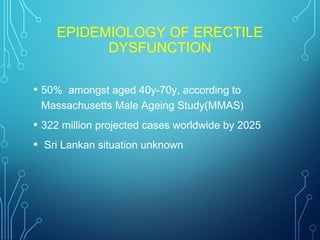
• 50% amongst aged 40y-70y, according to
Massachusetts Male Ageing Study(MMAS)
• 322 million projected cases worldwide by 2025
• Sri Lankan situation unknown
RISK FACTORS FOR ED
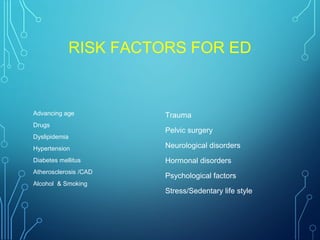
Advancing age
Drugs
Dyslipidemia
Hypertension
Diabetes mellitus
Atherosclerosis /CAD
Alcohol & Smoking
Trauma
Pelvic surgery
Neurological disorders
Hormonal disorders
Psychological factors
Stress/Sedentary life style
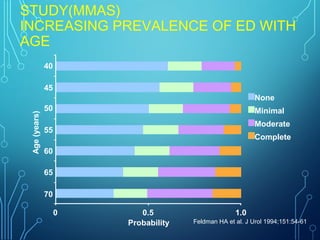
STUDY(MMAS)
INCREASING PREVALENCE OF ED WITH
AGE
0 0.5 1.0
70
65
60
55
50
45
40
Age(years)
Probability
None
Minimal
Moderate
Complete
Feldman HA et al. J Urol 1994;151:54-61
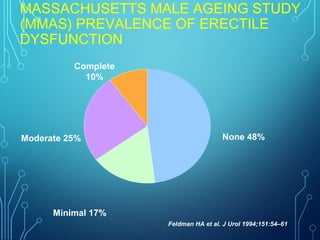
MASSACHUSETTS MALE AGEING STUDY
(MMAS) PREVALENCE OF ERECTILE
DYSFUNCTION
None 48%
Minimal 17%
Complete
10%
Moderate 25%
Feldman HA et al. J Urol 1994;151:54–61
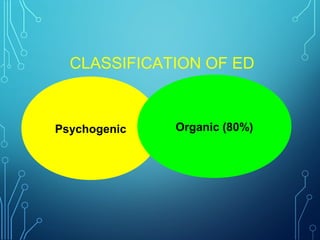
CLASSIFICATION OF ED
Psychogenic Organic (80%)
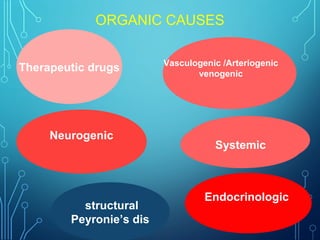
ORGANIC CAUSES
Therapeutic drugs
Endocrinologic
Neurogenic
structural
Peyronie’s dis
Arteriogenic
eg Atherosclerosis
Venogenic
E,venogenicVasculogenic /Arteriogenic
venogenic
Systemic
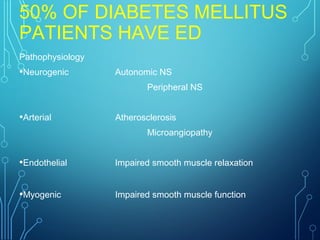
50% OF DIABETES MELLITUS
PATIENTS HAVE ED
Pathophysiology
•Neurogenic Autonomic NS
Peripheral NS
•Arterial Atherosclerosis
Microangiopathy
•Endothelial Impaired smooth muscle relaxation
•Myogenic Impaired smooth muscle function
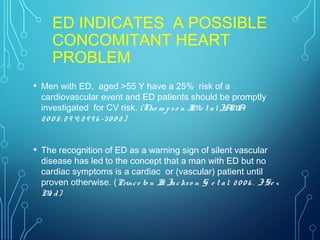
ED INDICATES A POSSIBLE
CONCOMITANT HEART
PROBLEM
• Men with ED, aged >55 Y have a 25% risk of a
cardiovascular event and ED patients should be promptly
investigated for CV risk. (Tho m pso n IMe t alJAMA
20 0 5; 29 4: 29 9 6 -30 0 2)
• The recognition of ED as a warning sign of silent vascular
disease has led to the concept that a man with ED but no
cardiac symptoms is a cardiac or (vascular) patient until
proven otherwise. (Prince to n II: Jackso n G e t al. 20 0 6 . JSe x
Me d)
PHYSIOLOGY OF NORMAL
ERECTION
•Cerebral control -PVN
•Autonomic control-parasympathetic stimulation
• Molecular Mechanisms Endothelial dysfunction
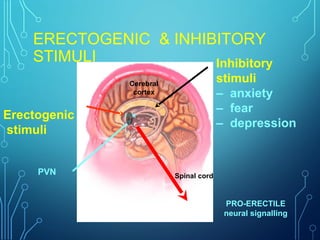
ERECTOGENIC & INHIBITORY
STIMULI
Cerebral
cortex
Spinal cord
Erectogenic
stimuli
Inhibitory
stimuli
– anxiety
– fear
– depression
PRO-ERECTILE
neural signalling
PVN
PVN
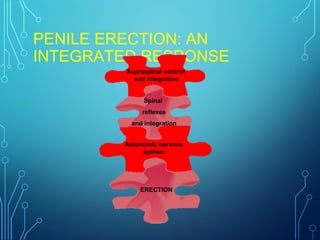
PENILE ERECTION: AN
INTEGRATED RESPONSE
Supraspinal control
and integration
Spinal
reflexes
and integration
Autonomic nervous
system
ERECTION
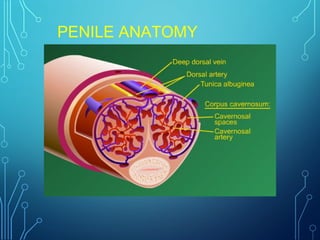
PENILE ANATOMY
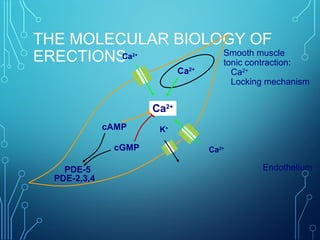
THE MOLECULAR BIOLOGY OF
ERECTIONS
Ca2+
cGMP
cAMP
Ca2+
Ca2+
Ca2+
K+
Endothelium
Smooth muscle
tonic contraction:
Ca2+
Locking mechanism
PDE-5
PDE-2,3,4
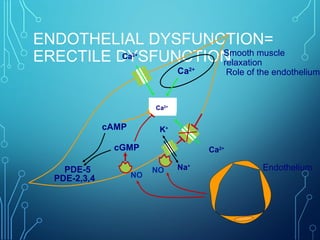
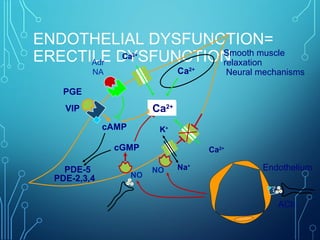
ENDOTHELIAL DYSFUNCTION=
ERECTILE DYSFUNCTION
Ca2+
cGMP
cAMP
Ca2+
Ca2+
Ca2+
K+
Na+
Ca2+Ca2+
NO
NO Endothelium
Smooth muscle
relaxation
Role of the endothelium
PDE-5
PDE-2,3,4
ENDOTHELIAL DYSFUNCTION=
ERECTILE DYSFUNCTION
NO
cGMP
cAMP
Adr
NA
Ca2+
PDE-5
Ca2+
Ca2+
K+
Na+
NO
Ca2+
PGE
VIP Ca2+
PDE-2,3,4
Endothelium
Smooth muscle
relaxation
Neural mechanisms
Ca2+
ACh
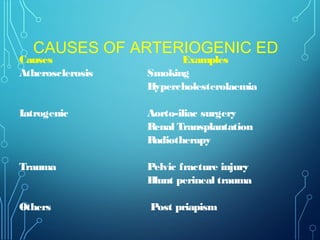
CAUSES OF ARTERIOGENIC ED
Causes Examples
Atherosclerosis Smoking
Hypercholesterolaemia
Iatrogenic Aorto-iliac surgery
Renal Transplantation
Radiotherapy
Trauma Pelvic fracture injury
Blunt perineal trauma
Others Post priapism
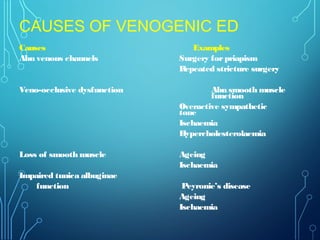
CAUSES OF VENOGENIC ED
Causes Examples
Abn venous channels Surgery forpriapism
Repeated stricture surgery
Veno-occlusive dysfunction Abn smooth muscle
function
Overactive sympathetic
tone
Ischaemia
Hypercholesterolaemia
Loss of smooth muscle Ageing
Ischaemia
Impaired tunica albuginae
function Peyronie’s disease
Ageing
Ischaemia
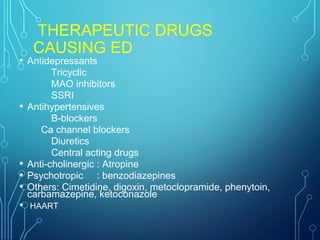
THERAPEUTIC DRUGS
CAUSING ED
• Antidepressants
Tricyclic
MAO inhibitors
SSRI
• Antihypertensives
B-blockers
Ca channel blockers
Diuretics
Central acting drugs
• Anti-cholinergic : Atropine
• Psychotropic : benzodiazepines
• Others: Cimetidine, digoxin, metoclopramide, phenytoin,
carbamazepine, ketoconazole
• HAART
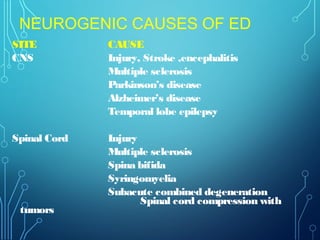
NEUROGENIC CAUSES OF ED
SITE CAUSE
CNS Injury, Stroke ,encephalitis
Multiple sclerosis
Parkinson’s disease
Alzheimer’s disease
Temporal lobe epilepsy
Spinal Cord Injury
Multiple sclerosis
Spina bifida
Syringomyelia
Subacute combined degeneration
Spinal cord compression with
tumors
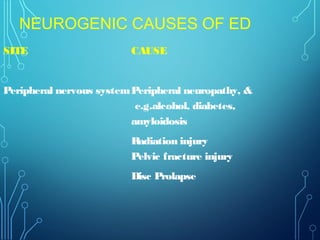
NEUROGENIC CAUSES OF ED
SITE CAUSE
Peripheral nervous systemPeripheral neuropathy, &
e.g.alcohol, diabetes,
amyloidosis
Radiation injury
Pelvic fracture injury
Disc Prolapse
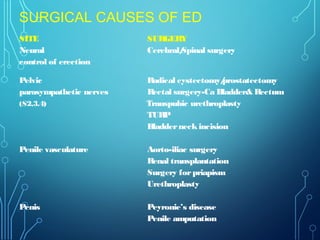
SURGICAL CAUSES OF ED
SITE SURGERY
Neural Cerebral/Spinal surgery
control of erection
Pelvic Radical cystectomy/prostatectomy
parasympathetic nerves Rectal surgery-Ca Bladder& Rectum
(S2,3.4) Transpubic urethroplasty
TURP
Bladderneckincision
Penile vasculature Aorto-iliac surgery
Renal transplantation
Surgery forpriapism
Urethroplasty
Penis Peyronie’s disease
Penile amputation
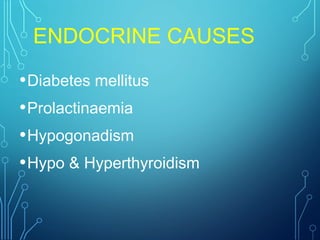
ENDOCRINE CAUSES
•Diabetes mellitus
•Prolactinaemia
•Hypogonadism
•Hypo & Hyperthyroidism
SYSTEMIC DISEASES
• Hyperlipidemia
• Atherosclerosis
• Hypertension
• Chronic renal failure
PSYCHOGENIC
• Sudden onset
• Situational
• Relationship problem
• Life event
• Anxiety, fear, depression
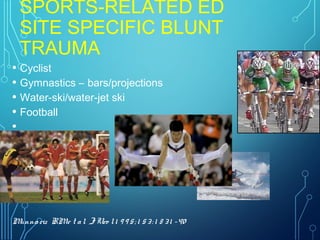
SPORTS-RELATED ED
SITE SPECIFIC BLUNT
TRAUMA
• Cyclist
• Gymnastics – bars/projections
• Water-ski/water-jet ski
• Football
•
•
•
Munnariz RMe t al. JUro l1 9 9 5; 1 53: 1 8 31 -40
HISTORY
• Chronic medical/Psychiatric / Surgical
conditions
• Sexual
• Psychosocial
• Drugs
• Smoking/alcohol/recreational drugs
• Erectile dysfunction
questionnaires(International Index of erectile
function/IIEF)
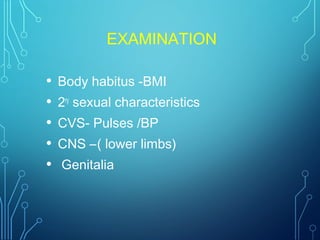
EXAMINATION
• Body habitus -BMI
• 2ry
sexual characteristics
• CVS- Pulses /BP
• CNS –( lower limbs)
• Genitalia
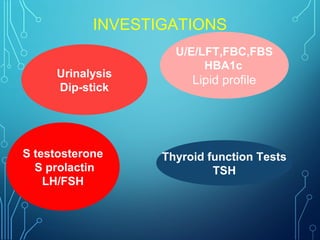
INVESTIGATIONS
U/E/LFT,FBC,FBS
HBA1c
Lipid profile
S testosterone
S prolactin
LH/FSH
Urinalysis
Dip-stick
Thyroid function Tests
TSH
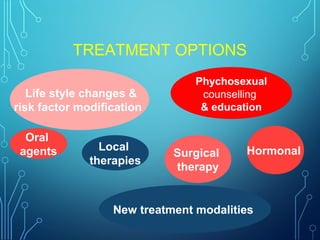
TREATMENT OPTIONS
Life style changes &
risk factor modification
Phychosexual
counselling
& education
Oral
agents Local
therapies
Surgical
therapy
New treatment modalities
Hormonal
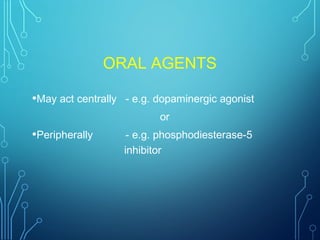
ORAL AGENTS
•May act centrally - e.g. dopaminergic agonist
or
•Peripherally - e.g. phosphodiesterase-5
inhibitor
AVAILABLE ORAL AGENTS
Phosphodiesterase-5 inhibitor
• Sildenafil citrate (VIAGRA
®
)
• Tadalafil (CIALIS
®
)
• Vardenafil (LEVITRA
®
)
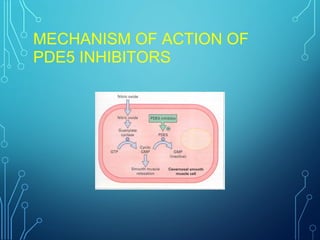
MECHANISM OF ACTION OF
PDE5 INHIBITORS
PDE5 INHIBITORS
Advantages
• Effective and
inexpensive
• Non invasive
• Require sexual
stimulation to be
effective
• Well tolerated
Disadvantages
• Contraindicated in
patients on nitrate
therapy
• Cytochrome P450 drug
interactions Caution
with protease inhibitors
DRUG INTERACTIONS OF PDE5
INHIBITORS
• Nitrates  added hypotensive effect
Recreational ‘Poppers’ (amyl nitrate)
Levels of PDE5 inhibitors Increased by
Protease inhibitors
erythromycin,
itraconazole/ ketoconazole
SILDENAFIL (VIAGRA,SELAGRA)
• Take ½ - 1 hour for action
• Action last 4 hours
• Food delays absorption
• Dose 25 mg-100mg
• Side effects: Headache, flushing, blocked nose,
epigastric discomfort, visual disturbance
SILDENAFIL & EYE PROBLEM
• Colour discrimination (blue-green)
• Non-anterior ischaemic optic neuropathy (NAION) – Po m e ranz e t
al20 0 2, 20 0 5, Bo shie r e t al20 0 2, Gruhn & Fle de lius 20 0 4
• Anterior ischamic optic neuropathy (AION) – Dhe e r e t al20 0 2
• Central serous chorioretinopathy – Allibhai e t al20 0 4
VARDENAFIL
(LEVITRA)
• Rapid onset of action (<30 mins)
• More specific for PDE-5
• Less side effects
• Action lasts 9 -12 hours
• Dose 10,20,40mg
TADALAFIL (CIALIS,
MEGAFIL)
• Longer half life
• Active for 24 hours
Dose 2.5mg -20mg
• Side effects- myalgia, back pain
• No visual disturbances
LOCAL THERAPIES
Second line
•Intra-urethral therapy
•Intra-cavernosal injection therapy
•Vacuum device therapy
INDICATION FOR LOCAL
THERAPIES
• Failure of oral drug therapy (DM)
• Contraindications to oral drugs (Nitrate
uses )
• Adverse events from oral drugs
• Individual preferences
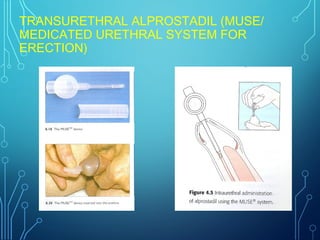
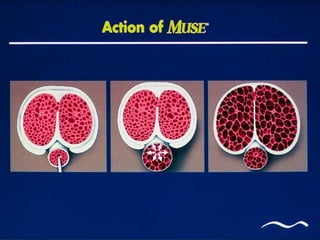
TRANSURETHRAL ALPROSTADIL (MUSE/
MEDICATED URETHRAL SYSTEM FOR
ERECTION)
TRANSURETHRAL
APPLICATION OF
ALPROSTADIL
Advantages
• No needles
• Effective in about 2/3 of men
• Suitable/acceptable for most
men
Disadvantages
• 30% incidence of penile pain
• Requires dexterity &
insertion post-micturition
• Slower acting than injection
• Patients need to be taught
technique
• Just prior to sex
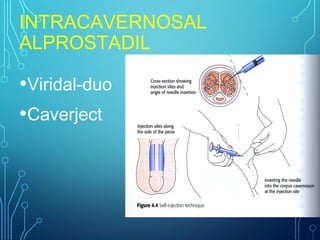
INTRACAVERNOSAL
ALPROSTADIL
•Viridal-duo
•Caverject
INTRACAVERNOSAL
INJECTION OF ALPROSTADIL
Advantages
• Rapidly effective
• Good success rates when
well motivated
• Suitable for most men
• Few contraindications &
drug interactions
Disadvantages
• Invasive, not acceptable
to some patients/partners
• Patients need to be
taught technique
• Manual dexterity &
reasonable eye sight
• Local side-effects (e.g.
penile pain, bleeding,
bruising, fibrosis)
• Priapism
• Just prior to sex
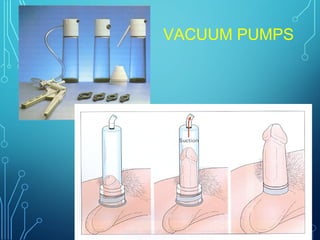
VACUUM PUMPS
VACUUM CONSTRICTION
DEVICES
Advantages
• Suitable for most men with ED
• Less side-effects
• Few contraindications
• Suitable for long term use
• Non invasive
Disadvantages
• Erections can be uncomfortable
• Erections may last > 30 minutes
• Sensation of ejaculation can be
impaired
• Lack of
spontaneity/cumbersome
• Partners may complain the
penis is felt cold
• Pivoting of penis at base
• Just prior to sex
SURGICAL THERAPY
• Penile prosthesis – Implant
• Correction of anatomical deformities-Peyronie’s disease
• Vascular surgery-may increase arterial inflow &
decrease venous outflow
young patients with arterial stenosis may be
candidates
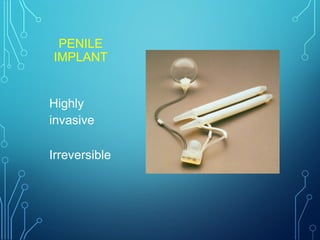
PENILE
IMPLANT
Highly
invasive
Irreversible
HORMONAL REPLACEMENT
INDICATIONS
• Young patients with primary hypogonadisam
• ED with low testosterone level
LOW DENSITY EXTRA-
COPORAL SHOCK WAVE
THERAPY(LI-ESWT)
Advantages
No pain
No adverse effects
Not on demand basis
Non invasive
Feasible
Tolerable
Disadvantages
Cost
HCWdependent
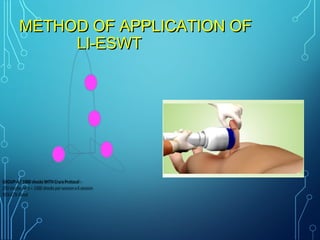
METHOD OF APPLICATION OFMETHOD OF APPLICATION OF
LI-ESWTLI-ESWT
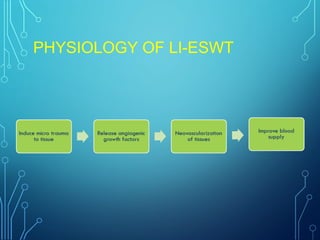
PHYSIOLOGY OF LI-ESWT
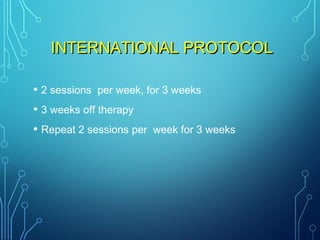
INTERNATIONAL PROTOCOLINTERNATIONAL PROTOCOL
• 2 sessions per week, for 3 weeks
• 3 weeks off therapy
• Repeat 2 sessions per week for 3 weeks
ED - THE FUTURE
• Alprostadil 0.3% topical cream licensing in Canada
and Europe ,Phase iii studies
• Gene therapy - based on vascular endothelial
growth factor and nitric oxide synthase genes-trails
TAKE HOME MASSAGE &
CHALLENGES
•In a steady relationship, involve sexual partner/s in
the management. it’s a problem to both partners
•Multidisciplinary approach is needed to manage
ED patients effectively
•Some treatments and investigations are costly and
not available in the SL government sector
Thank you

2016 Sessions: Erectile dysfunction

  • 1.
    TREATMENT MODALITIES IN ERECTILE DYSFUNCTION DRHIMALI PERERA CONSULTANT VENEREOLOGIST COORDINATOR TRAINING AND CAPACITY BUILDING NATIONAL STD /AIDS CONTROL PROGRAMME
  • 2.
    ERECTILE DYSFUNCTION ‘The consistent orrecurrent inability of a man to attain and or maintain a penile erection sufficient for sexual performance’
  • 3.
    EPIDEMIOLOGY OF ERECTILE DYSFUNCTION •50% amongst aged 40y-70y, according to Massachusetts Male Ageing Study(MMAS) • 322 million projected cases worldwide by 2025 • Sri Lankan situation unknown
  • 4.
    RISK FACTORS FORED Advancing age Drugs Dyslipidemia Hypertension Diabetes mellitus Atherosclerosis /CAD Alcohol & Smoking Trauma Pelvic surgery Neurological disorders Hormonal disorders Psychological factors Stress/Sedentary life style
  • 5.
    STUDY(MMAS) INCREASING PREVALENCE OFED WITH AGE 0 0.5 1.0 70 65 60 55 50 45 40 Age(years) Probability None Minimal Moderate Complete Feldman HA et al. J Urol 1994;151:54-61
  • 6.
    MASSACHUSETTS MALE AGEINGSTUDY (MMAS) PREVALENCE OF ERECTILE DYSFUNCTION None 48% Minimal 17% Complete 10% Moderate 25% Feldman HA et al. J Urol 1994;151:54–61
  • 7.
  • 8.
    ORGANIC CAUSES Therapeutic drugs Endocrinologic Neurogenic structural Peyronie’sdis Arteriogenic eg Atherosclerosis Venogenic E,venogenicVasculogenic /Arteriogenic venogenic Systemic
  • 9.
    50% OF DIABETESMELLITUS PATIENTS HAVE ED Pathophysiology •Neurogenic Autonomic NS Peripheral NS •Arterial Atherosclerosis Microangiopathy •Endothelial Impaired smooth muscle relaxation •Myogenic Impaired smooth muscle function
  • 10.
    ED INDICATES APOSSIBLE CONCOMITANT HEART PROBLEM • Men with ED, aged >55 Y have a 25% risk of a cardiovascular event and ED patients should be promptly investigated for CV risk. (Tho m pso n IMe t alJAMA 20 0 5; 29 4: 29 9 6 -30 0 2) • The recognition of ED as a warning sign of silent vascular disease has led to the concept that a man with ED but no cardiac symptoms is a cardiac or (vascular) patient until proven otherwise. (Prince to n II: Jackso n G e t al. 20 0 6 . JSe x Me d)
  • 11.
    PHYSIOLOGY OF NORMAL ERECTION •Cerebralcontrol -PVN •Autonomic control-parasympathetic stimulation • Molecular Mechanisms Endothelial dysfunction
  • 12.
    ERECTOGENIC & INHIBITORY STIMULI Cerebral cortex Spinalcord Erectogenic stimuli Inhibitory stimuli – anxiety – fear – depression PRO-ERECTILE neural signalling PVN PVN
  • 13.
    PENILE ERECTION: AN INTEGRATEDRESPONSE Supraspinal control and integration Spinal reflexes and integration Autonomic nervous system ERECTION
  • 14.
  • 15.
    THE MOLECULAR BIOLOGYOF ERECTIONS Ca2+ cGMP cAMP Ca2+ Ca2+ Ca2+ K+ Endothelium Smooth muscle tonic contraction: Ca2+ Locking mechanism PDE-5 PDE-2,3,4
  • 16.
    ENDOTHELIAL DYSFUNCTION= ERECTILE DYSFUNCTION Ca2+ cGMP cAMP Ca2+ Ca2+ Ca2+ K+ Na+ Ca2+Ca2+ NO NOEndothelium Smooth muscle relaxation Role of the endothelium PDE-5 PDE-2,3,4
  • 17.
    ENDOTHELIAL DYSFUNCTION= ERECTILE DYSFUNCTION NO cGMP cAMP Adr NA Ca2+ PDE-5 Ca2+ Ca2+ K+ Na+ NO Ca2+ PGE VIPCa2+ PDE-2,3,4 Endothelium Smooth muscle relaxation Neural mechanisms Ca2+ ACh
  • 18.
    CAUSES OF ARTERIOGENICED Causes Examples Atherosclerosis Smoking Hypercholesterolaemia Iatrogenic Aorto-iliac surgery Renal Transplantation Radiotherapy Trauma Pelvic fracture injury Blunt perineal trauma Others Post priapism
  • 19.
    CAUSES OF VENOGENICED Causes Examples Abn venous channels Surgery forpriapism Repeated stricture surgery Veno-occlusive dysfunction Abn smooth muscle function Overactive sympathetic tone Ischaemia Hypercholesterolaemia Loss of smooth muscle Ageing Ischaemia Impaired tunica albuginae function Peyronie’s disease Ageing Ischaemia
  • 20.
    THERAPEUTIC DRUGS CAUSING ED •Antidepressants Tricyclic MAO inhibitors SSRI • Antihypertensives B-blockers Ca channel blockers Diuretics Central acting drugs • Anti-cholinergic : Atropine • Psychotropic : benzodiazepines • Others: Cimetidine, digoxin, metoclopramide, phenytoin, carbamazepine, ketoconazole • HAART
  • 21.
    NEUROGENIC CAUSES OFED SITE CAUSE CNS Injury, Stroke ,encephalitis Multiple sclerosis Parkinson’s disease Alzheimer’s disease Temporal lobe epilepsy Spinal Cord Injury Multiple sclerosis Spina bifida Syringomyelia Subacute combined degeneration Spinal cord compression with tumors
  • 22.
    NEUROGENIC CAUSES OFED SITE CAUSE Peripheral nervous systemPeripheral neuropathy, & e.g.alcohol, diabetes, amyloidosis Radiation injury Pelvic fracture injury Disc Prolapse
  • 23.
    SURGICAL CAUSES OFED SITE SURGERY Neural Cerebral/Spinal surgery control of erection Pelvic Radical cystectomy/prostatectomy parasympathetic nerves Rectal surgery-Ca Bladder& Rectum (S2,3.4) Transpubic urethroplasty TURP Bladderneckincision Penile vasculature Aorto-iliac surgery Renal transplantation Surgery forpriapism Urethroplasty Penis Peyronie’s disease Penile amputation
  • 24.
  • 25.
    SYSTEMIC DISEASES • Hyperlipidemia •Atherosclerosis • Hypertension • Chronic renal failure
  • 26.
    PSYCHOGENIC • Sudden onset •Situational • Relationship problem • Life event • Anxiety, fear, depression
  • 27.
    SPORTS-RELATED ED SITE SPECIFICBLUNT TRAUMA • Cyclist • Gymnastics – bars/projections • Water-ski/water-jet ski • Football • • • Munnariz RMe t al. JUro l1 9 9 5; 1 53: 1 8 31 -40
  • 28.
    HISTORY • Chronic medical/Psychiatric/ Surgical conditions • Sexual • Psychosocial • Drugs • Smoking/alcohol/recreational drugs • Erectile dysfunction questionnaires(International Index of erectile function/IIEF)
  • 29.
    EXAMINATION • Body habitus-BMI • 2ry sexual characteristics • CVS- Pulses /BP • CNS –( lower limbs) • Genitalia
  • 30.
    INVESTIGATIONS U/E/LFT,FBC,FBS HBA1c Lipid profile S testosterone Sprolactin LH/FSH Urinalysis Dip-stick Thyroid function Tests TSH
  • 31.
    TREATMENT OPTIONS Life stylechanges & risk factor modification Phychosexual counselling & education Oral agents Local therapies Surgical therapy New treatment modalities Hormonal
  • 32.
    ORAL AGENTS •May actcentrally - e.g. dopaminergic agonist or •Peripherally - e.g. phosphodiesterase-5 inhibitor
  • 33.
    AVAILABLE ORAL AGENTS Phosphodiesterase-5inhibitor • Sildenafil citrate (VIAGRA ® ) • Tadalafil (CIALIS ® ) • Vardenafil (LEVITRA ® )
  • 34.
    MECHANISM OF ACTIONOF PDE5 INHIBITORS
  • 35.
    PDE5 INHIBITORS Advantages • Effectiveand inexpensive • Non invasive • Require sexual stimulation to be effective • Well tolerated Disadvantages • Contraindicated in patients on nitrate therapy • Cytochrome P450 drug interactions Caution with protease inhibitors
  • 36.
    DRUG INTERACTIONS OFPDE5 INHIBITORS • Nitrates  added hypotensive effect Recreational ‘Poppers’ (amyl nitrate) Levels of PDE5 inhibitors Increased by Protease inhibitors erythromycin, itraconazole/ ketoconazole
  • 37.
    SILDENAFIL (VIAGRA,SELAGRA) • Take½ - 1 hour for action • Action last 4 hours • Food delays absorption • Dose 25 mg-100mg • Side effects: Headache, flushing, blocked nose, epigastric discomfort, visual disturbance
  • 38.
    SILDENAFIL & EYEPROBLEM • Colour discrimination (blue-green) • Non-anterior ischaemic optic neuropathy (NAION) – Po m e ranz e t al20 0 2, 20 0 5, Bo shie r e t al20 0 2, Gruhn & Fle de lius 20 0 4 • Anterior ischamic optic neuropathy (AION) – Dhe e r e t al20 0 2 • Central serous chorioretinopathy – Allibhai e t al20 0 4
  • 39.
    VARDENAFIL (LEVITRA) • Rapid onsetof action (<30 mins) • More specific for PDE-5 • Less side effects • Action lasts 9 -12 hours • Dose 10,20,40mg
  • 40.
    TADALAFIL (CIALIS, MEGAFIL) • Longerhalf life • Active for 24 hours Dose 2.5mg -20mg • Side effects- myalgia, back pain • No visual disturbances
  • 41.
    LOCAL THERAPIES Second line •Intra-urethraltherapy •Intra-cavernosal injection therapy •Vacuum device therapy
  • 42.
    INDICATION FOR LOCAL THERAPIES •Failure of oral drug therapy (DM) • Contraindications to oral drugs (Nitrate uses ) • Adverse events from oral drugs • Individual preferences
  • 43.
    TRANSURETHRAL ALPROSTADIL (MUSE/ MEDICATEDURETHRAL SYSTEM FOR ERECTION)
  • 44.
    TRANSURETHRAL APPLICATION OF ALPROSTADIL Advantages • Noneedles • Effective in about 2/3 of men • Suitable/acceptable for most men Disadvantages • 30% incidence of penile pain • Requires dexterity & insertion post-micturition • Slower acting than injection • Patients need to be taught technique • Just prior to sex
  • 46.
  • 47.
    INTRACAVERNOSAL INJECTION OF ALPROSTADIL Advantages •Rapidly effective • Good success rates when well motivated • Suitable for most men • Few contraindications & drug interactions Disadvantages • Invasive, not acceptable to some patients/partners • Patients need to be taught technique • Manual dexterity & reasonable eye sight • Local side-effects (e.g. penile pain, bleeding, bruising, fibrosis) • Priapism • Just prior to sex
  • 48.
  • 49.
    VACUUM CONSTRICTION DEVICES Advantages • Suitablefor most men with ED • Less side-effects • Few contraindications • Suitable for long term use • Non invasive Disadvantages • Erections can be uncomfortable • Erections may last > 30 minutes • Sensation of ejaculation can be impaired • Lack of spontaneity/cumbersome • Partners may complain the penis is felt cold • Pivoting of penis at base • Just prior to sex
  • 50.
    SURGICAL THERAPY • Penileprosthesis – Implant • Correction of anatomical deformities-Peyronie’s disease • Vascular surgery-may increase arterial inflow & decrease venous outflow young patients with arterial stenosis may be candidates
  • 51.
  • 52.
    HORMONAL REPLACEMENT INDICATIONS • Youngpatients with primary hypogonadisam • ED with low testosterone level
  • 53.
    LOW DENSITY EXTRA- COPORALSHOCK WAVE THERAPY(LI-ESWT) Advantages No pain No adverse effects Not on demand basis Non invasive Feasible Tolerable Disadvantages Cost HCWdependent
  • 54.
    METHOD OF APPLICATIONOFMETHOD OF APPLICATION OF LI-ESWTLI-ESWT
  • 55.
  • 56.
    INTERNATIONAL PROTOCOLINTERNATIONAL PROTOCOL •2 sessions per week, for 3 weeks • 3 weeks off therapy • Repeat 2 sessions per week for 3 weeks
  • 57.
    ED - THEFUTURE • Alprostadil 0.3% topical cream licensing in Canada and Europe ,Phase iii studies • Gene therapy - based on vascular endothelial growth factor and nitric oxide synthase genes-trails
  • 58.
    TAKE HOME MASSAGE& CHALLENGES •In a steady relationship, involve sexual partner/s in the management. it’s a problem to both partners •Multidisciplinary approach is needed to manage ED patients effectively •Some treatments and investigations are costly and not available in the SL government sector
  • 59.

Editor's Notes

  • #5 HT –Ed more prevalent with HT than age-matched GP Atherosclerosis –Atheromata-reduce penile perfusion Dyslipedimia –high cholesterol and low HDL
  • #6 MAAS shows 15% had ED with hypertension
  • #13 PVN-Paraventricular nucleus in hypothalamus
  • #16 In the flaccid state Cavernous smooth muscle and penile artery smooth muscle are in tonic contraction. Tonic contraction is maintained by the ca locking mechanism of the smooth muscle. Cavenosal and penile artery smooth muscle relaxation leads to erection. This process is predominantly via neurotransmitter No. NO is released from endothelial cells and parasympatheic non cholinerigic nerve endings. The second messenger system leading to caverous smooth muscle relaxation is mediated via two distinct pathways. C AMP amd CGMP. NO stimulate the formation of CGMP. PGE1 and VIP stimulate cAMP formation. Adnenarlin and noadrenalin inhibit the formation of cyclic AMP. Both cAMP and CGMP promote efflux of ca from the cell, leading to smooth muscle relaxation and vasodilation resulting in erection. CGMP is broken down by enzyme pospodiesterase 5. Other pospodiesterse enzimes involved are PDE 2,3 and 4