


Erectile dysfunction – a growing problem   Erection Physics


Sequence of events Stimulus Either cerebral cortex or tactile
Visual  Auditory Imagined tactile
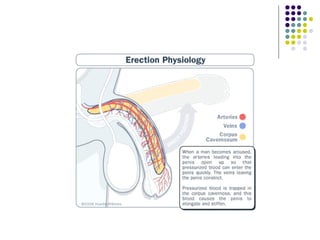
Penile artery relaxation due to NO release in muscle cells Passive engorgement of pudendal arteries
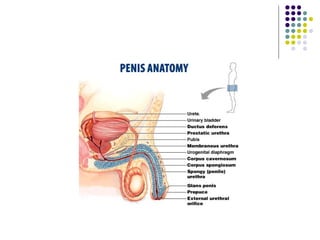
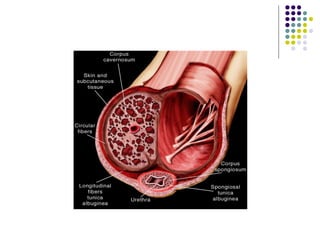
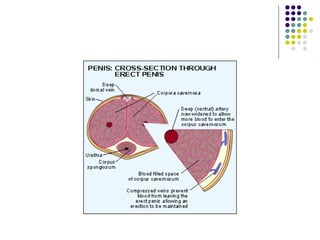
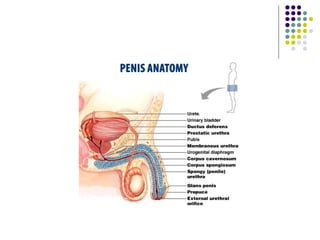
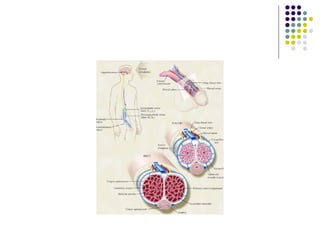
Corpus cavernosa ( 2 main tubes in penis) corpus spongiosum These engorge Blood pressure strains on sheath Closes vein escape of blood
Blood and nerve function  Blood and nerve supply in perineal area: Affected by injury (spinal cord) pressure plaque ( diabetes and CVD) medication ( also marijuana) smoking drugs (alcohol)
Other causes  Age ( nerve function, diabetes, proper NO function, testosterone deficiency) Hypertension High estrogens  Prostate cancer treatment ( surgery or hormonal) Transmitter problems
Erectile Dysfunction (ED) Definition Epidemiology Aetiology Clinical features History Examination Investigation Treatment
Definition The consistent inability to obtain and maintain penile erection sufficient to complete satisfactory sexual performance
definitions ED. Impotence Infertility
 
 
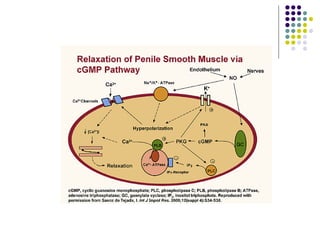
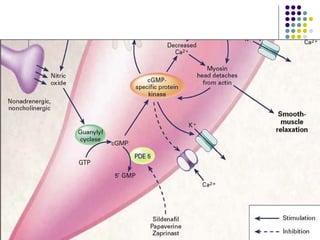
Basic Penis biology 3 types of cells in penile corpora cavernosa: Neuron cells release Nitric Oxide which causes calcium ions to enter storage areas and decrease calcium levels in tissue Then smooth muscles relax and endothelial cells flatten and block exodus of blood
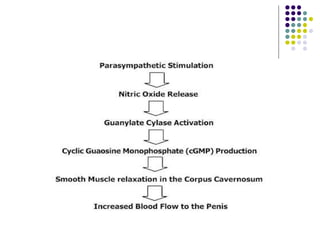
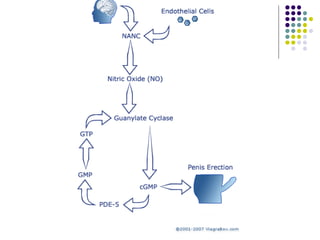
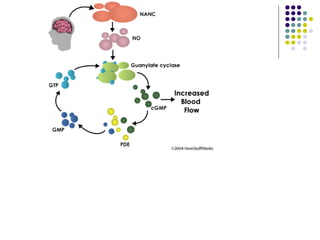
Stimuli--  hypothalamus   autonomic nerves--   NO--  penile muscle relaxation  endothelial cells flatten on sides of sinusoids, block veins. Other neurotransmitters, like norepinephrine  Increase calcium which contracts muscle cells Testosterone and acetylcholine also influence erection.
Summary: Messages via autonomic, cholinergic, norepinephrine and “T” control Nitric Oxide levels-   Calcium levels Autonomic nerve fibers  NO  enzyme (Guanylyl cyclase)  -   converts cGTP into cGMP   calcium storage   sliding filament relaxation and sinusoids fill
treatments Penile injections ( smooth muscle relaxants) Converts cGTP to cGMP  Calcium levels    relaxed sinusoids Viagra and other ED meds. Inhibit cGMP degradation ( maintains erection) Phosphodiesterase 5 is the chemical which degrades cGMP…ending the erection
Name a famous drug? A  phosphodiesterase type 5 inhibitor, often shortened to PDE5 inhibitor, is a drug used to block the degradative action of phosphodiesterase type 5 on cyclic GMP in the smooth muscle cells lining the blood vessels supplying the corpus cavernosum of the penis. These drugs are used in the treatment of erectile dysfunction, and were the first effective oral treatment available for the condition
Does Viagra need an intact apparatus? Needs penile blood flow Intact nerves and sensory impulses NO production Sexual stimulation


Epidemiology Estimated to affect 152m men worldwide Non-diabetic men 0.1-18.4% prevalence In a study of 541 diabetic males 35% in diabetic men 5.7% in 20-24 year olds 52.4% in 55-59 years olds ED is a growing problem Massachusetts Male Aging Study  estimate an 11% world increase by 2015
Aetiology Vascular Neurological Endocrine Psychological Pharmacological Penile tissue abnormalities Others
Vascular Arterial insufficiency Endothelial dysfunction (up to 95%) Discrete lesions Venous leakage Failure of venule constriction
Neurological Damage to autonomic nervous system Predominant parasympathetic damage
Endocrine Hypogonadism Most commonly primary testosterone deficiency Secondary hypogonadism Hypothyroidism Hyperprolactinaemia
Other causes of ED Penile Balinitis Phymosis Penile finrosis Tumours Trauma Pharmacoloical
PMH Glycaemic control Vascular/neurological disease Urological PSH and trauma DH Anti-hypertensives Androgen antagonists Sedatives Drugs that cause hyperprolactinaemia (phenolthiazides) Alcohol Psychological assessment
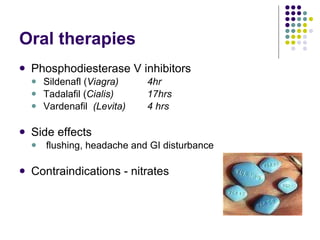
Oral therapies Phosphodiesterase V inhibitors Sildenafl ( Viagra) 4hr Tadalafil ( Cialis) 17hrs Vardenafil  (Levita) 4 hrs Side effects flushing, headache and GI disturbance Contraindications - nitrates


Efficacy of PDE-V inhibitors Hundreds of studies internauinally Improved erections and increased successful episodes of sexual intercourse vs placebo (15 RCTs)
PDE V inhibitor prescribing Following conditions DM PD, MS, polyiomyelitis Pinal cord injuries, spina bifida Radical prostatectomy
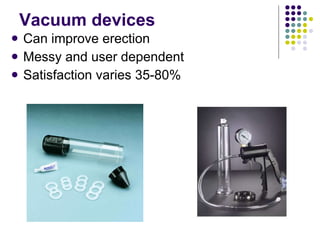
Vacuum devices Can improve erection Messy and user dependent Satisfaction varies 35-80%
Intracavernosal injections Intracavernosal injections with prostaglandins Alprostadil (prostaglandin E1) One large RCT found increased rate of satisfactory erections when alprostadil injected compared to placebo Side effects – pain, priapism
Testosterone replacement Improves erectile function and libido Preparations Topical (testim gel) Im testosterone Long-acting depots
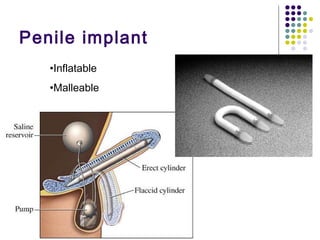
Penile implant Inflatable Malleable
Psychosexual counselling Talking therapies for men and couples
Summary ED Common Marker for other forms of neurovascular complications in diabetes Psychologically damaging Treatable Treat associated hormonal deficiencies

Erection physics witkov modification

  • 1.
    Erectile dysfunction –a growing problem Erection Physics
  • 2.
  • 3.
  • 4.
  • 5.
  • 6.
    Sequence of eventsStimulus Either cerebral cortex or tactile
  • 7.
    Visual AuditoryImagined tactile
  • 8.
    Penile artery relaxationdue to NO release in muscle cells Passive engorgement of pudendal arteries
  • 9.
    Corpus cavernosa (2 main tubes in penis) corpus spongiosum These engorge Blood pressure strains on sheath Closes vein escape of blood
  • 10.
    Blood and nervefunction Blood and nerve supply in perineal area: Affected by injury (spinal cord) pressure plaque ( diabetes and CVD) medication ( also marijuana) smoking drugs (alcohol)
  • 11.
    Other causes Age ( nerve function, diabetes, proper NO function, testosterone deficiency) Hypertension High estrogens Prostate cancer treatment ( surgery or hormonal) Transmitter problems
  • 12.
    Erectile Dysfunction (ED)Definition Epidemiology Aetiology Clinical features History Examination Investigation Treatment
  • 13.
    Definition The consistentinability to obtain and maintain penile erection sufficient to complete satisfactory sexual performance
  • 14.
  • 15.
  • 16.
  • 17.
    Basic Penis biology3 types of cells in penile corpora cavernosa: Neuron cells release Nitric Oxide which causes calcium ions to enter storage areas and decrease calcium levels in tissue Then smooth muscles relax and endothelial cells flatten and block exodus of blood
  • 18.
    Stimuli--  hypothalamus autonomic nerves--  NO--  penile muscle relaxation  endothelial cells flatten on sides of sinusoids, block veins. Other neurotransmitters, like norepinephrine Increase calcium which contracts muscle cells Testosterone and acetylcholine also influence erection.
  • 19.
    Summary: Messages viaautonomic, cholinergic, norepinephrine and “T” control Nitric Oxide levels-  Calcium levels Autonomic nerve fibers  NO  enzyme (Guanylyl cyclase) -  converts cGTP into cGMP  calcium storage  sliding filament relaxation and sinusoids fill
  • 20.
    treatments Penile injections( smooth muscle relaxants) Converts cGTP to cGMP  Calcium levels  relaxed sinusoids Viagra and other ED meds. Inhibit cGMP degradation ( maintains erection) Phosphodiesterase 5 is the chemical which degrades cGMP…ending the erection
  • 21.
    Name a famousdrug? A phosphodiesterase type 5 inhibitor, often shortened to PDE5 inhibitor, is a drug used to block the degradative action of phosphodiesterase type 5 on cyclic GMP in the smooth muscle cells lining the blood vessels supplying the corpus cavernosum of the penis. These drugs are used in the treatment of erectile dysfunction, and were the first effective oral treatment available for the condition
  • 22.
    Does Viagra needan intact apparatus? Needs penile blood flow Intact nerves and sensory impulses NO production Sexual stimulation
  • 23.
  • 24.
  • 25.
  • 26.
    Epidemiology Estimated toaffect 152m men worldwide Non-diabetic men 0.1-18.4% prevalence In a study of 541 diabetic males 35% in diabetic men 5.7% in 20-24 year olds 52.4% in 55-59 years olds ED is a growing problem Massachusetts Male Aging Study estimate an 11% world increase by 2015
  • 27.
    Aetiology Vascular NeurologicalEndocrine Psychological Pharmacological Penile tissue abnormalities Others
  • 28.
    Vascular Arterial insufficiencyEndothelial dysfunction (up to 95%) Discrete lesions Venous leakage Failure of venule constriction
  • 29.
    Neurological Damage toautonomic nervous system Predominant parasympathetic damage
  • 30.
    Endocrine Hypogonadism Mostcommonly primary testosterone deficiency Secondary hypogonadism Hypothyroidism Hyperprolactinaemia
  • 31.
    Other causes ofED Penile Balinitis Phymosis Penile finrosis Tumours Trauma Pharmacoloical
  • 32.
    PMH Glycaemic controlVascular/neurological disease Urological PSH and trauma DH Anti-hypertensives Androgen antagonists Sedatives Drugs that cause hyperprolactinaemia (phenolthiazides) Alcohol Psychological assessment
  • 33.
    Oral therapies PhosphodiesteraseV inhibitors Sildenafl ( Viagra) 4hr Tadalafil ( Cialis) 17hrs Vardenafil (Levita) 4 hrs Side effects flushing, headache and GI disturbance Contraindications - nitrates
  • 34.
  • 35.
  • 36.
  • 37.
    Efficacy of PDE-Vinhibitors Hundreds of studies internauinally Improved erections and increased successful episodes of sexual intercourse vs placebo (15 RCTs)
  • 38.
    PDE V inhibitorprescribing Following conditions DM PD, MS, polyiomyelitis Pinal cord injuries, spina bifida Radical prostatectomy
  • 39.
    Vacuum devices Canimprove erection Messy and user dependent Satisfaction varies 35-80%
  • 40.
    Intracavernosal injections Intracavernosalinjections with prostaglandins Alprostadil (prostaglandin E1) One large RCT found increased rate of satisfactory erections when alprostadil injected compared to placebo Side effects – pain, priapism
  • 41.
    Testosterone replacement Improveserectile function and libido Preparations Topical (testim gel) Im testosterone Long-acting depots
  • 42.
  • 43.
    Psychosexual counselling Talkingtherapies for men and couples
  • 44.
    Summary ED CommonMarker for other forms of neurovascular complications in diabetes Psychologically damaging Treatable Treat associated hormonal deficiencies