Disorders of Ejaculation
Aaron Spitz MD
Assistant Clinical Professor
UC Irvine, Department of Urology
Ejaculatory dysfunction
 Any condition, whether it be medical, surgical, or
psychological, that disrupts the normal ejaculation pathway,
from the cortical influence to the sympathetic nervous
system to the somatic afferents from the penis or the
somatic efferents to the pelvic floor, can lead to ejaculatory
dysfunction
 Delayed ejaculation
 Premature ejaculation,
 Retrograde ejaculation,
 Anejaculation
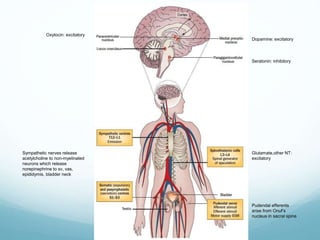
Dopamine: excitatory
Seratonin: inhibitory
Oxytocin: excitatory
Glutamate,other NT:
excitatory
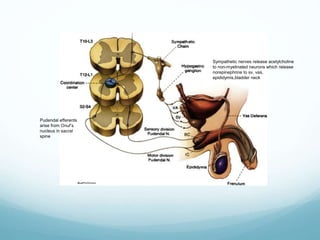
Sympathetic nerves release
acetylcholine to non-myelinated
neurons which release
norepinephrine to sv, vas,
epididymis, bladder neck
Pudendal efferents
arise from Onuf’s
nucleus in sacral spine
Sympathetic nerves release acetylcholine
to non-myelinated neurons which release
norepinephrine to sv, vas,
epididymis,bladder neck
Pudendal efferents
arise from Onuf’s
nucleus in sacral
spine
Delayed Ejaculation
The World Health Organization 2nd Consultation Sexual
Dysfunction:
The persistent or recurrent difficulty, delay in, or absence
of attaining orgasm after sufficient sexual stimulation,
which causes personal distress.
Intravaginal Ejaculatory Latency
Time
(IELT) The duration that begins at
intromission (penile entry into the
vagina) and ends at intravaginal
ejaculation or exhaustion
Determination of IELT
Stopwatch studies by Waldinger et al.
500 couples, five countries
 IELT exists as a distribution
 33 seconds to 44 minutes median: 5.4 minutes
21–23 minutes = +2 SD
Men who cannot climax after 25 minutes or experience
distress meet criteria for Delayed Ejaculation
Waldinger M,. J Sex Med 2005;2:498–507
McMahon C, J Sex Med 2013;10:204–29
Neurotransmitters/hormones
 Dopamine: facilitates ejaculation
 Dopamine levels increase steadily through copulation to
ejaculation in rats
 Prolactin suppresses ejaculation when in excess
through testosterone inhibition and as a
neurotransmitter
 Additional players:
 Acetylcholine, norepinephrine, nitric oxide, GABA
Neurotransmitters/hormones
 Spinal ejaculatory center is under central control
 Serotonin: two receptors implicated
 5-HT2C, 5-HT1A
 5-HT2C delays ejaculatory latency time
 5-HT1A shortens ejaculatory latency time
 These receptors are found on oxytocin secreting nerves and
stimulate oxytocin release.
 Oxytocin shortens IELT.
 SSRIs cause desensitization of these receptors oxytocin
Designations
 Primary (lifelong)
 all partnered sexual activity from first opportunity onwards
 Secondary (acquired)
 Surgery
 Medical disease
 Psychosexual change
Primary: Psychological/behavioral
 Conflicted masturbation
 Auto sexual orientation
 Increased masturbation
 Idiosyncratic masturbation
 Sensation therefore NOT easily reproduced with partner
 Decreased sensitivity
 Due to overuse vs causes overuse
 Physical/Subjective mismatch
 Arousal/Desire mismatch
Surgical (acquired)
 RPLND
 Penectomy
 Pelvic surgery
Secondary (acquired)
 Endocrine imbalance
 Hypothyroid
 Low testosterone
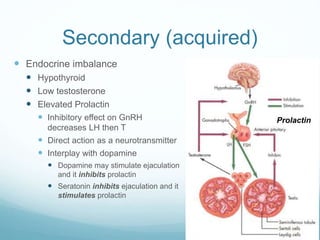
 Elevated Prolactin
 Inhibitory effect on GnRH
decreases LH then T
 Direct action as a neurotransmitter
 Interplay with dopamine
 Dopamine may stimulate ejaculation
and it inhibits prolactin
 Seratonin inhibits ejaculation and it
stimulates prolactin
Prolactin
Medications
 SSRI: increased seratonin decreases receptor sensitivity
which decreases oxytocin release
 Antipsychotics:
 Antagonize dopamine (dopamine is pro ejaculatory)
 Elevate prolactin (prolactin is counter ejaculatory)
 Inhibit alpha adrenergic tone of bladder neck
 Antiandrogens
Neurogenic
 Interference with communication between the spinal
ejaculatory center and the sympathetic and
parasympathetic nervous system
 Spinal cord injury
 MS
 DM
Age
 Decreased penile sensitivity
 Natural decline in fast-conducting peripheral nerves
starting in 3rd decade
 Concurrent atrophy of dermis and underlying stroma
 Accumulation of chronic medical conditions
Chronic illness
 Chronic pain
 Renal disease: Dialysis
 (50% with delayed or inhibited ejaculation)
 Vascular disease
 Prostate disease
Psychosexual
 Stress in relationship/life
 Fatigue
 Performance anxiety
Evaluation
 History
 Query regarding strong religious/ethical beliefs regarding
sex
 Age of first ejaculation
 Pattern of ejaculation
 Difficulty with sex versus masturbation?
 Lifelong versus gradual versus abrupt onset
 Temporal association with other medical conditions
 Relationship stress/female sexual dysfunction
Physical Exam
 Signs of low T: genitals/breasts/pelvis/hair
 Signs of hypothyroidism
 Abnormal prostate (mullerian duct cysts)
Labs
 Rule out chronic medical conditions/endocrine
imbalance
 CBC, CHEM 20, lipid panel, TSH, Testosterone, Prolactin
Treatment
 Psychosexual counseling
 Basic education in mechanics of sexual intercourse and
orgasm
 Establish an anxiety-free environment
 Engagement of partner in therapy
Treatment
 Sensate focus:
 Couple based “homework”
 First: Achieve ejaculation without coitus
 Then: bring the male to the brink and then insert penis
into vagina to provide final stimulation
 Breaks mental barrier to ejaculating within the vagina
 Masturbation retraining to acclimatize the male to
stimulation similar to partnered intercourse
 Reducing the frequency of masturbation
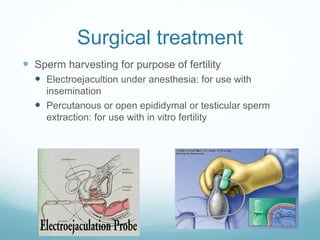
Surgical treatment
 Sperm harvesting for purpose of fertility
 Electroejacultion under anesthesia: for use with
insemination
 Percutanous or open epididymal or testicular sperm
extraction: for use with in vitro fertility
Neuro/endocrine treatment
 Hypogonadism: androgens
 Hypothyroidism: levothyroid
 Hyperprolactinemia: cabergoline
 SSRI related: switch meds if possible
 Most to least inhibition
 Paroxetine (Paxil) – fluoxetine (Prozac) –sertraline (Zoloft)
 Fluvoxamine (Luvox) does not cause ejaculatory delay
 Bupropion: not associated with sexual dysfunction
 Antipsychotics: newer agents affect dopamine less and
cause less hyperprolactinemia
Pharmaceutical treatment
 Alpha -1-adrenergic receptor agonists: imipramine,
ephedrine, pseudoephedrine, midodrine
 Increase sympathetic tone for emission and ejaculation
 Midodrine: very effective for organic anejaculation (58%
improved, 30% cured)
 MS responded best, sympathectomy worst
Pharmaceutical continued
 Yohimbine: central apha-2-adrenergic receptor agonist
 70% “much improved” in SRI associated sexual
dysfunction
 Increases HR and BP
 Cyproheptadine: antihistamine/antiseratonergic (blocks
5-HT1A, 5-HT2A r)
 Effective for delayed ejaculation due to SSRI, MOA,
Imipramine
 High rates of sedation, possible relapse of depression
Pharmaceutical
 Amantadine: indirect stimulation of dopaminergic
nerves: 40% improvement in SRI induced delayed
ejaculation
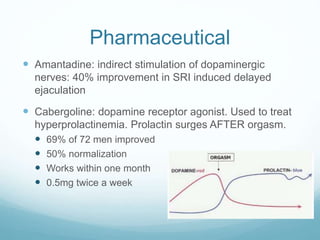
 Cabergoline: dopamine receptor agonist. Used to treat
hyperprolactinemia. Prolactin surges AFTER orgasm.
 69% of 72 men improved
 50% normalization
 Works within one month
 0.5mg twice a week
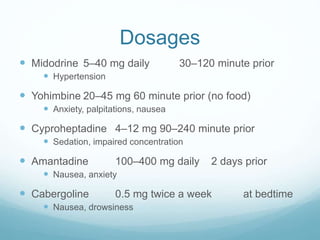
Dosages
 Midodrine 5–40 mg daily 30–120 minute prior
 Hypertension
 Yohimbine 20–45 mg 60 minute prior (no food)
 Anxiety, palpitations, nausea
 Cyproheptadine 4–12 mg 90–240 minute prior
 Sedation, impaired concentration
 Amantadine 100–400 mg daily 2 days prior
 Nausea, anxiety
 Cabergoline 0.5 mg twice a week at bedtime
 Nausea, drowsiness
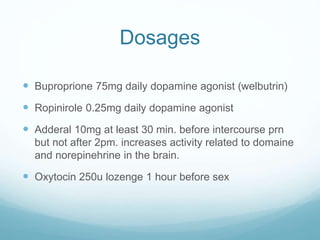
Dosages
 Buproprione 75mg daily dopamine agonist (welbutrin)
 Ropinirole 0.25mg daily dopamine agonist
 Adderal 10mg at least 30 min. before intercourse prn
but not after 2pm. increases activity related to domaine
and norepinehrine in the brain.
 Oxytocin 250u lozenge 1 hour before sex
Conclusions
 Difficult, but common
 Psycho-sexual causes make this condition complex to
treat
 Pharmacologic treatments are evolving
Premature Ejaculation
 Definition: Premature ejaculation is ejaculation that
occurs sooner than desired, either before or shortly
after penetration, causing distress to either one or both
partners.
 Incidence 20 to 30%
 For clinical trials, it’s usually under 2 minutes
Diagnosis
 History
 frequency and duration of PE,
 relationship to specific partners,
 occurrence with all or some attempts,
 degree of stimulus resulting in PE,
 nature and frequency of sexual activity (foreplay, masturbation,
intercourse, use of visual clues, etc.),
 impact of PE on sexual activity,
 types and quality of personal relationships and quality of life,
aggravating or alleviating factors, and
 relationship to drug use or abuse
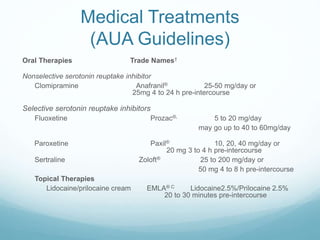
Medical Treatments
(AUA Guidelines)
Oral Therapies Trade Names†
Nonselective serotonin reuptake inhibitor
Clomipramine Anafranil® 25-50 mg/day or
25mg 4 to 24 h pre-intercourse
Selective serotonin reuptake inhibitors
Fluoxetine Prozac®, 5 to 20 mg/day
may go up to 40 to 60mg/day
Paroxetine Paxil® 10, 20, 40 mg/day or
20 mg 3 to 4 h pre-intercourse
Sertraline Zoloft® 25 to 200 mg/day or
50 mg 4 to 8 h pre-intercourse
Topical Therapies
Lidocaine/prilocaine cream EMLA® C Lidocaine2.5%/Prilocaine 2.5%
20 to 30 minutes pre-intercourse
Medical Treatment
(aua guidelines)
 Trimix
 Phosphodiesterase inhibitors
A rigid erection allows for less hurry to reach climax
Medical Treatment
(AUA Guidelines)
 Alpha blockers: alfuzosin and terazosin have shown
mild benefit in clinical trials: counteraction of
sympathetic stimulation of ejaculation
Tramadol
 Opioid analgesic: opioid receptor
 Lelt increases 2 to 10 fold
 Well-tolerated
 Possible decrease in efficacy over time
 10 to 20 percent nausea and somnolence
 Head to head less effective than Paxil
 50mg po 2 hours prior to Sex
Promescent
 Promescent: thymol and ethanol in the eutectic formula
of lidocaine
 Follows FDA monograph
 2 to 6 sprays 10 minutes prior to intercourse
 Available OTC/Promescent.com
Dapoxatine
 On-demand SSRI treatment
 Quick uptake and quick elimination
 In European/Asian studies: good results
 Common adverse event: nausea usually mild
 Approved in 30 to 40 countries
 Failed to be approved by FDA but will likely try again
Retrograde ejaculation
 Bladder neck/internal sphincter fails to close during
ejaculation and the emitted semen flows along the path of
least resistance into the bladder, while the external sphincter
is closed and the bulbocavernosus muscle is contracting the
prostatic urethra
 Diabetic neuropathy of the bladder
 Multiple Sclerosis
 Surgical injury to the bladder neck
 TURP
 Pediatric surgery
Anejaculation
 Failure of emission into the prostatic urethra
 Interference with somatic efferent contraction of the
ejaculatory structures including the epididymis, vas
deferens, ampulla of the vas deferens and seminal
vesicles.
Anejaculation
 Diabetic sympathetic neuropathy
 ejaculatory structures are not stimulated to contract
effectively
 Diabetic microvascular disease
 concomitant fibrosis of smooth musculature impairs the
contractility of the ejaculatory apparatus.
Spinal Cord Injury
 Most common neurological cause of anejaculation
 Complete injury above the spinal ejaculation center will
prevent cortical excitation
 Injury below the spinal ejaculation center will diminish
afferent penile sensory excitation as well as efferent
control of emission and ejaculation
Other neurological causes
 Multiple Sclerosis
 Transverse Myelitis
Latrogenic--Surgical
 Surgical injury to the sympathetic chain or pelvic
nerves
 RPLND may disrupt the sympathetic outflow to the
ejaculatory structures
 Pelvic surgery: lower sympathetic pelvic nerve
 Colorectal surgery
 Aorto-iliac reconstruction
 Lumbar spine exploration
Alpha Blockers
 The more alpha-1A specific inhibit seminal emission
 FDA label for silodosin reports 28% retrograde ejaculation
while
 FDA label for tamsulosin reports an “abnormal ejaculation”
rate of only 8.4%
 FDA approval label for alfusosin reports no adverse effects
on abnormal ejaculation
 A Japanese study of 15 healthy urologist volunteers
reported a 100% rate of anejaculation with Silodosin vs a
35% rate for tamsulosin 4mg vs a 0% rate for alfuzosin
10mg
Differentiation:
Retrograde vs. Anejaculation
 Normal orgasm
 No or low volume ejaculate (<1.5ml)
 Post-orgasm void should be checked for sperm
 The bladder should be emptied before ejaculation, and
immediately after
 Greater than 10 sperm per high powered field in a centrifuged
post-orgasm urine is indicative of retrograde ejaculation
 In the case of lack of emission: no sperm in urine
 Exception: diabetic patient may suffer neuropathic changes
resulting in both bladder neck dysfunction and lack of emission
Treatment
 Alpha agonists
 Sympathomimetic stimulation to augment the sympathetic
tone in the vas deferens, seminal vesicles, and bladder neck
 May be enough to overcome the disrupted sympathetic
plexus as long as there is not a complete injury
 The patients who would most benefit from this actually feel,
at baseline, a climax and rhythmic pelvic contractions with
little or no flow of fluid per urethra
Treatment
 MEDICATION DOSING FOR ASPERMIA (retro or an-)
 Ephedrine 25-50 mg po qid for 2 to 3 doses
 Pseudoephedrine 60 mg po qid or 120 mg po bid for 2
to 3 doses
 Imipramine 50 to 75mg po a day for 1 to 2 weeks
 Midodrine 2.5 mg po tid titrated up to 10mg po tid,
titrate by 2.5mg/week
Treatment
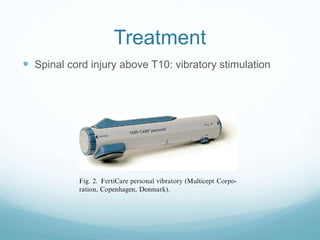
 Spinal cord injury above T10: vibratory stimulation
Treatment
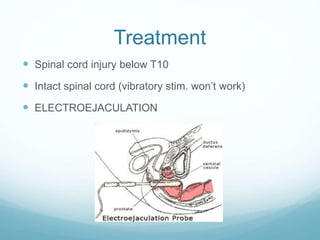
 Spinal cord injury below T10
 Intact spinal cord (vibratory stim. won’t work)
 ELECTROEJACULATION
For patients with very high lesions at or above C4, general anesthesia is
recommended for safer patient control.
Brackett et al showed a sperm retrieval rate of 92% in SCI patients
undergoing EEJ after failed PVS. (J Urol 2010)
(2)
Differential Dx
 Ejaculatory duct obstruction
 Low volume
 Low PH
 Negative post ejaculatory urine analysis
 Dx by TRUS/Aspiration/contrast study
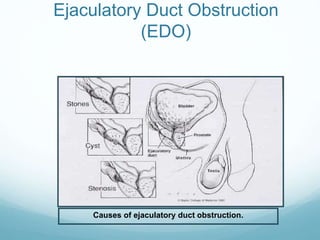
Ejaculatory Duct Obstruction
(EDO)
Causes of ejaculatory duct obstruction.
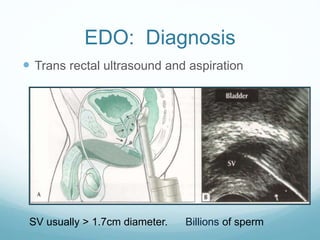
EDO: Diagnosis
 Trans rectal ultrasound and aspiration
SV usually > 1.7cm diameter. Billions of sperm
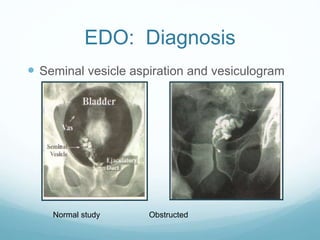
EDO: Diagnosis
 Seminal vesicle aspiration and vesiculogram
Normal study Obstructed
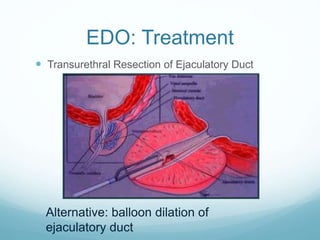
EDO: Treatment
 Transurethral Resection of Ejaculatory Duct
Alternative: balloon dilation of
ejaculatory duct
Post Operative TURED
 Dramatic Improvement immediately
 OR Retrograde Ejaculation
 OR No Change----
 Secondary epididymal “blow out”
 Possible epididymo-vasostomy
 Retrieve sperm for IVF-ICSI
 OR COMPLICATIONS
 25% incidence of chronic epipdidymitis/seminal vesiculitis
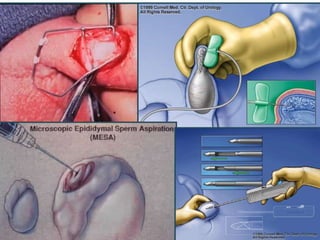
Sperm retrieval/ICSI
 Due to the high complication rate of TURED sperm
retrieval and ICSI is now more commonly
recommended
 Sperm retrieval has lower morbidity and can be
performed with local anesthesia
 ICSI has a high success rate (up to 75%)
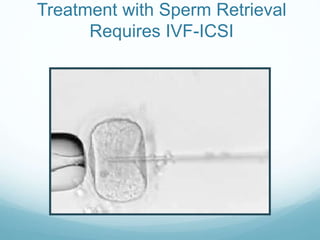
Treatment with Sperm Retrieval
Requires IVF-ICSI
Not a Disorder
Thank You

Disorders of Ejaculation

  • 1.
    Disorders of Ejaculation AaronSpitz MD Assistant Clinical Professor UC Irvine, Department of Urology
  • 2.
    Ejaculatory dysfunction  Anycondition, whether it be medical, surgical, or psychological, that disrupts the normal ejaculation pathway, from the cortical influence to the sympathetic nervous system to the somatic afferents from the penis or the somatic efferents to the pelvic floor, can lead to ejaculatory dysfunction  Delayed ejaculation  Premature ejaculation,  Retrograde ejaculation,  Anejaculation
  • 3.
    Dopamine: excitatory Seratonin: inhibitory Oxytocin:excitatory Glutamate,other NT: excitatory Sympathetic nerves release acetylcholine to non-myelinated neurons which release norepinephrine to sv, vas, epididymis, bladder neck Pudendal efferents arise from Onuf’s nucleus in sacral spine
  • 4.
    Sympathetic nerves releaseacetylcholine to non-myelinated neurons which release norepinephrine to sv, vas, epididymis,bladder neck Pudendal efferents arise from Onuf’s nucleus in sacral spine
  • 5.
    Delayed Ejaculation The WorldHealth Organization 2nd Consultation Sexual Dysfunction: The persistent or recurrent difficulty, delay in, or absence of attaining orgasm after sufficient sexual stimulation, which causes personal distress.
  • 6.
    Intravaginal Ejaculatory Latency Time (IELT)The duration that begins at intromission (penile entry into the vagina) and ends at intravaginal ejaculation or exhaustion
  • 7.
    Determination of IELT Stopwatchstudies by Waldinger et al. 500 couples, five countries  IELT exists as a distribution  33 seconds to 44 minutes median: 5.4 minutes 21–23 minutes = +2 SD Men who cannot climax after 25 minutes or experience distress meet criteria for Delayed Ejaculation Waldinger M,. J Sex Med 2005;2:498–507 McMahon C, J Sex Med 2013;10:204–29
  • 8.
    Neurotransmitters/hormones  Dopamine: facilitatesejaculation  Dopamine levels increase steadily through copulation to ejaculation in rats  Prolactin suppresses ejaculation when in excess through testosterone inhibition and as a neurotransmitter  Additional players:  Acetylcholine, norepinephrine, nitric oxide, GABA
  • 9.
    Neurotransmitters/hormones  Spinal ejaculatorycenter is under central control  Serotonin: two receptors implicated  5-HT2C, 5-HT1A  5-HT2C delays ejaculatory latency time  5-HT1A shortens ejaculatory latency time  These receptors are found on oxytocin secreting nerves and stimulate oxytocin release.  Oxytocin shortens IELT.  SSRIs cause desensitization of these receptors oxytocin
  • 10.
    Designations  Primary (lifelong) all partnered sexual activity from first opportunity onwards  Secondary (acquired)  Surgery  Medical disease  Psychosexual change
  • 11.
    Primary: Psychological/behavioral  Conflictedmasturbation  Auto sexual orientation  Increased masturbation  Idiosyncratic masturbation  Sensation therefore NOT easily reproduced with partner  Decreased sensitivity  Due to overuse vs causes overuse  Physical/Subjective mismatch  Arousal/Desire mismatch
  • 12.
    Surgical (acquired)  RPLND Penectomy  Pelvic surgery
  • 13.
    Secondary (acquired)  Endocrineimbalance  Hypothyroid  Low testosterone  Elevated Prolactin  Inhibitory effect on GnRH decreases LH then T  Direct action as a neurotransmitter  Interplay with dopamine  Dopamine may stimulate ejaculation and it inhibits prolactin  Seratonin inhibits ejaculation and it stimulates prolactin Prolactin
  • 14.
    Medications  SSRI: increasedseratonin decreases receptor sensitivity which decreases oxytocin release  Antipsychotics:  Antagonize dopamine (dopamine is pro ejaculatory)  Elevate prolactin (prolactin is counter ejaculatory)  Inhibit alpha adrenergic tone of bladder neck  Antiandrogens
  • 15.
    Neurogenic  Interference withcommunication between the spinal ejaculatory center and the sympathetic and parasympathetic nervous system  Spinal cord injury  MS  DM
  • 16.
    Age  Decreased penilesensitivity  Natural decline in fast-conducting peripheral nerves starting in 3rd decade  Concurrent atrophy of dermis and underlying stroma  Accumulation of chronic medical conditions
  • 17.
    Chronic illness  Chronicpain  Renal disease: Dialysis  (50% with delayed or inhibited ejaculation)  Vascular disease  Prostate disease
  • 18.
    Psychosexual  Stress inrelationship/life  Fatigue  Performance anxiety
  • 19.
    Evaluation  History  Queryregarding strong religious/ethical beliefs regarding sex  Age of first ejaculation  Pattern of ejaculation  Difficulty with sex versus masturbation?  Lifelong versus gradual versus abrupt onset  Temporal association with other medical conditions  Relationship stress/female sexual dysfunction
  • 20.
    Physical Exam  Signsof low T: genitals/breasts/pelvis/hair  Signs of hypothyroidism  Abnormal prostate (mullerian duct cysts)
  • 21.
    Labs  Rule outchronic medical conditions/endocrine imbalance  CBC, CHEM 20, lipid panel, TSH, Testosterone, Prolactin
  • 22.
    Treatment  Psychosexual counseling Basic education in mechanics of sexual intercourse and orgasm  Establish an anxiety-free environment  Engagement of partner in therapy
  • 23.
    Treatment  Sensate focus: Couple based “homework”  First: Achieve ejaculation without coitus  Then: bring the male to the brink and then insert penis into vagina to provide final stimulation  Breaks mental barrier to ejaculating within the vagina  Masturbation retraining to acclimatize the male to stimulation similar to partnered intercourse  Reducing the frequency of masturbation
  • 24.
    Surgical treatment  Spermharvesting for purpose of fertility  Electroejacultion under anesthesia: for use with insemination  Percutanous or open epididymal or testicular sperm extraction: for use with in vitro fertility
  • 25.
    Neuro/endocrine treatment  Hypogonadism:androgens  Hypothyroidism: levothyroid  Hyperprolactinemia: cabergoline  SSRI related: switch meds if possible  Most to least inhibition  Paroxetine (Paxil) – fluoxetine (Prozac) –sertraline (Zoloft)  Fluvoxamine (Luvox) does not cause ejaculatory delay  Bupropion: not associated with sexual dysfunction  Antipsychotics: newer agents affect dopamine less and cause less hyperprolactinemia
  • 26.
    Pharmaceutical treatment  Alpha-1-adrenergic receptor agonists: imipramine, ephedrine, pseudoephedrine, midodrine  Increase sympathetic tone for emission and ejaculation  Midodrine: very effective for organic anejaculation (58% improved, 30% cured)  MS responded best, sympathectomy worst
  • 27.
    Pharmaceutical continued  Yohimbine:central apha-2-adrenergic receptor agonist  70% “much improved” in SRI associated sexual dysfunction  Increases HR and BP  Cyproheptadine: antihistamine/antiseratonergic (blocks 5-HT1A, 5-HT2A r)  Effective for delayed ejaculation due to SSRI, MOA, Imipramine  High rates of sedation, possible relapse of depression
  • 28.
    Pharmaceutical  Amantadine: indirectstimulation of dopaminergic nerves: 40% improvement in SRI induced delayed ejaculation  Cabergoline: dopamine receptor agonist. Used to treat hyperprolactinemia. Prolactin surges AFTER orgasm.  69% of 72 men improved  50% normalization  Works within one month  0.5mg twice a week
  • 29.
    Dosages  Midodrine 5–40mg daily 30–120 minute prior  Hypertension  Yohimbine 20–45 mg 60 minute prior (no food)  Anxiety, palpitations, nausea  Cyproheptadine 4–12 mg 90–240 minute prior  Sedation, impaired concentration  Amantadine 100–400 mg daily 2 days prior  Nausea, anxiety  Cabergoline 0.5 mg twice a week at bedtime  Nausea, drowsiness
  • 30.
    Dosages  Buproprione 75mgdaily dopamine agonist (welbutrin)  Ropinirole 0.25mg daily dopamine agonist  Adderal 10mg at least 30 min. before intercourse prn but not after 2pm. increases activity related to domaine and norepinehrine in the brain.  Oxytocin 250u lozenge 1 hour before sex
  • 31.
    Conclusions  Difficult, butcommon  Psycho-sexual causes make this condition complex to treat  Pharmacologic treatments are evolving
  • 32.
    Premature Ejaculation  Definition:Premature ejaculation is ejaculation that occurs sooner than desired, either before or shortly after penetration, causing distress to either one or both partners.  Incidence 20 to 30%  For clinical trials, it’s usually under 2 minutes
  • 33.
    Diagnosis  History  frequencyand duration of PE,  relationship to specific partners,  occurrence with all or some attempts,  degree of stimulus resulting in PE,  nature and frequency of sexual activity (foreplay, masturbation, intercourse, use of visual clues, etc.),  impact of PE on sexual activity,  types and quality of personal relationships and quality of life, aggravating or alleviating factors, and  relationship to drug use or abuse
  • 34.
    Medical Treatments (AUA Guidelines) OralTherapies Trade Names† Nonselective serotonin reuptake inhibitor Clomipramine Anafranil® 25-50 mg/day or 25mg 4 to 24 h pre-intercourse Selective serotonin reuptake inhibitors Fluoxetine Prozac®, 5 to 20 mg/day may go up to 40 to 60mg/day Paroxetine Paxil® 10, 20, 40 mg/day or 20 mg 3 to 4 h pre-intercourse Sertraline Zoloft® 25 to 200 mg/day or 50 mg 4 to 8 h pre-intercourse Topical Therapies Lidocaine/prilocaine cream EMLA® C Lidocaine2.5%/Prilocaine 2.5% 20 to 30 minutes pre-intercourse
  • 35.
    Medical Treatment (aua guidelines) Trimix  Phosphodiesterase inhibitors A rigid erection allows for less hurry to reach climax
  • 36.
    Medical Treatment (AUA Guidelines) Alpha blockers: alfuzosin and terazosin have shown mild benefit in clinical trials: counteraction of sympathetic stimulation of ejaculation
  • 37.
    Tramadol  Opioid analgesic:opioid receptor  Lelt increases 2 to 10 fold  Well-tolerated  Possible decrease in efficacy over time  10 to 20 percent nausea and somnolence  Head to head less effective than Paxil  50mg po 2 hours prior to Sex
  • 38.
    Promescent  Promescent: thymoland ethanol in the eutectic formula of lidocaine  Follows FDA monograph  2 to 6 sprays 10 minutes prior to intercourse  Available OTC/Promescent.com
  • 39.
    Dapoxatine  On-demand SSRItreatment  Quick uptake and quick elimination  In European/Asian studies: good results  Common adverse event: nausea usually mild  Approved in 30 to 40 countries  Failed to be approved by FDA but will likely try again
  • 40.
    Retrograde ejaculation  Bladderneck/internal sphincter fails to close during ejaculation and the emitted semen flows along the path of least resistance into the bladder, while the external sphincter is closed and the bulbocavernosus muscle is contracting the prostatic urethra  Diabetic neuropathy of the bladder  Multiple Sclerosis  Surgical injury to the bladder neck  TURP  Pediatric surgery
  • 41.
    Anejaculation  Failure ofemission into the prostatic urethra  Interference with somatic efferent contraction of the ejaculatory structures including the epididymis, vas deferens, ampulla of the vas deferens and seminal vesicles.
  • 42.
    Anejaculation  Diabetic sympatheticneuropathy  ejaculatory structures are not stimulated to contract effectively  Diabetic microvascular disease  concomitant fibrosis of smooth musculature impairs the contractility of the ejaculatory apparatus.
  • 43.
    Spinal Cord Injury Most common neurological cause of anejaculation  Complete injury above the spinal ejaculation center will prevent cortical excitation  Injury below the spinal ejaculation center will diminish afferent penile sensory excitation as well as efferent control of emission and ejaculation
  • 44.
    Other neurological causes Multiple Sclerosis  Transverse Myelitis
  • 45.
    Latrogenic--Surgical  Surgical injuryto the sympathetic chain or pelvic nerves  RPLND may disrupt the sympathetic outflow to the ejaculatory structures  Pelvic surgery: lower sympathetic pelvic nerve  Colorectal surgery  Aorto-iliac reconstruction  Lumbar spine exploration
  • 46.
    Alpha Blockers  Themore alpha-1A specific inhibit seminal emission  FDA label for silodosin reports 28% retrograde ejaculation while  FDA label for tamsulosin reports an “abnormal ejaculation” rate of only 8.4%  FDA approval label for alfusosin reports no adverse effects on abnormal ejaculation  A Japanese study of 15 healthy urologist volunteers reported a 100% rate of anejaculation with Silodosin vs a 35% rate for tamsulosin 4mg vs a 0% rate for alfuzosin 10mg
  • 47.
    Differentiation: Retrograde vs. Anejaculation Normal orgasm  No or low volume ejaculate (<1.5ml)  Post-orgasm void should be checked for sperm  The bladder should be emptied before ejaculation, and immediately after  Greater than 10 sperm per high powered field in a centrifuged post-orgasm urine is indicative of retrograde ejaculation  In the case of lack of emission: no sperm in urine  Exception: diabetic patient may suffer neuropathic changes resulting in both bladder neck dysfunction and lack of emission
  • 48.
    Treatment  Alpha agonists Sympathomimetic stimulation to augment the sympathetic tone in the vas deferens, seminal vesicles, and bladder neck  May be enough to overcome the disrupted sympathetic plexus as long as there is not a complete injury  The patients who would most benefit from this actually feel, at baseline, a climax and rhythmic pelvic contractions with little or no flow of fluid per urethra
  • 49.
    Treatment  MEDICATION DOSINGFOR ASPERMIA (retro or an-)  Ephedrine 25-50 mg po qid for 2 to 3 doses  Pseudoephedrine 60 mg po qid or 120 mg po bid for 2 to 3 doses  Imipramine 50 to 75mg po a day for 1 to 2 weeks  Midodrine 2.5 mg po tid titrated up to 10mg po tid, titrate by 2.5mg/week
  • 50.
    Treatment  Spinal cordinjury above T10: vibratory stimulation
  • 51.
    Treatment  Spinal cordinjury below T10  Intact spinal cord (vibratory stim. won’t work)  ELECTROEJACULATION For patients with very high lesions at or above C4, general anesthesia is recommended for safer patient control. Brackett et al showed a sperm retrieval rate of 92% in SCI patients undergoing EEJ after failed PVS. (J Urol 2010) (2)
  • 52.
    Differential Dx  Ejaculatoryduct obstruction  Low volume  Low PH  Negative post ejaculatory urine analysis  Dx by TRUS/Aspiration/contrast study
  • 53.
    Ejaculatory Duct Obstruction (EDO) Causesof ejaculatory duct obstruction.
  • 54.
    EDO: Diagnosis  Transrectal ultrasound and aspiration SV usually > 1.7cm diameter. Billions of sperm
  • 55.
    EDO: Diagnosis  Seminalvesicle aspiration and vesiculogram Normal study Obstructed
  • 56.
    EDO: Treatment  TransurethralResection of Ejaculatory Duct Alternative: balloon dilation of ejaculatory duct
  • 57.
    Post Operative TURED Dramatic Improvement immediately  OR Retrograde Ejaculation  OR No Change----  Secondary epididymal “blow out”  Possible epididymo-vasostomy  Retrieve sperm for IVF-ICSI  OR COMPLICATIONS  25% incidence of chronic epipdidymitis/seminal vesiculitis
  • 58.
    Sperm retrieval/ICSI  Dueto the high complication rate of TURED sperm retrieval and ICSI is now more commonly recommended  Sperm retrieval has lower morbidity and can be performed with local anesthesia  ICSI has a high success rate (up to 75%)
  • 60.
    Treatment with SpermRetrieval Requires IVF-ICSI
  • 61.
  • 62.

Editor's Notes

  • #5 Stimulation from a few sources leads ultimately to emission and ejaculation. Erotic visual stimulation as well as psychological stimulation is processed in the cerebral cortex, which in turn modulate signals from various brain centers including the medial preoptic area, which is excitatory to ejaculation via dopamine (2), as well as the paraventricular nucleus of the hypothalamus which is excitatory via oxytocin (3). Inhibitory signals arise from the nucleus paragigantocellularis, which is seratonergic (4). These excitatory and inhibitory signals descend to a specialized area of the spine known as the “spinal ejaculation generator” which spans T12 to L2. (5)   Figure 1 Tactile penile stimulation from afferent dorsal penile nerves passes through the pudendal nerves to the S2-S4 spinal cord level and continues cephalad to the spinal ejaculation generator. (6)   The spinal ejaculation generator is comprised of lumbar spinothalamic cells under the influence of glutamate and other neurotransmitters. These cells process the cortical and sensory input and generate coordinated efferent signals via sympathetic, parasympathetic and somatic nerve pathways. (7) Sympathetic fibers, arising from level T10-L2 in the gray matter lateral columns, exit via the ventral roots to pass through the paravertebral sympathetic ganglia down to the hypogastric plexus and on to the end organ targets, where they synapse with and release acetylcholine to non-myelinated neurons which innervate the tissues and release norepinephrine to trigger contraction of the seminal vesicles, epididymis and vas deferens resulting in seminal fluid deposition in the posterior urethra while simultaneously triggering the bladder neck to contract. (8-10)   The spinal ejaculaton generator activates Onuf nucleus in the sacral spine which gives rise to pudendal efferent nerves that cause contraction of the pelvic floor, the bulbocavernosus and ischiocavernosus muscles and the periurethral muscles. (11-12) The tonic contractions reach a certain pressure in the external urethral sphincter before the ejaculatory reflex is elicited. (13)