Dr (Mrs) Sriyani Nanayakkara
Consultant Histopathologist
National Eye Hospital, De Soysa Hospital for Women, Institute of
Forensic Medicine and toxicology.
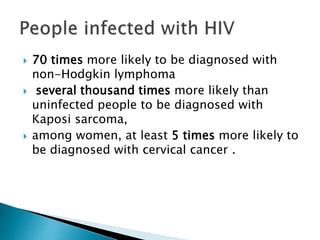
 70 times more likely to be diagnosed with
non-Hodgkin lymphoma
 several thousand times more likely than
uninfected people to be diagnosed with
Kaposi sarcoma,
 among women, at least 5 times more likely to
be diagnosed with cervical cancer .
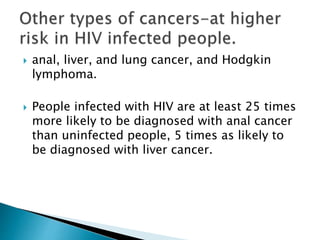
 anal, liver, and lung cancer, and Hodgkin
lymphoma.
 People infected with HIV are at least 25 times
more likely to be diagnosed with anal cancer
than uninfected people, 5 times as likely to
be diagnosed with liver cancer.
 Breast, colorectal, prostate, or many other
common types of cancer .
 Screening for these cancers in HIV-infected
people should follow current guidelines for
the general population.
 HIV weakens the immune system and reduces the body's ability to fight infections
that may lead to cancer
 Many people infected with HIV are also infected with other viruses that cause
certain cancers
cancer-related viruses:
 Human herpesvirus 8 (HHV-8), also known as Kaposi sarcoma-associated
herpesvirus (KSHV), is the cause of Kaposi sarcoma.
 Epstein Barr virus (EBV) causes some subtypes of non-Hodgkin and Hodgkin
lymphoma.
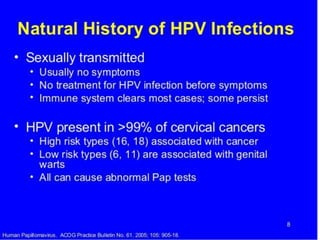
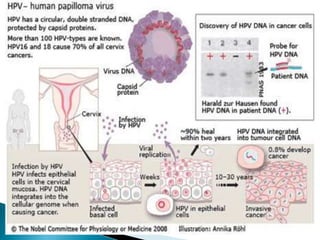
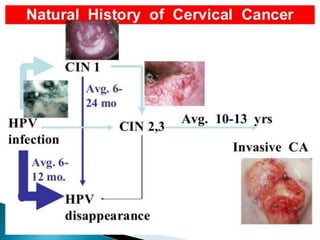
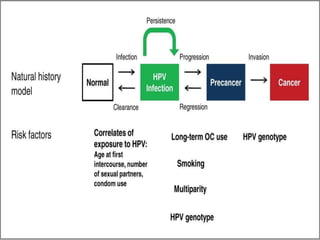
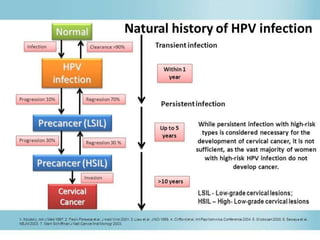
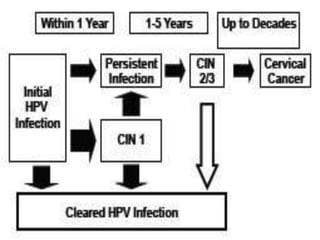
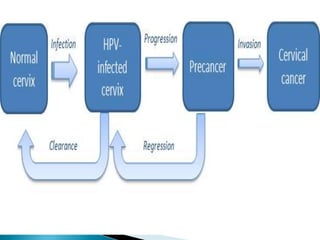
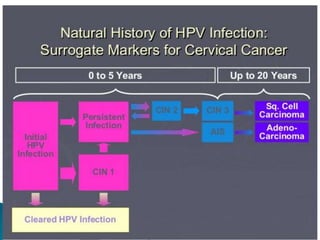
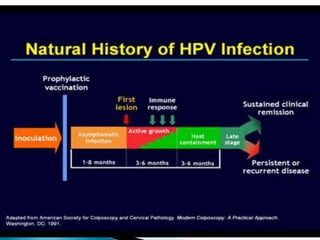
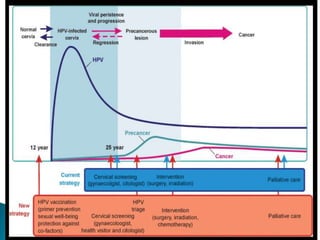
 Human papillomavirus (HPV) causes cervical cancer and some types of anal, penile,
vaginal, vulvar, and head and neck cancer.
 Hepatitis B virus (HBV) and hepatitis C virus (HCV) both can cause liver cancer.
 Infection with most of these viruses is more common among people infected with
HIV than among uninfected people.
 In addition, the prevalence of some traditional risk factors for cancer, especially
smoking (a known cause of lung cancer) and heavy alcohol use (which can increase
the risk of liver cancer), is higher among people infected with HIV.
 Lymphomas-
 NHL
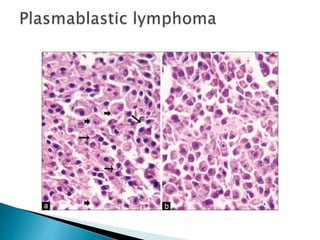
 Plasmablastic lymphoma
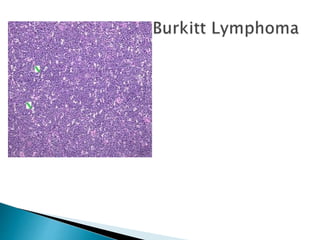
 Burkitt lymphoma.
 Lymphoma arising in HHV-8 associated
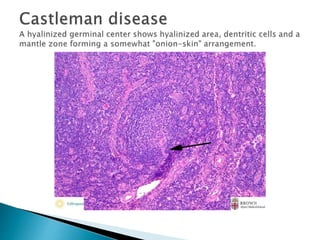
multicentric Castleman Disease.
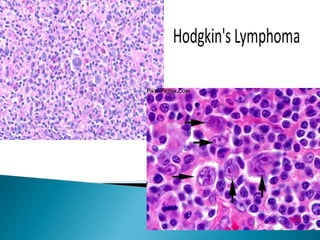
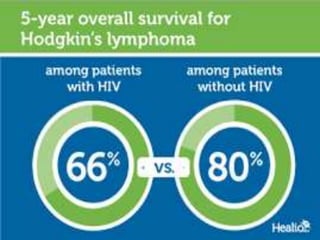
 Hodgkin Lymphoma.
 Myeloma.
 Kaposi’s sarcoma
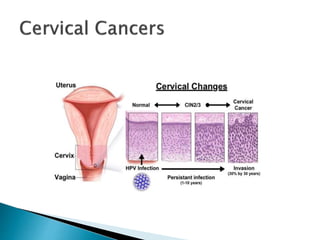
 Cervical Carcinoma in Females.
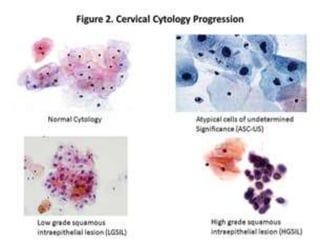
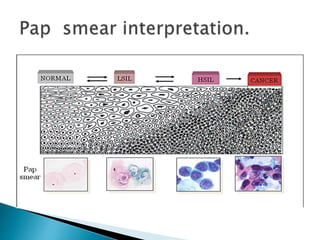
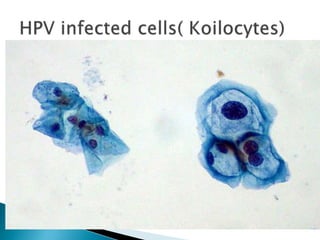
 Cervical smear or the pap test – screening
test to detect the early cytological changes of
cervical cancer.
 Should not be considered as a Diagnostic
test.
 False negatives can occur due to- Sampling,
screening and interpretive errors.
 In Sri Lanka- started in 1999.
 Targeted group- 35 years old females.
 Present coverage is 50%.
 All females of 35 yrs or any female who
attend to well woman clinics are subjected to
pap smear test.
 Smears--- cyto screeners- All positive
and 1in 10 negative slides are seen by a
Histopathologist.
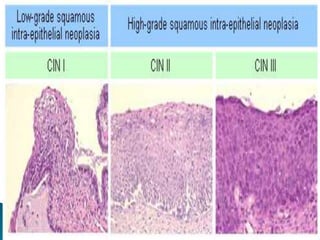
 All CIN and Atypical cells suspicious for High
grade-- Colposcopy guided biopsy--
Definitive diagnosis by Histology.
 Conventional pap smear every year in HIV
positive patients.
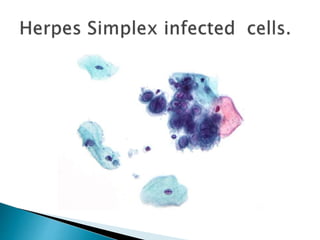
 Herpes Simplex.
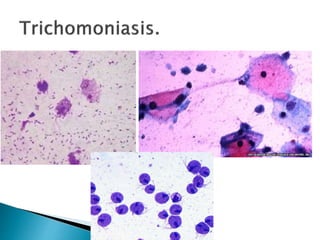
 Trichomoniasis.
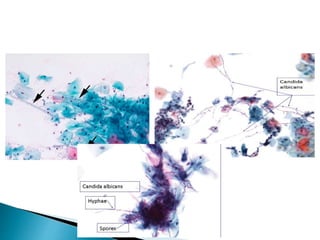
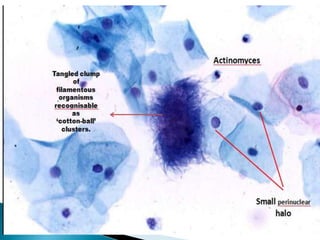
 Candida.
 Actinomyces.
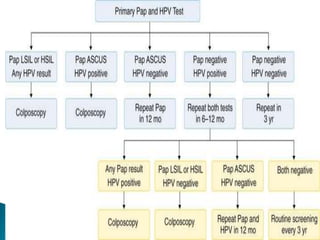
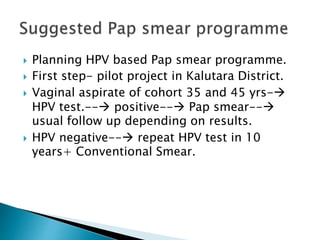
 Planning HPV based Pap smear programme.
 First step- pilot project in Kalutara District.
 Vaginal aspirate of cohort 35 and 45 yrs-
HPV test.-- positive-- Pap smear--
usual follow up depending on results.
 HPV negative-- repeat HPV test in 10
years+ Conventional Smear.
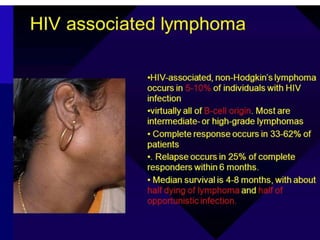
 Individuals infected with human
immunodeficiency virus (HIV) have a high risk
of developing lymphomas
 Approximately 4% of people with acquired
immunodeficiency syndrome
(AIDS) have non-Hodgkin Lymphoma (NHL) at
diagnosis .
 at least the same proportion develop NHL
during the course of illness
Three types on the basis of areas of
involvement
 Systemic NHL.
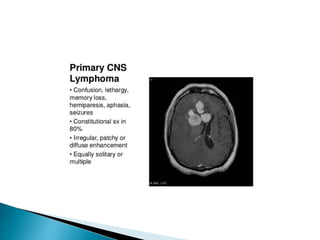
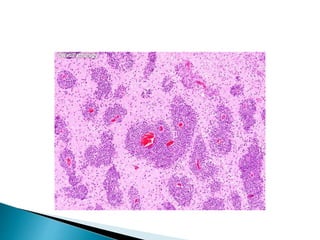
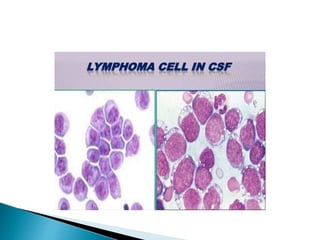
 Primary central nervous system lymphoma
(PCNSL).
 Primary effusion lymphomas ("body cavity
lymphoma).
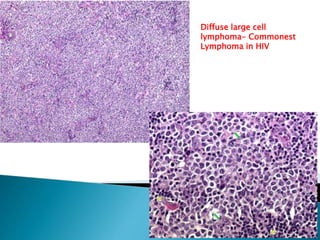
Diffuse large cell
lymphoma- Commonest
Lymphoma in HIV
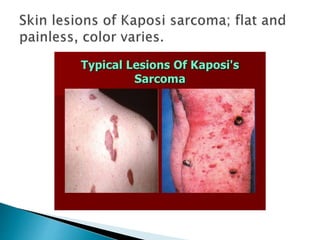
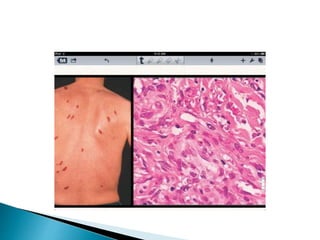
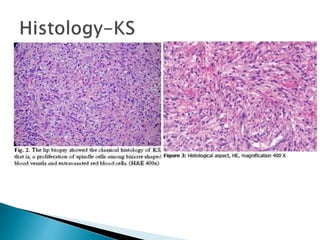
 Kaposi’s sarcoma- skin cancer : affects many
parts of the body- but mainly the skin, mouth
and lymph nodes
 uncommon cancer ,affect people with HIV
because of their weaken immune system.
 KS- caused by the Herpes virus .
 many people with HIV also have herpes
 KS are tumors develop -below the skin and
the mucous membranes in the mouth, nose,
anus or eyes.
 Kaposi’s sarcoma can spread to major
organs such as: the liver, intestines and the
stomach.
 Usually the same Highly Active Anti-
Retroviral (HAART) drugs used for AIDS/HIV
are used for KS; however, if it becomes too
bad certain cancer medicines may be needed.
 The introduction of highly active antiretroviral therapy (HAART)
in the mid-1990s greatly reduced the incidence of Kaposi
sarcoma and non-Hodgkin lymphoma among people infected
with HIV (2, 5). HAART lowers the amount of HIV circulating in
the blood, thereby allowing partial restoration of immune system
function.
 Although HAART has led to reductions in the incidence of Kaposi
sarcoma and non-Hodgkin lymphoma among HIV-infected
individuals, it has not reduced the incidence of cervical cancer,
which has essentially remained unchanged.
 Moreover, the incidence of several other cancers, particularly
Hodgkin lymphoma and anal cancer, has been increasing
among HIV-infected individuals since the introduction of
HAART . The influence of HAART on the risk of these other
cancer types is not well understood
 Taking HAART as indicated based on current HIV treatment guidelines lowers the
risk of Kaposi sarcoma and non-Hodgkin lymphoma and increases overall survival.
 The risk of lung cancer can be reduced by quitting smoking.
 HIV-infected individuals should know their hepatitis status. If blood tests show
that they have previously been infected with HBV or HCV, they should consider
reducing their alcohol consumption.
 In addition, if they currently have viral hepatitis, they should discuss with their
health care provider whether HBV- or HCV-suppressing therapy is an option for
them .Some drugs may be used for both HBV-suppressing therapy and HAART
(13).
 Cervical cancer, it is important that they be screened regularly for this disease.
Studies have suggested that Pap test abnormalities are more common among HIV-
infected women
 Some researchers recommend anal Pap test screening to detect and treat early
lesions before they progress to anal cancer . This type of screening may be most
beneficial for men who have had sexual intercourse with other men. HIV-infected
patients should discuss such screening with their medical providers.
 Grulich AE, van Leeuwen MT, Falster MO, Vajdic CM. Incidence of cancers in people with HIV/AIDS compared with immunosuppressed
transplant recipients: a meta-analysis. Lancet 2007; 370(9581):59–67. [PubMed Abstract]
 Engels EA, Biggar RJ, Hall HI, et al. Cancer risk in people infected with human immunodeficiency virus in the United States. International
Journal of Cancer 2008; 123(1):187–194. [PubMed Abstract]
 Powles T, Macdonald D, Nelson M, Stebbing J. Hepatocellular cancer in HIV-infected individuals: tomorrow's problem? Expert Review of
Anticancer Therapy 2006; 6(11):1553–1558. [PubMed Abstract]
 Angeletti PC, Zhang L, Wood C. The viral etiology of AIDS-associated malignancies. Advances in Pharmacology 2008; 56:509–557.
[PubMed Abstract]
 Engels EA, Pfeiffer RM, Goedert JJ, et al. Trends in cancer risk among people with AIDS in the United States 1980–2002. AIDS 2006;
20(12):1645–1654. [PubMed Abstract]
 Chaturvedi AK, Madeleine MM, Biggar RJ, Engels EA. Risk of human papillomavirus-associated cancers among persons with AIDS. Journal
of the National Cancer Institute 2009; 101(16):1120–1130. [PubMed Abstract]
 Silverberg MJ, Abrams DI. AIDS-defining and non-AIDS-defining malignancies: cancer occurrence in the antiretroviral therapy era.
Current Opinion in Oncology 2007; 19(5):446–451. [PubMed Abstract]
 Grogg KL, Miller RF, Dogan A. HIV infection and lymphoma. Journal of Clinical Pathology 2007; 60(12):1365–1372. [PubMed Abstract]
 Simard EP, Pfeiffer RM, Engels EA. Spectrum of cancer risk late after AIDS onset in the United States. Archives of Internal Medicine 2010;
170(15):1337–1345. [PubMed Abstract]
 Shiels MS, Pfeiffer RM, Engels EA. Age at cancer diagnosis among persons with AIDS in the United States. Annals of Internal Medicine
2010; 153(7):452–460. [PubMed Abstract]
 Spano JP, Costagliola D, Katlama C, et al. AIDS-related malignancies: state of the art and therapeutic challenges. Journal of Clinical
Oncology 2008; 26(29):4834–4842. [PubMed Abstract]
 Heard I. Prevention of cervical cancer in women with HIV. Current Opinion in HIV and AIDS 2009; 4(1):68–73. [PubMed Abstract]
 Macdonald DC, Nelson M, Bower M, Powles T. Hepatocellular carcinoma, human immunodeficiency virus and viral hepatitis in the HAART
era. World Journal of Gastroenterology 2008; 14(11):1657–1663. [PubMed Abstract]
 McGinnis KA, Fultz SL, Skanderson M, et al. Hepatocellular carcinoma and non-Hodgkin's lymphoma: the roles of HIV, hepatitis C
infection, and alcohol abuse. Journal of Clinical Oncology 2006; 24(31):5005–5009. [PubMed Abstract]
 Massad LS, Seaberg EC, Wright RL, et al. Squamous cervical lesions in women with human immunodeficiency virus: long-term follow-up.
Obstetrics and Gynecology 2008; 111(6):1388–1393. [PubMed Abstract]
 Goldie SJ, Kuntz KM, Weinstein MC, et al. The clinical effectiveness and cost-effectiveness of screening for anal squamous intraepithelial
lesions in homosexual and bisexual HIV-positive men. Journal of the American Medical Association 1999; 281(19):1822–1829. [PubMed
Abstract]
 Thank You.

CPD 2017: HIV Histopathology

  • 1.
    Dr (Mrs) SriyaniNanayakkara Consultant Histopathologist National Eye Hospital, De Soysa Hospital for Women, Institute of Forensic Medicine and toxicology.
  • 3.
     70 timesmore likely to be diagnosed with non-Hodgkin lymphoma  several thousand times more likely than uninfected people to be diagnosed with Kaposi sarcoma,  among women, at least 5 times more likely to be diagnosed with cervical cancer .
  • 4.
     anal, liver,and lung cancer, and Hodgkin lymphoma.  People infected with HIV are at least 25 times more likely to be diagnosed with anal cancer than uninfected people, 5 times as likely to be diagnosed with liver cancer.
  • 5.
     Breast, colorectal,prostate, or many other common types of cancer .  Screening for these cancers in HIV-infected people should follow current guidelines for the general population.
  • 6.
     HIV weakensthe immune system and reduces the body's ability to fight infections that may lead to cancer  Many people infected with HIV are also infected with other viruses that cause certain cancers cancer-related viruses:  Human herpesvirus 8 (HHV-8), also known as Kaposi sarcoma-associated herpesvirus (KSHV), is the cause of Kaposi sarcoma.  Epstein Barr virus (EBV) causes some subtypes of non-Hodgkin and Hodgkin lymphoma.  Human papillomavirus (HPV) causes cervical cancer and some types of anal, penile, vaginal, vulvar, and head and neck cancer.  Hepatitis B virus (HBV) and hepatitis C virus (HCV) both can cause liver cancer.  Infection with most of these viruses is more common among people infected with HIV than among uninfected people.  In addition, the prevalence of some traditional risk factors for cancer, especially smoking (a known cause of lung cancer) and heavy alcohol use (which can increase the risk of liver cancer), is higher among people infected with HIV.
  • 8.
     Lymphomas-  NHL Plasmablastic lymphoma  Burkitt lymphoma.  Lymphoma arising in HHV-8 associated multicentric Castleman Disease.  Hodgkin Lymphoma.  Myeloma.  Kaposi’s sarcoma  Cervical Carcinoma in Females.
  • 14.
     Cervical smearor the pap test – screening test to detect the early cytological changes of cervical cancer.  Should not be considered as a Diagnostic test.  False negatives can occur due to- Sampling, screening and interpretive errors.
  • 15.
     In SriLanka- started in 1999.  Targeted group- 35 years old females.  Present coverage is 50%.  All females of 35 yrs or any female who attend to well woman clinics are subjected to pap smear test.  Smears--- cyto screeners- All positive and 1in 10 negative slides are seen by a Histopathologist.
  • 16.
     All CINand Atypical cells suspicious for High grade-- Colposcopy guided biopsy-- Definitive diagnosis by Histology.
  • 29.
     Conventional papsmear every year in HIV positive patients.
  • 30.
     Herpes Simplex. Trichomoniasis.  Candida.  Actinomyces.
  • 31.
     Planning HPVbased Pap smear programme.  First step- pilot project in Kalutara District.  Vaginal aspirate of cohort 35 and 45 yrs- HPV test.-- positive-- Pap smear-- usual follow up depending on results.  HPV negative-- repeat HPV test in 10 years+ Conventional Smear.
  • 37.
     Individuals infectedwith human immunodeficiency virus (HIV) have a high risk of developing lymphomas  Approximately 4% of people with acquired immunodeficiency syndrome (AIDS) have non-Hodgkin Lymphoma (NHL) at diagnosis .  at least the same proportion develop NHL during the course of illness
  • 38.
    Three types onthe basis of areas of involvement  Systemic NHL.  Primary central nervous system lymphoma (PCNSL).  Primary effusion lymphomas ("body cavity lymphoma).
  • 40.
    Diffuse large cell lymphoma-Commonest Lymphoma in HIV
  • 51.
     Kaposi’s sarcoma-skin cancer : affects many parts of the body- but mainly the skin, mouth and lymph nodes  uncommon cancer ,affect people with HIV because of their weaken immune system.  KS- caused by the Herpes virus .  many people with HIV also have herpes
  • 52.
     KS aretumors develop -below the skin and the mucous membranes in the mouth, nose, anus or eyes.  Kaposi’s sarcoma can spread to major organs such as: the liver, intestines and the stomach.
  • 56.
     Usually thesame Highly Active Anti- Retroviral (HAART) drugs used for AIDS/HIV are used for KS; however, if it becomes too bad certain cancer medicines may be needed.
  • 57.
     The introductionof highly active antiretroviral therapy (HAART) in the mid-1990s greatly reduced the incidence of Kaposi sarcoma and non-Hodgkin lymphoma among people infected with HIV (2, 5). HAART lowers the amount of HIV circulating in the blood, thereby allowing partial restoration of immune system function.  Although HAART has led to reductions in the incidence of Kaposi sarcoma and non-Hodgkin lymphoma among HIV-infected individuals, it has not reduced the incidence of cervical cancer, which has essentially remained unchanged.  Moreover, the incidence of several other cancers, particularly Hodgkin lymphoma and anal cancer, has been increasing among HIV-infected individuals since the introduction of HAART . The influence of HAART on the risk of these other cancer types is not well understood
  • 58.
     Taking HAARTas indicated based on current HIV treatment guidelines lowers the risk of Kaposi sarcoma and non-Hodgkin lymphoma and increases overall survival.  The risk of lung cancer can be reduced by quitting smoking.  HIV-infected individuals should know their hepatitis status. If blood tests show that they have previously been infected with HBV or HCV, they should consider reducing their alcohol consumption.  In addition, if they currently have viral hepatitis, they should discuss with their health care provider whether HBV- or HCV-suppressing therapy is an option for them .Some drugs may be used for both HBV-suppressing therapy and HAART (13).  Cervical cancer, it is important that they be screened regularly for this disease. Studies have suggested that Pap test abnormalities are more common among HIV- infected women  Some researchers recommend anal Pap test screening to detect and treat early lesions before they progress to anal cancer . This type of screening may be most beneficial for men who have had sexual intercourse with other men. HIV-infected patients should discuss such screening with their medical providers.
  • 60.
     Grulich AE,van Leeuwen MT, Falster MO, Vajdic CM. Incidence of cancers in people with HIV/AIDS compared with immunosuppressed transplant recipients: a meta-analysis. Lancet 2007; 370(9581):59–67. [PubMed Abstract]  Engels EA, Biggar RJ, Hall HI, et al. Cancer risk in people infected with human immunodeficiency virus in the United States. International Journal of Cancer 2008; 123(1):187–194. [PubMed Abstract]  Powles T, Macdonald D, Nelson M, Stebbing J. Hepatocellular cancer in HIV-infected individuals: tomorrow's problem? Expert Review of Anticancer Therapy 2006; 6(11):1553–1558. [PubMed Abstract]  Angeletti PC, Zhang L, Wood C. The viral etiology of AIDS-associated malignancies. Advances in Pharmacology 2008; 56:509–557. [PubMed Abstract]  Engels EA, Pfeiffer RM, Goedert JJ, et al. Trends in cancer risk among people with AIDS in the United States 1980–2002. AIDS 2006; 20(12):1645–1654. [PubMed Abstract]  Chaturvedi AK, Madeleine MM, Biggar RJ, Engels EA. Risk of human papillomavirus-associated cancers among persons with AIDS. Journal of the National Cancer Institute 2009; 101(16):1120–1130. [PubMed Abstract]  Silverberg MJ, Abrams DI. AIDS-defining and non-AIDS-defining malignancies: cancer occurrence in the antiretroviral therapy era. Current Opinion in Oncology 2007; 19(5):446–451. [PubMed Abstract]  Grogg KL, Miller RF, Dogan A. HIV infection and lymphoma. Journal of Clinical Pathology 2007; 60(12):1365–1372. [PubMed Abstract]  Simard EP, Pfeiffer RM, Engels EA. Spectrum of cancer risk late after AIDS onset in the United States. Archives of Internal Medicine 2010; 170(15):1337–1345. [PubMed Abstract]  Shiels MS, Pfeiffer RM, Engels EA. Age at cancer diagnosis among persons with AIDS in the United States. Annals of Internal Medicine 2010; 153(7):452–460. [PubMed Abstract]  Spano JP, Costagliola D, Katlama C, et al. AIDS-related malignancies: state of the art and therapeutic challenges. Journal of Clinical Oncology 2008; 26(29):4834–4842. [PubMed Abstract]  Heard I. Prevention of cervical cancer in women with HIV. Current Opinion in HIV and AIDS 2009; 4(1):68–73. [PubMed Abstract]  Macdonald DC, Nelson M, Bower M, Powles T. Hepatocellular carcinoma, human immunodeficiency virus and viral hepatitis in the HAART era. World Journal of Gastroenterology 2008; 14(11):1657–1663. [PubMed Abstract]  McGinnis KA, Fultz SL, Skanderson M, et al. Hepatocellular carcinoma and non-Hodgkin's lymphoma: the roles of HIV, hepatitis C infection, and alcohol abuse. Journal of Clinical Oncology 2006; 24(31):5005–5009. [PubMed Abstract]  Massad LS, Seaberg EC, Wright RL, et al. Squamous cervical lesions in women with human immunodeficiency virus: long-term follow-up. Obstetrics and Gynecology 2008; 111(6):1388–1393. [PubMed Abstract]  Goldie SJ, Kuntz KM, Weinstein MC, et al. The clinical effectiveness and cost-effectiveness of screening for anal squamous intraepithelial lesions in homosexual and bisexual HIV-positive men. Journal of the American Medical Association 1999; 281(19):1822–1829. [PubMed Abstract]
  • 61.

Editor's Notes

  • #3 HIV infected people have a substantially higher risk of some types of cancer compared with uninfected people of the same age
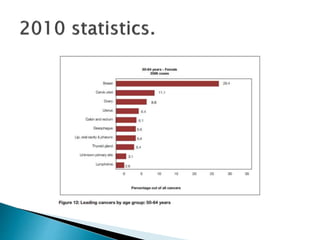
  • #11 2010 statitics
  • #41 Diffuse large cell lymphoma- Commonest Lymphoma in HIV
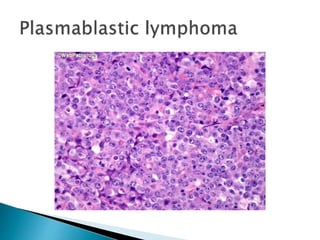
  • #43 Neoplastic plasma cells with varying degrees of maturation of plasma cells.
  • #46 Hodgkins Lymphoma- classic “Reed sternberg” cells.
  • #49 Primary CNS lymphoma- Perivascular Lymphoid infiltrate.