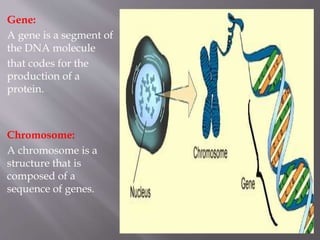

Gene: 
A gene is a segment of 
the DNA molecule 
that codes for the 
production of a 
protein. 
Chromosome: 
A chromosome is a 
structure that is 
composed of a 
sequence of genes.
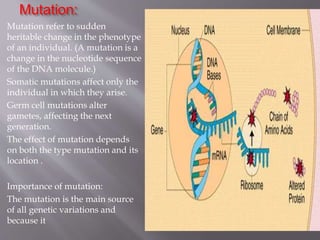
Mutation: 
Mutation refer to sudden 
heritable change in the phenotype 
of an individual. (A mutation is a 
change in the nucleotide sequence 
of the DNA molecule.) 
Somatic mutations affect only the 
individual in which they arise. 
Germ cell mutations alter 
gametes, affecting the next 
generation. 
The effect of mutation depends 
on both the type mutation and its 
location . 
Importance of mutation: 
The mutation is the main source 
of all genetic variations and 
because it
1- Nature (Spontaneous) Mutation 
2- Artificially (Induced) Mutation
Most mutations are spontaneous, rather than 
induced by a mutagen 
Spontaneous mutations result from DNA replication 
errors 
The cause of a spontaneous mutation is unknown. 
The spontaneous mutation rate in eukaryotes is 
between 10-4-to-10-6 per gene per generation
 An induced mutation is brought about by a 
mutagen. 
 A mutagen is a physical agent or a chemical agent 
that causes an alteration of the base sequence of the 
DNA molecule.
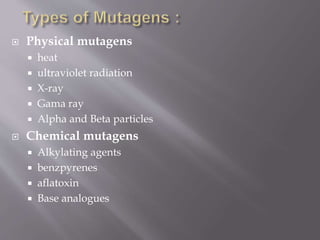
 Physical mutagens 
 heat 
 ultraviolet radiation 
 X-ray 
 Gama ray 
 Alpha and Beta particles 
 Chemical mutagens 
 Alkylating agents 
 benzpyrenes 
 aflatoxin 
 Base analogues
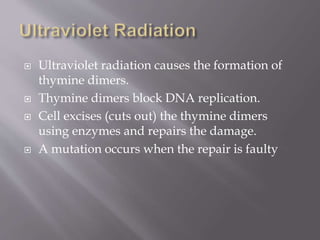
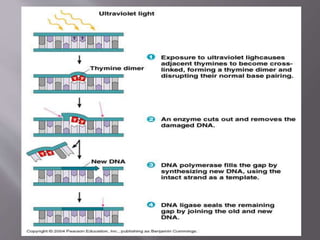
 Ultraviolet radiation causes the formation of 
thymine dimers. 
 Thymine dimers block DNA replication. 
 Cell excises (cuts out) the thymine dimers 
using enzymes and repairs the damage. 
 A mutation occurs when the repair is faulty
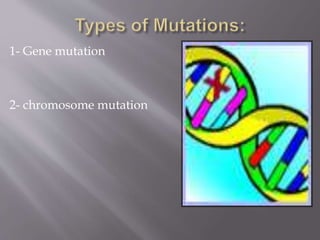
1- Gene mutation 
2- chromosome mutation
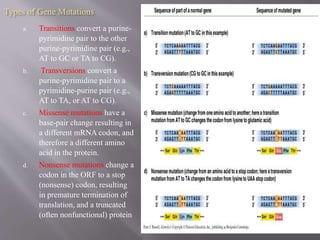
Types of Gene Mutations 
a. Transitions convert a purine-pyrimidine 
pair to the other 
purine-pyrimidine pair (e.g., 
AT to GC or TA to CG). 
b. Transversions convert a 
purine-pyrimidine pair to a 
pyrimidine-purine pair (e.g., 
AT to TA, or AT to CG). 
c. Missense mutations have a 
base-pair change resulting in 
a different mRNA codon, and 
therefore a different amino 
acid in the protein. 
d. Nonsense mutations change a 
codon in the ORF to a stop 
(nonsense) codon, resulting 
in premature termination of 
translation, and a truncated 
(often nonfunctional) protein
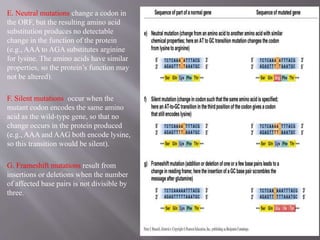
E. Neutral mutations change a codon in 
the ORF, but the resulting amino acid 
substitution produces no detectable 
change in the function of the protein 
(e.g., AAA to AGA substitutes arginine 
for lysine. The amino acids have similar 
properties, so the protein’s function may 
not be altered). 
F. Silent mutations occur when the 
mutant codon encodes the same amino 
acid as the wild-type gene, so that no 
change occurs in the protein produced 
(e.g., AAA and AAG both encode lysine, 
so this transition would be silent). 
G. Frameshift mutations result from 
insertions or deletions when the number 
of affected base pairs is not divisible by 
three.
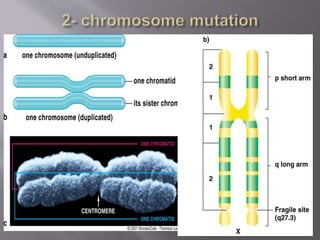
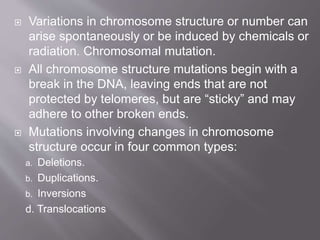
 Variations in chromosome structure or number can 
arise spontaneously or be induced by chemicals or 
radiation. Chromosomal mutation. 
 All chromosome structure mutations begin with a 
break in the DNA, leaving ends that are not 
protected by telomeres, but are “sticky” and may 
adhere to other broken ends. 
 Mutations involving changes in chromosome 
structure occur in four common types: 
a. Deletions. 
b. Duplications. 
b. Inversions 
d. Translocations
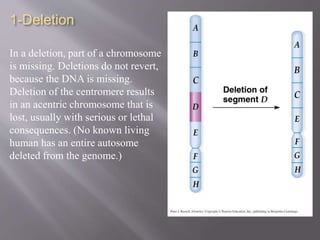
1-Deletion 
In a deletion, part of a chromosome 
is missing. Deletions do not revert, 
because the DNA is missing. 
Deletion of the centromere results 
in an acentric chromosome that is 
lost, usually with serious or lethal 
consequences. (No known living 
human has an entire autosome 
deleted from the genome.)
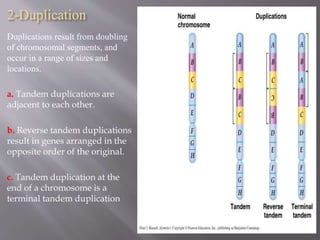
2-Duplication 
Duplications result from doubling 
of chromosomal segments, and 
occur in a range of sizes and 
locations. 
a. Tandem duplications are 
adjacent to each other. 
b. Reverse tandem duplications 
result in genes arranged in the 
opposite order of the original. 
c. Tandem duplication at the 
end of a chromosome is a 
terminal tandem duplication
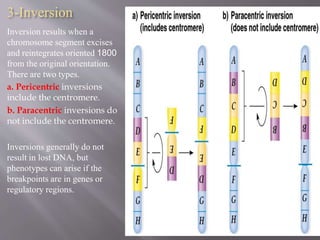
3-Inversion 
Inversion results when a 
chromosome segment excises 
and reintegrates oriented 1800 
from the original orientation. 
There are two types. 
a. Pericentric inversions 
include the centromere. 
b. Paracentric inversions do 
not include the centromere. 
Inversions generally do not 
result in lost DNA, but 
phenotypes can arise if the 
breakpoints are in genes or 
regulatory regions.
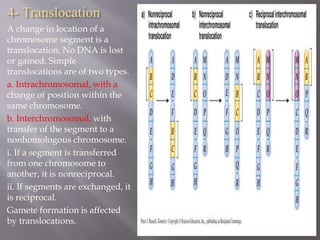
4- Translocation 
A change in location of a 
chromosome segment is a 
translocation. No DNA is lost 
or gained. Simple 
translocations are of two types. 
a. Intrachromosomal, with a 
change of position within the 
same chromosome. 
b. Interchromosomal, with 
transfer of the segment to a 
nonhomologous chromosome. 
i. If a segment is transferred 
from one chromosome to 
another, it is nonreciprocal. 
ii. If segments are exchanged, it 
is reciprocal. 
Gamete formation is affected 
by translocations.
 mutation is one of the special methods of crop 
movement. 
 Mutation breeding is commonly used in self 
pollination and asexually propagated species. 
 mutation breeding is rarely used for genetic 
improvement of cross pollination species. 
 mutation breeding will be rewarding under 
following situations(Chopra and Sharma, 1985)
1) When a high yielding variety has oligogenic defect such as 
susceptibility to disease, mutation breeding is the best 
source of a line for breeder. 
2) When there is a tight linkage between desirable and 
undesirable characters mutation breeding is the best way of 
overcoming such problems. 
3) When in fruit crops, the improvement has to be made 
without change in the taste and colour of the fruit it can 
best be achieved through mutation breeding. 
4) In those species where generation cycle is very long, such 
as fruit trees and forest trees, mutation breeding is the only 
short cut method.
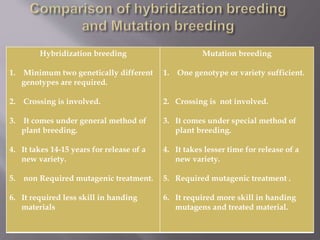
Mutation breeding 
1. One genotype or variety sufficient. 
2. Crossing is not involved. 
3. It comes under special method of 
plant breeding. 
4. It takes lesser time for release of a 
new variety. 
5. Required mutagenic treatment . 
6. It required more skill in handing 
mutagens and treated material. 
Hybridization breeding 
1. Minimum two genetically different 
genotypes are required. 
2. Crossing is involved. 
3. It comes under general method of 
plant breeding. 
4. It takes 14-15 years for release of a 
new variety. 
5. non Required mutagenic treatment. 
6. It required less skill in handing 
materials
Question 
If you wanted to 
change the one 
character any way 
(type) you will be 
choosing 
1- gene mutation 
2- chromosome 
mutation
1 12-2013

1 12-2013

  • 2.
    Gene: A geneis a segment of the DNA molecule that codes for the production of a protein. Chromosome: A chromosome is a structure that is composed of a sequence of genes.
  • 3.
    Mutation: Mutation referto sudden heritable change in the phenotype of an individual. (A mutation is a change in the nucleotide sequence of the DNA molecule.) Somatic mutations affect only the individual in which they arise. Germ cell mutations alter gametes, affecting the next generation. The effect of mutation depends on both the type mutation and its location . Importance of mutation: The mutation is the main source of all genetic variations and because it
  • 4.
    1- Nature (Spontaneous)Mutation 2- Artificially (Induced) Mutation
  • 5.
    Most mutations arespontaneous, rather than induced by a mutagen Spontaneous mutations result from DNA replication errors The cause of a spontaneous mutation is unknown. The spontaneous mutation rate in eukaryotes is between 10-4-to-10-6 per gene per generation
  • 6.
     An inducedmutation is brought about by a mutagen.  A mutagen is a physical agent or a chemical agent that causes an alteration of the base sequence of the DNA molecule.
  • 7.
     Physical mutagens  heat  ultraviolet radiation  X-ray  Gama ray  Alpha and Beta particles  Chemical mutagens  Alkylating agents  benzpyrenes  aflatoxin  Base analogues
  • 8.
     Ultraviolet radiationcauses the formation of thymine dimers.  Thymine dimers block DNA replication.  Cell excises (cuts out) the thymine dimers using enzymes and repairs the damage.  A mutation occurs when the repair is faulty
  • 10.
    1- Gene mutation 2- chromosome mutation
  • 11.
    Types of GeneMutations a. Transitions convert a purine-pyrimidine pair to the other purine-pyrimidine pair (e.g., AT to GC or TA to CG). b. Transversions convert a purine-pyrimidine pair to a pyrimidine-purine pair (e.g., AT to TA, or AT to CG). c. Missense mutations have a base-pair change resulting in a different mRNA codon, and therefore a different amino acid in the protein. d. Nonsense mutations change a codon in the ORF to a stop (nonsense) codon, resulting in premature termination of translation, and a truncated (often nonfunctional) protein
  • 12.
    E. Neutral mutationschange a codon in the ORF, but the resulting amino acid substitution produces no detectable change in the function of the protein (e.g., AAA to AGA substitutes arginine for lysine. The amino acids have similar properties, so the protein’s function may not be altered). F. Silent mutations occur when the mutant codon encodes the same amino acid as the wild-type gene, so that no change occurs in the protein produced (e.g., AAA and AAG both encode lysine, so this transition would be silent). G. Frameshift mutations result from insertions or deletions when the number of affected base pairs is not divisible by three.
  • 14.
     Variations inchromosome structure or number can arise spontaneously or be induced by chemicals or radiation. Chromosomal mutation.  All chromosome structure mutations begin with a break in the DNA, leaving ends that are not protected by telomeres, but are “sticky” and may adhere to other broken ends.  Mutations involving changes in chromosome structure occur in four common types: a. Deletions. b. Duplications. b. Inversions d. Translocations
  • 15.
    1-Deletion In adeletion, part of a chromosome is missing. Deletions do not revert, because the DNA is missing. Deletion of the centromere results in an acentric chromosome that is lost, usually with serious or lethal consequences. (No known living human has an entire autosome deleted from the genome.)
  • 16.
    2-Duplication Duplications resultfrom doubling of chromosomal segments, and occur in a range of sizes and locations. a. Tandem duplications are adjacent to each other. b. Reverse tandem duplications result in genes arranged in the opposite order of the original. c. Tandem duplication at the end of a chromosome is a terminal tandem duplication
  • 17.
    3-Inversion Inversion resultswhen a chromosome segment excises and reintegrates oriented 1800 from the original orientation. There are two types. a. Pericentric inversions include the centromere. b. Paracentric inversions do not include the centromere. Inversions generally do not result in lost DNA, but phenotypes can arise if the breakpoints are in genes or regulatory regions.
  • 18.
    4- Translocation Achange in location of a chromosome segment is a translocation. No DNA is lost or gained. Simple translocations are of two types. a. Intrachromosomal, with a change of position within the same chromosome. b. Interchromosomal, with transfer of the segment to a nonhomologous chromosome. i. If a segment is transferred from one chromosome to another, it is nonreciprocal. ii. If segments are exchanged, it is reciprocal. Gamete formation is affected by translocations.
  • 19.
     mutation isone of the special methods of crop movement.  Mutation breeding is commonly used in self pollination and asexually propagated species.  mutation breeding is rarely used for genetic improvement of cross pollination species.  mutation breeding will be rewarding under following situations(Chopra and Sharma, 1985)
  • 20.
    1) When ahigh yielding variety has oligogenic defect such as susceptibility to disease, mutation breeding is the best source of a line for breeder. 2) When there is a tight linkage between desirable and undesirable characters mutation breeding is the best way of overcoming such problems. 3) When in fruit crops, the improvement has to be made without change in the taste and colour of the fruit it can best be achieved through mutation breeding. 4) In those species where generation cycle is very long, such as fruit trees and forest trees, mutation breeding is the only short cut method.
  • 21.
    Mutation breeding 1.One genotype or variety sufficient. 2. Crossing is not involved. 3. It comes under special method of plant breeding. 4. It takes lesser time for release of a new variety. 5. Required mutagenic treatment . 6. It required more skill in handing mutagens and treated material. Hybridization breeding 1. Minimum two genetically different genotypes are required. 2. Crossing is involved. 3. It comes under general method of plant breeding. 4. It takes 14-15 years for release of a new variety. 5. non Required mutagenic treatment. 6. It required less skill in handing materials
  • 22.
    Question If youwanted to change the one character any way (type) you will be choosing 1- gene mutation 2- chromosome mutation