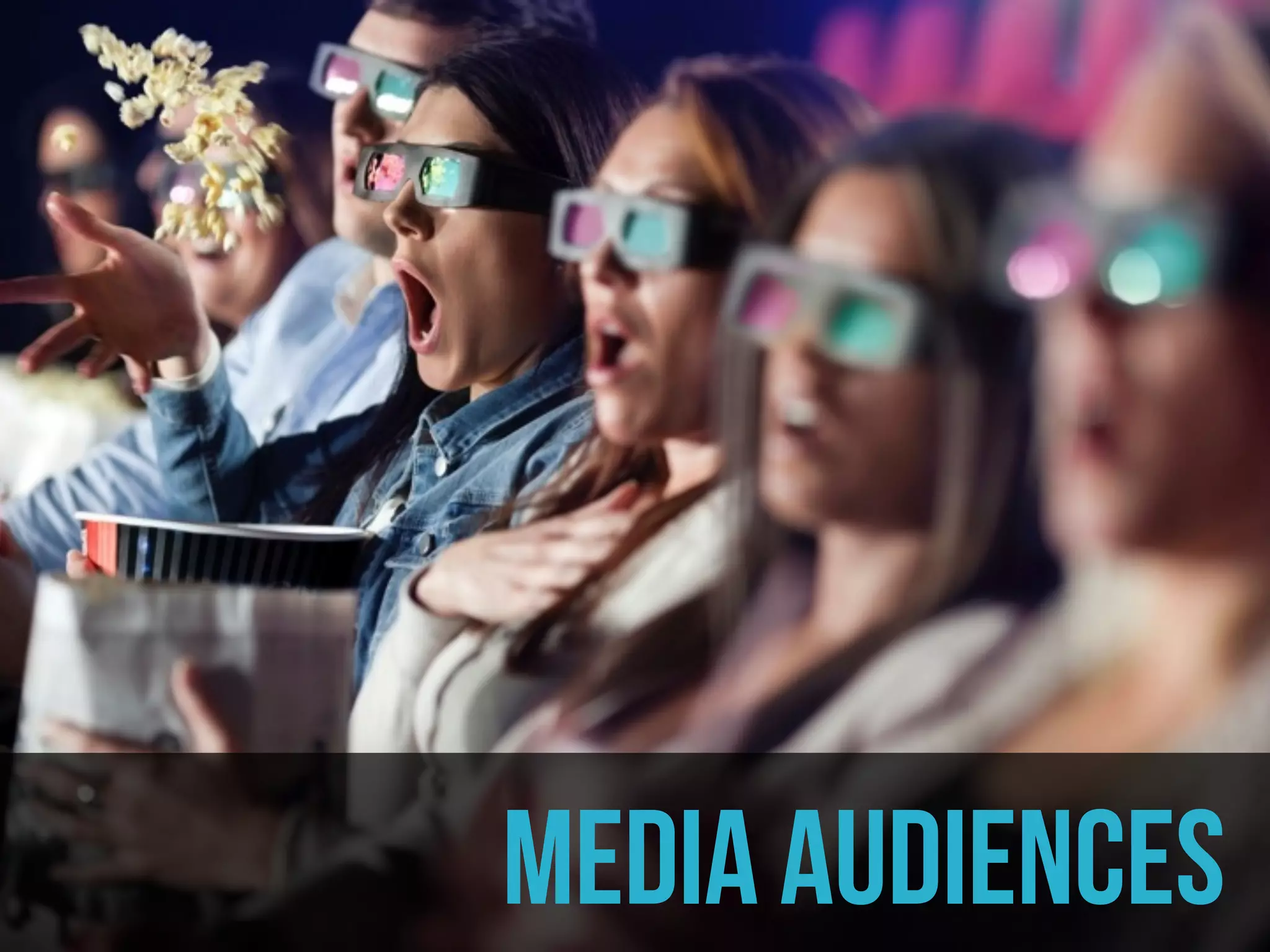
media audiences
Lesson objectives 
one Know how a media industry identifies 
audiences for its products 
two Understand how media products are 
construcred for specific audiences 
three Understand how audiences can 
respond to media products
audience is used to describe a 
group of individually 
unidentifiable and mutually 
anonymous people, usually 
united by their participation 
in media use.
It is used to refer to large 
groups of people like the 
mass audience …
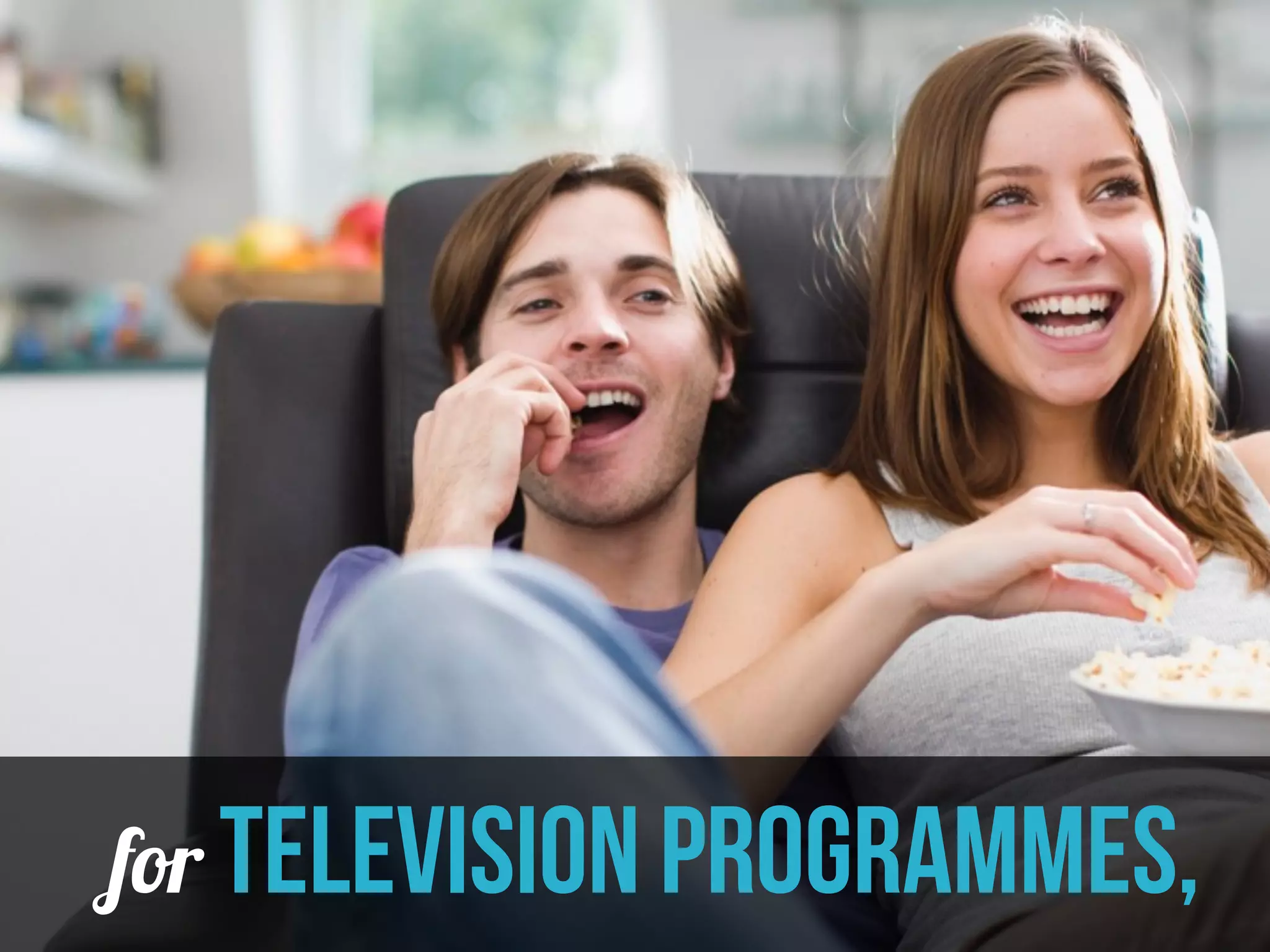
for television programmes,
newspaper readership,
people attending a sporting event,
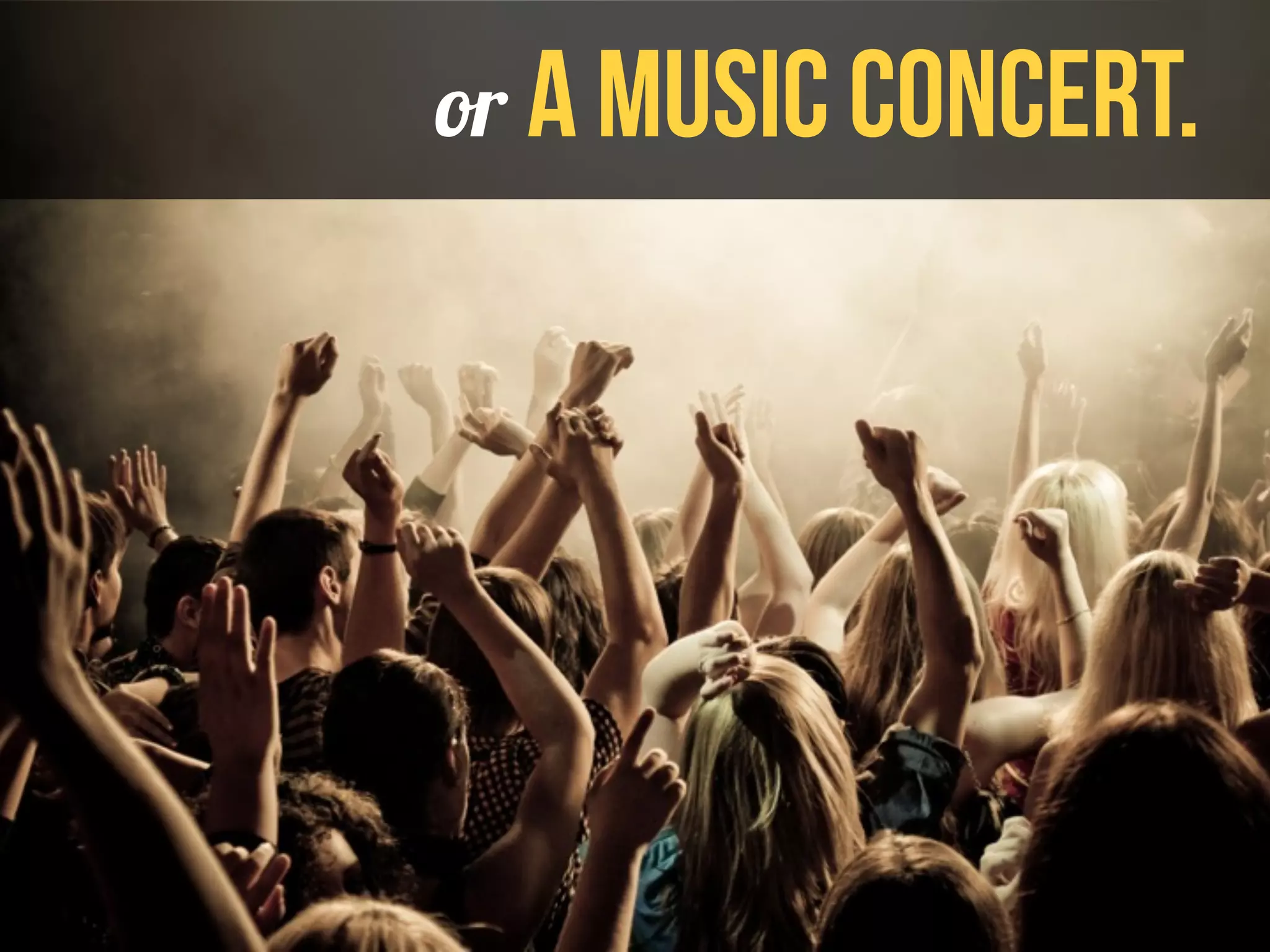
or a music concert.
People is such groups are seen as 
having little connection 
with each other, other than 
interest in the event they are 
attending or witnessing.
The word audience may also 
be used to refer to a relatively 
small groups like people 
who attend …
a school play,
a theatre performance,
or a poetry reading.
media product is 
anything made by the 
media industries.
media products are made 
for a particular audience. We 
enjoy some media products, but 
we may be uninterested in 
others.
Analysing a media product 
is much easier once you have 
identified the target 
audience.
target audience is a specific 
group of people at which a 
product or marketing 
messages are aimed.
Once you know your target 
audience you can start to look 
for particular features of the 
product that appeal to that 
audience.
A common and traditional 
method of audience 
research is known as 
demographics.
producers need to know the 
demographics of a potential 
audience so they can shape 
their product to appeal to a 
group with known viewing habits.
psychographics is a way of 
describing an audience by 
looking at the behaviour and 
personality traits of its members.
psychographics labels a 
particular type of person and 
makes an assessment about their 
viewing and spending habits.
audience theory
the hypodermic model 
In this model the media is seen 
as powerful and able to inject 
ideas into an audience who are 
seen as weak and passive.
It was thought that a mass 
audience could be 
influenced by the same 
message.
Powerful German films such as Triumph of the will 
seemed to use propaganda methods to ‘inject’ Nazi 
cause into the German audience.
That is why this this theory is 
known as the hypodermic 
model.
It suggests that media can 
‘inject’ ideas, values and attitudes 
into passive audience who 
might then act upon them.
This theory also suggests 
that media products 
have only one message which 
the audience must pick up.
This theory stems from a fear of 
the mass media, and gives the 
media much more power than 
it can ever have in a democracy.
It also ignores the obvious 
fact that not everyone in 
the audience behaves in 
the same way.
Two Step Flow Theory 
Katz and Lazarsfeld (1955) 
assumed a slightly more active 
audience. They suggest that 
messages from the media move in 
two distinct ways.
First, individuals who are opinion 
leaders, receive messages from 
the media and pass on their own 
interpretations in addition to 
the actual media content.
The information does not flow 
directly from the text into the minds 
of its audience, but is filtered 
through the opinion leaders who then 
pass it on to a more passive 
audience.
The audience then mediate the 
information received directly from the 
media with the ideas and thoughts 
expressed by the opinion leaders, thus 
being influenced not by a direct 
process, but by a two step flow.
This theory appeared to reduce the 
power of the media, and some 
researchers concluded that social 
factors were also important in the way 
in which audiences interpret texts. This 
led to the idea of active audiences.
uses and gratification theory 
This model stems from the idea 
that audiences are a complex 
mixture of individuals who select 
media products that best suit their 
needs.
This model suggests that media 
audiences are active and make 
active decisions about what 
they consume in relation to their 
social and cultural setting and 
their needs.
The message of the media is 
not being forced on them as 
such, they are choosing to 
interpret its message.
Here power lies with 
the audience not the 
producers.
The main idea is that media does 
not fully control an audience, 
but rather the media is subjective 
per person as they use it to meet 
their needs.
Blumier and Katz (1975) 
went into greater detail 
and identified four main 
uses:
Surveillance – our need to know 
what is going on in the world 
By keeping up to date with news about 
local and international events we feel we 
have the knowledge to avoid or deal with 
dangers.
Personal relationships – our need 
for to interact with other people 
This is provided by forming virtual 
relationships with characters in soaps, 
films and all kinds of drama, and other 
programmes and other media texts.
Personal identity – our need to 
define our identity and sense of self 
Part of our sense of self is informed by 
making judgements about all sorts of people 
and things. This is also true of judgements we 
make about TV and film characters, and 
celebrities.
Our choice of music, the shows we watch, 
the stars we like can be an expression of 
our identities. One aspect of this type of 
gratification is known as value 
reinforcement. This is where we choose 
television programmes or newspapers 
that have similar beliefs to those we hold.
Diversion – the need for escape, 
entertainment and relaxation 
All types of television programmes can 
be ‘used’ to wind down and offer 
diversion, as well as satisfying some of 
the other needs at the same time.
Next class will be on 
moral panics
homework task 
Read chapter on ‘Media audiences, 
interpreters and users’ by Sonia 
Livingstone. In your reading pay extra 
attention to the concept of moral panic, 
which we’ll discuss at the next class.

2. Media audiences

  • 1.
  • 2.
    Lesson objectives oneKnow how a media industry identifies audiences for its products two Understand how media products are construcred for specific audiences three Understand how audiences can respond to media products
  • 3.
    audience is usedto describe a group of individually unidentifiable and mutually anonymous people, usually united by their participation in media use.
  • 4.
    It is usedto refer to large groups of people like the mass audience …
  • 5.
  • 6.
  • 7.
    people attending asporting event,
  • 8.
    or a musicconcert.
  • 9.
    People is suchgroups are seen as having little connection with each other, other than interest in the event they are attending or witnessing.
  • 10.
    The word audiencemay also be used to refer to a relatively small groups like people who attend …
  • 11.
  • 12.
  • 13.
    or a poetryreading.
  • 14.
    media product is anything made by the media industries.
  • 15.
    media products aremade for a particular audience. We enjoy some media products, but we may be uninterested in others.
  • 16.
    Analysing a mediaproduct is much easier once you have identified the target audience.
  • 17.
    target audience isa specific group of people at which a product or marketing messages are aimed.
  • 18.
    Once you knowyour target audience you can start to look for particular features of the product that appeal to that audience.
  • 19.
    A common andtraditional method of audience research is known as demographics.
  • 20.
    producers need toknow the demographics of a potential audience so they can shape their product to appeal to a group with known viewing habits.
  • 21.
    psychographics is away of describing an audience by looking at the behaviour and personality traits of its members.
  • 22.
    psychographics labels a particular type of person and makes an assessment about their viewing and spending habits.
  • 23.
  • 24.
    the hypodermic model In this model the media is seen as powerful and able to inject ideas into an audience who are seen as weak and passive.
  • 25.
    It was thoughtthat a mass audience could be influenced by the same message.
  • 26.
    Powerful German filmssuch as Triumph of the will seemed to use propaganda methods to ‘inject’ Nazi cause into the German audience.
  • 27.
    That is whythis this theory is known as the hypodermic model.
  • 28.
    It suggests thatmedia can ‘inject’ ideas, values and attitudes into passive audience who might then act upon them.
  • 29.
    This theory alsosuggests that media products have only one message which the audience must pick up.
  • 30.
    This theory stemsfrom a fear of the mass media, and gives the media much more power than it can ever have in a democracy.
  • 31.
    It also ignoresthe obvious fact that not everyone in the audience behaves in the same way.
  • 32.
    Two Step FlowTheory Katz and Lazarsfeld (1955) assumed a slightly more active audience. They suggest that messages from the media move in two distinct ways.
  • 33.
    First, individuals whoare opinion leaders, receive messages from the media and pass on their own interpretations in addition to the actual media content.
  • 34.
    The information doesnot flow directly from the text into the minds of its audience, but is filtered through the opinion leaders who then pass it on to a more passive audience.
  • 35.
    The audience thenmediate the information received directly from the media with the ideas and thoughts expressed by the opinion leaders, thus being influenced not by a direct process, but by a two step flow.
  • 36.
    This theory appearedto reduce the power of the media, and some researchers concluded that social factors were also important in the way in which audiences interpret texts. This led to the idea of active audiences.
  • 37.
    uses and gratificationtheory This model stems from the idea that audiences are a complex mixture of individuals who select media products that best suit their needs.
  • 38.
    This model suggeststhat media audiences are active and make active decisions about what they consume in relation to their social and cultural setting and their needs.
  • 39.
    The message ofthe media is not being forced on them as such, they are choosing to interpret its message.
  • 40.
    Here power lieswith the audience not the producers.
  • 41.
    The main ideais that media does not fully control an audience, but rather the media is subjective per person as they use it to meet their needs.
  • 42.
    Blumier and Katz(1975) went into greater detail and identified four main uses:
  • 43.
    Surveillance – ourneed to know what is going on in the world By keeping up to date with news about local and international events we feel we have the knowledge to avoid or deal with dangers.
  • 44.
    Personal relationships –our need for to interact with other people This is provided by forming virtual relationships with characters in soaps, films and all kinds of drama, and other programmes and other media texts.
  • 45.
    Personal identity –our need to define our identity and sense of self Part of our sense of self is informed by making judgements about all sorts of people and things. This is also true of judgements we make about TV and film characters, and celebrities.
  • 46.
    Our choice ofmusic, the shows we watch, the stars we like can be an expression of our identities. One aspect of this type of gratification is known as value reinforcement. This is where we choose television programmes or newspapers that have similar beliefs to those we hold.
  • 47.
    Diversion – theneed for escape, entertainment and relaxation All types of television programmes can be ‘used’ to wind down and offer diversion, as well as satisfying some of the other needs at the same time.
  • 48.
    Next class willbe on moral panics
  • 49.
    homework task Readchapter on ‘Media audiences, interpreters and users’ by Sonia Livingstone. In your reading pay extra attention to the concept of moral panic, which we’ll discuss at the next class.