Media Hegemony
Presented by
Syed Zaheer Ul Husnain
Roll No. 14
Hegemony
 Hegemony is the process by which dominant culture
maintain its dominant position, because the word of
hegemony donated by power.
 The term “hegemony” refers to the leadership,
dominance or great influence that one entity or group
of people has over others.
Hegemony depends on consent
 Hegemony depends on consent, consent depends on
benefit.
 The material benefits for those who own and operate
privatized media are obvious, profits from media
advertising are plentiful.
Hegemony plays everywhere
 Politics
Leadership is one of the great talent in the world
Societies
Money makes the culture, every society based on the
culture.
Media
In the media also has the hegemony to their activities.
Power of Wealthy
 Wealthy individuals can contribute the most money to
the campaigns of certain political candidates or
political parties.
Power of Media
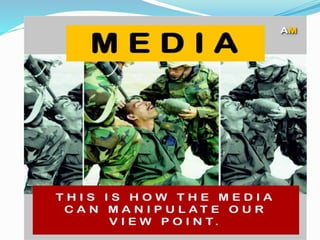
 Besides money , other forms of influence can be used
by one group to dominate others.
 For example, control the media can influence thing
such as what shows get aired or canceled.
Media Hegemony
 Base on Karl Marx’s idea
 Creation and malignances of dominant groups in
society
 Material Good ( Forms and Factories)
 Intellectual Good ( Education, Religion,
Institutions, Media, Family)
 Ideas of ruling class become the ruling class
 false consciousness',
MEDIA HEGEMONY
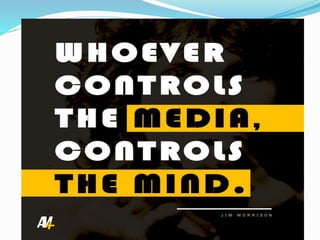
 The assumption of media hegemony is that
the ideas of the ruling class become ruling
ideas in society. According to this approach,
the mass media are controlled by the
dominant class in society which uses it as a
vehicle for exerting control over the rest of
society
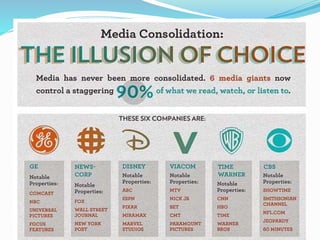
Owned by only 6 Corporation
There are 1500 Newspapers, 1100 Magazines, 9000
Radio stations, 1500 TV stations, 2400
Publishers....
What is their Agenda…?
Counter Hegemony
 Counter-hegemony is the practice of a subordinate
group resisting to the power and control of a dominant
group.
 Counter hegemony repress the hegemony.
 THANK YOU

Media hagemony ppt

  • 1.
    Media Hegemony Presented by SyedZaheer Ul Husnain Roll No. 14
  • 2.
    Hegemony  Hegemony isthe process by which dominant culture maintain its dominant position, because the word of hegemony donated by power.  The term “hegemony” refers to the leadership, dominance or great influence that one entity or group of people has over others.
  • 3.
    Hegemony depends onconsent  Hegemony depends on consent, consent depends on benefit.  The material benefits for those who own and operate privatized media are obvious, profits from media advertising are plentiful.
  • 4.
    Hegemony plays everywhere Politics Leadership is one of the great talent in the world Societies Money makes the culture, every society based on the culture. Media In the media also has the hegemony to their activities.
  • 5.
    Power of Wealthy Wealthy individuals can contribute the most money to the campaigns of certain political candidates or political parties.
  • 6.
    Power of Media Besides money , other forms of influence can be used by one group to dominate others.  For example, control the media can influence thing such as what shows get aired or canceled.
  • 7.
    Media Hegemony  Baseon Karl Marx’s idea  Creation and malignances of dominant groups in society  Material Good ( Forms and Factories)  Intellectual Good ( Education, Religion, Institutions, Media, Family)  Ideas of ruling class become the ruling class  false consciousness',
  • 8.
    MEDIA HEGEMONY  Theassumption of media hegemony is that the ideas of the ruling class become ruling ideas in society. According to this approach, the mass media are controlled by the dominant class in society which uses it as a vehicle for exerting control over the rest of society
  • 9.
    Owned by only6 Corporation There are 1500 Newspapers, 1100 Magazines, 9000 Radio stations, 1500 TV stations, 2400 Publishers....
  • 11.
    What is theirAgenda…?
  • 14.
    Counter Hegemony  Counter-hegemonyis the practice of a subordinate group resisting to the power and control of a dominant group.  Counter hegemony repress the hegemony.
  • 15.