
EQUALITY AND
EQUITY
BY
NOSHAD AHMED 15CRP46
City and Regional Planning department MUET
Jamshoro.
 Equity or economic equality is the
concept or idea of fairness in economics,
particularly in regard to taxation or welfare
economics.
 More specifically, it may refer to equal life
chances regardless of identity, to provide
all citizens with a basic and equal
minimum of income, goods, and services
or to increase funds and commitment for
redistribution.
Definition
Equity or equality?
Both are inter related to each other
Equity results into equality
And where there is equality , there is
equity too.
While seemingly comparable, equity
leads to the fair treatment of every
individual based on his or her
circumstances whereas equality calls
for the same rights to be afforded to
everyone regardless of these
circumstances.
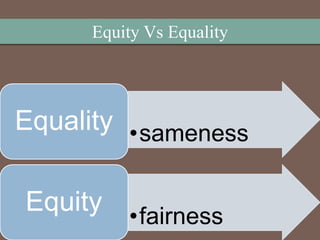
Equity Vs Equality
•samenessEquality
•fairness
Equity
Equity – the concept of ‘fairness’
There can be no universal definition of
equity:
 Refers to a “good” distribution of
welfare across society.
 What some will consider fair reward
for work done, others may consider
unfair.
Equity
Three views of equity:-
Focus
Inclusion
Narrowing gaps
The significance of equity:
 The concept of fairness will be part of
the economic policy making process
 Many economic policies will aim to
improve equity
Significance
Equity applies in the construction of tax systems:
 Horizontal Equity - people with a similar ability to
pay taxes should pay the same or similar amounts
 Vertical Equity - people with a greater ability to pay
taxes should pay more Truly equitable tax systems
will deliver horizontal and vertical equity.
 E.g. income tax has both horizontal and vertical
equity.
Types of Equity
Redistribution Using the tax and benefit system to
transfer wealth from the wealthy to the poor.
 20% standard tax rate
 40% higher tax rate
 50% tax rate on high income earners – but will end
soon Improves equity
 Raises consumption by the poor Issues:
 May damage the incentive to work
 Dead weight loss caused by inefficiency of
taxation
Equality – the situation where goods
and services in a society are distributed
equally
Equality
The benefits of equality:
•Improves social cohesion – less difference
•Improves health – greater access
•Can encourage economic growth – less
savingIssues created by equality:
•Lack of incentive to work harder
•Profit motive drives the economy
•International competitiveness: in highly re-
distributive economies(high taxes and benefits)
may act as an uncompetitive constraint in the
economy
Benefits of equality
Equality and Equity Types
 Gender Equality and Gender Equity
 Education based
 Political based
 job based
 judicial based
 etc
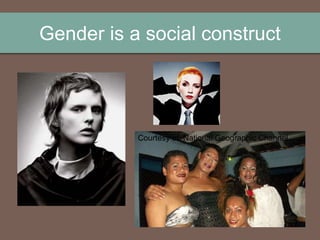
Gender is a social construct
Courtesy of: National Geographic Channel
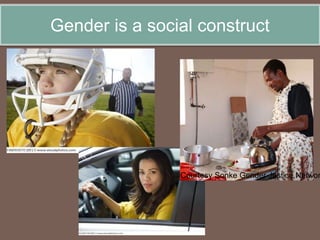
Gender is a social construct
Courtesy Sonke Gender Justice Networ
WHY focus on gender?
Because
“We seek a world of hope, tolerance and social justice,
where poverty has been overcome and people live in
dignity and security.”
CARE’s core values of Respect, Integrity,
Commitment and Excellence promotes diversity and
gender equity, choice and dignity for all.
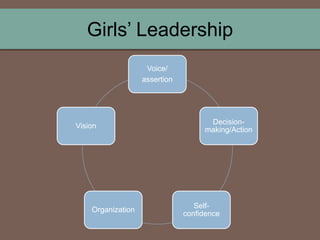
Girls’ Leadership
Voice/
assertion
Decision-
making/Action
Self-
confidence
Organization
Vision
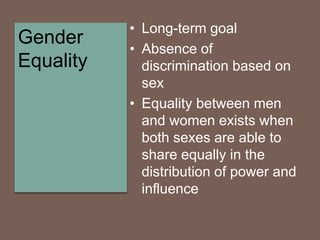
• Long-term goal
• Absence of
discrimination based on
sex
• Equality between men
and women exists when
both sexes are able to
share equally in the
distribution of power and
influence
Gender
Equality
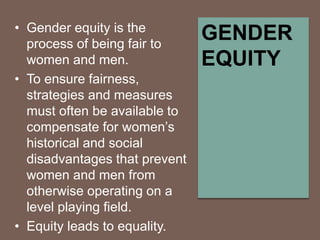
• Gender equity is the
process of being fair to
women and men.
• To ensure fairness,
strategies and measures
must often be available to
compensate for women’s
historical and social
disadvantages that prevent
women and men from
otherwise operating on a
level playing field.
• Equity leads to equality.
GENDER
EQUITY
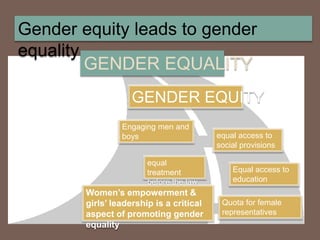
equal
treatment
before the law
equal access to
social provisions
Equal access to
education
Quota for female
representatives
GENDER EQUALITY
GENDER EQUITY
Gender equity leads to gender
equality
Women’s empowerment &
girls’ leadership is a critical
aspect of promoting gender
equality
Engaging men and
boys
17.equality and equity

17.equality and equity

  • 1.
    EQUALITY AND EQUITY BY NOSHAD AHMED15CRP46 City and Regional Planning department MUET Jamshoro.
  • 2.
     Equity oreconomic equality is the concept or idea of fairness in economics, particularly in regard to taxation or welfare economics.  More specifically, it may refer to equal life chances regardless of identity, to provide all citizens with a basic and equal minimum of income, goods, and services or to increase funds and commitment for redistribution. Definition
  • 3.
    Equity or equality? Bothare inter related to each other Equity results into equality And where there is equality , there is equity too. While seemingly comparable, equity leads to the fair treatment of every individual based on his or her circumstances whereas equality calls for the same rights to be afforded to everyone regardless of these circumstances.
  • 4.
  • 5.
    Equity – theconcept of ‘fairness’ There can be no universal definition of equity:  Refers to a “good” distribution of welfare across society.  What some will consider fair reward for work done, others may consider unfair. Equity
  • 6.
    Three views ofequity:- Focus Inclusion Narrowing gaps
  • 7.
    The significance ofequity:  The concept of fairness will be part of the economic policy making process  Many economic policies will aim to improve equity Significance
  • 8.
    Equity applies inthe construction of tax systems:  Horizontal Equity - people with a similar ability to pay taxes should pay the same or similar amounts  Vertical Equity - people with a greater ability to pay taxes should pay more Truly equitable tax systems will deliver horizontal and vertical equity.  E.g. income tax has both horizontal and vertical equity. Types of Equity
  • 9.
    Redistribution Using thetax and benefit system to transfer wealth from the wealthy to the poor.  20% standard tax rate  40% higher tax rate  50% tax rate on high income earners – but will end soon Improves equity  Raises consumption by the poor Issues:  May damage the incentive to work  Dead weight loss caused by inefficiency of taxation
  • 10.
    Equality – thesituation where goods and services in a society are distributed equally Equality
  • 11.
    The benefits ofequality: •Improves social cohesion – less difference •Improves health – greater access •Can encourage economic growth – less savingIssues created by equality: •Lack of incentive to work harder •Profit motive drives the economy •International competitiveness: in highly re- distributive economies(high taxes and benefits) may act as an uncompetitive constraint in the economy Benefits of equality
  • 12.
    Equality and EquityTypes  Gender Equality and Gender Equity  Education based  Political based  job based  judicial based  etc
  • 13.
    Gender is asocial construct Courtesy of: National Geographic Channel
  • 14.
    Gender is asocial construct Courtesy Sonke Gender Justice Networ
  • 15.
    WHY focus ongender? Because “We seek a world of hope, tolerance and social justice, where poverty has been overcome and people live in dignity and security.” CARE’s core values of Respect, Integrity, Commitment and Excellence promotes diversity and gender equity, choice and dignity for all.
  • 16.
  • 17.
    • Long-term goal •Absence of discrimination based on sex • Equality between men and women exists when both sexes are able to share equally in the distribution of power and influence Gender Equality
  • 18.
    • Gender equityis the process of being fair to women and men. • To ensure fairness, strategies and measures must often be available to compensate for women’s historical and social disadvantages that prevent women and men from otherwise operating on a level playing field. • Equity leads to equality. GENDER EQUITY
  • 19.
    equal treatment before the law equalaccess to social provisions Equal access to education Quota for female representatives GENDER EQUALITY GENDER EQUITY Gender equity leads to gender equality Women’s empowerment & girls’ leadership is a critical aspect of promoting gender equality Engaging men and boys