Metabolism of Cobalt, Chromium & Nickel
Gandham. Rajeev
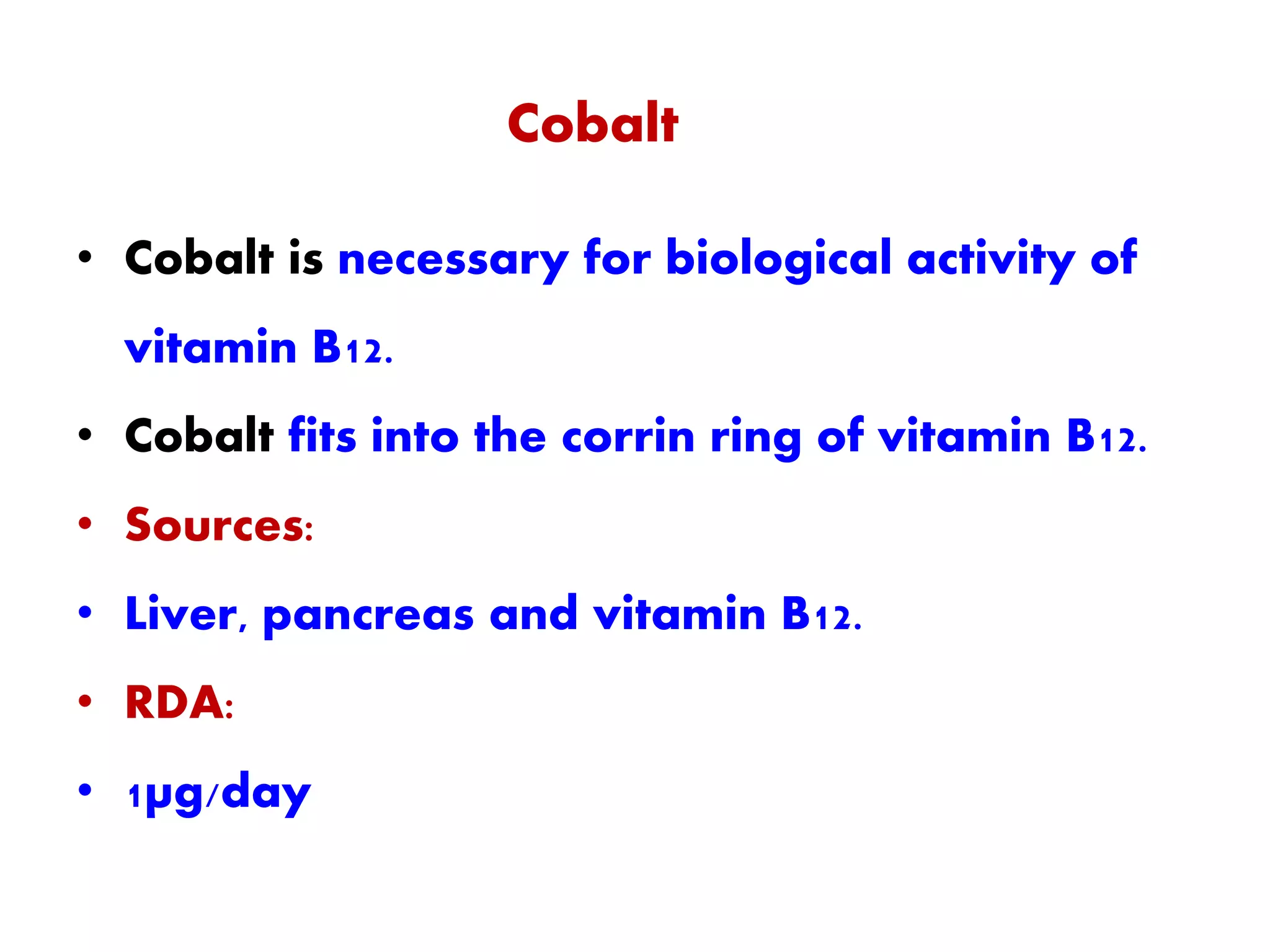
Cobalt
• Cobalt is necessary for biological activity of
vitamin B12.
• Cobalt fits into the corrin ring of vitamin B12.
• Sources:
• Liver, pancreas and vitamin B12.
• RDA:
• 1µg/day
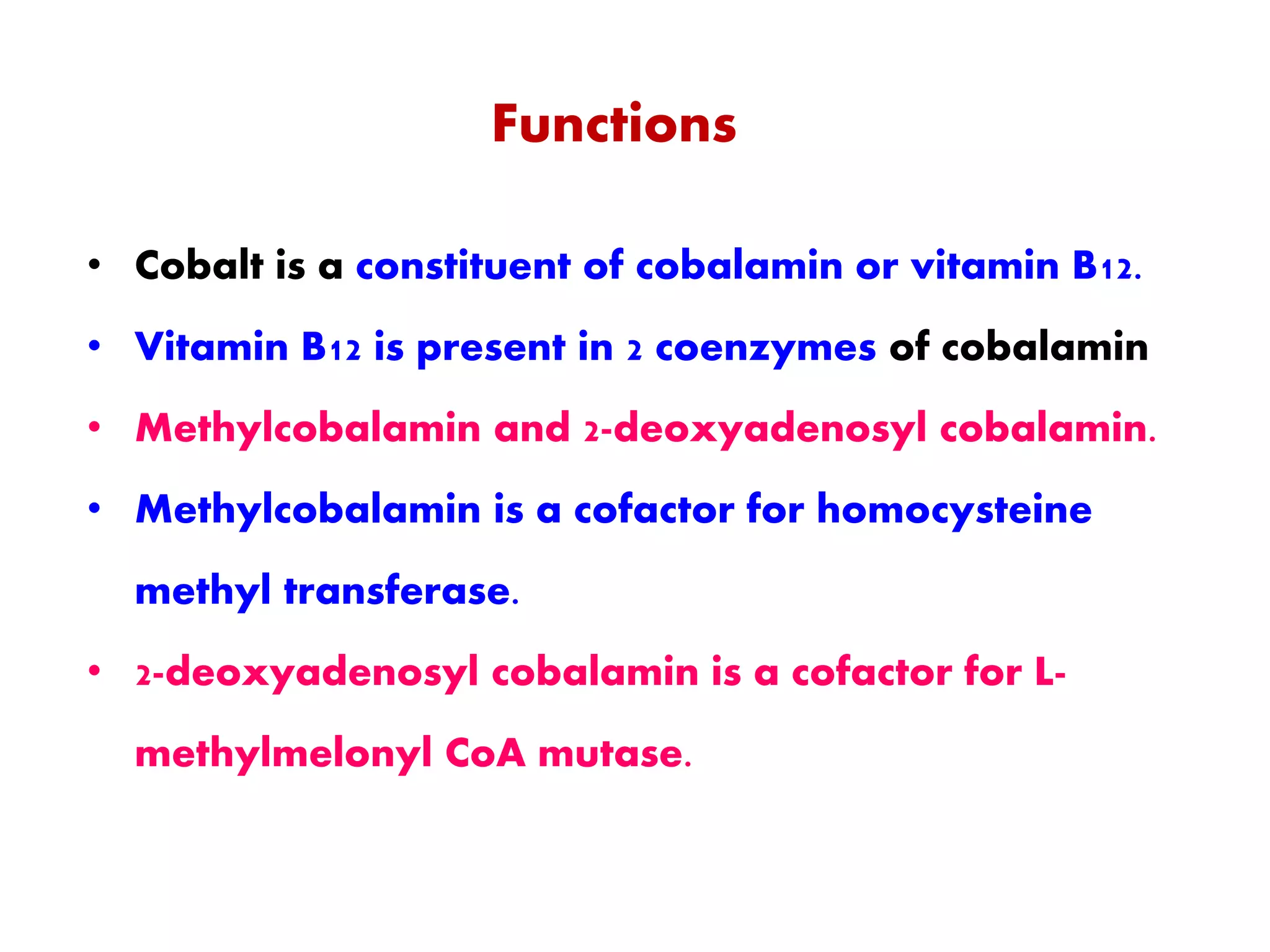
Functions
• Cobalt is a constituent of cobalamin or vitamin B12.
• Vitamin B12 is present in 2 coenzymes of cobalamin
• Methylcobalamin and 2-deoxyadenosyl cobalamin.
• Methylcobalamin is a cofactor for homocysteine
methyl transferase.
• 2-deoxyadenosyl cobalamin is a cofactor for L-
methylmelonyl CoA mutase.
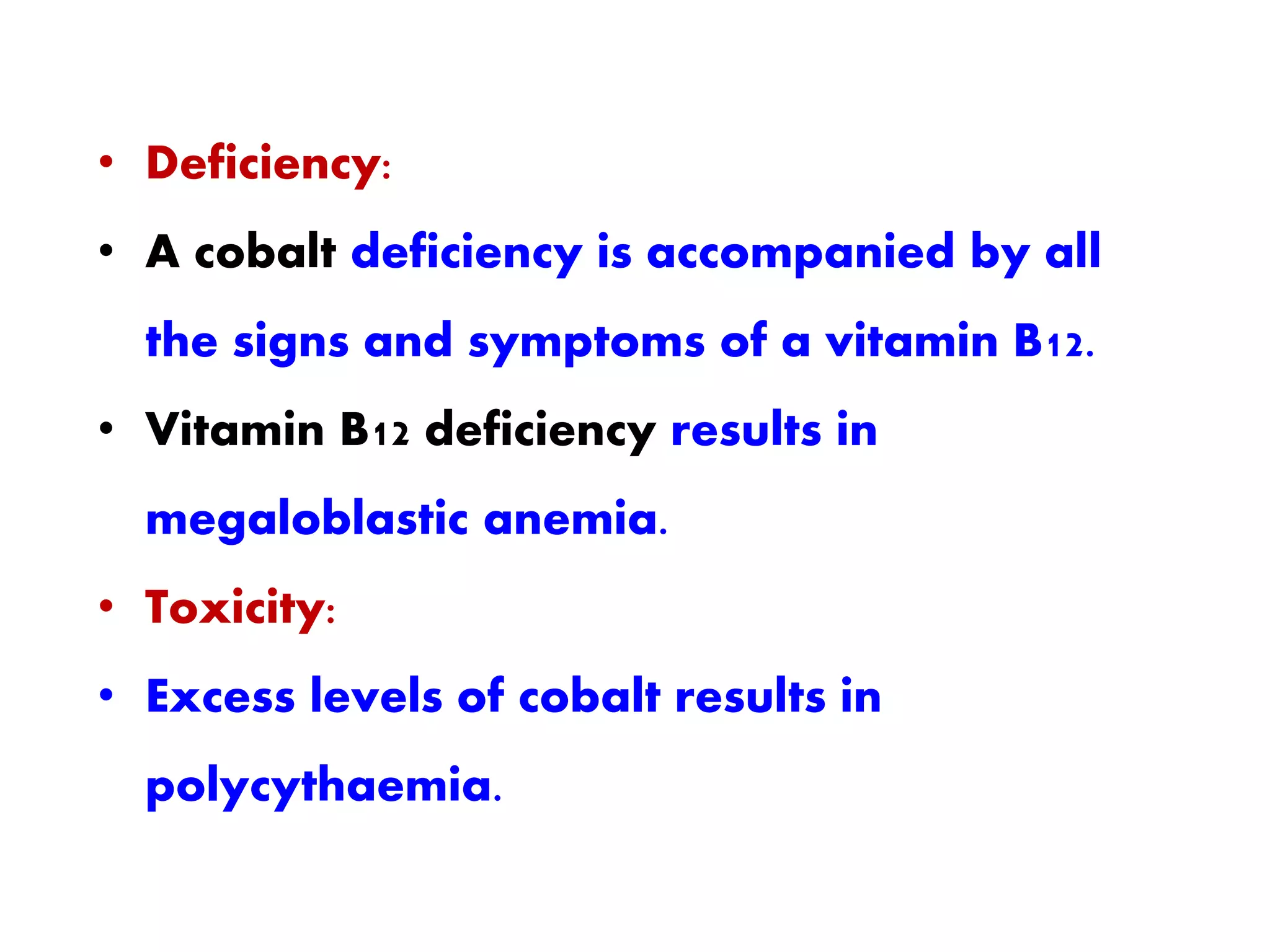
• Deficiency:
• A cobalt deficiency is accompanied by all
the signs and symptoms of a vitamin B12.
• Vitamin B12 deficiency results in
megaloblastic anemia.
• Toxicity:
• Excess levels of cobalt results in
polycythaemia.
Chromium
• The adult human body contains about 6 mg.
• Sources:
• Brewer’s yeast, molasses, meat products,
cheese, whole grains.
• RDA:
• 0.05 to 20 mg/day
Absorption and excretion
• The biologically active form of chromium
(Cr3+) is absorbed poorly from the diet.
• The majority of orally absorbed chromium is
excreted through urine.
Functions
• In association with insulin, Cr promotes the
utilization of glucose,
• Cr is a component of a protein – chromodulin,
which facilitates the binding of insulin to cell
receptor sites.
• Cr lowers the total cholesterol level.
• Cr decreases serum LDL levels & increases
HDL levels.
• Cr participates in transport of amino acids.
Deficiency
• Causes:
• Malnutrition & malabsorption.
• Features;
• Impaired glucose tolerance in malnourished
children, and diabetes in elderly persons.
• Toxicity:
• Excess intake of Cr results in toxicity, leading
to liver & kidney damage.
Nickel
• Source and distribution:
• Nickel occurs trace amounts in human &
animal tissues.
• Nickel does not accumulate with age in any
of human tissue other than lungs.
• It is poorly absorbed from intestine.
• It is excreted mainly through faeces.
Functions
• Nickel activates some enzymes such as
arginase & urease.
• It also inhibits some enzymes such as acid
phosphatase.
• Nickel is required in trace amounts for
growth and reproduction.
Deficiency & Toxicity
• Nickel deficiency in humans is unknown.
• In experimental animals impaired growth &
reproduction, anemia.
• Toxicity:
• Nickel is relatively non-toxic.
• Prolonged exposure results in respiratory
tract neoplasia & dermatitis.
Reference books
• Text book of Biochemistry - U Satyanarayana
• Text book of Biochemistry – DM Vasudevan
• Text book of Biochemistry - MN Chatterjea
Thank you

METABOLISM OF COBALT & CHROMIUM

  • 1.
    Metabolism of Cobalt,Chromium & Nickel Gandham. Rajeev
  • 2.
    Cobalt • Cobalt isnecessary for biological activity of vitamin B12. • Cobalt fits into the corrin ring of vitamin B12. • Sources: • Liver, pancreas and vitamin B12. • RDA: • 1µg/day
  • 3.
    Functions • Cobalt isa constituent of cobalamin or vitamin B12. • Vitamin B12 is present in 2 coenzymes of cobalamin • Methylcobalamin and 2-deoxyadenosyl cobalamin. • Methylcobalamin is a cofactor for homocysteine methyl transferase. • 2-deoxyadenosyl cobalamin is a cofactor for L- methylmelonyl CoA mutase.
  • 4.
    • Deficiency: • Acobalt deficiency is accompanied by all the signs and symptoms of a vitamin B12. • Vitamin B12 deficiency results in megaloblastic anemia. • Toxicity: • Excess levels of cobalt results in polycythaemia.
  • 5.
    Chromium • The adulthuman body contains about 6 mg. • Sources: • Brewer’s yeast, molasses, meat products, cheese, whole grains. • RDA: • 0.05 to 20 mg/day
  • 6.
    Absorption and excretion •The biologically active form of chromium (Cr3+) is absorbed poorly from the diet. • The majority of orally absorbed chromium is excreted through urine.
  • 7.
    Functions • In associationwith insulin, Cr promotes the utilization of glucose, • Cr is a component of a protein – chromodulin, which facilitates the binding of insulin to cell receptor sites. • Cr lowers the total cholesterol level. • Cr decreases serum LDL levels & increases HDL levels. • Cr participates in transport of amino acids.
  • 8.
    Deficiency • Causes: • Malnutrition& malabsorption. • Features; • Impaired glucose tolerance in malnourished children, and diabetes in elderly persons. • Toxicity: • Excess intake of Cr results in toxicity, leading to liver & kidney damage.
  • 9.
    Nickel • Source anddistribution: • Nickel occurs trace amounts in human & animal tissues. • Nickel does not accumulate with age in any of human tissue other than lungs. • It is poorly absorbed from intestine. • It is excreted mainly through faeces.
  • 10.
    Functions • Nickel activatessome enzymes such as arginase & urease. • It also inhibits some enzymes such as acid phosphatase. • Nickel is required in trace amounts for growth and reproduction.
  • 11.
    Deficiency & Toxicity •Nickel deficiency in humans is unknown. • In experimental animals impaired growth & reproduction, anemia. • Toxicity: • Nickel is relatively non-toxic. • Prolonged exposure results in respiratory tract neoplasia & dermatitis.
  • 12.
    Reference books • Textbook of Biochemistry - U Satyanarayana • Text book of Biochemistry – DM Vasudevan • Text book of Biochemistry - MN Chatterjea
  • 13.