Patient – Ventilator Asynchrony
Dr Vincent Ioos
Medical ICU – PIMS
APICON 2008
Workshop on Mechanical Ventilation
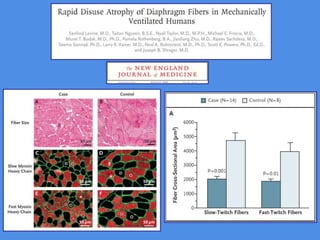
Goal of mechanical ventilation
• Do you mechanically ventilate your patient to
reverse diaphragmatic fatigue ?
or
• Do you encourage greater diaphragm use to
avoid ventilator-induced diaphragmatic
dysfunction?
Patient triggered ventilation
• Assisted mechanical ventilation
• Avoid ventilator induced diaphragmatic
dysfunction
• Providing sufficient level of ventilatory support
to reduce patient’s work of breathing
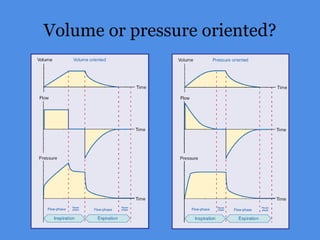
Volume or pressure oriented?
Volume oriented modes
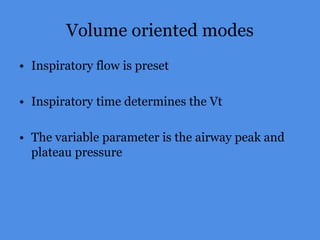
• Inspiratory flow is preset
• Inspiratory time determines the Vt
• The variable parameter is the airway peak and
plateau pressure
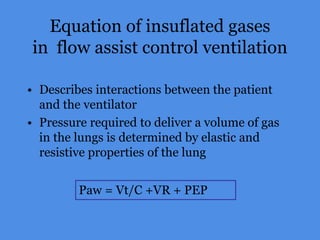
Equation of insuflated gases
in flow assist control ventilation
• Describes interactions between the patient
and the ventilator
• Pressure required to deliver a volume of gas
in the lungs is determined by elastic and
resistive properties of the lung
Paw = Vt/C +VR + PEP
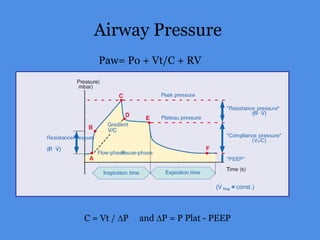
Airway Pressure
C = Vt / P and P = P Plat - PEEP
Paw= Po + Vt/C + RV
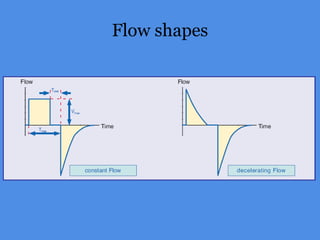
Flow shapes
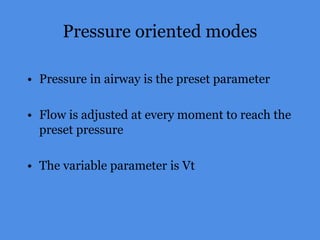
Pressure oriented modes
• Pressure in airway is the preset parameter
• Flow is adjusted at every moment to reach the
preset pressure
• The variable parameter is Vt
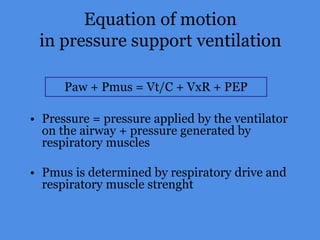
Equation of motion
in pressure support ventilation
• Pressure = pressure applied by the ventilator
on the airway + pressure generated by
respiratory muscles
• Pmus is determined by respiratory drive and
respiratory muscle strenght
Paw + Pmus = Vt/C + VxR + PEP
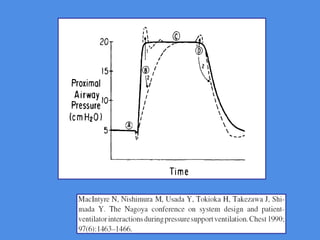
Determinant factors
of inspiratory flow in PSV
• Pressure support setting
• Pmus (inspiratory effort)
• Airway resistance
• Respiratory system compliance
• Vt directly depends on inspiratory flow, but
also on auto-PEEP (decreases the driving
pressure gradient)
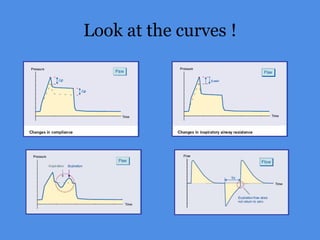
Look at the curves !
A challenge for the intensivist
• Discomfort anxiety
• Increased work of breathing
• Increased requirement of sedation
• Increased length of mechanical ventilation
• Increased incidence of VAP

Patient-ventilator asynchrony
• Mechanical ventilation: 2 pumps
– Ventilator controlled by the physician
– Patient’s own respiratory muscle pump
• Mismatch between the patient and the ventilator
inspiratory and expiratory time time
• Patient « fighting » with the ventilator
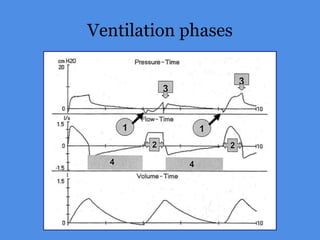
Ventilation phases
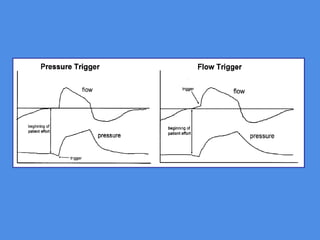
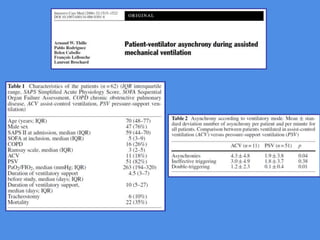
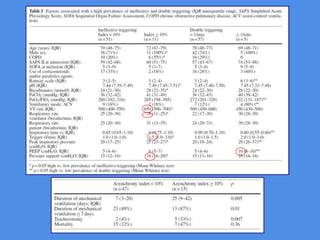
Trigger asynchrony
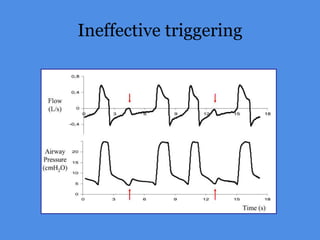
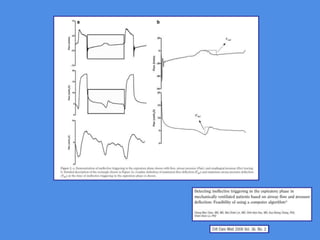
• Ineffective triggerring: muscular effort without
ventilator trigger
• Double triggerring
• Auto-triggering
• Insensitive trigger: triggering that requires
excessive patient effort
Ineffective triggering
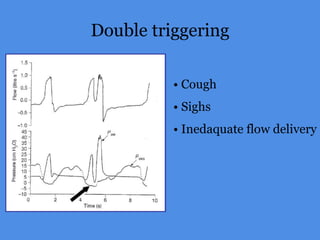
Double triggering
• Cough
• Sighs
• Inedaquate flow delivery
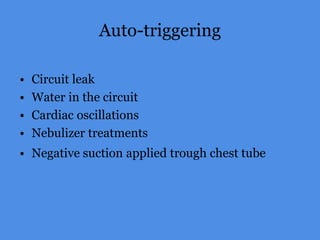
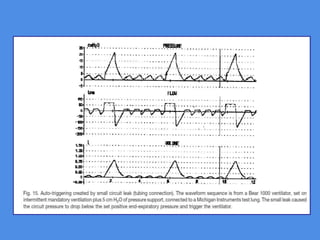
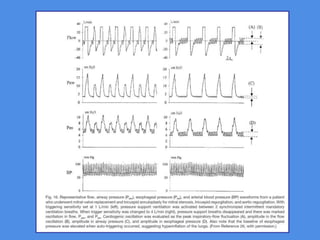
Auto-triggering
• Circuit leak
• Water in the circuit
• Cardiac oscillations
• Nebulizer treatments
• Negative suction applied trough chest tube
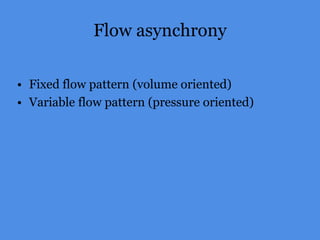
Flow asynchrony
• Fixed flow pattern (volume oriented)
• Variable flow pattern (pressure oriented)
Volume oriented ventilation
(fixed flow pattern)
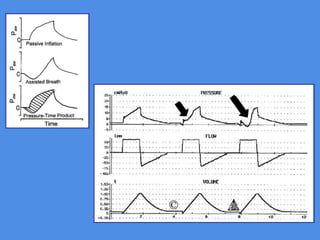
• Inspiratory flow varies according to the
underlying condition
• If patient’s flow demand increases, peak flow
should be adjusted accordingly
• Usually, peak flow is too low
• Dished-out appearance of the presure-wave-
form
• Importance of flow-pattern
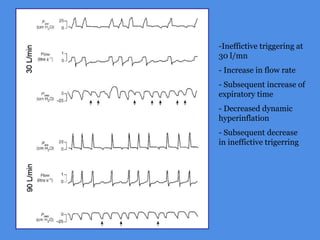
-Ineffictive triggering at
30 l/mn
- Increase in flow rate
- Subsequent increase of
expiratory time
- Decreased dynamic
hyperinflation
- Subsequent decrease
in ineffictive trigerring
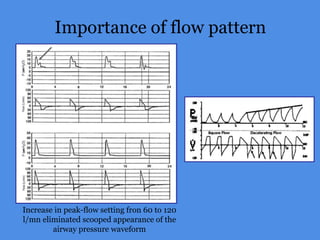
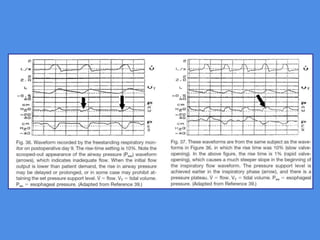
Importance of flow pattern
Increase in peak-flow setting fron 60 to 120
l/mn eliminated scooped appearance of the
airway pressure waveform
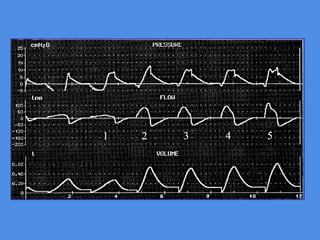
Pressure oriented ventilation
(variable flow)
• Peak flow is depending on :
– Set target pressure
– Patient effort
– Respiratory system compliance
• Adjustement : rate of valve opening = rise time =
presure slope = flow acceleration
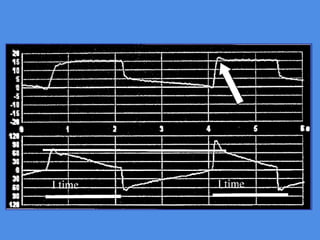
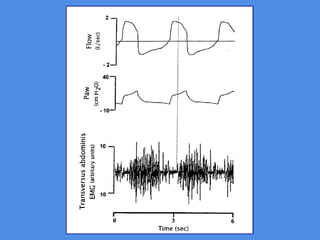
Termination asynchrony
• Ventilator should cycle at the end of the neural
inspiration time
• Delayed termination:
– Dynamic hyperinflation
– Trigger delay
– Ineffective triggering
• Premature termination
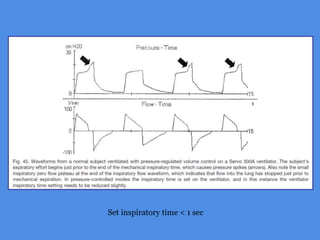
Set inspiratory time < 1 sec
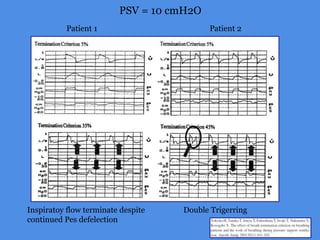
PSV = 10 cmH2O
Inspiratoy flow terminate despite
continued Pes defelection
Double Trigerring
Patient 1 Patient 2
Expiratory asynchrony
• Shortened expiratory time:
Auto-PEEP  trigger asynchrony
– Delay in the relaxation of the expiratory
muscle activity prior to the next mechanical
inspiration
– Overlap between expiratory and insiratory
uscle activity
• Prolonged expiratory time
Auto-PEEP created by flow patterns
that increases inspiratory time
• Lower peak flow during control ventilation
• Switch from constant flow to descending ramp
flow
• Inadequate pressure slope during presure
controlled ventilation
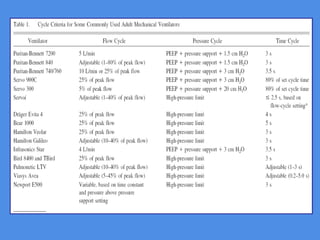
• Termination criteria that prolong expiratory
time during PSV
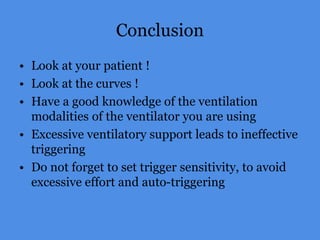
Conclusion
• Look at your patient !
• Look at the curves !
• Have a good knowledge of the ventilation
modalities of the ventilator you are using
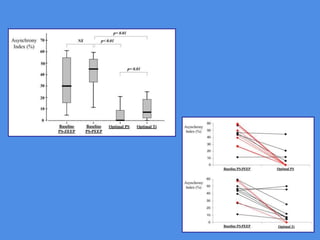
• Excessive ventilatory support leads to ineffective
triggering
• Do not forget to set trigger sensitivity, to avoid
excessive effort and auto-triggering

1457613.ppt

  • 1.
    Patient – VentilatorAsynchrony Dr Vincent Ioos Medical ICU – PIMS APICON 2008 Workshop on Mechanical Ventilation
  • 2.
    Goal of mechanicalventilation • Do you mechanically ventilate your patient to reverse diaphragmatic fatigue ? or • Do you encourage greater diaphragm use to avoid ventilator-induced diaphragmatic dysfunction?
  • 4.
    Patient triggered ventilation •Assisted mechanical ventilation • Avoid ventilator induced diaphragmatic dysfunction • Providing sufficient level of ventilatory support to reduce patient’s work of breathing
  • 6.
  • 7.
    Volume oriented modes •Inspiratory flow is preset • Inspiratory time determines the Vt • The variable parameter is the airway peak and plateau pressure
  • 8.
    Equation of insuflatedgases in flow assist control ventilation • Describes interactions between the patient and the ventilator • Pressure required to deliver a volume of gas in the lungs is determined by elastic and resistive properties of the lung Paw = Vt/C +VR + PEP
  • 9.
    Airway Pressure C =Vt / P and P = P Plat - PEEP Paw= Po + Vt/C + RV
  • 10.
  • 11.
    Pressure oriented modes •Pressure in airway is the preset parameter • Flow is adjusted at every moment to reach the preset pressure • The variable parameter is Vt
  • 12.
    Equation of motion inpressure support ventilation • Pressure = pressure applied by the ventilator on the airway + pressure generated by respiratory muscles • Pmus is determined by respiratory drive and respiratory muscle strenght Paw + Pmus = Vt/C + VxR + PEP
  • 13.
    Determinant factors of inspiratoryflow in PSV • Pressure support setting • Pmus (inspiratory effort) • Airway resistance • Respiratory system compliance • Vt directly depends on inspiratory flow, but also on auto-PEEP (decreases the driving pressure gradient)
  • 15.
    Look at thecurves !
  • 16.
    A challenge forthe intensivist • Discomfort anxiety • Increased work of breathing • Increased requirement of sedation • Increased length of mechanical ventilation • Increased incidence of VAP 
  • 17.
    Patient-ventilator asynchrony • Mechanicalventilation: 2 pumps – Ventilator controlled by the physician – Patient’s own respiratory muscle pump • Mismatch between the patient and the ventilator inspiratory and expiratory time time • Patient « fighting » with the ventilator
  • 20.
  • 21.
    Trigger asynchrony • Ineffectivetriggerring: muscular effort without ventilator trigger • Double triggerring • Auto-triggering • Insensitive trigger: triggering that requires excessive patient effort
  • 22.
  • 24.
    Double triggering • Cough •Sighs • Inedaquate flow delivery
  • 25.
    Auto-triggering • Circuit leak •Water in the circuit • Cardiac oscillations • Nebulizer treatments • Negative suction applied trough chest tube
  • 28.
    Flow asynchrony • Fixedflow pattern (volume oriented) • Variable flow pattern (pressure oriented)
  • 29.
    Volume oriented ventilation (fixedflow pattern) • Inspiratory flow varies according to the underlying condition • If patient’s flow demand increases, peak flow should be adjusted accordingly • Usually, peak flow is too low • Dished-out appearance of the presure-wave- form • Importance of flow-pattern
  • 31.
    -Ineffictive triggering at 30l/mn - Increase in flow rate - Subsequent increase of expiratory time - Decreased dynamic hyperinflation - Subsequent decrease in ineffictive trigerring
  • 32.
    Importance of flowpattern Increase in peak-flow setting fron 60 to 120 l/mn eliminated scooped appearance of the airway pressure waveform
  • 33.
    Pressure oriented ventilation (variableflow) • Peak flow is depending on : – Set target pressure – Patient effort – Respiratory system compliance • Adjustement : rate of valve opening = rise time = presure slope = flow acceleration
  • 37.
    Termination asynchrony • Ventilatorshould cycle at the end of the neural inspiration time • Delayed termination: – Dynamic hyperinflation – Trigger delay – Ineffective triggering • Premature termination
  • 40.
  • 41.
    PSV = 10cmH2O Inspiratoy flow terminate despite continued Pes defelection Double Trigerring Patient 1 Patient 2
  • 42.
    Expiratory asynchrony • Shortenedexpiratory time: Auto-PEEP  trigger asynchrony – Delay in the relaxation of the expiratory muscle activity prior to the next mechanical inspiration – Overlap between expiratory and insiratory uscle activity • Prolonged expiratory time
  • 43.
    Auto-PEEP created byflow patterns that increases inspiratory time • Lower peak flow during control ventilation • Switch from constant flow to descending ramp flow • Inadequate pressure slope during presure controlled ventilation • Termination criteria that prolong expiratory time during PSV
  • 47.
    Conclusion • Look atyour patient ! • Look at the curves ! • Have a good knowledge of the ventilation modalities of the ventilator you are using • Excessive ventilatory support leads to ineffective triggering • Do not forget to set trigger sensitivity, to avoid excessive effort and auto-triggering