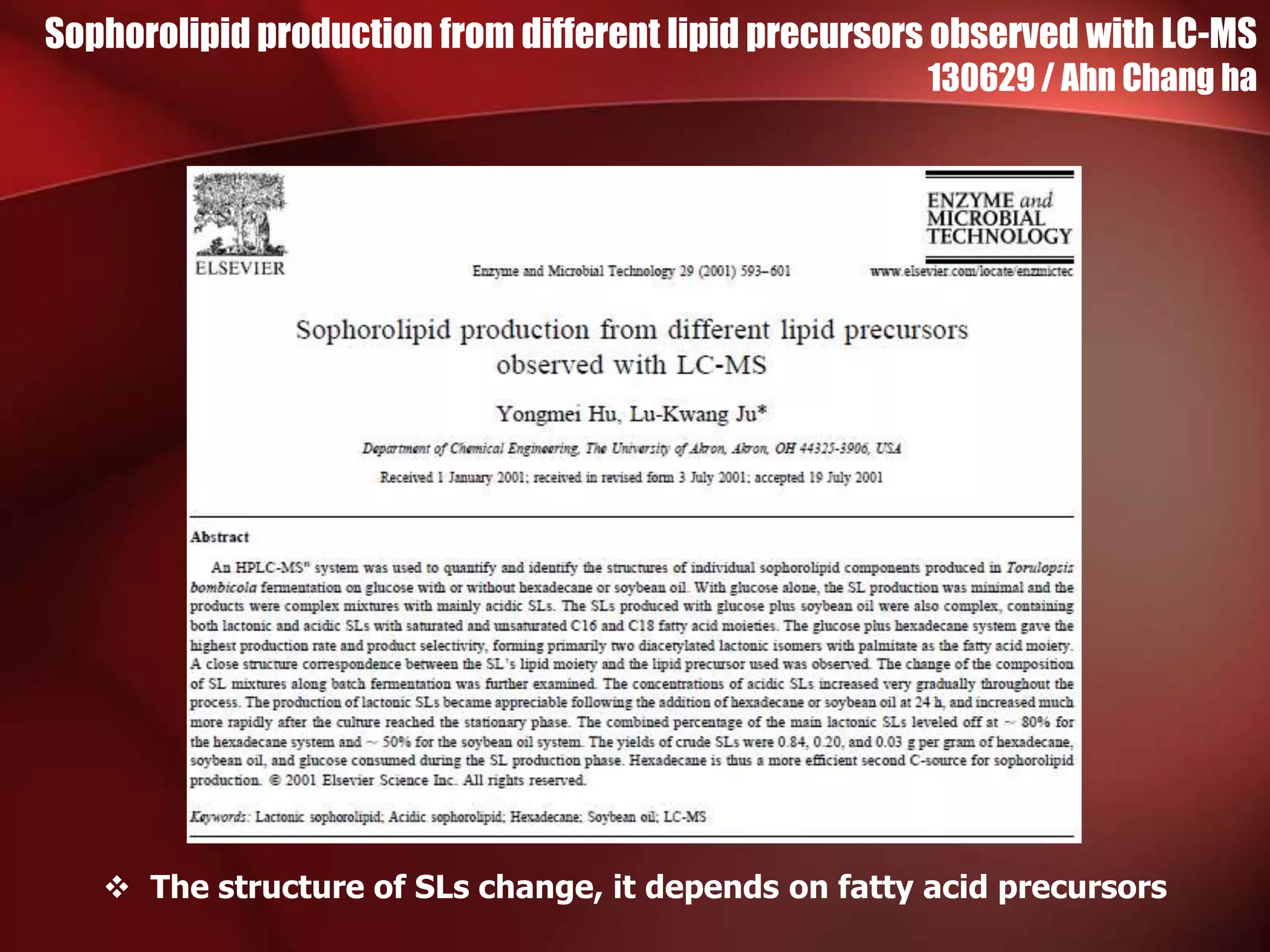
Sophorolipid production from different lipid precursors observed with LC-MS
130629 / Ahn Chang ha
 The structure of SLs change, it depends on fatty acid precursors
Introduction
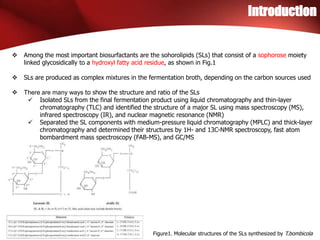
Figure1. Molecular structures of the SLs synthesized by T.bombicola
 Among the most important biosurfactants are the sohorolipids (SLs) that consist of a sophorose moiety
linked glycosidically to a hydroxyl fatty acid residue, as shown in Fig.1
 SLs are produced as complex mixtures in the fermentation broth, depending on the carbon sources used
 There are many ways to show the structure and ratio of the SLs
 Isolated SLs from the final fermentation product using liquid chromatography and thin-layer
chromatography (TLC) and identified the structure of a major SL using mass spectroscopy (MS),
infrared spectroscopy (IR), and nuclear magnetic resonance (NMR)
 Separated the SL components with medium-pressure liquid chromatography (MPLC) and thick-layer
chromatography and determined their structures by 1H- and 13C-NMR spectroscopy, fast atom
bombardment mass spectroscopy (FAB-MS), and GC/MS
Materials & Methods
 Organisms and culture conditions
 Torulopsis bombicola ATCC 22214
 The production medium, with N-source
• Glucose
• Second C-source : glucose, hexadecane or soybean oil)
• Sodium citrate
• Yeast extract
• MgSO4
• (NH4)2SO4
• KH2PO4
• FeSO4∙7H2O
• CaCl2
• NaCl
 pH : initial pH (6, with 1N KOH), controlled pH(3.5±0.5, with 3N KOH), in the late stage (3.5,
with acid)
 Second carbon source was added in 4steps at 24-h intervals
• (24, 48, 72, 96h) : the first addition was at the late exponential phase, the others at
the stationary phase
• The step-wise additions were adopted to prevent the potential accumulation of
inhibitory fatty acids
 The agitation and aeration used were 500rpm and 0.5vvm, respectively
 The temperature was controlled at 30.0°C ± 0.2°C
Materials & Methods
 Analytical methods
 Samples (10ml) taken periodically along the fermentation were extracted twice with equal
volume of ethyl acetate and centrifuged at 14,500g for 10min at room temperature
 The cell pellet collected was washed and dried for determining the cell (dry-weight)
concentration
 The aqueous phase was used for analyses of glucose and ammonium concentrations
 The organic phase was vacuum-dried at 40°C to remove the ethyl acetate
 The residue was twice washed with 10-ml hexane to remove the remaining hexadecane or
soybean oil
 The crude SLs were obtained after vaporizing the residual hexane at 40 under vacuum
 The hexane phase collected from the wash was also dried for determining the remaining
hexadecane or soybean oil
 Sophorolipid : HPLC (C-18 column, wave length 207nm, mobile phase 8/2(v/v)
acetonitrile/H2O, flow rate 0.5ml/min)
 Hexadecane, soybean oil and glucose : HPLC (SI column, mobile phase hexane, flow rate
0.5ml/min)
 Cells and ammonium : dry cell weight and ammonia-selective electrode
 Structure identification and characterization
 LC-MS system was used to separate and identify the structures of individual SL components
 Mobile phase 8/2(v/v) acetonitrile/H2O
 The SL components separated by HPLC was passed through the mass spectrometer where
they were ionized by electrospray
 The molecular ions were collected in an ion trap and the mass/charge (m/z) values detected
Results
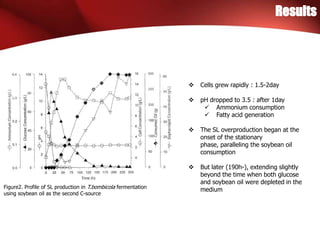
Figure2. Profile of SL production in T.bombicola fermentation
using soybean oil as the second C-source
 Cells grew rapidly : 1.5-2day
 pH dropped to 3.5 : after 1day
 Ammonium consumption
 Fatty acid generation
 The SL overproduction began at the
onset of the stationary
phase, paralleling the soybean oil
consumption
 But later (190h-), extending slightly
beyond the time when both glucose
and soybean oil were depleted in the
medium
Results
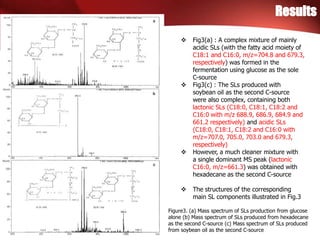
Figure3. (a) Mass spectrum of SLs production from glucose
alone (b) Mass spectrum of SLs produced from hexadecane
as the second C-source (c) Mass spectrum of SLs produced
from soybean oil as the second C-source
 Fig3(a) : A complex mixture of mainly
acidic SLs (with the fatty acid moiety of
C18:1 and C16:0, m/z=704.8 and 679.3,
respectively) was formed in the
fermentation using glucose as the sole
C-source
 Fig3(c) : The SLs produced with
soybean oil as the second C-source
were also complex, containing both
lactonic SLs (C18:0, C18:1, C18:2 and
C16:0 with m/z 688.9, 686.9, 684.9 and
661.2 respectively) and acidic SLs
(C18:0, C18:1, C18:2 and C16:0 with
m/z=707.0, 705.0, 703.0 and 679.3,
respectively)
 However, a much cleaner mixture with
a single dominant MS peak (lactonic
C16:0, m/z=661.3) was obtained with
hexadecane as the second C-source
 The structures of the corresponding
main SL components illustrated in Fig.3
Results
Figure4. MS/MS spectrum from fragmentation of
SLs with m/z=661.3
 An example of the MS-MS spectra from
fragmentation is given in Fig4
 The molecular ion (M-) had m/z=661.3
 m/z=618.5 and 576.8 corresponded to
the ready removal of one and two
acetyl groups, respectively, indication
that the SL was originally diacetylated
 A further loss of one glucose from the
de-acetylated structure (m/z=576.8)
led to the fragment ion at m/z=432.7
 The loss of both sugars gave the final
fragment ion at
m/z=270.5, corresponding to that from
hydroxyl hexadecanoic acid
 The MS-MS spectrum, together with the
structures reported in the
literatures, strongly suggested that the
molecule is the diacetylated lactonic
SL, L-([2’-O-β-D-glucopyranosyl-β-D-
glucopyranosyl] oxy)-hexadecanoic acid
1’-4’’-lactone 6’,6’’-diacetate, as shown
in Fig.3b
Results
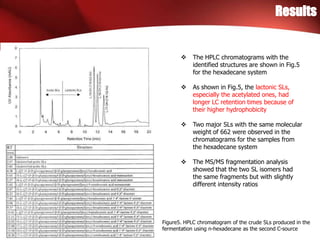
Figure5. HPLC chromatogram of the crude SLs produced in the
fermentation using n-hexadecane as the second C-source
 The HPLC chromatograms with the
identified structures are shown in Fig.5
for the hexadecane system
 As shown in Fig.5, the lactonic SLs,
especially the acetylated ones, had
longer LC retention times because of
their higher hydrophobicity
 Two major SLs with the same molecular
weight of 662 were observed in the
chromatograms for the samples from
the hexadecane system
 The MS/MS fragmentation analysis
showed that the two SL isomers had
the same fragments but with slightly
different intensity ratios
Results
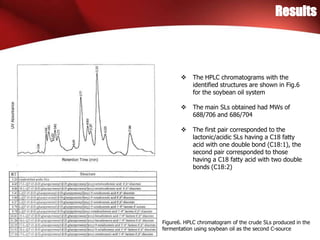
Figure6. HPLC chromatogram of the crude SLs produced in the
fermentation using soybean oil as the second C-source
 The HPLC chromatograms with the
identified structures are shown in Fig.6
for the soybean oil system
 The main SLs obtained had MWs of
688/706 and 686/704
 The first pair corresponded to the
lactonic/acidic SLs having a C18 fatty
acid with one double bond (C18:1), the
second pair corresponded to those
having a C18 fatty acid with two double
bonds (C18:2)
Results
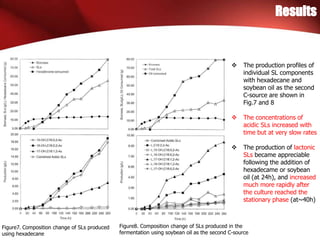
Figure7. Composition change of SLs produced
using hexadecane
Figure8. Composition change of SLs produced in the
fermentation using soybean oil as the second C-source
 The production profiles of
individual SL components
with hexadecane and
soybean oil as the second
C-source are shown in
Fig.7 and 8
 The concentrations of
acidic SLs increased with
time but at very slow rates
 The production of lactonic
SLs became appreciable
following the addition of
hexadecame or soybean
oil (at 24h), and increased
much more rapidly after
the culture reached the
stationary phase (at~40h)
Results
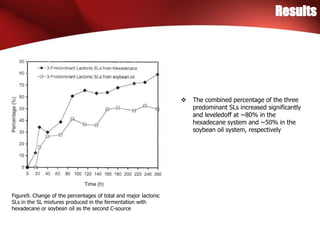
Figure9. Change of the percentages of total and major lactonic
SLs in the SL mixtures produced in the fermentation with
hexadecane or soybean oil as the second C-source
 The combined percentage of the three
predominant SLs increased significantly
and leveledoff at ~80% in the
hexadecane system and ~50% in the
soybean oil system, respectively
Conclusions
 Sophorolipid production by T.bombicola was strongly affected by the use of different lipidic substrates as
the second C-source
 The production in the fermentation with glucose as the only substrate was far slower than that in the
systems supplemented with hexadecane or soybean oil
 The yield of crude SLs were 0.84, 0.20, and 0.03 g/gram of hexadecane, soybean oil, and glucose
consumed, respectively, during the SL production phase
 The results of SL quantification and structural identification obtained with the LC-MS analyses showed
that much cleaner mixtures of SLs were produced in the hexadecane system, containing predominantly
two diacetylated lactonic SL isomers with palmitate as the fatty acid moiety
 A very close structure correspondence between the SL’s lipid moiety and the lipid precursor used in the
fermentation was also observed, suggessting that the lipid precursor was converted to the corresponding
hydroxyl fatty acid and then incorporated into the SLs
 While the concentrations of acidic SLs increased very gradually along the batch fermentation, the
production of lactonic SLs became appreciable following the addition of hexadecane or soybean oil at
24h, and increased much more rapidly after the culture reached the stationary phase

130629 paper 창하

  • 1.
    Sophorolipid production fromdifferent lipid precursors observed with LC-MS 130629 / Ahn Chang ha  The structure of SLs change, it depends on fatty acid precursors
  • 2.
    Introduction Figure1. Molecular structuresof the SLs synthesized by T.bombicola  Among the most important biosurfactants are the sohorolipids (SLs) that consist of a sophorose moiety linked glycosidically to a hydroxyl fatty acid residue, as shown in Fig.1  SLs are produced as complex mixtures in the fermentation broth, depending on the carbon sources used  There are many ways to show the structure and ratio of the SLs  Isolated SLs from the final fermentation product using liquid chromatography and thin-layer chromatography (TLC) and identified the structure of a major SL using mass spectroscopy (MS), infrared spectroscopy (IR), and nuclear magnetic resonance (NMR)  Separated the SL components with medium-pressure liquid chromatography (MPLC) and thick-layer chromatography and determined their structures by 1H- and 13C-NMR spectroscopy, fast atom bombardment mass spectroscopy (FAB-MS), and GC/MS
  • 3.
    Materials & Methods Organisms and culture conditions  Torulopsis bombicola ATCC 22214  The production medium, with N-source • Glucose • Second C-source : glucose, hexadecane or soybean oil) • Sodium citrate • Yeast extract • MgSO4 • (NH4)2SO4 • KH2PO4 • FeSO4∙7H2O • CaCl2 • NaCl  pH : initial pH (6, with 1N KOH), controlled pH(3.5±0.5, with 3N KOH), in the late stage (3.5, with acid)  Second carbon source was added in 4steps at 24-h intervals • (24, 48, 72, 96h) : the first addition was at the late exponential phase, the others at the stationary phase • The step-wise additions were adopted to prevent the potential accumulation of inhibitory fatty acids  The agitation and aeration used were 500rpm and 0.5vvm, respectively  The temperature was controlled at 30.0°C ± 0.2°C
  • 4.
    Materials & Methods Analytical methods  Samples (10ml) taken periodically along the fermentation were extracted twice with equal volume of ethyl acetate and centrifuged at 14,500g for 10min at room temperature  The cell pellet collected was washed and dried for determining the cell (dry-weight) concentration  The aqueous phase was used for analyses of glucose and ammonium concentrations  The organic phase was vacuum-dried at 40°C to remove the ethyl acetate  The residue was twice washed with 10-ml hexane to remove the remaining hexadecane or soybean oil  The crude SLs were obtained after vaporizing the residual hexane at 40 under vacuum  The hexane phase collected from the wash was also dried for determining the remaining hexadecane or soybean oil  Sophorolipid : HPLC (C-18 column, wave length 207nm, mobile phase 8/2(v/v) acetonitrile/H2O, flow rate 0.5ml/min)  Hexadecane, soybean oil and glucose : HPLC (SI column, mobile phase hexane, flow rate 0.5ml/min)  Cells and ammonium : dry cell weight and ammonia-selective electrode  Structure identification and characterization  LC-MS system was used to separate and identify the structures of individual SL components  Mobile phase 8/2(v/v) acetonitrile/H2O  The SL components separated by HPLC was passed through the mass spectrometer where they were ionized by electrospray  The molecular ions were collected in an ion trap and the mass/charge (m/z) values detected
  • 5.
    Results Figure2. Profile ofSL production in T.bombicola fermentation using soybean oil as the second C-source  Cells grew rapidly : 1.5-2day  pH dropped to 3.5 : after 1day  Ammonium consumption  Fatty acid generation  The SL overproduction began at the onset of the stationary phase, paralleling the soybean oil consumption  But later (190h-), extending slightly beyond the time when both glucose and soybean oil were depleted in the medium
  • 6.
    Results Figure3. (a) Massspectrum of SLs production from glucose alone (b) Mass spectrum of SLs produced from hexadecane as the second C-source (c) Mass spectrum of SLs produced from soybean oil as the second C-source  Fig3(a) : A complex mixture of mainly acidic SLs (with the fatty acid moiety of C18:1 and C16:0, m/z=704.8 and 679.3, respectively) was formed in the fermentation using glucose as the sole C-source  Fig3(c) : The SLs produced with soybean oil as the second C-source were also complex, containing both lactonic SLs (C18:0, C18:1, C18:2 and C16:0 with m/z 688.9, 686.9, 684.9 and 661.2 respectively) and acidic SLs (C18:0, C18:1, C18:2 and C16:0 with m/z=707.0, 705.0, 703.0 and 679.3, respectively)  However, a much cleaner mixture with a single dominant MS peak (lactonic C16:0, m/z=661.3) was obtained with hexadecane as the second C-source  The structures of the corresponding main SL components illustrated in Fig.3
  • 7.
    Results Figure4. MS/MS spectrumfrom fragmentation of SLs with m/z=661.3  An example of the MS-MS spectra from fragmentation is given in Fig4  The molecular ion (M-) had m/z=661.3  m/z=618.5 and 576.8 corresponded to the ready removal of one and two acetyl groups, respectively, indication that the SL was originally diacetylated  A further loss of one glucose from the de-acetylated structure (m/z=576.8) led to the fragment ion at m/z=432.7  The loss of both sugars gave the final fragment ion at m/z=270.5, corresponding to that from hydroxyl hexadecanoic acid  The MS-MS spectrum, together with the structures reported in the literatures, strongly suggested that the molecule is the diacetylated lactonic SL, L-([2’-O-β-D-glucopyranosyl-β-D- glucopyranosyl] oxy)-hexadecanoic acid 1’-4’’-lactone 6’,6’’-diacetate, as shown in Fig.3b
  • 8.
    Results Figure5. HPLC chromatogramof the crude SLs produced in the fermentation using n-hexadecane as the second C-source  The HPLC chromatograms with the identified structures are shown in Fig.5 for the hexadecane system  As shown in Fig.5, the lactonic SLs, especially the acetylated ones, had longer LC retention times because of their higher hydrophobicity  Two major SLs with the same molecular weight of 662 were observed in the chromatograms for the samples from the hexadecane system  The MS/MS fragmentation analysis showed that the two SL isomers had the same fragments but with slightly different intensity ratios
  • 9.
    Results Figure6. HPLC chromatogramof the crude SLs produced in the fermentation using soybean oil as the second C-source  The HPLC chromatograms with the identified structures are shown in Fig.6 for the soybean oil system  The main SLs obtained had MWs of 688/706 and 686/704  The first pair corresponded to the lactonic/acidic SLs having a C18 fatty acid with one double bond (C18:1), the second pair corresponded to those having a C18 fatty acid with two double bonds (C18:2)
  • 10.
    Results Figure7. Composition changeof SLs produced using hexadecane Figure8. Composition change of SLs produced in the fermentation using soybean oil as the second C-source  The production profiles of individual SL components with hexadecane and soybean oil as the second C-source are shown in Fig.7 and 8  The concentrations of acidic SLs increased with time but at very slow rates  The production of lactonic SLs became appreciable following the addition of hexadecame or soybean oil (at 24h), and increased much more rapidly after the culture reached the stationary phase (at~40h)
  • 11.
    Results Figure9. Change ofthe percentages of total and major lactonic SLs in the SL mixtures produced in the fermentation with hexadecane or soybean oil as the second C-source  The combined percentage of the three predominant SLs increased significantly and leveledoff at ~80% in the hexadecane system and ~50% in the soybean oil system, respectively
  • 12.
    Conclusions  Sophorolipid productionby T.bombicola was strongly affected by the use of different lipidic substrates as the second C-source  The production in the fermentation with glucose as the only substrate was far slower than that in the systems supplemented with hexadecane or soybean oil  The yield of crude SLs were 0.84, 0.20, and 0.03 g/gram of hexadecane, soybean oil, and glucose consumed, respectively, during the SL production phase  The results of SL quantification and structural identification obtained with the LC-MS analyses showed that much cleaner mixtures of SLs were produced in the hexadecane system, containing predominantly two diacetylated lactonic SL isomers with palmitate as the fatty acid moiety  A very close structure correspondence between the SL’s lipid moiety and the lipid precursor used in the fermentation was also observed, suggessting that the lipid precursor was converted to the corresponding hydroxyl fatty acid and then incorporated into the SLs  While the concentrations of acidic SLs increased very gradually along the batch fermentation, the production of lactonic SLs became appreciable following the addition of hexadecane or soybean oil at 24h, and increased much more rapidly after the culture reached the stationary phase