<13.03.23 > INHA UNIVERSITY-김준
섭
▶Objective : P protein이 Tyrosine과 Tyrosinase의 localization에 영향을 미
친다는 가설에 대한 논문을 알아보기
The pink-eyed dilution phenotype in mice arises from mutations in the p gene; in
humans, analogous mutations in the P gene result in oculocutaneous albinism
type 2. Although the molecular mechanisms which underlie this phenotype remain
obscure, it has been postulated that mutations in p result in defective tyrosine
transport into murine melanosomes, resulting in hypopigmentation and
diminished coat color. However, we previously reported no difference in
melanosomal tyrosine transport in unpigmented, melanoblast-like pinkeyed
dilution (pcp/pcp), and in pigmented (melan-a) murine melanocytes. In this study,
we utilized melan-p1 cells, more differentiated pink-eyed dilution ( pcp/p25H)
melanocytes which can be induced to produce melanin, to characterize the
melanogenic lesion(s) more definitively. Uptake of [3H]tyrosine into melan-a
melanosomes did not differ significantly from uptake into melanosomes derived
from melan-p1 melanocytes, further arguing against its critical role as a tyrosine
transporter. Pink-eyed dilution melanocytes incubated in high tyrosine
concentrations became extremely pigmented as they became confluent and
secreted large amounts of black material into the medium. Total cellular tyrosinase
activity in melan-p1 melanocytes was significantly higher than that in melan-a
melanocytes (which are wild-type at the p locus), but the localization of tyrosinase
to melanosomes was impaired in melan-p1 melanocytes compared to melan-a
melanocytes. These results indicate that mechanisms other than deficient tyrosine
transport are involved in the pink-eyed dilution phenotype and that this protein
may serve a chaperone-like or stabilizing function in melanocytes. © 1998
Academic Press
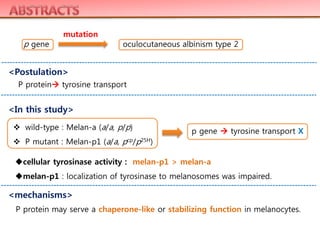
P protein tyrosine transport
 wild-type : Melan-a (a/a, p/p)
 P mutant : Melan-p1 (a/a, pcp/p25H)
p gene oculocutaneous albinism type 2
mutation
<Postulation>
<In this study>
p gene  tyrosine transport X
cellular tyrosinase activity : melan-p1 > melan-a
melan-p1 : localization of tyrosinase to melanosomes was impaired.
<mechanisms>
P protein may serve a chaperone-like or stabilizing function in melanocytes.
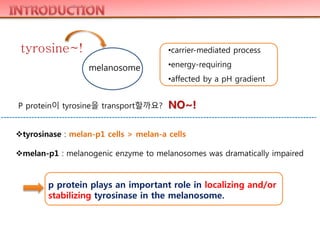
tyrosine~!
P protein이 tyrosine을 transport할까요? NO~!
melanosome
•carrier-mediated process
•energy-requiring
•affected by a pH gradient
tyrosinase : melan-p1 cells > melan-a cells
melan-p1 : melanogenic enzyme to melanosomes was dramatically impaired
p protein plays an important role in localizing and/or
stabilizing tyrosinase in the melanosome.
 Cell culture : wild-type : Melan-a (a/a, p/p)  C57BL/6 mice
P mutant : Melan-p1 (a/a, pcp/p25H)  pink eyed dilution mice
 Tyrosine transport assays : [3H-tyrosine]
 Subcellular fractionation : tyrosine transport assay, tyrosinase activity
 Light microscopy
 Enzyme assays and protein determinations : tyrosine hydroxylase assay
 Western immunoblotting analysis
1. Tyrosine Transport Studies
FIG. 1. [3H]Tyrosine uptake
into melanosomes derived
from melan-a or melan-p1
melanocytes.
darker bars : melan-a
lighter bars : melan-p1
melan a와 melan-p는 별 차이가 없다.
tyrosine transport : 50uM이 10uM 약 2배
tyrosine transport X
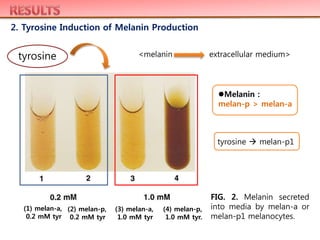
2. Tyrosine Induction of Melanin Production
FIG. 2. Melanin secreted
into media by melan-a or
melan-p1 melanocytes.
(4) melan-p,
1.0 mM tyr.
(1) melan-a,
0.2 mM tyr
(2) melan-p,
0.2 mM tyr
(3) melan-a,
1.0 mM tyr
Melanin :
melan-p > melan-a
tyrosine
tyrosine  melan-p1
<melanin extracellular medium>
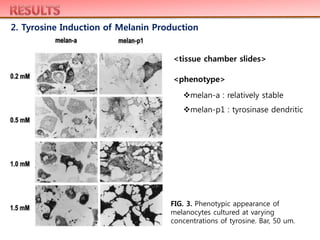
FIG. 3. Phenotypic appearance of
melanocytes cultured at varying
concentrations of tyrosine. Bar, 50 um.
2. Tyrosine Induction of Melanin Production
<tissue chamber slides>
melan-a : relatively stable
melan-p1 : tyrosinase dendritic
<phenotype>
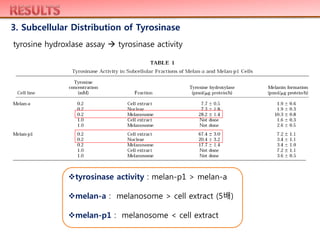
3. Subcellular Distribution of Tyrosinase
tyrosine hydroxlase assay  tyrosinase activity
tyrosinase activity : melan-p1 > melan-a
melan-a : melanosome > cell extract (5배)
melan-p1 : melanosome < cell extract
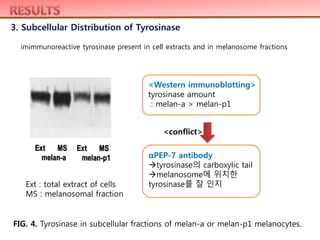
FIG. 4. Tyrosinase in subcellular fractions of melan-a or melan-p1 melanocytes.
Ext : total extract of cells
MS : melanosomal fraction
imimmunoreactive tyrosinase present in cell extracts and in melanosome fractions
3. Subcellular Distribution of Tyrosinase
<Western immunoblotting>
tyrosinase amount
: melan-a > melan-p1
αPEP-7 antibody
tyrosinase의 carboxylic tail
melanosome에 위치한
tyrosinase를 잘 인지
<conflict>
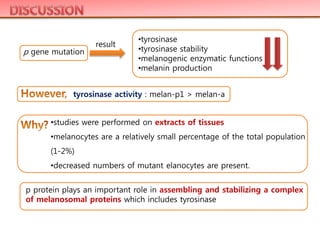
•tyrosinase
•tyrosinase stability
•melanogenic enzymatic functions
•melanin production
p gene mutation
result
tyrosinase activity : melan-p1 > melan-a
•studies were performed on extracts of tissues
•melanocytes are a relatively small percentage of the total population
(1-2%)
•decreased numbers of mutant elanocytes are present.
p protein plays an important role in assembling and stabilizing a complex
of melanosomal proteins which includes tyrosinase

130323 paper study 준섭

  • 1.
    <13.03.23 > INHAUNIVERSITY-김준 섭 ▶Objective : P protein이 Tyrosine과 Tyrosinase의 localization에 영향을 미 친다는 가설에 대한 논문을 알아보기
  • 2.
    The pink-eyed dilutionphenotype in mice arises from mutations in the p gene; in humans, analogous mutations in the P gene result in oculocutaneous albinism type 2. Although the molecular mechanisms which underlie this phenotype remain obscure, it has been postulated that mutations in p result in defective tyrosine transport into murine melanosomes, resulting in hypopigmentation and diminished coat color. However, we previously reported no difference in melanosomal tyrosine transport in unpigmented, melanoblast-like pinkeyed dilution (pcp/pcp), and in pigmented (melan-a) murine melanocytes. In this study, we utilized melan-p1 cells, more differentiated pink-eyed dilution ( pcp/p25H) melanocytes which can be induced to produce melanin, to characterize the melanogenic lesion(s) more definitively. Uptake of [3H]tyrosine into melan-a melanosomes did not differ significantly from uptake into melanosomes derived from melan-p1 melanocytes, further arguing against its critical role as a tyrosine transporter. Pink-eyed dilution melanocytes incubated in high tyrosine concentrations became extremely pigmented as they became confluent and secreted large amounts of black material into the medium. Total cellular tyrosinase activity in melan-p1 melanocytes was significantly higher than that in melan-a melanocytes (which are wild-type at the p locus), but the localization of tyrosinase to melanosomes was impaired in melan-p1 melanocytes compared to melan-a melanocytes. These results indicate that mechanisms other than deficient tyrosine transport are involved in the pink-eyed dilution phenotype and that this protein may serve a chaperone-like or stabilizing function in melanocytes. © 1998 Academic Press
  • 3.
    P protein tyrosinetransport  wild-type : Melan-a (a/a, p/p)  P mutant : Melan-p1 (a/a, pcp/p25H) p gene oculocutaneous albinism type 2 mutation <Postulation> <In this study> p gene  tyrosine transport X cellular tyrosinase activity : melan-p1 > melan-a melan-p1 : localization of tyrosinase to melanosomes was impaired. <mechanisms> P protein may serve a chaperone-like or stabilizing function in melanocytes.
  • 4.
    tyrosine~! P protein이 tyrosine을transport할까요? NO~! melanosome •carrier-mediated process •energy-requiring •affected by a pH gradient tyrosinase : melan-p1 cells > melan-a cells melan-p1 : melanogenic enzyme to melanosomes was dramatically impaired p protein plays an important role in localizing and/or stabilizing tyrosinase in the melanosome.
  • 5.
     Cell culture: wild-type : Melan-a (a/a, p/p)  C57BL/6 mice P mutant : Melan-p1 (a/a, pcp/p25H)  pink eyed dilution mice  Tyrosine transport assays : [3H-tyrosine]  Subcellular fractionation : tyrosine transport assay, tyrosinase activity  Light microscopy  Enzyme assays and protein determinations : tyrosine hydroxylase assay  Western immunoblotting analysis
  • 6.
    1. Tyrosine TransportStudies FIG. 1. [3H]Tyrosine uptake into melanosomes derived from melan-a or melan-p1 melanocytes. darker bars : melan-a lighter bars : melan-p1 melan a와 melan-p는 별 차이가 없다. tyrosine transport : 50uM이 10uM 약 2배 tyrosine transport X
  • 7.
    2. Tyrosine Inductionof Melanin Production FIG. 2. Melanin secreted into media by melan-a or melan-p1 melanocytes. (4) melan-p, 1.0 mM tyr. (1) melan-a, 0.2 mM tyr (2) melan-p, 0.2 mM tyr (3) melan-a, 1.0 mM tyr Melanin : melan-p > melan-a tyrosine tyrosine  melan-p1 <melanin extracellular medium>
  • 8.
    FIG. 3. Phenotypicappearance of melanocytes cultured at varying concentrations of tyrosine. Bar, 50 um. 2. Tyrosine Induction of Melanin Production <tissue chamber slides> melan-a : relatively stable melan-p1 : tyrosinase dendritic <phenotype>
  • 9.
    3. Subcellular Distributionof Tyrosinase tyrosine hydroxlase assay  tyrosinase activity tyrosinase activity : melan-p1 > melan-a melan-a : melanosome > cell extract (5배) melan-p1 : melanosome < cell extract
  • 10.
    FIG. 4. Tyrosinasein subcellular fractions of melan-a or melan-p1 melanocytes. Ext : total extract of cells MS : melanosomal fraction imimmunoreactive tyrosinase present in cell extracts and in melanosome fractions 3. Subcellular Distribution of Tyrosinase <Western immunoblotting> tyrosinase amount : melan-a > melan-p1 αPEP-7 antibody tyrosinase의 carboxylic tail melanosome에 위치한 tyrosinase를 잘 인지 <conflict>
  • 11.
    •tyrosinase •tyrosinase stability •melanogenic enzymaticfunctions •melanin production p gene mutation result tyrosinase activity : melan-p1 > melan-a •studies were performed on extracts of tissues •melanocytes are a relatively small percentage of the total population (1-2%) •decreased numbers of mutant elanocytes are present. p protein plays an important role in assembling and stabilizing a complex of melanosomal proteins which includes tyrosinase