Microorganisms and their effect on living things1.1 Classification of microorganismsManniseh Yakun
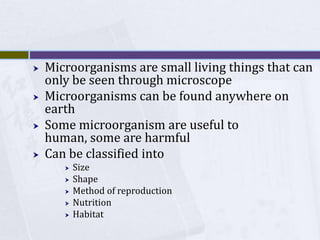
Microorganisms are small living things that can only be seen through microscopeMicroorganisms can be found anywhere on earthSome microorganism are useful to human, some are harmfulCan be classified intoSizeShapeMethod of reproductionNutritionHabitat
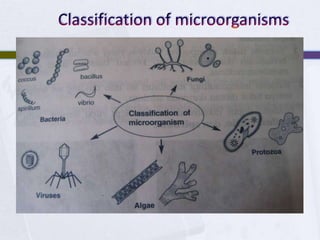
Classification of microorganisms
Bacteria
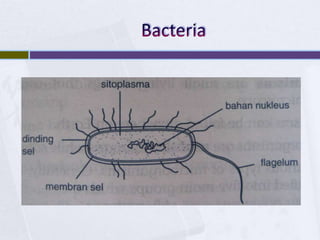
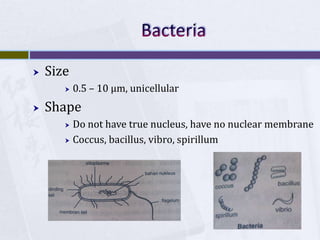
BacteriaSize0.5 – 10 μm, unicellularShapeDo not have true nucleus, have no nuclear membraneCoccus, bacillus, vibro, spirillum
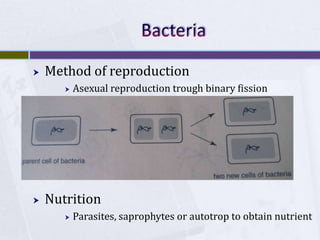
BacteriaMethod of reproductionAsexual reproduction trough binary fissionNutritionParasites, saprophytes or autotrop to obtain nutrient
BacteriaHabitatWaterAirSoilPlantsAnimals
Viruses
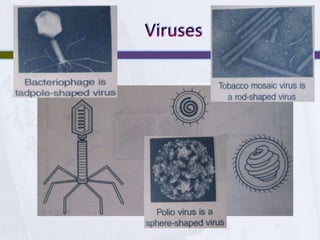
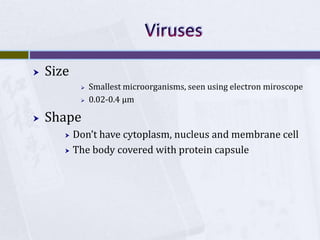
VirusesSizeSmallest microorganisms, seen using electron miroscope0.02-0.4 μmShapeDon’t have cytoplasm, nucleus and membrane cellThe body covered with protein capsule
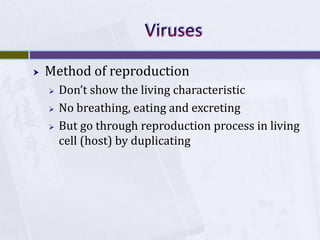
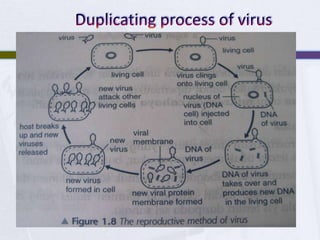
VirusesMethod of reproductionDon’t show the living characteristicNo breathing, eating and excreting But go through reproduction process in living cell (host) by duplicating
Duplicating process of virus
VirusesNutritionParasites causing diseaseNot eat, but using nutrient to duplicates (replication)HabitatLiving cells
Fungi
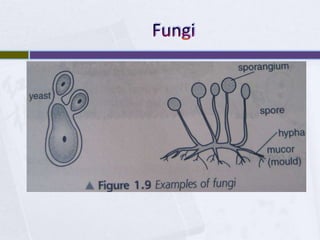
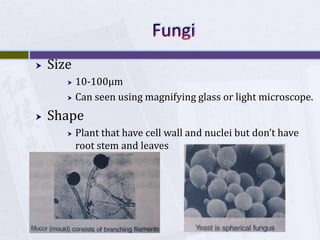
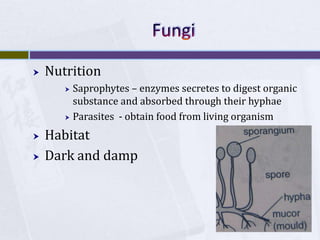
FungiSize10-100μmCan seen using magnifying glass or light microscope. ShapePlant that have cell wall and nuclei but don’t have root stem and leaves
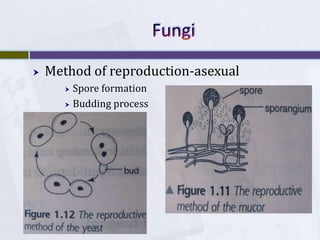
FungiMethod of reproduction-asexualSpore formationBudding process
FungiNutritionSaprophytes – enzymes secretes to digest organic substance and absorbed through their hyphaeParasites  - obtain food from living organismHabitatDark and damp
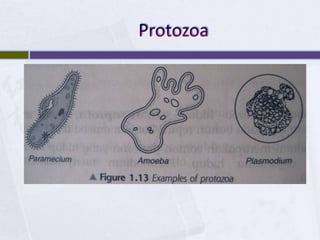
Protozoa
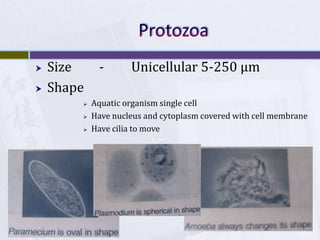
ProtozoaSize	- 	Unicellular 5-250 μmShapeAquatic organism single cellHave nucleus and cytoplasm covered with cell membraneHave cilia to move
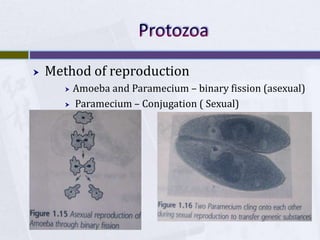
ProtozoaMethod of reproductionAmoeba and Paramecium – binary fission (asexual) Paramecium – Conjugation ( Sexual)
ProtozoaNutritionSaprophytes – Amoeba and ParameciumParasites – Plasmodium (cause malaria)HabitatAquatic habitatsDamp places, living cells
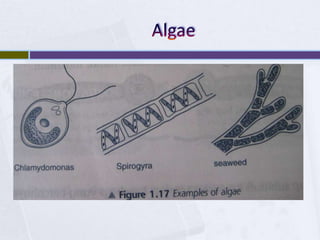
Algae
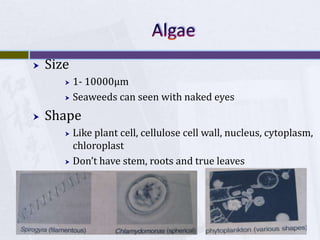
AlgaeSize1- 10000μmSeaweeds can seen with naked eyesShapeLike plant cell, cellulose cell wall, nucleus, cytoplasm, chloroplastDon’t have stem, roots and true leaves
AlgaeMethod of reproductionAsexual reproduction by binary fissionSexual reproduction through conjugation as spirogyraNutritionHave chlorophyll undergoes photosynthesis, autotrops, producer in food chainHabitatDamps area and receive sunlight
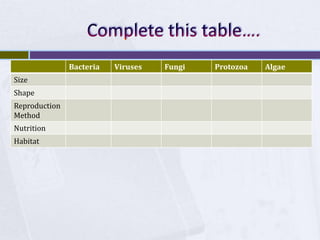
Complete this table….

1.1 Microorganisms