Fungus-like Protists
FUNGUS-LIKE PROTISTS similar to fungi in appearance and mode of nutrition non-photosynthetic and undergo a particular stage in their life cycle that is mold-like
Slime Molds spend most of the life cycle as free-living, amoeba-like cells (phagocytic) found near rich sources of food (e.g. rotting wood, piles of compost, thick wet lawns) when nutrients are scarce and cells are starving, many of the cells aggregate (coenocytic) and form a slimy mass that may migrate to a more favorable location; which will later on form a  spore-bearing structure ; when conditions improve, the spores germinate, starting the cycle again
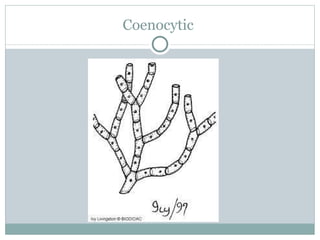
Coenocytic
  Phylum Myxomycota acellular or plasmodial  slime molds the plasma membranes and cell walls of the aggregated amoebas break down, forming one large cytoplasmic mass ( multinucleate ) which is the feeding stage the mass ( plasmodium ), which can be several square meters in size, migrates and then forms spores
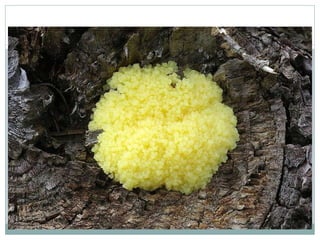
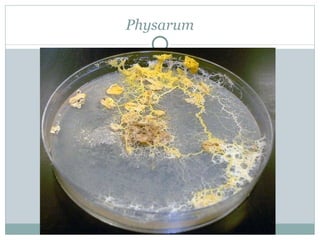
when conditions become unfavorable, the plasmodium “fruits”, forming a spore-bearing fruiting body which produce haploid spores by meiosis spores scatter to the ground where they germinate into flagellated gametes which fuse to form a diploid zygote (sexual reproduction) that undergoes mitosis to produce diploid ameboid cells  e.g.  Physarum
 
Physarum
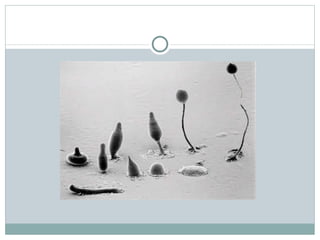
Phylum Acrasiomycota cellular slime molds when the cells aggregate (pseudoplasmodium), they adhere to one another but remain separated by their cell membranes  this aggregation creates a slug-like form, which migrates in search of a place to form a  fruiting body  (reproductive structure) which produces spores by mitosis reproduction is asexual; no diploid stage in the life cycle e.g.  Dictyostelium discoideum
 

Fungus like protists

  • 1.
  • 2.
    FUNGUS-LIKE PROTISTS similarto fungi in appearance and mode of nutrition non-photosynthetic and undergo a particular stage in their life cycle that is mold-like
  • 3.
    Slime Molds spendmost of the life cycle as free-living, amoeba-like cells (phagocytic) found near rich sources of food (e.g. rotting wood, piles of compost, thick wet lawns) when nutrients are scarce and cells are starving, many of the cells aggregate (coenocytic) and form a slimy mass that may migrate to a more favorable location; which will later on form a spore-bearing structure ; when conditions improve, the spores germinate, starting the cycle again
  • 4.
  • 5.
      Phylum Myxomycotaacellular or plasmodial slime molds the plasma membranes and cell walls of the aggregated amoebas break down, forming one large cytoplasmic mass ( multinucleate ) which is the feeding stage the mass ( plasmodium ), which can be several square meters in size, migrates and then forms spores
  • 6.
    when conditions becomeunfavorable, the plasmodium “fruits”, forming a spore-bearing fruiting body which produce haploid spores by meiosis spores scatter to the ground where they germinate into flagellated gametes which fuse to form a diploid zygote (sexual reproduction) that undergoes mitosis to produce diploid ameboid cells e.g. Physarum
  • 7.
  • 8.
  • 9.
    Phylum Acrasiomycota cellularslime molds when the cells aggregate (pseudoplasmodium), they adhere to one another but remain separated by their cell membranes this aggregation creates a slug-like form, which migrates in search of a place to form a fruiting body (reproductive structure) which produces spores by mitosis reproduction is asexual; no diploid stage in the life cycle e.g. Dictyostelium discoideum
  • 10.