CLASSIFICATION OF MICROORGANISMS
ABURA GEOFFREY
Introduction
Classification is the act of forming into groups or categories according to some
common relations or attributes or similarities.
The science of classification of living forms is called taxonomy (from the Greek for
orderly arrangement).
There may be as many as 100 million different living organisms, but fewer than 10%
have been discovered, much less classified and identified
In 2001, an international project called the All Species Inventory was launched whose
purpose was to identify and record every species of life on Earth in the next 25 years.
Whereas biologists have identified more than 1.7 million different organisms thus far, it
is estimated that the number of living species ranges from 10 to 100 million
Con’t
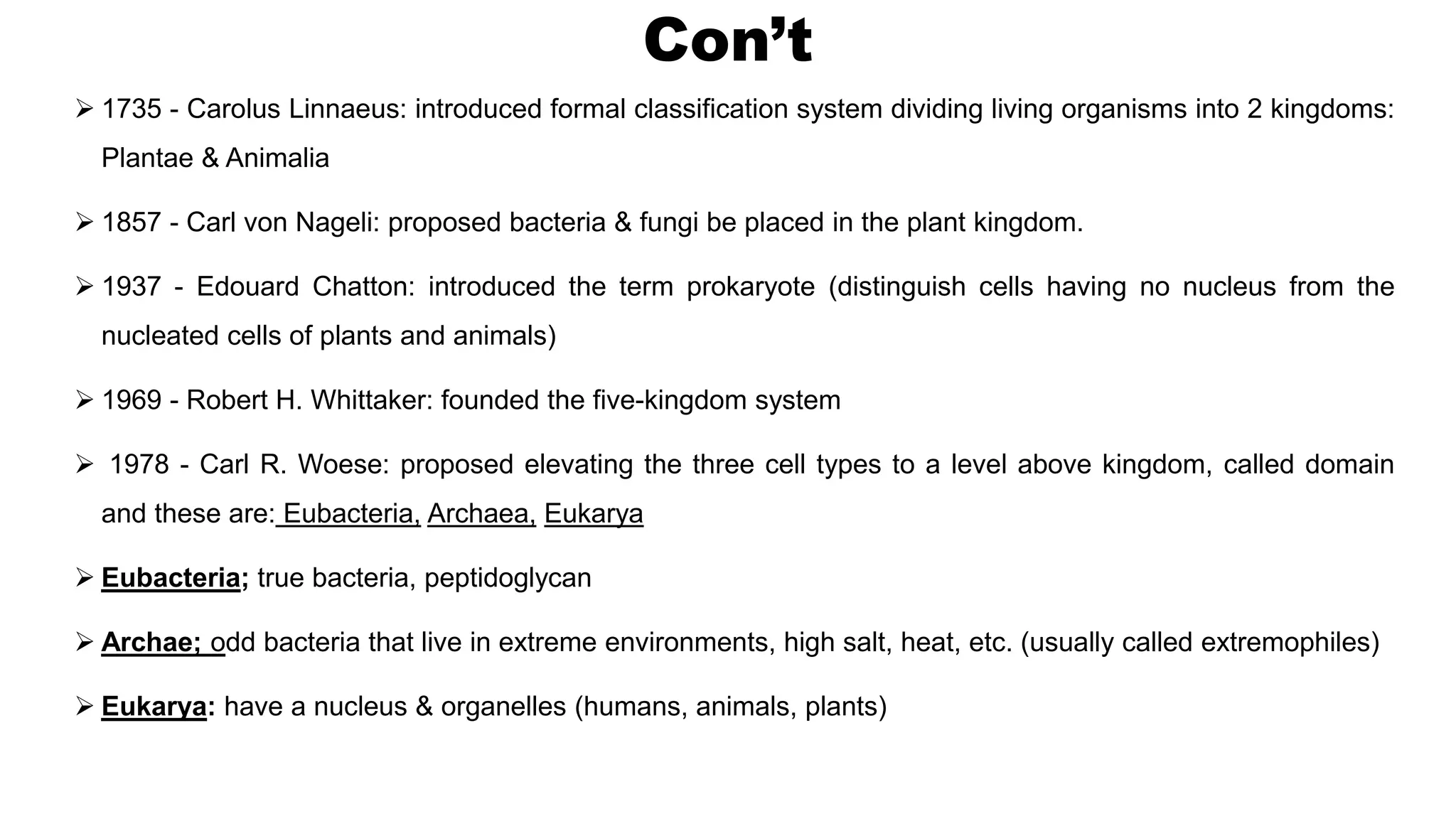
 1735 - Carolus Linnaeus: introduced formal classification system dividing living organisms into 2 kingdoms:
Plantae & Animalia
 1857 - Carl von Nageli: proposed bacteria & fungi be placed in the plant kingdom.
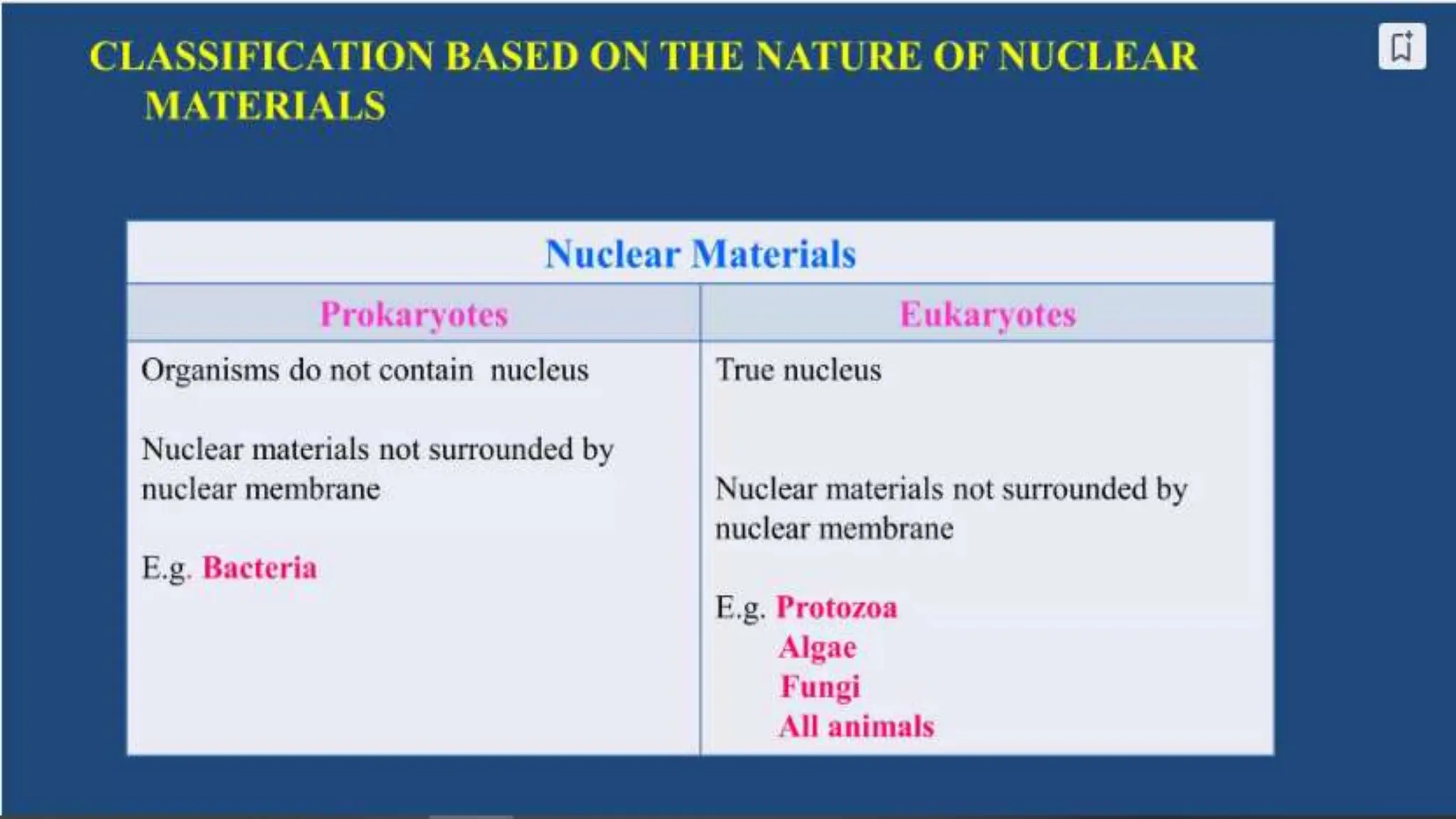
 1937 - Edouard Chatton: introduced the term prokaryote (distinguish cells having no nucleus from the
nucleated cells of plants and animals)
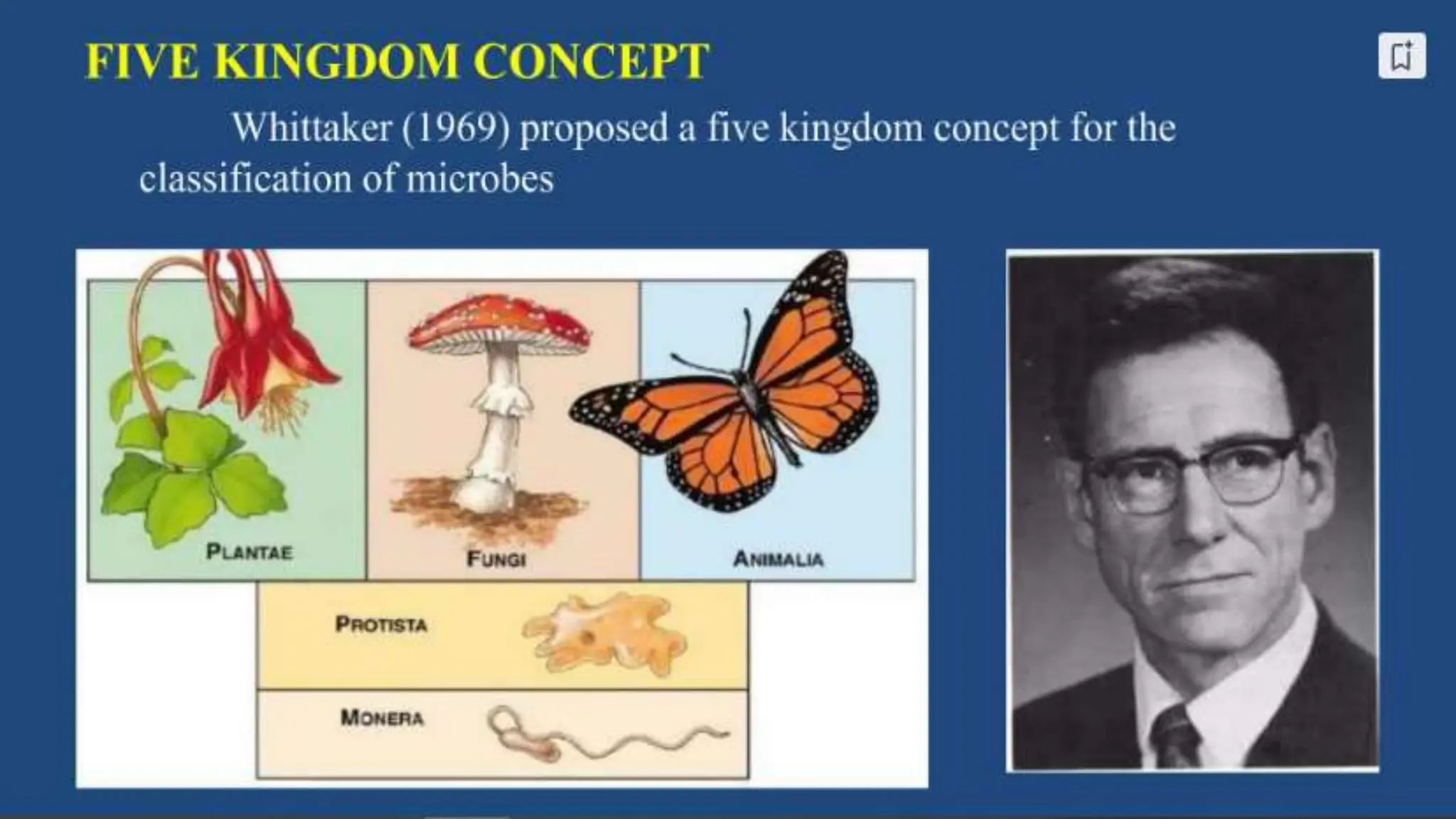
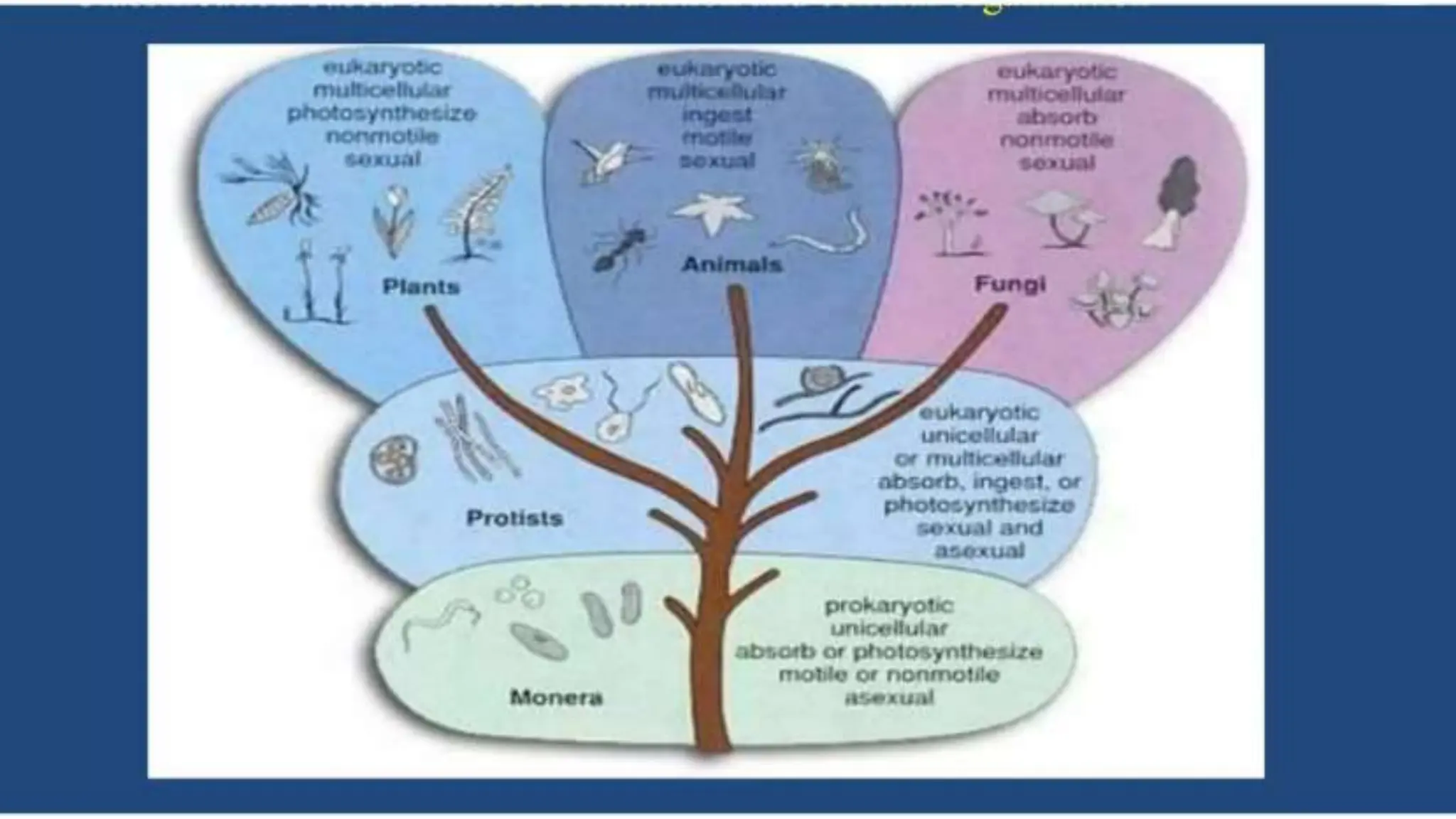
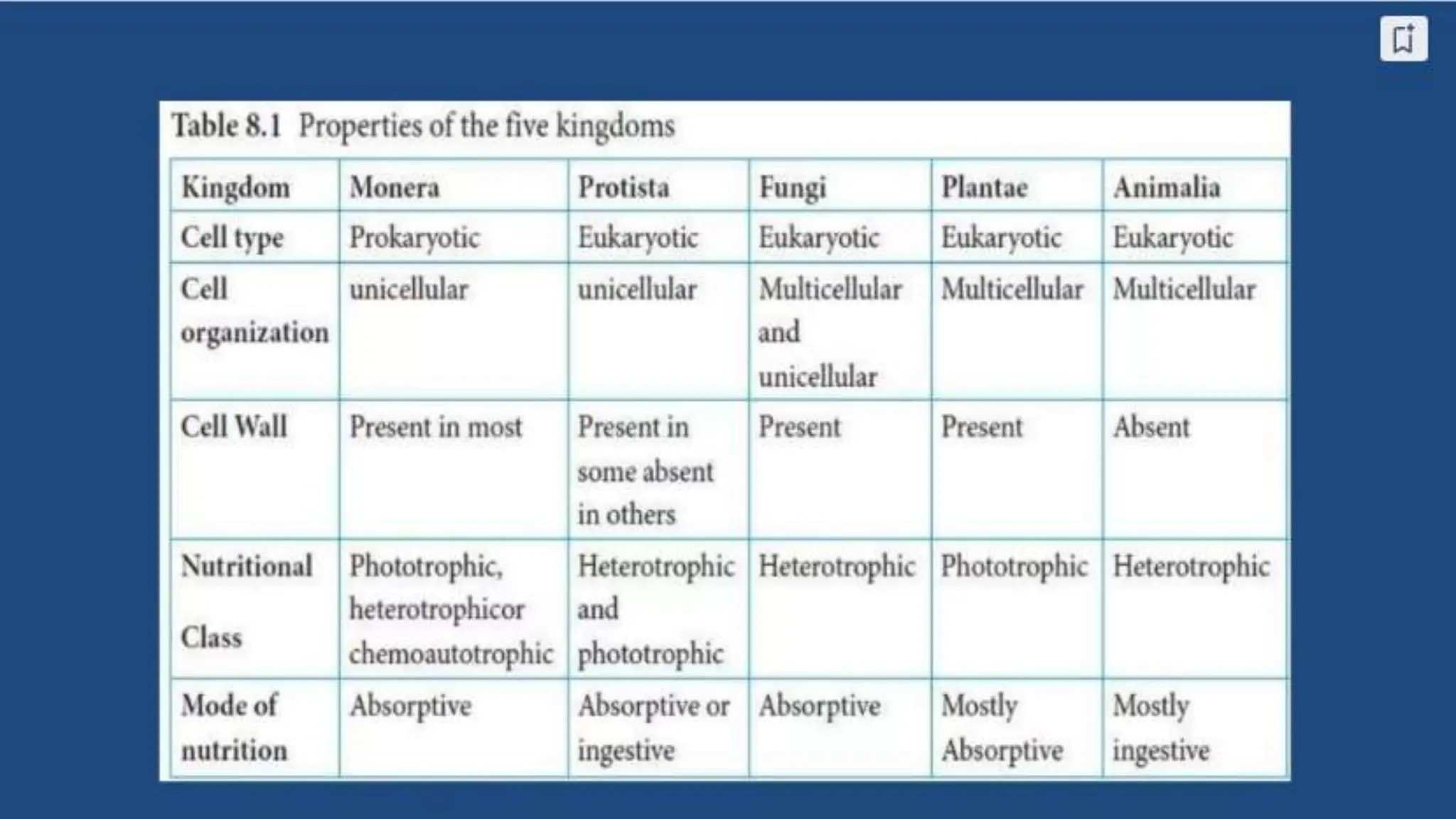
 1969 - Robert H. Whittaker: founded the five-kingdom system
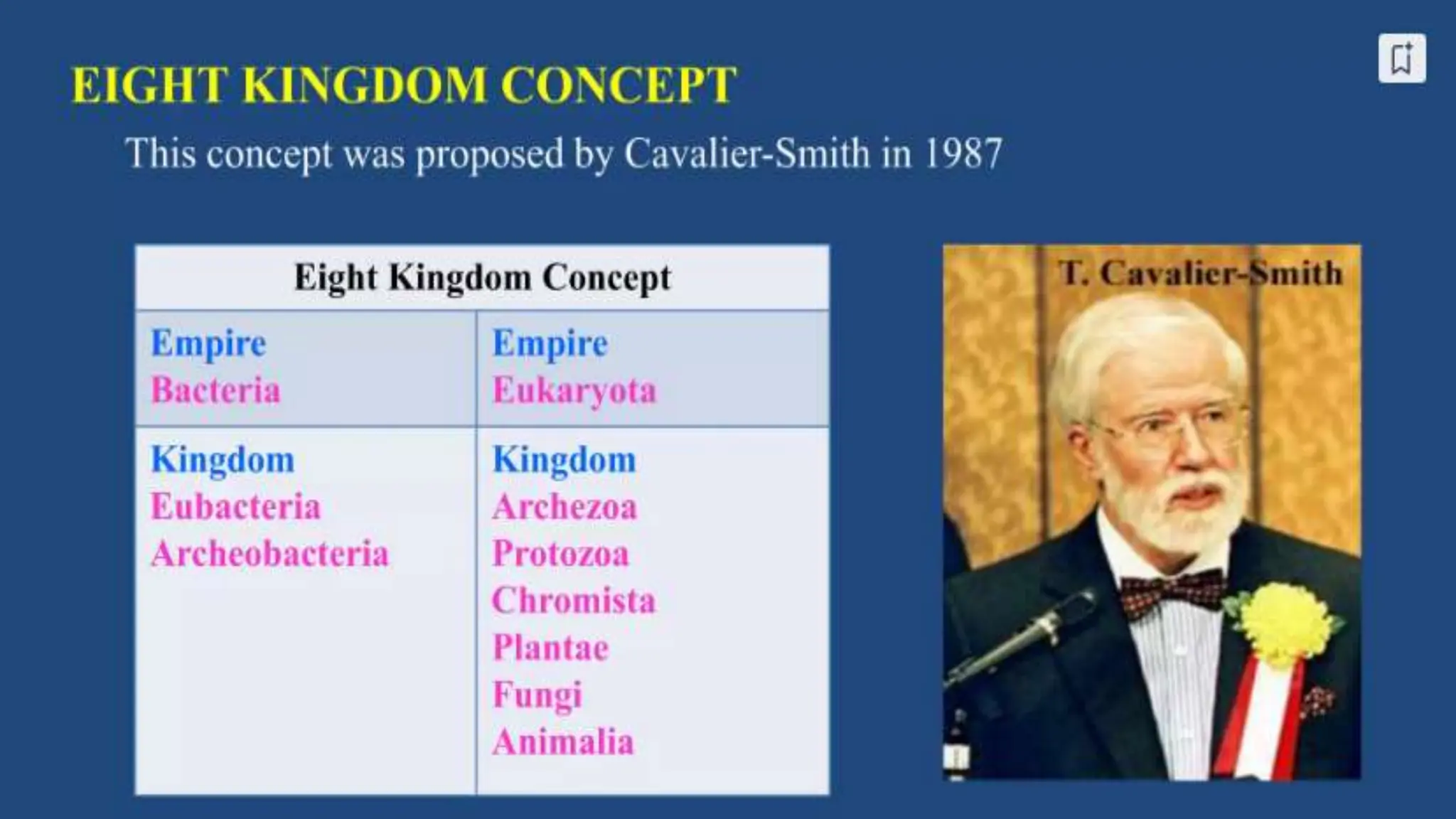
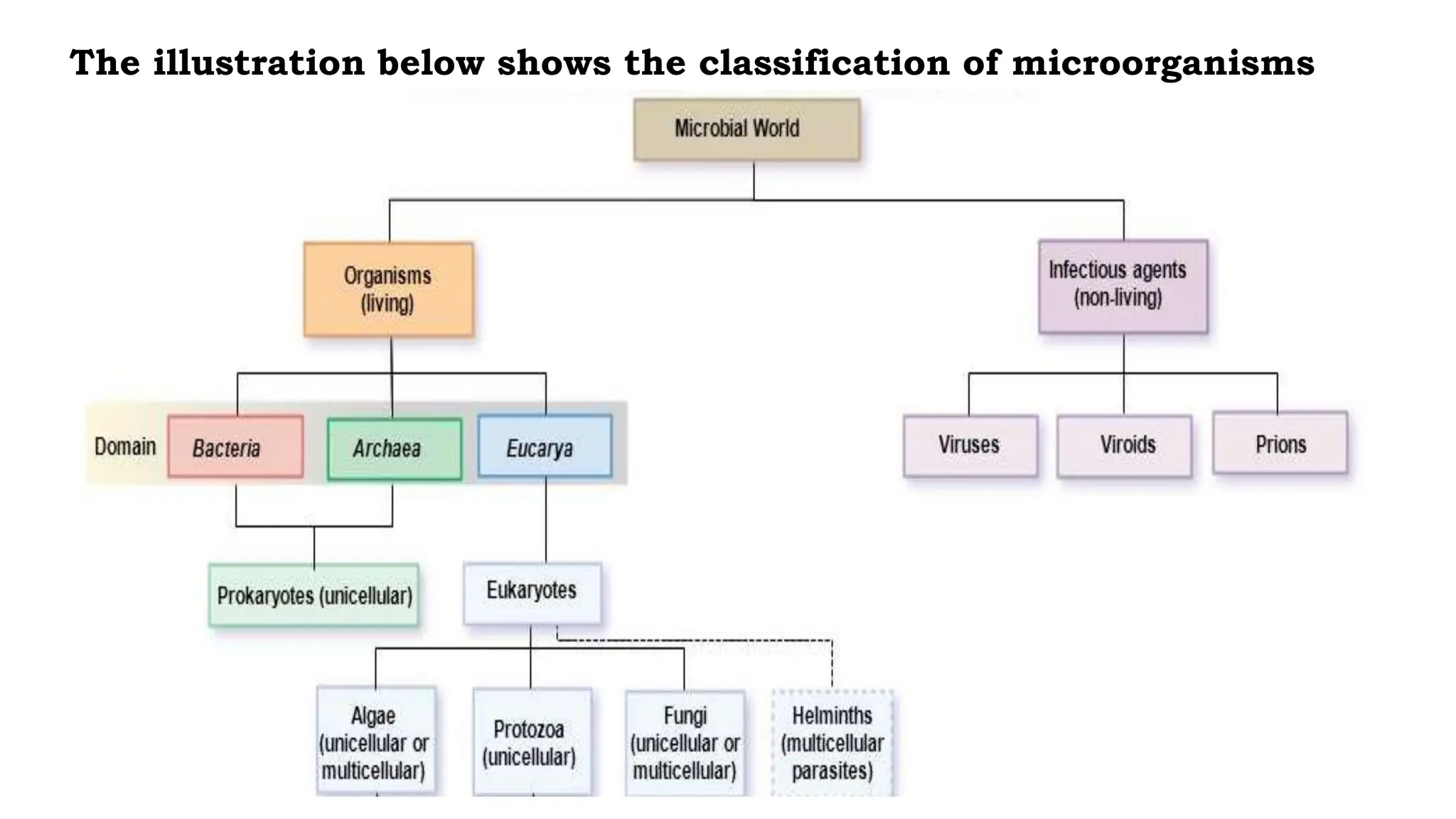
 1978 - Carl R. Woese: proposed elevating the three cell types to a level above kingdom, called domain
and these are: Eubacteria, Archaea, Eukarya
 Eubacteria; true bacteria, peptidoglycan
 Archae; odd bacteria that live in extreme environments, high salt, heat, etc. (usually called extremophiles)
 Eukarya: have a nucleus & organelles (humans, animals, plants)
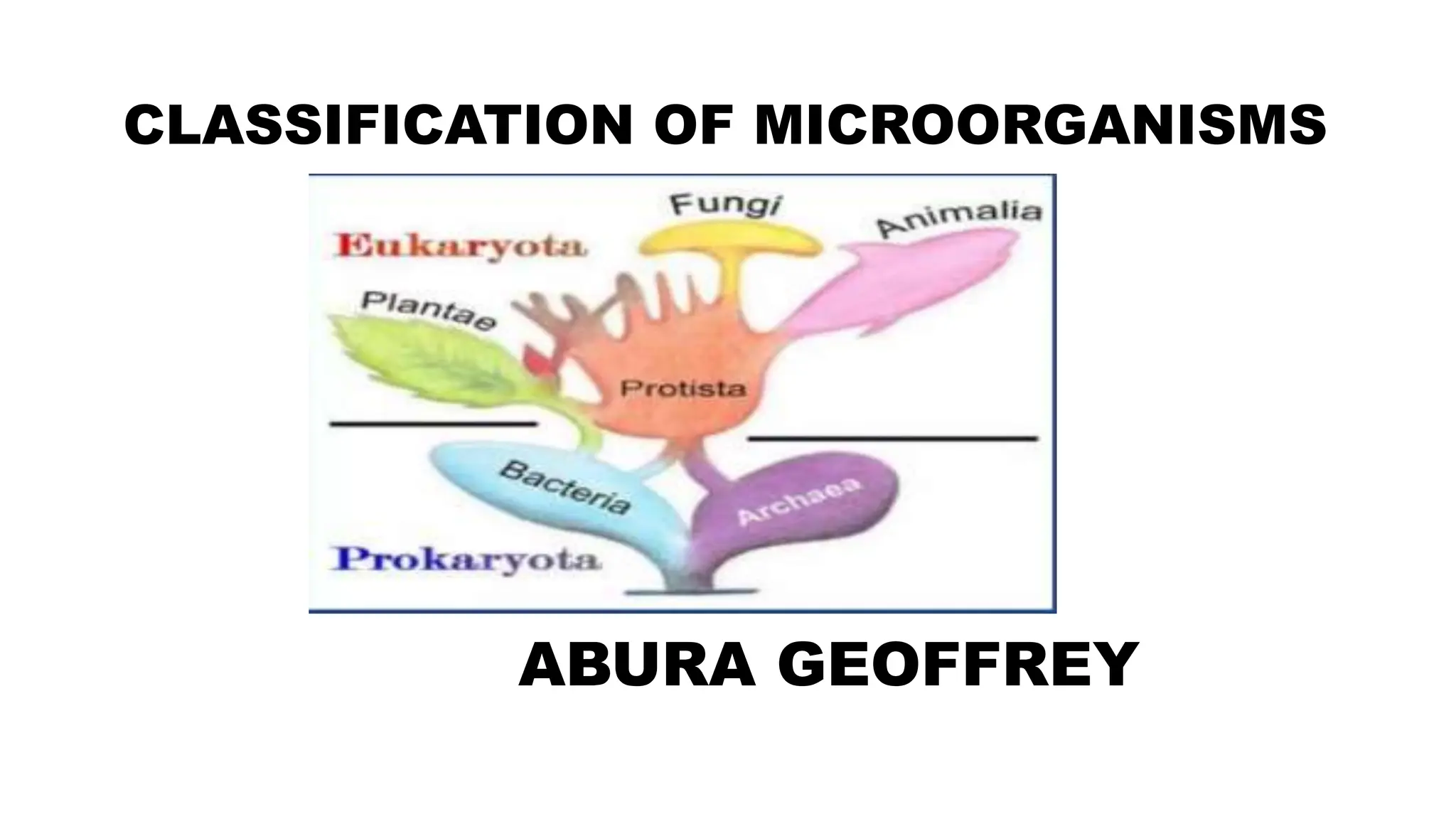
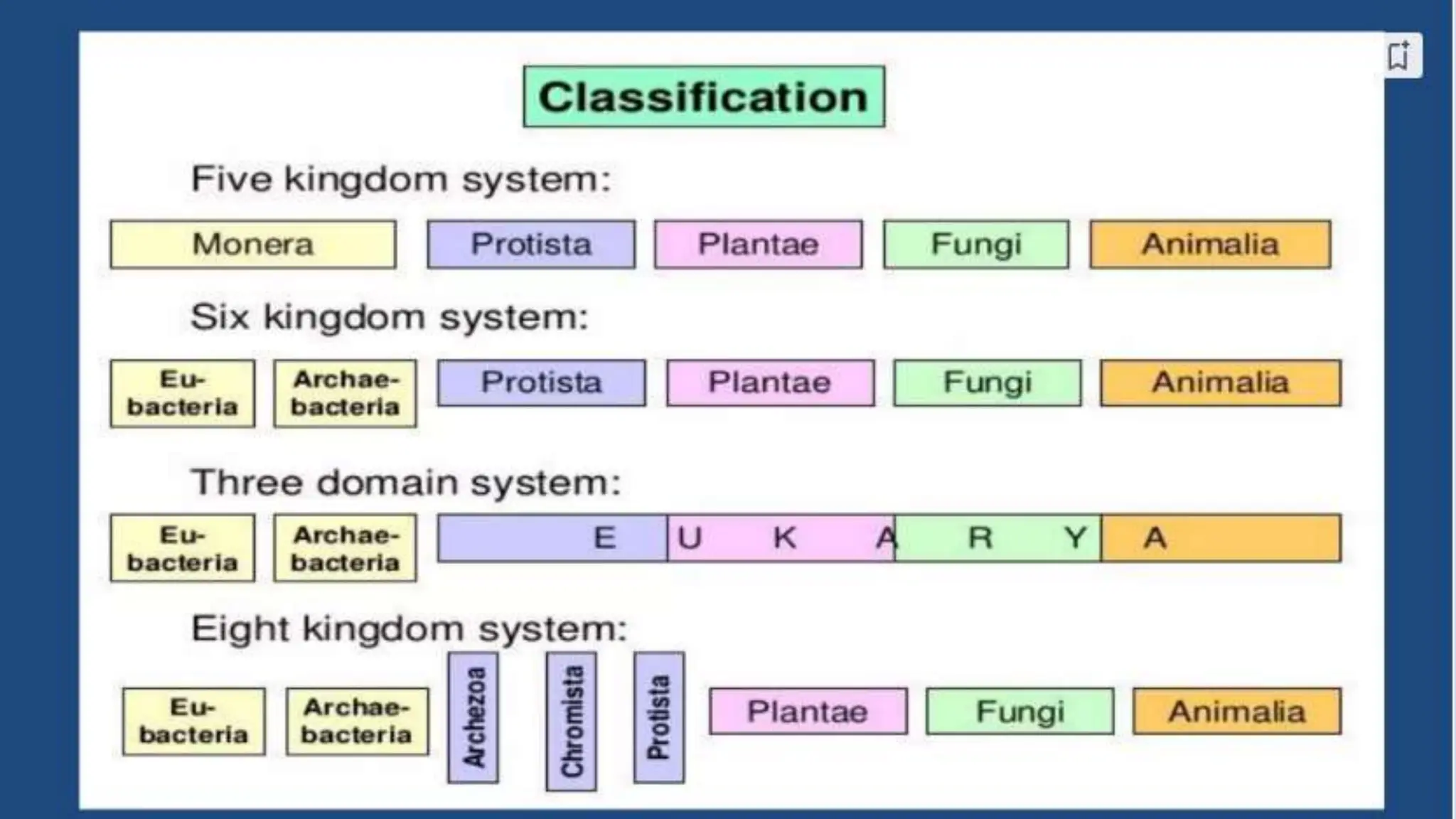
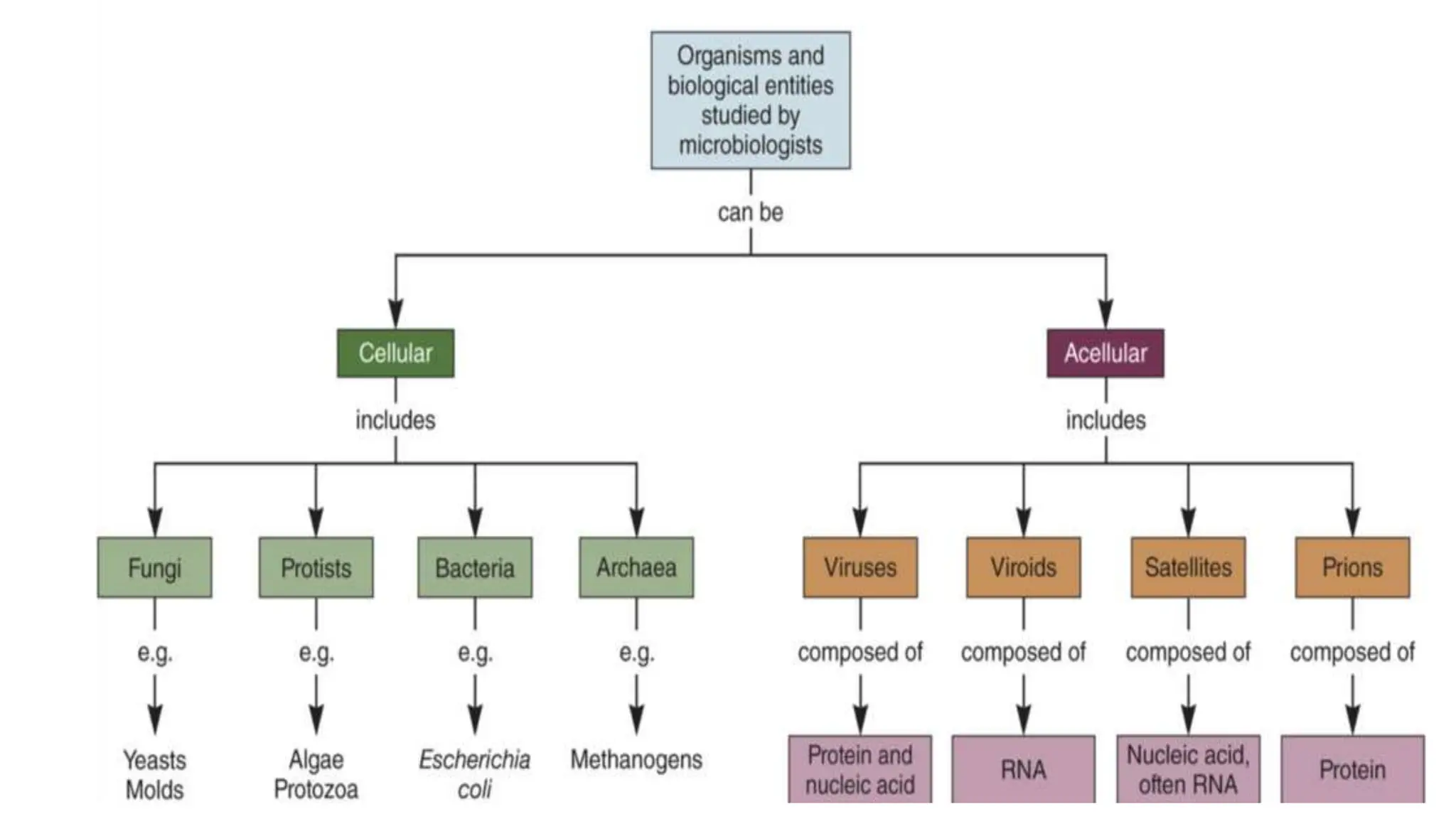
The illustration below shows the classification of microorganisms
Con’t
1. Virus: Viruses have a very simple structure and are the smallest
microorganism discovered so far by man. They can reproduce and
don’t breathe at all. Viruses can capture living cells and reproduce on
them.
2. Viroids: A viroid is an infectious agent of plants similar to a virus but
smaller than any of the known viruses, consisting of only a short, single
strand of RNA without a protein coat.
It is not clear whether viroids occur in animal cells, lacking the protein
coat of a virus.
Con’t
3. Prions: Prions are infectious particles that contain no nucleic acids which
causes disease of the brain and other neural tissue.
4. Algae: Algae also cannot be seen with the naked eyes.
• There are unicellular algae as well as multicellular filamentous algae.
• They produce their own food by photosynthesis, hence they can be known
as Autotrophic.
• Most forms of algae are aquatic so they are living in fresh water and in sea
water too. Algae develop as clusters of cells and as individual cells.
Con’t
5. Protozoa: Protozoa is also a unicellular organism with large number of aquatic
species of around 40,000.
• Usually they move onto other living organisms and feed on them. Protozoa has a
body size of 10-52ͷm.
6. Fungi: Fungi are non-green plants which are not photosynthetic.
• They are heterotrophic nutrition type because they are parasitic or saprophytic.
They show a symbiotic relationship with Algae to form lichens.
• Some fungi can be seen with naked eyes.
• Fungi such as mushrooms and molds have a multicellular structure known as
mycelium.
Symbiosis
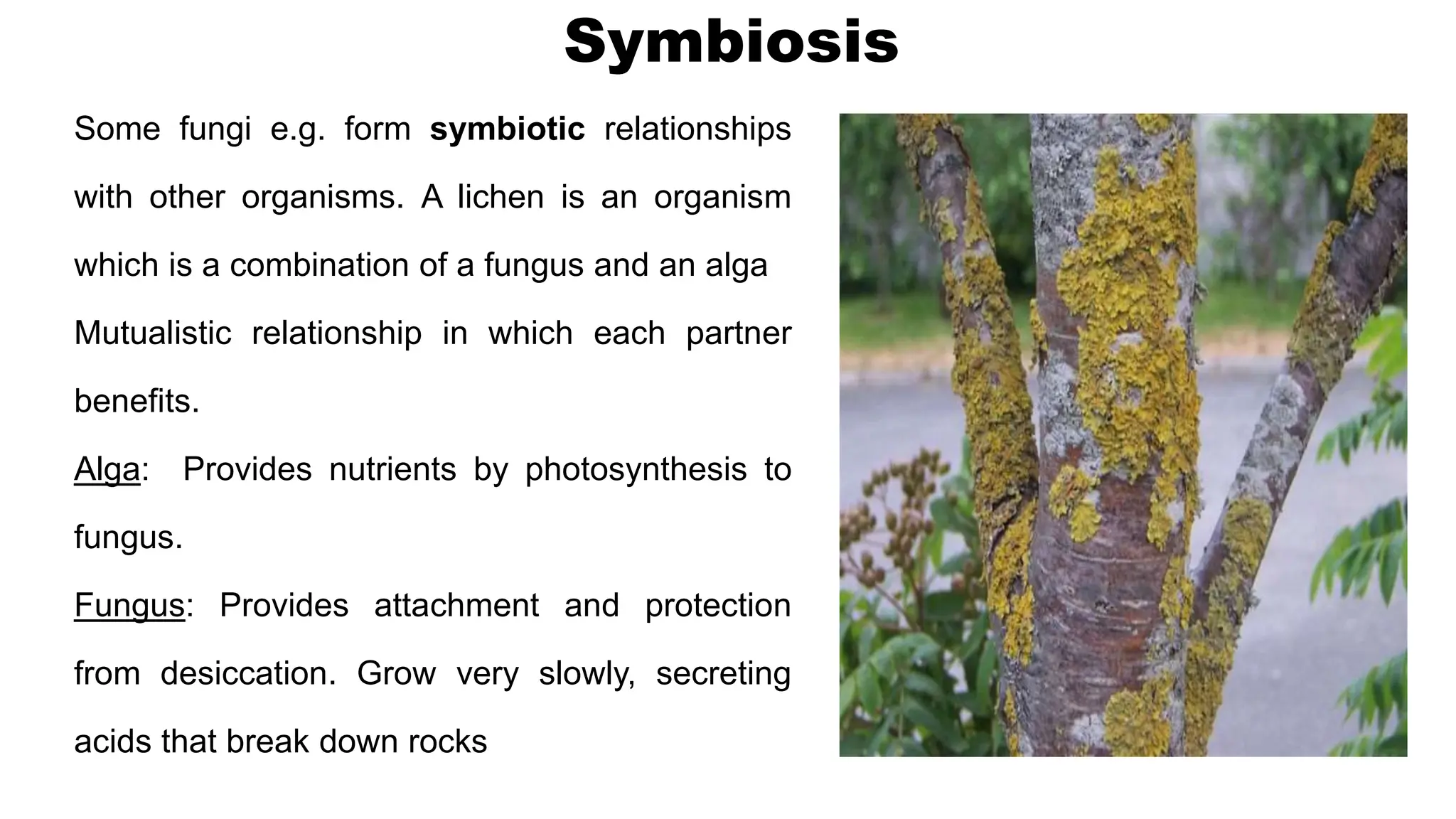
Some fungi e.g. form symbiotic relationships
with other organisms. A lichen is an organism
which is a combination of a fungus and an alga
Mutualistic relationship in which each partner
benefits.
Alga: Provides nutrients by photosynthesis to
fungus.
Fungus: Provides attachment and protection
from desiccation. Grow very slowly, secreting
acids that break down rocks

LECTURE NOTE ON CLASSIFICATION OF MICROORGANISMS.pptx

  • 1.
  • 2.
    Introduction Classification is theact of forming into groups or categories according to some common relations or attributes or similarities. The science of classification of living forms is called taxonomy (from the Greek for orderly arrangement). There may be as many as 100 million different living organisms, but fewer than 10% have been discovered, much less classified and identified In 2001, an international project called the All Species Inventory was launched whose purpose was to identify and record every species of life on Earth in the next 25 years. Whereas biologists have identified more than 1.7 million different organisms thus far, it is estimated that the number of living species ranges from 10 to 100 million
  • 6.
    Con’t  1735 -Carolus Linnaeus: introduced formal classification system dividing living organisms into 2 kingdoms: Plantae & Animalia  1857 - Carl von Nageli: proposed bacteria & fungi be placed in the plant kingdom.  1937 - Edouard Chatton: introduced the term prokaryote (distinguish cells having no nucleus from the nucleated cells of plants and animals)  1969 - Robert H. Whittaker: founded the five-kingdom system  1978 - Carl R. Woese: proposed elevating the three cell types to a level above kingdom, called domain and these are: Eubacteria, Archaea, Eukarya  Eubacteria; true bacteria, peptidoglycan  Archae; odd bacteria that live in extreme environments, high salt, heat, etc. (usually called extremophiles)  Eukarya: have a nucleus & organelles (humans, animals, plants)
  • 14.
    The illustration belowshows the classification of microorganisms
  • 16.
    Con’t 1. Virus: Viruseshave a very simple structure and are the smallest microorganism discovered so far by man. They can reproduce and don’t breathe at all. Viruses can capture living cells and reproduce on them. 2. Viroids: A viroid is an infectious agent of plants similar to a virus but smaller than any of the known viruses, consisting of only a short, single strand of RNA without a protein coat. It is not clear whether viroids occur in animal cells, lacking the protein coat of a virus.
  • 17.
    Con’t 3. Prions: Prionsare infectious particles that contain no nucleic acids which causes disease of the brain and other neural tissue. 4. Algae: Algae also cannot be seen with the naked eyes. • There are unicellular algae as well as multicellular filamentous algae. • They produce their own food by photosynthesis, hence they can be known as Autotrophic. • Most forms of algae are aquatic so they are living in fresh water and in sea water too. Algae develop as clusters of cells and as individual cells.
  • 18.
    Con’t 5. Protozoa: Protozoais also a unicellular organism with large number of aquatic species of around 40,000. • Usually they move onto other living organisms and feed on them. Protozoa has a body size of 10-52ͷm. 6. Fungi: Fungi are non-green plants which are not photosynthetic. • They are heterotrophic nutrition type because they are parasitic or saprophytic. They show a symbiotic relationship with Algae to form lichens. • Some fungi can be seen with naked eyes. • Fungi such as mushrooms and molds have a multicellular structure known as mycelium.
  • 19.
    Symbiosis Some fungi e.g.form symbiotic relationships with other organisms. A lichen is an organism which is a combination of a fungus and an alga Mutualistic relationship in which each partner benefits. Alga: Provides nutrients by photosynthesis to fungus. Fungus: Provides attachment and protection from desiccation. Grow very slowly, secreting acids that break down rocks