Emergency Dermatology

Dr Daniel Hewitt
Dermatologist
Skin and Cancer Foundation Westmead
Emergency Dermatology

Emergencies are rare in general dermatology but there are
  certain situations that require prompt management.
These include severe drug reactions, severe
  infections, allergic reactions and severe flares of
  inflammatory dermatoses.
The following three areas will be briefly discussed.

Severe drug reactions
Serious infections
Erythroderma
Serious drug reactions

Drug reactions in the skin are usually innocuous and self-
  limiting.
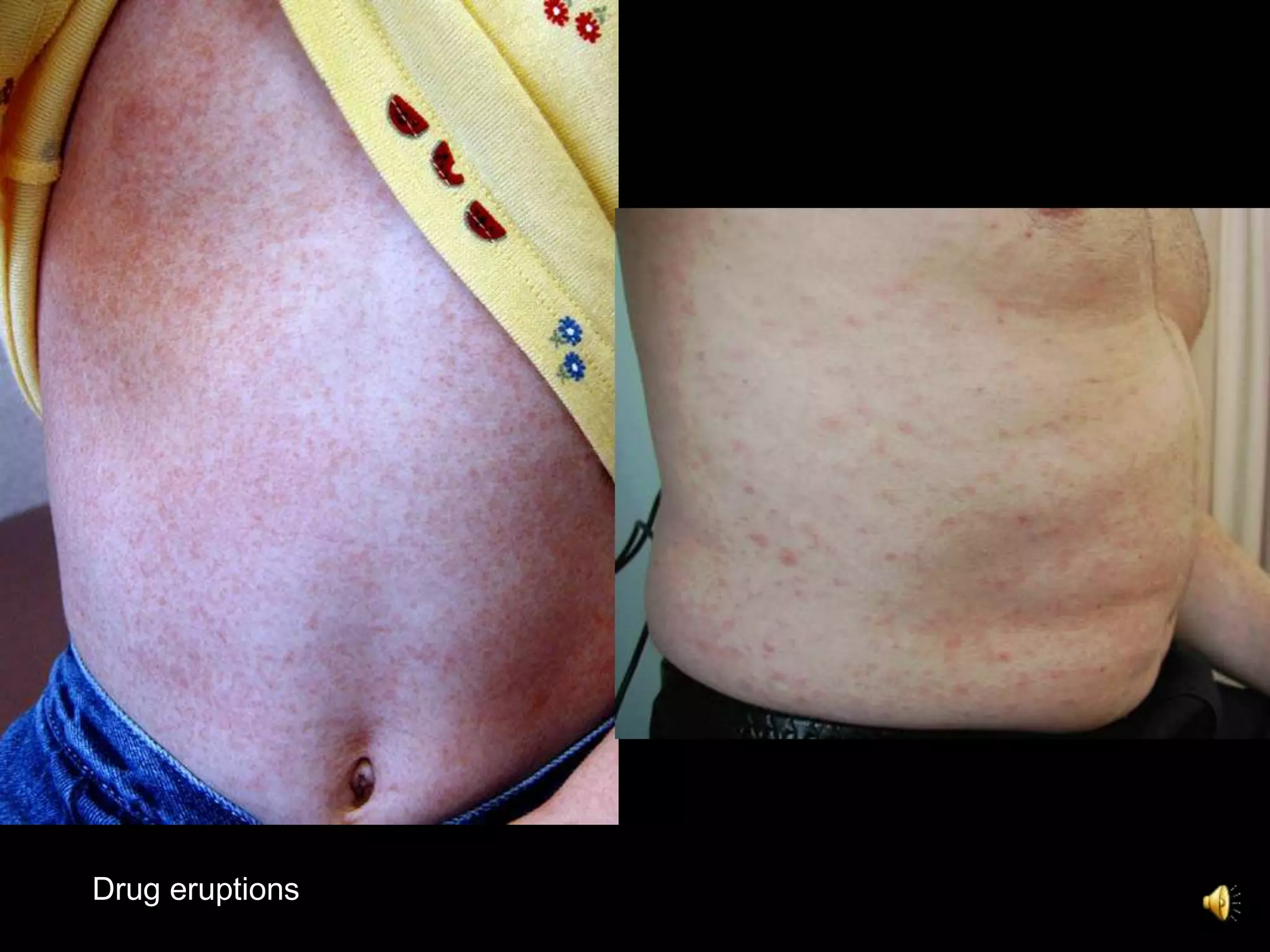
The most common presentation is of a blotchy erythema
  predominantly involving the trunk. This may be referred
  to as a “morbilliform” (measles-like) rash or as a
  “macuo-papular” rash. This presentation can also be
  referred to as a toxic erythema, this is discussed in
  another module.

However, medications can produce many other types of
  skin changes including
  urticaria, erythema mutliforme, lichenoid changes,
  pustules, pigmentation, blisters and mucosal changes
Drug eruptions
The list of medications that can cause drug reactions is
  extremely long, but the most common medications
  causing drug reactions are

  Antibiotics – beta lactams, sulphonamides
  Anticonvulsants – phenytoin, carbamazepine,
                           lamotrigine
  Cardiac medications – frusemide, thiazide diuretics,
                         ACE inhibitors
  Nonsteroidal anti-inflammatories
  Allopurinol
  Antiretrovirals
The most serious drug reaction is toxic epidermal
  necrolysis. A severe type IV hypersensitvity reaction
  causes widespread skin necrosis and can lead to
  multiorgan failure and overwhelming sepsis.

It needs early recognition, immediate cessation of the
    offending drug and early intensive supportive
    management. It is an emergency.

Important signs of a potentially more serious drug reaction
  are
   fever and systemic upset
   mucous membrane involvement
   targetoid lesions with central duskiness or blistering
   skin pain and tenderness
   blistering and shedding of sheets of epidermis
Toxic epidermal necrolysis
Serious infections

Ocassionally cutaneous findings are an early feature of
  serious infections. Usually other systemic findings will
  aid in early diagnosis.

A classic example is meningococcal disease, caused by
  the bacteria Neisseria meningitidis.
This needs early antibiotic treatment. A delay of just hours
  can be fatal.

The hallmark is palpable purpura – due to vasulitis and
  vascular occlusion and damage.
Early changes of
Meningococcal disease
Later changes of meningococcal disease
Other examples of severe cutaneous reactions in infections
  occur in Kawasaki disease and Staphylococcal Scalded
  Skin Syndrome.

Kawasaki disease is defined by fevers, a widespread
  exanthem, conjunctivitis, mucositis and
  lymphadenopathy.

Staphylococcal Scalded Skin Syndrome comprises
  irritability, fevers and widespread erythema developing
  into blisters and then skin changes like a burn
Kawasaki disease   Staphylococcal Scalded Skin Syndrome
Erythroderma

This is erythema involving 90% or more of the body surface
    area.
It often necessitates admission as patients are systemically
    unwell. Older patients are especially prone to fluid
    loss, electrolyte imbalance, cardiac failure and
    hypothermia.
The most common causes are
    psoriasis
    dermatitis
    drug reactions
    pityriasis rubra pilaris
    lymphoma
In approximately 10%, no cause can be identified.
Erythoderma due to dermatitis
Erythoderma due to psoriasis
Erythoderma due to Sezary syndrome (lymphoma)
Conclusion

Like all of these modules, this is a very brief introduction to
   some skin conditions that must be recognized early to
   minimize patient harm.

There are certain dermatological conditions that must be
  treated early to prevent significnat morbidity or even
  mortality.

11. emergency dermatology

  • 1.
    Emergency Dermatology Dr DanielHewitt Dermatologist Skin and Cancer Foundation Westmead
  • 2.
    Emergency Dermatology Emergencies arerare in general dermatology but there are certain situations that require prompt management. These include severe drug reactions, severe infections, allergic reactions and severe flares of inflammatory dermatoses.
  • 3.
    The following threeareas will be briefly discussed. Severe drug reactions Serious infections Erythroderma
  • 4.
    Serious drug reactions Drugreactions in the skin are usually innocuous and self- limiting. The most common presentation is of a blotchy erythema predominantly involving the trunk. This may be referred to as a “morbilliform” (measles-like) rash or as a “macuo-papular” rash. This presentation can also be referred to as a toxic erythema, this is discussed in another module. However, medications can produce many other types of skin changes including urticaria, erythema mutliforme, lichenoid changes, pustules, pigmentation, blisters and mucosal changes
  • 5.
  • 6.
    The list ofmedications that can cause drug reactions is extremely long, but the most common medications causing drug reactions are Antibiotics – beta lactams, sulphonamides Anticonvulsants – phenytoin, carbamazepine, lamotrigine Cardiac medications – frusemide, thiazide diuretics, ACE inhibitors Nonsteroidal anti-inflammatories Allopurinol Antiretrovirals
  • 7.
    The most seriousdrug reaction is toxic epidermal necrolysis. A severe type IV hypersensitvity reaction causes widespread skin necrosis and can lead to multiorgan failure and overwhelming sepsis. It needs early recognition, immediate cessation of the offending drug and early intensive supportive management. It is an emergency. Important signs of a potentially more serious drug reaction are fever and systemic upset mucous membrane involvement targetoid lesions with central duskiness or blistering skin pain and tenderness blistering and shedding of sheets of epidermis
  • 8.
  • 9.
  • 10.
  • 11.
    Serious infections Ocassionally cutaneousfindings are an early feature of serious infections. Usually other systemic findings will aid in early diagnosis. A classic example is meningococcal disease, caused by the bacteria Neisseria meningitidis. This needs early antibiotic treatment. A delay of just hours can be fatal. The hallmark is palpable purpura – due to vasulitis and vascular occlusion and damage.
  • 12.
  • 13.
    Later changes ofmeningococcal disease
  • 14.
    Other examples ofsevere cutaneous reactions in infections occur in Kawasaki disease and Staphylococcal Scalded Skin Syndrome. Kawasaki disease is defined by fevers, a widespread exanthem, conjunctivitis, mucositis and lymphadenopathy. Staphylococcal Scalded Skin Syndrome comprises irritability, fevers and widespread erythema developing into blisters and then skin changes like a burn
  • 15.
    Kawasaki disease Staphylococcal Scalded Skin Syndrome
  • 16.
    Erythroderma This is erythemainvolving 90% or more of the body surface area. It often necessitates admission as patients are systemically unwell. Older patients are especially prone to fluid loss, electrolyte imbalance, cardiac failure and hypothermia. The most common causes are psoriasis dermatitis drug reactions pityriasis rubra pilaris lymphoma In approximately 10%, no cause can be identified.
  • 17.
  • 18.
  • 19.
    Erythoderma due toSezary syndrome (lymphoma)
  • 20.
    Conclusion Like all ofthese modules, this is a very brief introduction to some skin conditions that must be recognized early to minimize patient harm. There are certain dermatological conditions that must be treated early to prevent significnat morbidity or even mortality.