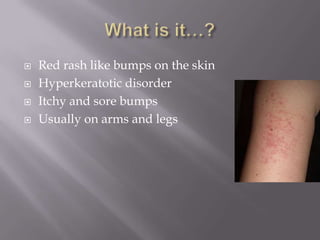
   Red rash like bumps on the skin
   Hyperkeratotic disorder
   Itchy and sore bumps
   Usually on arms and legs
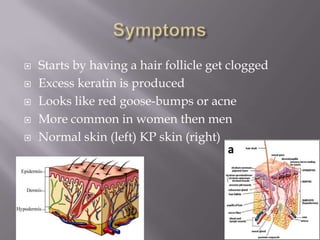
   Starts by having a hair follicle get clogged
   Excess keratin is produced
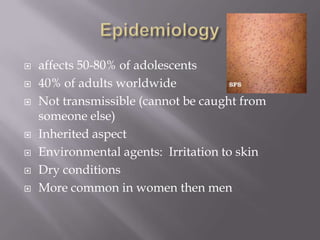
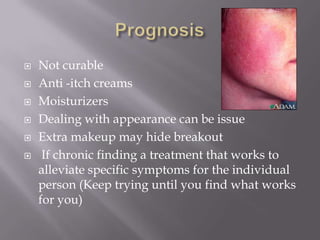
   Looks like red goose-bumps or acne
   More common in women then men
   Normal skin (left) KP skin (right)
   Doctor compares condition to normal skin
   Looks at family history: genetic influence
   No standard laboratory tests
   Compares to seasonal conditions: more
    prevalent during the winter
   Impacted hair
   Common name, “Chicken Skin”
   Dry conditions
   Hereditary
    Environmental
   Impacted hair
    Clogged pores
   Build up of keratin in the hair follicles
   affects 50-80% of adolescents
   40% of adults worldwide
   Not transmissible (cannot be caught from
    someone else)
   Inherited aspect
   Environmental agents: Irritation to skin
   Dry conditions
   More common in women then men
 Presently no known cure
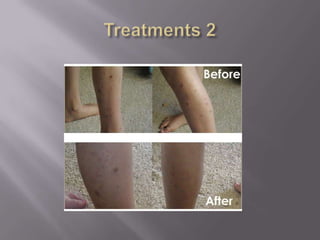
 Skin oils and creams may help soothe

 Remission maybe spontanious

 More gentile soaps

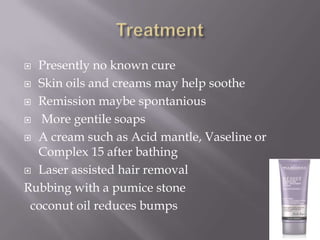
 A cream such as Acid mantle, Vaseline or
  Complex 15 after bathing
 Laser assisted hair removal

Rubbing with a pumice stone
 coconut oil reduces bumps
   Not curable
   Anti -itch creams
   Moisturizers
   Dealing with appearance can be issue
   Extra makeup may hide breakout
    If chronic finding a treatment that works to
    alleviate specific symptoms for the individual
    person (Keep trying until you find what works
    for you)
   http://www.paulaschoice.com
   http://www.streetdirectory.com
   http://www.medicinenet.com
   http://www.google.com/imgres

Keratosis pilaris

  • 2.
     Red rash like bumps on the skin  Hyperkeratotic disorder  Itchy and sore bumps  Usually on arms and legs
  • 3.
     Starts by having a hair follicle get clogged  Excess keratin is produced  Looks like red goose-bumps or acne  More common in women then men  Normal skin (left) KP skin (right)
  • 4.
     Doctor compares condition to normal skin  Looks at family history: genetic influence  No standard laboratory tests  Compares to seasonal conditions: more prevalent during the winter  Impacted hair  Common name, “Chicken Skin”
  • 5.
     Dry conditions  Hereditary  Environmental  Impacted hair  Clogged pores  Build up of keratin in the hair follicles
  • 6.
     affects 50-80% of adolescents  40% of adults worldwide  Not transmissible (cannot be caught from someone else)  Inherited aspect  Environmental agents: Irritation to skin  Dry conditions  More common in women then men
  • 7.
     Presently noknown cure  Skin oils and creams may help soothe  Remission maybe spontanious  More gentile soaps  A cream such as Acid mantle, Vaseline or Complex 15 after bathing  Laser assisted hair removal Rubbing with a pumice stone coconut oil reduces bumps
  • 9.
     Not curable  Anti -itch creams  Moisturizers  Dealing with appearance can be issue  Extra makeup may hide breakout  If chronic finding a treatment that works to alleviate specific symptoms for the individual person (Keep trying until you find what works for you)
  • 10.
     http://www.paulaschoice.com  http://www.streetdirectory.com  http://www.medicinenet.com  http://www.google.com/imgres