M.Sc.Zoology Semester I Molecular Biology
RNA Editing
Praveen Deepak
Assistant Professor of Zoology
Swami Sahjanand College
Jehanabad
Introduction
2
 RNA editing is a process of RNA modification in which discrete changes
are made in the specific nucleotide sequences within an RNA molecule
after transcription without splicing.
 In a simple way, it can be defined as any type of changes in RNA
transcript sequence without RNA splicing called RNA editing.
 It was previously thought as rare phenomenon, but it is widespread
 It was firstly discovered in mitochondria of Trypanosomes.
 It takes place in cell nucleus and cytosol as well as mitochondria and
plastids.
 RNA editing enables a cell to obtain large diversity in proteins by using
small number of genes.
 It is mainly achieved by insertion, modification or deletion of one or more
bases.
 It happens after transcription, also happens in Poly(A) tail.
RNA Editing
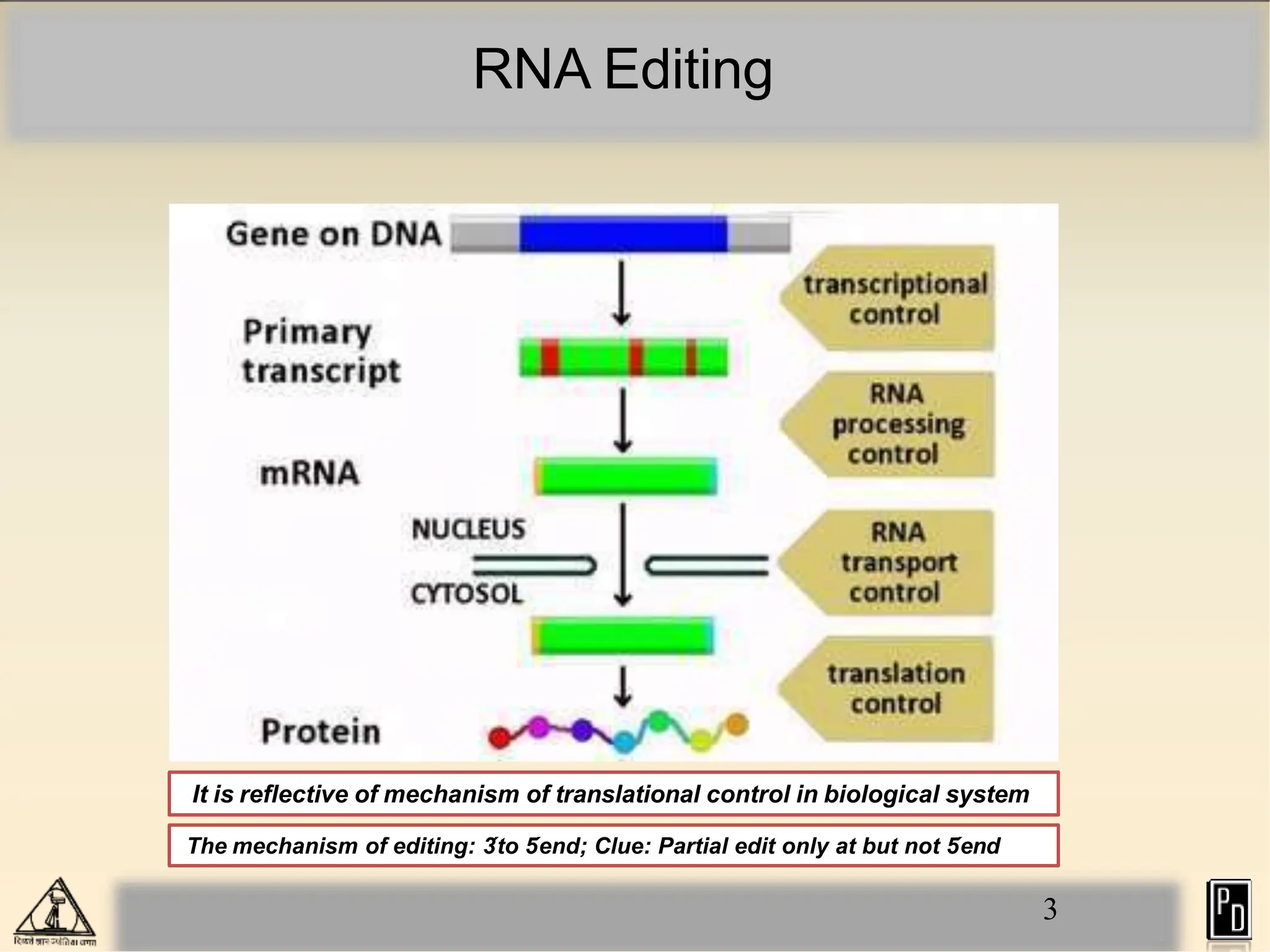
It is reflective of mechanism of translational control in biological system
3
The mechanism of editing: 3
´to 5
´end; Clue: Partial edit only at but not 5
´end
RNA Editing
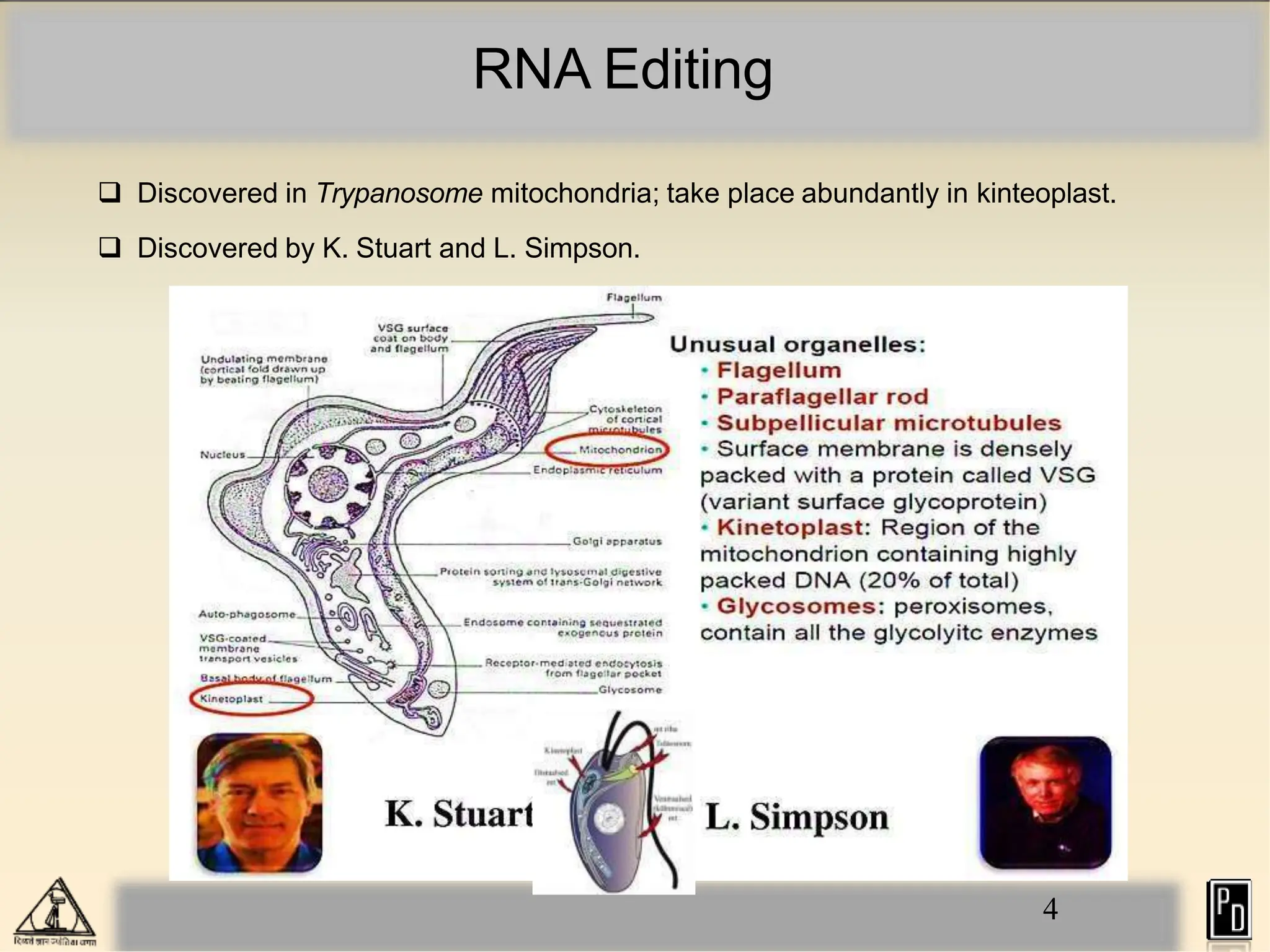
 Discovered in Trypanosome mitochondria; take place abundantly in kinteoplast.
 Discovered by K. Stuart and L. Simpson.
4
RNA Editing
5
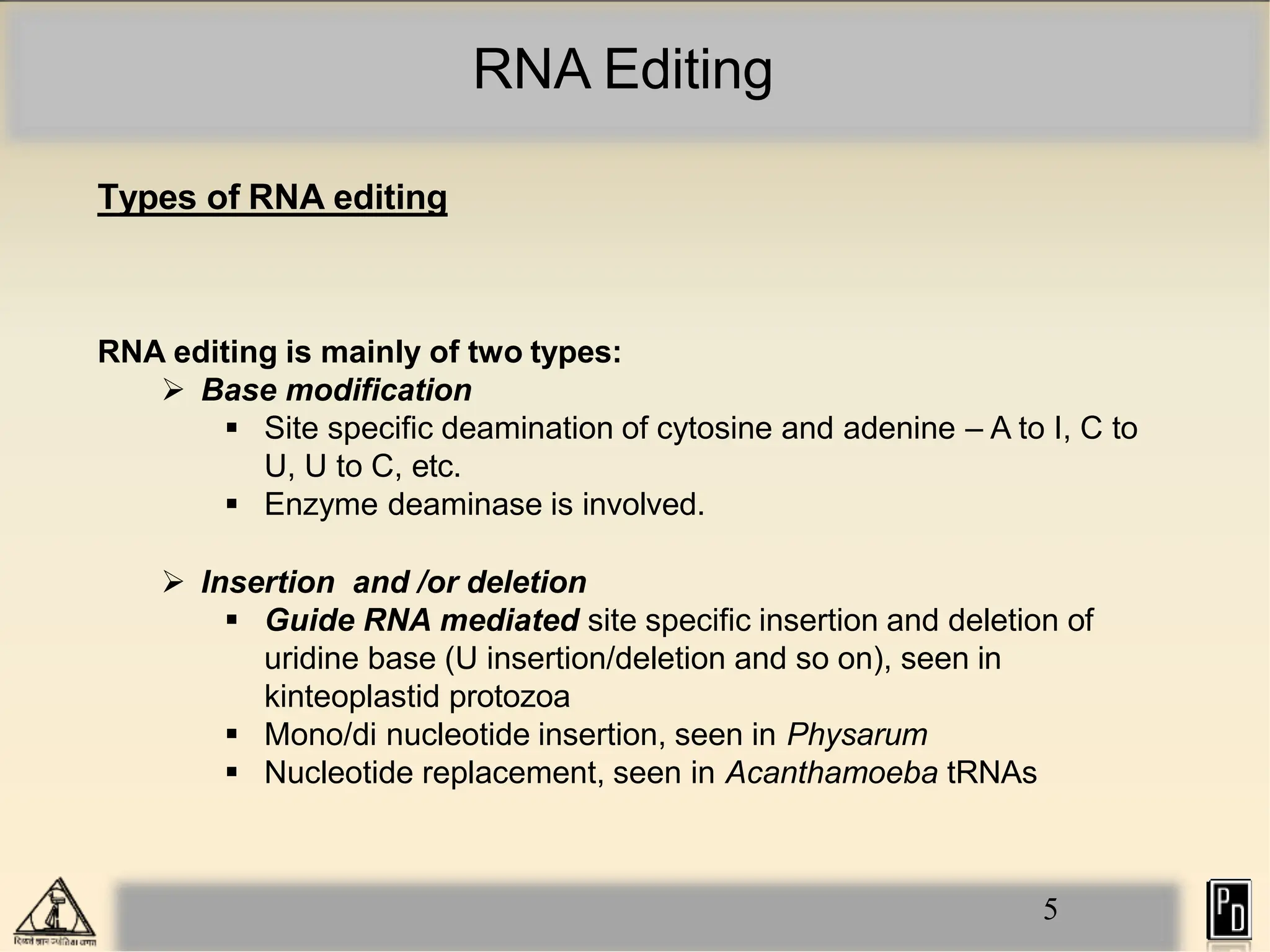
Types of RNA editing
RNA editing is mainly of two types:
 Base modification
 Site specific deamination of cytosine and adenine – A to I, C to
U, U to C, etc.
 Enzyme deaminase is involved.
 Insertion and /or deletion
 Guide RNA mediated site specific insertion and deletion of
uridine base (U insertion/deletion and so on), seen in
kinteoplastid protozoa
 Mono/di nucleotide insertion, seen in Physarum
 Nucleotide replacement, seen in Acanthamoeba tRNAs
RNA Editing
6
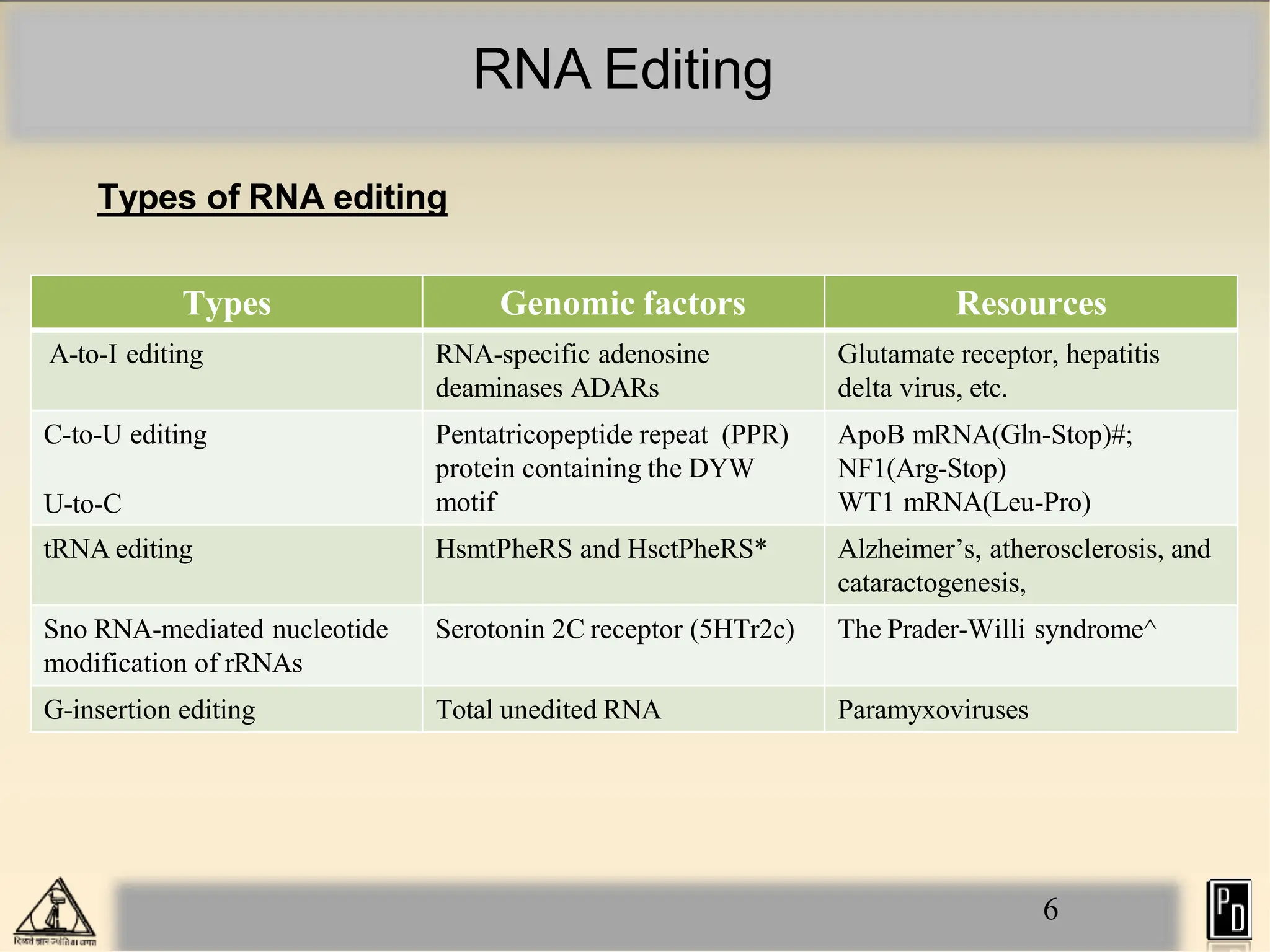
Types of RNA editing
Types Genomic factors Resources
A-to-I editing RNA-specific adenosine
deaminases ADARs
Glutamate receptor, hepatitis
delta virus, etc.
C-to-U editing
U-to-C
Pentatricopeptide repeat (PPR)
protein containing the DYW
motif
ApoB mRNA(Gln-Stop)#;
NF1(Arg-Stop)
WT1 mRNA(Leu-Pro)
tRNA editing HsmtPheRS and HsctPheRS* Alzheimer’s, atherosclerosis, and
cataractogenesis,
Sno RNA-mediated nucleotide
modification of rRNAs
Serotonin 2C receptor (5HTr2c) The Prader-Willi syndrome^
G-insertion editing Total unedited RNA Paramyxoviruses
RNA Editing
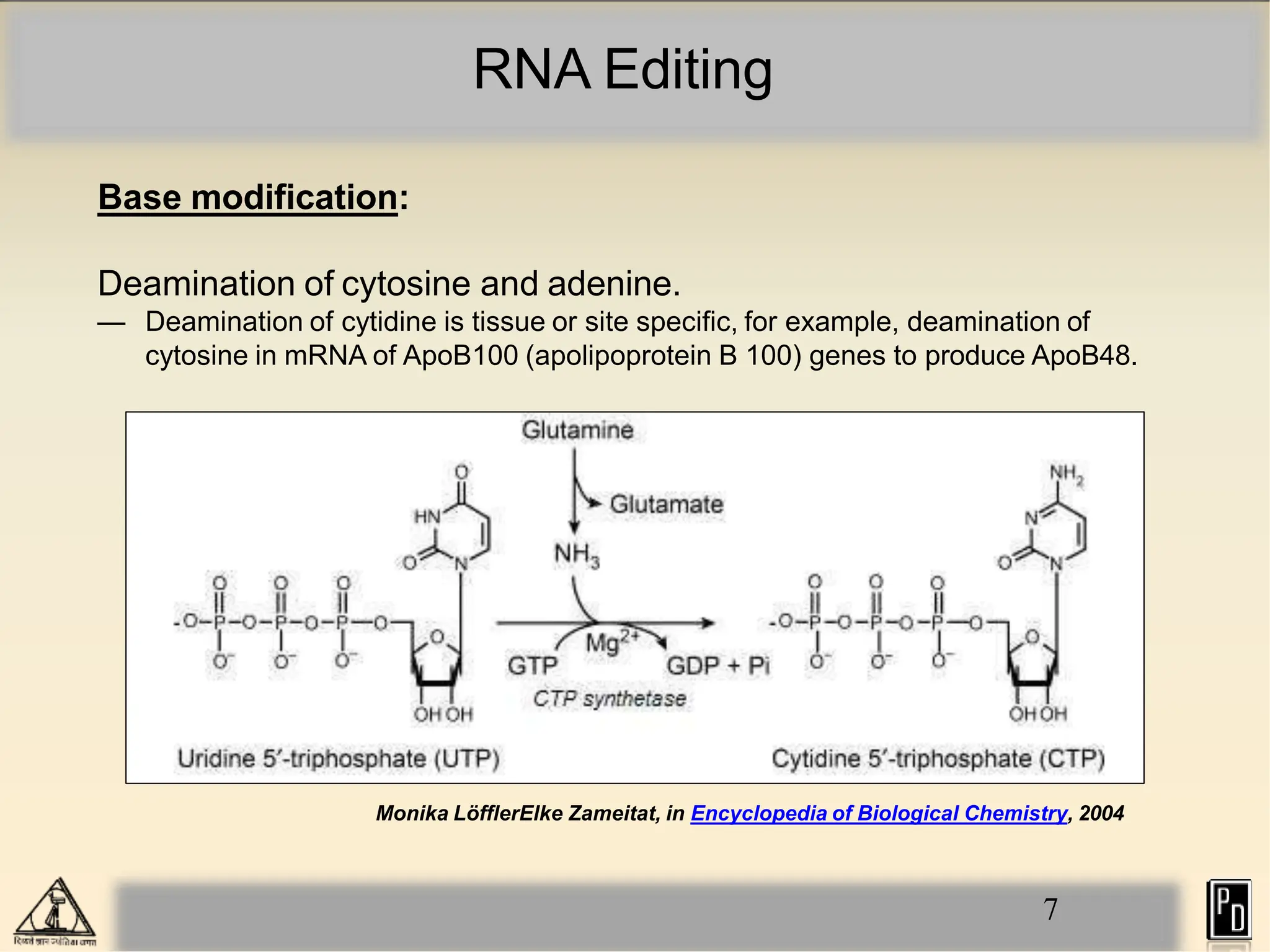
Base modification:
Deamination of cytosine and adenine.
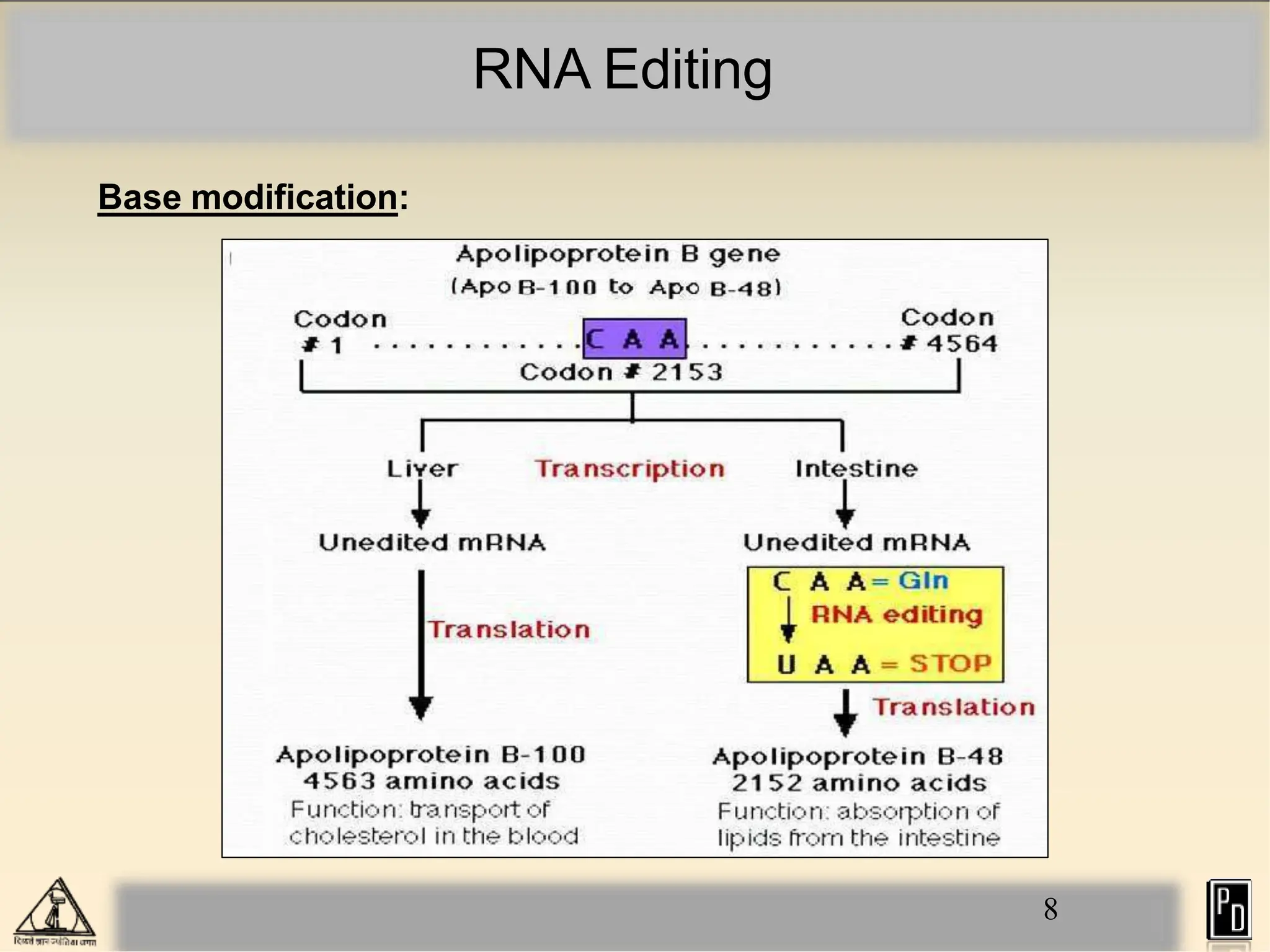
— Deamination of cytidine is tissue or site specific, for example, deamination of
cytosine in mRNA of ApoB100 (apolipoprotein B 100) genes to produce ApoB48.
Monika LöfflerElke Zameitat, in Encyclopedia of Biological Chemistry, 2004
7
RNA Editing
Base modification:
8
RNA Editing
Base modification:
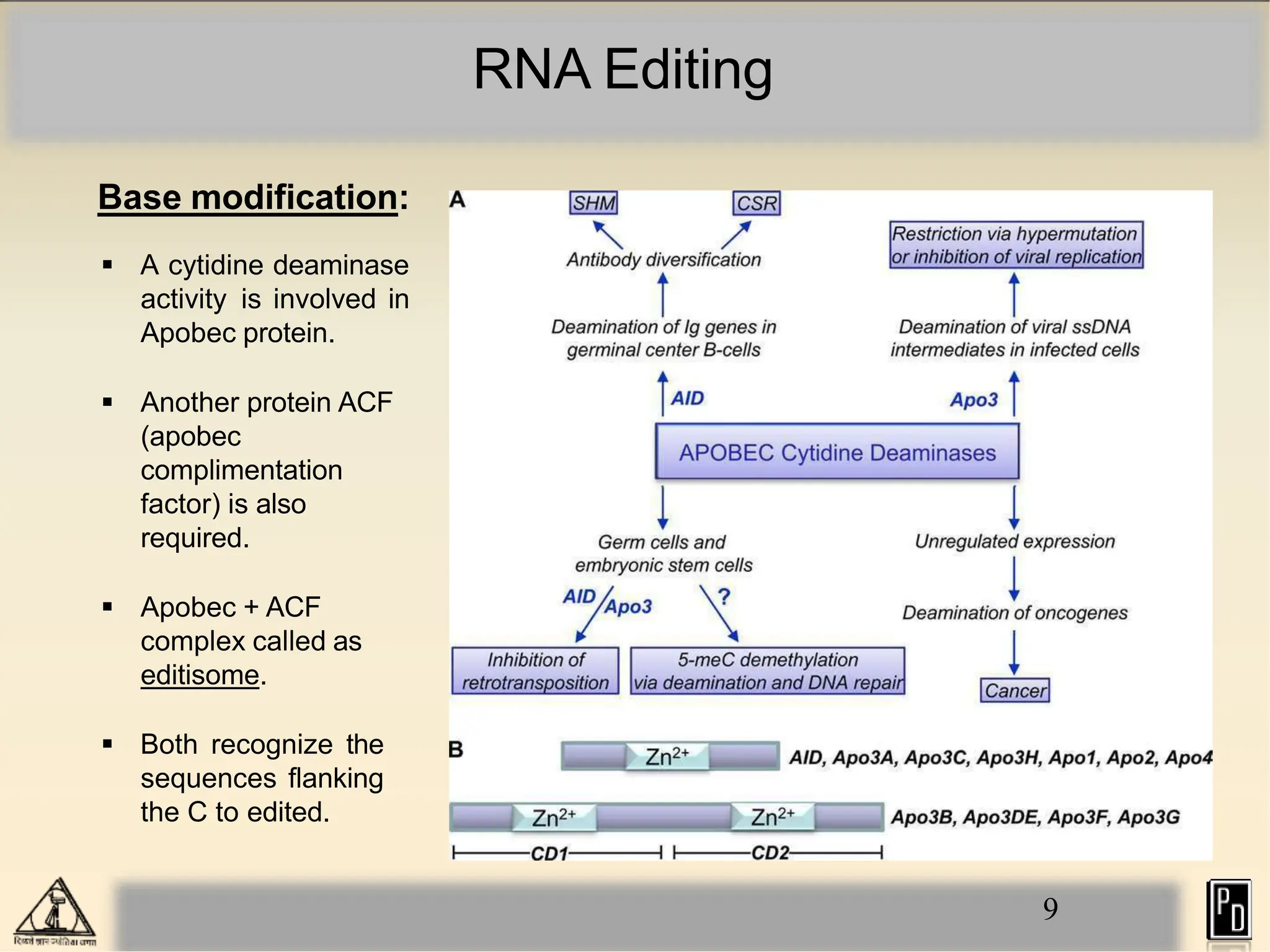
 A cytidine deaminase
activity is involved in
Apobec protein.
 Another protein ACF
(apobec
complimentation
factor) is also
required.
 Apobec + ACF
complex called as
editisome.
 Both recognize the
sequences flanking
the C to edited.
9
RNA Editing
Base modification:
Deamination of adenine and inosine
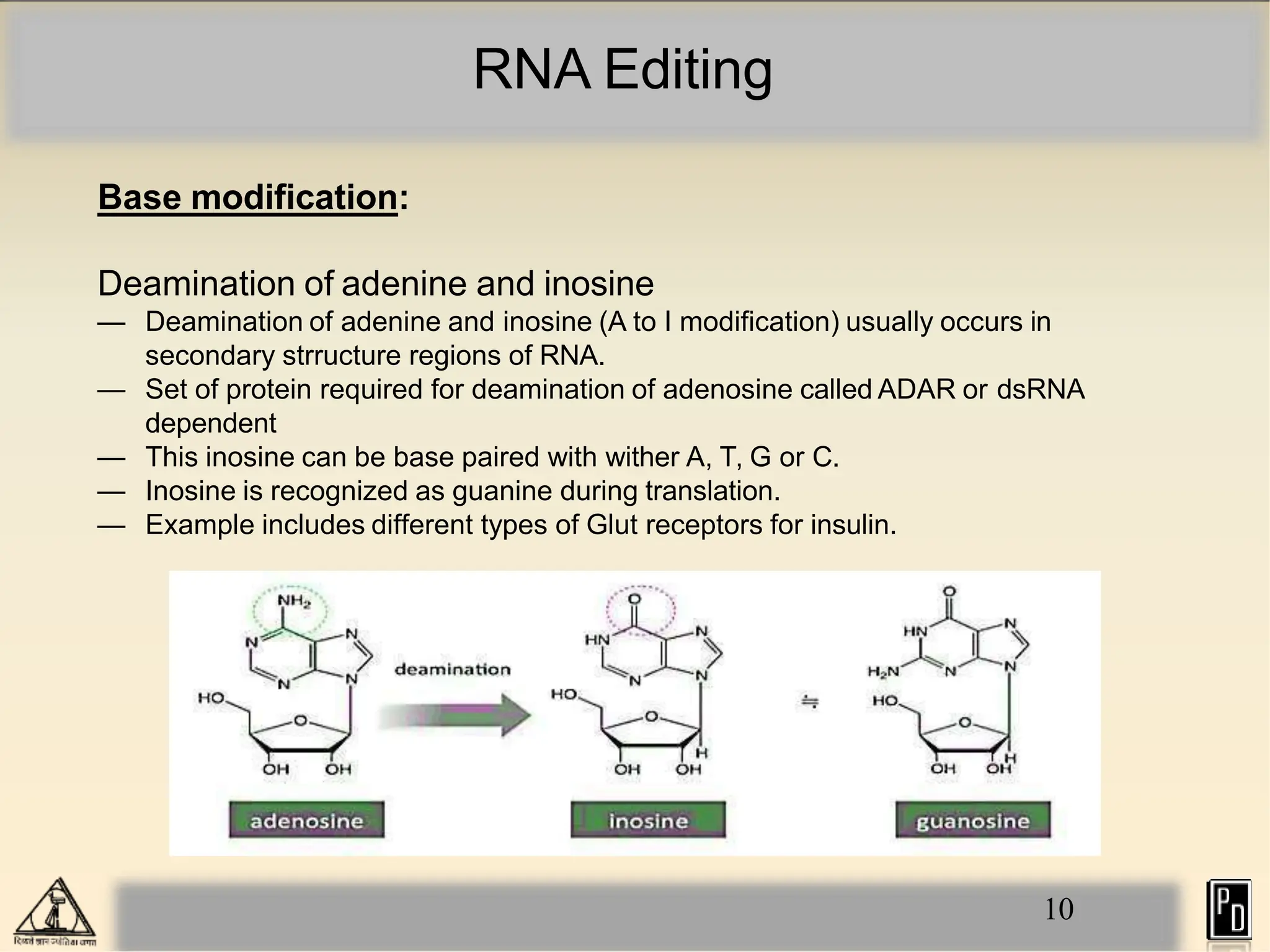
— Deamination of adenine and inosine (A to I modification) usually occurs in
secondary strructure regions of RNA.
— Set of protein required for deamination of adenosine called ADAR or dsRNA
dependent
— This inosine can be base paired with wither A, T, G or C.
— Inosine is recognized as guanine during translation.
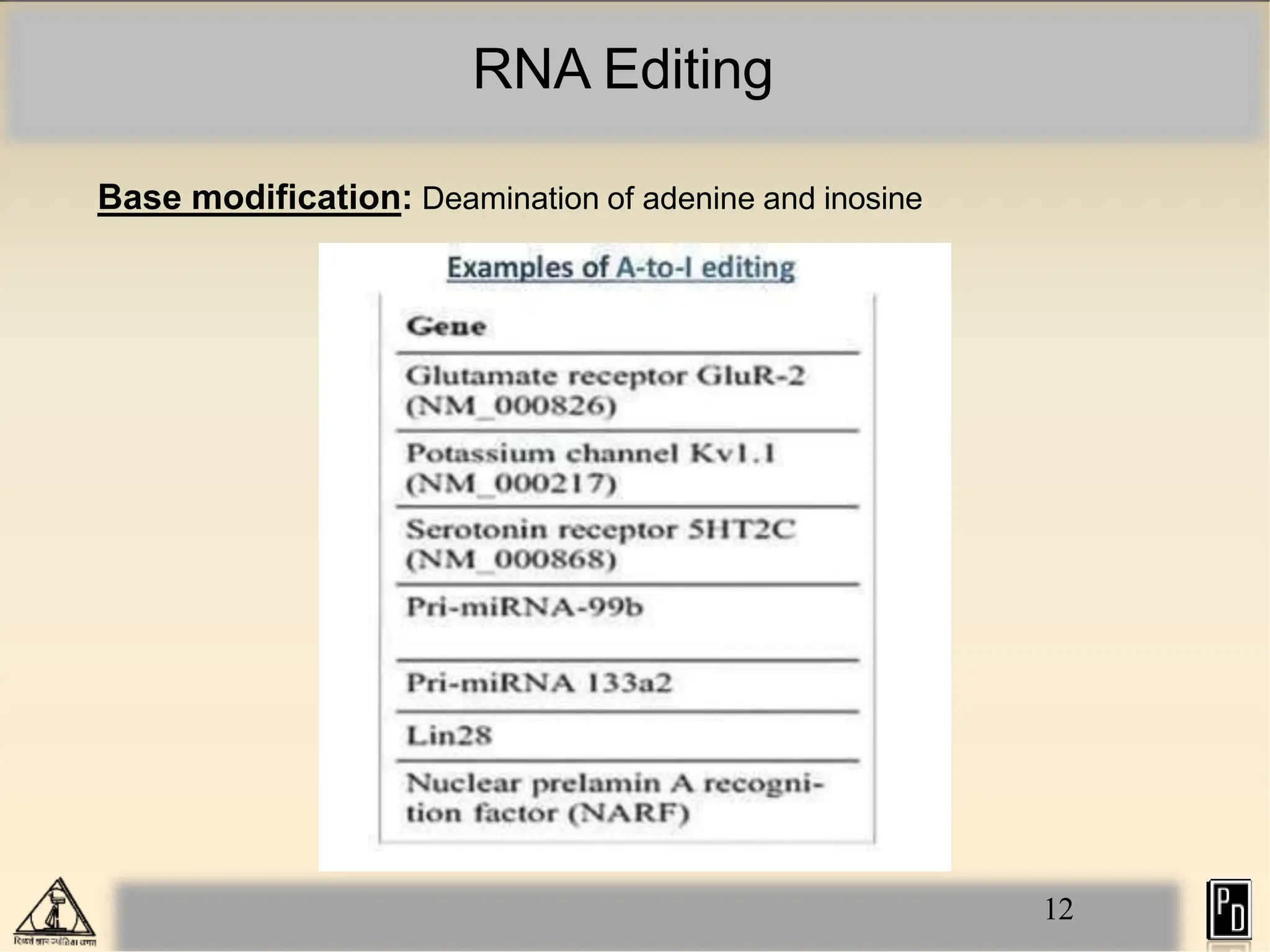
— Example includes different types of Glut receptors for insulin.
10
RNA Editing
Base modification: Deamination of adenine and inosine
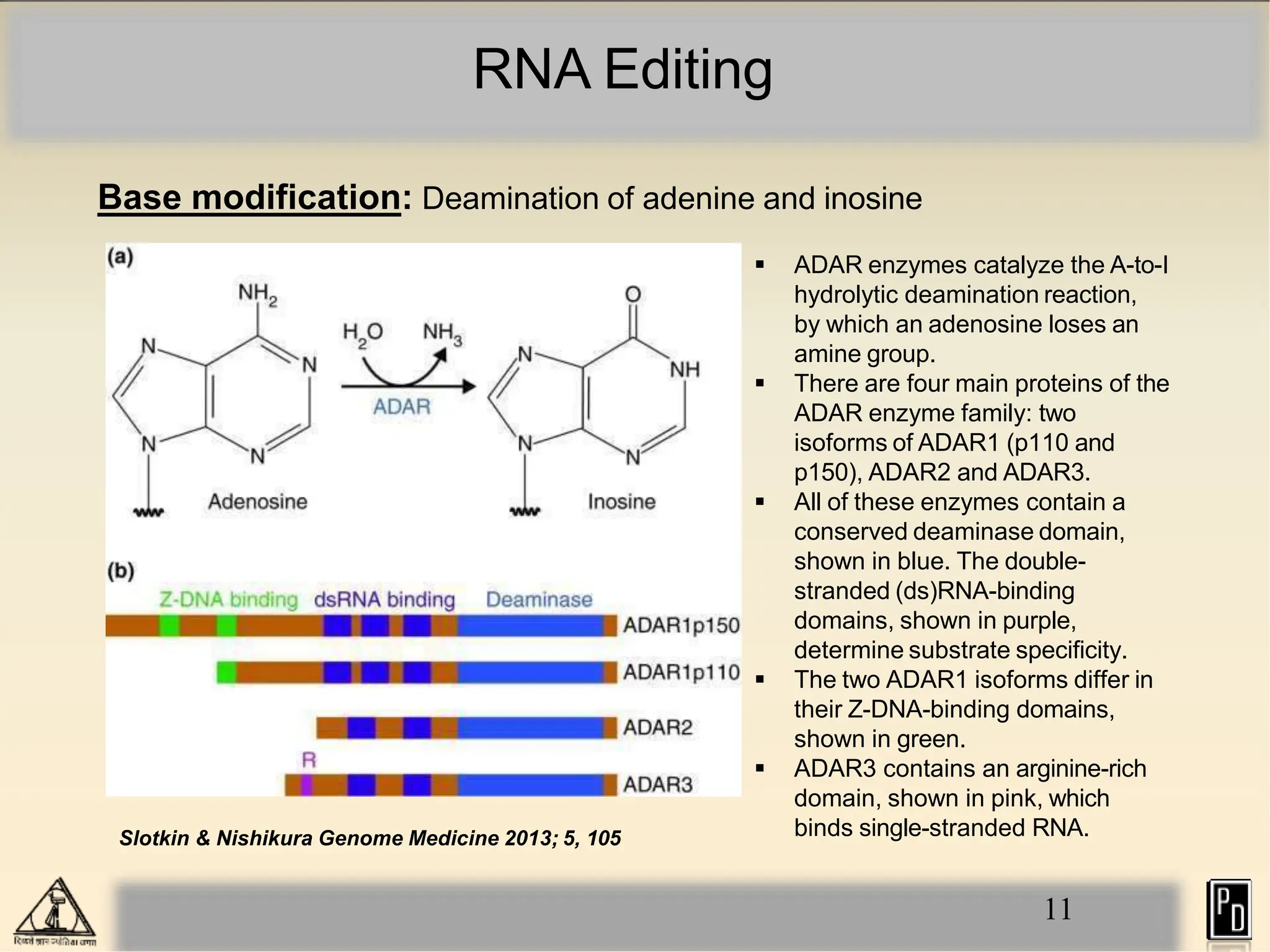
Slotkin & Nishikura Genome Medicine 2013; 5, 105
 ADAR enzymes catalyze the A-to-I
hydrolytic deamination reaction,
by which an adenosine loses an
amine group.
 There are four main proteins of the
ADAR enzyme family: two
isoforms of ADAR1 (p110 and
p150), ADAR2 and ADAR3.
 All of these enzymes contain a
conserved deaminase domain,
shown in blue. The double-
stranded (ds)RNA-binding
domains, shown in purple,
determine substrate specificity.
 The two ADAR1 isoforms differ in
their Z-DNA-binding domains,
shown in green.
 ADAR3 contains an arginine-rich
domain, shown in pink, which
binds single-stranded RNA.
11
RNA Editing
Base modification: Deamination of adenine and inosine
12
RNA Editing
13
Insertion or deletion
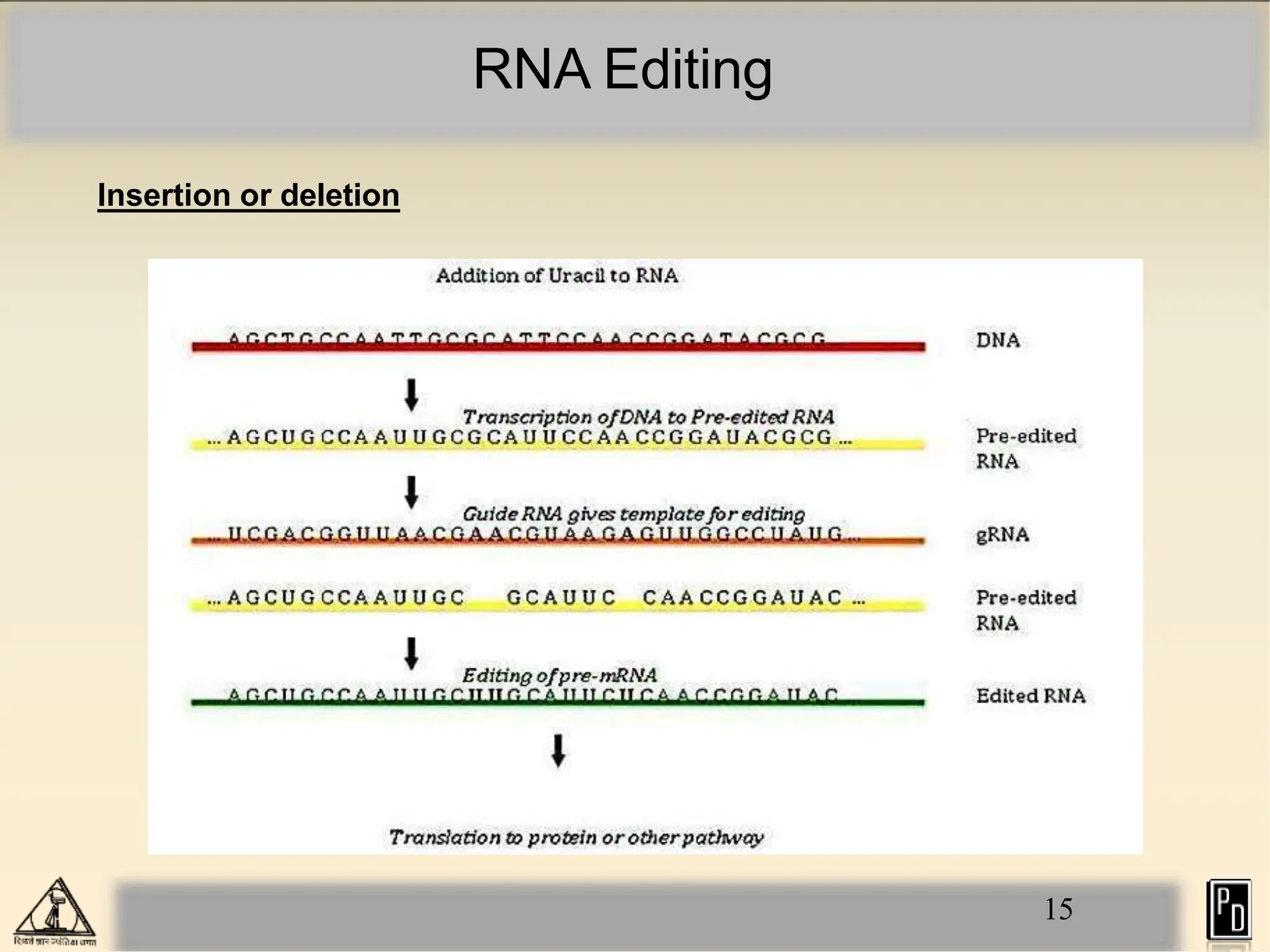
 RNA editing through the addition and deletion of uracil has been found in
kinetoplasts from the mitochondria of Trypanosoma brucei.
 It is sometimes seen in a large fraction of the sites in a gene, therefore it is also
called as ‘pan editing’ to distinguish it from typical editing of one or a few sites.
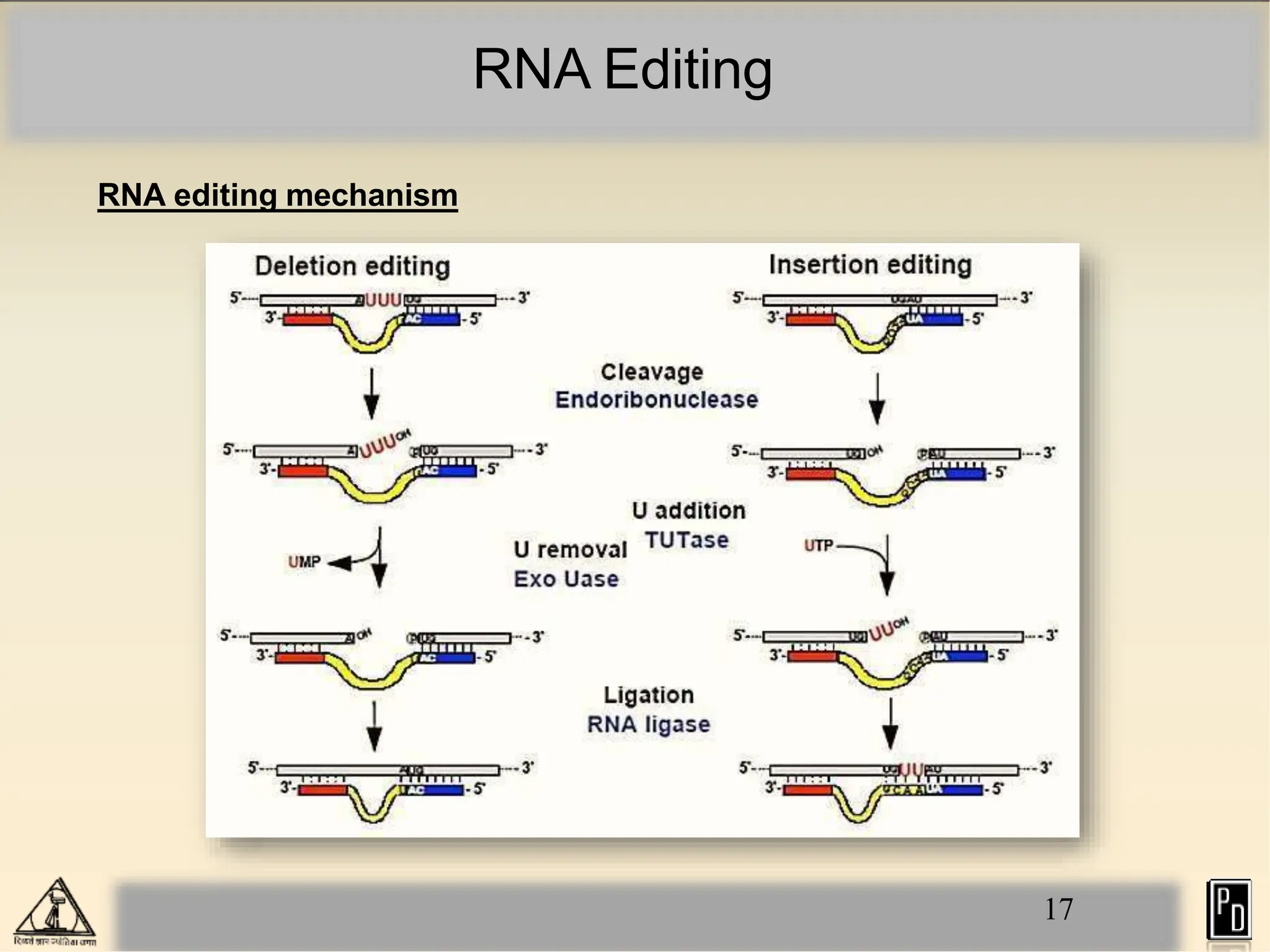
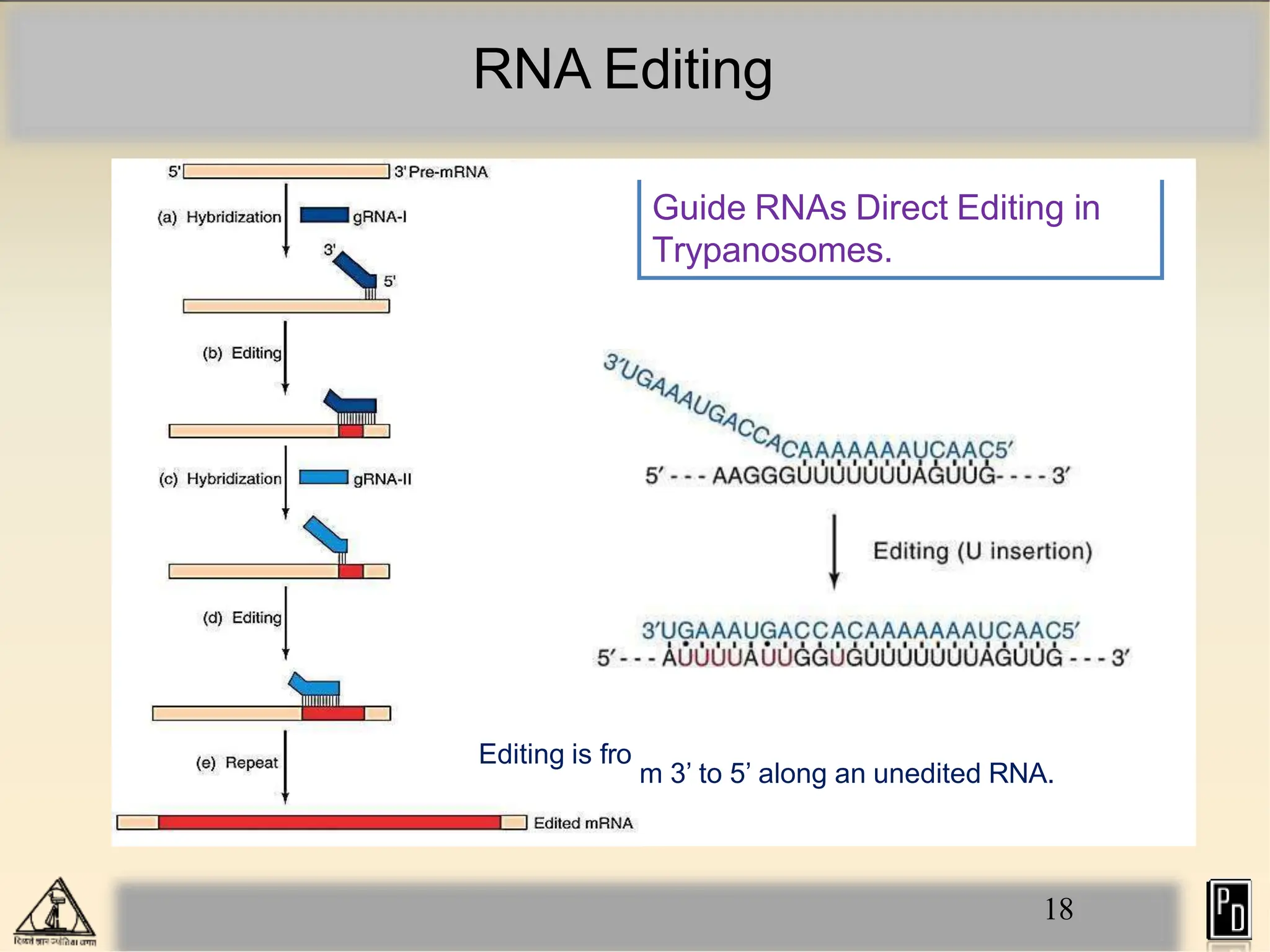
 It starts with the base-pairing of the unedited primary transcript with a guide RNA
(gRNA), which contains complementary sequences to the regions around the
insertion/deletion points.
 The newly formed double-stranded region is then enveloped by an editosome, a
large multi-protein complex that catalyzes the editing.
 The editosome opens the transcript at the first mismatched nucleotide and starts
inserting uridine.
 The inserted uridine base-pairs with the guide RNA, and insertion continues as
long as A or G is present in the guide RNA and stops when a C or U is
encountered.
 The inserted nucleotide then causes a frameshift and result in a translated protein
that differs from its gene.
 The mechanism involves an endonucleolytic cut at the mismatch point between the
guide RNA and the unedited transcript by editosome.
RNA Editing
14
Insertion or deletion
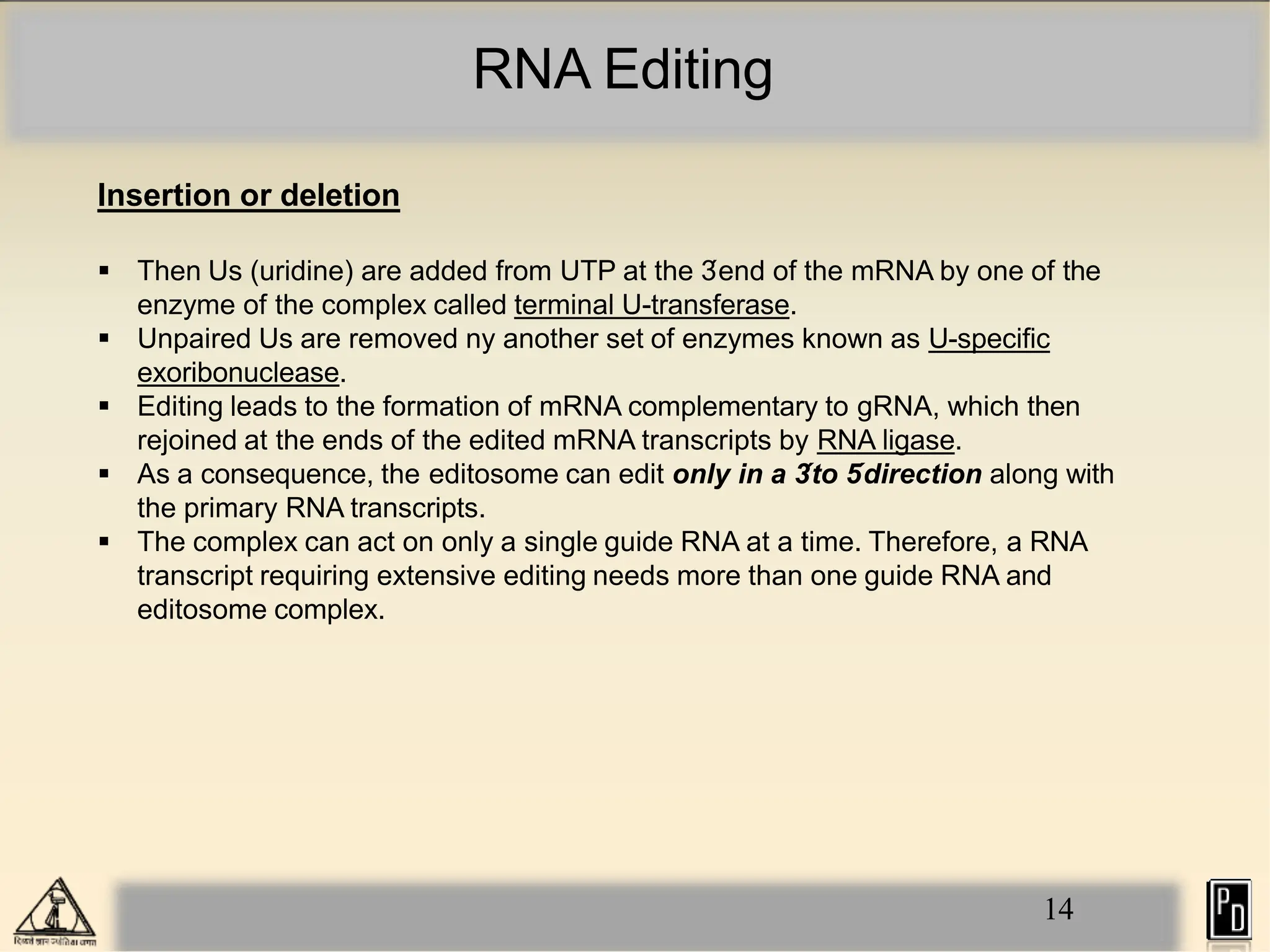
 Then Us (uridine) are added from UTP at the 3
´end of the mRNA by one of the
enzyme of the complex called terminal U-transferase.
 Unpaired Us are removed ny another set of enzymes known as U-specific
exoribonuclease.
 Editing leads to the formation of mRNA complementary to gRNA, which then
rejoined at the ends of the edited mRNA transcripts by RNA ligase.
 As a consequence, the editosome can edit only in a 3
´to 5
´direction along with
the primary RNA transcripts.
 The complex can act on only a single guide RNA at a time. Therefore, a RNA
transcript requiring extensive editing needs more than one guide RNA and
editosome complex.
RNA Editing
Insertion or deletion
15
RNA Editing
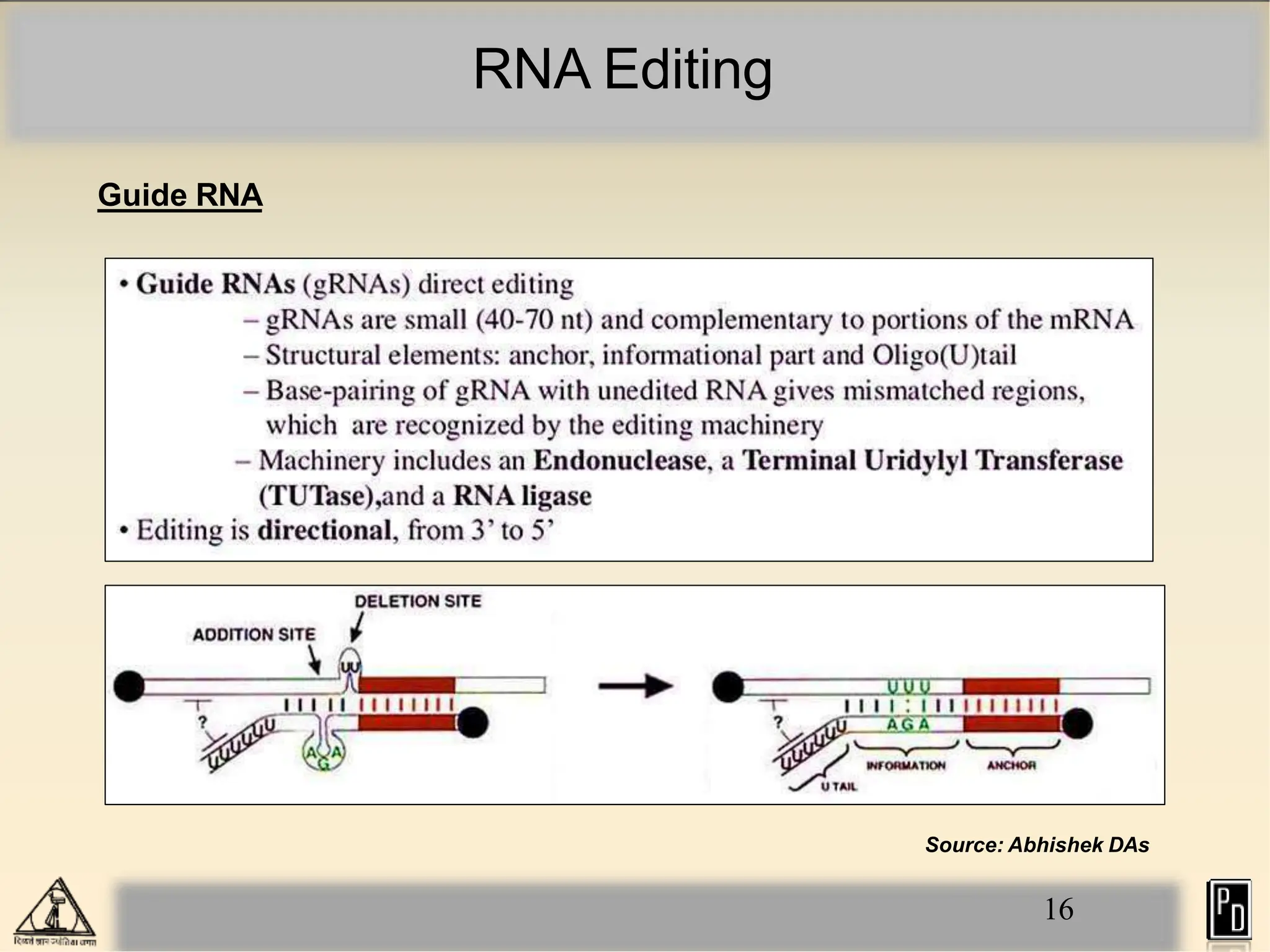
Guide RNA
Source: Abhishek DAs
16
RNA Editing
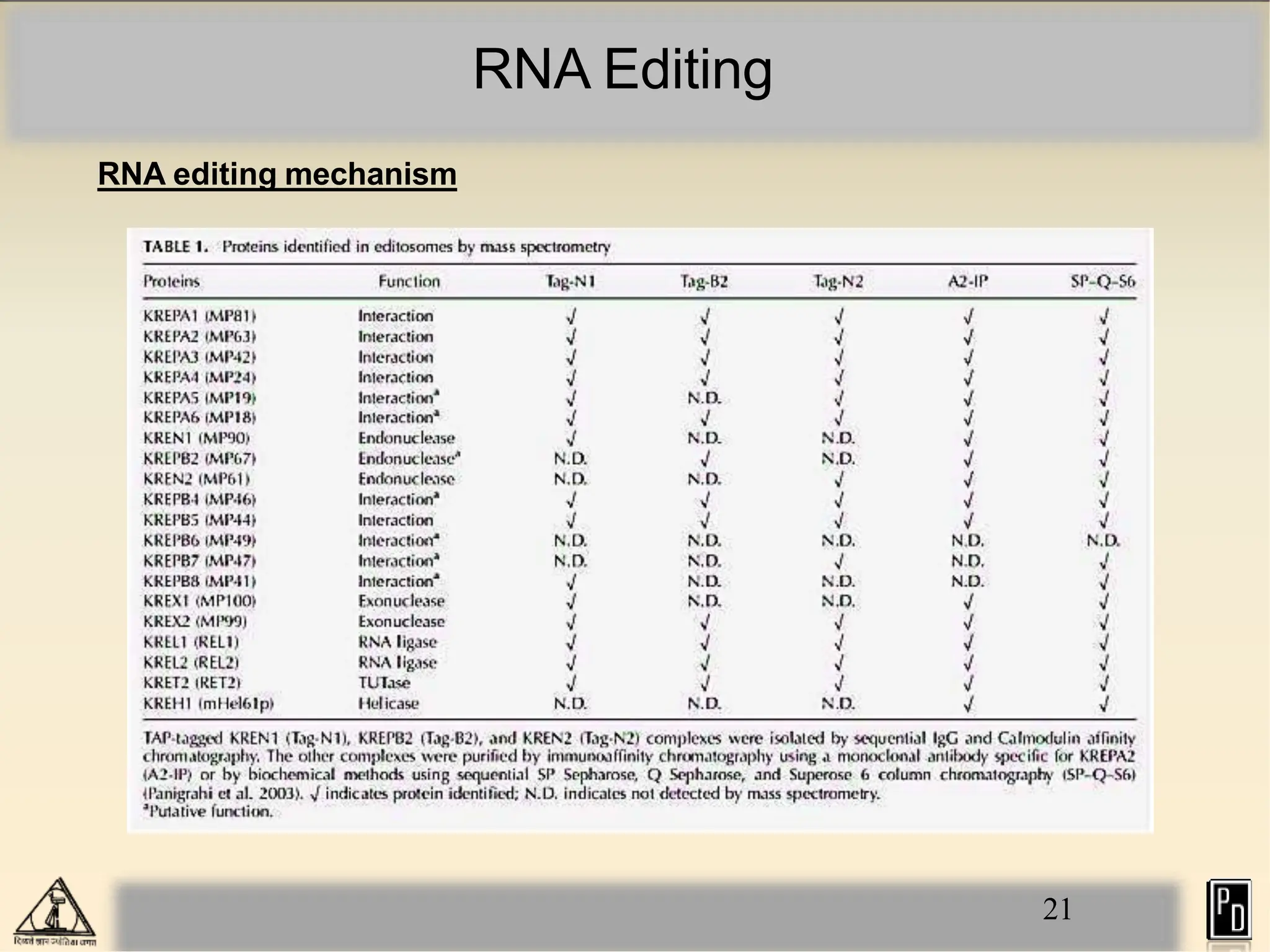
RNA editing mechanism
17
RNA Editing
Editing is fro
18
Guide RNAs Direct Editing in
Trypanosomes.
m 3’ to 5’ along an unedited RNA.
RNA Editing
19
RNA editing mechanism
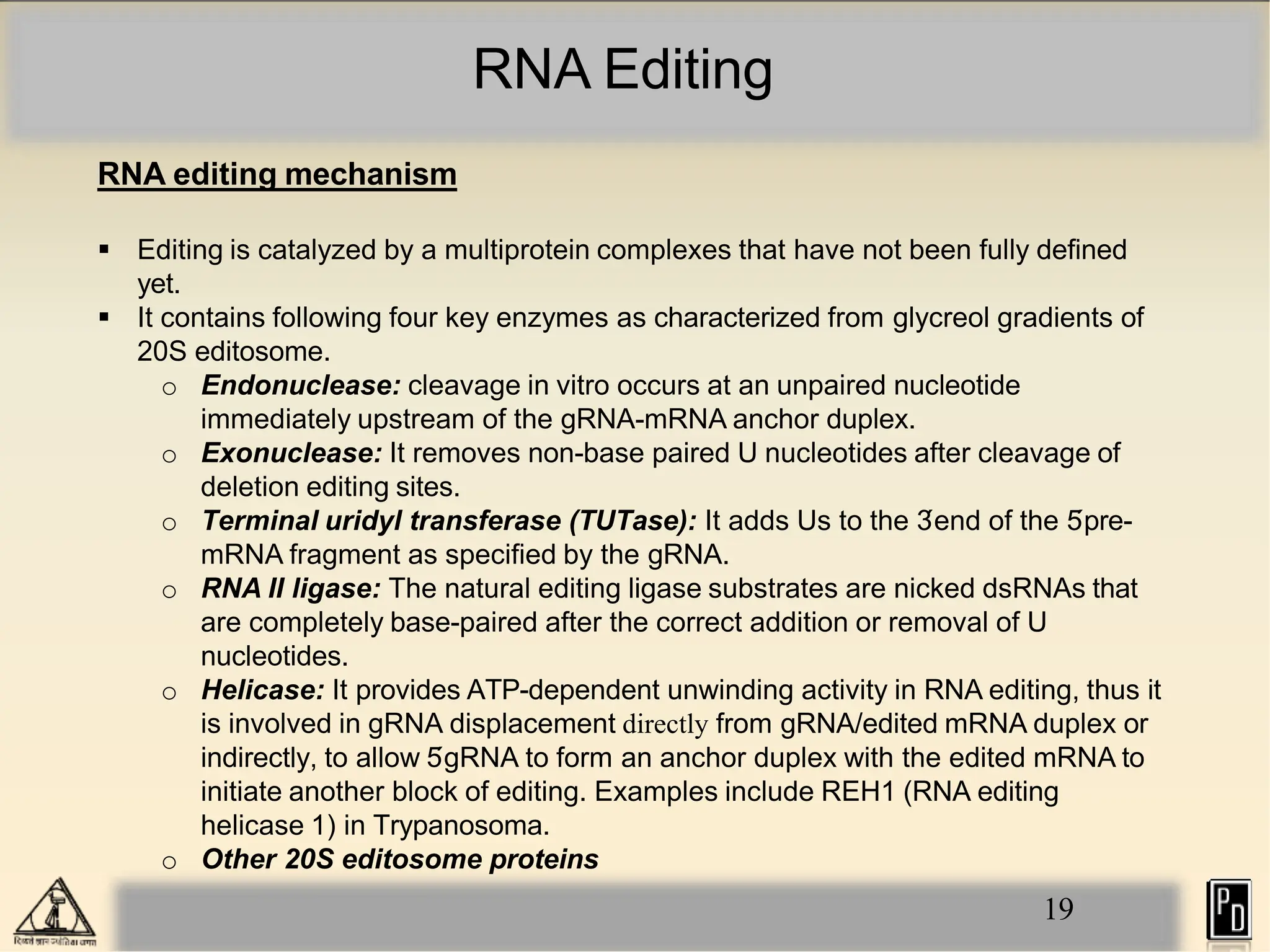
 Editing is catalyzed by a multiprotein complexes that have not been fully defined
yet.
 It contains following four key enzymes as characterized from glycreol gradients of
20S editosome.
o Endonuclease: cleavage in vitro occurs at an unpaired nucleotide
immediately upstream of the gRNA-mRNA anchor duplex.
o Exonuclease: It removes non-base paired U nucleotides after cleavage of
deletion editing sites.
o Terminal uridyl transferase (TUTase): It adds Us to the 3
´end of the 5
´pre-
mRNA fragment as specified by the gRNA.
o RNA II ligase: The natural editing ligase substrates are nicked dsRNAs that
are completely base-paired after the correct addition or removal of U
nucleotides.
o Helicase: It provides ATP-dependent unwinding activity in RNA editing, thus it
is involved in gRNA displacement directly from gRNA/edited mRNA duplex or
indirectly, to allow 5
´gRNA to form an anchor duplex with the edited mRNA to
initiate another block of editing. Examples include REH1 (RNA editing
helicase 1) in Trypanosoma.
o Other 20S editosome proteins
RNA Editing
RNA editing mechanism
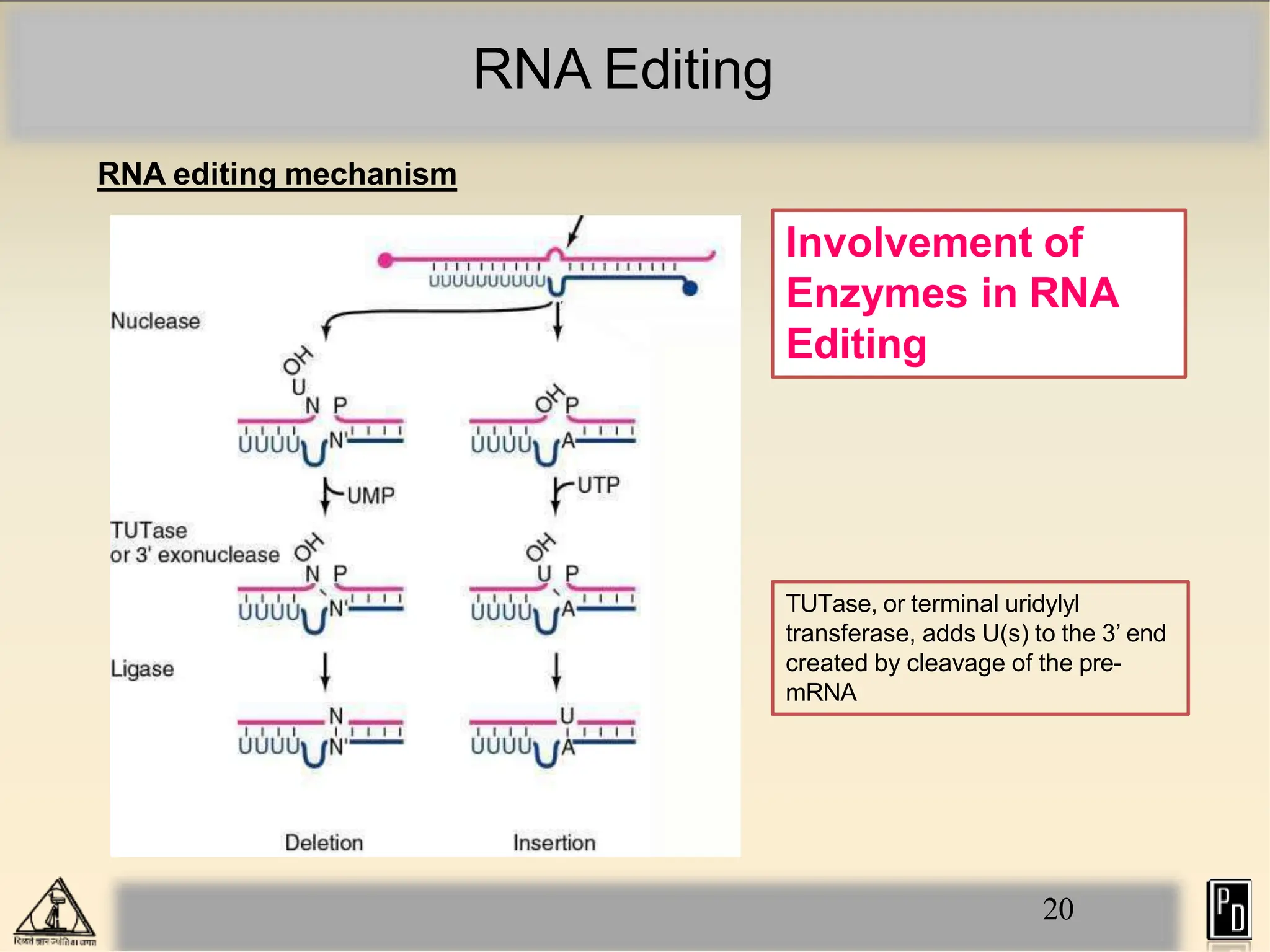
TUTase, or terminal uridylyl
transferase, adds U(s) to the 3’ end
created by cleavage of the pre-
mRNA
20
Involvement of
Enzymes in RNA
Editing
RNA Editing
RNA editing mechanism
21
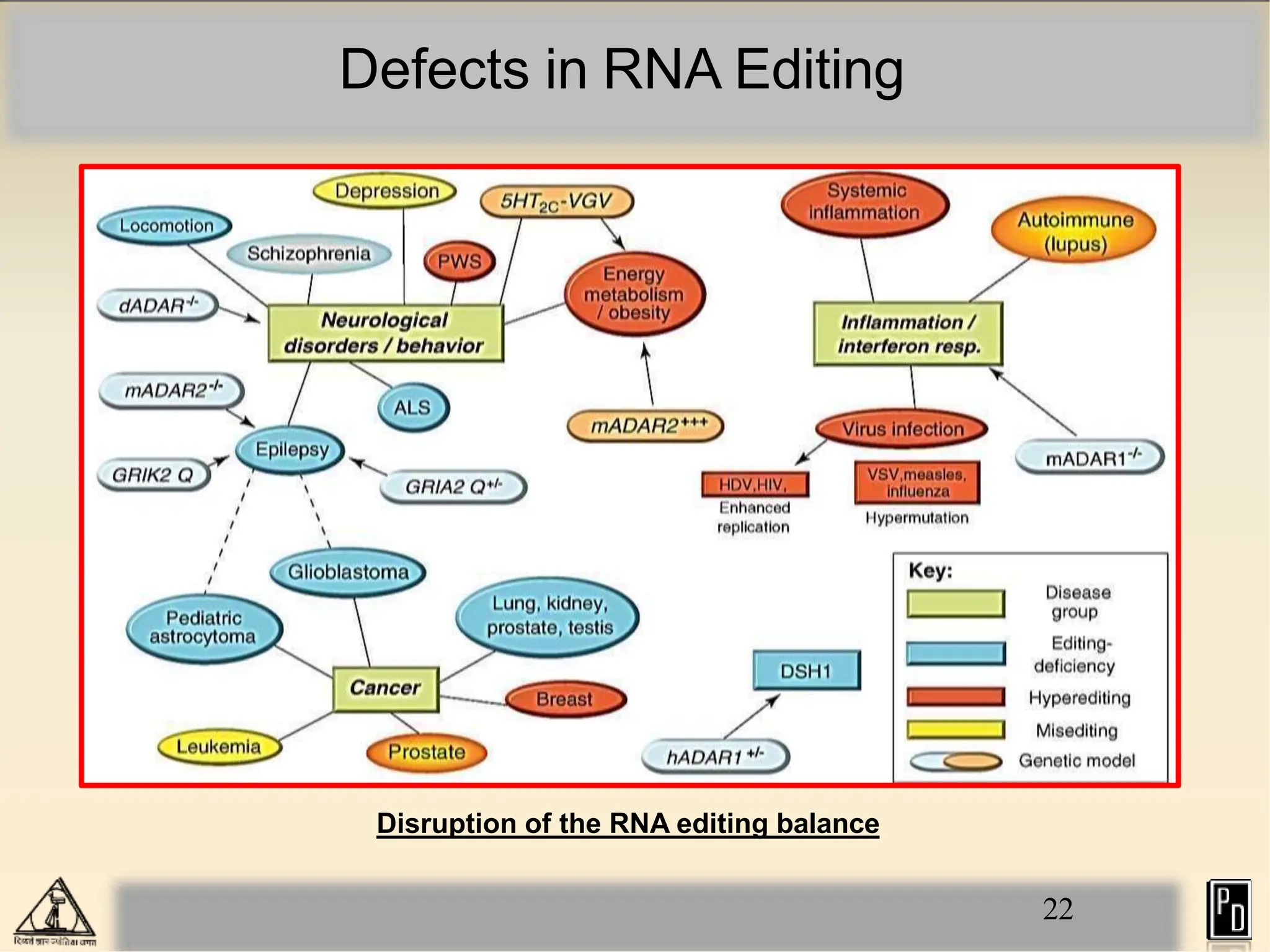
Defects in RNA Editing
Disruption of the RNA editing balance
22
Tools of RNA Editing – CRISPR
23
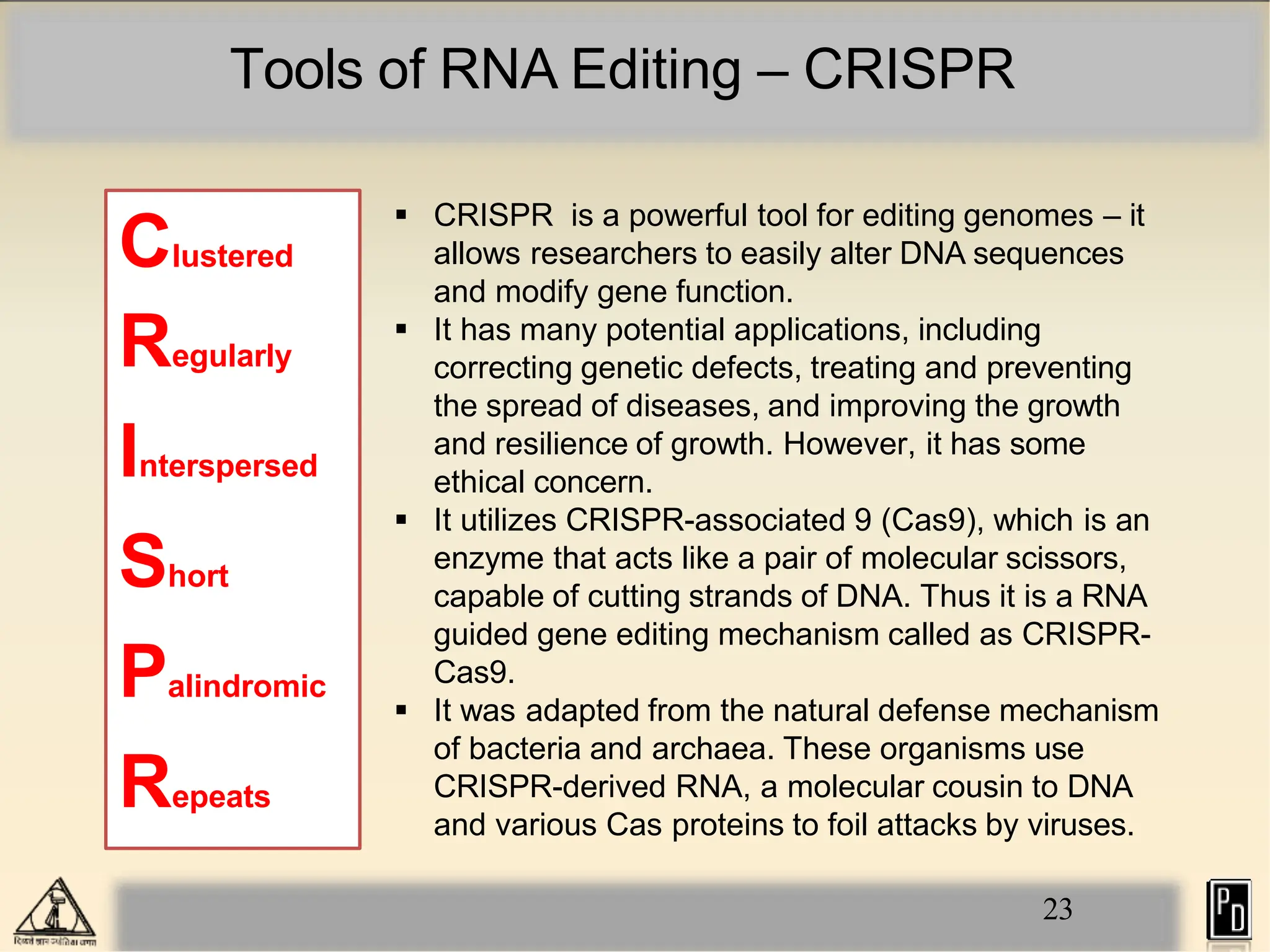
 CRISPR is a powerful tool for editing genomes – it
allows researchers to easily alter DNA sequences
and modify gene function.
 It has many potential applications, including
correcting genetic defects, treating and preventing
the spread of diseases, and improving the growth
and resilience of growth. However, it has some
ethical concern.
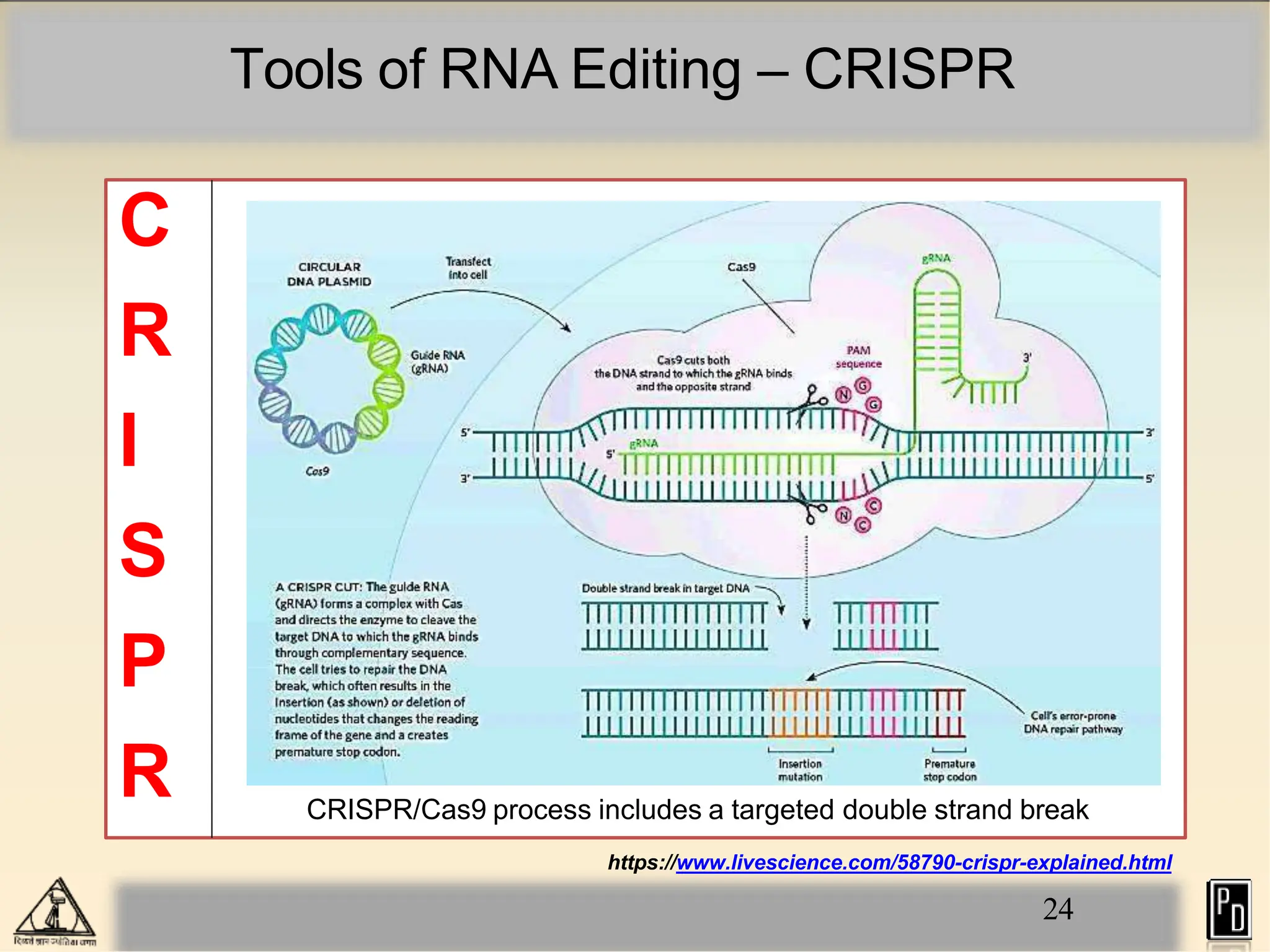
 It utilizes CRISPR-associated 9 (Cas9), which is an
enzyme that acts like a pair of molecular scissors,
capable of cutting strands of DNA. Thus it is a RNA
guided gene editing mechanism called as CRISPR-
Cas9.
 It was adapted from the natural defense mechanism
of bacteria and archaea. These organisms use
CRISPR-derived RNA, a molecular cousin to DNA
and various Cas proteins to foil attacks by viruses.
Clustered
Regularly
Interspersed
Short
Palindromic
Repeats
Tools of RNA Editing – CRISPR
C
R
I
S
P
R CRISPR/Cas9 process includes a targeted double strand break
24
https://www.livescience.com/58790-crispr-explained.html
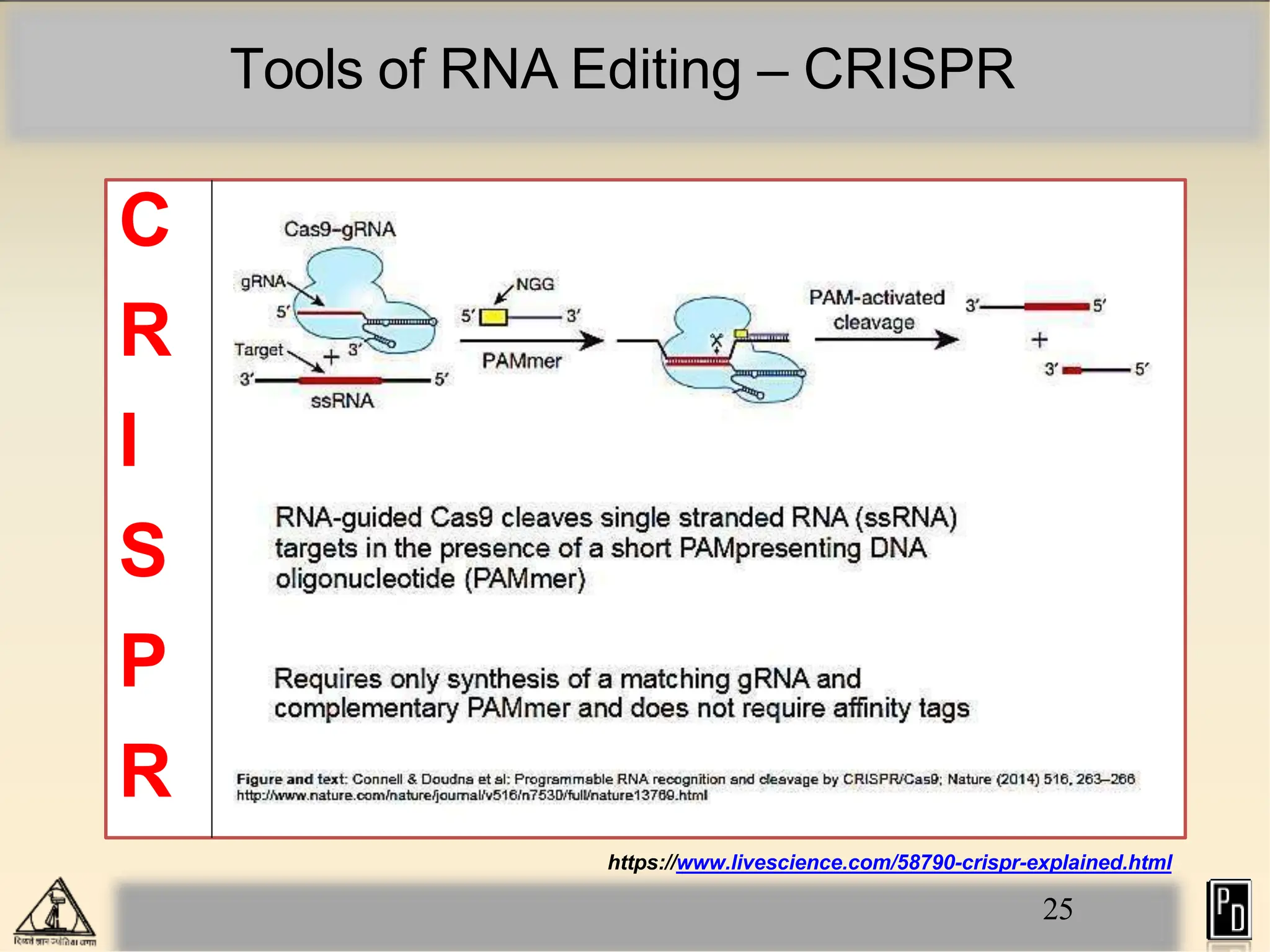
Tools of RNA Editing – CRISPR
C
R
I
S
P
R
https://www.livescience.com/58790-crispr-explained.html
25
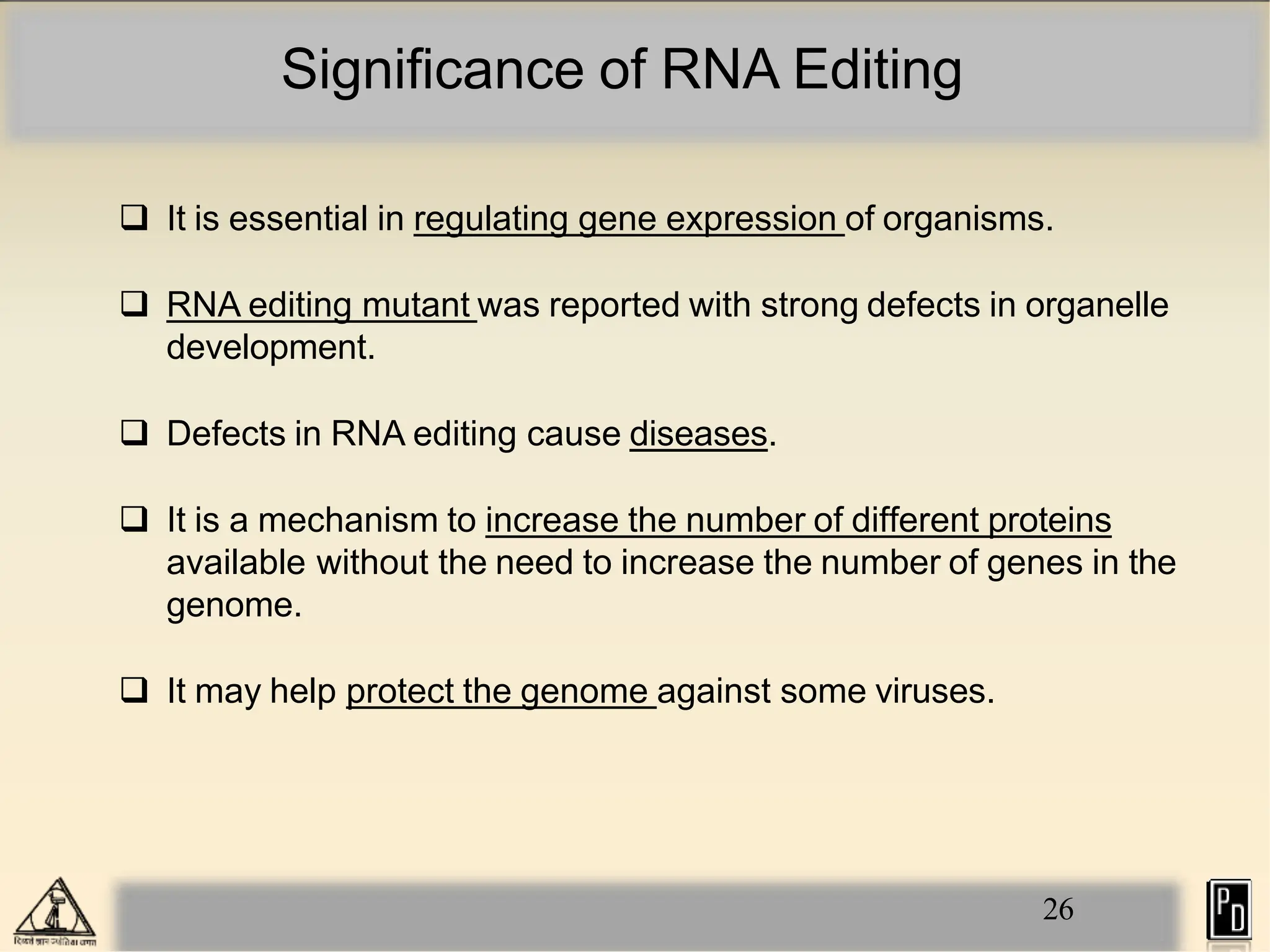
Significance of RNA Editing
26
 It is essential in regulating gene expression of organisms.
 RNA editing mutant was reported with strong defects in organelle
development.
 Defects in RNA editing cause diseases.
 It is a mechanism to increase the number of different proteins
available without the need to increase the number of genes in the
genome.
 It may help protect the genome against some viruses.
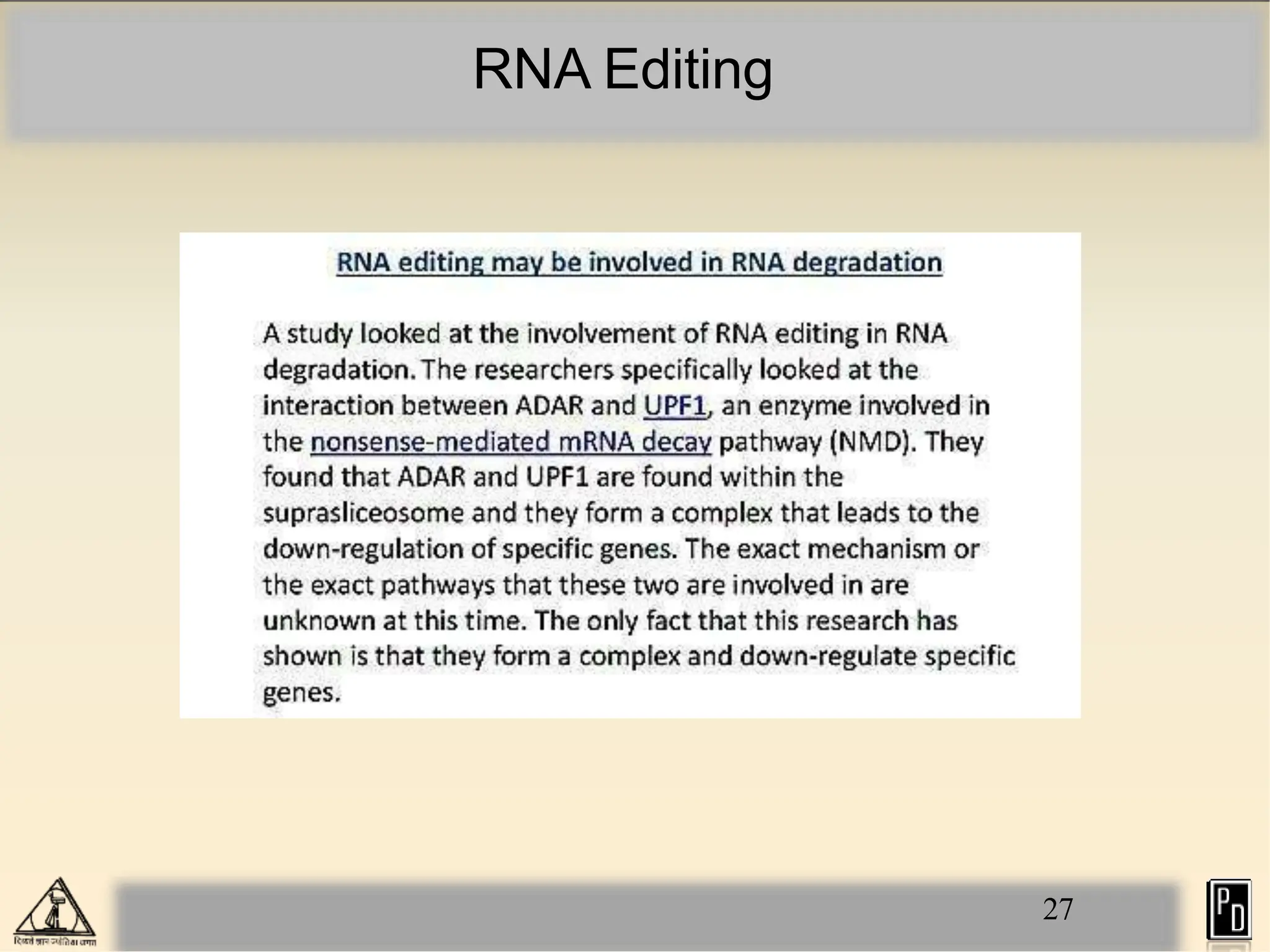
RNA Editing
27
Further reading
28
 Watson J.D., Baker T.A., Bell S.P., Gann A., Levine M., Losick R. 2013.
Molecular Biology of the Gene, 7th Edition. Pearson education, London,
UK.
 Alberts B., Johnson A., Lewis J., Raff M., Roberts K., Walter P. 2002.
Molecular Biology of the Cells. Garland Science, New York, USA.
 Lodish H., Berk A., Lawrence Zipursky S., Matsudaira P., Baltimore D.,
Darnell J.E.. 2000. Molecular Cell Biology. W. H. Freeman and Company,
New York, USA.
 Krebs J.E., Goldstein E.S., Kilpatrick S.T. 2017. Lewin’s Genes XII. Jones
and Bartlett Publishers, Inc., Burlington, MA, USA.
 Slotkin W. & Nishikura K. 2013. Adenosine-to-inosine RNA editing and
human disease. Genome Medicine 5:105

1088873494RNA Editing: RNA Editing and CRISPR technology

  • 1.
    M.Sc.Zoology Semester IMolecular Biology RNA Editing Praveen Deepak Assistant Professor of Zoology Swami Sahjanand College Jehanabad
  • 2.
    Introduction 2  RNA editingis a process of RNA modification in which discrete changes are made in the specific nucleotide sequences within an RNA molecule after transcription without splicing.  In a simple way, it can be defined as any type of changes in RNA transcript sequence without RNA splicing called RNA editing.  It was previously thought as rare phenomenon, but it is widespread  It was firstly discovered in mitochondria of Trypanosomes.  It takes place in cell nucleus and cytosol as well as mitochondria and plastids.  RNA editing enables a cell to obtain large diversity in proteins by using small number of genes.  It is mainly achieved by insertion, modification or deletion of one or more bases.  It happens after transcription, also happens in Poly(A) tail.
  • 3.
    RNA Editing It isreflective of mechanism of translational control in biological system 3 The mechanism of editing: 3 ´to 5 ´end; Clue: Partial edit only at but not 5 ´end
  • 4.
    RNA Editing  Discoveredin Trypanosome mitochondria; take place abundantly in kinteoplast.  Discovered by K. Stuart and L. Simpson. 4
  • 5.
    RNA Editing 5 Types ofRNA editing RNA editing is mainly of two types:  Base modification  Site specific deamination of cytosine and adenine – A to I, C to U, U to C, etc.  Enzyme deaminase is involved.  Insertion and /or deletion  Guide RNA mediated site specific insertion and deletion of uridine base (U insertion/deletion and so on), seen in kinteoplastid protozoa  Mono/di nucleotide insertion, seen in Physarum  Nucleotide replacement, seen in Acanthamoeba tRNAs
  • 6.
    RNA Editing 6 Types ofRNA editing Types Genomic factors Resources A-to-I editing RNA-specific adenosine deaminases ADARs Glutamate receptor, hepatitis delta virus, etc. C-to-U editing U-to-C Pentatricopeptide repeat (PPR) protein containing the DYW motif ApoB mRNA(Gln-Stop)#; NF1(Arg-Stop) WT1 mRNA(Leu-Pro) tRNA editing HsmtPheRS and HsctPheRS* Alzheimer’s, atherosclerosis, and cataractogenesis, Sno RNA-mediated nucleotide modification of rRNAs Serotonin 2C receptor (5HTr2c) The Prader-Willi syndrome^ G-insertion editing Total unedited RNA Paramyxoviruses
  • 7.
    RNA Editing Base modification: Deaminationof cytosine and adenine. — Deamination of cytidine is tissue or site specific, for example, deamination of cytosine in mRNA of ApoB100 (apolipoprotein B 100) genes to produce ApoB48. Monika LöfflerElke Zameitat, in Encyclopedia of Biological Chemistry, 2004 7
  • 8.
  • 9.
    RNA Editing Base modification: A cytidine deaminase activity is involved in Apobec protein.  Another protein ACF (apobec complimentation factor) is also required.  Apobec + ACF complex called as editisome.  Both recognize the sequences flanking the C to edited. 9
  • 10.
    RNA Editing Base modification: Deaminationof adenine and inosine — Deamination of adenine and inosine (A to I modification) usually occurs in secondary strructure regions of RNA. — Set of protein required for deamination of adenosine called ADAR or dsRNA dependent — This inosine can be base paired with wither A, T, G or C. — Inosine is recognized as guanine during translation. — Example includes different types of Glut receptors for insulin. 10
  • 11.
    RNA Editing Base modification:Deamination of adenine and inosine Slotkin & Nishikura Genome Medicine 2013; 5, 105  ADAR enzymes catalyze the A-to-I hydrolytic deamination reaction, by which an adenosine loses an amine group.  There are four main proteins of the ADAR enzyme family: two isoforms of ADAR1 (p110 and p150), ADAR2 and ADAR3.  All of these enzymes contain a conserved deaminase domain, shown in blue. The double- stranded (ds)RNA-binding domains, shown in purple, determine substrate specificity.  The two ADAR1 isoforms differ in their Z-DNA-binding domains, shown in green.  ADAR3 contains an arginine-rich domain, shown in pink, which binds single-stranded RNA. 11
  • 12.
    RNA Editing Base modification:Deamination of adenine and inosine 12
  • 13.
    RNA Editing 13 Insertion ordeletion  RNA editing through the addition and deletion of uracil has been found in kinetoplasts from the mitochondria of Trypanosoma brucei.  It is sometimes seen in a large fraction of the sites in a gene, therefore it is also called as ‘pan editing’ to distinguish it from typical editing of one or a few sites.  It starts with the base-pairing of the unedited primary transcript with a guide RNA (gRNA), which contains complementary sequences to the regions around the insertion/deletion points.  The newly formed double-stranded region is then enveloped by an editosome, a large multi-protein complex that catalyzes the editing.  The editosome opens the transcript at the first mismatched nucleotide and starts inserting uridine.  The inserted uridine base-pairs with the guide RNA, and insertion continues as long as A or G is present in the guide RNA and stops when a C or U is encountered.  The inserted nucleotide then causes a frameshift and result in a translated protein that differs from its gene.  The mechanism involves an endonucleolytic cut at the mismatch point between the guide RNA and the unedited transcript by editosome.
  • 14.
    RNA Editing 14 Insertion ordeletion  Then Us (uridine) are added from UTP at the 3 ´end of the mRNA by one of the enzyme of the complex called terminal U-transferase.  Unpaired Us are removed ny another set of enzymes known as U-specific exoribonuclease.  Editing leads to the formation of mRNA complementary to gRNA, which then rejoined at the ends of the edited mRNA transcripts by RNA ligase.  As a consequence, the editosome can edit only in a 3 ´to 5 ´direction along with the primary RNA transcripts.  The complex can act on only a single guide RNA at a time. Therefore, a RNA transcript requiring extensive editing needs more than one guide RNA and editosome complex.
  • 15.
  • 16.
  • 17.
  • 18.
    RNA Editing Editing isfro 18 Guide RNAs Direct Editing in Trypanosomes. m 3’ to 5’ along an unedited RNA.
  • 19.
    RNA Editing 19 RNA editingmechanism  Editing is catalyzed by a multiprotein complexes that have not been fully defined yet.  It contains following four key enzymes as characterized from glycreol gradients of 20S editosome. o Endonuclease: cleavage in vitro occurs at an unpaired nucleotide immediately upstream of the gRNA-mRNA anchor duplex. o Exonuclease: It removes non-base paired U nucleotides after cleavage of deletion editing sites. o Terminal uridyl transferase (TUTase): It adds Us to the 3 ´end of the 5 ´pre- mRNA fragment as specified by the gRNA. o RNA II ligase: The natural editing ligase substrates are nicked dsRNAs that are completely base-paired after the correct addition or removal of U nucleotides. o Helicase: It provides ATP-dependent unwinding activity in RNA editing, thus it is involved in gRNA displacement directly from gRNA/edited mRNA duplex or indirectly, to allow 5 ´gRNA to form an anchor duplex with the edited mRNA to initiate another block of editing. Examples include REH1 (RNA editing helicase 1) in Trypanosoma. o Other 20S editosome proteins
  • 20.
    RNA Editing RNA editingmechanism TUTase, or terminal uridylyl transferase, adds U(s) to the 3’ end created by cleavage of the pre- mRNA 20 Involvement of Enzymes in RNA Editing
  • 21.
  • 22.
    Defects in RNAEditing Disruption of the RNA editing balance 22
  • 23.
    Tools of RNAEditing – CRISPR 23  CRISPR is a powerful tool for editing genomes – it allows researchers to easily alter DNA sequences and modify gene function.  It has many potential applications, including correcting genetic defects, treating and preventing the spread of diseases, and improving the growth and resilience of growth. However, it has some ethical concern.  It utilizes CRISPR-associated 9 (Cas9), which is an enzyme that acts like a pair of molecular scissors, capable of cutting strands of DNA. Thus it is a RNA guided gene editing mechanism called as CRISPR- Cas9.  It was adapted from the natural defense mechanism of bacteria and archaea. These organisms use CRISPR-derived RNA, a molecular cousin to DNA and various Cas proteins to foil attacks by viruses. Clustered Regularly Interspersed Short Palindromic Repeats
  • 24.
    Tools of RNAEditing – CRISPR C R I S P R CRISPR/Cas9 process includes a targeted double strand break 24 https://www.livescience.com/58790-crispr-explained.html
  • 25.
    Tools of RNAEditing – CRISPR C R I S P R https://www.livescience.com/58790-crispr-explained.html 25
  • 26.
    Significance of RNAEditing 26  It is essential in regulating gene expression of organisms.  RNA editing mutant was reported with strong defects in organelle development.  Defects in RNA editing cause diseases.  It is a mechanism to increase the number of different proteins available without the need to increase the number of genes in the genome.  It may help protect the genome against some viruses.
  • 27.
  • 28.
    Further reading 28  WatsonJ.D., Baker T.A., Bell S.P., Gann A., Levine M., Losick R. 2013. Molecular Biology of the Gene, 7th Edition. Pearson education, London, UK.  Alberts B., Johnson A., Lewis J., Raff M., Roberts K., Walter P. 2002. Molecular Biology of the Cells. Garland Science, New York, USA.  Lodish H., Berk A., Lawrence Zipursky S., Matsudaira P., Baltimore D., Darnell J.E.. 2000. Molecular Cell Biology. W. H. Freeman and Company, New York, USA.  Krebs J.E., Goldstein E.S., Kilpatrick S.T. 2017. Lewin’s Genes XII. Jones and Bartlett Publishers, Inc., Burlington, MA, USA.  Slotkin W. & Nishikura K. 2013. Adenosine-to-inosine RNA editing and human disease. Genome Medicine 5:105