Most Essential Learning Competency
 Trace how the seafloor spreading theory was develop by the
scientist.
 Identify the different evidences that support the seafloor spreading
 Explain how the evidences support the seafloor spreading
 Appreciate the significance of this evidences in the theory of plate
tectonics
● Enumerate the lines of evidence that support plate movement
Alfred Wegener
Despite the evidences presented in his
theory, his idea that the continents were once
joined together was not accepted by the
scientific society until 1960s.
Complete the concept map.
COIN TIN
ANTS
CONTINENTS
SEE FLOUR
SEAFLOOR
SHH BREAD
SPREAD
TEA YOU RAY
THEORY
EVE AID DANCE
EVIDENCE
MOLE TIN RACKS
MOLTEN ROCKS
EVIDENCES SUPPORTING
SEAFLOOR SPREADING
THEORY
Purpose of the Seafloor studies during WWII
 To understand the topography
of the sea floor
 To find hiding places for both
allied and enemy submarines
enabled scientists to make
better observations and gather
new information about the
ocean floor.
SONARS
SUBMERSIB
LES
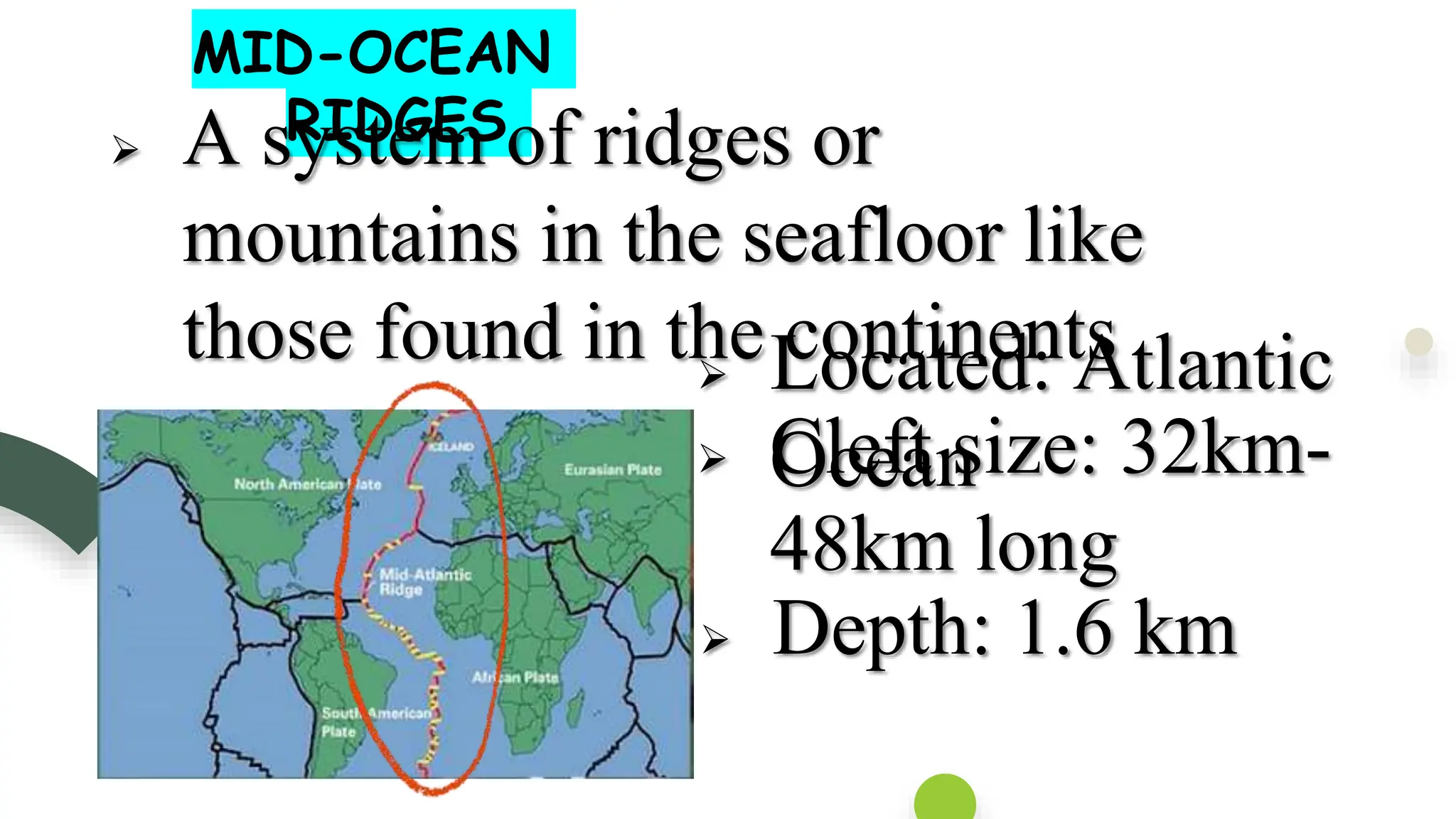
MID-OCEAN
RIDGES
 A system of ridges or
mountains in the seafloor like
those found in the continents
 Located: Atlantic
Ocean
 Cleft size: 32km-
48km long
 Depth: 1.6 km
Harry Hammond Hess
Robert S. Dietz
 The process of
seafloor spreading
allowed the
creation of new
bodies of water.
one of the most active sites of
seafloor spreading, with more
than 14 centimeters every year
What happens to the ocean floor at deep ocean
trenches?
Continental Plate
Oceanic Plate
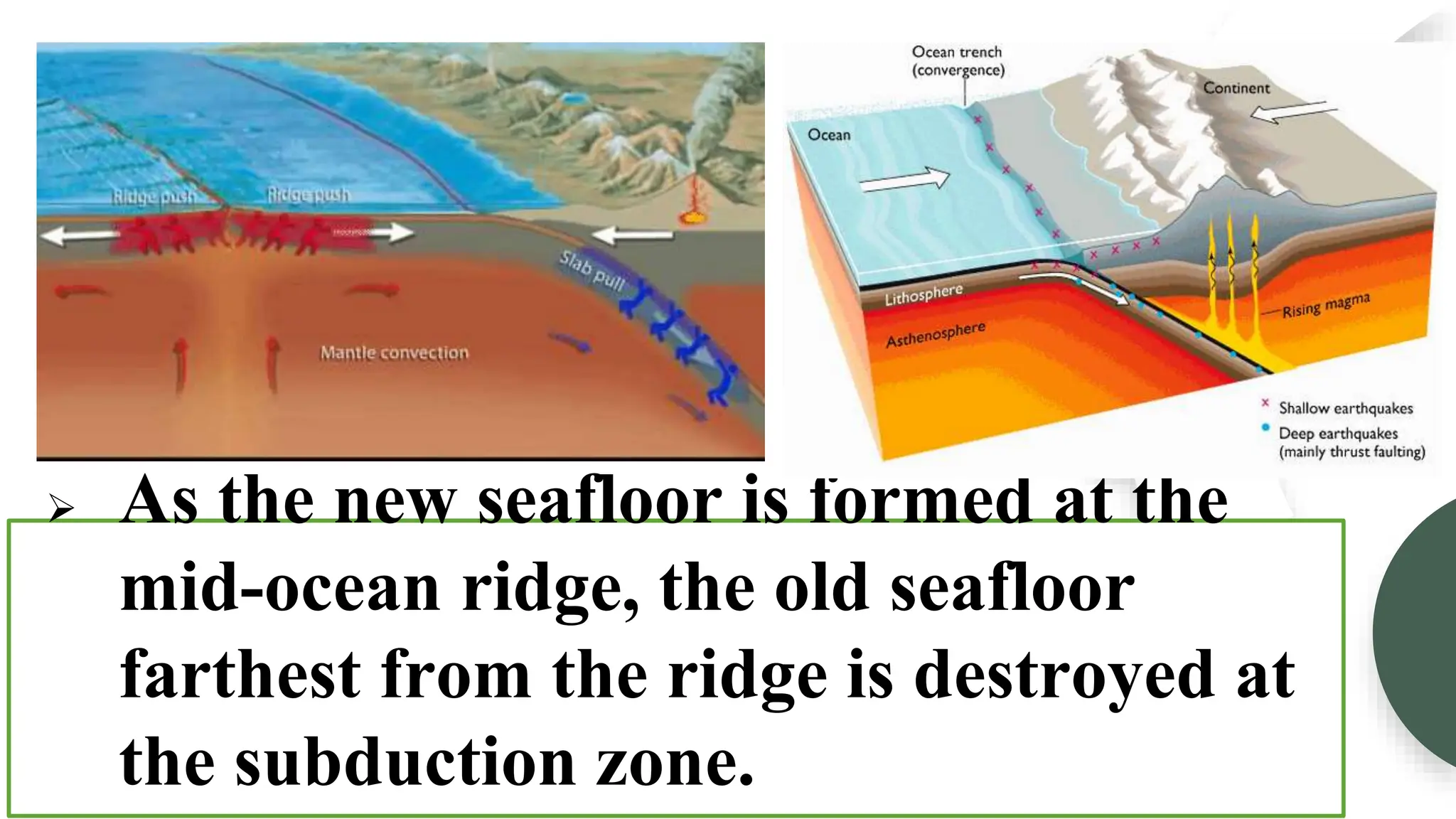
 As the new seafloor is formed at the
mid-ocean ridge, the old seafloor
farthest from the ridge is destroyed at
the subduction zone.
 The rate of formation of a new seafloor is
not always as fast as the destruction of the
old seafloor at the subduction zone.
Getting
smaller
Getting wider
ON is
FASTER
THAN
SEAFLOOR
SPREADIN
G, the ocean
_ _ _ _ _ _ _ _
SPREADIN
G is
GREATER
THANK the
SUBDUCTI
ON, then the
ocean gets _ _
_ _ _
Evidences that
explain/
support
Seafloor
Spreading
Theory
AGE OF ROCKS
1. Rocks are younger at the mid-ocean
ridge.
2. Rocks far from the mid-ocean ridge are
older.
3. Sediments are thinner at the ridge.
4. Rocks at the ocean floor are younger
than those at the continents.
It states that continents moved through
unmoving oceans and that larger and
sturdier continents broke through the
ocean crust.
It shows that the ocean is the actual site
of tectonic activity.
Evidences that
explain/
support
Seafloor
Spreading
Theory
-Magnetic evidence in rocks.
C
REVERSA
L
Seafloor spreading was strngthened
with discovery that the magnetic rocks
near the ridge follow a pattern aside
from the fact that rocks near the ridge
are remarkably younger than those
farther from the ridge.
The Earth’s magnetic field is a DIPOLE,
North and South Pole.
Magnetic Compass
Direction of the earth
Show earth magnetic field
MAGNETIC REVERSAL
Simple Experiment
1. Using a magnet rub the needle to the magnet 20 times.
2. Slowly place the plastic bottle cap at the middle and place the needle on top of it.
3. Observe what happen.
4. How does the needle work?
The needle became
magnetized after
rubbing the magnet
against it, and once
magnetized, it will have
a north and south pole,
exactly like other
magnets.
Needle
The plastic bottle cap
on the water’s surface
was able to move freely
after it was submerged.
Plastic bottle cap
The magnetized needle
then force the plastic
cap to spin around until
the needle’s North and
South poles aligned
with the Earth’s N and
• Also called magnetic
‘fip” of the Earth
• It happens when the
geographic North Pole
is transformed into a
South Magnetic Pole
or vice versa.
Magnetic
Reversal
• The occurrence of
magnetic reversals
can be explained
through the magnetic
patterns in magnetic
rocks, esp.those found
in the ocean floor..
Magnetic
Reversal
• When lave solidifies,
iron bearing mineral
crystallize.
• The minerals behave
like tiny compasses
and align with the
Earth’s magnetic field.
Magnetic
Reversal
Over the last 10 million years, there
has been an average of 4-5
reversals per milion years
MAGNETIC
REVERSAL
10 Science  Seafloor Spreading theory.pptx

10 Science Seafloor Spreading theory.pptx

  • 1.
    Most Essential LearningCompetency  Trace how the seafloor spreading theory was develop by the scientist.  Identify the different evidences that support the seafloor spreading  Explain how the evidences support the seafloor spreading  Appreciate the significance of this evidences in the theory of plate tectonics ● Enumerate the lines of evidence that support plate movement
  • 2.
    Alfred Wegener Despite theevidences presented in his theory, his idea that the continents were once joined together was not accepted by the scientific society until 1960s.
  • 3.
  • 5.
  • 6.
  • 7.
  • 8.
  • 9.
  • 10.
  • 11.
  • 12.
    Purpose of theSeafloor studies during WWII  To understand the topography of the sea floor  To find hiding places for both allied and enemy submarines
  • 13.
    enabled scientists tomake better observations and gather new information about the ocean floor.
  • 14.
  • 15.
    MID-OCEAN RIDGES  A systemof ridges or mountains in the seafloor like those found in the continents  Located: Atlantic Ocean  Cleft size: 32km- 48km long  Depth: 1.6 km
  • 16.
  • 18.
     The processof seafloor spreading allowed the creation of new bodies of water.
  • 20.
    one of themost active sites of seafloor spreading, with more than 14 centimeters every year
  • 21.
    What happens tothe ocean floor at deep ocean trenches? Continental Plate Oceanic Plate
  • 22.
     As thenew seafloor is formed at the mid-ocean ridge, the old seafloor farthest from the ridge is destroyed at the subduction zone.
  • 23.
     The rateof formation of a new seafloor is not always as fast as the destruction of the old seafloor at the subduction zone. Getting smaller Getting wider
  • 24.
    ON is FASTER THAN SEAFLOOR SPREADIN G, theocean _ _ _ _ _ _ _ _ SPREADIN G is GREATER THANK the SUBDUCTI ON, then the ocean gets _ _ _ _ _
  • 25.
  • 26.
  • 27.
    1. Rocks areyounger at the mid-ocean ridge. 2. Rocks far from the mid-ocean ridge are older. 3. Sediments are thinner at the ridge. 4. Rocks at the ocean floor are younger than those at the continents.
  • 28.
    It states thatcontinents moved through unmoving oceans and that larger and sturdier continents broke through the ocean crust. It shows that the ocean is the actual site of tectonic activity.
  • 29.
  • 30.
    -Magnetic evidence inrocks. C REVERSA L
  • 31.
    Seafloor spreading wasstrngthened with discovery that the magnetic rocks near the ridge follow a pattern aside from the fact that rocks near the ridge are remarkably younger than those farther from the ridge.
  • 32.
    The Earth’s magneticfield is a DIPOLE, North and South Pole. Magnetic Compass Direction of the earth Show earth magnetic field
  • 33.
    MAGNETIC REVERSAL Simple Experiment 1.Using a magnet rub the needle to the magnet 20 times. 2. Slowly place the plastic bottle cap at the middle and place the needle on top of it. 3. Observe what happen. 4. How does the needle work?
  • 34.
    The needle became magnetizedafter rubbing the magnet against it, and once magnetized, it will have a north and south pole, exactly like other magnets. Needle The plastic bottle cap on the water’s surface was able to move freely after it was submerged. Plastic bottle cap The magnetized needle then force the plastic cap to spin around until the needle’s North and South poles aligned with the Earth’s N and
  • 35.
    • Also calledmagnetic ‘fip” of the Earth • It happens when the geographic North Pole is transformed into a South Magnetic Pole or vice versa. Magnetic Reversal
  • 36.
    • The occurrenceof magnetic reversals can be explained through the magnetic patterns in magnetic rocks, esp.those found in the ocean floor.. Magnetic Reversal • When lave solidifies, iron bearing mineral crystallize. • The minerals behave like tiny compasses and align with the Earth’s magnetic field.
  • 37.
  • 38.
    Over the last10 million years, there has been an average of 4-5 reversals per milion years MAGNETIC REVERSAL