MS. JERALDEL M. ENCEPTO
7TH GRADE
KINDS OF LINE
PERPENDICULAR
AND PARALLEL
LINES
1. Define and illustrate the different kinds of line.
a. Perpendicular lines
b. Intersecting lines
c. Concurrent lines
d. Parallel lines
e. Skew lines
f. Transversal line
2. Define and illustrate perpendicularity
LEARNING OBJECTIVES:
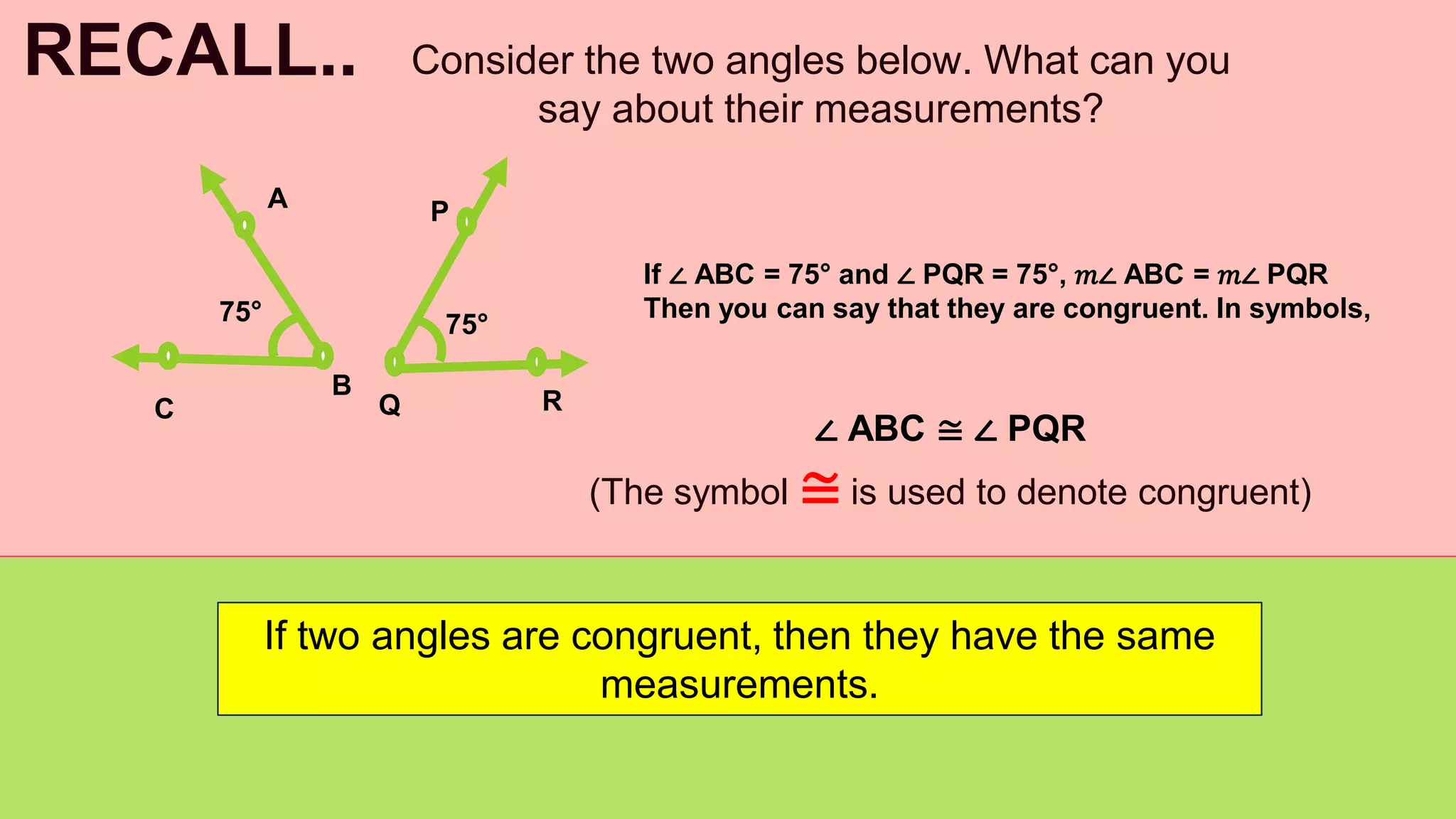
Consider the two angles below. What can you
say about their measurements?
RECALL..
If ∠ ABC = 75° and ∠ PQR = 75°, 𝑚∠ ABC = 𝑚∠ PQR
Then you can say that they are congruent. In symbols,
∠ ABC ≅ ∠ PQR
(The symbol ≅ is used to denote congruent)
If two angles are congruent, then they have the same
measurements.
A
B
C
P
R
Q
75° 75°
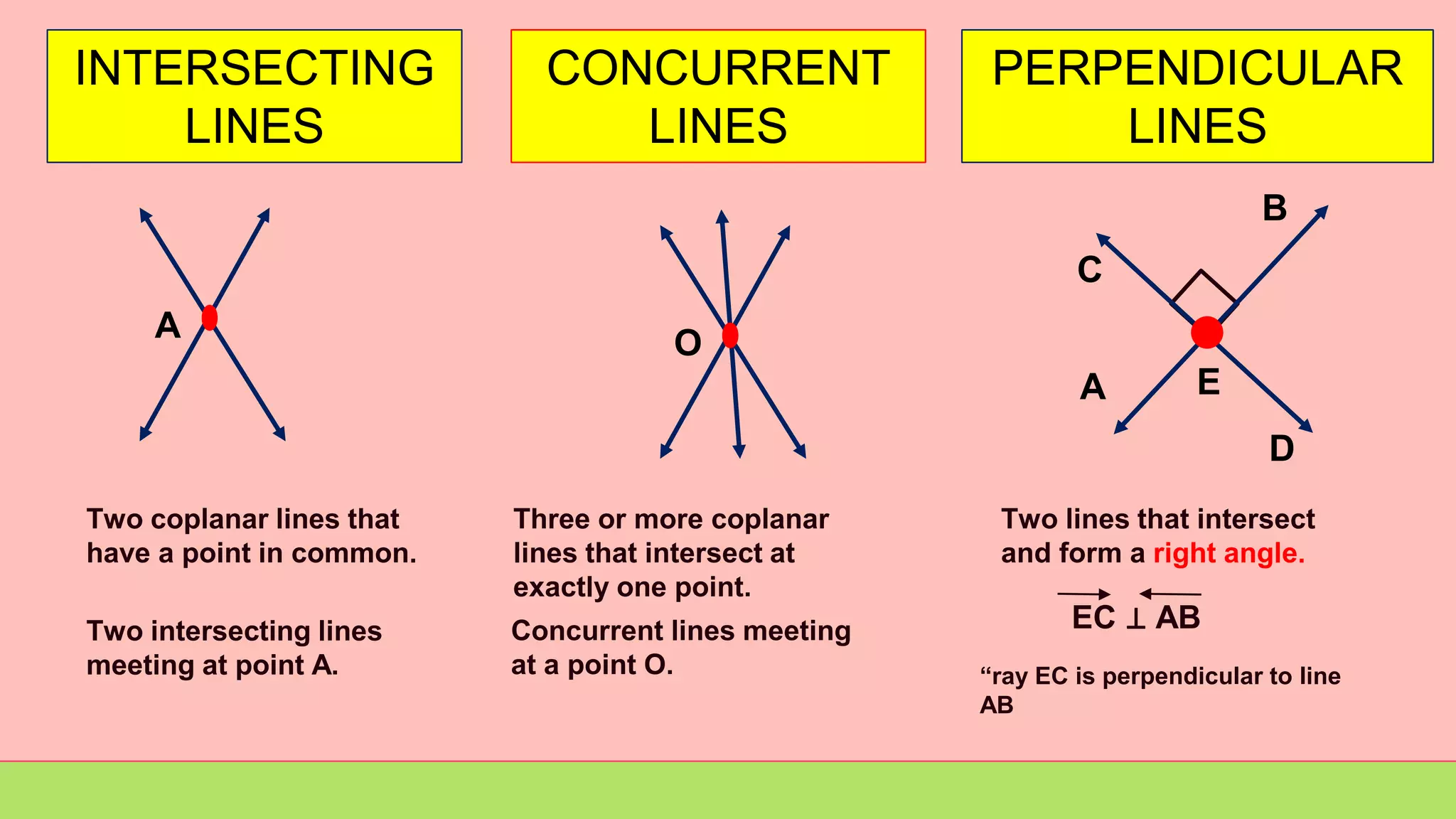
Two coplanar lines that
have a point in common.
INTERSECTING
LINES
CONCURRENT
LINES
PERPENDICULAR
LINES
A
Two intersecting lines
meeting at point A.
Three or more coplanar
lines that intersect at
exactly one point.
Concurrent lines meeting
at a point O.
Two lines that intersect
and form a right angle.
O
EC ⊥ AB
A
B
C
D
E
“ray EC is perpendicular to line
AB
Perpendicular lines
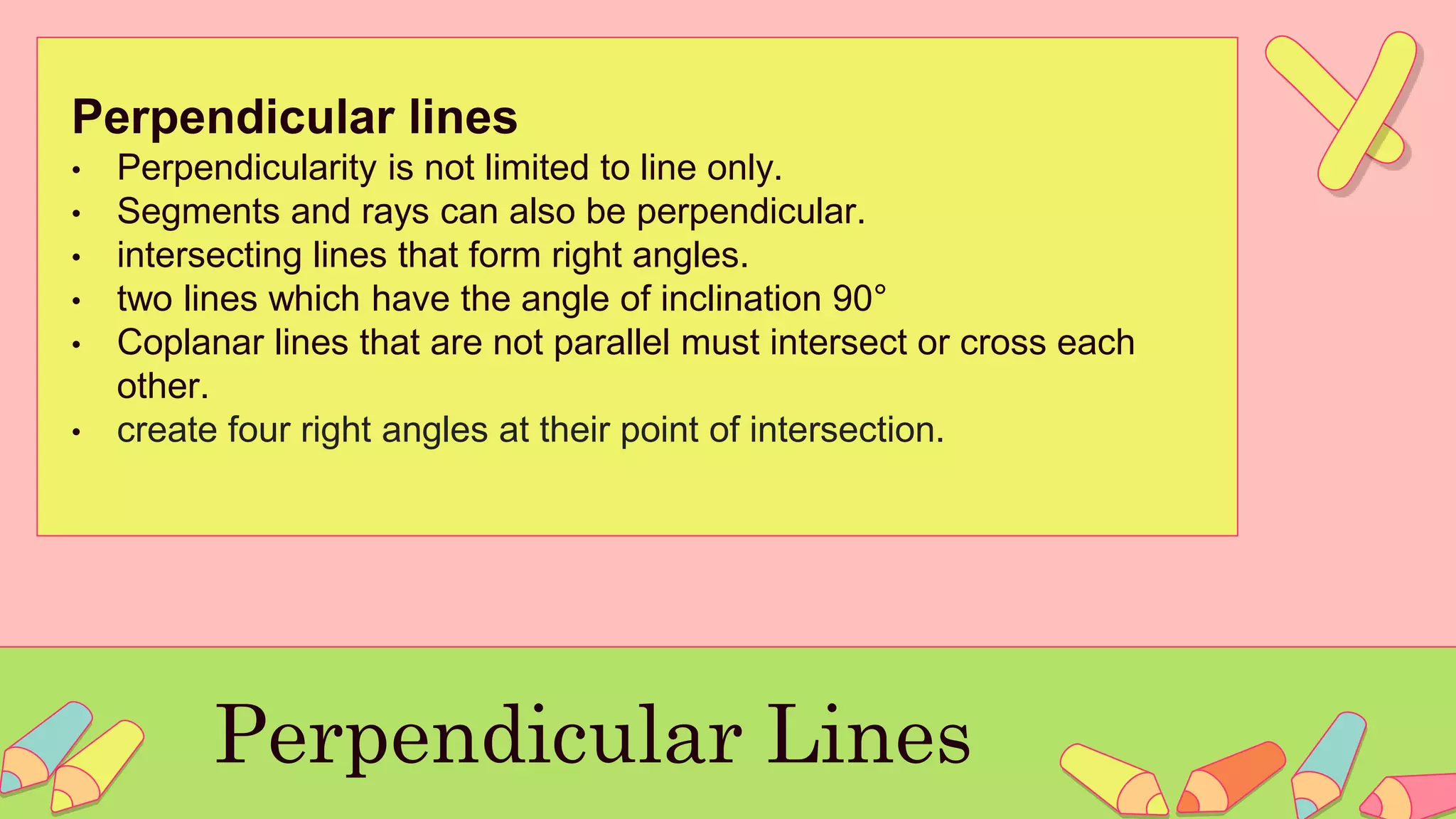
• Perpendicularity is not limited to line only.
• Segments and rays can also be perpendicular.
• intersecting lines that form right angles.
• two lines which have the angle of inclination 90°
• Coplanar lines that are not parallel must intersect or cross each
other.
• create four right angles at their point of intersection.
Perpendicular Lines
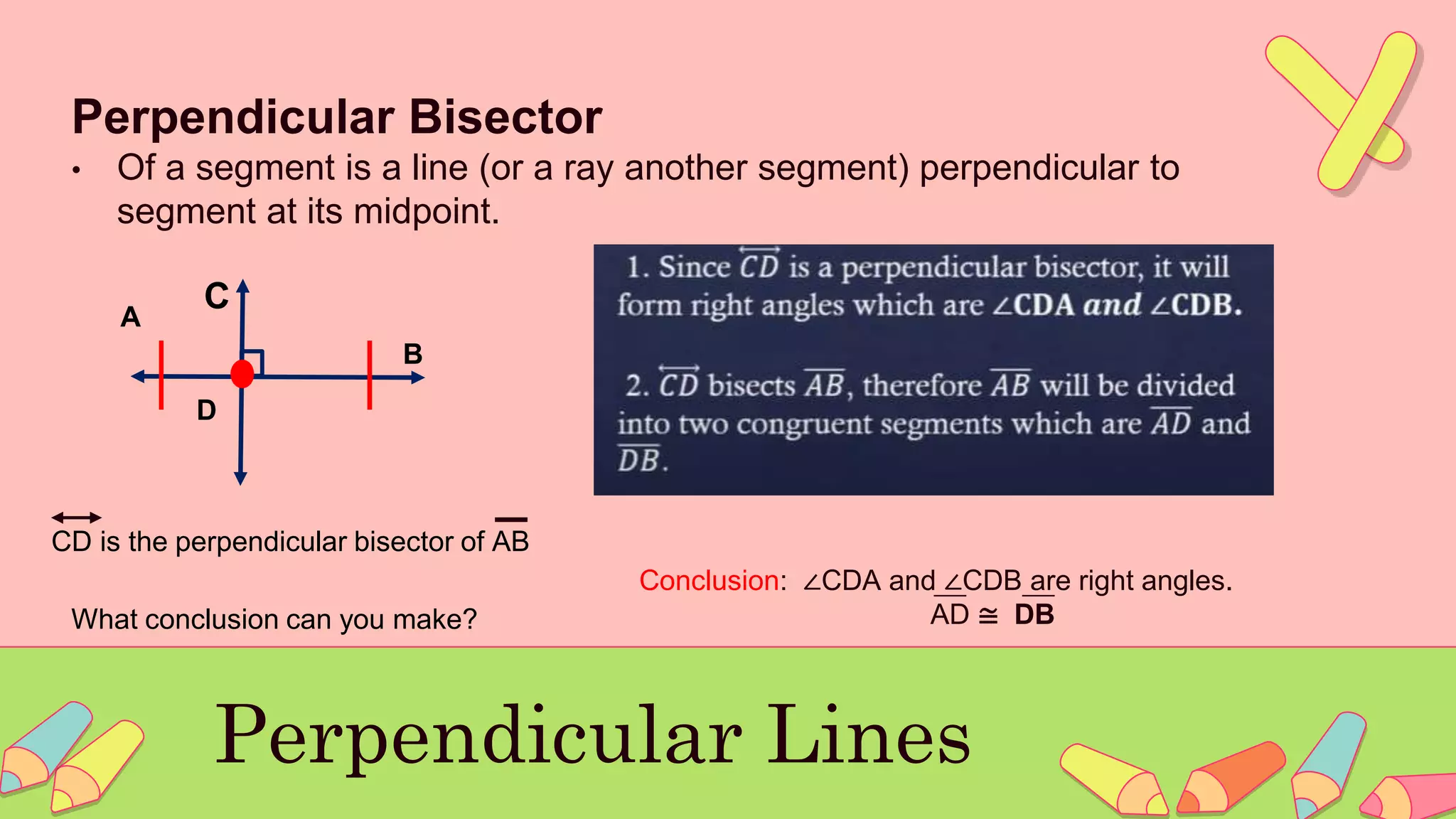
Perpendicular Bisector
• Of a segment is a line (or a ray another segment) perpendicular to
segment at its midpoint.
Perpendicular Lines
A
D
C
B
Conclusion: ∠CDA and ∠CDB are right angles.
AD ≅ DB
CD is the perpendicular bisector of AB
What conclusion can you make?
Examples
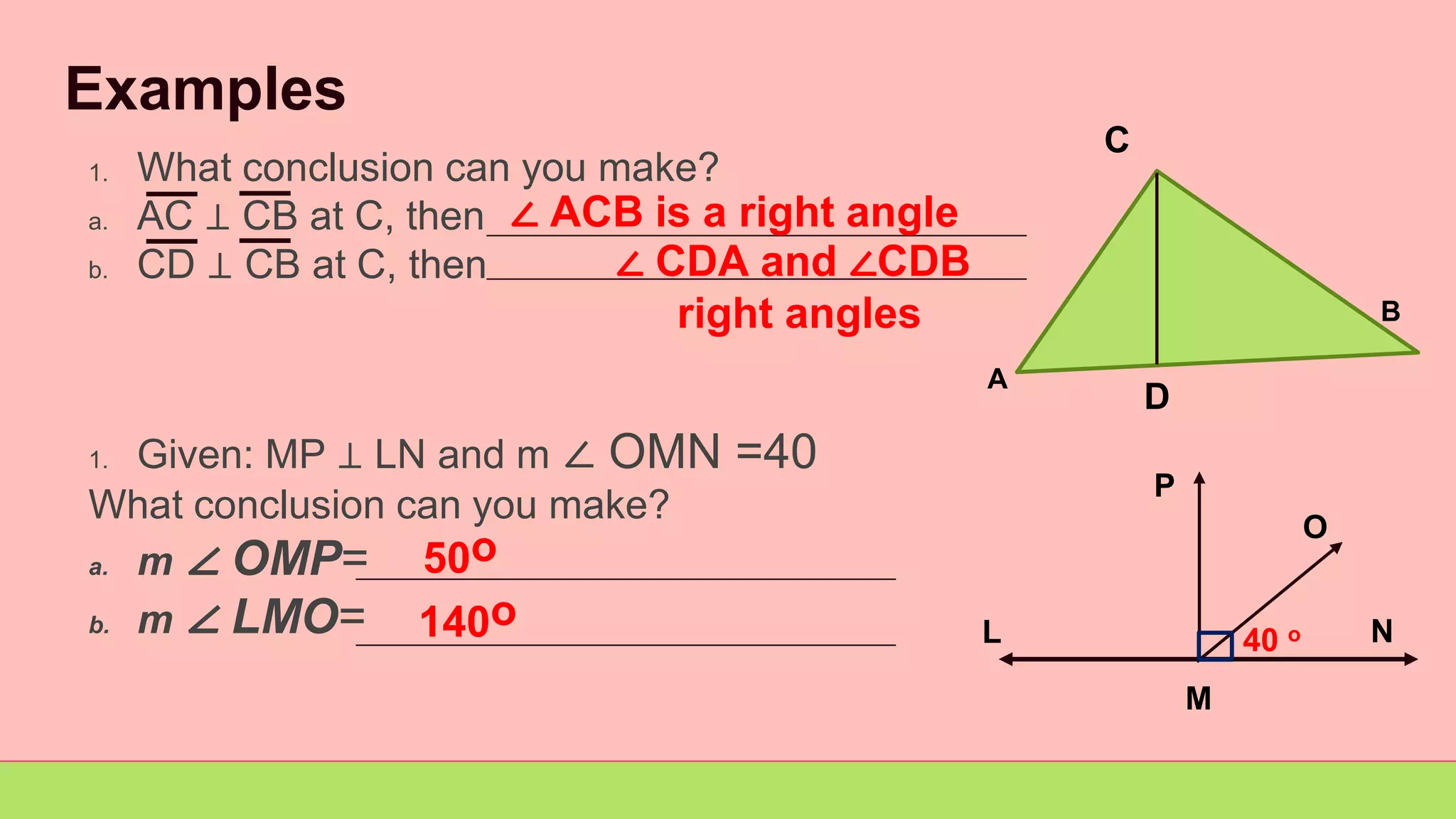
1. What conclusion can you make?
a. AC ⊥ CB at C, then
b. CD ⊥ CB at C, then
A
C
B
D
1. Given: MP ⊥ LN and m ∠ OMN =40
What conclusion can you make?
a. m ∠ OMP=
b. m ∠ LMO= L
P
O
M
N
40 o
∠ ACB is a right angle
∠ CDA and ∠CDB
right angles
50o
140o
Examples
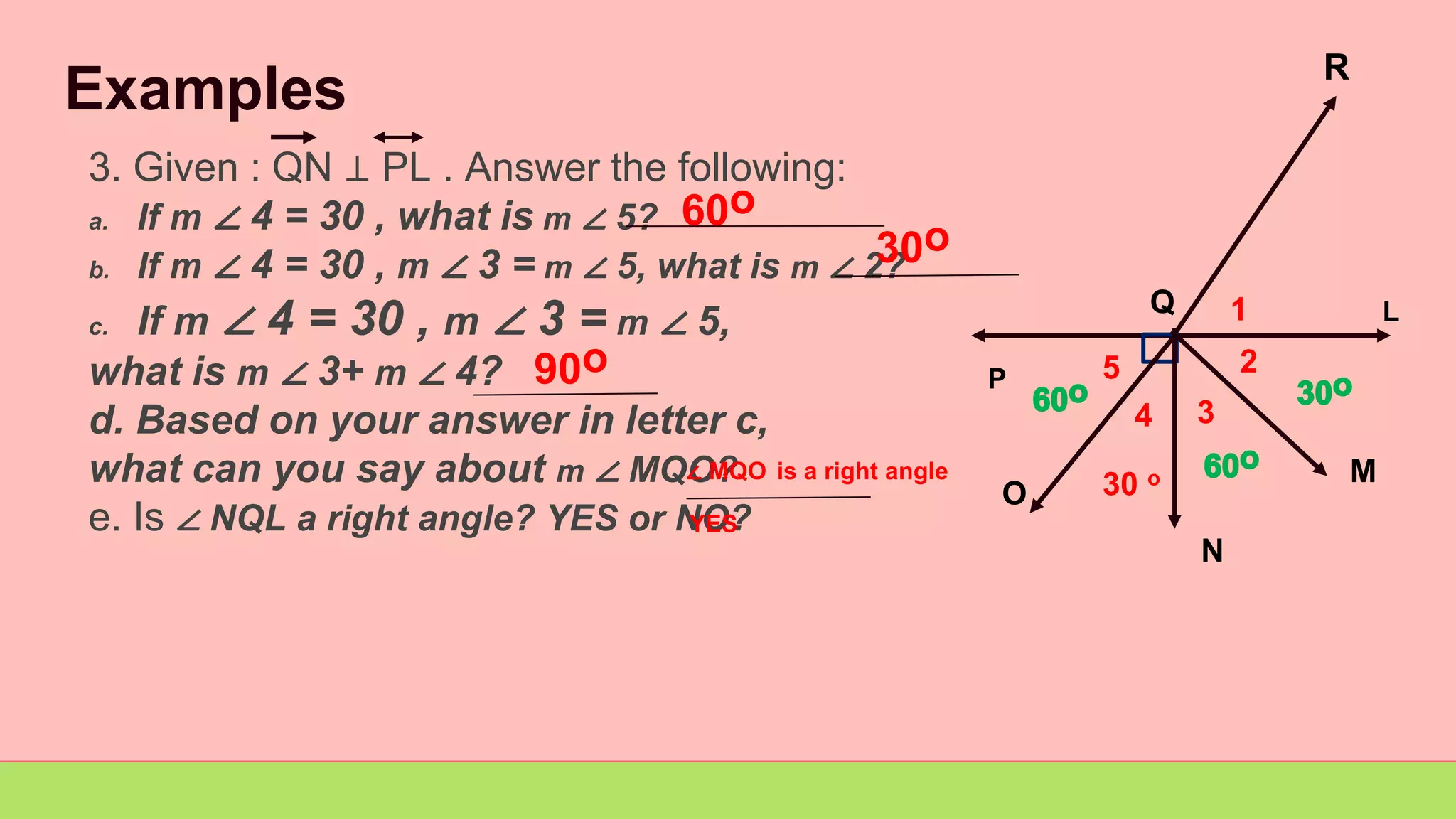
3. Given : QN ⊥ PL . Answer the following:
a. If m ∠ 4 = 30 , what is m ∠ 5?
b. If m ∠ 4 = 30 , m ∠ 3 = m ∠ 5, what is m ∠ 2?
c. If m ∠ 4 = 30 , m ∠ 3 = m ∠ 5,
what is m ∠ 3+ m ∠ 4?
d. Based on your answer in letter c,
what can you say about m ∠ MQO?
e. Is ∠ NQL a right angle? YES or NO?
P
L
R
O
Q
M
N
30 o
60o
30o
5
3
4
2
1
90o
∠ MQO is a right angle
YES
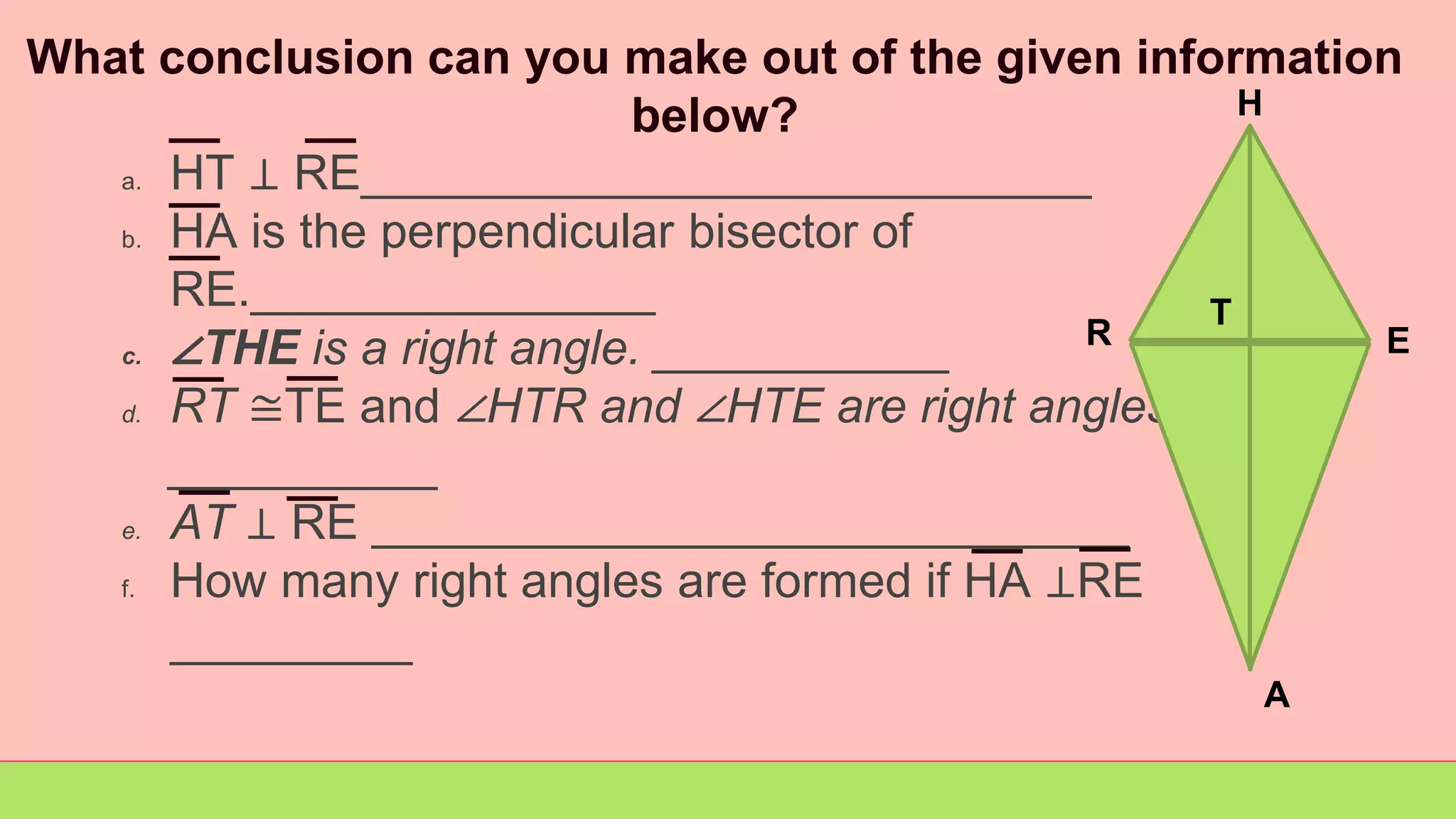
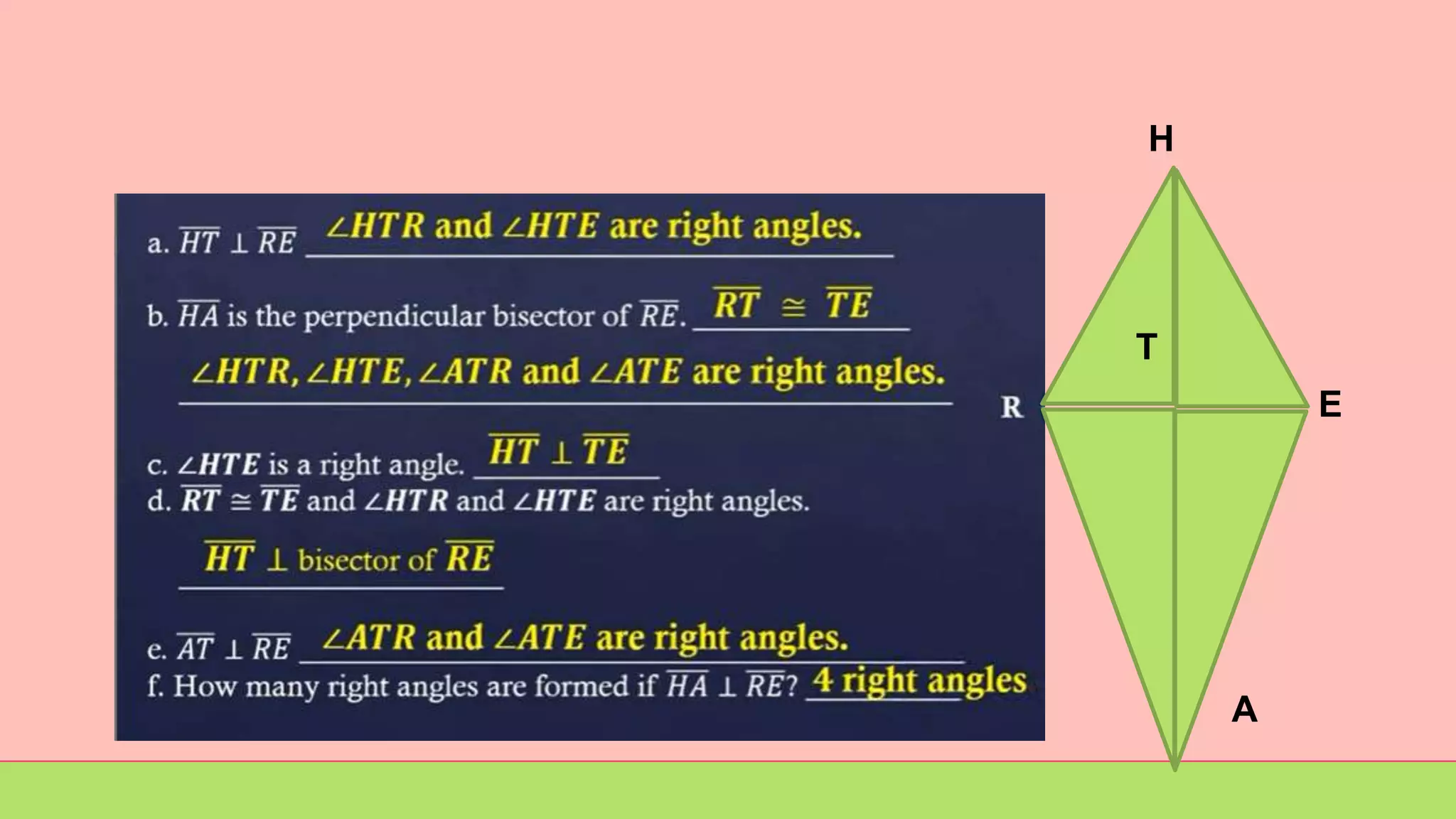
What conclusion can you make out of the given information
below?
a. HT ⊥ RE___________________________
b. HA is the perpendicular bisector of
RE._______________
c. ∠THE is a right angle. ___________
d. RT ≅TE and ∠HTR and ∠HTE are right angles
__________
e. AT ⊥ RE ____________________________
f. How many right angles are formed if HA ⊥RE
_________
R
H
E
A
T
H
E
A
T
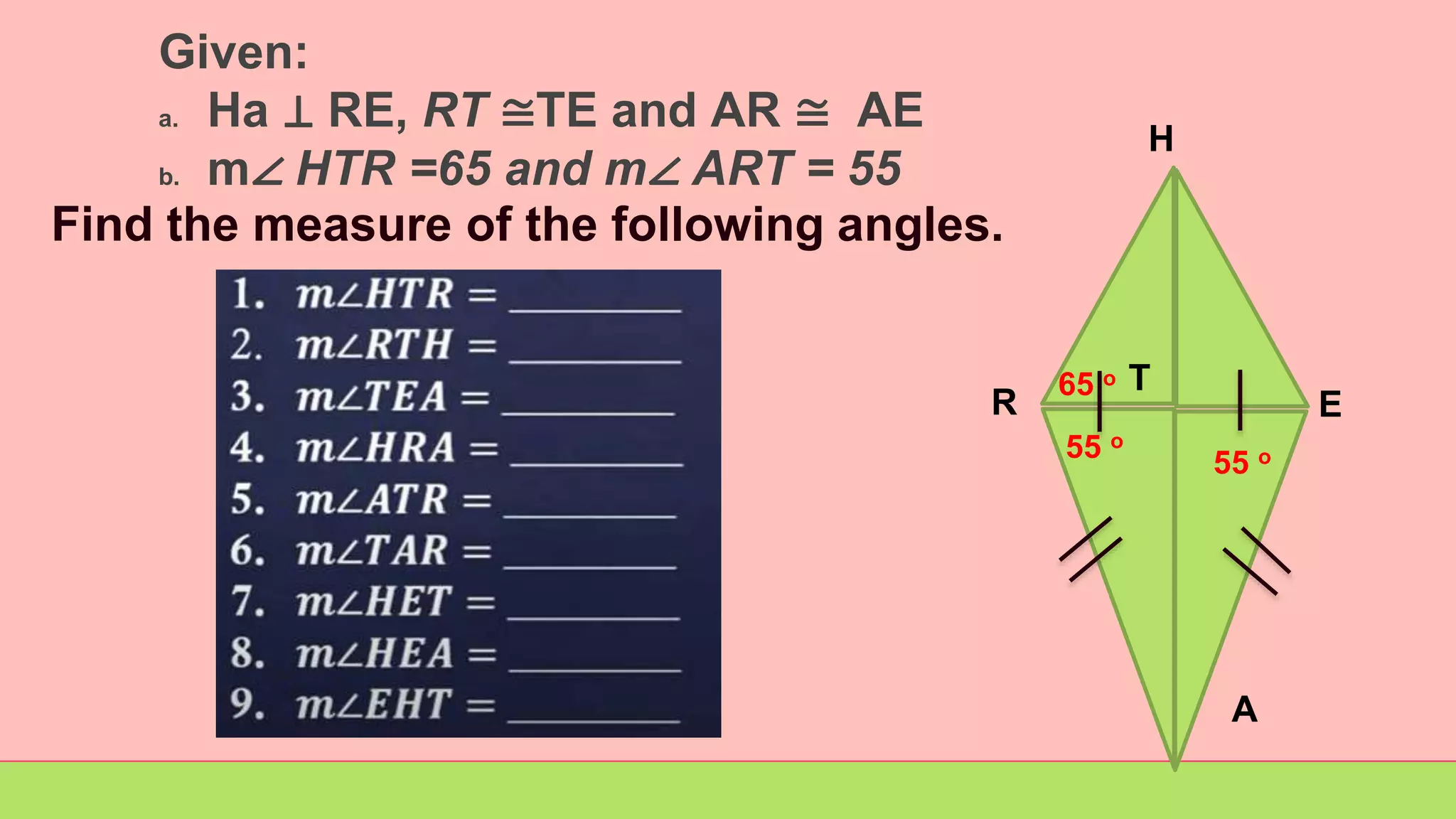
Find the measure of the following angles.
H
E
A
T
Given:
a. Ha ⊥ RE, RT ≅TE and AR ≅ AE
b. m∠ HTR =65 and m∠ ART = 55
R
55 o
55 o
65 o
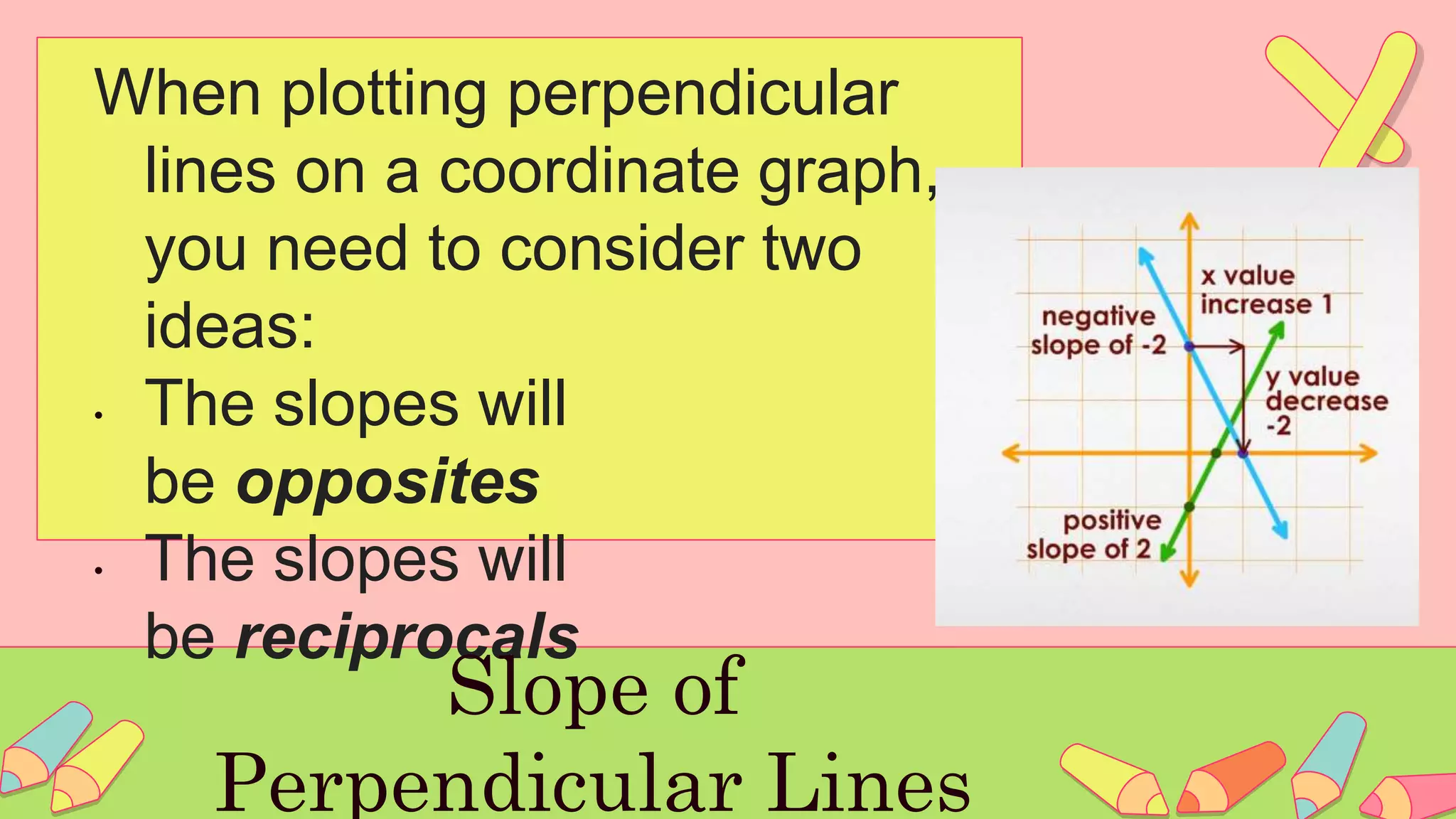
When plotting perpendicular
lines on a coordinate graph,
you need to consider two
ideas:
• The slopes will
be opposites
• The slopes will
be reciprocals
Slope of
Perpendicular Lines
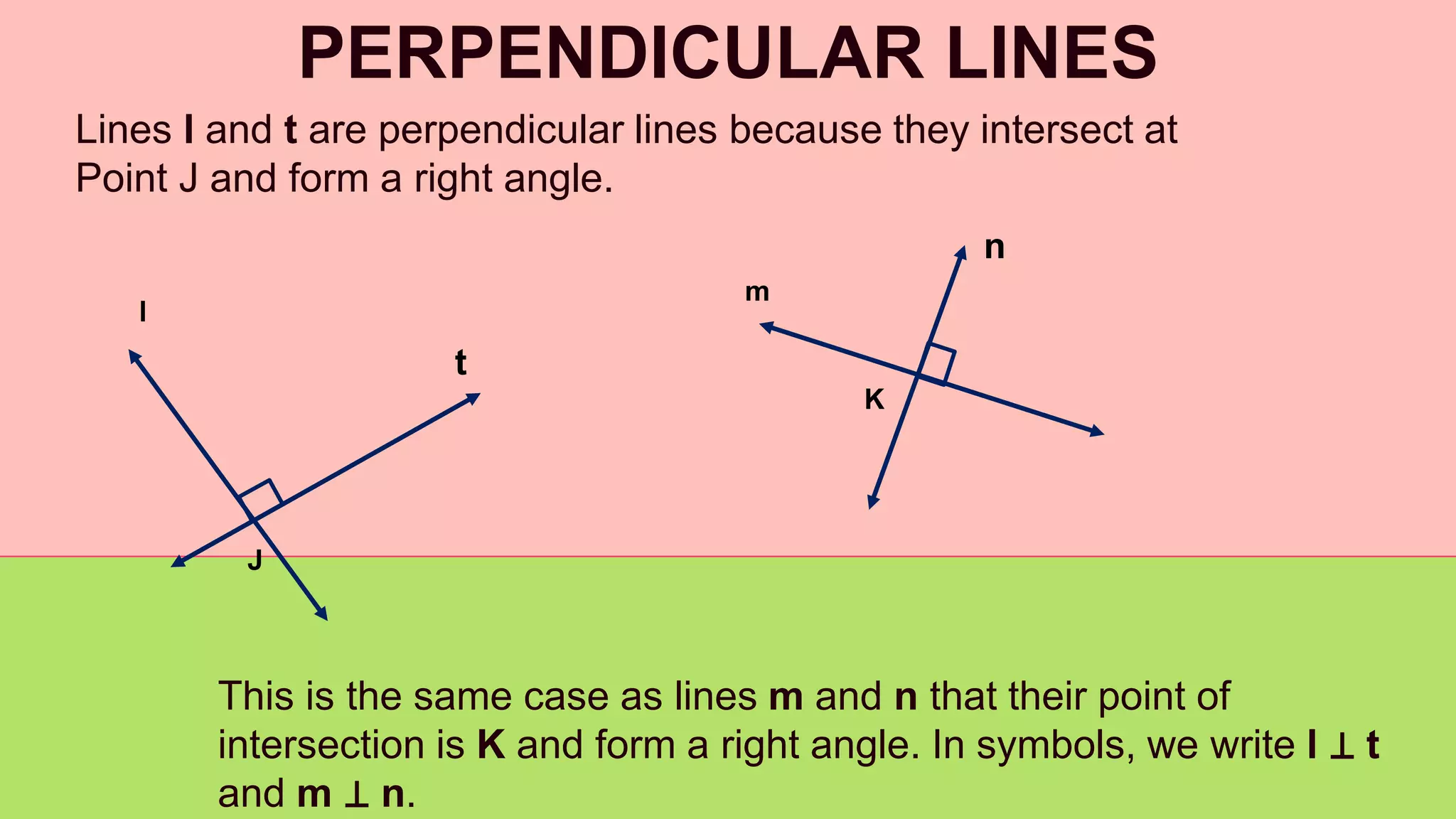
Lines l and t are perpendicular lines because they intersect at
Point J and form a right angle.
PERPENDICULAR LINES
l
J
t
This is the same case as lines m and n that their point of
intersection is K and form a right angle. In symbols, we write l ⊥ t
and m ⊥ n.
m
K
n
Parallel lines are lines that do not
intersect (lines that never meet)
Parallel Lines
Parallel symbol are two vertical lines( or slightly
slanted lines.
• AT || UP
• AT // UP
Parallel Lines
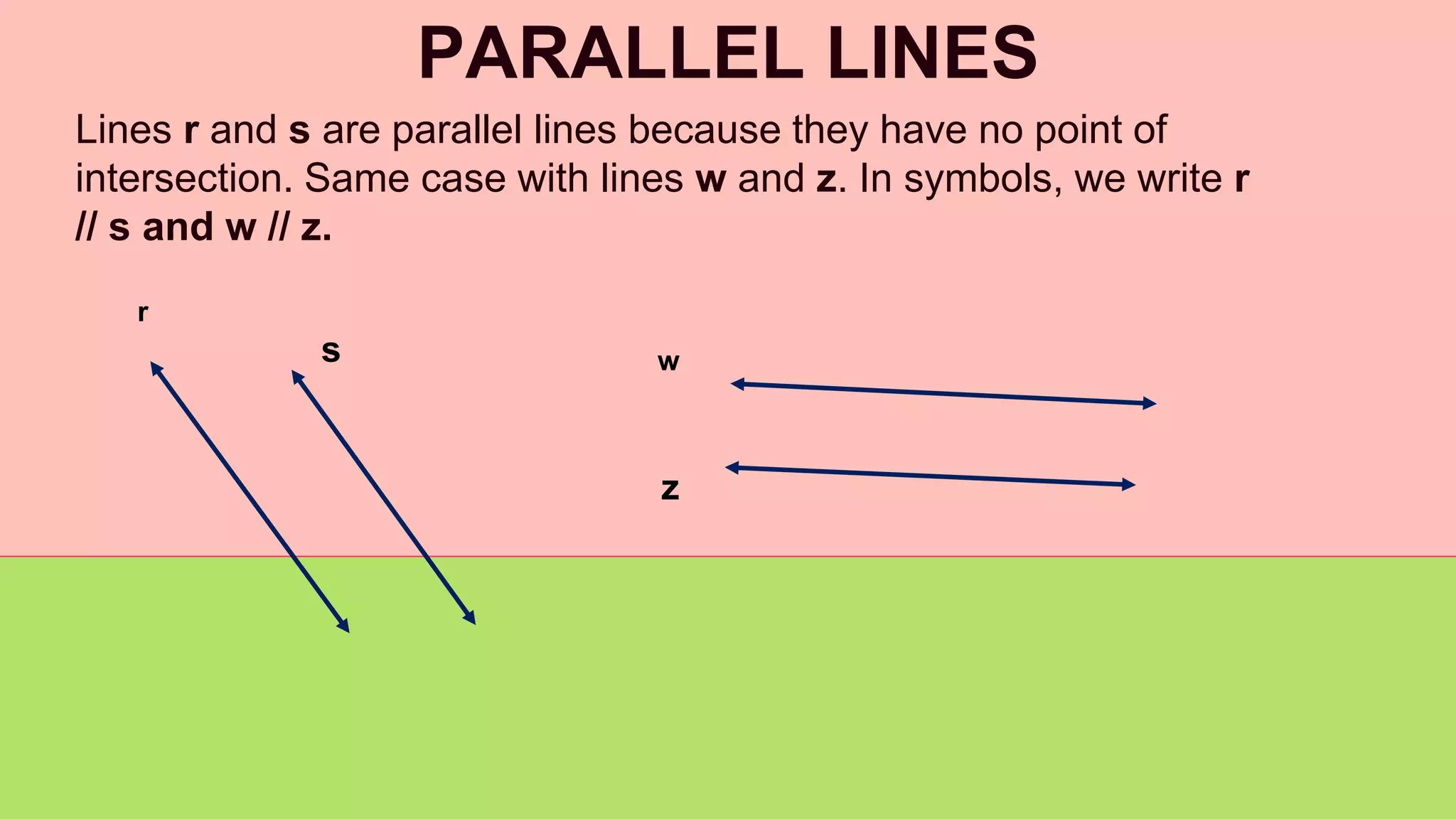
Lines r and s are parallel lines because they have no point of
intersection. Same case with lines w and z. In symbols, we write r
// s and w // z.
PARALLEL LINES
r
s w
z

PARALLEL and PERPENDICULAR LINES.pptx

  • 1.
    MS. JERALDEL M.ENCEPTO 7TH GRADE KINDS OF LINE PERPENDICULAR AND PARALLEL LINES
  • 2.
    1. Define andillustrate the different kinds of line. a. Perpendicular lines b. Intersecting lines c. Concurrent lines d. Parallel lines e. Skew lines f. Transversal line 2. Define and illustrate perpendicularity LEARNING OBJECTIVES:
  • 3.
    Consider the twoangles below. What can you say about their measurements? RECALL.. If ∠ ABC = 75° and ∠ PQR = 75°, 𝑚∠ ABC = 𝑚∠ PQR Then you can say that they are congruent. In symbols, ∠ ABC ≅ ∠ PQR (The symbol ≅ is used to denote congruent) If two angles are congruent, then they have the same measurements. A B C P R Q 75° 75°
  • 4.
    Two coplanar linesthat have a point in common. INTERSECTING LINES CONCURRENT LINES PERPENDICULAR LINES A Two intersecting lines meeting at point A. Three or more coplanar lines that intersect at exactly one point. Concurrent lines meeting at a point O. Two lines that intersect and form a right angle. O EC ⊥ AB A B C D E “ray EC is perpendicular to line AB
  • 5.
    Perpendicular lines • Perpendicularityis not limited to line only. • Segments and rays can also be perpendicular. • intersecting lines that form right angles. • two lines which have the angle of inclination 90° • Coplanar lines that are not parallel must intersect or cross each other. • create four right angles at their point of intersection. Perpendicular Lines
  • 6.
    Perpendicular Bisector • Ofa segment is a line (or a ray another segment) perpendicular to segment at its midpoint. Perpendicular Lines A D C B Conclusion: ∠CDA and ∠CDB are right angles. AD ≅ DB CD is the perpendicular bisector of AB What conclusion can you make?
  • 7.
    Examples 1. What conclusioncan you make? a. AC ⊥ CB at C, then b. CD ⊥ CB at C, then A C B D 1. Given: MP ⊥ LN and m ∠ OMN =40 What conclusion can you make? a. m ∠ OMP= b. m ∠ LMO= L P O M N 40 o ∠ ACB is a right angle ∠ CDA and ∠CDB right angles 50o 140o
  • 8.
    Examples 3. Given :QN ⊥ PL . Answer the following: a. If m ∠ 4 = 30 , what is m ∠ 5? b. If m ∠ 4 = 30 , m ∠ 3 = m ∠ 5, what is m ∠ 2? c. If m ∠ 4 = 30 , m ∠ 3 = m ∠ 5, what is m ∠ 3+ m ∠ 4? d. Based on your answer in letter c, what can you say about m ∠ MQO? e. Is ∠ NQL a right angle? YES or NO? P L R O Q M N 30 o 60o 30o 5 3 4 2 1 90o ∠ MQO is a right angle YES
  • 9.
    What conclusion canyou make out of the given information below? a. HT ⊥ RE___________________________ b. HA is the perpendicular bisector of RE._______________ c. ∠THE is a right angle. ___________ d. RT ≅TE and ∠HTR and ∠HTE are right angles __________ e. AT ⊥ RE ____________________________ f. How many right angles are formed if HA ⊥RE _________ R H E A T
  • 10.
  • 11.
    Find the measureof the following angles. H E A T Given: a. Ha ⊥ RE, RT ≅TE and AR ≅ AE b. m∠ HTR =65 and m∠ ART = 55 R 55 o 55 o 65 o
  • 12.
    When plotting perpendicular lineson a coordinate graph, you need to consider two ideas: • The slopes will be opposites • The slopes will be reciprocals Slope of Perpendicular Lines
  • 13.
    Lines l andt are perpendicular lines because they intersect at Point J and form a right angle. PERPENDICULAR LINES l J t This is the same case as lines m and n that their point of intersection is K and form a right angle. In symbols, we write l ⊥ t and m ⊥ n. m K n
  • 14.
    Parallel lines arelines that do not intersect (lines that never meet) Parallel Lines Parallel symbol are two vertical lines( or slightly slanted lines. • AT || UP • AT // UP
  • 15.
  • 16.
    Lines r ands are parallel lines because they have no point of intersection. Same case with lines w and z. In symbols, we write r // s and w // z. PARALLEL LINES r s w z