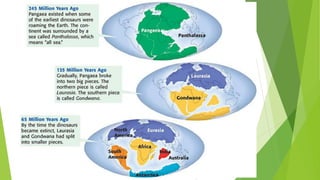
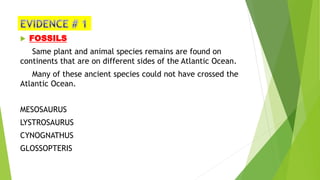
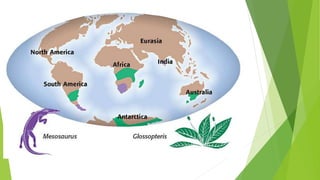
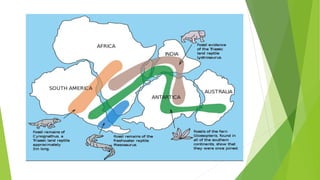
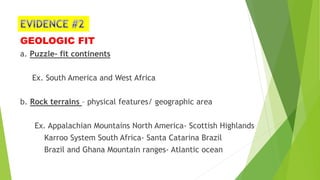
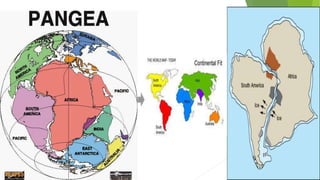
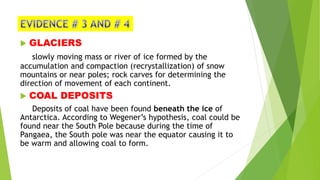
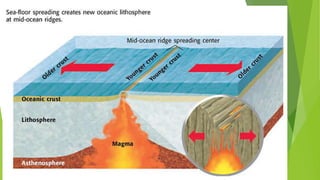
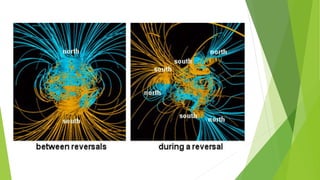
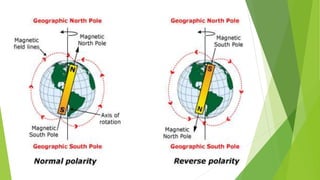
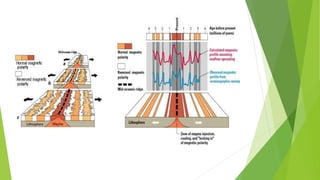
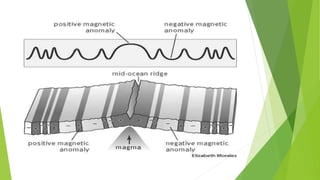
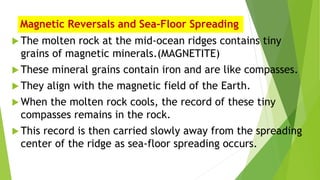
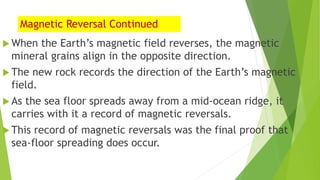
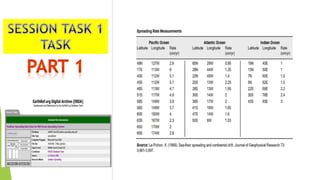
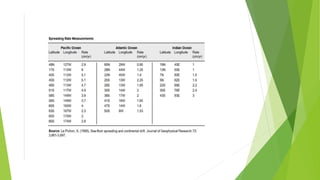
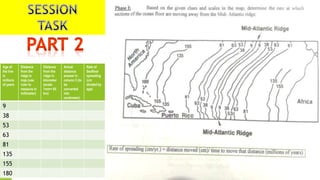
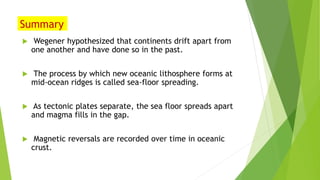
Alfred Wegener first proposed the continental drift hypothesis in the early 1900s, which theorized that the continents were once joined together in a supercontinent called Pangaea before drifting apart to their current locations. We now know from the theory of plate tectonics that Pangaea existed around 245 million years ago and later split into the continents of Laurasia and Gondwana. Sea-floor spreading at mid-ocean ridges drives the movement of tectonic plates and the formation of new oceanic crust, which is evidenced by magnetic reversals recorded in oceanic rocks over time.