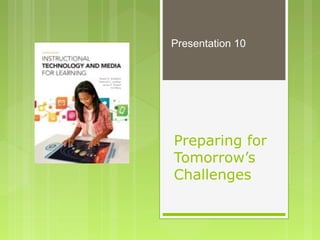
Preparing for
Tomorrow’s
Challenges
Presentation 10
Preparing
for Tomorrow’s Challenges
 Understand factors influencing the advancement of
21st century teaching and learning
Presentation 10
Introduction
Presentation 10
The ASSURE Model and
21st
Century Learning
 The ASSURE model supports the National
Education Technology Plan
 #1 Analyze learners; helps teachers gather correct
resources and prepare individual support
 #2-5 Help teachers to strategically plan
technology integration lessons
 #6 Evaluate and revise; helps teachers assess
student learning and the effectiveness of their
lessons
Presentation 10
 Technological
Competence
 Information Literacy
 Technology-Focused
Professional
Development
 Professional
Engagement
21st
Century Teachers
Improve student
learning through
skilled pedagogy,
technical competence
and information
literacy
Presentation 10
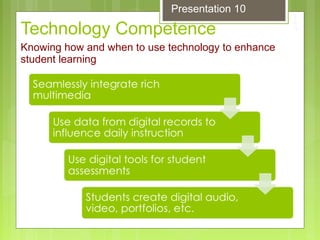
Technology Competence
Knowing how and when to use technology to enhance
student learning
Presentation 10
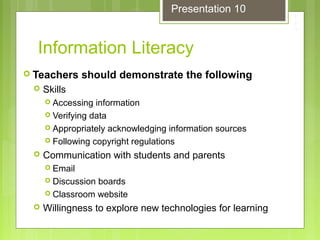
Information Literacy
 Teachers should demonstrate the following
 Skills
 Accessing information
 Verifying data
 Appropriately acknowledging information sources
 Following copyright regulations
 Communication with students and parents
 Email
 Discussion boards
 Classroom website
 Willingness to explore new technologies for learning
Presentation 10
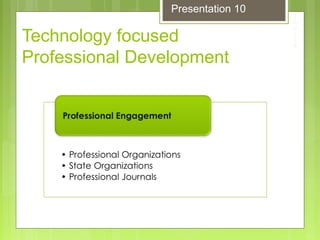
Technology focused
Professional Development
Presentation 10
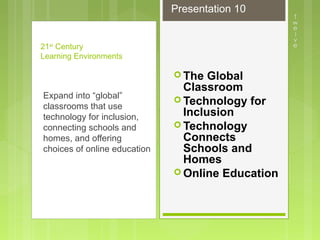
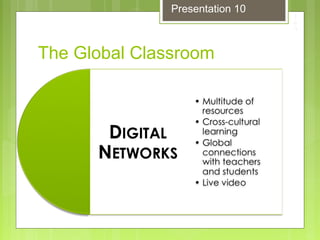
 The Global
Classroom
 Technology for
Inclusion
 Technology
Connects
Schools and
Homes
 Online Education
21st
Century
Learning Environments
Expand into “global”
classrooms that use
technology for inclusion,
connecting schools and
homes, and offering
choices of online education
Presentation 10
The Global Classroom
Presentation 10
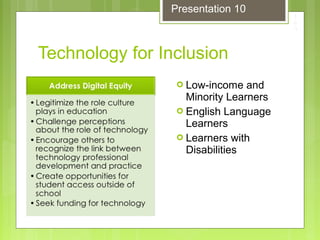
Technology for Inclusion
 Low-income and
Minority Learners
 English Language
Learners
 Learners with
Disabilities
Presentation 10
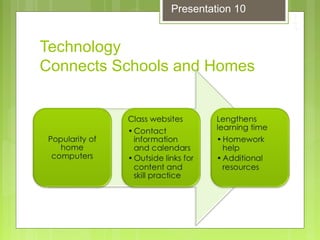
Technology
Connects Schools and Homes
Presentation 10
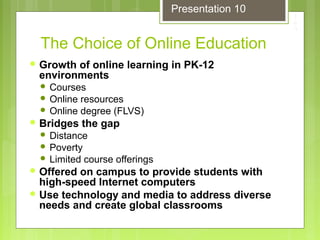
The Choice of Online Education
 Growth of online learning in PK-12
environments
 Courses
 Online resources
 Online degree (FLVS)
 Bridges the gap
 Distance
 Poverty
 Limited course offerings
 Offered on campus to provide students with
high-speed Internet computers
 Use technology and media to address diverse
needs and create global classrooms
Presentation 10
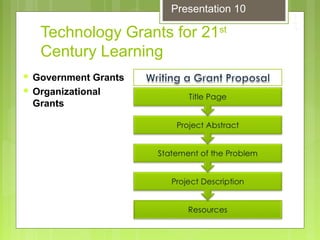
Technology Grants for 21st
Century Learning
 Government Grants
 Organizational
Grants
Presentation 10
Demonstrating
Professional Knowledge
1. Describe how the ASSURE model supports 21st
century
learning as described in the National Education
Technology Plan.
2. Discuss the characteristics of a 21st century teacher who is
technologically competent, information literate, and
committed to professional growth and engagement.
3. List ways that 21st century environments use technology
for inclusion, to connect schools and homes, and to offer
the choice of online education.
4. Describe the types of technology grants available for 21st
century learning and briefly explain the basic components
included when writing a grant proposal.
Presentation 10

10 nur642preparing for tomorrow’s challenges pp10

  • 1.
  • 2.
    Preparing for Tomorrow’s Challenges Understand factors influencing the advancement of 21st century teaching and learning Presentation 10
  • 3.
  • 4.
    The ASSURE Modeland 21st Century Learning  The ASSURE model supports the National Education Technology Plan  #1 Analyze learners; helps teachers gather correct resources and prepare individual support  #2-5 Help teachers to strategically plan technology integration lessons  #6 Evaluate and revise; helps teachers assess student learning and the effectiveness of their lessons Presentation 10
  • 5.
     Technological Competence  InformationLiteracy  Technology-Focused Professional Development  Professional Engagement 21st Century Teachers Improve student learning through skilled pedagogy, technical competence and information literacy Presentation 10
  • 6.
    Technology Competence Knowing howand when to use technology to enhance student learning Presentation 10
  • 7.
    Information Literacy  Teachersshould demonstrate the following  Skills  Accessing information  Verifying data  Appropriately acknowledging information sources  Following copyright regulations  Communication with students and parents  Email  Discussion boards  Classroom website  Willingness to explore new technologies for learning Presentation 10
  • 8.
  • 9.
     The Global Classroom Technology for Inclusion  Technology Connects Schools and Homes  Online Education 21st Century Learning Environments Expand into “global” classrooms that use technology for inclusion, connecting schools and homes, and offering choices of online education Presentation 10
  • 10.
  • 11.
    Technology for Inclusion Low-income and Minority Learners  English Language Learners  Learners with Disabilities Presentation 10
  • 12.
    Technology Connects Schools andHomes Presentation 10
  • 13.
    The Choice ofOnline Education  Growth of online learning in PK-12 environments  Courses  Online resources  Online degree (FLVS)  Bridges the gap  Distance  Poverty  Limited course offerings  Offered on campus to provide students with high-speed Internet computers  Use technology and media to address diverse needs and create global classrooms Presentation 10
  • 14.
    Technology Grants for21st Century Learning  Government Grants  Organizational Grants Presentation 10
  • 15.
    Demonstrating Professional Knowledge 1. Describehow the ASSURE model supports 21st century learning as described in the National Education Technology Plan. 2. Discuss the characteristics of a 21st century teacher who is technologically competent, information literate, and committed to professional growth and engagement. 3. List ways that 21st century environments use technology for inclusion, to connect schools and homes, and to offer the choice of online education. 4. Describe the types of technology grants available for 21st century learning and briefly explain the basic components included when writing a grant proposal. Presentation 10