Modernizing Education
The State of Teaching and Learning in the 21st Century
Lucy Gray
Midwest Educational Technology Conference
February 2013
http://www.lucygray.org
@elemenous
All materials are located at:
http://www.lucygray.org
Download the PDF and click on pictures and
hyperlinks to visit cited resources.
Additional Resources:
http://sg.sg/modernizingedu
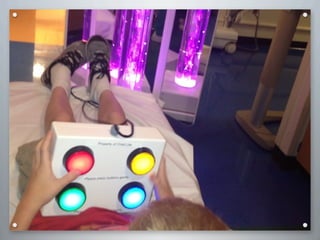
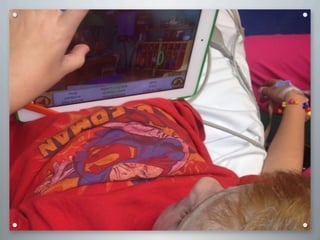
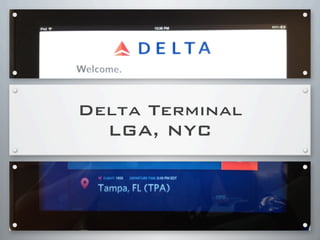
Technology is
changing
everything...
Fourth Presbyterian
Church
Chicago, IL
Comer Children’s Hospital
University of Chicago
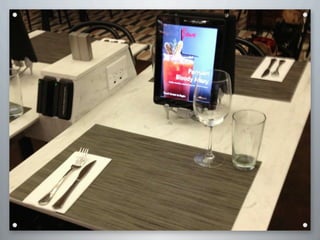
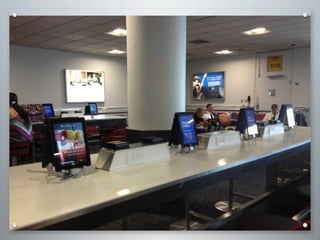
Delta Terminal
LGA, NYC
Connectedness
is changing
everything...
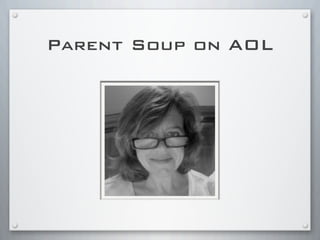
Parent Soup on AOL
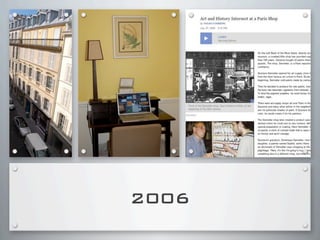
2006
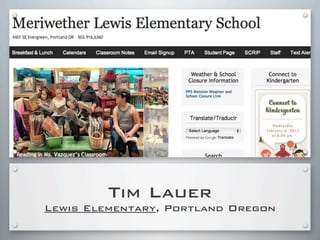
Tim Lauer
Lewis Elementary, Portland Oregon
Serendipity Happens
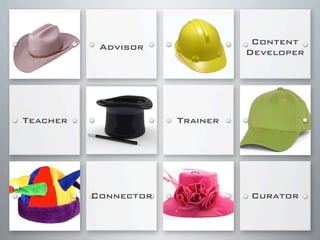
Advisor
Content
Developer
Curator
TrainerTeacher
Connector
Observer
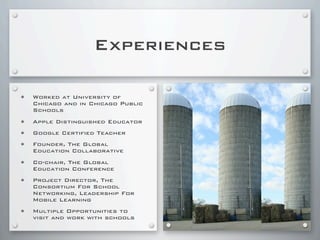
Experiences
• Worked at University of
Chicago and in Chicago Public
Schools
• Apple Distinguished Educator
• Google Certified Teacher
• Founder, The Global
Education Collaborative
• Co-chair, The Global
Education Conference
• Project Director, The
Consortium For School
Networking, Leadership For
Mobile Learning
• Multiple Opportunities to
visit and work with schools
Julia and Henry
Our perspectives
need to
E x p a n d
What do we value in
schools?
Are parents and educators asking for
more high stakes testing, standardized
curriculum, and seat time?
I think not.
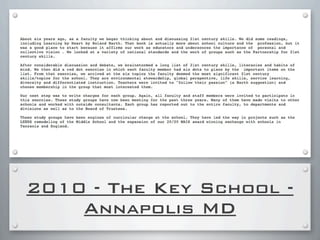
2010 - The Key School -
Annapolis MD
Lucy’s Laundry List
Schools where continuous improvement using a wide
variety of criteria is the bottom line.
Schools that see their role is to educate, enlighten,
and support kids and their families.
Schools where intellectual curiosity and variety is
valued, where educating for compliance is not the
norm.
Visionary Leadership
Empowered Faculty
Schools where teachers have strong backgrounds in
pedagogy, child development and in meeting the
needs of diverse learners.
Schools faculty have ample opportunities to observe
each other, visit other institutions, and to engage in
activities to benefit their own learning.
Schools where professional development is
personalized and supportive of teachers.
Engaged Students
Schools where student voice is taken into consideration
throughout the school culture.
Schools where students are encouraged to identify and
pursue their passions.
Schools that show evidence that their faculty really
knows and understands their students.
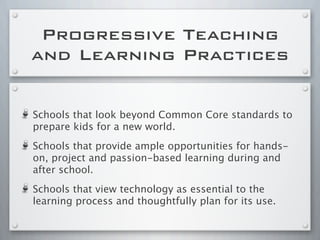
Progressive Teaching
and Learning Practices
Schools that look beyond Common Core standards to
prepare kids for a new world.
Schools that provide ample opportunities for hands-
on, project and passion-based learning during and
after school.
Schools that view technology as essential to the
learning process and thoughtfully plan for its use.
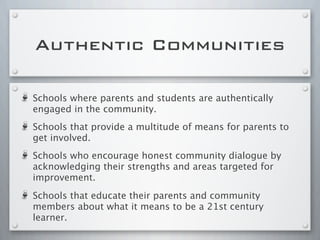
Authentic Communities
Schools where parents and students are authentically
engaged in the community.
Schools that provide a multitude of means for parents to
get involved.
Schools who encourage honest community dialogue by
acknowledging their strengths and areas targeted for
improvement.
Schools that educate their parents and community
members about what it means to be a 21st century
learner.
Political
Context
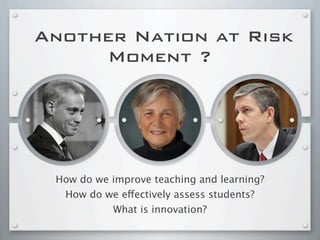
Another Nation at Risk
Moment ?
How do we improve teaching and learning?
How do we effectively assess students?
What is innovation?
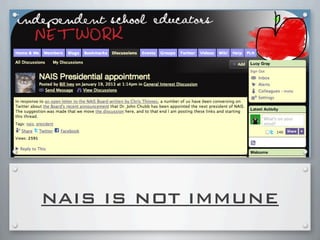
NAIS IS NOT IMMUNE
Education
Policy
Context
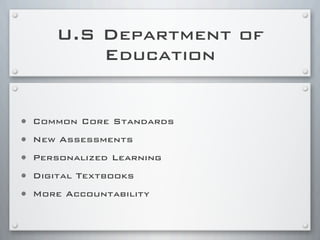
U.S Department of
Education
• Common Core Standards
• New Assessments
• Personalized Learning
• Digital Textbooks
• More Accountability
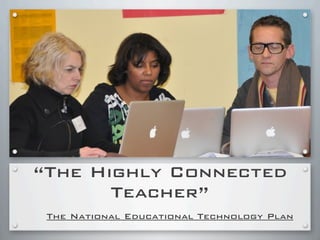
“The Highly Connected
Teacher”
The National Educational Technology Plan
Technological
Context
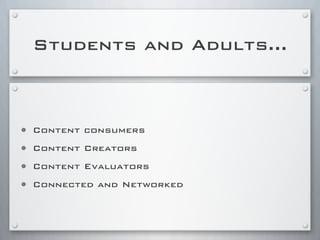
Students and Adults...
• Content consumers
• Content Creators
• Content Evaluators
• Connected and Networked
The Power of Social
Media
Flickr
YouTubeTwitter Facebook
LinkedIn Google+
Diigo
SlideShare
EdSurge
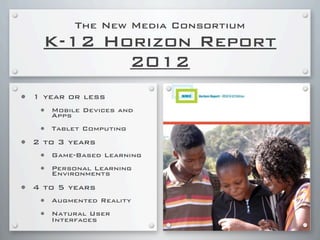
The New Media Consortium
K-12 Horizon Report
2012
• 1 year or less
• Mobile Devices and
Apps
• Tablet Computing
• 2 to 3 years
• Game-Based Learning
• Personal Learning
Environments
• 4 to 5 years
• Augmented Reality
• Natural User
Interfaces
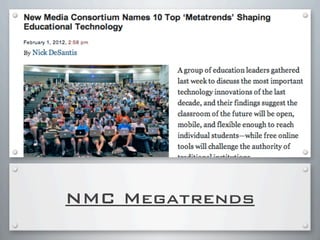
NMC Megatrends
Why Change?
Why Evolve?
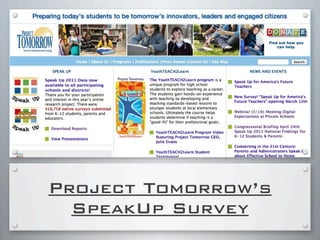
Project Tomorrow’s
SpeakUp Survey
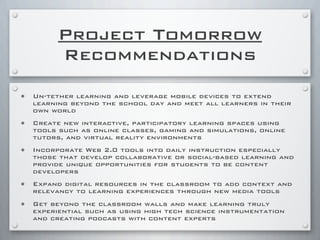
Project Tomorrow
Recommendations
• Un-tether learning and leverage mobile devices to extend
learning beyond the school day and meet all learners in their
own world
• Create new interactive, participatory learning spaces using
tools such as online classes, gaming and simulations, online
tutors, and virtual reality environments
• Incorporate Web 2.0 tools into daily instruction especially
those that develop collaborative or social-based learning and
provide unique opportunities for students to be content
developers
• Expand digital resources in the classroom to add context and
relevancy to learning experiences through new media tools
• Get beyond the classroom walls and make learning truly
experiential such as using high tech science instrumentation
and creating podcasts with content experts
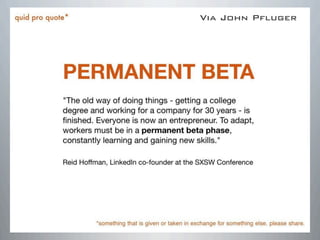
Via John Pfluger
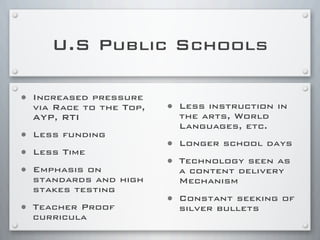
The Reality
U.S Public Schools
• Increased pressure
via Race to the Top,
AYP, RTI
• Less funding
• Less Time
• Emphasis on
standards and high
stakes testing
• Teacher Proof
curricula
• Less instruction in
the arts, World
Languages, etc.
• Longer school days
• Technology seen as
a content delivery
Mechanism
• Constant seeking of
silver bullets
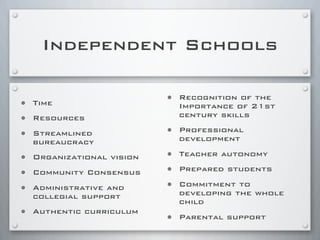
Independent Schools
• Time
• Resources
• Streamlined
bureaucracy
• Organizational vision
• Community Consensus
• Administrative and
collegial support
• Authentic curriculum
• Recognition of the
Importance of 21st
century skills
• Professional
development
• Teacher autonomy
• Prepared students
• Commitment to
developing the whole
child
• Parental support
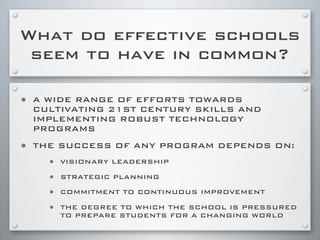
What do effective schools
seem to have in common?
• A WIDE RANGE OF EFFORTS TOWARDS
CULTIVATING 21ST CENTURY SKILLS AND
IMPLEMENTING ROBUST TECHNOLOGY
PROGRAMS
• THE SUCCESS OF ANY PROGRAM DEPENDS ON:
• VISIONARY LEADERSHIP
• STRATEGIC PLANNING
• COMMITMENT TO CONTINUOUS IMPROVEMENT
• THE DEGREE TO WHICH THE SCHOOL IS PRESSURED
TO PREPARE STUDENTS FOR A CHANGING WORLD
Examples of
Modernization
Digital Transformation
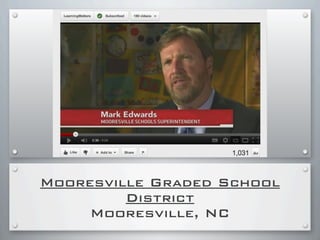
Mooresville Graded School
District
Mooresville, NC
Innovation
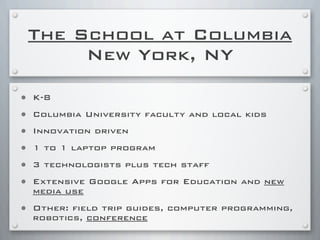
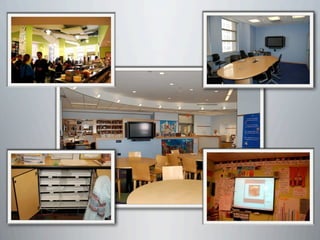
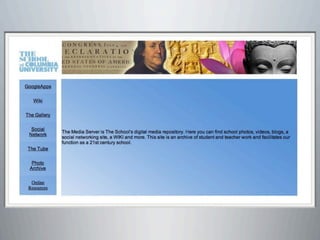
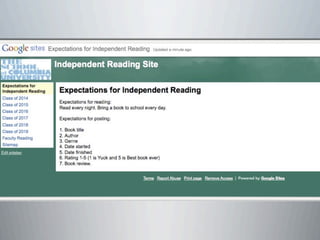
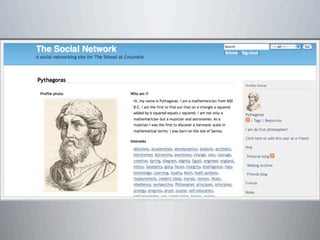
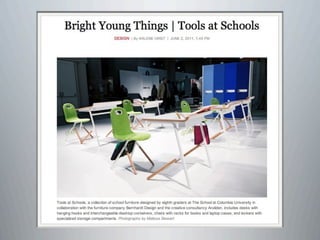
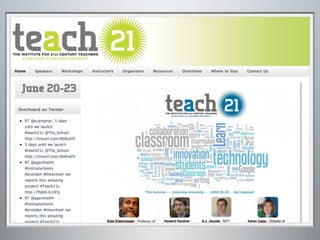
The School at Columbia
New York, NY
• K-8
• Columbia University faculty and local kids
• Innovation driven
• 1 to 1 laptop program
• 3 technologists plus tech staff
• Extensive Google Apps for Education and new
media use
• Other: field trip guides, computer programming,
robotics, conference
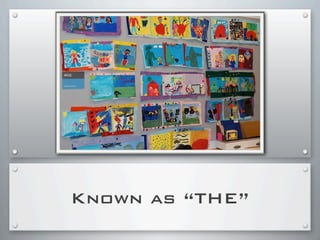
Known as “THE”
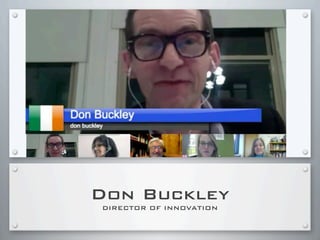
Don Buckley
DIRECTOR OF INNOVATION
Inquiry
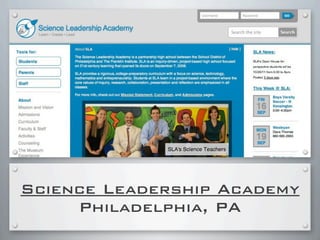
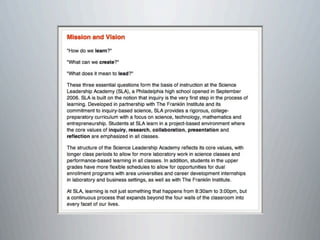
Science Leadership Academy
Philadelphia, PA
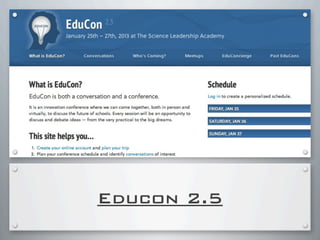
Educon 2.5
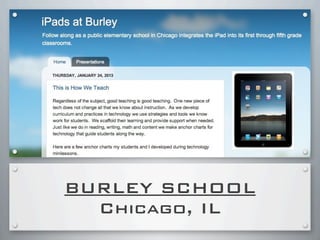
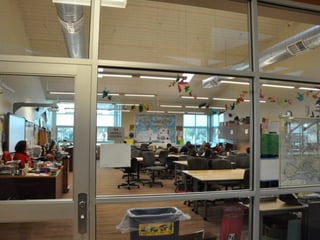
BURLEY SCHOOL
Chicago, IL
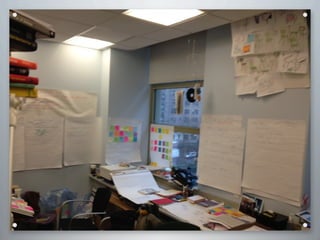
Teacher Leadership
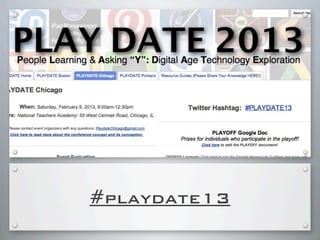
#playdate13
Design +
21st Century Skills
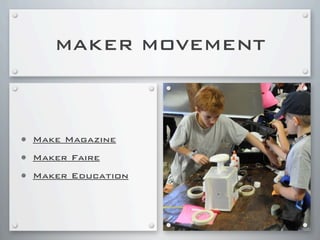
MAKER MOVEMENT
• Make Magazine
• Maker Faire
• Maker Education
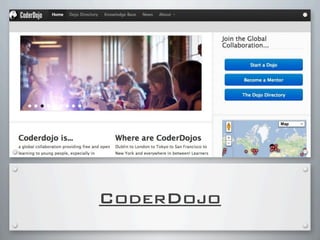
CoderDojo
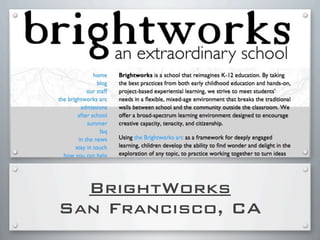
BrightWorks
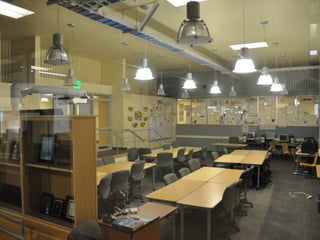
San Francisco, CA
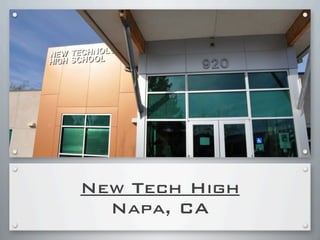
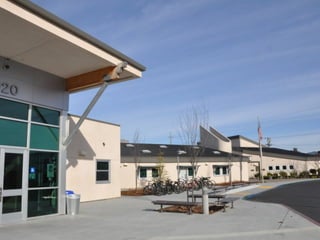
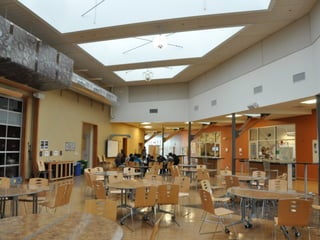
New Tech High
Napa, CA
Leadership + Iteration
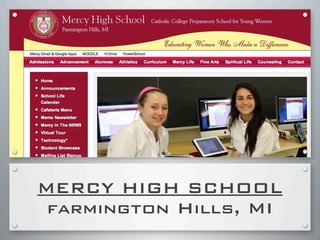
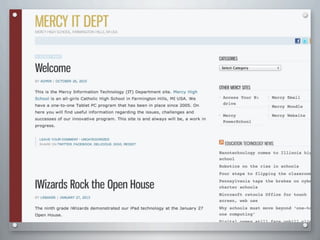
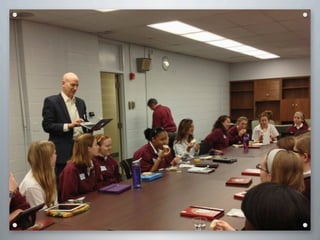
MERCY HIGH SCHOOL
farmington Hills, MI
Additional
Modernizing Themes
Worthy of Exploration
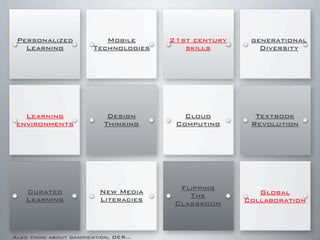
Personalized
Learning
Mobile
Technologies
21st century
skills
generational
Diversity
Learning
environments
Design
Thinking
Cloud
Computing
Textbook
Revolution
Curated
Learning
New Media
Literacies
Flipping
The
Classroom
Global
Collaboration
Also think about gamification, OER...
21st Century Skills
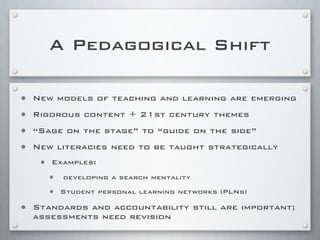
A Pedagogical Shift
• New models of teaching and learning are emerging
• Rigorous content + 21st century themes
• “Sage on the stage” to “guide on the side”
• New literacies need to be taught strategically
• Examples:
• developing a search mentality
• Student personal learning networks (PLNs)
• Standards and accountability still are important;
assessments need revision
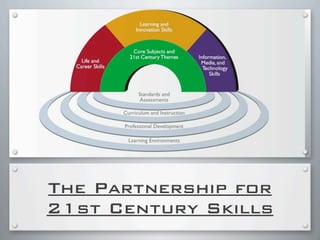
The Partnership for
21st Century Skills
4 Cs
of the
Common Core
Standards
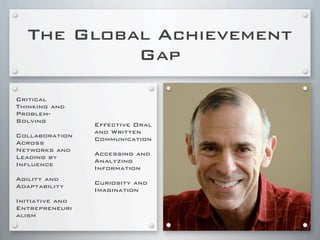
The Global Achievement
Gap
Critical
Thinking and
Problem-
Solving
Collaboration
Across
Networks and
Leading by
Influence
Agility and
Adaptability
Initiative and
Entrepreneuri
alism
Effective Oral
and Written
Communication
Accessing and
Analyzing
Information
Curiosity and
Imagination
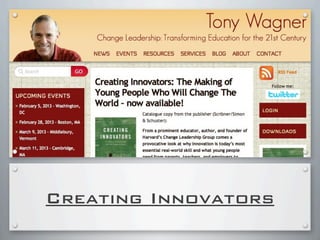
Creating Innovators
Learning Environments
Wired UK
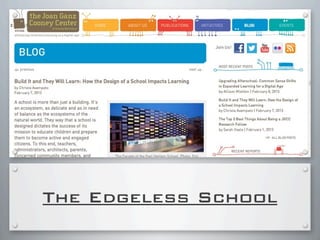
The Edgeless School
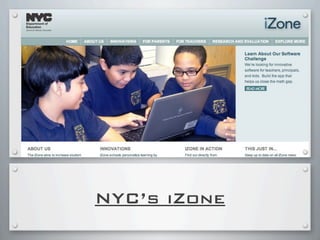
NYC’s iZone
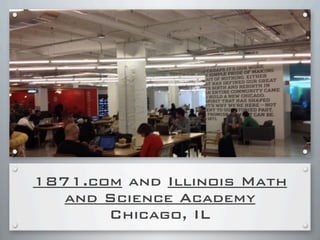
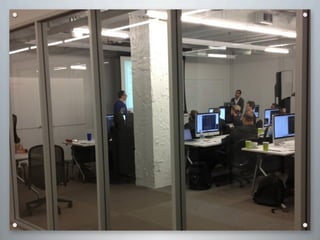
1871.com and Illinois Math
and Science Academy
Chicago, IL
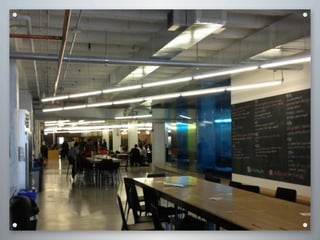
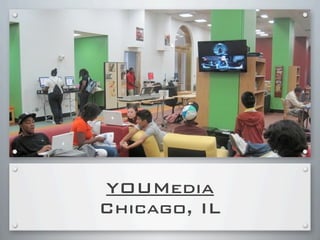
YOUMedia
Chicago, IL
GLOBAL
COLLABORATION
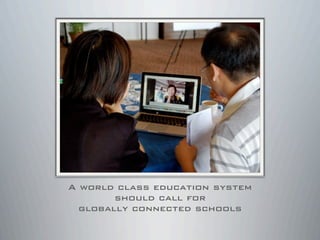
A world class education system
should call for
globally connected schools
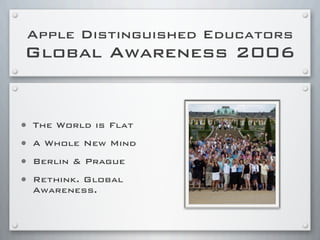
Apple Distinguished Educators
Global Awareness 2006
• The World is Flat
• A Whole New Mind
• Berlin & Prague
• Rethink. Global
Awareness.
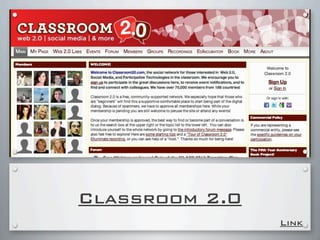
Classroom 2.0
Link
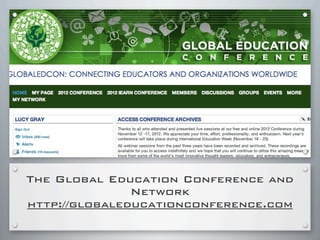
The Global Education Conference and
Network
http://globaleducationconference.com
Mission
The Global Education Conference Network is a community of
practice where people connect and build the professional
relationships necessary for effective collaboration across
borders. Via this social network, educators and organizations
from all over the world share conversations, resources, projects,
and initiatives with a strong emphasis on promoting global
awareness, fostering global competency, and inspiring action
towards solving real-world problems. Our ultimate goal is to help
prepare students for a rapidly changing and complex world.
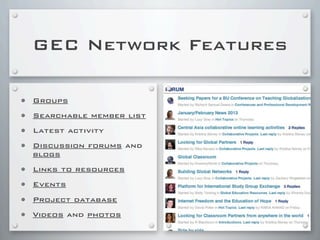
GEC Network Features
• Groups
• Searchable member list
• Latest activity
• Discussion forums and
blogs
• Links to resources
• Events
• Project database
• Videos and photos
2010 - Polar Bears
International
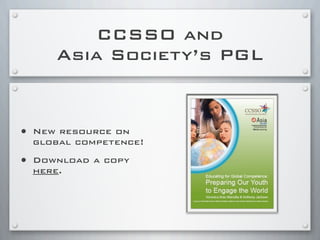
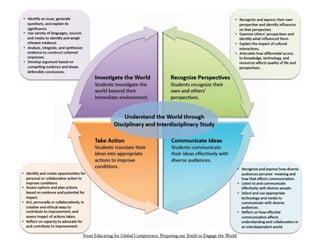
CCSSO and
Asia Society’s PGL
• New resource on
global competence!
• Download a copy
here.
From Educating for Global Competence: Preparing our Youth to Engage the World
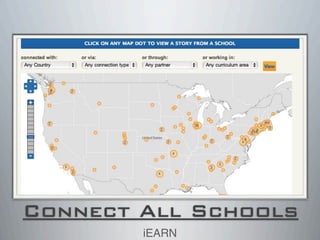
Connect All Schools
iEARN
WHY NOW?
@oline73: Can you distill why globally connected classrooms are vital in 2010?
Photo source
We have urgent problems that need
to be addressed and, in order to
prepare our students to work on
these problems, we must connect
them globally. We must teach them
how networked learning leads to
networked problem solving.
So what?
21st century Skills: The art of teaching comes through via the
weaving of 21st century themes into core content. Focus on
inquiry and the thoughtful use of technology in classrooms. It is
not all about the tools.
Learning Environments: There has been an emphasis on
educating the whole child. Shift the discussion to address the
whole learning environment. Personalized learning for both
students and teachers is important.
Global Collaborations: It’s so easy to connect classrooms today.
It’s essential that we bring the world into our classrooms and
inspire students with the possibilities. This is where you apply the
tools!
Further Explorations
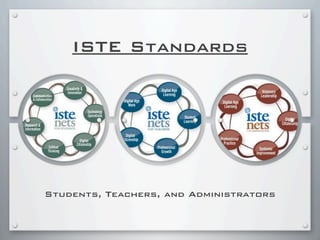
ISTE Standards
Students, Teachers, and Administrators
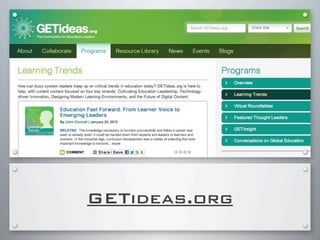
GETideas.org
Design Share
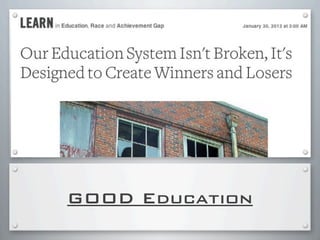
GOOD Education
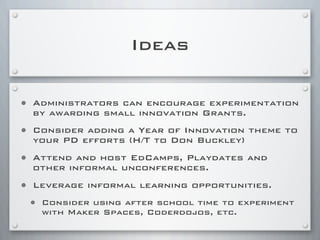
Ideas
• Administrators can encourage experimentation
by awarding small innovation Grants.
• Consider adding a Year of Innovation theme to
your PD efforts (H/T to Don Buckley)
• Attend and host EdCamps, Playdates and
other informal unconferences.
• Leverage informal learning opportunities.
• Consider using after school time to experiment
with Maker Spaces, Coderdojos, etc.
http://sg.sg/modernizingedu
lucy@lucygrayconsulting.com
@elemenous on Twitter

Modernizing Education - Administrator 2.0 Conference #sls13