Digital Libraries and Prospects of a Programme on Technology Enhanced Learning in Africa Dr Baharul Islam Chairman & CEO South Asia Development Gateway 1st International Conference on African Digital Libraries and Archives (ICADLA-1)   1 to 3 July 2009 : United Nations Conference Centre (UNCC), Addis Ababa, Ethiopia
Outline Introduction NPTEL (India)  Strategy  Security and Privacy Issues  Digital Library and Technology Enhanced Learning  Action Plan  Challenges for Africa  Conclusion
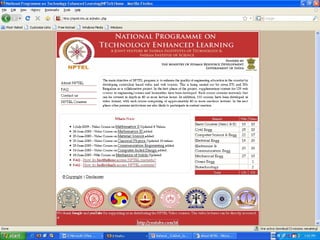
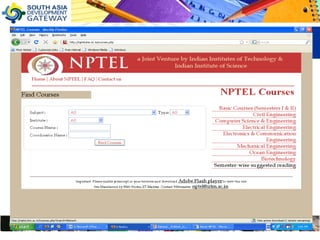
Introduction  The National Program on Technology Enhanced Learning (NPTEL) in India I Multimedia based courses with high potential of interactivity. A viable option for both the developed and the developing nations Creative option for faculty.  Enhance the on-and off-campus learning experience Delivery of courses and sharing expertise among faculty in different parts of the world.  Competitiveness of industry in the global markets  Quality and reach of engineering education. High quality learning material available to students of engineering institutions 110 new courses and 109 existing courses encapsulated in digital video format) and web-based e-courses (129).  A potential initiative for African countries and institutions
NPTEL (India)  Strategy Quality of engineering education - Video and web courses.  1998: India – USA exploration of TEL 1999: IIT, Madras and Carnegie Mellon University, USA  Transforming a country into a vibrant knowledge economy NPTEL thrust areas:  i) higher education, ii) professional education, iii) distance education and iv) continuous and open learning NPTEL and OCW (Open Courseware by MIT) Implementation Strategy  F:\ Baharul  _ ICADLA_June09_Pictures.ppt Content organization  Industry needs Courses in subjects - well structured on fundamental concepts  Training, comprehension and analytical skills
 
 
Security and Privacy Issues Privacy and data protection are crucial factors for any technology-enhanced learning applications Relaxed regulatory or legal environment or “data heavens” is a challenge  Security and privacy problems concern all the stakeholders – developers, content providers, archives, system administrators, and the end users. Secure storage of both content and learner data  Security and privacy requirements also differ in different learning settings or learning environments.
Digital Library and Technology Enhanced Learning Creation of a digital library of learning resources or a consortium of digital libraries across Africa  Increase competitiveness of the region’s industry in the global markets The target group  Make video lectures in a format appropriate for broadcasting  Create web-based (e-learning) material  Create a common web portal the digital library activity.  Make e-learning material available in the web for the video lectures Advise target institutions  NPTEL in India works through Partner Institutions (PI) and Associate Partner Institutions (API)
Delhi Declaration  of the India-Africa Forum Summit in April 2008 Africa and India will collaborate in the   “…in the development and production of teaching and learning materials, including equipment for teaching science and technology and textbooks, especially for universities…Collaboration in designing and implementation of Open and Distance Education/Learning Programs with attendant capacity building for personnel required, such as teachers and ICT technicians”
Action Plan DRAW  a tentative Action Plan for a Digital Library consortium for technology enhanced learning in Africa, in the line NPTEL of India Joint platform of African Institutions or Libraries. Ensure inter-institutional coordination at the regional level Faculty from different institutions, departments and centers.  Technical assistance to develop expertise  Courses developed under the NPTEL project in India  Upgradation of the existing facilities for video recording  TV channels and streaming the content through video server  Primary target group Support materials /good textbooks
Challenges for Africa African public policies and priorities to develop a system of TEL Learning through technology based on solid research and evaluation. Developing and sharing subject content and expertise across continents can be both time consuming and expensive.  The infrastructure for learning technologies in African higher education institutions is weak in many respects.  Faculty members do not generally have access to adequate computers.  Many libraries and classrooms do not have sufficient computer resources Dedicated funds, tax policy changes,  Intellectual property policies that balance the needs of users and creators will be critical to the ongoing development of technology enhanced learning in Africa National copyright laws must assure that fair dealing and other statutory exceptions for educational and library uses apply in the digital environment
Conclusions Preparing the African for the future will require new knowledge, new skills, new approaches and new attitudes.  Course contents created so far by the Indian initiative NPTEL will be useful for teacher training and through them improve the quality of instructions in Africa.  A similar initiative in Africa will incorporate feedback and evaluation by the users and continuously update the course contents for the next  generation
THANK YOU Email Me at : [email_address]  /  [email_address]

Baharul Icadla June09

  • 1.
    Digital Libraries andProspects of a Programme on Technology Enhanced Learning in Africa Dr Baharul Islam Chairman & CEO South Asia Development Gateway 1st International Conference on African Digital Libraries and Archives (ICADLA-1) 1 to 3 July 2009 : United Nations Conference Centre (UNCC), Addis Ababa, Ethiopia
  • 2.
    Outline Introduction NPTEL(India) Strategy Security and Privacy Issues Digital Library and Technology Enhanced Learning Action Plan Challenges for Africa Conclusion
  • 3.
    Introduction TheNational Program on Technology Enhanced Learning (NPTEL) in India I Multimedia based courses with high potential of interactivity. A viable option for both the developed and the developing nations Creative option for faculty. Enhance the on-and off-campus learning experience Delivery of courses and sharing expertise among faculty in different parts of the world. Competitiveness of industry in the global markets Quality and reach of engineering education. High quality learning material available to students of engineering institutions 110 new courses and 109 existing courses encapsulated in digital video format) and web-based e-courses (129). A potential initiative for African countries and institutions
  • 4.
    NPTEL (India) Strategy Quality of engineering education - Video and web courses. 1998: India – USA exploration of TEL 1999: IIT, Madras and Carnegie Mellon University, USA Transforming a country into a vibrant knowledge economy NPTEL thrust areas: i) higher education, ii) professional education, iii) distance education and iv) continuous and open learning NPTEL and OCW (Open Courseware by MIT) Implementation Strategy F:\ Baharul _ ICADLA_June09_Pictures.ppt Content organization Industry needs Courses in subjects - well structured on fundamental concepts Training, comprehension and analytical skills
  • 5.
  • 6.
  • 7.
    Security and PrivacyIssues Privacy and data protection are crucial factors for any technology-enhanced learning applications Relaxed regulatory or legal environment or “data heavens” is a challenge Security and privacy problems concern all the stakeholders – developers, content providers, archives, system administrators, and the end users. Secure storage of both content and learner data Security and privacy requirements also differ in different learning settings or learning environments.
  • 8.
    Digital Library andTechnology Enhanced Learning Creation of a digital library of learning resources or a consortium of digital libraries across Africa Increase competitiveness of the region’s industry in the global markets The target group Make video lectures in a format appropriate for broadcasting Create web-based (e-learning) material Create a common web portal the digital library activity. Make e-learning material available in the web for the video lectures Advise target institutions NPTEL in India works through Partner Institutions (PI) and Associate Partner Institutions (API)
  • 9.
    Delhi Declaration of the India-Africa Forum Summit in April 2008 Africa and India will collaborate in the “…in the development and production of teaching and learning materials, including equipment for teaching science and technology and textbooks, especially for universities…Collaboration in designing and implementation of Open and Distance Education/Learning Programs with attendant capacity building for personnel required, such as teachers and ICT technicians”
  • 10.
    Action Plan DRAW a tentative Action Plan for a Digital Library consortium for technology enhanced learning in Africa, in the line NPTEL of India Joint platform of African Institutions or Libraries. Ensure inter-institutional coordination at the regional level Faculty from different institutions, departments and centers. Technical assistance to develop expertise Courses developed under the NPTEL project in India Upgradation of the existing facilities for video recording TV channels and streaming the content through video server Primary target group Support materials /good textbooks
  • 11.
    Challenges for AfricaAfrican public policies and priorities to develop a system of TEL Learning through technology based on solid research and evaluation. Developing and sharing subject content and expertise across continents can be both time consuming and expensive. The infrastructure for learning technologies in African higher education institutions is weak in many respects. Faculty members do not generally have access to adequate computers. Many libraries and classrooms do not have sufficient computer resources Dedicated funds, tax policy changes, Intellectual property policies that balance the needs of users and creators will be critical to the ongoing development of technology enhanced learning in Africa National copyright laws must assure that fair dealing and other statutory exceptions for educational and library uses apply in the digital environment
  • 12.
    Conclusions Preparing theAfrican for the future will require new knowledge, new skills, new approaches and new attitudes. Course contents created so far by the Indian initiative NPTEL will be useful for teacher training and through them improve the quality of instructions in Africa. A similar initiative in Africa will incorporate feedback and evaluation by the users and continuously update the course contents for the next generation
  • 13.
    THANK YOU EmailMe at : [email_address] / [email_address]